
The Regions of France: a Map of All 18 with Their Capitals and What to See in Each

By Maxime Roseau Co-founder, Master of Business and Communication, Université Nice Sophia Antipolis
Published Updated

In this article
- The 18 Regions of France on a Map
- The Regions of France at a Glance
- How France Went from 22 Regions to 13
- Regions and Departments
- Corsica and the Overseas Regions
- Île-de-France (Paris and Its Region)
- Hauts-de-France
- Normandy (Normandie)
- Brittany (Bretagne)
- Pays de la Loire
- Centre-Val de Loire
- Grand Est
- Bourgogne-Franche-Comté
- Nouvelle-Aquitaine
- Occitanie
- Auvergne-Rhône-Alpes
- Provence-Alpes-Côte d’Azur
- Corsica (Corse)
- The Five Overseas Regions
- Guadeloupe
- Martinique
- French Guiana (Guyane)
- La Réunion
- Mayotte
- Entry Rules for Americans
- Which Region for Which Trip
- Staying Longer in a Region
- FAQ
- Conclusion
France has 18 regions: 13 in metropolitan France, Corsica included, and 5 overseas, according to INSEE: Guadeloupe, Martinique, French Guiana, La Réunion and Mayotte. The map dates from January 1, 2016, when a law of January 16, 2015 merged the 22 regions of metropolitan France into 13, and decrees of September 28, 2016 fixed the names of the merged regions: Hauts-de-France, Grand Est, Normandy, Bourgogne-Franche-Comté, Nouvelle-Aquitaine, Occitanie and Auvergne-Rhône-Alpes. Each region has a capital, its chef-lieu, and is divided into departments, 101 in all.
This guide maps the 18 regions, then takes them one by one: the capital, population and area from INSEE, the national statistics institute; what each region’s official tourism board puts forward; its places on UNESCO’s World Heritage List; its food; and the fastest train from Paris on SNCF Connect, all read on November 25, 2026. It ends with which region suits which trip, the entry rules for the overseas regions, and what changes if you stay for months.
The 18 Regions of France on a Map
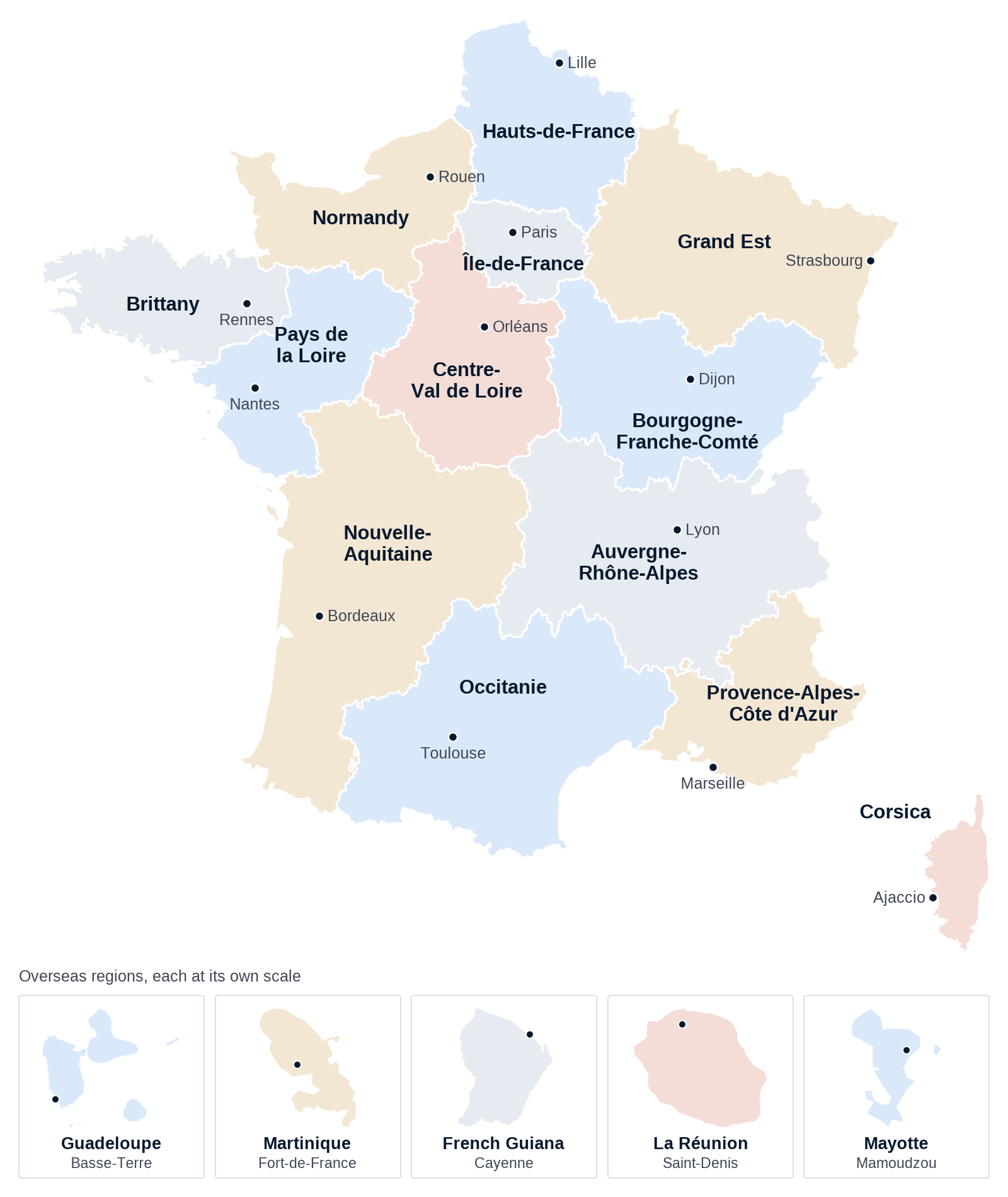
The 13 regions of metropolitan France, from Hauts-de-France in the north to Corsica in the Mediterranean, are shown in place, and the dots mark their capitals. The five overseas regions are in the boxes below, each at its own scale: Guadeloupe and Martinique are in the Caribbean, French Guiana in South America, La Réunion and Mayotte in the Indian Ocean.
The Regions of France at a Glance
| Region | Capital | Population | Area | Known for | Fastest train from Paris |
|---|---|---|---|---|---|
| Île-de-France | Paris | 12,463,067 | 12,012 km² | Paris, Versailles, Fontainebleau, Disneyland Paris | The capital region |
| Hauts-de-France | Lille | 5,992,194 | 31,806 km² | Gothic cathedrals, belfries, 200 km of coast, war memorials | 55 minutes to Lille |
| Normandy | Rouen | 3,345,842 | 29,875 km² | The D-Day beaches, Mont-Saint-Michel, Étretat, Camembert and cider | 1 h 13 to Rouen |
| Brittany | Rennes | 3,449,370 | 27,208 km² | The coastal path, Saint-Malo, the Carnac megaliths, crêpes | 1 h 25 to Rennes |
| Pays de la Loire | Nantes | 3,907,156 | 32,082 km² | Atlantic beaches, Saumur and Angers, Fontevraud, Puy du Fou | 1 h 57 to Nantes |
| Centre-Val de Loire | Orléans | 2,587,031 | 39,151 km² | The Loire châteaux, Chartres and Bourges cathedrals | 56 minutes to Orléans or Les Aubrais |
| Grand Est | Strasbourg | 5,563,378 | 57,441 km² | Champagne, the Alsace Wine Route, Strasbourg, Christmas markets | 1 h 44 to Strasbourg |
| Bourgogne-Franche-Comté | Dijon | 2,802,670 | 47,783 km² | Burgundy wines, Beaune, Vézelay, the Jura | 1 h 32 to Dijon |
| Nouvelle-Aquitaine | Bordeaux | 6,150,451 | 84,036 km² | Bordeaux wines, the Dune du Pilat, the Dordogne caves, the Basque coast | 2 h 03 to Bordeaux |
| Occitanie | Toulouse | 6,124,653 | 72,724 km² | Carcassonne, the Pont du Gard, the Canal du Midi, the Pyrenees | 5 h 39 to Toulouse, 3 h 12 to Montpellier |
| Auvergne-Rhône-Alpes | Lyon | 8,205,557 | 69,711 km² | Lyon, Mont Blanc and the Alps, the volcanoes of Auvergne | 1 h 43 to Lyon |
| Provence-Alpes-Côte d’Azur | Marseille | 5,218,960 | 31,400 km² | The Riviera, Avignon and Arles, the Calanques, lavender | 3 h 03 to Marseille |
| Corsica | Ajaccio | 355,486 | 8,680 km² | 1,000 km of coast, the mountains, Bonifacio, Scandola | By air or ferry |
Source: INSEE for the capitals, populations (the 2023 reference populations, in force since January 1, 2026) and areas, read on November 25, 2026; SNCF Connect route pages for the fastest trains, from any of the Paris-area stations each page lists, read the same day; each region’s official tourism board and UNESCO’s list for what it is known for. The five overseas regions are in their own table below.
The parts of the move Americans find out about too late.
What Americans get wrong about moving to France, and the number, form or deadline that fixes it. Straight to your inbox.
One email a week. Real numbers, nothing else.
How France Went from 22 Regions to 13
Until December 31, 2015, metropolitan France had 22 regions. The law of January 16, 2015 replaced them with 13 from January 1, 2016, by adding regions together without changing the departments that make them up, as vie-publique, the government’s public information site, puts it. Six regions kept their borders: Brittany, Centre (renamed Centre-Val de Loire by the same law), Île-de-France, Pays de la Loire, Provence-Alpes-Côte d’Azur and Corsica. The seven others are mergers:
| Region since 2016 | Former regions merged | Capital |
|---|---|---|
| Grand Est | Alsace, Champagne-Ardenne, Lorraine | Strasbourg |
| Nouvelle-Aquitaine | Aquitaine, Limousin, Poitou-Charentes | Bordeaux |
| Auvergne-Rhône-Alpes | Auvergne, Rhône-Alpes | Lyon |
| Bourgogne-Franche-Comté | Bourgogne (Burgundy), Franche-Comté | Dijon |
| Occitanie | Languedoc-Roussillon, Midi-Pyrénées | Toulouse |
| Hauts-de-France | Nord-Pas-de-Calais, Picardie | Lille |
| Normandy | Basse-Normandie, Haute-Normandie | Rouen |
Source: law n° 2015-29 of January 16, 2015, article 1, and the seven decrees of September 28, 2016 that fixed the names and capitals of the merged regions, on Légifrance, read on November 25, 2026. Strasbourg was named the capital of its region by the law itself.
So if you look for Alsace, Champagne, Picardy or the Languedoc on a current map, they are now parts of Grand Est, Hauts-de-France and Occitanie. The capital is not always where the Région has its offices: in Normandy the Région has its seat at the Abbaye aux Dames in Caen, with a second hôtel de Région in Rouen, and in Bourgogne-Franche-Comté the hôtel de Région, its official address, is in Besançon, while the regional council also occupies its building in Dijon.
Regions and Departments
Each region is made up of departments: 101 in all in INSEE’s count, 96 in metropolitan France and 5 overseas, from 2 in Corsica and 4 in Brittany to 13 in Occitanie, and each overseas region counts as one. In Corsica, French Guiana, Martinique and Mayotte a single authority has taken over from the departmental council, but INSEE still counts the departments. Names such as the Dordogne, the Gironde or the Var, which many visitors know, are departments, not regions.
Corsica and the Overseas Regions
Corsica has a status of its own: since January 1, 2018, the Collectivité de Corse has replaced the former territorial collectivity of Corsica and its two departments, Corse-du-Sud and Haute-Corse, under the French local authorities code. Overseas, French Guiana and Martinique have been single collectivities with the powers of both a department and a region since December 18, 2015, the date in the local authorities code (vie-publique dates it to January 2016, after the elections of December 2015), and Mayotte, a department since March 31, 2011, became the Département-Région de Mayotte on January 1, 2026. Guadeloupe and La Réunion keep both a region and a department.
Île-de-France (Paris and Its Region)
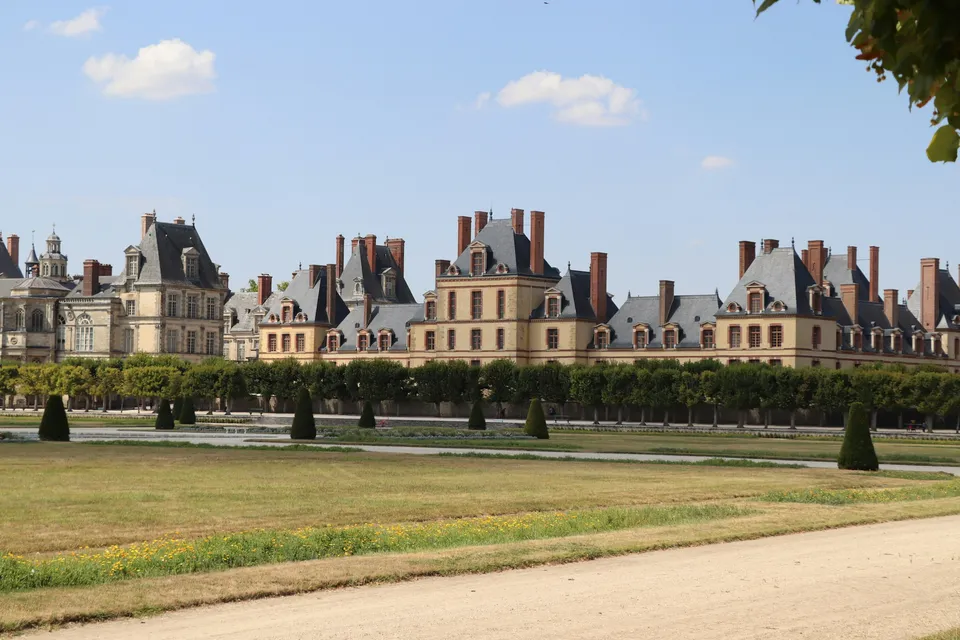
Capital: Paris. Population: 12,463,067 (INSEE, 2023). Area: 12,012 km², 8 departments.
Île-de-France is Paris and the seven departments around it, and its official tourism board, Visit Paris Region, sells it as monuments, shows, food, and “parks, gardens and forests”. Inside Paris, its top ten for a first trip runs from the Eiffel Tower and the Louvre to the Musée d’Orsay, the Arc de Triomphe, Notre-Dame, the Sainte-Chapelle and the Palais Garnier. Around Paris, its list starts with Versailles, 30 minutes west of Paris, and Disneyland Paris, 40 minutes from the center by the RER A, then the Château de Fontainebleau, lived in for more than eight centuries, and the medieval town of Provins, nearly 100 km from the capital.
- On UNESCO’s list: the Palace and Park of Versailles (1979), the Palace and Park of Fontainebleau (1981), Paris, Banks of the Seine (1991), from the Louvre to the Eiffel Tower, and Provins, Town of Medieval Fairs (2001).
- Also worth the trip: the Château de Vaux-le-Vicomte, which the board calls the château that inspired Versailles; the Basilica of Saint-Denis, burial place of the kings and queens of France, with more than 70 medieval recumbent effigies; the Château de Vincennes, whose keep, more than 50 meters high, the board calls the highest medieval keep in Europe; and the Saint-Ouen flea market, nearly 2,000 merchants in 11 markets since 1870.
- Food: Brie, from Meaux and Melun in the Seine-et-Marne, east of Paris, and button mushrooms, still called “Paris mushrooms”.
Our guides to the things to do in Paris, the best museums in Paris and the best time to visit Paris cover the city, and the best day trips from Paris give the trains, prices and hours for Versailles, Fontainebleau and Provins. For a longer stay, see our guides to renting in Paris and the cost of living in Paris.
Hauts-de-France
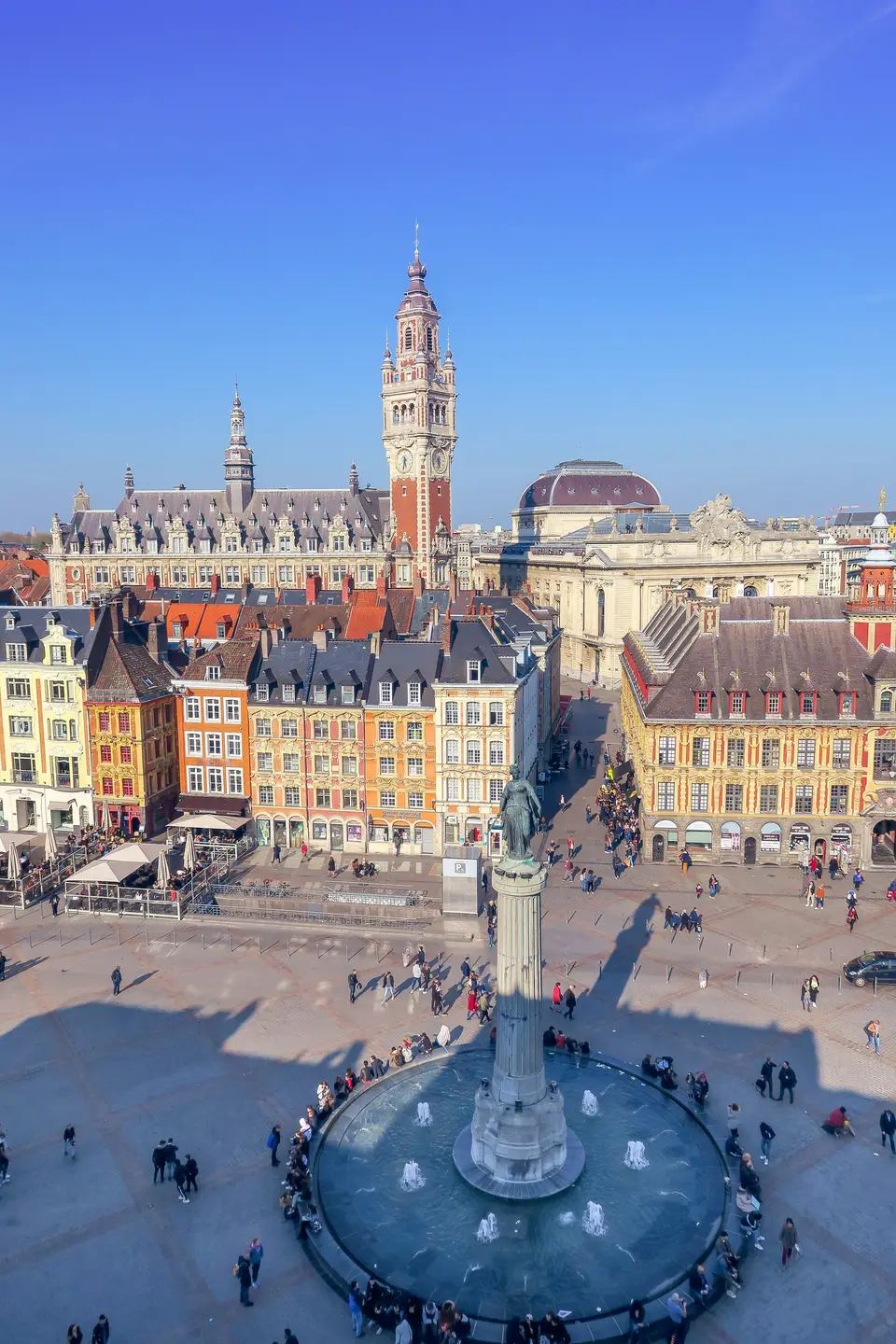
Capital: Lille, 55 minutes from Paris on the fastest trains (27 trains a day in all, from Gare du Nord or Charles de Gaulle airport). Population: 5,992,194 (INSEE, 2023). Area: 31,806 km², 5 departments.
The region at the top of the map, between Paris, the Channel and Belgium, has a coast of its own: its tourism board counts 200 km of coastline, from the Opal Coast between Calais and Le Touquet to the Baie de Somme, and the region was European Region of Gastronomy in 2023. Its history is in its Gothic cathedrals (Amiens, Laon, Noyon, Senlis, Soissons, Beauvais), in the belfries of its towns, and in its memorials, such as Vimy and Notre-Dame de Lorette.
- On UNESCO’s list: Amiens Cathedral (1981), “one of the largest ‘classic’ Gothic churches of the 13th century” for UNESCO; the belfries of northern France, 23 of them added in 2005 to the Belfries of Belgium and France; and the Nord-Pas de Calais Mining Basin (2012), 109 sites over 120,000 hectares.
- Best-known places: Lille, Arras, Amiens and its floating gardens (the Hortillonnages), Chantilly and its château, the Château de Pierrefonds, the Baie de Somme, and Parc Astérix at Plailly.
- Food and drink: beer, Maroilles cheese, fries, waffles, mussels, and the champagne of the Aisne.
The château of Chantilly and its train from Gare du Nord are in our guide to the best day trips from Paris.
Normandy (Normandie)
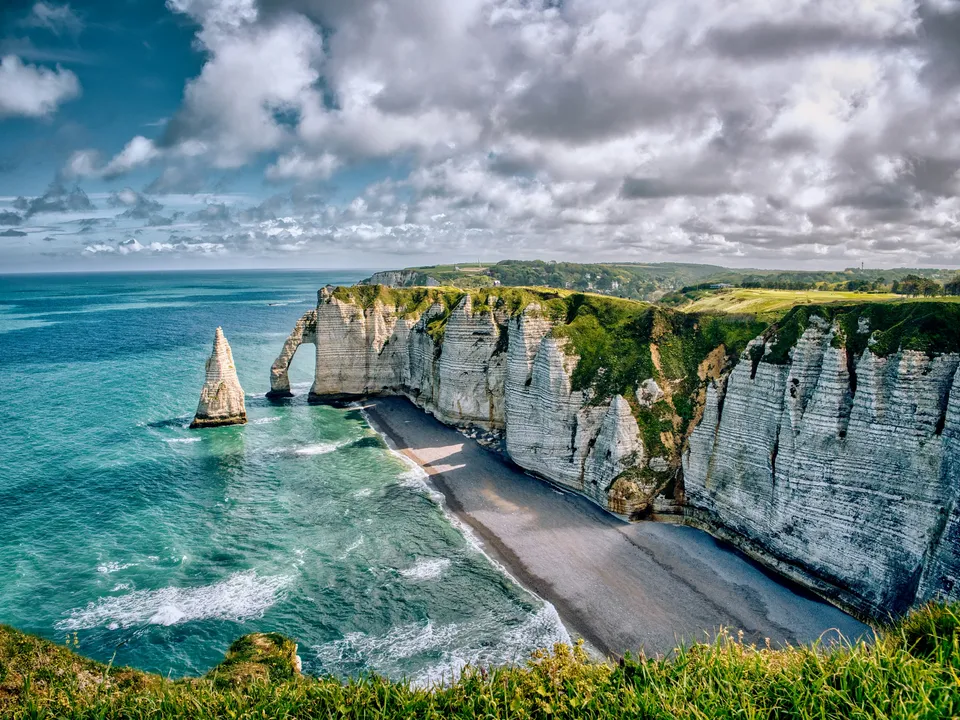
Capital: Rouen, 1 h 13 from Paris Saint-Lazare on the fastest trains (33 trains a day in all); Caen, where the Région has its seat, is 1 h 54. Population: 3,345,842 (INSEE, 2023). Area: 29,875 km², 5 departments.
Normandy’s tourism board names the places “for which our region is world-famous”: Étretat and its cliffs, Honfleur, Bayeux, Giverny and Mont-Saint-Michel. Its history runs from the Viking settlers who gave it its name (“Norman” comes from “Norseman”) to the Norman Conquest of England in 1066 and the landings of June 6, 1944. In 2027 it celebrates the millennium of the birth of William the Conqueror, born in Falaise in 1027, with more than 1,000 events in the region and around Europe, the board says.
- On UNESCO’s list: Mont-Saint-Michel and its Bay (1979), a Gothic Benedictine abbey on a rocky islet “between Normandy and Brittany”, in UNESCO’s words; Le Havre, rebuilt by Auguste Perret from 1945 to 1964 (2005); and, since 2026, the Beaches of the D-Day Landings, Normandy, 1944: Utah, Omaha, Gold, Juno and Sword beaches and the Pointe du Hoc, about 80 km of coast.
- The coast: the Alabaster Coast runs for 130 km from Le Tréport to Le Havre, with Étretat, Fécamp and Dieppe; the board’s other seaside towns include Honfleur, Deauville, Trouville, Cabourg, Arromanches, Cherbourg and Granville.
- Food and drink: AOP cheeses such as Camembert de Normandie, Livarot, Neufchâtel and Pont-l’Évêque, scallops (Normandy is France’s leading producer, the board says), oysters, cider, pommeau and Calvados.
Giverny, Rouen, Mont-Saint-Michel and the D-Day beaches by train are in our guide to the best day trips from Paris.
Brittany (Bretagne)
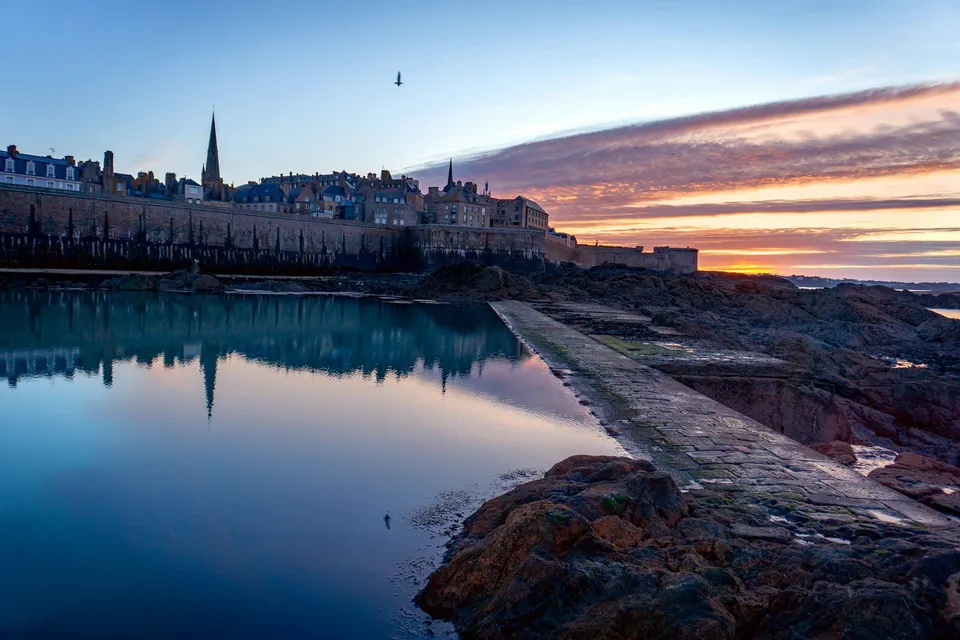
Capital: Rennes, 1 h 25 from Paris on the fastest trains (23 trains a day in all, from Montparnasse or Austerlitz). Population: 3,449,370 (INSEE, 2023). Area: 27,208 km², 4 departments.
Brittany is the peninsula at the western tip of France, and its tourism board sells it as the sea air and the footpaths: the GR 34 coastal path runs for more than 2,000 km along its coast, from Mont-Saint-Michel to the bridge of Saint-Nazaire. On the Emerald Coast, between Mont-Saint-Michel and Saint-Malo, the tides are among the highest in Europe.
- On UNESCO’s list: the Megaliths of Carnac and of the shores of Morbihan, since 2025. The board counts 3,000 standing stones in the moors of Carnac, in lines about 1 km long; UNESCO dates the megaliths to the Neolithic, about 5000 to 2300 BCE.
- The board’s iconic places: the Pink Granite Coast north of Lannion, the Gulf of Morbihan (“little sea” in Breton), the Pointe du Raz in Finistère, Brocéliande forest and its legend of King Arthur, Dinan and its nearly 3 km of ramparts, the walled town of Concarneau, Pont-Aven and the painters of Gauguin’s school, the Quiberon peninsula and the Crozon peninsula; among its main towns, Saint-Malo inside its ramparts.
- Food and drink: crêpes and buckwheat galettes, oysters and scallops, kouign-amann from Douarnenez, salted butter caramel, strawberries from Plougastel, cider, and buckwheat whisky.
Nantes, the board reminds visitors, was the capital of Brittany for hundreds of years, but it is now the capital of the Pays de la Loire.
Pays de la Loire
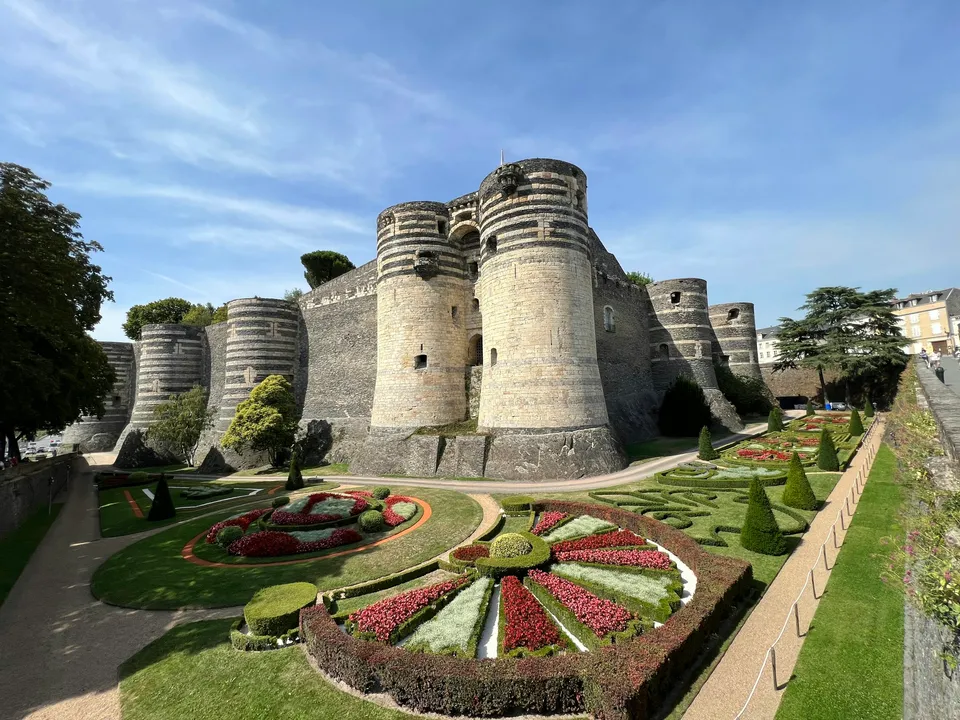
Capital: Nantes, 1 h 57 from Paris on the fastest trains (23 trains a day in all, from Montparnasse or Austerlitz). Population: 3,907,156 (INSEE, 2023). Area: 32,082 km², 5 departments.
The Pays de la Loire is the lower Loire and the Atlantic coast, which its tourism board markets in English as the “Atlantic Loire Valley”: the beaches of the Vendée and La Baule, fishing ports and islands such as Noirmoutier, then the châteaux of the Loire around Saumur and Angers. The UNESCO listing of the Loire Valley, from Sully-sur-Loire to Chalonnes, ends in this region.
- The board’s must-sees: the Abbey of Fontevraud near Saumur, founded in 1101, where the recumbent statues of Henry II and Eleanor of Aquitaine lie in the abbey church; the Machines de l’île in Nantes and their 12-meter-high elephant; the Puy du Fou theme park; and the 24 Hours of Le Mans.
- Châteaux: Angers and its 13th-century fortress, Saumur, Brissac, Montsoreau, Brézé, and the Château des Ducs de Bretagne in Nantes, once home to Anne of Brittany.
- Food and drink: the wines of the Nantes vineyards, Anjou and Saumur (with sparkling wine houses in the tuffeau cellars of Saumur), seafood, and the sea salt harvested on the coasts of the Loire-Atlantique and the Vendée since Gallo-Roman times.
Centre-Val de Loire
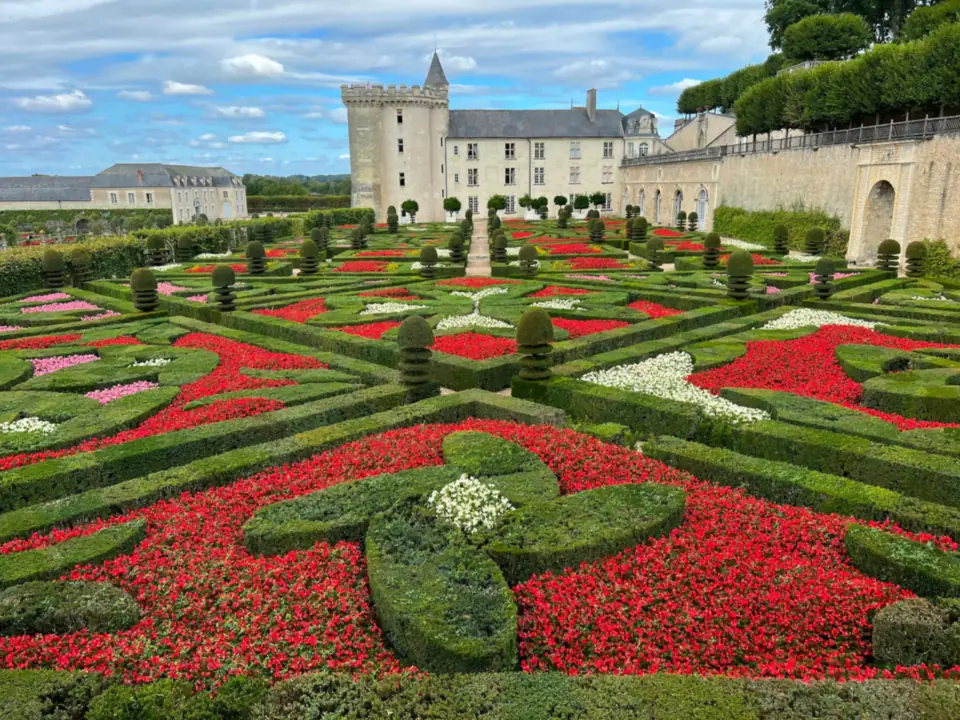
Capital: Orléans, 56 minutes from Paris on the fastest trains (32 trains a day in all, from Austerlitz or Montparnasse, to Orléans or Les Aubrais); Tours, or Saint-Pierre-des-Corps next to it, is 51 minutes away. Population: 2,587,031 (INSEE, 2023). Area: 39,151 km², 6 departments.
This is the region of the Loire châteaux. Its tourism board sells it as the “Loire Valley”, “just an hour from Paris”, and counts 15 architectural masterpieces in the collection of the Loire Valley Châteaux. Its château pages lead with Chambord, Chenonceau spanning the Cher, the royal château of Amboise, the royal château of Blois, home to 7 kings and 10 queens of France, Chaumont-sur-Loire, Villandry and its Renaissance gardens, Cheverny, Azay-le-Rideau, Chinon, where Joan of Arc met Charles VII, and Loches.
- On UNESCO’s list: the Loire Valley between Sully-sur-Loire and Chalonnes (2000), Chartres Cathedral (1979), “the high point of French Gothic art” for UNESCO, and Bourges Cathedral (1992).
- Towns: Orléans, Blois, Amboise, Tours, Chartres and Bourges.
- Food and wine: the board calls the region “the Garden of France”: asparagus, strawberries, goat’s cheese such as Sainte-Maure-de-Touraine, tarte Tatin, rillettes from Tours, and wines from Sancerre, Vouvray and Chinon among nearly 25 appellations.
Chambord, Chenonceau and Chartres are in our guide to the best day trips from Paris.
Grand Est
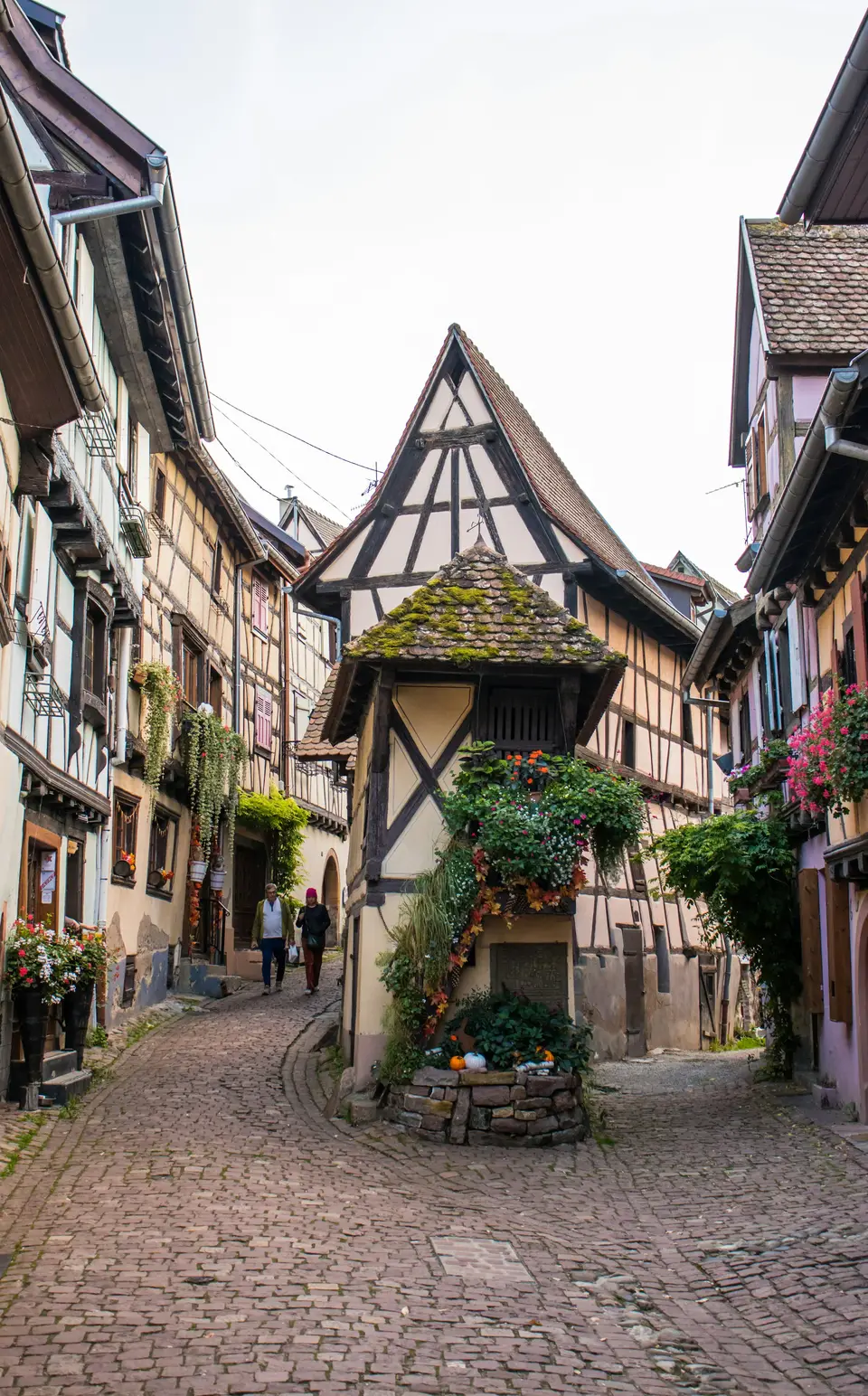
Capital: Strasbourg, 1 h 44 from Paris Gare de l’Est on the fastest trains (23 trains a day in all). Population: 5,563,378 (INSEE, 2023). Area: 57,441 km², 10 departments.
Grand Est joins five destinations, as its tourism board puts it, Alsace, the Ardennes, Champagne, Lorraine and the Vosges, and the board calls it France’s leading region for wine tourism (the Nouvelle-Aquitaine board says the same of its own region). In Alsace, the Alsace Wine Route runs for 170 km through wine villages; in Champagne, six marked routes, 600 km in all, run through the vineyards, the board says. In winter the board leads with its Christmas markets, in Strasbourg, Colmar, Mulhouse, Riquewihr and Obernai.
- On UNESCO’s list: Strasbourg, Grande-Île (1988) and the Neustadt (2017); the cathedral, the former Abbey of Saint-Rémi and the Palace of Tau in Reims (1991); Champagne Hillsides, Houses and Cellars (2015), with the vineyards of Hautvillers and Aÿ and the Avenue de Champagne in Épernay; and Place Stanislas in Nancy (1983).
- Towns: Strasbourg, seat of the European Parliament; Colmar; Reims, its cathedral and its champagne houses; Épernay; Nancy and its Art Nouveau; Metz and the Centre Pompidou-Metz; Verdun.
- Food and drink: champagne and Alsace wines, flammekueche, quiche Lorraine, mirabelle plums from Lorraine and the pink biscuits of Reims. The board counts 51 Michelin-starred restaurants.
Reims and its champagne houses are in our guide to the best day trips from Paris.
Bourgogne-Franche-Comté
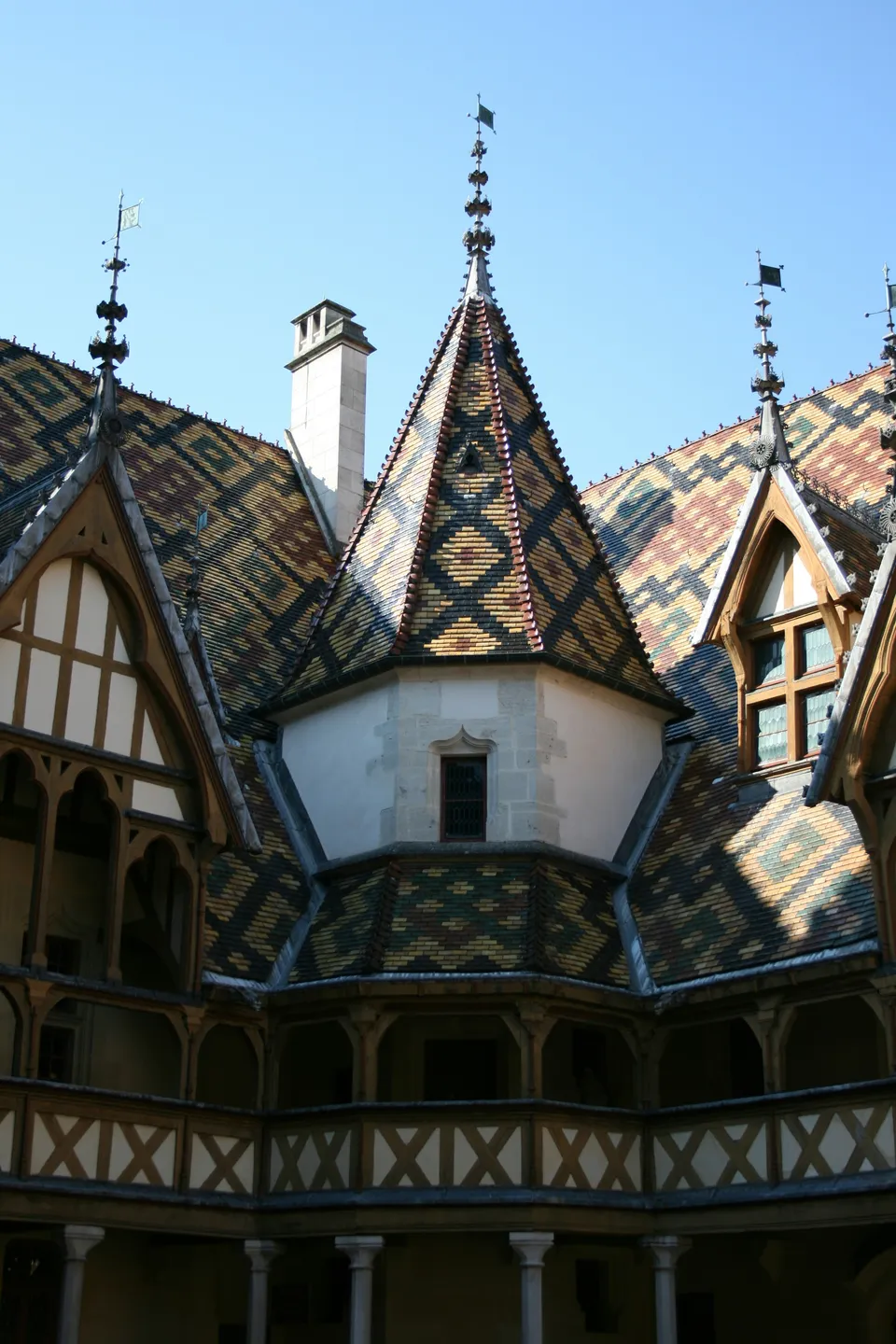
Capital: Dijon, 1 h 32 from Paris on the fastest trains (20 trains a day in all, from Gare de Lyon or Bercy); Besançon, home of the hôtel de Région, is 2 h 27. Population: 2,802,670 (INSEE, 2023). Area: 47,783 km², 8 departments.
Burgundy is wine country, rivers and Romanesque abbeys: its tourism board counts more than 1,000 km of canals and rivers, and the Route des Grands Crus runs past estates for more than 60 km. Franche-Comté, to the east, takes in the Jura and its vineyards. The regional board counts 9 UNESCO sites in the region, 4 of them in Burgundy.
- On UNESCO’s list: the Climats, terroirs of Burgundy (2015), on the slopes of the Côte de Nuits and the Côte de Beaune south of Dijon, more than 1,200 vineyard plots on a strip 60 km long and 3 km wide, the board says; Vézelay, Church and Hill (1979); the Cistercian Abbey of Fontenay (1981), founded by St. Bernard in 1119; the Royal Saltworks of Arc-et-Senans and the Great Saltworks of Salins-les-Bains (1982, boundaries extended in 2009); and the citadel of Besançon, among the Fortifications of Vauban (2008).
- Best-known places: Dijon and its Cité Internationale du Vin et de la Gastronomie, the Hospices de Beaune, the Château du Clos de Vougeot, the medieval building site of Guédelon, the Rock of Solutré, the Morvan, and Le Corbusier’s chapel at Ronchamp.
- Food and wine: Burgundy wines from Chablis to the Mâconnais, Jura wines around Arbois, mustard, snails, beef bourguignon, oeufs en meurette and pain d’épices.
Nouvelle-Aquitaine
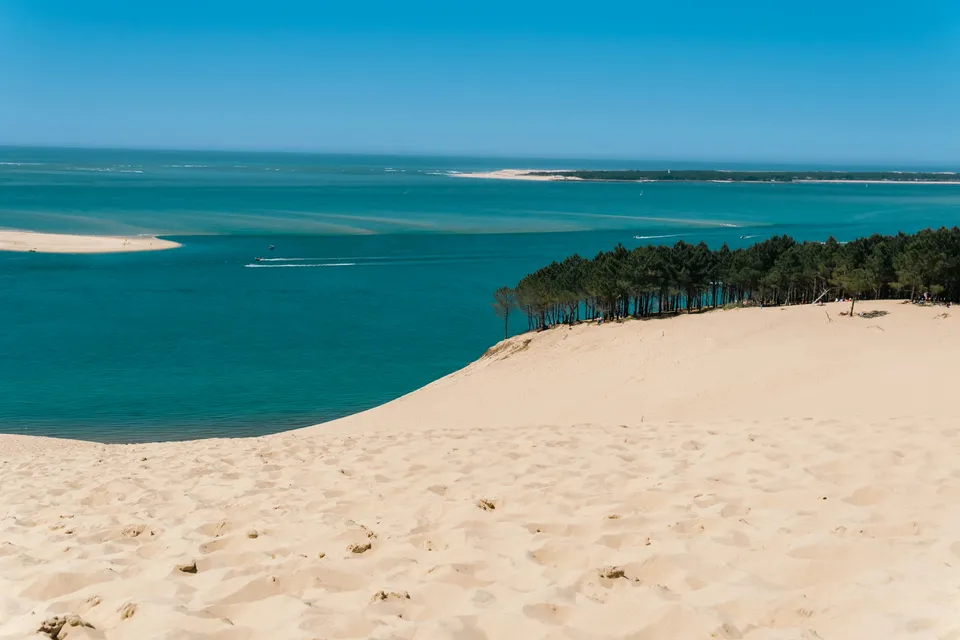
Capital: Bordeaux, 2 h 03 from Paris on the fastest trains (29 trains a day in all, from Montparnasse, Massy or Austerlitz). Population: 6,150,451 (INSEE, 2023). Area: 84,036 km², 12 departments.
Nouvelle-Aquitaine, “southwest France’s largest region” in its tourism board’s words, stretches from the Atlantic coast to the Pyrenees, and the board divides it into eight destinations: Bordeaux, Biarritz and the Basque Country, the Atlantic Coast, Cognac, Limoges, Poitiers with the Futuroscope and the Marais Poitevin, the Pyrenees around Pau, and the Dordogne Valley. It counts 16 UNESCO World Heritage sites in the region.
- On UNESCO’s list: Bordeaux, Port of the Moon (2007); the Jurisdiction of Saint-Émilion (1999); the Prehistoric Sites and Decorated Caves of the Vézère Valley (1979), with Lascaux; and the Cordouan Lighthouse at the mouth of the Gironde (2021).
- Best-known places: Bordeaux and the Cité du Vin, Arcachon Bay and the Dune du Pilat, an hour from Bordeaux by train, the islands of Ré, Oléron and Aix, La Rochelle, Biarritz and Saint-Jean-de-Luz, Cognac and its houses, and the Dordogne, where the board counts 661 castles and 10 “Most Beautiful Villages of France”, among them La Roque-Gageac and Domme.
- Food and drink: Bordeaux wines, cognac, oysters from the Arcachon basin, canelés, Périgord walnuts, black truffles and foie gras, and Espelette pepper in the Basque Country.
For a longer stay, see our guide to renting in Bordeaux.
Occitanie
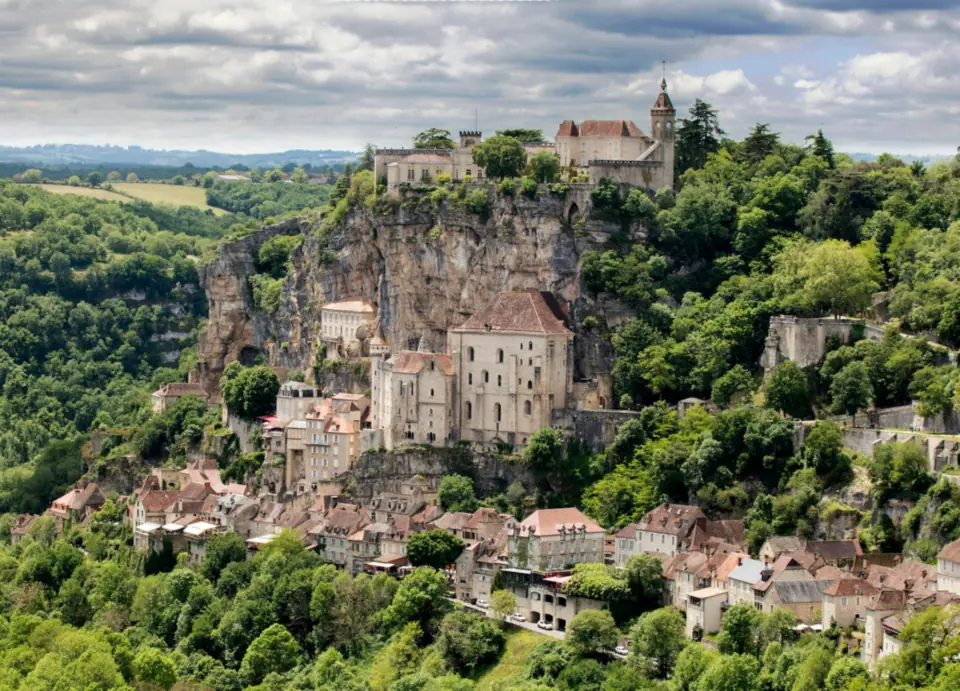
Capital: Toulouse, 5 h 39 from Paris on the fastest trains (17 trains a day in all; SNCF Connect says the journey may involve a change); Montpellier, the region’s other big city, is 3 h 12 away (from Gare de Lyon or Marne-la-Vallée). Population: 6,124,653 (INSEE, 2023). Area: 72,724 km², 13 departments.
Occitanie was formed in 2016 from Midi-Pyrénées and Languedoc-Roussillon, and its tourism board sums it up as the sea, the mountains, two big cities and the countryside: more than 200 km of Mediterranean beaches from Le Grau-du-Roi to Banyuls-sur-Mer, the Pyrenees along the Spanish border, and the high plateaus of the Massif Central. It labels 41 “Grands Sites Occitanie”, among them Carcassonne, Rocamadour, the Pic du Midi, the Gorges du Tarn, Sète, Collioure, Lourdes and Conques.
- On UNESCO’s list: the Historic Fortified City of Carcassonne (1997), and since 2026 the Royal Capetian Fortresses of Languedoc, eight sites: the castle and ramparts of Carcassonne and the fortresses of Aguilar, Lastours, Montségur, Peyrepertuse, Puilaurens, Quéribus and Termes; the Pont du Gard (1985), the bridge of a Roman aqueduct, almost 50 meters high; the Canal du Midi (1996), which UNESCO describes as a 360-km network of waterways linking the Mediterranean and the Atlantic, built from 1667 to 1694; the Episcopal City of Albi (2010); and the Maison Carrée of Nîmes (2023).
- Cities: Toulouse, which the board calls the European capital of aeronautics and space; Montpellier; Nîmes and its Roman arena; Perpignan.
- Food and wine: cassoulet from Castelnaudary, Carcassonne or Toulouse, Roquefort cheese, aligot in the Aubrac, foie gras from the Gers, oysters from Bouzigues, and wines from Corbières, Côtes du Roussillon, Cahors and Gaillac.
For a longer stay, see our guides to renting in Toulouse and renting in Montpellier, and our guide to the South of France for the Mediterranean side.
Auvergne-Rhône-Alpes
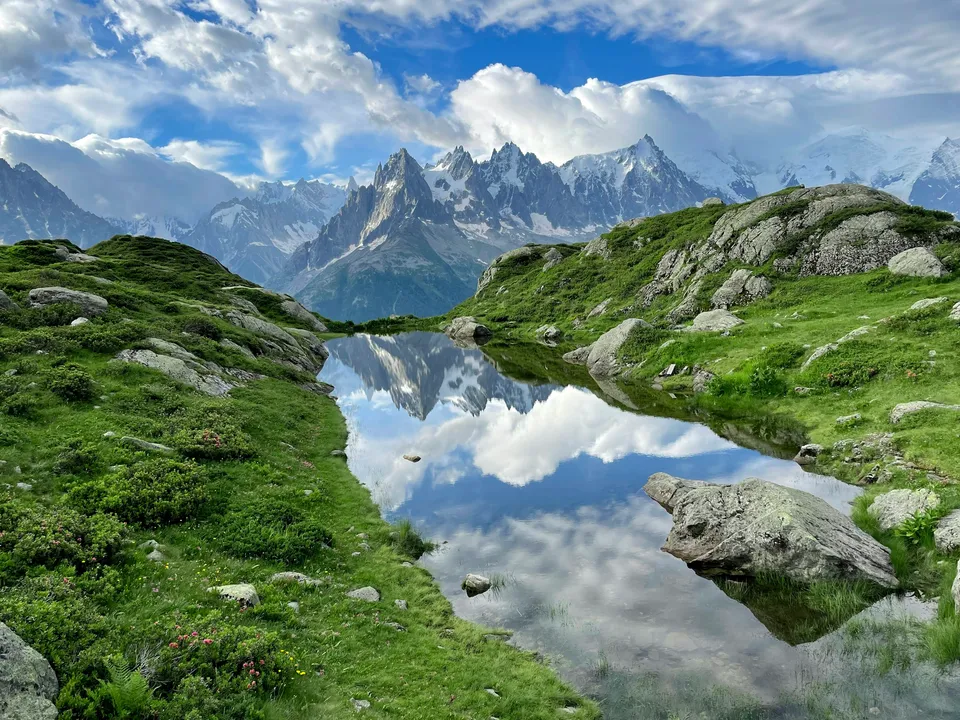
Capital: Lyon, 1 h 43 from Paris on the fastest trains (32 trains a day in all, from Gare de Lyon, Bercy or Marne-la-Vallée). Population: 8,205,557 (INSEE, 2023). Area: 69,711 km², 12 departments.
Its tourism board’s destinations include Lyon, “the capital of gastronomy”; the Alps and Mont Blanc, 4,810 meters, which the board calls the highest summit in Europe, above Chamonix; the Drôme and the Ardèche, “reminiscent of Provence”; and Auvergne and its volcanoes. Its Grand Tour, a 3,000 km road trip, links 43 must-see sites, from Lake Annecy and the Gorges de l’Ardèche to the Puy de Dôme, Vichy, Le Puy-en-Velay and Grenoble.
- On UNESCO’s list: the Historic Site of Lyon (1998), founded by the Romans as the capital of the Three Gauls; the Chaîne des Puys and the Limagne fault (2018), the volcanoes of Auvergne (80 of them, the board says); and the Decorated Cave of Pont d’Arc, known as Grotte Chauvet-Pont d’Arc, Ardèche (2014), with the earliest known figurative drawings in the world, in UNESCO’s words.
- Best-known places: Lyon, between the Rhône and the Saône; Chamonix, the capital of mountaineering; Lake Annecy, with the old town and canals of Annecy (our guide to Annecy covers them, with the lake’s beaches and cruises); the Gorges de l’Ardèche, nearly 30 km of canyon with the Pont d’Arc; the Puy de Dôme, 1,465 meters, reached in 15 minutes by cog railway; and the national parks of the Vanoise and the Écrins.
- Food and wine: the bouchons of Lyon (saucisson lyonnais, quenelle de brochet, praline tart), Beaujolais wines, and the Vallée de la Gastronomie, a 620 km gourmet route.
For a longer stay, see our guide to renting in Lyon.
Provence-Alpes-Côte d’Azur
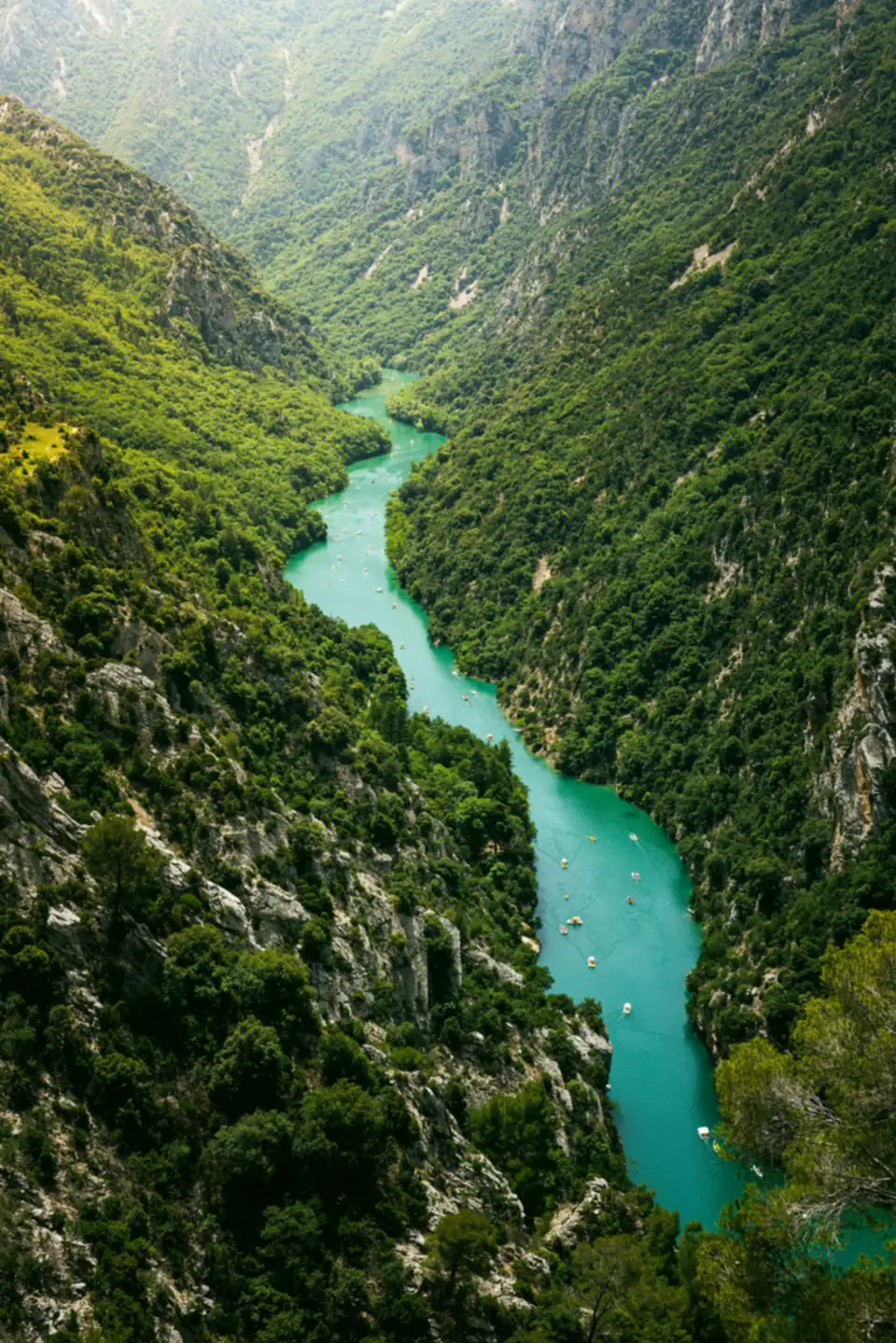
Capital: Marseille, 3 h 03 from Paris on the fastest trains (26 trains a day in all, from Gare de Lyon, Marne-la-Vallée or Austerlitz). Population: 5,218,960 (INSEE, 2023). Area: 31,400 km², 6 departments.
Its tourism board calls it three destinations in one: Provence, the Alps and the Côte d’Azur, with 700 km of Mediterranean coastline and 4 national parks, from the seabed to the summits of the Écrins, some above 4,000 meters. The Côte d’Azur runs from Saint-Tropez to Menton, as the board’s home page puts it; Provence, in its words, is roads lined with olive trees and lavender fields, with flower-filled villages such as Gordes, Lourmarin and Seillans.
- On UNESCO’s list: the Historic Centre of Avignon, with the Palais des Papes and the Avignon bridge (1995); Arles, Roman and Romanesque Monuments (1981); the Roman Theatre and the “Triumphal Arch” of Orange (1981); and Nice, Winter Resort Town of the Riviera (2021).
- Best-known places: Marseille and the Mucem, the Calanques, the Camargue and its flamingos, Les Baux-de-Provence, Saint-Tropez, Cannes, Nice and Menton, and the Verdon Canyon in the Verdon regional park.
- Food and wine: bouillabaisse in Marseille, Provence rosé (the board calls Vins de Provence AOP France’s leading producer of rosé, with about 6 percent of world production), Châteauneuf-du-Pape, Bandol and Gigondas, truffles and lavender honey.
Our guide to the South of France takes the region town by town, with Nice, Èze and Menton in their own guides, and our best places to live in the South of France compare the region with Occitanie for a longer stay. For Provence itself, area by area from the Luberon villages to the Verdon and the lavender plateaux, see our Provence guide.
Corsica (Corse)
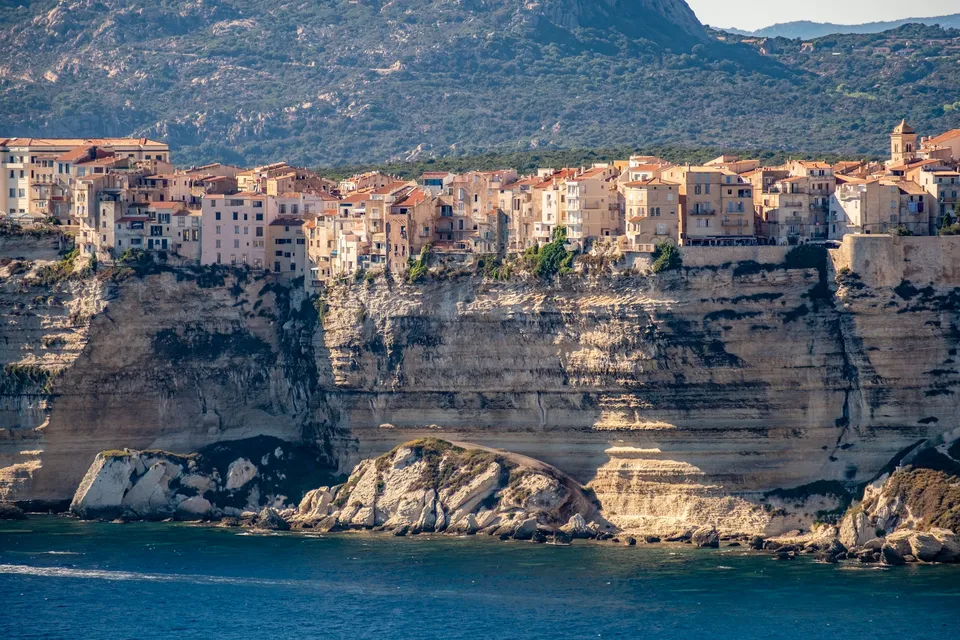
Capital: Ajaccio. Population: 355,486 (INSEE, 2023). Area: 8,680 km², 2 departments.
Corsica is the island 170 km off the French coast in the Mediterranean, 80 km from Italy. Its tourism board calls it the island of superlatives: more than 1,000 km of coastline, mountains at its center, and the GR 20, the hiking trail that crosses it from north to south. Since January 1, 2018, the island has been run by the Collectivité de Corse, a single authority with a status of its own.
- On UNESCO’s list: the Gulf of Porto, with the Calanche of Piana, the Gulf of Girolata and the Scandola Reserve (1983).
- Best-known places: Bonifacio and its fortifications, the Lavezzi islands, the Agriates coast, Ajaccio and the Sanguinaires islands at sunset, Porto and Scandola, the citadel of Calvi, the baroque churches of Bastia and the menhirs of Filitosa.
- Food and wine: charcuterie such as figatelli, brocciu cheese, chestnut flour, citrus fruit, and Patrimonio wine, from vineyards the board says are more than 2,000 years old.
- Getting there: there is no train from the mainland. The island has four airports (Ajaccio, Bastia, Calvi and Figari), with year-round flights from Paris Orly to Ajaccio, Bastia and Calvi on Air Corsica and Air France, as the board lists them for the 2025 season, and ferries from Marseille, Toulon and Nice all year (and from Sète in season).
The Five Overseas Regions
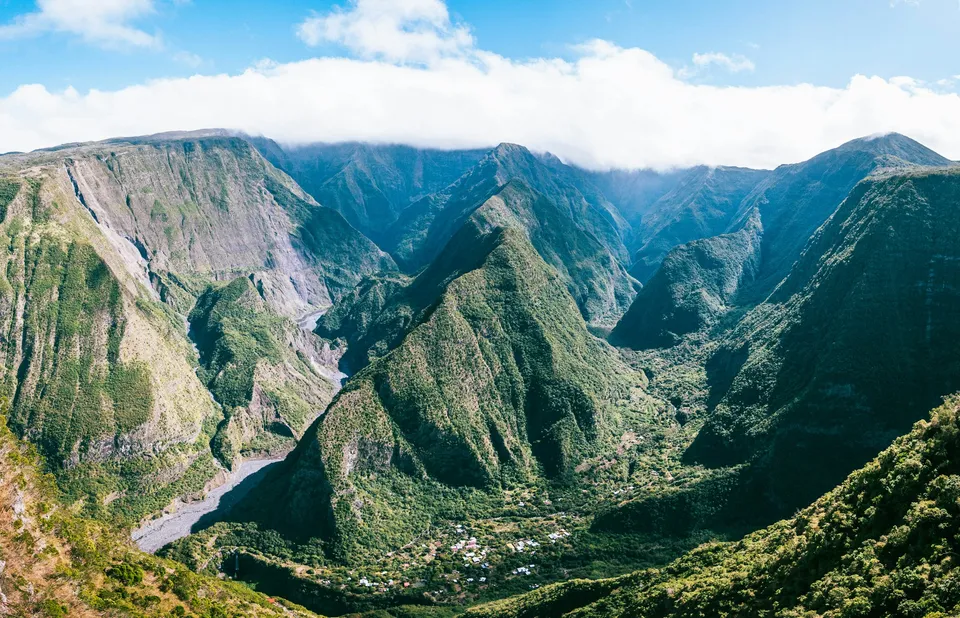
The overseas regions are as much regions of France as Normandy or Brittany, but they lie in the Caribbean, in South America and in the Indian Ocean, and none of them is in the Schengen area, France-Visas notes.
| Overseas region | Capital | Population | Area | Known for | From Paris |
|---|---|---|---|---|---|
| Guadeloupe | Basse-Terre | 384,160 | 1,628 km² | Six islands, La Soufrière volcano, beaches, rum | About 8 hours direct |
| Martinique | Fort-de-France | 360,630 | 1,128 km² | Mount Pelée, Les Salines beach, rhum agricole | By air |
| French Guiana | Cayenne | 293,996 | 83,534 km² | The Amazon forest, the Guiana Space Centre, the Îles du Salut | Direct flights from Charles de Gaulle and Orly |
| La Réunion | Saint-Denis | 889,679 | 2,504 km² | Volcanoes, cirques, lagoons | About 11 hours direct |
| Mayotte | Mamoudzou | 323,153 (2026 census) | Not in the series | Its 1,100 km² lagoon, lemurs, ylang-ylang | Direct from mainland France, or via La Réunion |
Source: INSEE for capitals, populations (2023) and areas, read on November 25, 2026. For Mayotte, INSEE publishes the 2026 census, which a decree is to authenticate at the end of 2026; its area series covers France without Mayotte. Flight times from the tourism boards of Guadeloupe and La Réunion; the other three give none.
Guadeloupe
An archipelago of six main islands in the Caribbean, as the tourism board’s islands page counts them: Basse-Terre and Grande-Terre, which form the “butterfly” shape of Guadeloupe and are joined by two bridges, then Marie-Galante, La Désirade and the two islands of Les Saintes, Terre-de-Haut and Terre-de-Bas. Basse-Terre holds the Guadeloupe National Park, created in 1989, and La Soufrière, 1,467 meters, which the board calls the highest peak in the Lesser Antilles; Grande-Terre has golden beaches and turquoise lagoons. The board’s natural wonders also include the Carbet Falls, the mangrove and the Pointe des Châteaux. Rum comes from distilleries on Grande-Terre, Marie-Galante and Basse-Terre. A direct flight from Paris takes about 8 hours, to the Maryse Condé airport at Les Abymes.
Martinique
The “island of flowers” (Madinina) lies between the Caribbean Sea and the Atlantic. In the north, the volcanoes and forests of Mount Pelée and the Pitons of Northern Martinique have been on UNESCO’s list since 2023; Mount Pelée, 1,397 meters, destroyed the former capital, Saint-Pierre, on May 8, 1902. The board calls the beach of Les Salines a must, among no fewer than a hundred beaches around the island. Martinique rum, made from fresh cane juice, has had its AOC since 1996, and the board counts some 15 distilleries.
French Guiana (Guyane)
French Guiana is in South America, and at 83,534 km² it is the second-largest region of France after Nouvelle-Aquitaine, according to INSEE. The Amazon forest covers 90 percent of it, according to its tourism board. Its best-known sites are the Guiana Space Centre at Kourou, where Ariane and Vega rockets are launched (the guided visit is free but must be booked at least 48 hours ahead), the Îles du Salut and the former penal colony of Devil’s Island, the Kaw marshes and their caimans, and the beaches of Awala-Yalimapo, where hundreds of sea turtles come ashore to lay their eggs from May to July. Air France flies daily from Paris Charles de Gaulle, and Air Caraïbes about five times a week from Orly.
La Réunion
A volcanic island in the Indian Ocean, 2,500 km² in its tourism board’s words, whose Pitons, cirques and remparts, more than 100,000 hectares or 40 percent of the island in UNESCO’s words, have been on its list since 2010. The Piton des Neiges, 3,070 meters, is its highest point; the Piton de la Fournaise, the most visited site on the island, is one of the most active volcanoes in the world. The three cirques are Cilaos, Salazie and Mafate, which can only be reached on foot, and the west and south coasts have 35 km of sandy beaches behind coral reefs. Flights from Paris take about 11 hours, the board says.
Mayotte
Mayotte lies in the Mozambique Channel, in the Indian Ocean, and its culture blends Malagasy, French and Comorian influences, its tourism board says. It has two main islands, Grande-Terre and Petite-Terre, where the airport is, linked by a ferry. The board’s lagoon page gives it 1,100 km², for diving and snorkeling; it also names the Choizil islets and the green Lake Dziani on Petite-Terre, where swimming is impossible, it warns, because the water is alkaline and corrosive. The island is also known for its lemurs (makis) and for ylang-ylang, which the board calls its yellow gold. Flights run from mainland France direct or with a stop in La Réunion. The board’s site shows no news since 2022, before cyclone Chido, which led INSEE to postpone its 2025 census on the island: check what is open before you book.
Entry Rules for Americans
None of the five is in the Schengen area, and a Schengen visa does not give entry, France-Visas states. For a US passport holder, the French orders that govern entry exempt Americans from a visa for stays of up to 90 days in any 180-day period: an order of July 26, 2011 for Guadeloupe, French Guiana, Martinique and La Réunion, and an order of February 4, 2015 for Mayotte. The exemption does not cover paid work that needs a work permit you cannot show at the border. The 2011 order also asks for a passport valid at least three months beyond your planned departure, with at least two blank pages, issued less than 10 years ago.
Which Region for Which Trip
- A first trip: Île-de-France for Paris, with Normandy and the Loire châteaux for day trips by train: Rouen is 1 h 13 away on the fastest trains, and Tours, or Saint-Pierre-des-Corps next to it, 51 minutes.
- Wine: Grand Est for Champagne and the Alsace Wine Route, Bourgogne-Franche-Comté for the Climats of Burgundy, Nouvelle-Aquitaine for Bordeaux, Saint-Émilion and Cognac, Centre-Val de Loire and Pays de la Loire for the Loire wines.
- Beaches: Provence-Alpes-Côte d’Azur, Occitanie and Corsica on the Mediterranean, Nouvelle-Aquitaine and the Pays de la Loire on the Atlantic, Brittany and Normandy for cliffs, coves and big tides.
- Mountains: Auvergne-Rhône-Alpes for Mont Blanc and the Alps, Occitanie and Nouvelle-Aquitaine for the Pyrenees, Corsica for the GR 20.
- History: Normandy for the D-Day beaches, Hauts-de-France for the memorials of Vimy and Notre-Dame de Lorette, Occitanie for Carcassonne and the royal fortresses of Languedoc, Provence for Roman Arles and Orange, the Dordogne for prehistory.
- Food: Lyon and its bouchons, Burgundy, the Périgord, Brittany for crêpes and seafood, Normandy for cheese and cider.
- Somewhere further: the Caribbean in Guadeloupe and Martinique, the Amazon and the space center in French Guiana, volcanoes and cirques in La Réunion.
Our guide to the best places to visit in France picks the places themselves, region by region, and our guide to French public holidays gives the 2027 holidays, including the two extra days of Alsace-Moselle and the abolition of slavery days of the overseas regions, with the school holidays of each zone.
Staying Longer in a Region
A season in Provence or a winter in Brittany is a stay of months, and the rules change once you stay beyond a holiday. As a visitor from a visa-exempt country such as the US, the UK, Canada or Australia, you can usually stay a maximum of 90 days within any 180-day period, according to the European Commission: our guide to how long Americans can stay in France without a visa explains the count, and a long-stay visa or an EU residence permit takes you out of the 90/180-day rule, the Commission adds. To choose a base, our guide to where to live in France compares Paris, Lyon, Bordeaux, Marseille and Montpellier, and our renting guides cover Paris, Lyon, Bordeaux, Marseille, Montpellier and Nice.
Finding a furnished home for a season, calling agencies and owners, opening a bank account and setting up internet is the kind of work our Personal Assistant handles, in French: the calls, the forms and the apartment search.
FAQ
How many regions are there in France?
18: 13 in metropolitan France, Corsica included, and 5 overseas (Guadeloupe, Martinique, French Guiana, La Réunion and Mayotte), according to INSEE. Together they are divided into 101 departments.
What are the 13 regions of France called?
Auvergne-Rhône-Alpes, Bourgogne-Franche-Comté, Brittany (Bretagne), Centre-Val de Loire, Corsica (Corse), Grand Est, Hauts-de-France, Île-de-France, Normandy (Normandie), Nouvelle-Aquitaine, Occitanie, Pays de la Loire and Provence-Alpes-Côte d’Azur. Add the five overseas regions, Guadeloupe, Martinique, French Guiana, La Réunion and Mayotte, and you have the 18 regions of France.
Are there still 22 regions in France?
No. Metropolitan France had 22 regions until December 31, 2015; the law of January 16, 2015 merged them into 13 from January 1, 2016, and with the five overseas regions France has 18. Former regions such as Alsace, Aquitaine, Picardie or Midi-Pyrénées are now parts of Grand Est, Nouvelle-Aquitaine, Hauts-de-France and Occitanie.
What is the largest region of France?
Nouvelle-Aquitaine, with 84,036 km² (about 32,400 square miles), according to INSEE, just ahead of French Guiana (83,534 km²), the largest overseas region. The most populous is Île-de-France, with 12,463,067 residents on January 1, 2023, and the smallest region of metropolitan France, by area and by population, is Corsica.
What is the best region of France to visit?
It depends on the trip. For a first visit, Île-de-France, for Paris and Versailles, with Normandy and the Loire châteaux within two hours by train. For the sea and the sun, Provence-Alpes-Côte d’Azur, Occitanie or Corsica. For wine, Grand Est, Burgundy or Bordeaux in Nouvelle-Aquitaine. For mountains, Auvergne-Rhône-Alpes and Mont Blanc.
Is Corsica a region of France?
Yes, in INSEE’s count: it is one of the 13 regions of metropolitan France, with Ajaccio as its capital and 355,486 residents (2023). In law it is a collectivity with a special status, the Collectivité de Corse, which since January 1, 2018 has replaced the former territorial collectivity and the island’s two departments; vie-publique therefore lists it beside 12 regions.
Conclusion
France has 18 regions, 13 in Europe and 5 overseas, and each gives a visitor something different: Champagne and Alsace in Grand Est, the D-Day beaches and Mont-Saint-Michel in Normandy, the châteaux of the Loire, the vineyards of Burgundy and Bordeaux, the Riviera and Provence, the Alps, Corsica, and the Caribbean or the Indian Ocean further away. Nine regional capitals are about two hours or less from Paris by train, so a single trip can take in two or three regions. Start with the map, pick the regions that match what you want to see, and our guides to the South of France, the things to do in Paris and the best day trips from Paris take you further. For the eleven largest cities, from Paris to Rennes, with their population, weather and rents, see our guide to the cities in France.
The parts of the move Americans find out about too late.
What Americans get wrong about moving to France, and the number, form or deadline that fixes it. Straight to your inbox.
One email a week. Real numbers, nothing else.
Written by
Maxime Roseau
Co-founder, EasyFranceNow
Maxime Roseau is a French entrepreneur and co-founder of EasyFranceNow. His work focuses on French visas, residency, and citizenship: long-stay visa applications, OFII validation, prefecture procedures, permit renewals, and naturalization files, along with the operational side of relocation such as housing, rental dossiers, and administrative coordination after arrival.


