
The Best Day Trips from Paris by Train: Versailles, Giverny, Mont-Saint-Michel, Normandy and More

By Aurelio Maurici Co-Founder, Master of Business Law, Aix-Marseille Université III
Published

In this article
- The Best Day Trips from Paris at a Glance
- 1. Versailles
- How to Get from Paris to Versailles
- Versailles Tickets and Hours
- 2. Giverny and Monet’s Gardens
- 3. Mont-Saint-Michel
- 4. Normandy and the D-Day Beaches
- How to Get from Paris to Normandy
- 5. Reims and Champagne
- 6. The Loire Châteaux: Chambord and Chenonceau
- Chambord
- Chenonceau
- 7. Fontainebleau
- 8. Chantilly
- 9. Chartres
- 10. Rouen
- 11. Auvers-sur-Oise and Van Gogh
- 12. Provins
- Which Day Trip for Which Season
- Train Tickets for Day Trips from Paris
- FAQ
- Conclusion
The best day trips from Paris are the ones a train makes easy. Versailles is a suburban train ride away. Chantilly, Fontainebleau, Reims, Giverny and Chartres are under an hour on the fastest trains. Rouen and the châteaux of the Loire take a little longer, and Mont-Saint-Michel and the D-Day beaches of Normandy are long days that start early and end late.
This guide covers twelve of them, with the fastest trains listed on SNCF Connect, the ticket prices, opening days and booking rules published on each site’s official pages, all read on November 25, 2026, then which trip suits which season and how to buy the train tickets.
The Best Day Trips from Paris at a Glance
| Day trip | Train from Paris | Fastest train | Adult ticket, 2026 | Closed |
|---|---|---|---|---|
| Versailles | Montparnasse, Saint-Lazare or the RER C | 11 minutes from Montparnasse | Passport 35 euros (April to October) or 25 euros (November to March), non-EEA | Mondays, January 1, May 1, December 25 |
| Giverny | Saint-Lazare to Vernon-Giverny, then a shuttle | 46 minutes | 13 euros | From November 2, 2026 (2027 dates not yet published) |
| Chantilly | Gare du Nord to Chantilly-Gouvieux | 23 minutes | 18 euros, timed | Tuesdays, and January 4 to 22 |
| Reims | Gare de l’Est | 46 minutes | Cathedral free | Open every day |
| Chartres | Montparnasse | 58 minutes | Cathedral free | Open every day |
| Fontainebleau | Gare de Lyon to Fontainebleau-Avon, then a bus | 40 minutes | 17 euros | Tuesdays, January 1, May 1, December 25 |
| Rouen | Saint-Lazare | 1 h 13 | A city to walk | See each site |
| Chambord | Montparnasse or Austerlitz to Blois, then a shuttle | 1 h 24 to Blois | 31 euros non-EEA, 21 euros EEA | December 25, January 1, four Mondays in early 2027 |
| Chenonceau | Montparnasse to Chenonceaux | 1 h 35 | 19 euros | Open every day of the year |
| D-Day beaches | Saint-Lazare to Bayeux or Caen | 2 h 12 to Bayeux | Normandy American Cemetery free | Cemetery: December 25 and January 1 |
| Mont-Saint-Michel | Montparnasse to Pontorson, then a bus | 2 h 57 | Abbey 16 euros (April to September), 13 euros (October to March) | Abbey: January 1, May 1, December 25 |
| Auvers-sur-Oise | Gare du Nord, change at Valmondois | About 1 hour; 44 minutes on the direct weekend train, April to October | Van Gogh’s room 10 euros | Mondays and Tuesdays; the 2026 season ended November 22 |
| Provins | Gare de l’Est, line P | Not published | Provins Pass 16 to 17 euros | Monuments: weekdays outside school holidays, from November to March |
Source: SNCF Connect route pages for the fastest trains, read on November 25, 2026; the Fontainebleau tourist office and the Maison de Van Gogh for their own journey times; each site’s official pages, linked in its section, for tickets and closing days. EEA means the European Economic Area. American visitors pay the non-EEA price where there is one.
1. Versailles
The Palace of Versailles was the principal residence of the French kings from Louis XIV to Louis XVI, in UNESCO’s words, and has been on the World Heritage List since 1979. It is the easiest great day trip from Paris, and a crowded one: Transilien, the Paris region’s train network, counts seven million people a year in its buildings and gardens. Give it a whole day: the palace in the morning, the gardens after lunch, then the Estate of Trianon, a 30-minute walk across the park.
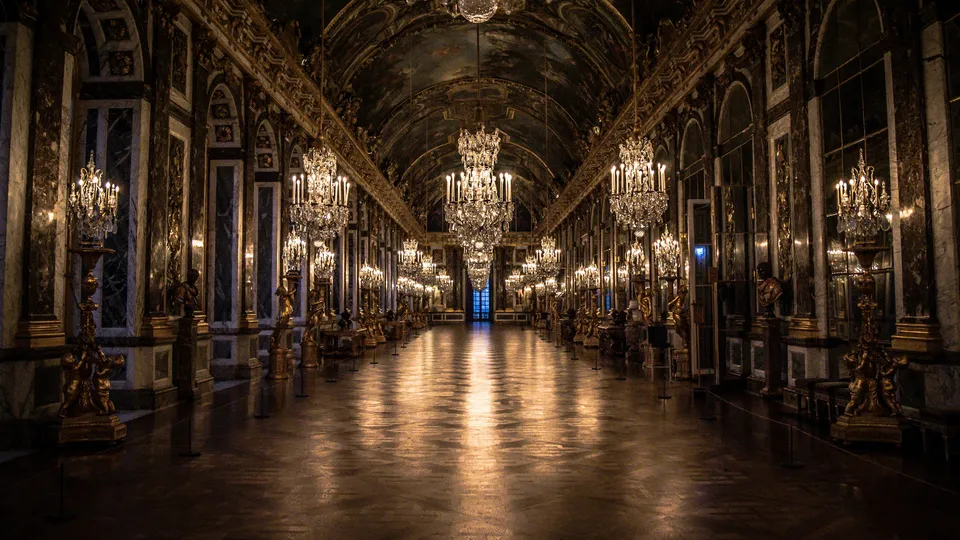
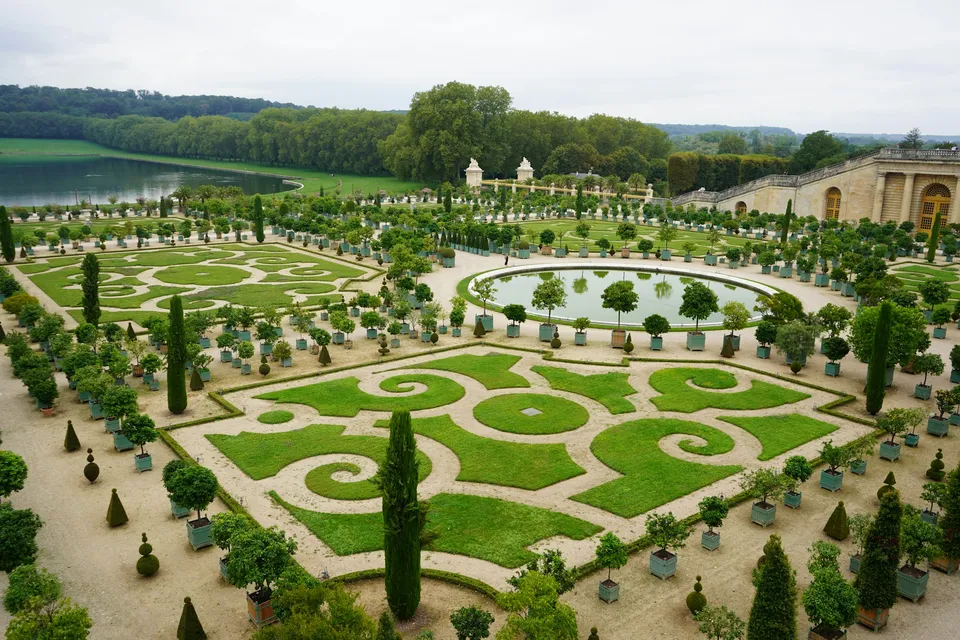
There are three parts to see. The palace itself, with the Hall of Mirrors and collections of 90,000 works of art that cover five centuries of French history. The gardens, which Louis XIV entrusted to André Le Nôtre in 1661, work that went on for about forty years. And the Estate of Trianon: the Grand Trianon, begun in 1687 under Jules Hardouin-Mansart; the Petit Trianon, completed in 1768 and given by Louis XVI to Marie-Antoinette in 1774; and the Queen’s Hamlet, built between 1783 and 1786.
How to Get from Paris to Versailles
The palace lists three train routes and a bus line:
- RER C to Versailles Château Rive Gauche, mainly from the Saint-Michel and Champ de Mars stations, then a 10-minute walk.
- Transilien trains from Saint-Lazare (and La Défense) to Versailles Rive Droite, then 17 minutes on foot.
- Trains from Montparnasse to Versailles Chantiers, then 18 minutes on foot. The fastest take 11 minutes, according to SNCF Connect.
- RATP bus 171 from Pont de Sèvres, the end of metro line 9, about 30 minutes without traffic.
Buy a round trip to the Versailles station or use a pass (Navigo or Paris Visite), as the palace advises: a Métro-Train-RER ticket costs 2.55 euros and is valid throughout the Île-de-France region, airports excepted. Leave the car in any case: the A13 motorway is closed in the Paris to Versailles direction from November 16, 2026 to August 31, 2027.
Versailles Tickets and Hours
| Versailles | November to March | April to October |
|---|---|---|
| Palace | 9 a.m. to 5:30 p.m., last admission 4:45 p.m. | 9 a.m. to 6:30 p.m., last admission 5:45 p.m. |
| Estate of Trianon | Noon to 5:30 p.m. | Noon to 6:30 p.m. |
| Gardens | 8 a.m. to 6 p.m., free | 7 a.m. to 8:30 p.m., paid on fountain show and Musical Gardens days |
| Passport, non-EEA visitors | 25 euros | 35 euros |
| Passport, EEA nationals and residents | 22 euros | 32 euros |
| Estate of Trianon only | 15 euros | 15 euros |
Source: Château de Versailles, practical information and 2026 ticketing pages, read on November 25, 2026. Hours change on April 1 and November 2, prices on April 1 and November 1. The palace and Trianon close on Mondays and on January 1, May 1 and December 25; the park and gardens open every day.
- Book a time slot, whoever you are. Every visitor needs one for the palace, including under-18s, who get in free, and only tickets bought online guarantee entry within half an hour of it. Paris Museum Pass holders also need a free Passport ticket with a slot.
- Late tickets cost less, and show less. The late Passport (from 3 p.m. in low season, 4 p.m. in high season) costs 18 or 28 euros, but the palace warns that its last slots do not allow a visit of the whole palace.
- Fountains in season. In 2026 the Musical Fountains Show played on weekends from April 4 to November 1 (and on Tuesdays from May 5 to June 30), and the Musical Gardens, music without the fountains, from Tuesday to Friday, April 1 to October 30; on those days the gardens cost 15 euros on their own. The Night Fountains run on summer Saturday evenings. The palace’s FAQ words the paid days differently, and the 2027 dates are not yet published: check your date on the show calendar.
The parts of the move Americans find out about too late.
What Americans get wrong about moving to France, and the number, form or deadline that fixes it. Straight to your inbox.
One email a week. Real numbers, nothing else.
2. Giverny and Monet’s Gardens
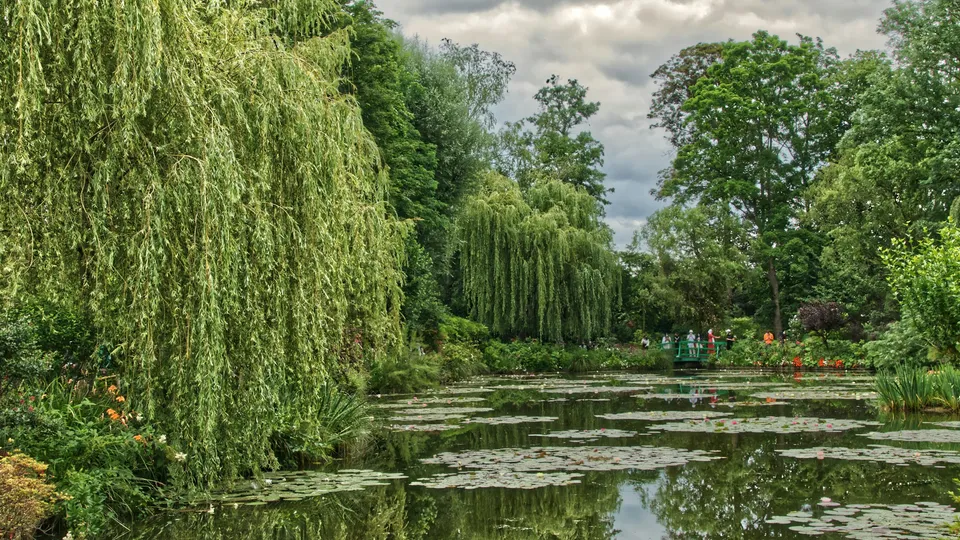
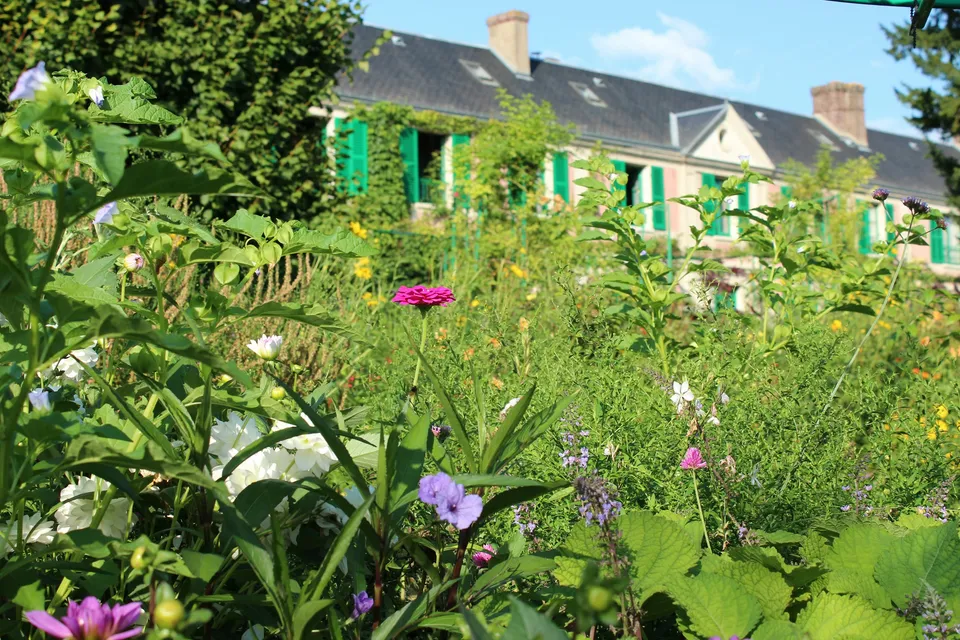
Giverny was Claude Monet’s private sanctuary from 1883 to 1926; his house and gardens, restored in the late 1970s and owned by the Académie des beaux-arts, are now the second most visited tourist attraction in Normandy. It is a trip for spring to autumn: in 2026 they opened from April 1 to November 1, and the 2027 dates are not yet published.
Trains leave Gare Saint-Lazare for Vernon-Giverny: 22 a day, 46 minutes on the fastest and 57 minutes on average, from 10 euros, according to SNCF Connect. From Vernon station, the Giverny shuttle costs 5 euros one way and 10 euros return and runs from April to November; seats are limited to those available. You can also rent a bike at the station exit.
| Monet’s house and gardens | As published |
|---|---|
| Open | Every day from April 1 to November 1, 2026, 10 a.m. to 6 p.m., last admission 5:30 p.m. |
| Adult | 13 euros |
| Child 7 to 17, student | 7 euros |
| Under 7 | Free |
| With the Orangerie in Paris | 25.50 euros, sold at Giverny |
| Time to allow | 1 h 30 to 2 hours |
Source: Maison et jardins de Claude Monet, useful information page, read on November 25, 2026. The 2027 season is not yet published.
Booking online is highly recommended, above all at weekends and on public holidays, though tickets are sold on site every day. Picnics are not allowed, there is no luggage storage, and bags are limited to 55 × 35 × 20 cm. The gardens are wheelchair accessible; the house is not. In Paris, Monet’s Water Lilies, his Great Decorations, hang in the permanent collection of the Orangerie: our guide to the best museums in Paris covers its hours and prices.
3. Mont-Saint-Michel
Mont-Saint-Michel and its bay have been on UNESCO’s World Heritage List since 1979: a Gothic-style Benedictine abbey dedicated to the archangel Michael, built between the 11th and 16th centuries on a rock in a bay with, in the abbey’s own words, the highest tides in Europe. At the strongest tides, around the spring and autumn equinoxes, the sea can retreat up to 15 km, and the Mont becomes an island again for about an hour.

It is the longest day trip in this guide. The fastest train to Pontorson, the nearest station, takes 2 h 57, then a bus takes about 27 minutes more: count close to seven hours of travel for the round trip on the fastest trains, more on the others. Three ways to go:
- The direct “Mont-Saint-Michel train”, a Nomad regional train from Montparnasse to Pontorson with a coach or shuttle to the Mont: 32 euros each way including the coach, 18.20 euros for children aged 4 to 11, according to TER Normandie. TER Normandie says it runs once a day each way, every day of the year; the Mont’s own site says weekends all year and every day in summer. Check your date on SNCF Connect.
- By TGV to Rennes, 1 h 25 on the fastest trains (23 a day), then the Keolis Armor coach to the Mont, which runs every day, Sundays and public holidays included; the Mont’s site gives its journey as 1 h 10 in one place and 1 h 15 in another.
- By TGV to Dol-de-Bretagne (2 h 12 on the fastest trains), then buses through Pontorson.
| Mont-Saint-Michel | As published |
|---|---|
| Village | Free, day and night, all year |
| Le Passeur shuttle | Free, every 5 to 12 minutes, about 12 minutes, stops 350 m from the ramparts |
| Abbey hours | May 1 to August 31: 9 a.m. to 7 p.m.; September 1 to April 30: 9:30 a.m. to 6 p.m.; last entry 1 hour before closing |
| Abbey ticket | 16 euros (April 1 to September 30, 2026), 13 euros (October 1, 2026 to March 31, 2027) |
| With a Nomad train ticket | 13 euros, then 11.50 euros, within 5 days of the trip |
| Abbey free | Under 18 with family; first Sunday of January, February, March, November and December |
Source: Abbaye du Mont-Saint-Michel (Centre des monuments nationaux) and Établissement public du Mont-Saint-Michel, read on November 25, 2026. The abbey closes on January 1, May 1 and December 25.
The Mont’s public body advises booking the abbey as early as possible, though tickets are also sold on site. Suitcases and large bags are not allowed in the abbey. From the shuttle square you can also walk to the Mont, about 45 minutes, by the 2.2 km bridge-walkway.
4. Normandy and the D-Day Beaches
In July 2026 UNESCO inscribed the Beaches of the D-Day Landings, Normandy, 1944 on the World Heritage List: six parts along about 80 km of coast, Utah, Omaha, Gold, Juno and Sword beaches and the Pointe du Hoc. For Americans the core is the American sector, as described by Normandy Tourism:
- Omaha Beach, from Vierville-sur-Mer to Colleville-sur-Mer, where American casualties on D-Day exceeded 3,000 men, around 1,000 of them dead.
- The Pointe du Hoc, with its 30-metre cliffs: of the 225 Rangers engaged there, only 90 were still fit to fight.
- Utah Beach, where the losses of the 4th Infantry Division did not exceed 200 men on June 6, and Sainte-Mère-Église, captured at 4 o’clock that morning.

The Normandy American Cemetery sits on a cliff above Omaha Beach, at Colleville-sur-Mer. It holds 9,389 graves and the names of 1,557 missing, according to the American Battle Monuments Commission, and stands on the site of the temporary St. Laurent cemetery that the U.S. First Army opened on June 8, 1944, the first American cemetery on European soil in the Second World War. It is open every day except December 25 and January 1, from 9 a.m. to 5 p.m. (admission ends at 4:30 p.m.), and a flag lowering ceremony is held one hour before closing. Entry is free and needs no booking today, but the ABMC is preparing a free, seasonal reservation system and expects every visitor to pre-register from 2027 (from the summer of 2027, one of its pages says). The path from the cemetery down to the beach has been closed since 2016; the beach can be reached nearby.
How to Get from Paris to Normandy
Trains leave Gare Saint-Lazare for Caen (19 a day, 1 h 54 on the fastest) and Bayeux (13 a day, 2 h 12 on the fastest), both from 17 euros. Bayeux, the first French city liberated after D-Day, is the station the ABMC points to. From there:
- Bus Nomad 120 from Bayeux station stops at Colleville-sur-Mer (Overlord Museum), a short distance from the cemetery, but runs only one round trip a day, Monday to Saturday, from April 20 to November 5.
- Taxis and tours leave from Bayeux. The ABMC strongly encourages visitors to arrange their transport there and back before leaving Paris or Bayeux, because local public transport is intermittent.
- From Caen, bus 6A goes to the Caen Memorial every 20 to 25 minutes, and from Carentan, bus Nomad 301 reaches Sainte-Mère-Église twice a day, Monday to Saturday.
A day trip works with an early train and a tour or taxi booked from Bayeux. For more than the American sector, plan a night in Normandy.
5. Reims and Champagne
Reims is 46 minutes from Gare de l’Est on the fastest TGVs (16 trains a day, from 15 euros, according to SNCF Connect), and its central station is within walking distance of the old town, 1.2 km from the Palace of Tau.
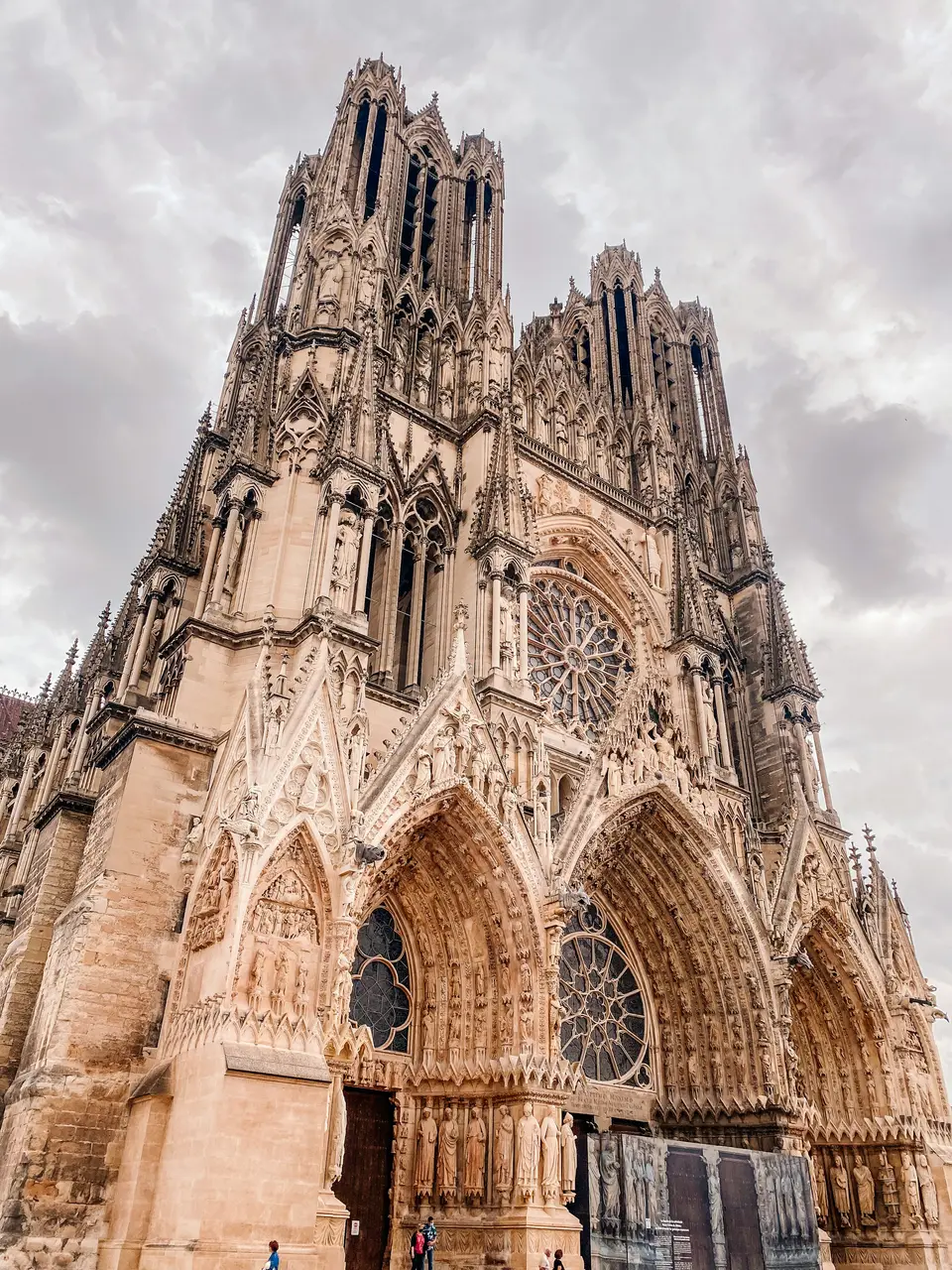
The Cathedral of Notre-Dame, built in the 13th century, saw the coronation of many kings of France, Charles VII among them in 1429 (Reims became the cathedral of coronations from Henri I, the parish says); badly damaged in the First World War, it saw the Franco-German reconciliation of 1962. With the former Abbey of Saint-Remi and the Palace of Tau, it has been on the World Heritage List since 1991. Entry is free, every day from 8 a.m.; the doors close at 7:30 p.m. (7:15 p.m. on Sundays and feast days), and on Sunday mornings visitors only reach the narthex until noon. The Palace of Tau is closed for works until 2027, when it reopens as a museum of the coronations, and tower visits go through it: check before counting on them.
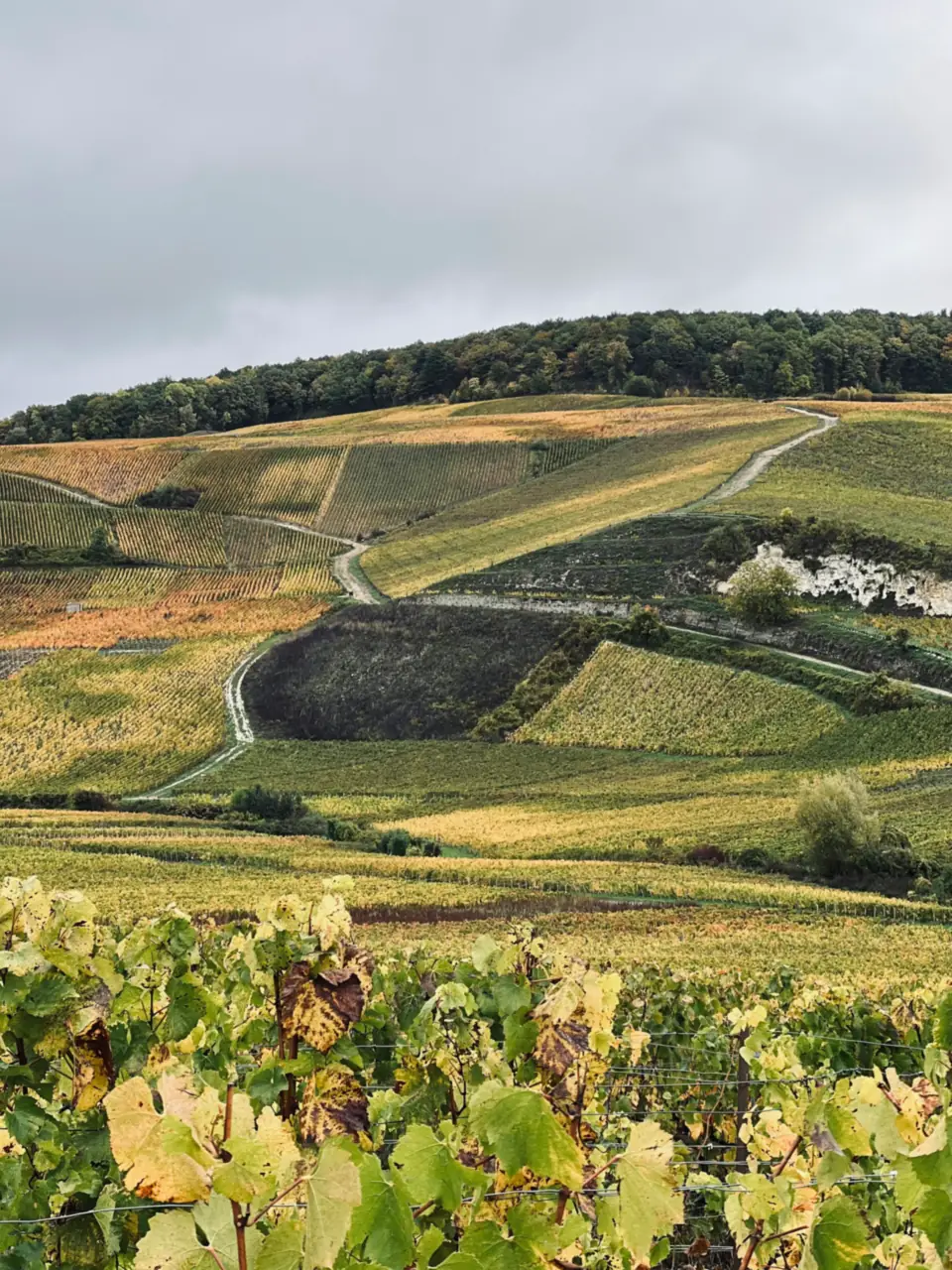
Champagne itself is the other reason to go. The Champagne Hillsides, Houses and Cellars have been on the World Heritage List since 2015: the vineyards of Hautvillers, Aÿ and Mareuil-sur-Aÿ, Saint-Nicaise Hill in Reims, and the Avenue de Champagne in Épernay. The Reims tourist office lists the major champagne houses that receive visitors for a visit and a tasting, most with a booking link. Épernay has its own trains from Gare de l’Est, 1 h 13 on the fastest (20 a day, from 11 euros), and the regional line between Reims and Épernay is known as the Ligne des Bulles.
6. The Loire Châteaux: Chambord and Chenonceau
The Loire Valley between Sully-sur-Loire and Chalonnes has been on the World Heritage List since 2000, and UNESCO names Chambord, Chenonceau, Amboise, Blois and Azay-le-Rideau among its châteaux. Chambord is reached by shuttle from Blois station, Chenonceau from its own station beyond Tours: on a day from Paris, choose one.
Chambord
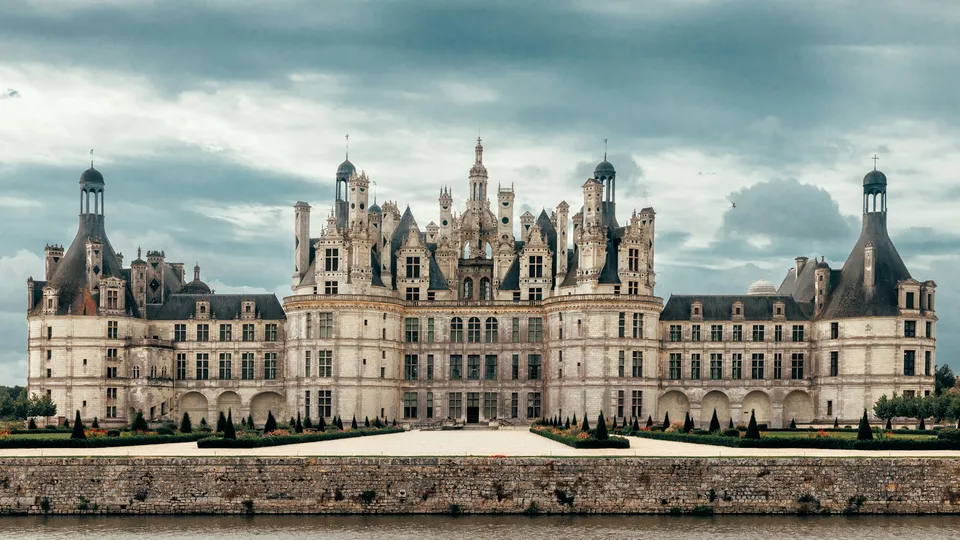
Chambord’s ticket covers the furnished historic apartments, the double-helix staircase, the coffered ceilings, the chapel and the terraces of a Renaissance château that its estate calls inspired by Leonardo da Vinci. Around it, a 5,440-hectare estate holds Europe’s largest enclosed nature reserve, whose forest is open free, day and night.
- Getting there: trains from Montparnasse or Austerlitz to Blois-Chambord (21 a day, 1 h 24 on the fastest, 2 hours on average, from 10 euros), then the Rémi line 2 shuttle from Blois station to Chambord, 3.40 euros one way and 6.80 euros return, or a taxi, about 25 minutes.
- Tickets: château and French gardens 31 euros for visitors from outside the EEA, 21 euros for EEA nationals and residents, free under 18 (2026 prices, valid until December 31; 2027 is not yet published). No booking is needed and the ticket has no time slot. Allow about 2 hours for the château and 30 minutes for the gardens.
- Hours: 9 a.m. to 5 p.m. in low season, but 9 a.m. to 6 p.m. on the weekends from November 28 to December 13, 2026 and from December 19 to early January (4 p.m. on December 24 and 31); then 9 a.m. to 6 p.m. from March 27 to November 7, 2027. Last admission 30 minutes before closing. Closed on December 25 and January 1, and in early 2027 on Mondays January 18 and 25, February 1 and March 8.
Chenonceau
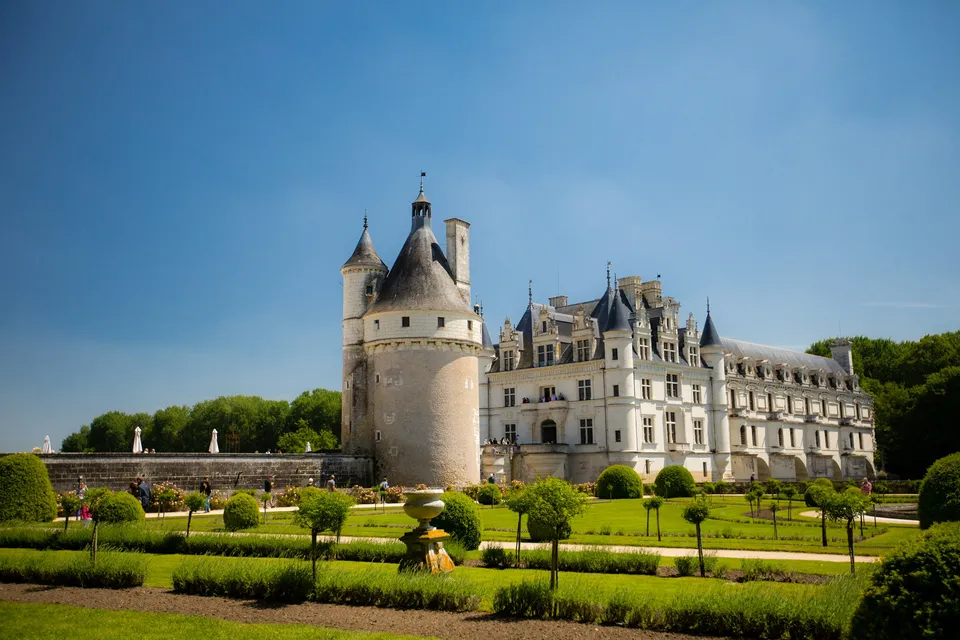
Chenonceau stands on the Cher river, 214 km from Paris. The château as it stands was built between 1513 and 1517 by Thomas Bohier and, above all, his wife Catherine Briçonnet; its history, in the château’s words, is an almost uninterrupted succession of women who built, embellished, protected, restored and saved it.
- Getting there: trains from Montparnasse to Chenonceaux station (8 a day, 1 h 35 on the fastest, 2 h 25 on average), which is 400 metres from the ticket office; or a TGV to Saint-Pierre-des-Corps, by Tours (1 hour, the château says), then a regional train from Tours, 25 minutes.
- Tickets: 19 euros for an adult with a guide leaflet, 24 euros with an audioguide; 15 and 20 euros for children aged 7 to 18; free under 7 (2026 prices).
- Hours: open every day of the year, from 9:30 a.m. to 4:30 p.m. on most winter days and 9 a.m. to 7 p.m. from early July to late August (2026 calendar; 2027 is not yet published).
Chambord sells combined tickets online only, among them Chambord with Chenonceau and the Château du Clos Lucé, for those who stay a night in the Loire.
7. Fontainebleau
Fontainebleau is the only château lived in by every French sovereign from the 12th to the 19th century, and the most furnished of the royal châteaux, in its own words, with more than 1,500 rooms and 130 hectares of park and gardens. Francis I redeveloped it from 1528, wanting, as UNESCO puts it, to make it a “New Rome”, and Napoleon I abdicated there in April 1814, then said farewell to his Old Guard in the main courtyard before leaving for Elba. It holds the only Napoleonic throne room still in existence. It has been on the World Heritage List since 1981.
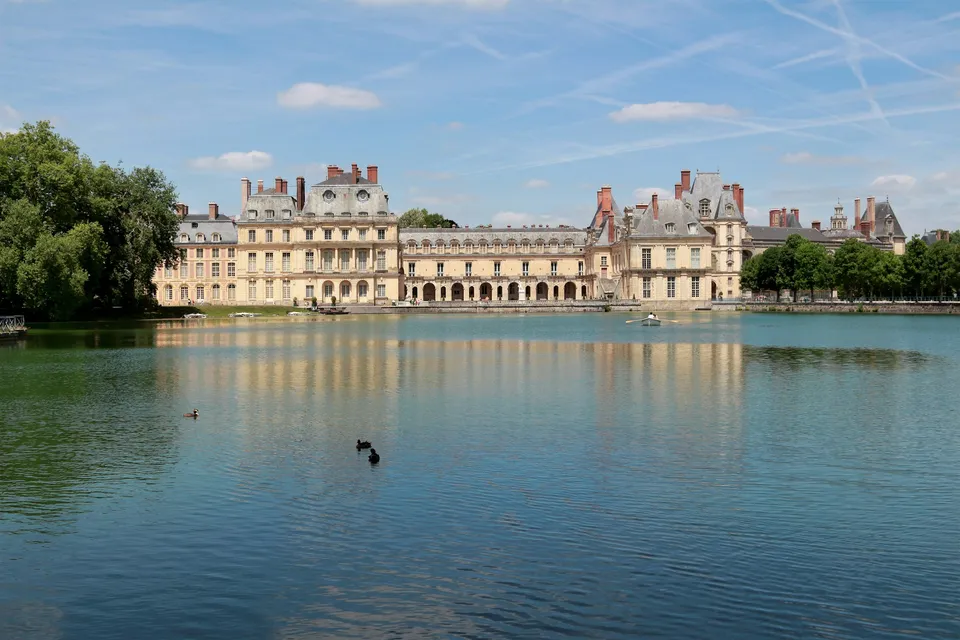
- Getting there: trains from Gare de Lyon towards Montargis, Montereau or Laroche-Migennes to Fontainebleau-Avon station, 40 minutes according to the tourist office, from 6:19 a.m. to 12:49 a.m. every day. Then a bus from the station to the “Château” stop: the château calls it line 3401 and links to the timetable of line 1, the number the tourist office gives. The tourist office adds that a Navigo pass covers public transport there.
- Tickets: 17 euros, 15 euros reduced, for the Grands Appartements and the Napoleon I Museum, online or on site on the day. Free under 18, and on the first Sunday of each month except in July and August. Allow 2 hours.
- Hours: 9:30 a.m. to 6 p.m. from April to September, 9:30 a.m. to 5 p.m. from October to March. Closed on Tuesdays, January 1, May 1 and December 25. The courtyards and gardens are free and open every day, and the park day and night.
8. Chantilly
Chantilly is 23 minutes from Gare du Nord on the fastest regional trains to Chantilly-Gouvieux (37 a day, from 3 euros), or 45 minutes on the RER D. The château is the work of one man, Henri d’Orléans, Duke of Aumale (1822 to 1897), fifth son of Louis-Philippe, the last king of France, and its grounds hold three gardens: the French formal garden designed by Le Nôtre, an Anglo-Chinese garden and an English garden.
- Tickets: the 1-day ticket covers the château, the grounds and the Great Stables: 18 euros over 25, 14.50 euros from 7 to 25, grounds only 9 euros. The 1-day ticket is now timed and booking a slot is mandatory; online booking is the only way to be sure of getting in on high-season weekends, public holidays and school holidays.
- The rail pack: a TER round trip from Paris Nord, valid 72 hours, with a 1-day ticket costs 27 euros, 1 euro per child under 12.
- From the station: a free bus or shuttle from platform A1 (about 10 minutes), or 25 minutes on foot.
- Hours: closed on Tuesdays and for its annual closure from January 4 to 22. In late November the château opens from 10 a.m. to 5 p.m., the grounds to 6 p.m. and the Great Stables from noon to 5 p.m.
9. Chartres
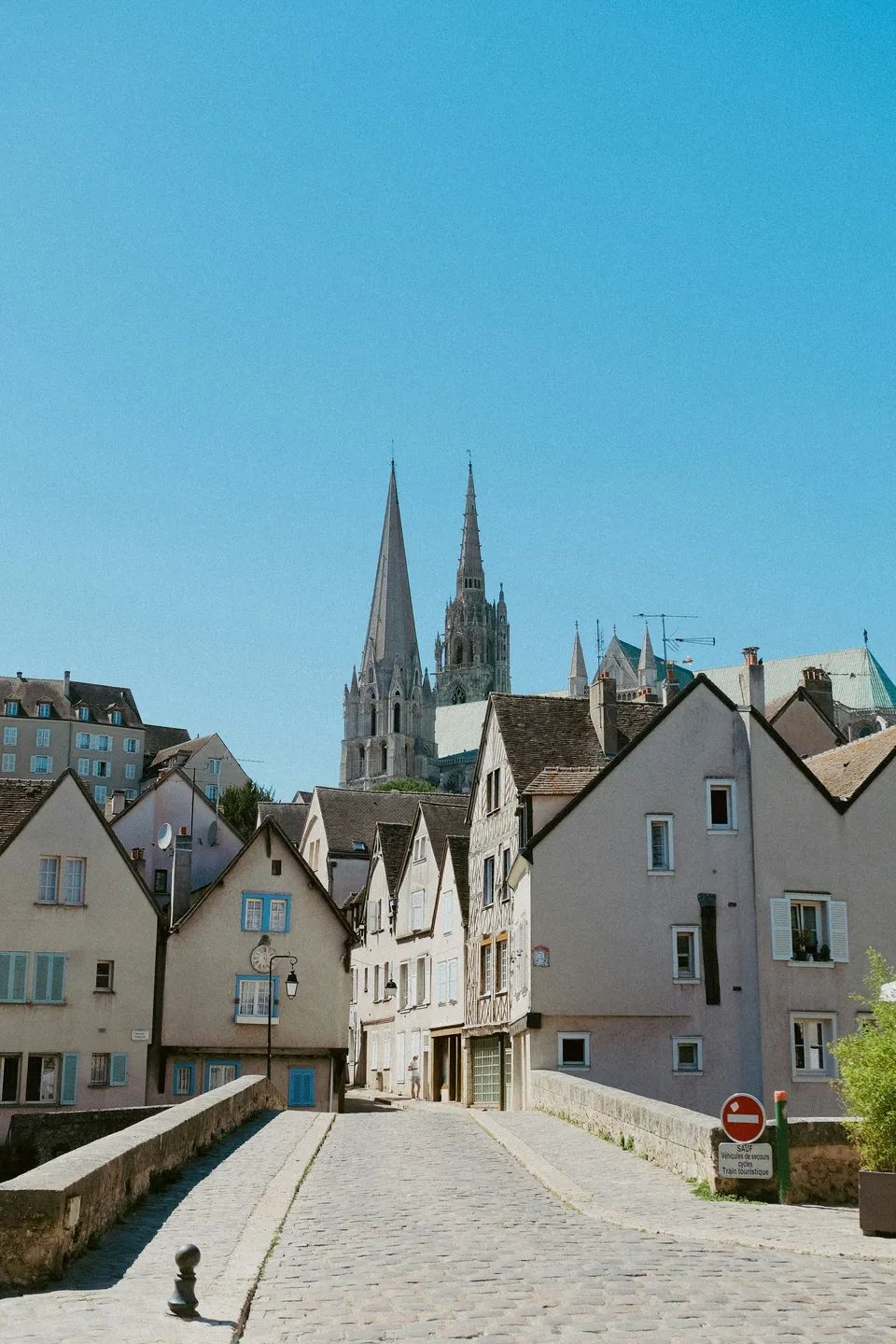
For UNESCO, Chartres Cathedral marks the high point of French Gothic art. It was rebuilt after the fire of 1194, its great vessel built between 1194 and 1220, and its stained glass covers 2,500 m² with more than 3,500 figures; it has been on the World Heritage List since 1979. The old spire dates from the 1160s, the new one was only completed in 1506 to 1513, after a wooden belfry burned.
- Getting there: trains from Montparnasse, 34 a day, 58 minutes on the fastest and 1 h 12 on average, from 10 euros.
- Visiting: entry is free, every day of the year from 8:30 a.m. to 7:30 p.m.; visitors cannot walk the nave and transepts during services. In July and August the cathedral stays open until 10 p.m. on Tuesdays, Fridays and Sundays.
- Guided visits: the cathedral daily at 3 p.m. (1 h 30) and the crypt daily at 2 p.m. (45 minutes), except during celebrations, each with a recommended offering of 10 euros. They are given in French; visits in English run from May to the end of September, Tuesday to Saturday. Tickets are collected the same day at the shop in the cathedral and cannot be booked online. A video guide in English costs 10 euros.
10. Rouen
Rouen is 1 h 13 from Gare Saint-Lazare on the fastest trains (33 a day, from 10 euros), and the city center is a 10-minute walk from Rouen Rive Droite station. Normandy Tourism calls its cathedral the tallest in France; Monet painted its façade more than thirty times, and it holds the heart of Richard the Lionheart. Joan of Arc was tried and condemned in 1431 in the hall now inside the Joan of Arc museum, and burned on the Place du Vieux-Marché, where the Église Sainte-Jeanne-d’Arc was completed in 1979.
11. Auvers-sur-Oise and Van Gogh
Vincent van Gogh moved into the Auberge Ravoux at Auvers-sur-Oise on May 20, 1890, in room number 5, an attic room of 7 m² lit by a skylight; he spent only 70 days in the village and painted close to 80 canvases there. The room is empty and has remained untouched since 1890, the only one of his known homes kept in its original state. The church he painted and the tomb of Vincent and his brother Theo, in the village cemetery, are in the village itself.
- Getting there: Transilien line H from Gare du Nord towards Valmondois, then the next train to Auvers-sur-Oise, about 1 hour in all. On Saturdays, Sundays and public holidays from April to October, a direct train leaves Gare du Nord at 9:38 a.m. and returns from Auvers at 6:15 p.m.
- The room: 10 euros for an adult, a 30-minute guided visit with a film. The 2026 season ran from March 4 to November 22, Wednesday to Sunday; the 2027 season is not yet published.
12. Provins
Provins, a UNESCO site since 2001, is the only surviving example of a merchant city of the Champagne fairs of the 12th and 13th centuries, with ramparts built in the 13th century (2 km of them remain, of 5) and more than fifty listed monuments. Line P runs direct from Gare de l’Est, and a Métro-Train-RER ticket at 2.55 euros covers the trip. The Provins Pass opens five paying monuments, the Tour César, the Tithe Barn, the underground galleries, the Saint-Ayoul priory and the museum, for 16 to 17 euros an adult, valid one year. The monuments open daily from the last weekend of March to the end of the All Saints’ school holidays, and at weekends and in school holidays the rest of the year. Check the line before you go: it had no trains on weekends from September 26 to November 1, 2026 (replacement buses between Torcy and Provins), and has none on the weekend of December 5 and 6.
Which Day Trip for Which Season
| Season | Best day trips | Watch out for |
|---|---|---|
| November to March | Versailles (gardens free, Passport 25 euros), Reims, Chartres, Fontainebleau, Chenonceau, Chambord | Giverny is closed from November 2 and Van Gogh’s room from November 23 (2026 seasons); Chantilly closes from January 4 to 22; the Normandy bus 120 stops after November 5 |
| April to June | Giverny’s gardens, the Versailles fountains, the Loire, Mont-Saint-Michel | Versailles and Chantilly need a time slot every day; book Giverny ahead for weekends and public holidays |
| July and August | Chartres open until 10 p.m. three evenings a week, the Night Fountains at Versailles, the D-Day beaches | The Versailles gardens close at 5:30 p.m. on Saturdays from June 6 to September 19 and on July 14 (2026) |
| September and October | Mont-Saint-Michel around the autumn equinox, for the biggest tides; Giverny until November 1 | Versailles changes to winter prices on November 1 and winter hours on November 2 |
Source: the official pages cited in each section, read on November 25, 2026; the seasons are the 2026 ones. For the weather and crowds month by month, see our guide to the best time to visit Paris.
Train Tickets for Day Trips from Paris
- On the Paris region’s own trains, a single Métro-Train-RER ticket costs 2.55 euros and is valid throughout the Île-de-France region, airports excepted; Versailles and Provins point to it on their own sites. A Navigo day pass costs 12.30 euros for unlimited travel in all zones, airports excepted. The ticket loads onto a smartphone or a Navigo Easy card (2 euros, according to Île-de-France Mobilités).
- Further out (Giverny, Chantilly, Reims, Chartres, Rouen, Normandy, the Loire, Mont-Saint-Michel), book on SNCF Connect. Its “from” prices are for one person, one way, in second class, on a selection of trains and dates and subject to availability, so book ahead.
- Look for the packs: the Chantilly train and château pack (27 euros), the Mont-Saint-Michel train with its coach (32 euros each way) and the reduced abbey ticket with a Nomad train ticket.
FAQ
What is the best day trip from Paris?
For a first visit, Versailles: the palace of the French kings, 11 minutes from Montparnasse on the fastest trains, closed on Mondays and on January 1, May 1 and December 25. From April to October add Giverny for Monet’s gardens; for a long and early day, Mont-Saint-Michel or the D-Day beaches.
How do I get from Paris to Versailles by train?
Take the RER C to Versailles Château Rive Gauche, a 10-minute walk from the palace, or a Transilien train from Saint-Lazare to Versailles Rive Droite (17 minutes on foot) or from Montparnasse to Versailles Chantiers (18 minutes on foot). A Métro-Train-RER ticket costs 2.55 euros each way.
Can you do Mont-Saint-Michel as a day trip from Paris?
Yes, but it is a long day: the fastest train to Pontorson takes 2 h 57, then a bus about 27 minutes, so count close to seven hours of travel for the round trip on the fastest trains, more on the others. The direct Nomad train from Montparnasse costs 32 euros each way with the coach to the Mont.
Can you visit the D-Day beaches from Paris in one day?
Yes, with an early train to Bayeux (2 h 12 on the fastest) and a tour or taxi booked from there: the Nomad 120 bus from Bayeux, which stops near the cemetery, runs one round trip a day, Monday to Saturday, from April 20 to November 5. The cemetery is free, open 9 a.m. to 5 p.m., and expects visitors to pre-register from 2027.
Is Giverny open in winter?
No. Monet’s house and gardens opened from April 1 to November 1 in 2026, every day from 10 a.m. to 6 p.m. The 2027 dates are not yet published.
Which day trips from Paris are free?
The cathedrals of Reims and Chartres, the Normandy American Cemetery, the village of Mont-Saint-Michel and its shuttle, the gardens of Versailles from November to March, and the park, courtyards and gardens of Fontainebleau. You still pay for the train.
Conclusion
Most of the best day trips from Paris fit in a morning train and an evening train back. Versailles, Chantilly, Reims, Chartres and Fontainebleau work all year; Giverny and Auvers-sur-Oise are for spring to autumn; Mont-Saint-Michel and the D-Day beaches are for the days you are willing to start early. Book the time slots where they are required, check the season dates, and take the train. For the city itself, our guide to the things to do in Paris covers the sights, and our guide to the South of France takes you further, from the Riviera to Provence.
The parts of the move Americans find out about too late.
What Americans get wrong about moving to France, and the number, form or deadline that fixes it. Straight to your inbox.
One email a week. Real numbers, nothing else.
Written by
Aurelio Maurici
Co-Founder, EasyFranceNow
Aurelio Maurici is a French entrepreneur and co-founder of EasyFranceNow. His work focuses on the intersection of French administration, banking constraints affecting U.S. nationals, tax residency and cross-border reporting, healthcare enrollment, and the procedural realities Americans encounter while settling in France.


