
The Best Places to Visit in France: 15 Places Region by Region and How to Get There from Paris

By Aurelio Maurici Co-Founder, Master of Business Law, Aix-Marseille Université III
Published Updated

In this article
- The Best Places to Visit in France at a Glance
- 1. Paris and Versailles
- 2. Mont-Saint-Michel
- 3. The D-Day Beaches of Normandy
- 4. Brittany: Saint-Malo and Carnac
- 5. The Loire Valley Châteaux
- 6. Reims and Champagne
- 7. Alsace: Strasbourg and Colmar
- 8. Beaune and the Burgundy Vineyards
- 9. Lyon
- 10. Chamonix and Mont Blanc
- 11. The French Riviera from Nice to Menton
- 12. Provence: Avignon and the Lavender
- 13. Carcassonne
- 14. Bordeaux and Saint-Émilion
- 15. The Dordogne: Sarlat and the Vézère Valley
- The Weather Across France
- Which Place for Which Season
- Getting Around France by Train
- Staying Longer: a Season in France
- FAQ
- Conclusion
The best places to visit in France are Paris and Versailles, Mont-Saint-Michel, the D-Day beaches of Normandy, Saint-Malo and Carnac in Brittany, the châteaux of the Loire Valley, Reims and Champagne, Strasbourg and Colmar in Alsace, Beaune and the Burgundy vineyards, Lyon, Chamonix and Mont Blanc, the French Riviera, Provence, Carcassonne, Bordeaux and the Dordogne. Fourteen of these fifteen places hold a site on UNESCO’s World Heritage List, and most of them are a direct train from Paris: the fastest trains reach Reims in 46 minutes, Tours (for the Loire) in 51 minutes, Lyon in 1 h 43, Strasbourg in 1 h 44, Bordeaux in 2 h 03 and Avignon in 2 h 33, according to SNCF Connect.
This guide takes them region by region, from Paris and the north-west to the east and the Alps, then the South and the south-west. For each place: what it is for, when to go, how to get there from Paris, and the official facts, from UNESCO’s listings to opening days and the ticket prices in force, all read on the official pages on November 25, 2026. Then come the seasons, the weather across France, how to book the trains, and what changes if you stay for months rather than weeks. For the regions themselves, with a map of all 18 and each region’s capital, see our guide to the regions of France.
The Best Places to Visit in France at a Glance
| Place | Best for | Fastest train from Paris | On UNESCO’s list since |
|---|---|---|---|
| Paris and Versailles | Museums, monuments, the Seine | Versailles: 11 minutes | 1991 (Seine), 1979 (Versailles) |
| Mont-Saint-Michel | The abbey and the tides | 2 h 57 to Pontorson, then a bus | 1979 |
| The D-Day beaches | Omaha, Utah, the American Cemetery | 2 h 12 to Bayeux | 2026 |
| Saint-Malo and Carnac | Ramparts, tides, standing stones | 2 h 29 to Saint-Malo, 2 h 39 to Auray | Carnac: 2025 |
| The Loire Valley | Chambord, Chenonceau, Amboise | 51 minutes to Tours | 2000 |
| Reims and Champagne | The coronation cathedral, champagne houses | 46 minutes | 1991 (Reims), 2015 (Champagne) |
| Strasbourg and Colmar | Old towns, Christmas markets | 1 h 44 to Strasbourg | Strasbourg: 1988 |
| Beaune and Burgundy | Wine villages, the Hôtel-Dieu | 2 h 05 to Beaune | 2015 |
| Lyon | Old Lyon, food, the Fête des Lumières | 1 h 43 | 1998 |
| Chamonix and Mont Blanc | The Aiguille du Midi, the Mer de Glace | 5 h 32, with a change | Not inscribed |
| The French Riviera | The sea, winter sun, Nice, Èze, Menton | 5 h 42 to Nice | Nice: 2021 |
| Provence | Avignon, the Pont du Gard, lavender | 2 h 33 to Avignon | 1995 (Avignon), 1985 (Pont du Gard) |
| Carcassonne | The walled medieval city | 5 h 24, with a change | 1997 |
| Bordeaux and Saint-Émilion | An Enlightenment-era city, wine | 2 h 03 to Bordeaux | 2007 (Bordeaux), 1999 (Saint-Émilion) |
| The Dordogne | Prehistory, Lascaux IV, Sarlat | 4 h 53 to Sarlat, with a change | 1979 |
Source: SNCF Connect route pages for the fastest trains and UNESCO’s World Heritage List for the years, read on November 25, 2026. The details, and the official page behind each figure, are in each section below.
For the cities themselves, from Paris and Lyon to Toulouse, Nantes and Lille, with their official population, the weather and the rents, see our guide to the cities in France.
1. Paris and Versailles
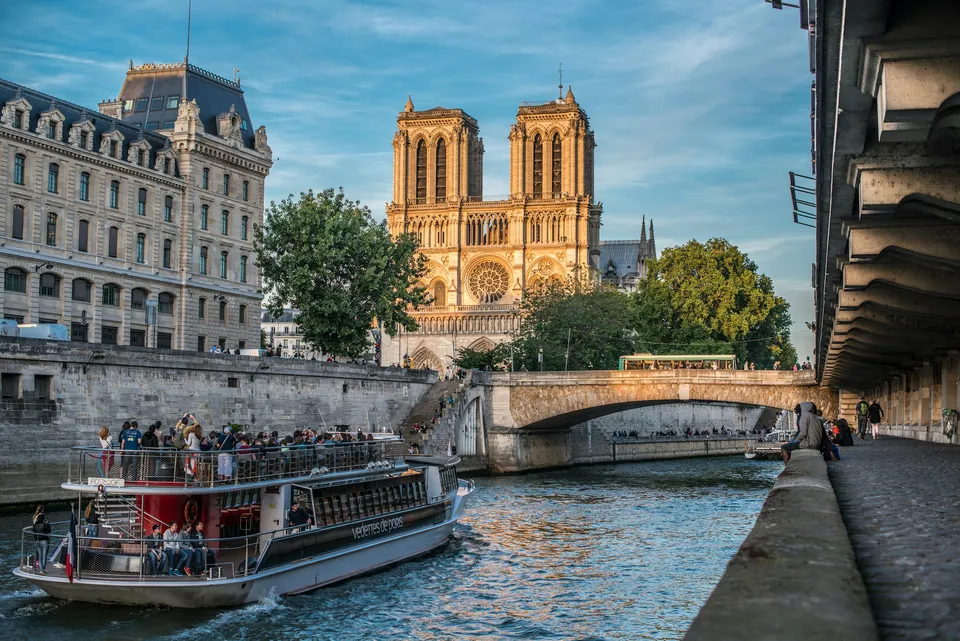
Paris is the one place in France that can fill a whole trip on its own. UNESCO put its historic heart on the World Heritage List in 1991 as “Paris, Banks of the Seine”: the bridges, quays and banks of the river between the Pont de Sully and the Pont d’Iéna, with the Île de la Cité and the Île Saint-Louis. In UNESCO’s words, “from the Louvre to the Eiffel Tower, from the Place de la Concorde to the Grand and Petit Palais, the evolution of Paris and its history can be seen from the River Seine.”
- The Louvre is open every day except Tuesday (and January 1, May 1 and December 25), from 9 a.m. to 6 p.m., and until 9 p.m. on Wednesdays and Fridays. Since January 14, 2026, a ticket costs 32 euros for visitors from outside the European Economic Area (EEA) and 22 euros for EEA visitors, and it is free under 18. A time slot is recommended, and every visitor needs one from December 19, 2026 to January 4, 2027.
- The Eiffel Tower costs 36.70 euros for an adult to the top by elevator, or 14.80 euros to the second floor by the stairs, and new fares apply from January 11, 2027. Buy on the tower’s own site: it warns that fraudulent sites posing as official ones are promoted on search engines and AI platforms.
- Notre-Dame is free and open every day, from 7:55 a.m. to 7 p.m. on weekdays (10 p.m. on Thursdays) and until 7:30 p.m. at weekends. Booking a free slot online is optional and only shortens the wait; the cathedral warns against fake paid tickets.
Versailles is the first trip out of the city. The palace, “the principal residence of the French kings from the time of Louis XIV to Louis XVI” in UNESCO’s words (World Heritage since 1979), is 11 minutes from Montparnasse on the fastest train to Versailles Chantiers, according to SNCF Connect, or a ride on the RER C to Versailles Château Rive Gauche, a 10-minute walk from the palace. It closes on Mondays, every visitor books a time slot, and the Passport, the ticket to the whole estate, costs 25 euros from November to March and 35 euros from April to October for visitors from outside the EEA (22 and 32 euros for EEA visitors) in 2026.
Our guides to the things to do in Paris, the best museums in Paris and the best time to visit Paris cover the city in detail, and our guide to the best day trips from Paris covers Versailles, Giverny, Chartres, Reims and the others, with their trains.
The parts of the move Americans find out about too late.
What Americans get wrong about moving to France, and the number, form or deadline that fixes it. Straight to your inbox.
One email a week. Real numbers, nothing else.
2. Mont-Saint-Michel
Mont-Saint-Michel is the image of France many visitors carry home. UNESCO describes it as “the ‘Wonder of the West’, a Gothic-style Benedictine abbey dedicated to the archangel St Michael, and the village that grew up in the shadow of its great walls”, on a rocky islet between Normandy and Brittany. The abbey was founded in 966 and built between the 11th and 16th centuries, and the Mont and its bay have been on the World Heritage List since 1979.
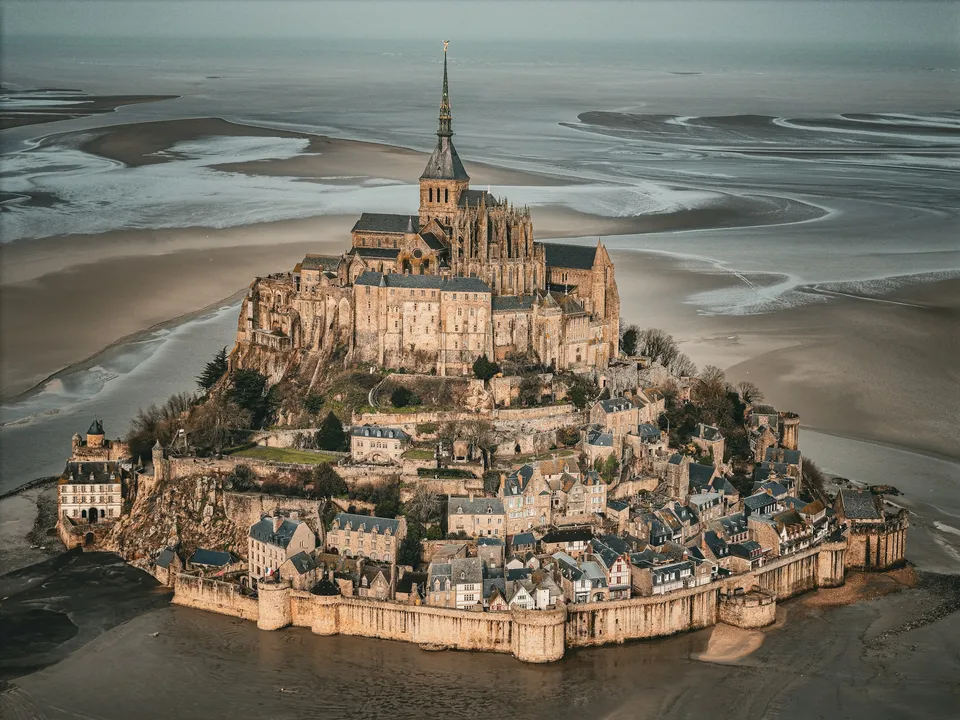
The village is a commune, free to enter without a ticket, booking or time slot, the abbey says. Cars stop at car parks 2.5 km from the rock; from there you walk, or take the free shuttle, Le Passeur, over a 2.2 km bridge-walkway. On the biggest tides the Mont becomes an island again for about an hour, so its public body advises arriving 1 to 2 hours before high tide; once the sea surrounds the rock, count 1 to 1.5 hours before you can reach the walkway again. From the car parks to the abbey entrance, the walk takes about 45 minutes to an hour, depending on the crowds.
| The abbey | As published |
|---|---|
| Hours | May 1 to August 31: 9 a.m. to 7 p.m.; September 1 to April 30: 9:30 a.m. to 6 p.m.; last entry 1 hour before closing |
| Closed | January 1, May 1 and December 25 |
| Adult ticket | 16 euros (April 1 to September 30, 2026), 13 euros (October 1, 2026 to March 31, 2027) |
| With a Paris to Mont-Saint-Michel train ticket | 13 euros, then 11.50 euros, within 5 days of the trip |
| Free | Under 18 with their family; the first Sunday of January, February, March, November and December |
| Bags | No suitcases or large bags, and no luggage storage |
Source: Abbaye du Mont-Saint-Michel, practical information, read on November 25, 2026.
Getting there from Paris. The nearest station is Pontorson, 9 km away, linked to the Mont by bus line 2 in about 27 minutes. SNCF Connect lists 2 trains a day from Montparnasse to Pontorson, 2 h 57 on the fastest, with a change, from 25 euros; the direct “Mont-Saint-Michel train” runs on weekends all year and every day in summer, the Mont’s public body says. The other way is a TGV to Rennes, 1 h 25 on the fastest of 23 trains a day according to SNCF Connect (the Mont’s page says 2 hours), then the Keolis Armor coach, which runs every day; the same page gives that coach 1 h 10 in one place and 1 h 15 in another. On a weekday such as Thursday, November 26, 2026, SNCF Connect’s timetable shows what a day trip means: the 8:43 a.m. from Montparnasse reaches Pontorson at 12:14 p.m., and the last train back leaves Pontorson at 6:48 p.m. and reaches Paris at 11:08 p.m. (the 2 h 57 train leaves Paris at 3:49 p.m.). A night nearby makes it an easier visit.
3. The D-Day Beaches of Normandy
Normandy’s landing beaches are among the newest World Heritage sites in France. In 2026 UNESCO inscribed the “Beaches of the D-Day Landings, Normandy, 1944” on the list, in six parts along about 80 km of coast, Utah, Omaha, Gold, Juno and Sword beaches and the Pointe du Hoc. They preserve remains of the German Atlantic Wall (casemates, artillery batteries, fire-control posts), traces of the battle, the artificial harbor known as Mulberry B, and memorial landscapes such as the American Cemetery at Colleville-sur-Mer.
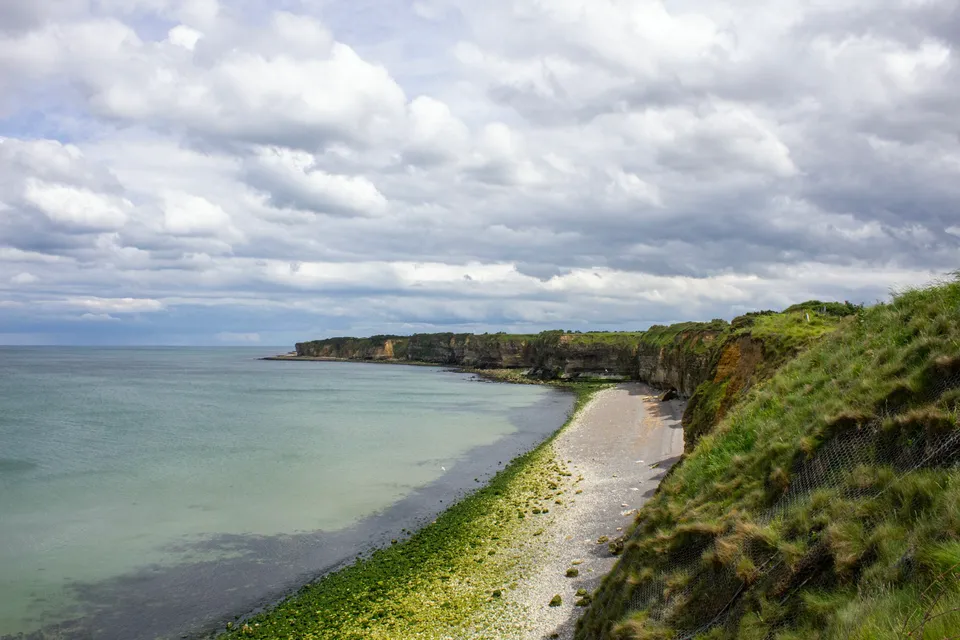
The Normandy American Cemetery sits on a cliff above Omaha Beach. It holds 9,389 burials and the names of 1,557 missing, according to the American Battle Monuments Commission (ABMC), which runs it (Normandy’s tourist board gives 9,387 graves), and it receives more than one million visitors a year. It is open every day except December 25 and January 1, from 9 a.m. to 5 p.m. (admission ends at 4:30 p.m.), and the flag lowering ceremony is held one hour before closing. Entry is free and needs no booking today, but the ABMC plans a free, seasonal reservation system, due online in late 2026 for visits in 2027.
Getting there from Paris. Trains leave Saint-Lazare for Bayeux (13 a day, 2 h 12 on the fastest, from 17 euros) and for Caen (19 a day, 1 h 54 on the fastest), according to SNCF Connect; the ABMC gives three hours by rail. Bayeux, the first French city liberated after D-Day, is a prime starting point, Normandy’s tourist board says. It lists a greenway to Omaha Beach by bike and a Nomad bus to the Overlord Museum at Omaha Beach, while the ABMC strongly encourages arranging your transport to and from the cemetery before leaving Paris or Bayeux, because local public transport is intermittent. For Utah Beach and Sainte-Mère-Église, the station is Carentan. If you drive, note that a portion of the A13, the main motorway from Paris to Normandy, is closed from November 16, 2026 to August 2027.
4. Brittany: Saint-Malo and Carnac
Brittany is France’s Atlantic peninsula: a walled port, big tides, standing stones and the coolest summers in this guide (an average July maximum of 24.8 °C at Rennes, according to Météo-France).
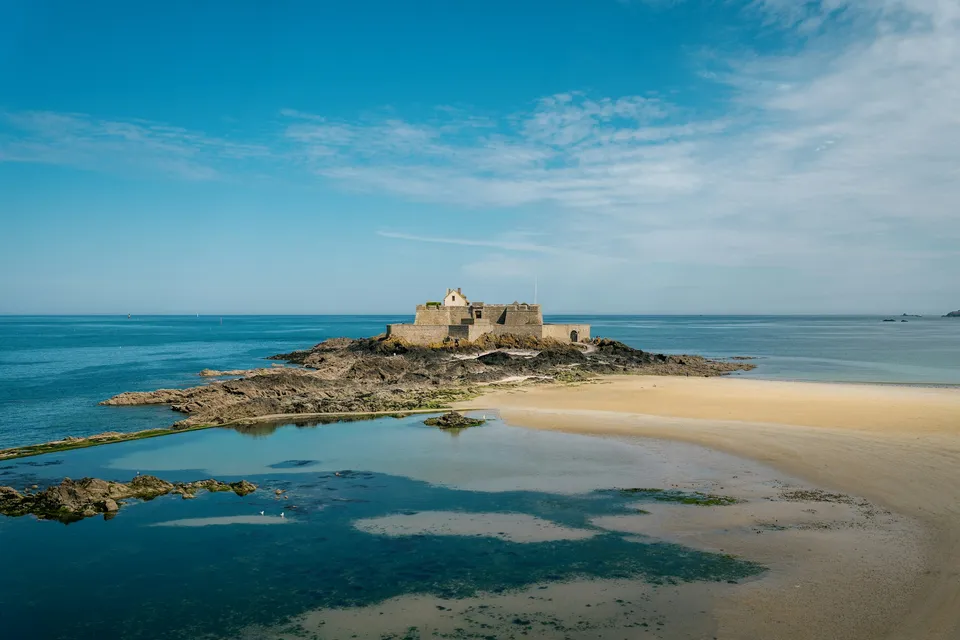
- Saint-Malo, the walled port on the Channel, is 2 h 29 from Montparnasse on the fastest of 14 trains a day, from 27 euros, according to SNCF Connect; that train has a change, and direct TGVs run too (2 h 48 on the 7:07 a.m. of November 26, 2026). Its ramparts run for 1,754 meters around the old town, Intra-Muros, and came through 1944 intact, the tourist office says, while most of the facades of the privateers’ houses (the Maisons de Corsaires) along them were rebuilt identically after 1944, and the cathedral, badly damaged that year, went through a long restoration; it holds the tomb of Jacques Cartier. The tourist office calls its tides the biggest in Europe: the strongest come close to the equinoxes, in March and April and in September and October.
- Carnac, on the south coast, has been on the World Heritage List since 2025, as the “Megaliths of Carnac and of the shores of Morbihan”. UNESCO describes a dense concentration of monuments built during the Neolithic, from about 5000 to 2300 BCE, between the Quiberon peninsula and the Gulf of Morbihan, among them menhirs, alignments of standing stones, stone circles, cairns and dolmens. A walking path around the sites is free, and some sites are open to walk in freely from October to the end of March; inside the alignments, a guided visit of about an hour on one of the main sites costs 13 euros for an adult, with visits offered all year depending on the calendar. A free trail runs 3.5 km from the Ménec alignments to Kerlescan, about 2 hours. The station is Auray, 2 h 39 from Montparnasse on the fastest of 13 trains a day, some direct and some with a change (from 25 euros, according to SNCF Connect), then a bus to Carnac.
5. The Loire Valley Châteaux
The Loire Valley is the France of châteaux. UNESCO lists “The Loire Valley between Sully-sur-Loire and Chalonnes” (2000) as “an outstanding cultural landscape of great beauty, containing historic towns and villages, great architectural monuments (the châteaux), and cultivated lands”, from Sully-sur-Loire, east of Orléans, to Chalonnes, west of Angers. It names Chambord, Chenonceau, Amboise, Blois and Azay-le-Rideau among its châteaux, and Orléans, Blois, Amboise, Tours and Saumur among its towns. Tours, 51 minutes from Paris on the fastest train according to SNCF Connect, is the easiest base.
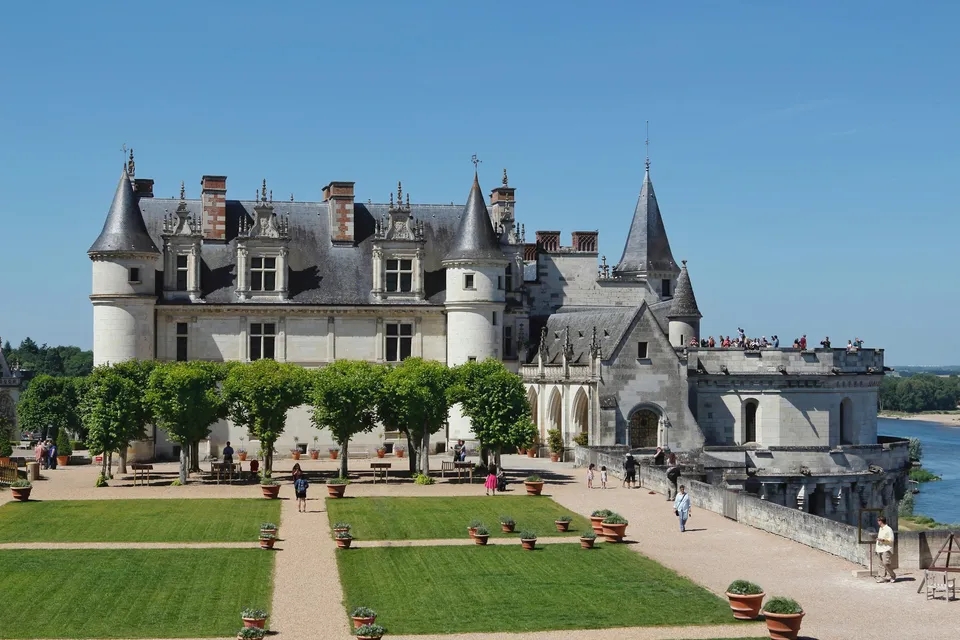
| Château | Train from Paris | Adult ticket, 2026 | Open |
|---|---|---|---|
| Chambord | Blois-Chambord station, 1 h 24 on the fastest (21 trains a day), then the Rémi line 2 shuttle (3.40 euros one way) or a taxi, about 25 minutes | 31 euros for non-EEA visitors, 21 euros for EEA visitors, free under 18 | All year; closed December 25, 2026, January 1, 2027 and four Mondays in early 2027 |
| Chenonceau | A TGV to Saint-Pierre-des-Corps (1 hour, the château says), then the regional train from Tours to Chenonceaux, 25 minutes; the station is 400 m from the ticket office | 19 euros with a guide leaflet, 24 euros with an audioguide | Every day of the year |
| Amboise | Amboise station, 1 h 30 on the fastest (16 trains a day) | 17.30 euros with the HistoPad | All year except December 25 and January 1 |
Source: SNCF Connect route pages for the trains; Chambord (prices, hours, getting there), Chenonceau (prices, opening times, getting there) and Château royal d’Amboise (prices, opening times), read on November 25, 2026.
Chambord’s estate covers 5,440 hectares, and its forest and the grounds around the château are open free, day and night. For a quiet visit, Chambord itself suggests weekdays outside school holidays, from January to March or in November.
6. Reims and Champagne
Reims is the shortest trip in this guide after Versailles: 46 minutes from Paris on the fastest of 16 trains a day (they leave from the Gare de l’Est and the Gare du Nord), from 15 euros, according to SNCF Connect. Its Cathedral of Notre-Dame is, in UNESCO’s words, “a masterpiece of Gothic art” and “an evident testimony to the twenty-five royal coronations that took place there”; with the former Abbey of Saint-Rémi and the Palace of Tau, it has been on the World Heritage List since 1991. Entry is free, every day from 8 a.m.; the doors close at 7:30 p.m. (7:15 p.m. on Sundays and feast days), and on Sunday mornings visitors only reach the narthex until noon.
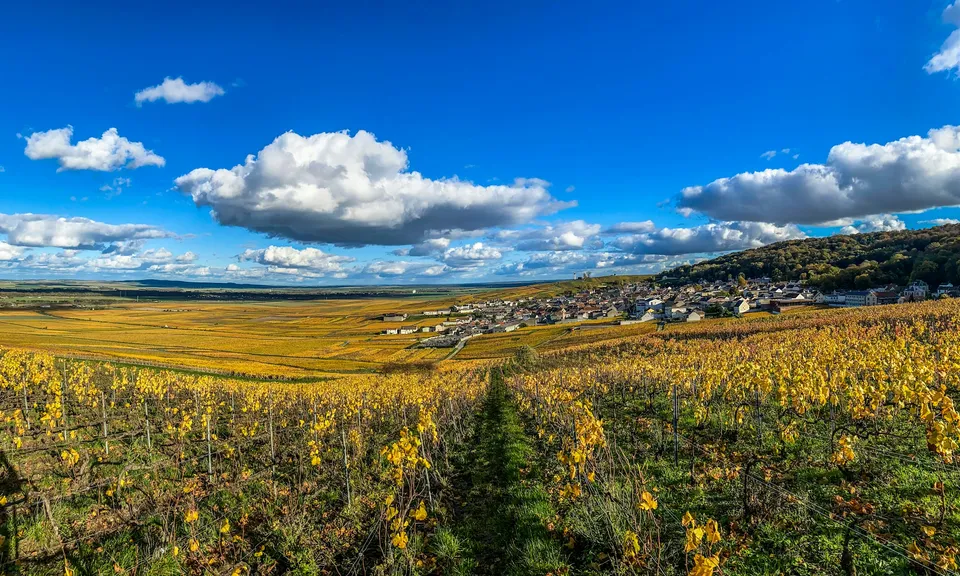
Champagne itself joined the list in 2015 as the “Champagne Hillsides, Houses and Cellars”, in three parts: the historic vineyards of Hautvillers, Aÿ and Mareuil-sur-Aÿ, Saint-Nicaise Hill in Reims, and the Avenue de Champagne and Fort Chabrol in Épernay. The Reims tourist office lists the houses that receive visitors, among them Veuve Clicquot, Ruinart, Lanson, G.H. Mumm, Vranken-Pommery and Taittinger in Reims, and Moët & Chandon and Mercier in Épernay, and warns that in high season you must book your guided visit with the house in advance. As an example of price, the Reims tourist office lists Taittinger’s visit with two glasses at 40 euros for an adult. Épernay is 1 h 13 from Paris on the fastest of 20 trains a day, according to SNCF Connect.
7. Alsace: Strasbourg and Colmar
Alsace, on the Rhine, is the France of half-timbered houses and, from late November, Christmas markets. Strasbourg has been on the World Heritage List since 1988, extended in 2017 as “Strasbourg, Grande-Île and Neustadt”: an urban ensemble “characteristic of Rhineland Europe, with a structure that centres on the cathedral, a major masterpiece of Gothic art”, and a 19th and early 20th century district built when the city was “the capital and symbol of the new German state”. The fastest of 23 trains a day from the Gare de l’Est takes 1 h 44, from 25 euros, according to SNCF Connect.
- The Christmas market of Strasbourg goes back to 1570: its historic market on place Broglie, the Christkindelsmärik, is one of the oldest in Europe, the city’s Christmas site says. In 2026 the Christmas market runs from Friday, November 27 to Thursday, December 24, from 11:30 a.m. to 9 p.m. every day (from 2 p.m. on the first day, until 10 p.m. on December 11, 12, 18 and 19, and until 6 p.m. on December 24), across 8 markets; nothing opens on December 25.
- The cathedral is free to enter, without booking. Its platform, 66 meters up 330 steps, costs 10 euros. Its astronomical clock plays its full show of automata every day at 12:30 p.m. (4 euros), but not during the Christmas market.
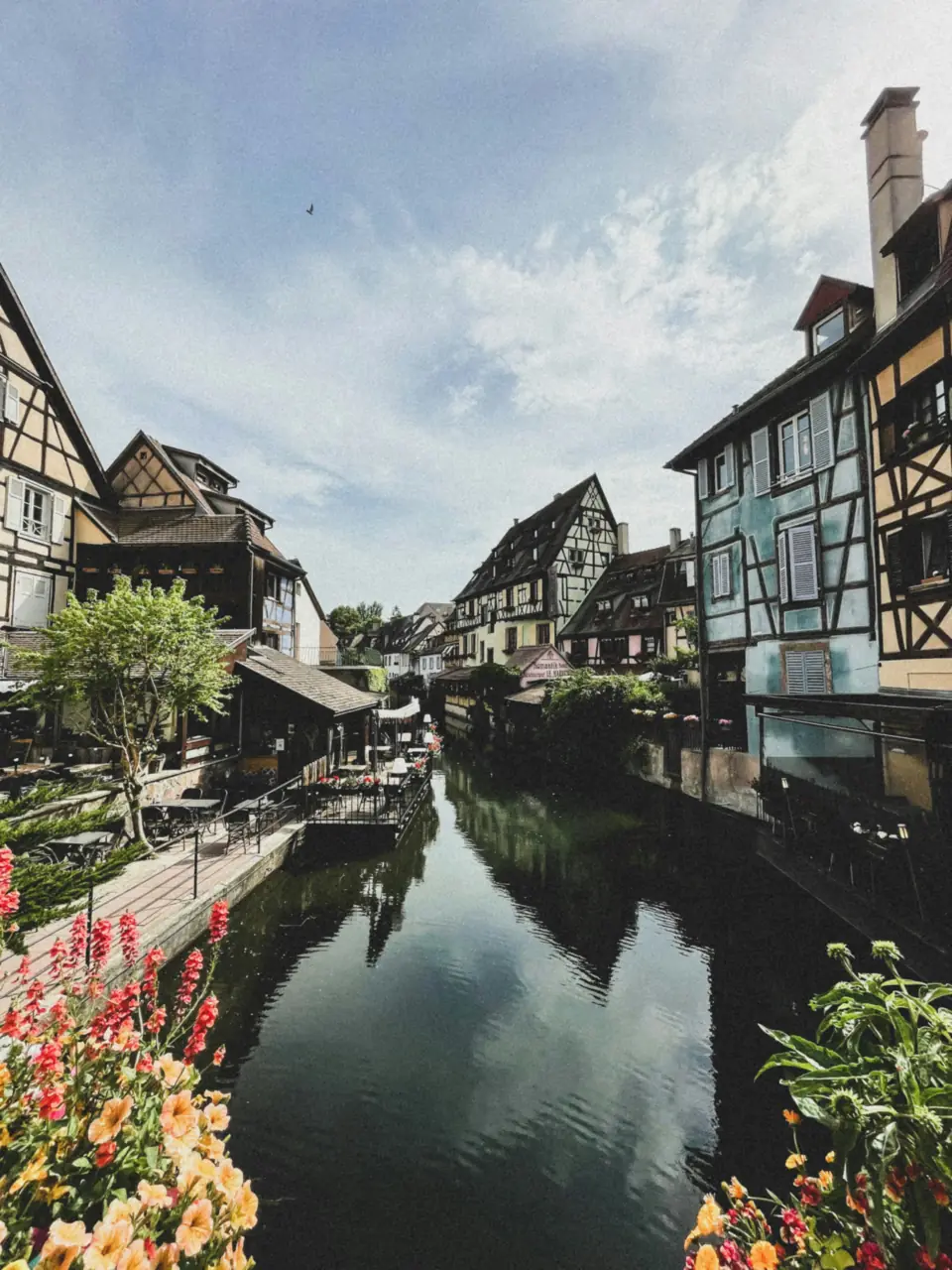
- Colmar, 26 minutes from Strasbourg on the fastest train (42 a day), or 2 h 20 from Paris on the fastest, according to SNCF Connect, is the smaller, prettier old town: a protected sector of half-timbered houses from the Middle Ages to the 18th century, with “Little Venice” along the river Lauch, the tourist office says. Its own Christmas markets run from November 23 to December 29, 2026, with 180 stalls, and the villages around it hold theirs too: Eguisheim from November 27 to December 30, Riquewihr from November 27 to December 20.
8. Beaune and the Burgundy Vineyards
Burgundy is the France of wine villages, and its wine slopes have been on the World Heritage List since 2015 as “The Climats, terroirs of Burgundy”: “small precisely delimited parcels of vineyard located on the slopes of the Côte de Nuits and the Côte de Beaune”, “extending 50 km south of Dijon up to Maranges”, 1,247 of them. The listing takes in the vineyards and villages, the town of Beaune and the historic center of Dijon, with the Ducal Palace of Dijon, the Hospices of Beaune and the Château du Clos de Vougeot as the traces of the powers that shaped them.
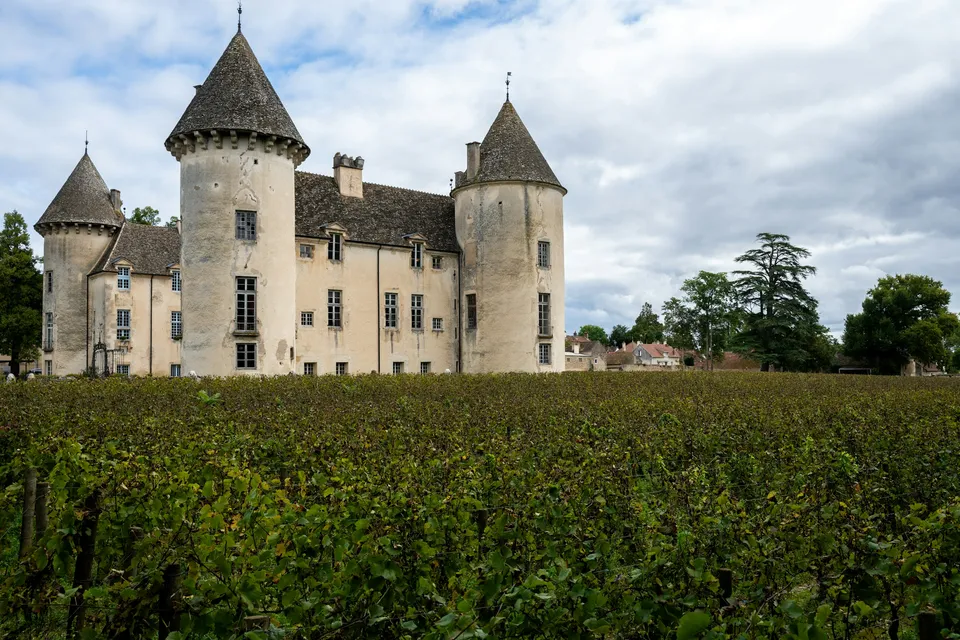
- The Hôtel-Dieu of Beaune, the hospital founded in 1443 by Nicolas Rolin, chancellor of the Duke of Burgundy, and his wife Guigone de Salins, is known around the world for its roof of glazed polychrome tiles, and it holds Rogier van der Weyden’s polyptych of the Last Judgment. It is open every day: from November 16 to March 31, 9 a.m. to 12:30 p.m. and 2 to 6:30 p.m.; from April 1 to November 15, 9 a.m. to 7:30 p.m. The 2026 ticket costs 12.50 euros for an adult and 6.25 euros for ages 6 to 17, free under 6.
- The Route des Grands Crus, the wine road of Burgundy, runs about 60 km from Dijon to Santenay through some fifty wine villages; the Beaune tourist office counts 3 to 4 days to cover all of it.
Getting there from Paris. SNCF Connect lists 19 trains a day from Paris (Gare de Lyon or Bercy) to Beaune, 2 h 05 on the fastest, from 26 euros, and 20 to Dijon, 1 h 32 on the fastest, from 20 euros.
9. Lyon
Lyon has been a great city since the Romans founded it. UNESCO inscribed the “Historic Site of Lyon” in 1998: a city “founded by the Romans in the 1st century B.C. as the capital of the Three Gauls”, whose fabric runs “from the Roman vestiges of antique Lugdunum to the medieval streets on the slopes of Fourvière and the Renaissance dwellings of Vieux-Lyon, from the peninsula with a wealth of classical architecture to the slopes of Croix-Rousse with its very particular canut dwellings”.
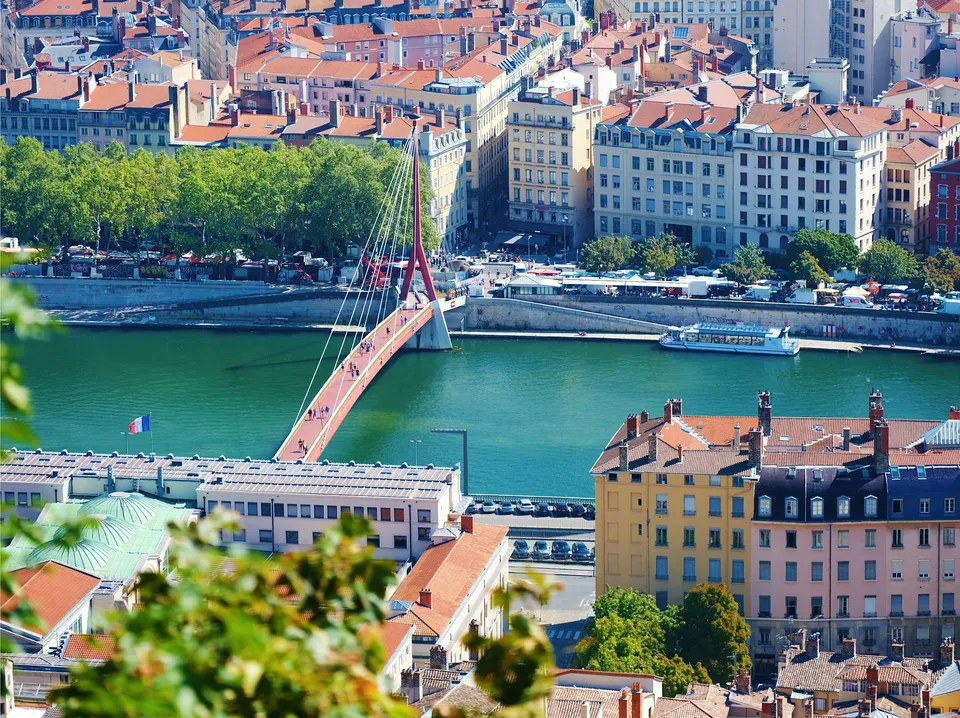
- Vieux Lyon became France’s first protected district in 1964 and is one of the largest Renaissance ensembles in Europe, 24 hectares, the tourist office says. Lyon’s traboules, passages that cross from one street to the next through the buildings, number about 500 across the city, about 200 of them in Vieux-Lyon, but only about fifty are open to the public, the tourist office says.
- Fourvière, on the hill above, has a basilica that is free to enter, without booking; the F2 funicular climbs from Vieux-Lyon (metro D), or you walk up through the Rosaire gardens in 25 minutes.
- The Fête des Lumières, the festival of lights, runs from Saturday, December 5 to Tuesday, December 8, 2026, with more than 25 works, from 7 to 11 p.m. (6 to 10 p.m. on Sunday).
Getting there from Paris. SNCF Connect lists 32 trains a day, 1 h 43 on the fastest, from 10 euros, arriving at Lyon Part-Dieu, Lyon Perrache or Lyon Saint-Exupéry TGV.
10. Chamonix and Mont Blanc
Chamonix, at 1,035 meters, is the town at the foot of Mont Blanc, 4,805 meters, according to its tourist office, first climbed on August 8, 1786 by Jacques Balmat and Michel Paccard, both from Chamonix. It is the one place in this guide without a World Heritage site: the Mont Blanc massif has been on France’s tentative list since 2000.
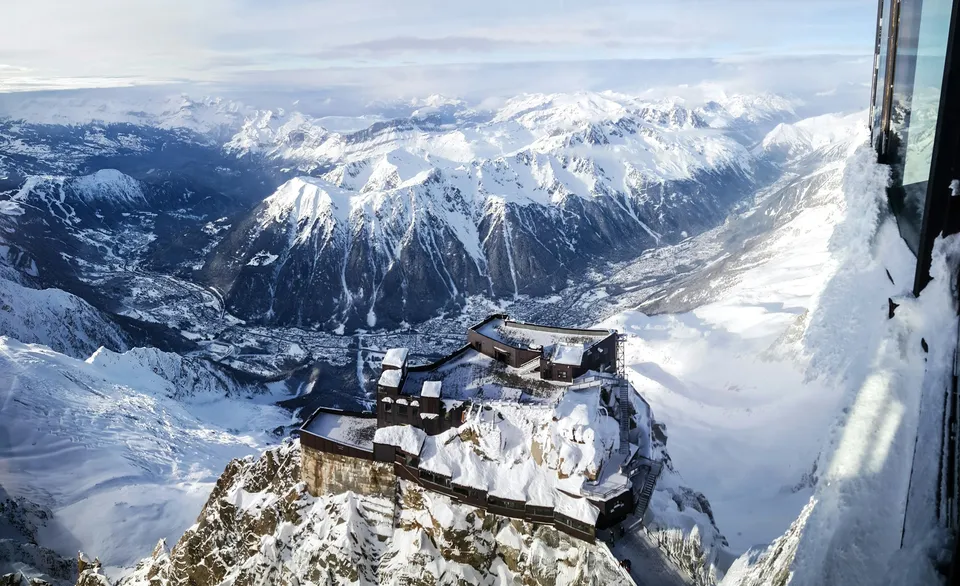
- The Aiguille du Midi cable car, “the highest cable car in France” in its operator’s words, climbs from the town to terraces at 3,842 meters, in about 20 minutes according to the tourist office (20 to 40 minutes depending on the crowds, according to the operator). It was closed when we checked on November 25, 2026, and reopens on December 19, 2026; the winter timetable runs to March 28, 2027. Booking is free and required, and this winter an adult (15 to 64) round trip to the summit costs from 60.20 to 83.00 euros, as the price varies. Allow 2 to 3 hours, trip included.
- The Mer de Glace glacier is reached by the Montenvers train: the “Mer de Glace trip”, with the train, the gondola and the ice cave, costs 51.30 euros for an adult.
Getting there from Paris. SNCF Connect lists 6 trains a day from the Gare de Lyon to Chamonix-Mont-Blanc, 5 h 32 on the fastest, with at least one change, from 56 euros.
For the lake and the old town of Annecy, 101 kilometers from Chamonix by road and 3 h 43 from the Gare de Lyon on the fastest train, see our guide to Annecy: its canals and château, the beaches and cruises of the lake, and its weather month by month.
11. The French Riviera from Nice to Menton
The Riviera has drawn winter visitors for two centuries. Nice has been on the World Heritage List since 2021 as “Nice, Winter Resort Town of the Riviera”: a city that, in UNESCO’s words, “reflects the development of a city devoted to winter tourism, making the most of its mild climate and its coastal situation, between sea and mountains”. Its seafront promenade began as the “Camin dei Ingles”, a modest path laid along the shore by British winter visitors in 1824, which became the Promenade des Anglais; the city was ceded to France in 1860.
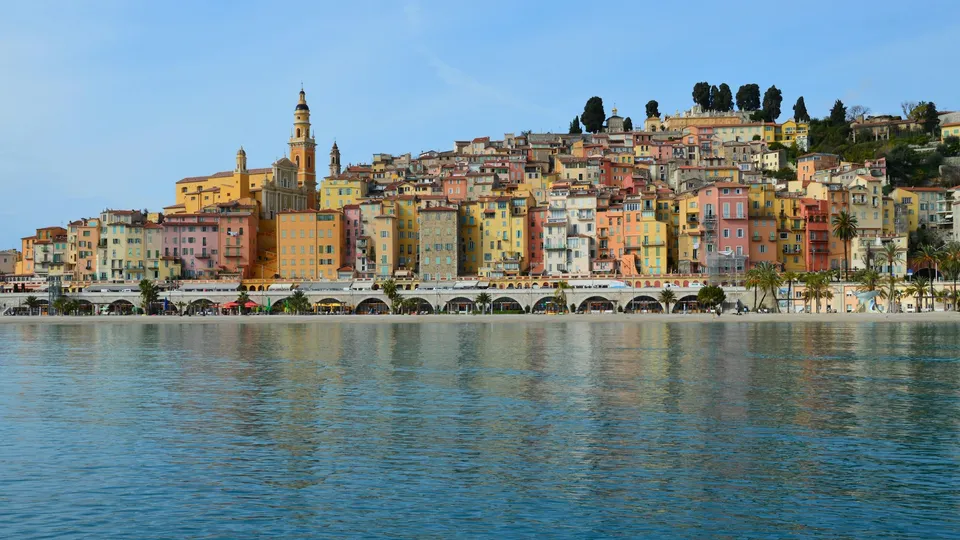
- Nice is the base: its old town, its markets, its museums and a coastal railway to the rest of the Riviera. Météo-France’s normals for Nice give 5.8 to 13.3 °C in January, 20.8 to 27.5 °C in July and 2,760.5 hours of sunshine a year. Our guide to Nice covers it in detail.
- Èze is a village at 429 meters between Nice and Monaco, whose château was built in the second half of the 12th century; its ruins top the exotic garden, which costs 10 euros for an adult. Our guide to Èze covers the village, the garden and the bus and train.
- Menton, by the Italian border, holds its Lemon Festival from February 13 to 28, 2027, the 93rd edition, on the theme “Douce France”, with citrus sculptures in the Biovès gardens and parades on Sundays and Thursday nights. Our guide to Menton has the rest.
Getting there. From the US, you can fly straight to Nice. Its airport lists non-stop flights to four US cities: New York all year (La Compagnie, to Newark; Delta and United from April to October), and Atlanta, Boston and Philadelphia from May to October. From Paris, SNCF Connect lists 13 trains a day to Nice, 5 h 42 on the fastest, from 25 euros, among them a night train from Austerlitz.
12. Provence: Avignon and the Lavender
Provence is the France of markets, stone villages and, for a few weeks in summer, lavender. Its city of the popes is Avignon, which UNESCO inscribed in 1995 as the “Historic Centre of Avignon: Papal Palace, Episcopal Ensemble and Avignon Bridge”: “In the 14th century, this city in the South of France was the seat of the papacy. The Palais des Papes, an austere-looking fortress lavishly decorated by Simone Martini and Matteo Giovanetti, dominates the city, the surrounding ramparts and the remains of a 12th-century bridge over the Rhone.”
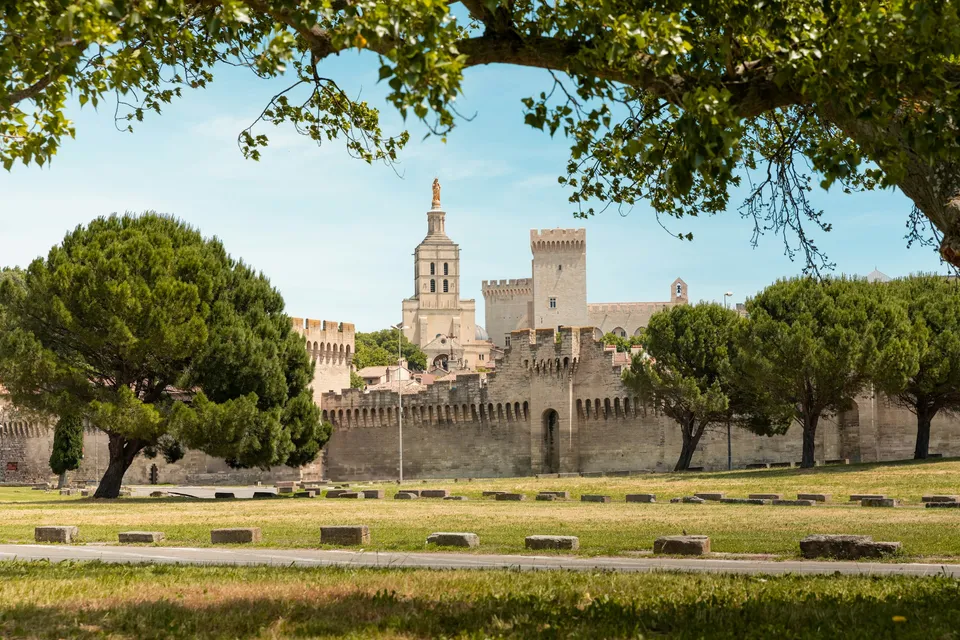
- The Palais des Papes is open every day of the year: 10 a.m. to 5 p.m. from November 2 to December 18, and 9 a.m. to 7 p.m. from March 1 to November 1, last entry one hour before closing. An adult ticket costs 16 euros with the papal gardens, or 19.50 euros with the Pont d’Avignon, and entry is free under 10. A new visit route opened on May 1, 2026, with rooms never shown before, and the work continues until spring 2027.
- The Pont du Gard, 21 km from Avignon, is a Roman aqueduct bridge “which stands almost 50 m high and is on three levels”, built to carry the aqueduct of Nîmes across the river, and on the World Heritage List since 1985. The site is free on foot or by bike; parking costs 9 euros per car for the day, whatever the number of people. Its museum spaces are closed for the winter from November 2, 2026 to February 28, 2027. Bus 115 runs from Avignon.
- The lavender blooms “generally between mid-June and early August”, according to the regional tourism board, which says elsewhere on the same page that it blooms from May to early August, and that the dates vary with the weather each year. Its best-known fields are on the Valensole plateau, in the Alpes-de-Haute-Provence, at the Cistercian abbey of Sénanque in the Luberon, and around Sault, in the Vaucluse. At Sénanque, 4 km from Gordes, the Luberon tourist office puts the bloom at about mid-June to late July.
- The Luberon regional nature park covers 1,867 km² and 77 communes, its own site says. Gordes, about 40 minutes by road from Avignon, is one of the “Plus Beaux Villages de France”, with a market on Tuesday mornings. In summer, from June 15 to September 15, access to the forests of the Vaucluse is regulated because of the fire risk.
Getting there from Paris. SNCF Connect lists 27 trains a day from the Gare de Lyon (and Marne-la-Vallée Chessy) to Avignon, 2 h 33 on the fastest, from 16 euros; they arrive at Avignon TGV or Avignon Centre. For the villages, plan on a car. Our guide to the South of France covers the rest of Provence, from Arles to the Calanques of Marseille, the Camargue and Languedoc, and our guide to Provence goes village by village, from Gordes and Roussillon to Saint-Rémy, Les Baux and Moustiers-Sainte-Marie, with the market days and the lavender calendar. On the coast, our guide to Cassis covers its fishing port, the calanques of Port-Miou, Port-Pin and En-Vau, and the boat trips to them.
13. Carcassonne
Carcassonne is the medieval fortress of everyone’s imagination, and a real one. UNESCO inscribed the “Historic Fortified City of Carcassonne” in 1997 as “an outstanding example of a medieval fortified town, with its massive defences encircling the castle and the surrounding buildings, its streets and its fine Gothic cathedral”, and as a landmark of conservation for “the lengthy restoration campaign undertaken by Viollet-le-Duc”. The tourist office counts 3 km of ramparts in a double ring of walls. In 2026 UNESCO added a second listing: the castle and ramparts are one of the eight sites of the “Royal Capetian Fortresses of Languedoc”, with the fortresses of Aguilar, Lastours, Montségur, Peyrepertuse, Puilaurens, Quéribus and Termes, part of the defensive system the Capetian kings built in the 13th and 14th centuries after the Albigensian Crusade.
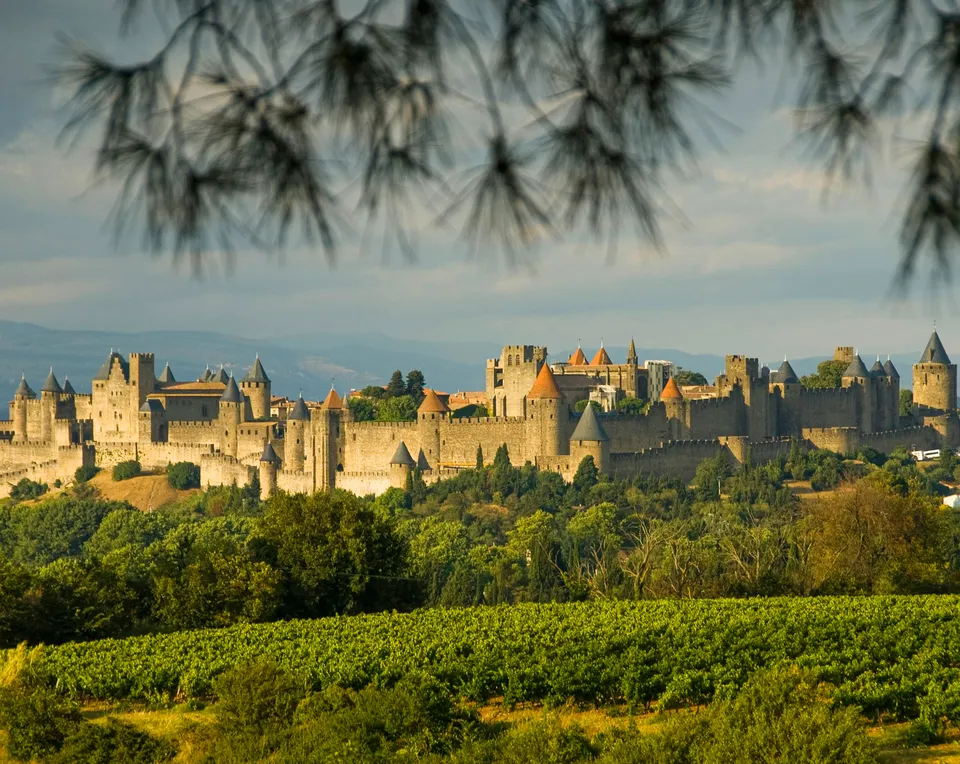
The walled city, La Cité, is free to enter day and night, by the Porte Narbonnaise or the Porte d’Aude; only the castle, the museums and some guided tours are paid, the tourist office says. The castle and ramparts, which the Centre des monuments nationaux now calls the Forteresse royale de Carcassonne, take about 2 hours:
| Castle and ramparts | As published |
|---|---|
| April 1 to September 30 | 10 a.m. to 6:30 p.m., last entry 5:45 p.m.; 19 euros |
| October 1 to March 31 | 9:30 a.m. to 5 p.m., last entry 4:15 p.m.; 13 euros |
| With a TGV INOUI or Intercités ticket less than 5 days old | 16.50 euros, then 11.50 euros |
| Free | Under 18; everyone on the first Sunday of the month from January to March, and on the European Heritage Days |
| Closed | January 1, May 1 and December 25 |
Source: Forteresse royale de Carcassonne (Centre des monuments nationaux), practical information, read on November 25, 2026. Places are limited and booking is strongly advised.
Getting there from Paris. SNCF Connect lists 10 trains a day, 5 h 24 on the fastest, from 38 euros, with at least one route that needs a change. Carcassonne fits best into a trip to the South rather than a visit from Paris.
14. Bordeaux and Saint-Émilion
Bordeaux is the great city of the Atlantic side, and the capital of wine. UNESCO inscribed “Bordeaux, Port of the Moon” in 2007 as “an outstanding urban and architectural ensemble, created in the age of the Enlightenment”, “with more protected buildings than any other French city except Paris”. SNCF Connect lists 29 trains a day to Bordeaux Saint-Jean, 2 h 03 on the fastest, from 10 euros.
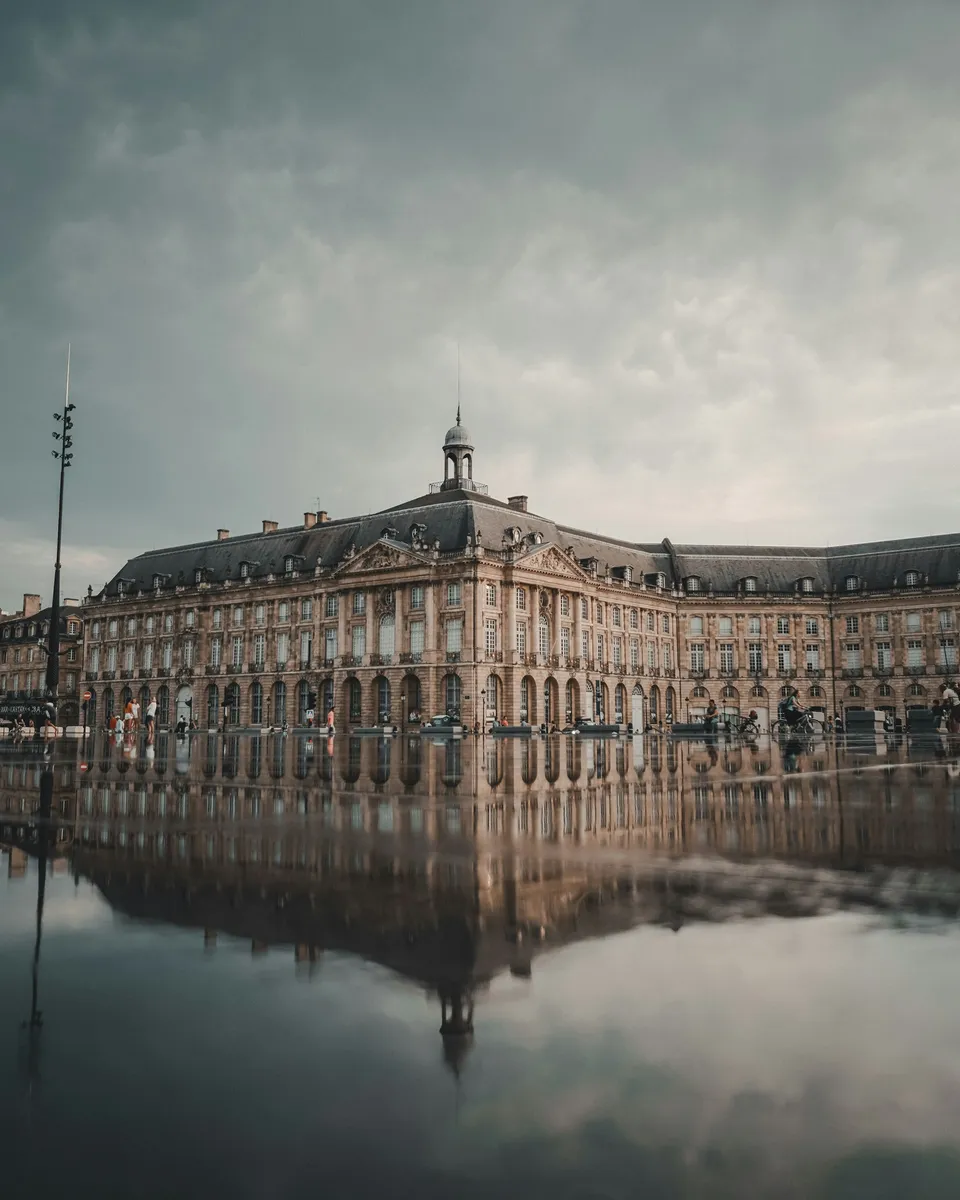
- La Cité du Vin, the wine museum on the river, is reached by tram B (stop “La Cité du Vin”). Its ticket costs 23 euros for an adult on a set date, with a multimedia guide in 9 languages and a glass of wine (or organic grape juice) at the 8th-floor Belvedere; count 2 to 3 hours. It opens every day from 10 a.m., except December 25 and a closure week in late January 2027 (January 26 to February 1 in one place on its page, January 25 to 31 in another).
- Saint-Émilion, 29 minutes from Bordeaux Saint-Jean on the fastest of 16 trains a day (from 5 euros, according to SNCF Connect), is the wine village of the region: the “Jurisdiction of Saint-Emilion”, on the World Heritage List since 1999, is “an exceptional landscape devoted entirely to wine-growing”, 7,847 hectares across eight communes. From the station to the village is a walk of about 20 minutes, uphill, the tourist office says. Its monolithic church, dug into the rock in the early 12th century, 38 m long and 12 m high, can only be seen on a guided tour: the tourist office’s “Saint-Émilion Souterrain” tour costs 15 euros for an adult and is given in French, with a written translation in English on request.
15. The Dordogne: Sarlat and the Vézère Valley
The Dordogne, in the Périgord, is the France of prehistory and of markets of truffles and foie gras. Its treasure is the Vézère Valley, inscribed by UNESCO in 1979 as “Prehistoric Sites and Decorated Caves of the Vézère Valley”: the property comprises 15 prehistoric sites, in a valley that, the same page says, holds 147 prehistoric sites from the Paleolithic and 25 decorated caves (or “more than 150” sites and “about thirty” caves, in another passage). The most famous is Lascaux, whose discovery in 1940 “was of great importance for the history of prehistoric art”; its hunting scenes show some 100 animal figures.
- Lascaux itself is closed: the original cave cannot be visited, its official site says, and it has been closed since 1963 for conservation. What you visit is Lascaux IV, the Centre International de l’Art Pariétal, the first replica of the whole cave, opened in 2016: 23 euros for an adult (13 and over) and 15 euros for children aged 5 to 12 in 2026, or 29 euros with Lascaux II, the first replica, opened in 1983. Check availability on the official ticket office, arrive 20 minutes before your visit, and note that the last admission is 2 hours before closing. Its 2026-2027 calendar shows no opening between January 4 and February 6.
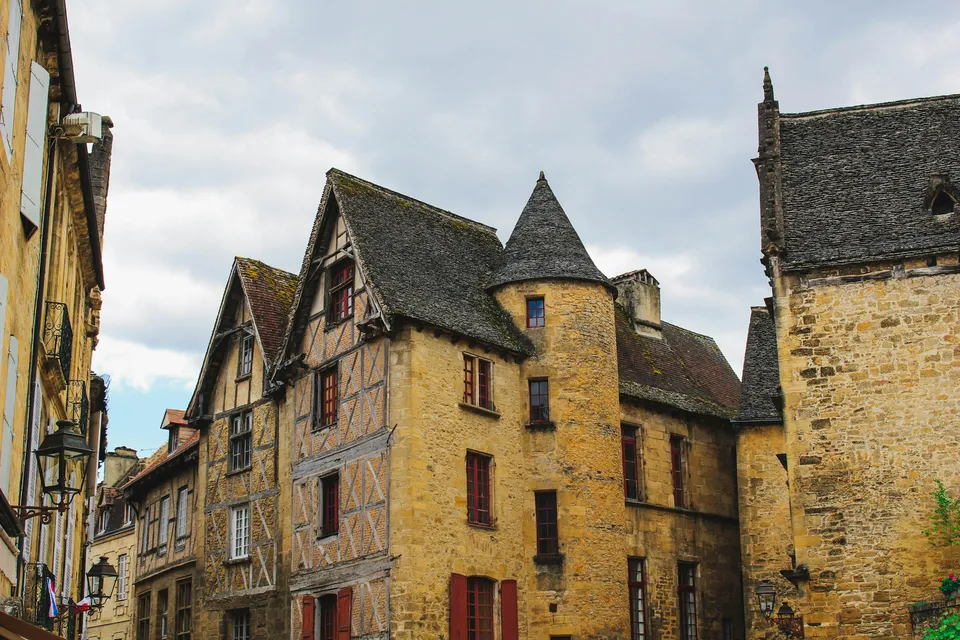
- Sarlat-la-Canéda is the town to stay in: its old town is one of the first and best preserved protected districts in France, with 66 listed historic monuments, the tourist office says. Its market fills the medieval town on Wednesday mornings and on Saturdays, and in winter the truffle and foie gras markets are held on Saturday mornings.
Getting there from Paris. There is no direct train to Sarlat: SNCF Connect lists 5 trains a day, 4 h 53 on the fastest, with at least one change, from 51 euros. Brive-la-Gaillarde has direct trains, 4 h 38 on the fastest. The valley itself is best seen by car.
The Weather Across France
France has several climates, and the gap shows in summer as much as in winter. Météo-France’s normals for 1991 to 2020:
| Station | January, min to max | July, min to max | Sunshine a year | Wettest month |
|---|---|---|---|---|
| Paris-Montsouris | 3.2 to 7.6 °C | 16.2 to 25.7 °C | 1,717 hours | May |
| Rennes (Brittany) | 3.3 to 9.2 °C | 13.7 to 24.8 °C | 1,761.5 hours | December, with November and October close behind |
| Strasbourg-Entzheim (Alsace) | -0.2 to 5.2 °C | 14.9 to 26.4 °C | 1,747.3 hours | May |
| Lyon-Bron | 1.1 to 7.1 °C | 17 to 28.2 °C | 2,049.5 hours | October |
| Bordeaux-Mérignac | 3.7 to 10.5 °C | 16.2 to 27.1 °C | 2,069.8 hours | November |
| Carpentras (Vaucluse, Provence) | 1 to 11.1 °C | 16.5 to 32.3 °C | 2,835.3 hours | September |
| Nice | 5.8 to 13.3 °C | 20.8 to 27.5 °C | 2,760.5 hours | November |
Source: Météo-France, climate normals 1991-2020 for each station (Paris-Montsouris, Rennes, Strasbourg-Entzheim, Lyon-Bron, Bordeaux-Mérignac, Carpentras, Nice), read on November 25, 2026. Météo-France lists no station for Avignon; Carpentras is in the same department, the Vaucluse.
Three things stand out. Strasbourg has the coldest winters of the list, and Nice the mildest. Provence has the hottest summers: the average July maximum at Carpentras is 32.3 °C. And the South gets the most sun: 2,835.3 hours a year at Carpentras and 2,760.5 at Nice, against 1,717 to 1,761.5 in Paris, Strasbourg and Rennes.
Which Place for Which Season
| Season | Where to go | What is on |
|---|---|---|
| December to February | Strasbourg and Colmar, Lyon, Chamonix, the Riviera | Christmas markets until December 24 in Strasbourg and December 29 in Colmar (2026); the Fête des Lumières in Lyon, December 5 to 8, 2026; the Aiguille du Midi reopens on December 19, 2026; Menton’s Lemon Festival, February 13 to 28, 2027; the mildest January of the weather table above, at Nice |
| March to May | Saint-Malo, the Loire, Provence | The strongest tides at Saint-Malo, around the spring equinox; Chambord’s quiet weekdays, until March; the Palais des Papes on its summer hours from March 1 |
| June to August | Provence, Brittany, Chamonix | The lavender, generally from mid-June to early August; the coolest summers, in Brittany; the Pont du Gard’s museum open until 8 p.m. in July and August |
| September to November | Saint-Malo, the Dordogne | The strongest tides of autumn at Saint-Malo, around the equinox; Lascaux IV open from 9 a.m. to 7 p.m. until November 1 |
Source: the official pages cited in each section, and Saint-Malo’s tourist office for the equinox tides, read on November 25, 2026. Dates are those of the 2026-2027 season.
Before you fix your dates, check the calendar: our guide to French public holidays gives the 2027 public holidays, what closes on each, the long weekends and the school holidays of each zone.
Getting Around France by Train
Most places in this guide are a train ride from Paris, and the fastest trains are high-speed TGVs, booked on SNCF Connect, the national rail operator’s site and app.
- When to book. In normal times, SNCF Connect sells train tickets 4 months ahead; for TGV INOUI, the big holiday periods (Christmas, winter, spring and summer) get opening dates set in advance. TGV INOUI trains from January 7 to July 2, 2027 went on sale on November 12, 2026. OUIGO, the low-cost high-speed trains, sell between 2 and 9 months ahead.
- What “from” means. The “from” prices on SNCF Connect’s route pages are for one person, one way, in second class, on a selection of trains and dates and subject to availability.
- The Carte Avantage. For several trips in a year, the Carte Avantage Adulte (ages 27 to 59) costs 49 euros and gives 30% off for you and one companion over 12 on TGV INOUI and Intercités trains (not OUIGO) within France, on one-way trips on Saturdays or Sundays, on round trips that include a Friday, Saturday or Sunday night, or every day when you travel with a child under 12. It is valid for one year. There are Jeune (12 to 27) and Senior (60 and over) versions at the same price.
- Beyond the stations. Buses are thin in the countryside: the ABMC calls local public transport around the D-Day beaches intermittent, and the villages of the Luberon, the Dordogne and the Burgundy wine road are best seen by car, rented at a station once you arrive.
Staying Longer: a Season in France
Many of the places in this guide reward a longer stay: a winter on the Riviera, a spring in Provence, a summer in Brittany. As a visitor from a visa-exempt country such as the US, the UK, Canada or Australia, you can usually stay a maximum of 90 days within any 180-day period, according to the European Commission: “You must count back 180 days from each day of your stay and ensure the total number does not exceed 90.” Since April 10, 2026, the Entry/Exit System has replaced passport stamps: it records each entry and exit and, for visitors who need no visa, four fingerprints and a face image. ETIAS, the travel authorization for visa-exempt visitors, is “currently not in operation”, the European Union says, and it will announce the start date several months ahead. Our guide to how long Americans can stay in France without a visa explains the count, and the Schengen calculator checks your dates; beyond 90 days you need a long-stay visa or a residence permit.
Finding a furnished home for a month or a season, calling owners and agencies, and setting up a phone line or a bank account in French is the kind of work our Personal Assistant handles: the calls, the forms and the apartment search, in French.
FAQ
What are the top 10 places to visit in France?
For a first trip: Paris and Versailles, Mont-Saint-Michel, the D-Day beaches of Normandy, the Loire Valley châteaux, Strasbourg and Colmar, Lyon, Avignon and Provence, the French Riviera, Carcassonne and Bordeaux. Each of the ten holds a site on UNESCO’s World Heritage List, and France has 56 in all.
Which part of France is the best to visit?
It depends on the season. For a first trip, Paris with Normandy or the Loire Valley, both under 2 h 15 by train on the fastest services. For winter sun, the Riviera: Nice has the mildest January of the seven Météo-France stations in our weather table. For Christmas, Alsace. For lavender, Provence, generally from mid-June to early August. For a summer without the heat, Brittany, where the average July maximum is 24.8 °C at Rennes against 32.3 °C at Carpentras in Provence.
Where should I go in France for 3 days?
Stay in Paris and give one day to Versailles, 11 minutes from Montparnasse on the fastest train and closed on Mondays. If you would rather see a region, Reims (46 minutes), Tours for the Loire châteaux (51 minutes), Dijon for Burgundy (1 h 32) and Lyon (1 h 43) are the shortest trips from Paris on SNCF Connect’s fastest trains. Mont-Saint-Michel can be done in a day, but a long one: on November 26, 2026, the 8:43 a.m. from Paris reached Pontorson at 12:14 p.m. and the last train back left at 6:48 p.m. For the D-Day beaches, Bayeux is 2 h 12 away on the fastest train, and the ABMC advises arranging your transport to and from the cemetery before you leave Paris or Bayeux.
What is the best time to visit France?
There is no single best month: the calendar decides. Strasbourg’s Christmas market runs from November 27 to December 24, 2026, Lyon’s Fête des Lumières from December 5 to 8, 2026, and Menton’s Lemon Festival from February 13 to 28, 2027. The lavender of Provence generally blooms from mid-June to early August, and the strongest tides at Saint-Malo come close to the equinoxes, its tourist office says. In Météo-France’s normals, the wettest month is May in Paris and Strasbourg, but November in Bordeaux and Nice.
Can you travel around France without a car?
Yes, for the cities and most of this guide. Reims, Tours, Strasbourg, Colmar, Lyon, Bordeaux, Avignon, Nice and Saint-Malo all have direct trains from Paris, and Mont-Saint-Michel, Chambord and the D-Day beaches have buses or shuttles from their stations, though the ABMC calls public transport around the beaches intermittent. For the villages of the Luberon, the Dordogne and the Burgundy wine road, plan on a car.
How many World Heritage sites does France have?
56, according to UNESCO: 47 cultural, 7 natural and 2 mixed. The newest are the Beaches of the D-Day Landings, Normandy, 1944 and the Royal Capetian Fortresses of Languedoc, which include the castle and ramparts of Carcassonne (both 2026), and the Megaliths of Carnac and of the shores of Morbihan (2025).
Conclusion
France is big enough for many trips. For a first one, pair Paris with one region that a direct train makes easy: Normandy, the Loire, Champagne, Alsace, Burgundy, Lyon, Bordeaux or Provence. Then time it by the calendar: the Christmas markets of Alsace and the lights of Lyon in December, Menton’s Lemon Festival in February, the lavender in early summer, the big tides of Saint-Malo around the equinoxes. Book the time slots where they are required, at Versailles, at the Aiguille du Midi and at the Louvre over the holidays, and remember that visitors from outside the EEA pay more at the Louvre, Versailles and Chambord. For the South in detail, start with our guide to the South of France; for the capital, with the things to do in Paris.
The parts of the move Americans find out about too late.
What Americans get wrong about moving to France, and the number, form or deadline that fixes it. Straight to your inbox.
One email a week. Real numbers, nothing else.
Written by
Aurelio Maurici
Co-Founder, EasyFranceNow
Aurelio Maurici is a French entrepreneur and co-founder of EasyFranceNow. His work focuses on the intersection of French administration, banking constraints affecting U.S. nationals, tax residency and cross-border reporting, healthcare enrollment, and the procedural realities Americans encounter while settling in France.


