
Provence, France: The Best Villages, the Lavender and Where to Go

By Maxime Roseau Co-founder, Master of Business and Communication, Université Nice Sophia Antipolis
Published Updated

In this article
- Where Is Provence?
- Provence at a Glance
- The Luberon: Perched Villages and the Abbey of Sénanque
- The Alpilles: Saint-Rémy-de-Provence and Les Baux
- Arles and the Camargue
- The Camargue
- Avignon and the Vaucluse
- Mont Ventoux
- Aix-en-Provence and Marseille
- The Verdon and Moustiers-Sainte-Marie
- The Lavender Plateaux and When Lavender Blooms
- The 2027 Lavender Festivals
- Provence’s UNESCO Sites
- Provence Markets by Day of the Week
- What to Taste in Provence
- Weather in Provence Month by Month
- When to Go: Provence’s 2027 Calendar
- Getting to Provence
- From the US
- From Paris by TGV
- Getting Around Provence
- A One-Week Provence Itinerary
- Where to Stay in Provence
- Staying Longer: a Season in Provence
- FAQ
- Conclusion
Provence is the part of the south of France made of four departments, the Bouches-du-Rhône (Marseille), the Vaucluse (Avignon), the Alpes-de-Haute-Provence (Digne-les-Bains) and the Var (Toulon), in the regional tourism board’s definition. For a visitor it is seven different trips: the perched villages of the Luberon, the Alpilles of Saint-Rémy and Les Baux, Roman Arles and the Camargue delta, Avignon and the Vaucluse up to Mont Ventoux, Aix and Marseille, the Gorges du Verdon, and the lavender plateaux of Valensole and Sault. Pick a base in one or two of them, come between mid-June and late July if you want the lavender, and rent a car for the villages.
This guide takes Provence area by area and village by village: what each place is for, what it costs to visit, the market day of each town, the lavender calendar and festivals of 2027, the weather month by month, and how to get there and around. Every price, date and journey time below comes from the official page of the park, the monument, the tourist office or the operator, read on November 26, 2026; where an organizer publishes only a rule, such as the first Sunday of July, the 2027 date is worked out from it and we say so. For the South of France as a whole, the Riviera and the Languedoc included, start with our South of France guide.
Where Is Provence?
Provence is part of the region Provence-Alpes-Côte d’Azur, which its tourism board sells as three destinations: Provence, “whose roads are bordered with olive trees and lavender fields”, the Alps, and the Côte d’Azur, which it draws from Saint-Tropez to Menton. Provence is the four departments named above, with a coast that runs, in the board’s words, “from the Calanques de Cassis fjords to the Gulf of Saint-Tropez”. Nice, Cannes and Menton are on the Côte d’Azur, not in Provence in this sense; our guides to Nice and Menton cover them.
Provence at a Glance
| Area | Where to base yourself | What it is for |
|---|---|---|
| The Luberon | Gordes, Lourmarin or another village | Perched villages, the ochres of Roussillon, the Abbey of Sénanque |
| The Alpilles | Saint-Rémy-de-Provence | Van Gogh, Roman Glanum, Les Baux, olive oil |
| Arles and the Camargue | Arles | Roman monuments, the Rhône delta, flamingos and white horses |
| Avignon and the Vaucluse | Avignon | The Palais des Papes, Roman Orange and Vaison, Châteauneuf-du-Pape, Mont Ventoux |
| Aix, Marseille and Cassis | Aix-en-Provence or Marseille | Cézanne’s country, the Mucem, the Calanques |
| The Verdon | Moustiers-Sainte-Marie | The Gorges du Verdon and the Lac de Sainte-Croix |
| The lavender plateaux | Valensole or Sault | Lavender from mid-June to mid-August |
Source: Provence-Alpes-Côte d’Azur Tourisme, Provence, and the pages of each area cited below, read on November 26, 2026.
The parts of the move Americans find out about too late.
What Americans get wrong about moving to France, and the number, form or deadline that fixes it. Straight to your inbox.
One email a week. Real numbers, nothing else.
The Luberon: Perched Villages and the Abbey of Sénanque
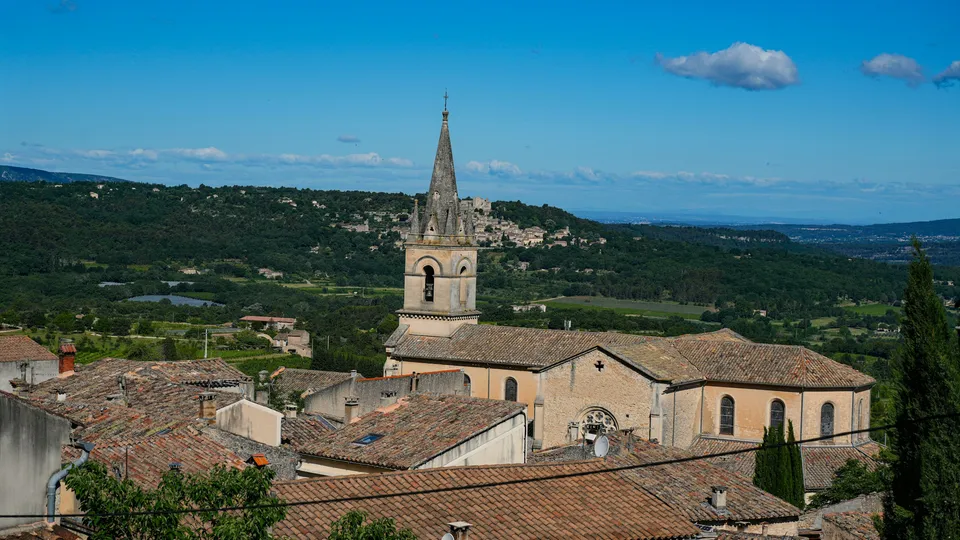
The Luberon is the Provence of the postcards: a massif that runs 75 km from Cavaillon to Forcalquier and rises to 1,125 meters at the Mourre Nègre, with stone villages perched on its slopes. The Parc naturel régional du Luberon covers 1,867 km² and 77 communes, 51 in the Vaucluse and 26 in the Alpes-de-Haute-Provence, its own site says. UNESCO counts it twice: as part of the Luberon-Lure biosphere reserve (since 1997, extended to the Montagne de Lure in 2010) and as a UNESCO Global Geopark (recognized in 2015). The Combe de Lourmarin, a pass through the ridge, separates the Petit Luberon to the west from the Grand Luberon to the east.
Five Luberon villages carry the label Les Plus Beaux Villages de France, the Luberon tourist office says: Gordes, Roussillon, Lourmarin, Ménerbes and Ansouis.
- Gordes, 1,661 inhabitants (INSEE, 2023), climbs its rock around a château built between the eleventh and the sixteenth centuries, which the Agoult-Simiane lords turned into a Renaissance château in 1525; the tourist office desk is inside. Under the houses, the Caves du Palais Saint-Firmin are cellars cut into the rock on several levels, with oil mills and cisterns. The tourist office suggests 2 to 4 hours for the village, and a full day with Sénanque or the Village des Bories, 4 km away toward Cavaillon, a cluster of dry-stone huts (UNESCO inscribed the art of dry-stone walling as intangible heritage in 2018). Two easy walks start in the village: 8 km round trip to Sénanque, 6 km round trip to the Bories.
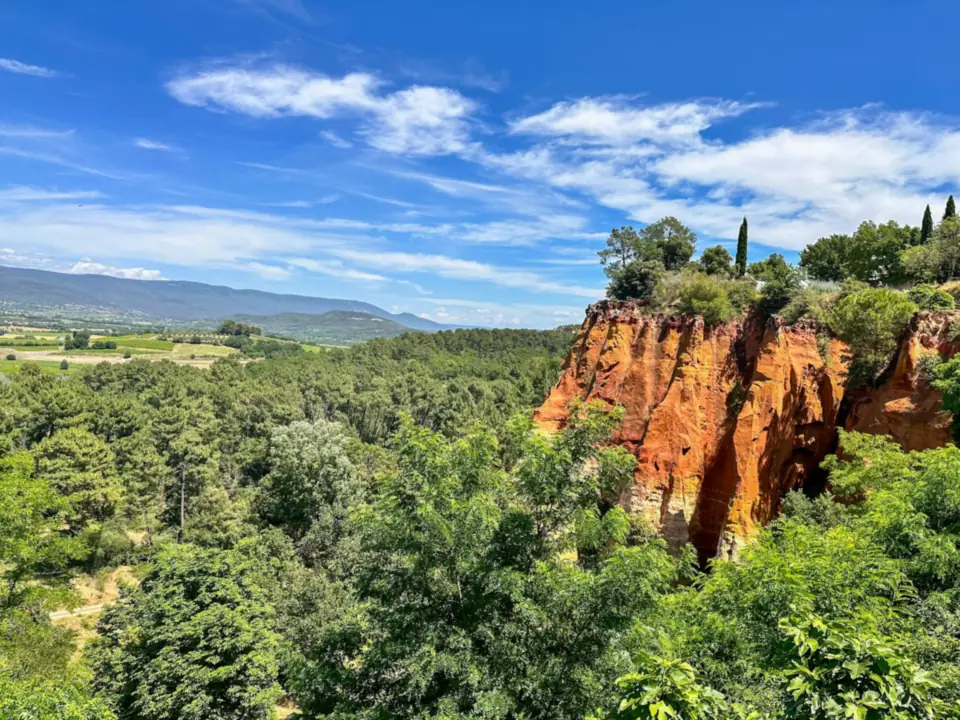
- Roussillon is built on an ochre cliff; the tourist office suggests half a day for the village and its trail. The Sentier des Ocres (ochre trail) offers two loops, about 30 and about 50 minutes according to the Luberon tourist office (the Apt office gives 40 minutes for the walk), for 3.50 euros (free under 10), with no booking; it is open every day from the February school holidays to the end of the Christmas holidays, except December 25 and January 1, and can close on fire-risk days, decided the day before at 6 p.m. Picnics are not allowed on the trail, dogs on a lead are. The ochres of the Luberon stretch over ten communes and about 25 km; the larger Colorado Provençal, at Rustrel about ten kilometers northeast of Apt, has loops of 1 to 2 hours.
- Ménerbes sits on a rocky spur. The photographer Dora Maar lived here, in a house that is now an artists’ residence (guided visits on Tuesdays and Saturdays, about 30 minutes), and the British writer Peter Mayle helped make the village known with A Year in Provence, the tourist office says. The Maison de la Truffe et du Vin is in the village.
- Lourmarin has what its château calls the first Renaissance château of Provence, with a wing built from 1526, open every day except December 25, January 1 and an annual closure in January (January 5 to 16 in 2026), for 8 euros (3.50 euros from 6 to 12). Albert Camus and Henri Bosco are buried in the village cemetery.
- Ansouis keeps a furnished château of the twelfth and thirteenth centuries, remodeled in the Renaissance, with terraced gardens, open from April to All Saints’ Day.
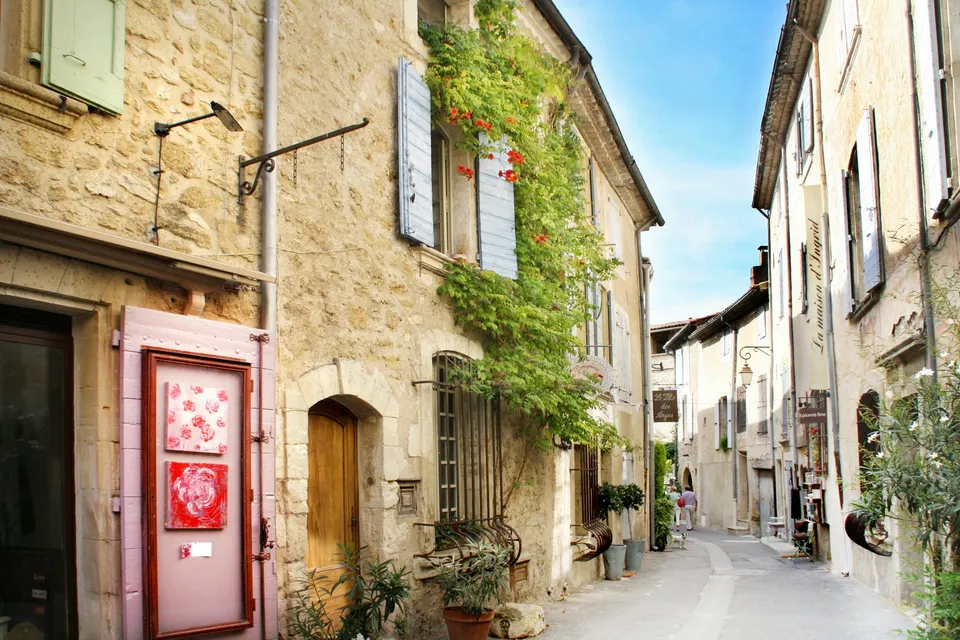
- Bonnieux and Lacoste are not on the association’s list; the Vaucluse tourism board picks out Bonnieux for its sloping lanes and Lacoste for the remains of the Marquis de Sade’s château.
The Abbey of Sénanque, 4 km from Gordes toward Venasque, was founded on June 23, 1148 by Cistercian monks from Mazan, in the Ardèche, and it is still a monastery. The visit covers the abbey church, the old dormitory, the cloister, the warming room and the chapter house, all of the twelfth and thirteenth centuries. Guided tours last an hour and are in French; the abbey advises non-French speakers to take the self-guided visit with an HistoPad tablet, available in 11 languages. Both cost 8 euros (4 euros from 6 to 17). Proper dress is required, there is no wheelchair access, and the lavender fields in front of the abbey are off limits; drones are forbidden over the valley. The rows bloom from about mid-June to the end of July, the tourist office says.
In summer, check before a walk. From June 15 to September 15, access to the forest massifs of the Vaucluse is regulated by prefectoral order because of the fire risk: the Luberon tourist office asks walkers to check the day’s conditions first.
The Alpilles: Saint-Rémy-de-Provence and Les Baux
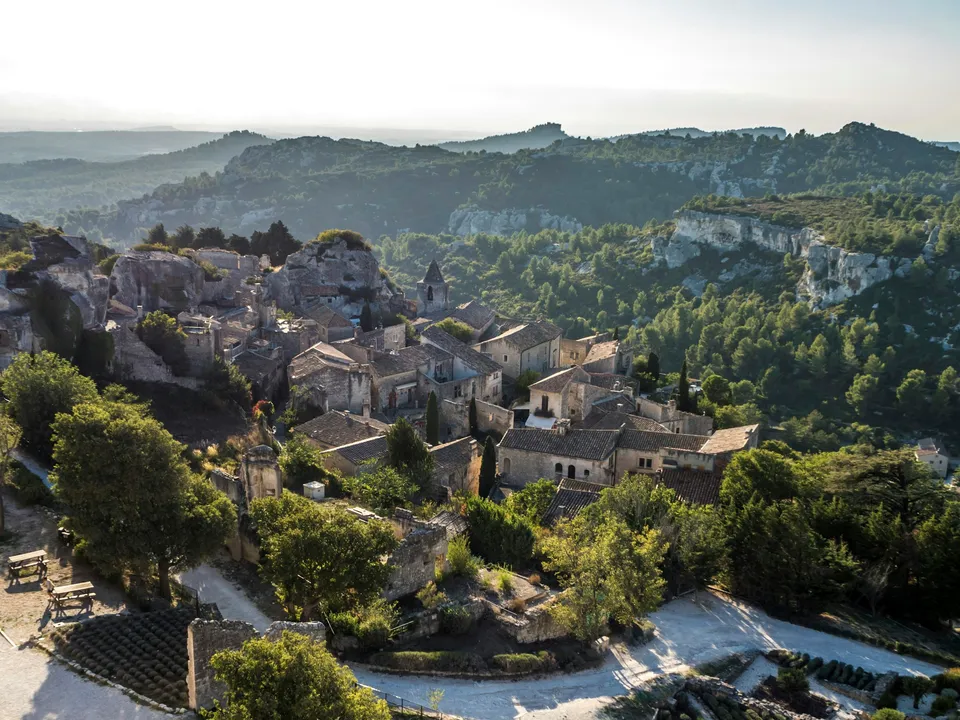
The Alpilles are a small range of hills, farmland and forest in the Bouches-du-Rhône, protected since February 1, 2007 by the Parc naturel régional des Alpilles: 51,000 hectares, 42.5 percent of them farmland, 17 communes, 110 listed historic monuments and a highest point of only 498 meters, the Tour des Opies, the park says. It counts 600,000 tourists a year who stay at least one night.
- Saint-Rémy-de-Provence is the base, a small town of 9,599 people (INSEE, 2023), where Nostradamus, Charles Gounod and Vincent van Gogh all stayed, the tourist office recalls. Van Gogh was a patient at the monastery of Saint-Paul-de-Mausole from May 8, 1889 to May 16, 1890; it is still a clinic, and its cultural center shows the Romanesque cloister, a reconstruction of his room and studio, the field he painted and 33 large reproductions of the 143 oil paintings he made there (10 euros; winter hours from October 1, 2026 to January 3, 2027, then a winter closure from January 4, 2027).
- Glanum, in Saint-Rémy, is a city that the Salyens, a Gaulish people, settled from the sixth century B.C., Roman after 49 B.C. and abandoned around A.D. 270. At its entrance stand “Les Antiques”, a triumphal arch and the mausoleum of the Julii. The Centre des monuments nationaux runs it: 9 euros, free under 18, closed on Mondays from October to March, with an audio guide in English.
- Les Baux-de-Provence, one of Les Plus Beaux Villages de France with 342 inhabitants, the Alpilles park says, is perched on a rocky spur with its castle, a fortress mentioned from the second half of the tenth century whose lords held 79 towns and strongholds. The Château des Baux is open all year (10 euros for an adult). At the foot of the village, the Carrières des Lumières project immersive digital exhibitions inside a former limestone quarry of the Val d’Enfer, closed in 1935; bauxite, found nearby in 1821, takes its name from Les Baux. A combined ticket for both costs 21 euros.
- Eygalières, a perched village with the cypress-framed Chapelle Saint-Sixte, and Maussane-les-Alpilles, which with Mouriès is the leading olive-oil producer of France, according to the Alpilles tourist office, with about 37,000 olive trees and two working mills making AOP oil.
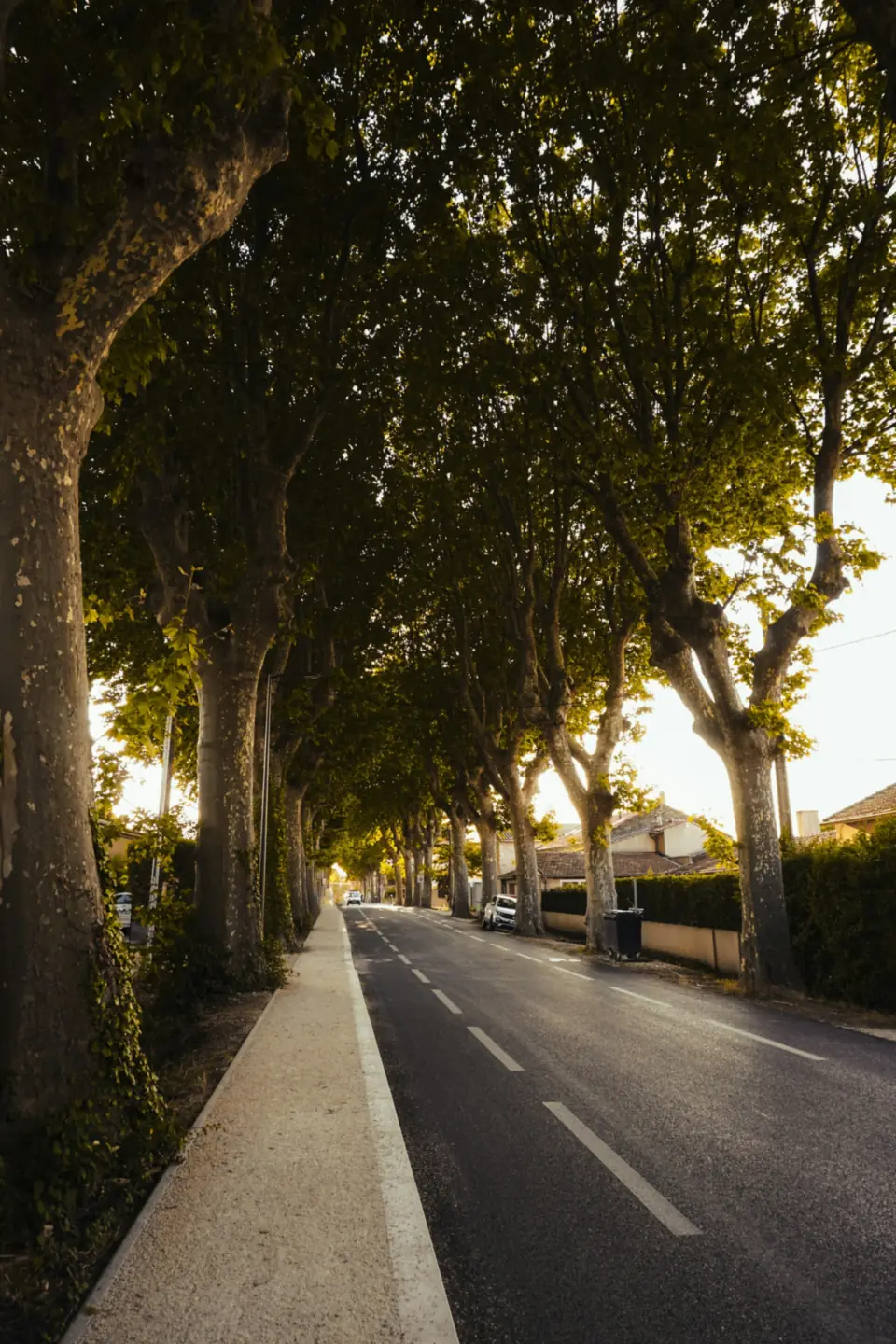
The park regulates access to its forests from June to September because of the fire risk, and wild camping is forbidden in the listed site of the Chaîne des Alpilles.
Arles and the Camargue
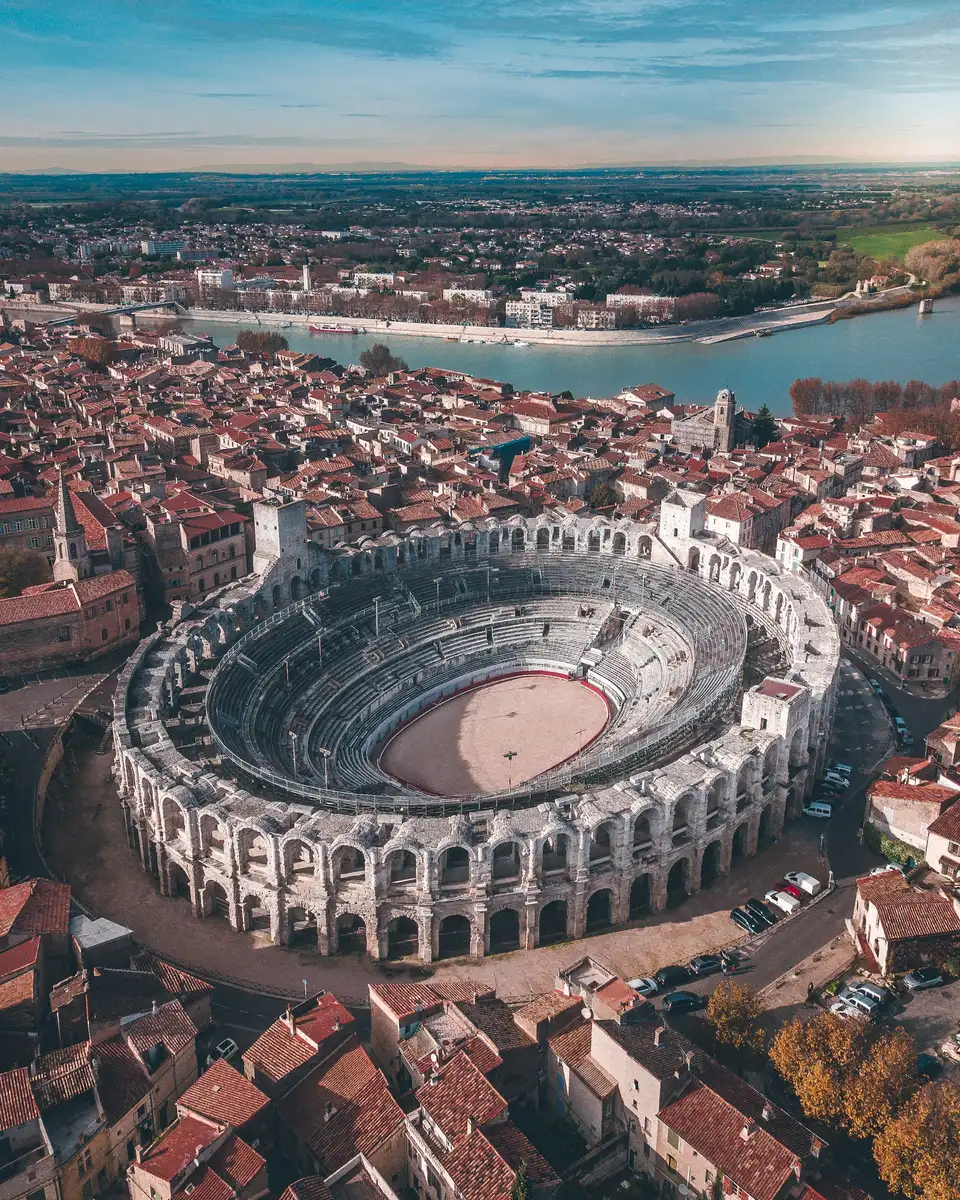
Arles was founded as a Roman colony by Caesar’s veterans of the Sixth Legion in 46 B.C., the city’s heritage service says, and its Roman and Romanesque monuments have been on UNESCO’s World Heritage List since 1981: eight monuments, the tourist office counts, six of them open to visitors, the city says. The two to see first:
- The amphitheater, built in A.D. 90, the tourist office says (at the end of the first century, says the city), for up to 21,000 spectators, 136 by 107 meters, and still used for shows, bullfights included, from Easter to the end of September.
- The Roman theater, of the late first century B.C., 102 meters across, for 10,000 spectators.
Each costs 11 euros (free under 18), and the tourist office sells monument passes valid from 2 days to 6 months. The others on the list include the Alyscamps necropolis, the cloister of Saint-Trophime, the cryptoporticoes of the forum and the Baths of Constantine.
Van Gogh stayed in the Arles area from February 1888 to May 1889 and made about 300 drawings and paintings there; panels mark the places where he set up his easel, from the Rhône quay of Starry Night to the Place Lamartine of The Yellow House. The Fondation Vincent van Gogh Arles, opened in April 2014, pays tribute to his work while exploring its influence on today’s artists (10 euros, free under 26; open Tuesday to Sunday from November 22, 2026). Every summer since 1970, the Rencontres d’Arles photography festival takes over the town: in 2027, the opening week runs from July 5 to 11 and the exhibitions until October 3.
Market days: Wednesday morning on the boulevard Émile-Combes, about 300 stalls, and Saturday morning, about 450 stalls on more than 2.5 km of the boulevards des Lices, Georges-Clemenceau and Émile-Combes, from 8 a.m. to 12:45 p.m., two markets a letter of King Henri III already confirmed in 1584.
The Camargue
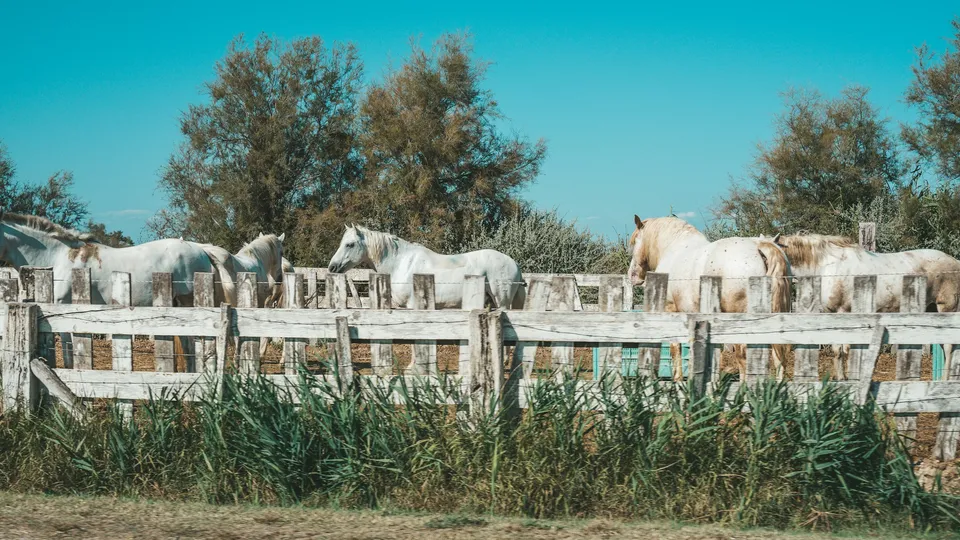
Arles is also one of the three communes of the Parc naturel régional de Camargue, in the delta of the Rhône, the second-largest delta of the Mediterranean after the Nile’s, the park says. Created on September 25, 1970, it covers more than 100,000 hectares and 75 km of coast in Arles, Saintes-Maries-de-la-Mer and Port-Saint-Louis-du-Rhône, with about 10,000 inhabitants; at its heart, the Réserve nationale de Camargue protects the Vaccarès lagoon, 6,500 hectares. Many landscapes that look wild were shaped by people, the park adds: by the salt industry, rice growing and, more recently, tourism. The Camargue has been a UNESCO biosphere reserve since 1977, and since 2006 the reserve has covered the whole Rhône delta.
- The Parc ornithologique du Pont de Gau, near Saintes-Maries, has 60 hectares of lagoons and marsh with hundreds of flamingos; reception is open every day from 10 a.m. to 5 p.m. in late autumn (the park gives no summer hours) and you may stay until sunset (8.50 euros, 5 euros from 4 to 12; about 1 to 1.5 hours; no pets, even on a leash). About 150 bird species live in the Camargue all year, the Saintes-Maries tourist office says.
- Saintes-Maries-de-la-Mer is dominated by a fortified Romanesque church with a single nave 15 meters high, visible from 10 km away, whose roof you can walk on after 53 steps; the crypt holds the statue of Saint Sara, venerated by the Gypsy people. Its great pilgrimage is on May 24 and 25 every year, with the procession of Sara to the sea, and two more come in October and December. Without a car, line A50 of the Envia network runs from Arles to Saintes-Maries-de-la-Mer all year, for 1.10 euros by card on board.
- The white horses and the bulls. The Camargue horse stands 1.35 to 1.50 meters at the withers and is light gray as an adult, though its foals are born dark bay; about 165 breeders raise it. About 150 manadiers breed the Camargue bulls, whose horns point upward; in the course camarguaise, from mid-March to mid-November, white-clad raseteurs try to snatch the cocarde and the other trophies from the bull’s head with a hook.
- The beaches and the salt. More than 70 km of sand run from Port-Saint-Louis-du-Rhône to Saintes-Maries, with the beaches of Piémanson and Beauduc near Salin-de-Giraud, a workers’ town built on salt production, and salt marshes that turn pink in summer.
The park’s rules: no vehicles off the public roads, no walking off the paths, no fires and no smoking, keep your distance from the birds, and bring mosquito repellent. Some sites can close temporarily between June 1 and September 30.
Avignon and the Vaucluse
Avignon, 92,188 people (INSEE, 2023), is the city of the popes: nine of them succeeded one another there in the fourteenth century, and the Palais des Papes, built in less than 20 years, from 1335 to 1352, is the most important building of the Gothic period, its managers say (the Vaucluse tourism board places the nine popes in the fourteenth and fifteenth centuries). More than twenty rooms are open, among them the Grand Tinel, the Grande Chapelle Clémentine, the Pope’s Chamber and the Chambre du Cerf with its frescoes; the visit takes 2 to 2.5 hours, and the palace is neither heated nor air-conditioned. A new visit route opened on May 1, 2026, with work continuing until spring 2027. Since August 1, 2026, a ticket costs 16 euros (10 euros from 10 to 17, free under 10), or 19.50 euros with the gardens and the bridge; the palace is open every day of the year.
The Pont Saint-Bénezet, the Pont d’Avignon, was begun in 1177 with 22 arches across 915 meters of the Rhône; four arches are left (6 euros, about 35 minutes, free audio guide in 11 languages). The Festival d’Avignon was born in the palace’s Cour d’honneur in 1947 and fills the city for three weeks in July; its fringe, the Off, puts on more than 1,500 shows at the same time. Avignon’s covered market, Les Halles, is open from Tuesday to Sunday morning.
Around Avignon, the Vaucluse holds the rest of the Roman and papal story:
- Orange: the Roman theater of the first century, with its stage wall 37 meters high and 103 meters long, and a triumphal arch built under Tiberius, both on UNESCO’s list since 1981. The theater costs 11.50 euros, audio guide and museum included. Its summer festival, the Chorégies d’Orange, founded in 1869, calls itself the oldest festival in France; its 2027 program was not yet published on November 26, 2026.
- Vaison-la-Romaine: two Roman sites, Puymin and La Villasse, which the tourist office calls the largest Gallo-Roman site in France, a Roman theater, a museum, and a Roman bridge over the Ouvèze 2,000 years old, in the Vaucluse board’s words. One pass, valid 24 hours, covers it all (9 euros; the sites close in January). Its Tuesday morning market is one of the oldest and most important in Provence, the tourist office says.
- Châteauneuf-du-Pape: the popes’ summer residence, whose château is now in ruins, and the first wine AOC of France, created in 1936: 3,150 hectares in five communes, 13 grape varieties, 93 percent red wine, the winegrowers’ syndicate says.
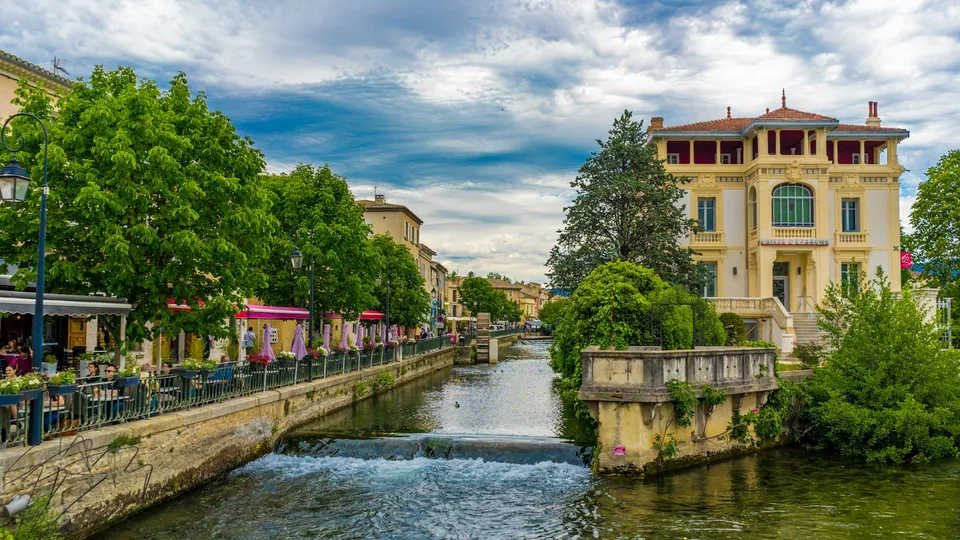
- L’Isle-sur-la-Sorgue: the “Venise Comtadine”, with its water wheels on the Sorgue, and an antiques town with 250 dealers in six antiques villages, its tourist office says (more than 300, says the Luberon tourist office). On Sundays it holds both a Provençal market, from 8 a.m. to 1 p.m. in the center, and a flea and antiques market on the Avenue des Quatre Otages; its international antiques fair returns at Easter and around August 15.
- Fontaine-de-Vaucluse: the source of the Sorgue, the largest resurgence in France, about 630 million cubic meters a year, at the foot of a cliff more than 200 meters high, reached on foot through a pedestrian village.
- Séguret and Venasque, two more of Les Plus Beaux Villages de France: Séguret at the foot of the Dentelles de Montmirail, Venasque on a rocky spur with a baptistery the association calls one of the oldest religious buildings in France.
Mont Ventoux
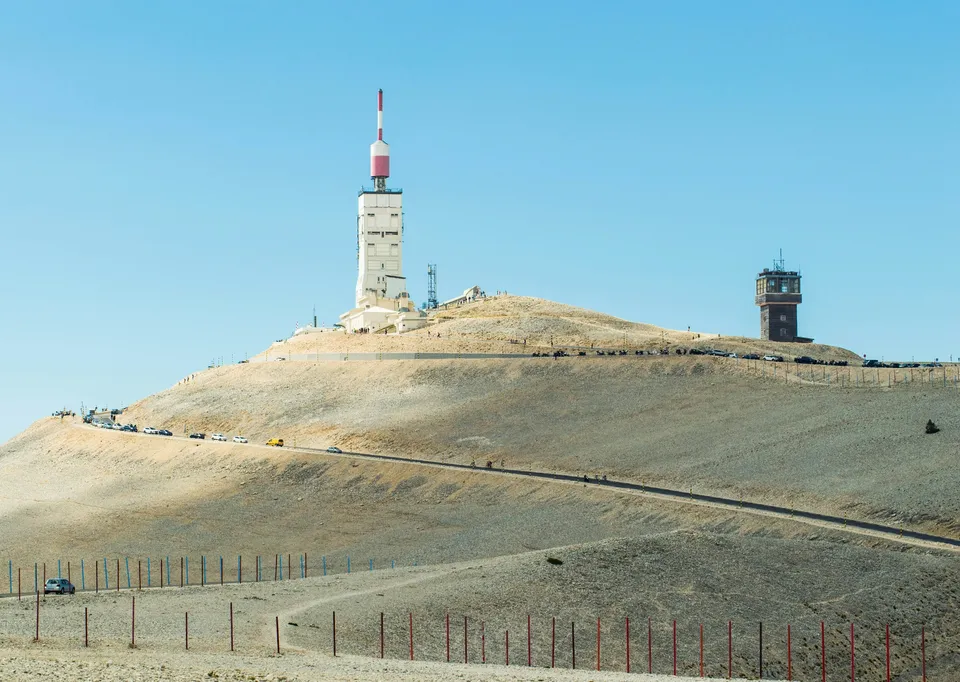
Mont Ventoux, 1,910 meters at its summit according to its park (1,909 for UNESCO), is the center of a regional nature park created on July 29, 2020, with 37 communes; UNESCO has counted it as a biosphere reserve since 1990. Three roads climb it, and the easiest starts from Sault, the Vaucluse board says; the road over the summit is closed from mid-November to mid-May. Sault, the park’s largest commune by area, sits on the plateau the Vaucluse board calls the most emblematic lavender country of the department (see below), with a market every Wednesday morning.
Aix-en-Provence and Marseille
Aix and Marseille are cities that need days of their own; here is what a first trip through Provence should know about them.
- Aix-en-Provence, a town of 149,695 people (INSEE, 2023), is the town of Cézanne and of the Montagne Sainte-Victoire, 1,011 meters; the mountain and the Cézanne sites have been on France’s tentative list for World Heritage since 1996. Note for 2027 planning: Cézanne’s studio, the Atelier des Lauves, is closed for restoration until spring 2027, and the Bastide du Jas de Bouffan is closed for works too, the tourist office says; the Bibémus quarries, where he stored his canvases in a hut, remain a visit. Its food market on the Place Richelme runs every day from 8 a.m. to 1 p.m., and the Festival d’Aix brings opera to the town from July 1 to 20, 2027. Our guide to Aix-en-Provence covers the Cours Mirabeau and its fountains, the markets day by day, Cézanne’s places, the museums and their prices, and the Sainte-Victoire.
- Marseille, the regional capital, 886,040 people, has the Vieux-Port, the basilica of Notre-Dame de la Garde, Le Panier and the Mucem, the museum of the civilizations of Europe and the Mediterranean, opened in June 2013 at the entrance of the Vieux-Port, whose outdoor spaces are free. Our guide to renting in Marseille covers the city for a longer stay, and our Marseille travel guide covers its sights and their prices, the Château d’If, the calanques on the city’s side, the beaches and the weather month by month.
- The Calanques, 28 limestone inlets over a little more than 20 km from Marseille to La Ciotat, form a national park created in 2012, which counts 3 million visitors a year (more than 2 million, says the Cassis tourist office). From June 1 to September 30 the prefecture decides each day whether the massifs are open because of the fire risk, and the map of the next day is published at 5 p.m.; from mid-June to mid-September, the park says, the calanques of Sugiton and Pierres Tombées require a compulsory, free booking (the Cassis tourist office gives the last two weekends of June, every day in July and August and the first two weekends of September). Our South of France guide sets out the rules of the park.
- Cassis is the port for the calanques of Port-Miou, Port-Pin and En-Vau, below the Cap Canaille, 394 meters; the 15 km Route des Crêtes to La Ciotat is reserved for pedestrians and non-motorized traffic every Sunday, and closes in strong wind. Our guide to Cassis covers the three calanques and the park’s rules, the boat trips and their prices, the beaches and the AOC wine.
The Verdon and Moustiers-Sainte-Marie
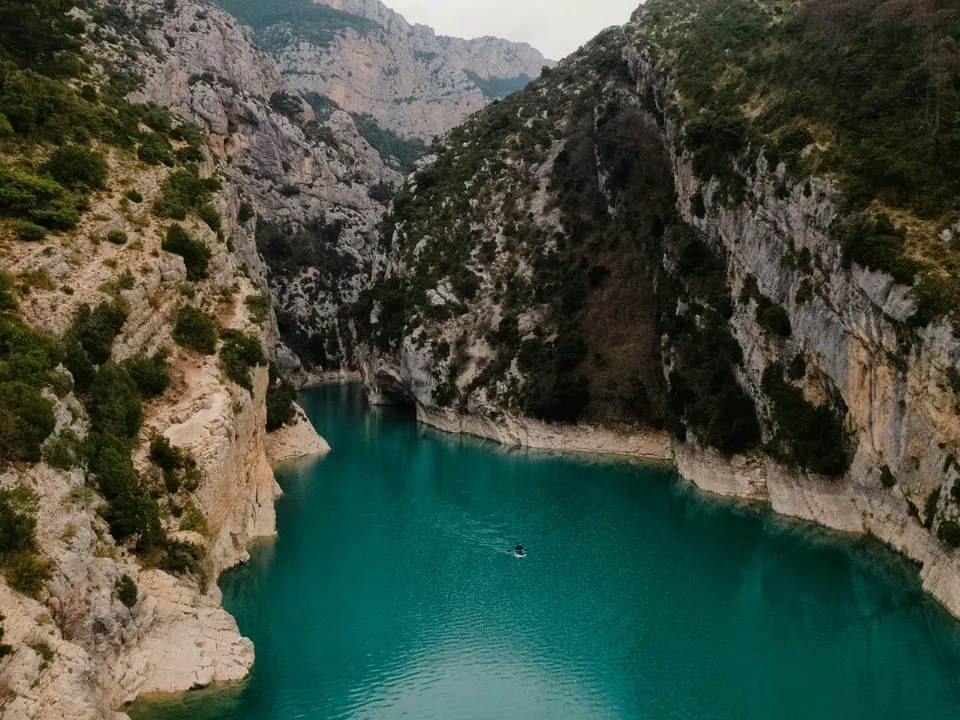
The Gorges du Verdon, which the Moustiers tourist office calls the “Grand Canyon of Europe”, cut about 25 km through limestone, with walls of up to 700 meters; they are a protected site since 1990 and free to visit. The Parc naturel régional du Verdon, created on March 3, 1997, now covers 54 communes and 216,700 hectares, and the Verdon itself, the park says, is a river of 165 km.
- By car: a loop of about 130 km links Moustiers-Sainte-Marie, La Palud-sur-Verdon, Trigance, Castellane and Aiguines. The Route des Crêtes from La Palud-sur-Verdon, with about fifteen viewpoints, is open from late March to late November; its central part is one-way, so drive it clockwise, and vehicles are limited to 12 meters long and 3.6 meters high. Verdon Tourisme gives it 24 km, the Moustiers office 23 km.
- On foot: the Sentier Blanc-Martel follows the river for 15 km between the Chalet de la Maline and the Point Sublime, named after the two men who made the first full descent of the canyon in 1905.
- On the water: the Lac de Sainte-Croix, 2,200 hectares, was created by a dam in 1973 and filled in 1974; it is the fourth-largest artificial lake in France and a zone without combustion engines. Driving around it takes about an hour, for some 60 km.
- The rules: swimming in the Verdon river is banned by municipal orders in Aiguines, Castellane, Rougon and La Palud-sur-Verdon, and wild camping is banned in the canyon and around the lake. Three of France’s four species of vulture nest in the gorges.
Moustiers-Sainte-Marie, one of Les Plus Beaux Villages de France, has made faience since the seventeenth century, and its faience museum shows more than 450 original pieces. A gilded star hangs on a chain of 135 meters between the two cliffs above the village, and 262 steps lead up to the chapel of Notre-Dame de Beauvoir, of the twelfth and sixteenth centuries. Its market is on Friday mornings all year, and the house of the Verdon park is in the village. Moustiers is also one of the four towns around which the Haute-Provence UNESCO Global Geopark gathers its 67 communes, with Digne-les-Bains, Sisteron and Seyne; it was the first geopark created in the world, in 2000, the geopark says.
The Lavender Plateaux and When Lavender Blooms
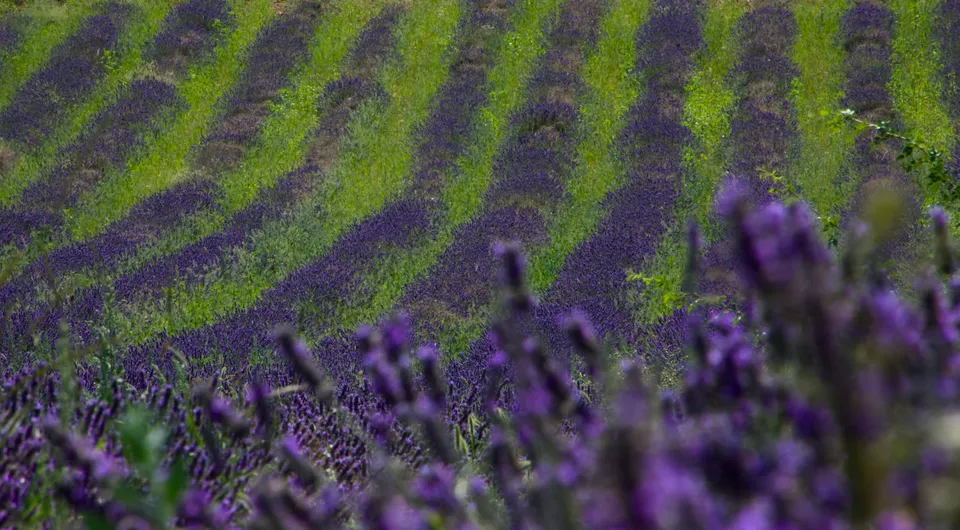
Lavender does not bloom everywhere at once: the date depends on the altitude and on the weather of the year, the regional tourism board says. The three places the boards send visitors to:
- The Valensole plateau (Alpes-de-Haute-Provence): about 800 km² of lavender and wheat at about 500 meters, the largest farm plateau of Provence and the leading lavandin country in the world, the Pays de Manosque tourist office says; it blooms from mid-June.
- The Sault plateau (Vaucluse), between 700 and 900 meters on the foothills of Mont Ventoux: “the biggest production area of true lavender in Europe”, according to the regional board, which suggests the Chemin des Lavandes, a 4 km loop of about 1 hour 40 minutes.
- The Luberon, around Sénanque, the Claparèdes plateau near Apt, Lioux and Saignon, where most of what grows is lavandin, the Vaucluse board says.
| Where | When it blooms, according to the official pages |
|---|---|
| Valensole plateau | From mid-June, for about a month (regional board); between June 15 and July 15 depending on the weather (Pays de Manosque tourist office) |
| Sault plateau | Lavender in the first half of July, then lavandin from mid-July to mid-August (Ventoux Provence tourist office) |
| Sénanque, near Gordes | From about mid-June to the end of July (Luberon tourist office) |
| Near Avignon, the Comtat Venaissin and Aix-en-Provence | Early July (regional board) |
| Drôme provençale (Grignan, Nyons) | Lavandin from mid-June to mid-July (Drôme tourism board) |
Sources: Provence-Alpes-Côte d’Azur Tourisme, five spots to admire lavender in bloom; Alpes-de-Haute-Provence Tourisme, Valensole; Ventoux Provence tourist office; Destination Luberon, Gordes; Drôme tourism, lavender, read on November 26, 2026.
The flowering can come early: in 2026 it had already begun on June 10 at Valensole, and the cut started on June 29, the tourist office noted. From mid-July to mid-August the tractors harvest lavender and lavandin, the Ventoux office adds: check the fields locally before you drive to them.
Lavender or lavandin? The big blue fields of the Valensole plateau are in their immense majority lavandin, the Pays de Manosque tourist office says, and so is most of the Luberon’s, says the Vaucluse board: a hybrid of true lavender and aspic lavender that appeared in the 1920s and yields far more essential oil, up to ten times more than traditional lavender, according to the regional board. True (fine) lavender grows higher, often above 800 meters, the Drôme board says.
The rules in the fields: do not walk into the rows and do not pick the flowers, even for a photograph; the regional board asks it out of respect for the owners and for the bees gathering pollen. At Sénanque the fields are closed to visitors.
The 2027 Lavender Festivals
| Festival | Where | Rule the organizer gives | Date in 2027 |
|---|---|---|---|
| Lavender festival | Ferrassières, Sault plateau | First Sunday of July | July 4 |
| Lavandissima | Le Thor, near Avignon | Second Saturday of July | July 10 |
| Fête de la Lavande | Valensole | Third Sunday of July | July 18 |
| Corso de la Lavande, since 1929 | Digne-les-Bains | First Sunday of August | August 1 |
| Fête de la Lavande | Sault, Hippodrome du Défends | August 15 | Sunday, August 15, from 9:30 a.m. |
Sources: Provence-Alpes-Côte d’Azur Tourisme, lavender festivals and Fête de la Lavande de Sault; Ville de Valensole; Ventoux Provence tourist office, read on November 26, 2026. Only Sault has published its 2027 date; the other dates follow each festival’s own rule. At Sault, entry and parking are free, and the ZOU! coach lines 912 and 916 stop at the Place des Aires.
To understand what you are looking at, the Musée de la Lavande at Coustellet, 5 km from Gordes and 20 km from Avignon, founded in 1991, is devoted to fine lavender, with an audio guide in 10 languages and distillation in July and August (8 euros for an adult, 20 percent off with a ZOU! ticket of the same day).
Provence’s UNESCO Sites
| Site | Listing | Since | What it covers |
|---|---|---|---|
| Arles, Roman and Romanesque Monuments | World Heritage | 1981 | The arena, the Roman theater and the cryptoporticoes, which UNESCO dates to the first century B.C., the Baths of Constantine and the Alyscamps of the fourth century, Saint-Trophime and its cloister |
| Roman Theatre and its Surroundings and the “Triumphal Arch” of Orange | World Heritage | 1981 | The theater’s facade, 103 meters long and 37 meters high, and an arch built between A.D. 10 and 25 |
| Historic Centre of Avignon: Papal Palace, Episcopal Ensemble and Avignon Bridge | World Heritage | 1995 | The Palais des Papes, the Petit Palais, the cathedral of Notre-Dame-des-Doms, the ramparts and the bridge |
| The Architectural Work of Le Corbusier | World Heritage | 2016 | 17 sites in seven countries, among them the Unité d’habitation in Marseille |
| Camargue (Rhône delta) | Biosphere reserve | 1977 | The whole delta of the Rhône, since 2006 |
| Luberon-Lure | Biosphere reserve | 1997 | The Luberon park, extended to the Montagne de Lure in 2010 |
| Mont Ventoux | Biosphere reserve | 1990 | 43 communes of the Vaucluse and the Drôme, the park says |
| Luberon | UNESCO Global Geopark | 2015 | The geology of the Luberon park, in the network since 2004 |
Sources: UNESCO World Heritage Centre, France and the pages of Arles, Orange, Avignon, Le Corbusier and the Pont du Gard; MAB France, Camargue; Parc du Luberon, biosphere reserve and geopark; Parc du Mont-Ventoux, read on November 26, 2026.
Arles is also part of a second World Heritage listing, the Routes of Santiago de Compostela in France (1998), and UNESCO inscribed the art of dry-stone walling, the craft behind the bories near Gordes, as intangible heritage in 2018. Two more are close: the Pont du Gard, the aqueduct bridge of Nîmes, about 50 meters high on three levels (48.77 meters, says another line of the same UNESCO page), inscribed in 1985, is in the neighboring region of Occitanie, and so is the Maison Carrée of Nîmes (2023). The Montagne Sainte-Victoire and the sites of Cézanne have been on France’s tentative list since 1996.
Provence Markets by Day of the Week
Most are morning markets, over by about 1 p.m.; the ones with months in brackets are seasonal.
| Day | Market |
|---|---|
| Monday | Cavaillon (all year); Fontvieille |
| Tuesday | Gordes; Vaison-la-Romaine; Apt (farmers’ market); Lourmarin (farmers’ evening market); Paradou |
| Wednesday | Saint-Rémy-de-Provence; Arles; Sault; Lacoste (April to early October); Mouriès |
| Thursday | Roussillon; Ménerbes (April to late September); L’Isle-sur-la-Sorgue (small market); Aureille |
| Friday | Carpentras; Lourmarin; Bonnieux; Eygalières; Moustiers-Sainte-Marie; Fontvieille |
| Saturday | Apt; Arles; Valensole; Saint-Rémy-de-Provence (producers); Avignon |
| Sunday | L’Isle-sur-la-Sorgue (with its antiques and flea market); Coustellet (farmers’ market, late March to late December in 2026) |
| Every day | Aix-en-Provence (food market, Place Richelme) |
| Tuesday to Sunday | Avignon (Les Halles, mornings) |
Sources: Destination Luberon, markets; Pays d’Apt Luberon; Roussillon; Alpilles en Provence; Ville d’Arles; Ventoux Provence; Vaison Ventoux Provence; Valensole; Moustiers-Sainte-Marie; Aix-en-Provence tourist office; Vaucluse tourism, Avignon, read on November 26, 2026.
Three markets stand apart. Apt on Saturday mornings, held since the twelfth century and classed a “marché d’exception”, one of 100 in France, the Apt tourist office says. Coustellet on Sunday mornings, a farmers’ market with the “marché paysan” label of the Luberon park. And Carpentras, with its big Friday market and, from December 4, 2026, a black-truffle market open to the public on Friday mornings.
What to Taste in Provence
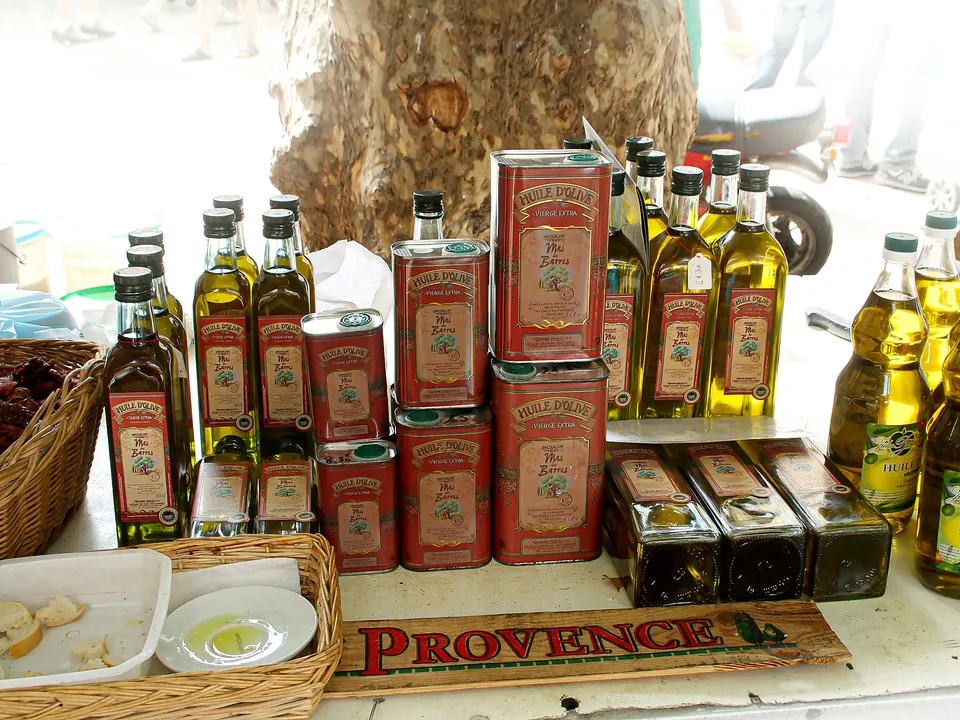
INAO, the French agency for origin labels, registers these products of Provence, among others:
- Olive oil, with an AOP for the Vallée des Baux-de-Provence, made mainly from the Aglandau, Salonenque, Grossane and Verdale varieties, and AOPs for its cracked and black olives; the Alpilles tourist office counts more than 350,000 olive trees and about ten mills, with a harvest that usually runs from October to January. Aix-en-Provence has its own olive oil appellation.
- Wine: Côtes de Provence, 90 percent rosé, made mainly in the Var; Coteaux d’Aix-en-Provence; Châteauneuf-du-Pape, the first wine AOC of France in 1936, its winegrowers say; and the AOP Luberon and AOP Ventoux wines, as the Luberon tourist office names them.
- Fruit: the Melon de Cavaillon (IGP), a yellow Charentais melon with deep orange flesh, and the Muscat du Ventoux (AOP), a black table grape picked from August to October.
- Herbes de Provence, which have a Label Rouge whose specification was approved in 2015.
For the black truffle, the Vaucluse produces half of Provence’s harvest, and Provence 80 percent of France’s, the Vaucluse board says. Apt is the capital of candied fruit, in the board’s words.
Weather in Provence Month by Month
Météo-France publishes no normals page for Avignon or Aix; its station in the Vaucluse is Carpentras, where the averages for 1991 to 2020 show hot, dry summers, cool winters and the wettest months in autumn:
| Month | Average low | Average high | Rain | Sunshine |
|---|---|---|---|---|
| January | 1.0 °C | 11.1 °C | 46.3 mm | 151 h |
| February | 1.1 °C | 12.8 °C | 34.2 mm | 173 h |
| March | 4.0 °C | 17.1 °C | 41.3 mm | 230 h |
| April | 6.9 °C | 20.4 °C | 61.1 mm | 244 h |
| May | 10.8 °C | 24.6 °C | 55.6 mm | 285 h |
| June | 14.4 °C | 29.1 °C | 41.7 mm | 328 h |
| July | 16.5 °C | 32.3 °C | 25.7 mm | 363 h |
| August | 16.1 °C | 31.9 °C | 40.6 mm | 327 h |
| September | 12.7 °C | 26.4 °C | 98.7 mm | 257 h |
| October | 9.5 °C | 21.1 °C | 87.6 mm | 191 h |
| November | 4.9 °C | 15.0 °C | 90.8 mm | 149 h |
| December | 1.8 °C | 11.3 °C | 41.9 mm | 138 h |
Source: Météo-France, climate normals 1991-2020, Carpentras, read on November 26, 2026. Sunshine rounded to the hour.
Météo-France’s other stations in Provence show how the year changes from the Marseille side to the hills of Haute-Provence and the Var:
| Station | Area | January low and high | July low and high | Rain a year | Sunshine a year |
|---|---|---|---|---|---|
| Carpentras | Vaucluse | 1.0 and 11.1 °C | 16.5 and 32.3 °C | 665.5 mm | 2,835 h |
| Marignane | Bouches-du-Rhône | 3.6 and 11.8 °C | 19.7 and 30.7 °C | 532.3 mm | 2,898 h |
| Saint-Auban | Alpes-de-Haute-Provence | 0.2 and 9.5 °C | 15.8 and 30.3 °C | 714.2 mm | 2,779 h |
| Le Luc | Var | 2.0 and 12.9 °C | 17.5 and 32.4 °C | 832.3 mm | 2,752 h |
Source: Météo-France, climate normals 1991-2020, Carpentras, Marignane, St Auban and Le Luc stations, read on November 26, 2026.
The mistral. Provence’s wind is dry and gusty: Météo-France gives an average speed of 50 km/h and gusts of 80 to 100 km/h, sometimes more, down the lower Rhône valley and across Provence, strongest between Orange, Avignon, Istres and Arles. It is often stronger in winter and spring and can blow for several days, even more than a week. It clears the sky, so mistral days are often very sunny, and it cools a summer day; and in summer it helps forest fires start and spread, Météo-France adds: hence the fire-risk rules from June to September.
When to Go: Provence’s 2027 Calendar
Spring brings the Arles Feria and the Camargue pilgrimage. Mid-June to late July is the lavender time and the season of the big festivals, with the hottest weather: 32.3 °C on average in July at Carpentras. September is still warm, 26.4 °C, but September to November are the wettest months of the year. Winter is the truffle season, with the summit road of Mont Ventoux closed and the monuments on shorter hours.
| Event | Where | 2027 dates, as published |
|---|---|---|
| Feria de Pâques, the opening of the French bullfighting season | Arles | March 26 to 29 |
| Pilgrimage of the Saintes-Maries, with the procession of Saint Sara to the sea | Saintes-Maries-de-la-Mer | May 24 and 25, every year |
| Festival d’Aix-en-Provence (opera) | Aix-en-Provence | July 1 to 20 |
| Rencontres d’Arles (photography) | Arles | Opening week July 5 to 11, exhibitions to October 3 |
| Festival d’Avignon (theater) | Avignon | July; 2027 dates not yet published |
| Chorégies d’Orange (opera) | Orange | Mid-June to the end of July as a rule; 2027 program not yet published |
| Lavender festivals | Valensole, Sault and others | July 4 to August 15 (see the lavender section) |
| Antiques fair | L’Isle-sur-la-Sorgue | At Easter and around August 15 |
| Black truffle market | Carpentras | Fridays from December 4, 2026, 8 a.m. to noon (8:30 a.m. on the tourist office’s markets page) |
Sources: Provence-Alpes-Côte d’Azur Tourisme, Feria de Pâques (Arles tourist office sheet); Sanctuaire des Saintes-Maries-de-la-Mer; Festival d’Aix-en-Provence; Rencontres d’Arles; Festival d’Avignon; Chorégies d’Orange; L’Isle-sur-la-Sorgue tourist office; Ventoux Provence tourist office, truffles, read on November 26, 2026. The Festival d’Aix announces its 2027 program on December 4, 2026.
Getting to Provence
From the US
Provence’s own airport, Marseille Provence, gets its first US airline on June 5, 2027, when United opens a daily non-stop to Newark; the airport gives a flight time of 9 h 15. The airport, which welcomes more than 11 million travelers a year, links to the rest of Provence by coach and train:
- Line A1 to Marseille Saint-Charles station, every 10 minutes from 7 a.m. to 8 p.m., in 30 to 50 minutes (15 euros one way).
- Line A2 to Aix-en-Provence TGV station and Aix-en-Provence, every 25 to 30 minutes, about 30 minutes to the center of Aix (15 euros one way to Aix, 6 euros to the TGV station).
- The Vitrolles-Aéroport Marseille Provence station, 5 minutes away by the LeBus13 shuttle, with up to 73 regional trains a day.
Until then, the two simple routes are a flight to Paris and the TGV, or a non-stop to Nice, whose airport lists non-stop flights to four US cities: New York (Delta to JFK and United to Newark, seven times a week from April to October, and La Compagnie four times a week all year), Atlanta (Delta), Boston (Delta) and Philadelphia (American Airlines). From Nice, the train reaches Marseille in 2 h 30 at the fastest. Avignon’s own airport is mainly for business and private aviation.
From Paris by TGV
| From Paris to | Trains a day | Fastest | Arrives at |
|---|---|---|---|
| Avignon | 28 | 2 h 33 | Avignon TGV or Avignon Centre |
| Aix-en-Provence | 24 | 2 h 54 | Aix-en-Provence TGV |
| Marseille | 26 | 3 h 03 | Marseille Saint-Charles or Marseille Blancarde |
| Arles | 11 | 3 h 37 | Arles |
Source: SNCF Connect, Paris to Avignon, Aix-en-Provence, Marseille and Arles, read on November 26, 2026. Tickets start at 16 euros to Avignon, Aix and Marseille, on some trains and dates; the counts include trains with a change.
Two stations to know. Avignon TGV is 6 km from the center, SNCF says, and a shuttle train runs to Avignon Centre, 25 a day, from 4 minutes, 6 on average. Aix-en-Provence TGV is 15 km from the center of Aix, served only by high-speed trains; the A2 coach links it to the town and to the airport. From Lyon, Avignon is 50 minutes away at the fastest.
Getting Around Provence
By train between the towns. Trains link the main towns: Avignon Centre to Arles in 15 minutes at the fastest, 18 trains a day; Marseille Saint-Charles to Avignon Centre in 53 minutes; Marseille Saint-Charles to the town station of Aix-en-Provence in 39 minutes, 37 trains a day, according to SNCF Connect. The regional network is called ZOU!: trains and coaches of the Région Sud, with 710 trains a day.
By coach to the villages. ZOU! runs about 200 regular coach lines; the express lines, numbered 50 to 99, link the main towns, stations and airports, and the local lines, from 100, serve the villages. A few that a visitor can use, with the names ZOU! gives them:
| Line | Route | For |
|---|---|---|
| 902 | Avignon - Orange | The Roman theater of Orange |
| 922 | Sorgues - Châteauneuf-du-Pape - Orange | The wine village |
| 904 | Orange - Vaison-la-Romaine - Buis-les-Baronnies | Vaison-la-Romaine |
| 906 | Avignon - Isle-sur-la-Sorgue | L’Isle-sur-la-Sorgue |
| 914 | Maubec - Fontaine-de-Vaucluse - Isle-sur-la-Sorgue | Fontaine-de-Vaucluse |
| 907 | Avignon - Cavaillon - Coustellet | The Lavender Museum at Coustellet |
| 915 | Avignon - Apt - Forcalquier - La Brillane | Apt and the Luberon |
| 917 | Apt - Gordes - Maubec | Gordes |
| 918 | Apt - Bonnieux - Maubec | Bonnieux |
| 919 | Cucuron - Lourmarin - Cadenet | Lourmarin |
| 912 and 916 | Carpentras - Sault, and Apt - Sault | The Sault plateau and its lavender |
| 707 | Arles - Saint-Rémy-de-Provence - Avignon | Saint-Rémy |
| 63 (express) | Avignon - Aix-en-Provence | Aix |
Source: ZOU!, timetables of the Vaucluse and Bouches-du-Rhône lines and express lines, timetables valid from September 1, 2026 unless the line says otherwise, read on November 26, 2026. Check the timetable of each line before you plan a day around it.
For several trips, ZOU! sells a book of 10 journeys for the price of 7, valid for 12 months, and a ZOU! Malin card at 20 euros that takes 30 percent off for you and one companion on its coaches and trains.
By car, for the villages. A US license is valid for a short stay in France, a holiday for example, if it is valid and either written in French or accompanied by an International Driving Permit or an official translation, according to service-public.fr; our guide to driving in France with a US license has the details. The limits are 130 km/h on motorways (110 km/h in the rain), 80 km/h on two-way roads without a central divider (90 km/h where the local authority has raised it) and 50 km/h in towns. Marseille is a low-emission zone since September 1, 2022: every vehicle, visitors’ included, needs a Crit’Air sticker, and the fine for a car without one is 68 euros, the Marseille tourist office says.
A One-Week Provence Itinerary
Seven days, two bases, a car for the villages. This order follows the geography of the areas above and the train lines.
- Days 1 and 2, Avignon: the Palais des Papes and the bridge, then a day trip by train to Arles (15 minutes at the fastest) for the arena, the Roman theater and the Van Gogh walk.
- Day 3, the Camargue: Saintes-Maries-de-la-Mer and the Pont de Gau bird park, back through Arles.
- Day 4, the Alpilles: Saint-Rémy-de-Provence (Glanum and Saint-Paul-de-Mausole, a Wednesday market if you can) and Les Baux-de-Provence.
- Days 5 and 6, the Luberon: move to a village base. Gordes and Sénanque, Roussillon and its ochre trail, then Ménerbes, Bonnieux and Lourmarin; L’Isle-sur-la-Sorgue on a Sunday for its market.
- Day 7, Mont Ventoux or the lavender: up to the Sault plateau in July, or the Gorges du Verdon and Moustiers-Sainte-Marie if you have a second week, then back to Avignon TGV or on to Aix-en-Provence TGV for the train to Paris.
Where to Stay in Provence
The best base depends on the area you came for, and on whether you will drive.
| Base | Good for |
|---|---|
| Avignon | The Palais des Papes, Orange, Châteauneuf-du-Pape, and Arles by train |
| Arles | The Roman monuments, the Camargue, the Alpilles |
| Saint-Rémy-de-Provence | The Alpilles, Les Baux, Glanum |
| Gordes, Lourmarin or another Luberon village | The perched villages, Sénanque, the ochres |
| Aix-en-Provence | Aix, Marseille, Cassis and the Sainte-Victoire |
| Moustiers-Sainte-Marie | The Gorges du Verdon, the Lac de Sainte-Croix, the Valensole plateau |
Avignon, Arles, Aix and Marseille are on the rail network, with the stations and times given above; the Luberon villages and the Alpilles are country for a car, or for the regional coaches if you plan around their timetables, and the Verdon is country for a car.
Staying Longer: a Season in Provence
A summer in the Luberon or a winter in Aix is a stay of months, and the rules change once you stay beyond a holiday. As a visitor from a visa-exempt country such as the US, the UK, Canada or Australia, you are usually allowed to stay a maximum of 90 days within any 180-day period, according to the European Commission, and a long-stay visa or an EU residence permit takes you out of that rule: our guide to how long Americans can stay in France without a visa explains the count. For choosing a town to live in, our comparison of the best places to live in the South of France sets Provence against the Riviera and Occitanie, and our guide to renting in Marseille covers the city’s rental market.
The furnished rental for a season, the bookings, the calls, the appointments and the letters in French are the kind of work our Personal Assistant handles: one dedicated person on the ground in France, so you can enjoy the country.
FAQ
Where is Provence?
In the south of France, on the Mediterranean. The regional tourism board defines it as four departments: the Bouches-du-Rhône (Marseille, Aix-en-Provence, Arles), the Vaucluse (Avignon and most of the Luberon), the Alpes-de-Haute-Provence (Digne-les-Bains, Valensole, Moustiers) and the Var (Toulon). It is part of the region Provence-Alpes-Côte d’Azur; Nice, Cannes and Menton are on the Côte d’Azur.
What is Provence famous for?
Lavender, perched stone villages (18 of Les Plus Beaux Villages de France are in its four departments, Gordes and Roussillon among them), the Roman monuments of Arles and Orange and the papal palace of Avignon, all on UNESCO’s World Heritage List, weekly markets, olive oil and rosé, and the country of Van Gogh at Arles and Saint-Rémy and of Cézanne at Aix.
What is the best month to visit Provence?
It depends on what you come for. Late June and the first half of July give you the lavender in bloom and the start of the summer festivals, with average highs of 29.1 °C in June and 32.3 °C in July at Carpentras. May and September are milder, 24.6 °C and 26.4 °C. Do not count on the lavender after mid-August: the harvest runs from mid-July to mid-August, the Ventoux tourist office says.
What is the best town to stay in Provence?
Without a car, Avignon: 2 h 33 from Paris by TGV, 15 minutes from Arles by train, with coaches to Orange, L’Isle-sur-la-Sorgue and the Luberon. With a car, a Luberon village such as Gordes or Lourmarin for the villages, Saint-Rémy-de-Provence for the Alpilles, Arles for the Camargue, or Moustiers-Sainte-Marie for the Verdon.
When do the lavender fields bloom in Provence?
From mid-June on the Valensole plateau, for about a month; in the first half of July for the true lavender of the Sault plateau, then lavandin until mid-August; from about mid-June to the end of July at Sénanque. The dates move with the weather: in 2026, Valensole was already in flower on June 10.
Do you need a car in Provence?
For the villages, the Verdon and the lavender, a car is the simple answer. The towns are on the rail network, and the regional ZOU! coaches reach many villages, Gordes, Bonnieux, Lourmarin and Sault among them, but you have to plan around their timetables. A US license is valid for a holiday if it is in French or comes with an International Driving Permit or an official translation.
Conclusion
Provence is seven areas, each with its own base: the Luberon villages, the Alpilles, Arles and the Camargue, Avignon and the Vaucluse, Aix and Marseille, the Verdon and the lavender plateaux. Pick one or two, and plan your days around the market days. For a first week, Avignon and Arles give you the popes and the Romans by train, and the Camargue by the A50 bus from Arles, and a few days in a Luberon village add Gordes, Roussillon and Sénanque. Come between mid-June and mid-July for the lavender, in May or September for milder days, and in winter for the truffles. For the rest of the South, from the Riviera of Nice and Menton to the Pont du Gard and Carcassonne, start with our South of France guide; for the rest of the country, our guide to the best places to visit in France goes region by region.
The parts of the move Americans find out about too late.
What Americans get wrong about moving to France, and the number, form or deadline that fixes it. Straight to your inbox.
One email a week. Real numbers, nothing else.
Written by
Maxime Roseau
Co-founder, EasyFranceNow
Maxime Roseau is a French entrepreneur and co-founder of EasyFranceNow. His work focuses on French visas, residency, and citizenship: long-stay visa applications, OFII validation, prefecture procedures, permit renewals, and naturalization files, along with the operational side of relocation such as housing, rental dossiers, and administrative coordination after arrival.


