
Cities in France: The 20 Largest and What the Big Eleven Are Like to Visit and Live In

By Aurelio Maurici Co-Founder, Master of Business Law, Aix-Marseille Université III
Published Updated

In this article
- The Largest Cities in France at a Glance
- The 20 Largest Cities in France by Population
- City or Metro Area: Is Lyon or Marseille Bigger?
- 1. Paris: The Capital
- 2. Marseille: The Port of the Greeks
- 3. Lyon: The City of Gastronomy
- 4. Toulouse: The Pink City
- 5. Nice: The Capital of the Riviera
- 6. Nantes: The Castle and the Machines
- 7. Montpellier: A Medieval Center Near the Sea
- 8. Strasbourg: Alsace and Europe
- 9. Bordeaux: The City of Wine
- 10. Lille: The Flemish North
- 11. Rennes: The Capital of Brittany
- The Weather in France’s Major Cities
- Rents and Rent Control in France’s Major Cities
- Cities on the UNESCO World Heritage List
- Which City for Which Trip
- Getting to French Cities from the US and the UK
- Staying Longer in a French City
- FAQ
- Conclusion
The largest cities in France are Paris, Marseille, Lyon, Toulouse and Nice, followed by Nantes, Montpellier, Strasbourg, Bordeaux and Lille. That is INSEE’s ranking of the ten most populous communes, from the official populations in force since January 1, 2026: Paris has 2,103,778 residents, Marseille 886,040, and the tenth, Lille, 238,246. Counted by metro area, the order changes: Lyon’s is larger than Marseille’s.
This guide gives the 20 largest cities, then takes the eleven largest one by one, Rennes included, with what each is like for a visitor (the sights its tourist office recommends, its city pass where it has one, its next big events) and for a resident (rents, rent control, the train from Paris). It then gives Météo-France’s weather for each city, rents and rent control side by side, the cities on UNESCO’s World Heritage List, which city suits which trip, and how to fly in from the US. Every figure was read on November 25, 2026 on the official page: INSEE, UNESCO, SNCF Connect, Météo-France, service-public.fr, the Senate and Légifrance, the ministry’s rent map, the European Commission, the airports and transport operators, and each city’s tourist office.
The Largest Cities in France at a Glance
| City | Population | Region | Fastest train from Paris | World Heritage in the city |
|---|---|---|---|---|
| Paris | 2,103,778 | Île-de-France | The capital | Paris, Banks of the Seine (1991) |
| Marseille | 886,040 | Provence-Alpes-Côte d’Azur | 3 h 03 | Le Corbusier’s Unité d’habitation (2016, part of a listing of 17 sites) |
| Lyon | 519,127 | Auvergne-Rhône-Alpes | 1 h 43 | Historic Site of Lyon (1998) |
| Toulouse | 514,819 | Occitanie | 5 h 39 | Saint-Sernin, on the Routes of Santiago (1998); the Canal du Midi (1996) |
| Nice | 357,737 | Provence-Alpes-Côte d’Azur | 5 h 42 | Winter Resort Town of the Riviera (2021) |
| Nantes | 327,734 | Pays de la Loire | 1 h 57 | None of its own |
| Montpellier | 310,240 | Occitanie | 3 h 12 | None of its own |
| Strasbourg | 293,771 | Grand Est | 1 h 44 | Grande-Île and Neustadt (1988, extended 2017) |
| Bordeaux | 267,991 | Nouvelle-Aquitaine | 2 h 03 | Bordeaux, Port of the Moon (2007) |
| Lille | 238,246 | Hauts-de-France | 55 minutes | The town hall belfry, among the Belfries of Belgium and France (2005) |
| Rennes | 230,890 | Brittany (Bretagne) | 1 h 25 | None of its own |
Sources: INSEE, reference populations 2023 and each commune’s page (Rennes, for example), population of the commune itself, in force since January 1, 2026, with the region from INSEE’s geography page of each commune; SNCF Connect route pages; UNESCO World Heritage List, France, read on November 25, 2026.
For the regions themselves, with their capitals and what each is known for, see our guide to the regions of France.
The 20 Largest Cities in France by Population
INSEE counts the population of each commune, the town or city within its own limits, without its suburbs. Of the 34,858 communes of France outside Mayotte, 42 have more than 100,000 residents, INSEE says, and more than half of their 10.3 million people live in the ten largest. The table covers metropolitan France: counting the overseas departments, Saint-Denis on La Réunion (155,634) would come 20th, between Grenoble and Nîmes.
| Rank | City | Population | Département | Region |
|---|---|---|---|---|
| 1 | Paris | 2,103,778 | Paris | Île-de-France |
| 2 | Marseille | 886,040 | Bouches-du-Rhône | Provence-Alpes-Côte d’Azur |
| 3 | Lyon | 519,127 | Rhône | Auvergne-Rhône-Alpes |
| 4 | Toulouse | 514,819 | Haute-Garonne | Occitanie |
| 5 | Nice | 357,737 | Alpes-Maritimes | Provence-Alpes-Côte d’Azur |
| 6 | Nantes | 327,734 | Loire-Atlantique | Pays de la Loire |
| 7 | Montpellier | 310,240 | Hérault | Occitanie |
| 8 | Strasbourg | 293,771 | Bas-Rhin | Grand Est |
| 9 | Bordeaux | 267,991 | Gironde | Nouvelle-Aquitaine |
| 10 | Lille | 238,246 | Nord | Hauts-de-France |
| 11 | Rennes | 230,890 | Ille-et-Vilaine | Bretagne |
| 12 | Toulon | 179,116 | Var | Provence-Alpes-Côte d’Azur |
| 13 | Reims | 177,674 | Marne | Grand Est |
| 14 | Saint-Étienne | 173,136 | Loire | Auvergne-Rhône-Alpes |
| 15 | Le Havre | 166,687 | Seine-Maritime | Normandie |
| 16 | Villeurbanne | 163,684 | Rhône | Auvergne-Rhône-Alpes |
| 17 | Dijon | 161,830 | Côte-d’Or | Bourgogne-Franche-Comté |
| 18 | Angers | 159,022 | Maine-et-Loire | Pays de la Loire |
| 19 | Grenoble | 156,140 | Isère | Auvergne-Rhône-Alpes |
| 20 | Nîmes | 151,839 | Gard | Occitanie |
Source: INSEE, reference populations 2023 for the ten largest, and each commune’s own page (Rennes, for example) for the rest, read on November 25, 2026. Population municipale, the figure INSEE uses for statistics; metropolitan France only.
Three things stand out in INSEE’s figures. Toulouse, fourth, is only 4,308 residents behind Lyon, and growing much faster: 1.19 percent a year from 2017 to 2023, against 0.10 percent for Lyon. Montpellier grew fastest of the ten, 1.42 percent a year. And Paris lost 0.65 percent a year, the second-largest fall among the cities above 100,000, behind Mulhouse. Just outside the top 20 come Aix-en-Provence (149,695), Saint-Denis in Île-de-France (149,077), Clermont-Ferrand, Le Mans, Brest, Tours and Amiens; Annecy has 132,117 residents and Avignon 92,188.
The parts of the move Americans find out about too late.
What Americans get wrong about moving to France, and the number, form or deadline that fixes it. Straight to your inbox.
One email a week. Real numbers, nothing else.
City or Metro Area: Is Lyon or Marseille Bigger?
Marseille is the bigger city: 886,040 residents in the commune against 519,127 in Lyon. But Lyon is the bigger metro area. INSEE measures metro areas as “aires d’attraction des villes”, a center of population and jobs plus the ring of communes where at least 15 percent of working residents work in that center, and on that measure the order of the eleven largest cities changes:
| Metro area of the city (INSEE name) | Population |
|---|---|
| Paris | 13,320,752 |
| Lyon | 2,339,329 |
| Marseille - Aix-en-Provence | 1,917,728 |
| Lille (French part) | 1,530,624 |
| Toulouse | 1,529,112 |
| Bordeaux | 1,426,278 |
| Nantes | 1,050,815 |
| Strasbourg (French part) | 875,163 |
| Montpellier | 842,923 |
| Rennes | 789,516 |
| Nice | 641,721 |
Source: INSEE, aires d’attraction des villes 2020, each area’s page, population 2023, read on November 25, 2026.
Among these eleven, Lille, tenth as a city, has the fourth-largest metro area, just ahead of Toulouse. Nice goes the other way: fifth as a city, last of the eleven as a metro area, behind Rennes; the metro areas of Grenoble (727,380) and Rouen (715,234) are larger too. Aix-en-Provence shares its metro area with Marseille, and our guide to Aix-en-Provence covers the city of Cézanne, its old town, its markets and its museums.
1. Paris: The Capital
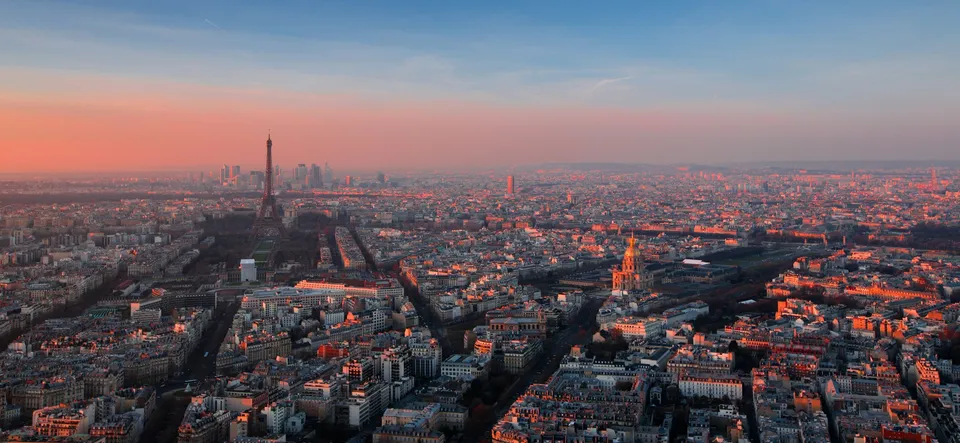
Paris is in a class of its own: 2,103,778 residents in the city, 13,320,752 in its metro area, and, in its tourist office’s count, 2,185 monuments and 206 museums. Its riverbanks have been a World Heritage site since 1991: “from the Louvre to the Eiffel Tower, from the Place de la Concorde to the Grand and Petit Palais”, in UNESCO’s words, the history of the city can be seen from the Seine.
For a visitor. The tourist office names the Eiffel Tower, Notre-Dame and the Sacré-Cœur as the three monuments most popular with visitors. Its list of must-sees adds the Louvre, a former royal palace that became a museum after the Revolution; the Musée d’Orsay, a former railway station turned museum in 1986, 40 years old in 2026, with the world’s largest collection of Impressionist and Post-Impressionist works; the Sainte-Chapelle and its 1,113 stained-glass windows; the Arc de Triomphe; the Palais Garnier; and the Parc Rives de Seine, 7 kilometers of riverside walks on both banks. The office’s own pass, the Official Paris City Pass, sells only its Discover formula for now: 3 activities chosen from 30, from 65 euros, valid 3 days from the first one booked, with no public transport. Our guides to the things to do in Paris, the best museums in Paris, the best time to visit Paris and the best day trips from Paris cover the city in detail.
For a resident. Paris has had rent control since July 1, 2019. Advertised rents for an unfurnished apartment, charges included, run from 27.70 euros a square meter a month in the 19th arrondissement to 37.89 euros in the 6th, according to the ministry’s 2025 rent map. Paris-Charles de Gaulle lists some 27 US destinations, from New York and Washington to Los Angeles and Seattle. Our guides to renting in Paris and to the cost of living in Paris give the practical picture.
2. Marseille: The Port of the Greeks
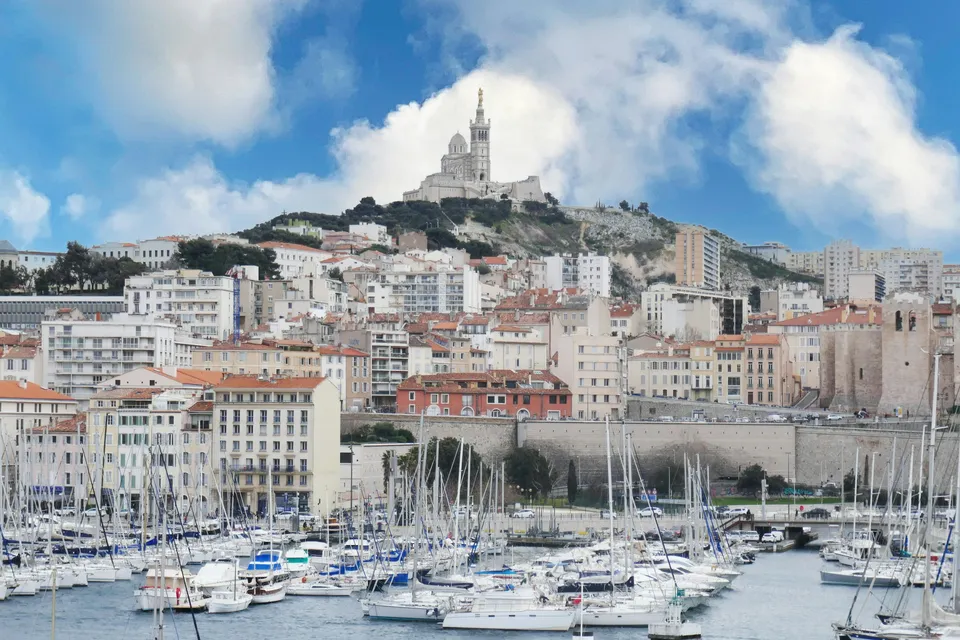
France’s second city, 886,040 residents, is also one of its oldest: Greek colonists from Phocaea founded Massalia around 600 B.C., at what is now the Vieux-Port, its tourist office says, which counts 111 districts. On UNESCO’s list, Marseille appears through Le Corbusier’s Unité d’habitation, one of 17 of his works in seven countries listed in 2016.
For a visitor. Among the sights the office calls must-sees:
- The Vieux-Port, where the city began, with its fish market every morning from 7:30 a.m. to 12:30 p.m. and the Ombrière, a canopy by the architect Norman Foster put up in 2013, the year Marseille-Provence was European Capital of Culture.
- Notre-Dame de la Garde, “la Bonne Mère”, Marseille’s most visited monument, built from 1853 to 1864 on a summit of 154 meters, with a 360-degree view over the city, the islands and the sea.
- Le Panier, the oldest district, on the site of Greek Massalia, with the Vieille Charité, a hospice completed in 1745.
- The Mucem, the Museum of European and Mediterranean Civilizations, opened on June 7, 2013 at the entrance to the port and linked to Fort Saint-Jean, which you can walk around for free.
- The Calanques, a national park of cliffs and coves that runs for more than 20 kilometers from Marseille to La Ciotat, with 28 calanques, 25 of them in Marseille. Our guide to Cassis covers the calanques on the Cassis side and the boat trips from its port.
The Marseille CityPass costs 36 euros for 24 hours, 47 euros for 48 hours and 55 euros for 72 hours, with unlimited public transport, the Mucem, a boat to the Château d’If or the Frioul islands (or the Cosquer cave replica) and a mini-train ride to Notre-Dame de la Garde. Until January 3, 2027, the 224th Foire aux santons et aux crèches, the santon and crib fair, runs alongside Le Noël Marseillais. From the airport, shuttle bus A1 reaches Saint-Charles station in 30 to 50 minutes, every 10 minutes in the day, for 15 euros one way. Our guide to Marseille covers each sight with its hours and prices, the access rules of the Calanques, the beaches and the weather month by month.
For a resident. Marseille has no rent control. Advertised rents run from 14.31 euros a square meter in the 14th arrondissement to 18.41 euros in the 7th. The fastest train from Paris takes 3 h 03, and Marseille Provence airport lists one US destination, New York-Newark with United. Our guide to renting in Marseille covers the areas and the budget, and the South of France guide covers the region around it.
3. Lyon: The City of Gastronomy
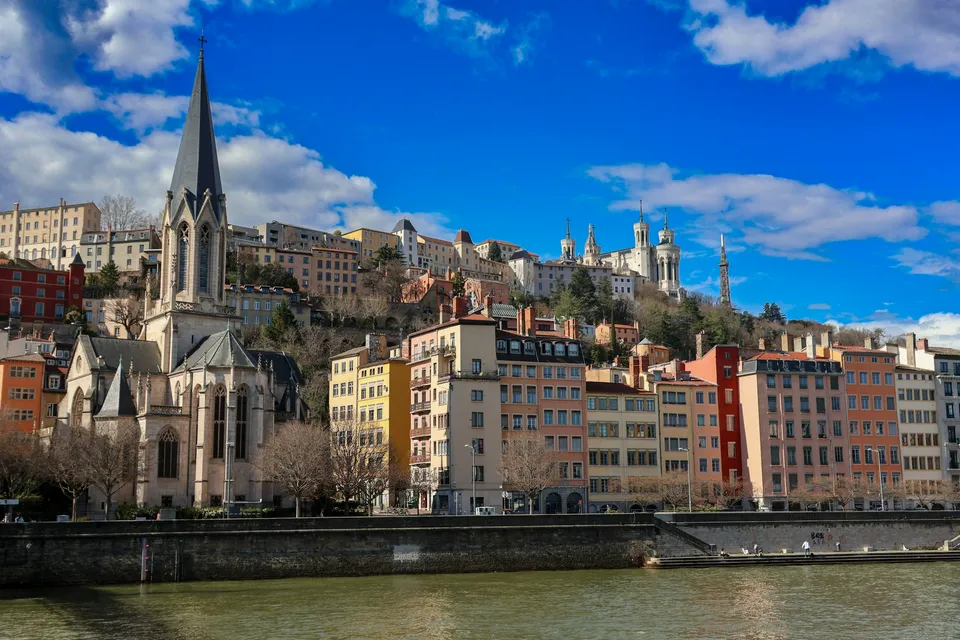
Lyon, 519,127 residents, sits where the Rhône and the Saône meet, between two hills. The Romans founded it on Fourvière in 43 B.C. as Lugdunum, capital of the Gauls, and its tourist office calls it the “French Capital of Gastronomy”. Four of its historic districts, Vieux Lyon, Fourvière, the slopes of the Croix-Rousse and much of the Presqu’île, have been a World Heritage site since 1998.
For a visitor.
- Vieux Lyon, between Fourvière and the Saône, the largest Renaissance district in France, the office says, with its merchants’ houses of the 15th and 16th centuries and its traboules, passages through the buildings from one street to the next: about 500 in the city, about 50 of them open to the public.
- Fourvière, with the Roman theater of Lugdunum, built in 1 B.C. for up to 10,000 spectators, and the basilica built from 1872 to 1896.
- The Presqu’île, between the two rivers, from Place Bellecour, “Europe’s largest pedestrian square” in the office’s words, to Place des Terreaux, with the city hall and the Museum of Fine Arts.
- The Croix-Rousse, the “working hill” of the 30,000 silk workers, the canuts, in contrast to Fourvière, the “praying hill”.
- Confluence, the newest district, with the Musée des Confluences and, at its tip, a viewpoint where the Rhône and the Saône meet.
- The food: the traditional bouchons, with a label created by the Chamber of Commerce and the tourist office, and the Halles Paul Bocuse, about sixty merchants under one roof.
The Lyon City Card gives free entry to 26 museums and a guided tour, for 24 to 96 hours: from 32 euros for 24 hours to 68 euros for 96 hours with public transport, 26 to 44 euros without. The Fête des Lumières, the Festival of Lights, runs from December 5 to 8, 2026, its 27th edition, with 27 light works. From Lyon-Saint-Exupéry airport, the Rhônexpress tram reaches Part-Dieu station in 30 minutes, every 15 minutes, for 16.30 euros one way online.
For a resident. Lyon and Villeurbanne have had rent control since November 1, 2021. Advertised rents run from 15.78 euros a square meter in the 5th arrondissement to 17.66 euros in the 6th, and the fastest train from Paris takes 1 h 43. Lyon’s airport lists no US destination; its only non-stop route to North America is Montreal. Our guide to renting in Lyon covers the neighborhoods and the budget.
4. Toulouse: The Pink City
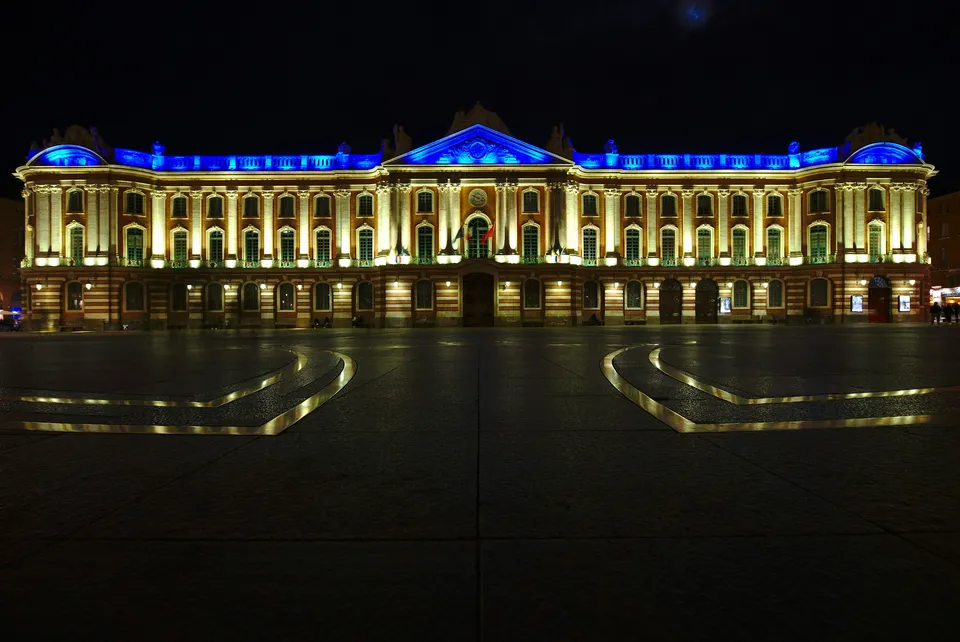
Toulouse, 514,819 residents, owes its nickname, the “Ville rose”, to the brick of its buildings, its tourist office says. Two World Heritage listings include it: the Routes of Santiago de Compostela, listed in 1998, which name the Basilica of Saint-Sernin, and the Canal du Midi, listed in 1996, which links Toulouse to the Mediterranean.
For a visitor. What the office recommends:
- The Capitole, on the Place du Capitole, which houses both the city hall and the Théâtre du Capitole; it has been the seat of the city’s government since the 12th century.
- The Basilica of Saint-Sernin, built from the 11th to the 13th century in brick and stone, one of the largest Romanesque buildings in the Western world.
- The Jacobins convent, 13th-century Southern Gothic, with a vaulted choir shaped like a palm tree, 28 meters high, and the relics of Saint Thomas Aquinas.
- The banks of the Garonne, with the Pont Neuf, the oldest bridge over the river in Toulouse, begun in 1544 and completed in 1632, and the Dôme de la Grave.
- The Canal du Midi, approved by Louis XIV in 1666 and designed by Pierre-Paul Riquet, to explore on foot, by bike or by boat.
- The Cité de l’espace, which the office recommends for astronomy and space missions, with a full-size Ariane 5 rocket and the Mir station.
The Pass Tourisme costs 26 euros, valid up to 3 days, with free museums and monuments and a guided tour, and 10 euros more for 10 trips on the metro, buses and trams. The airport shuttle reaches Matabiau station in 25 to 45 minutes, every 15 minutes, for 9 euros.
For a resident. Toulouse has no rent control, and its advertised rents are the lowest of the eleven: 13.98 euros a square meter. By rail, SNCF Connect lists 17 trains a day from Paris, the fastest in 5 h 39, and describes the route as one with connections. United plans a daily non-stop flight from Toulouse to Washington Dulles from April 26, 2027, the airport says, its first to the United States. Our guide to renting in Toulouse covers the neighborhoods and the budget.
5. Nice: The Capital of the Riviera
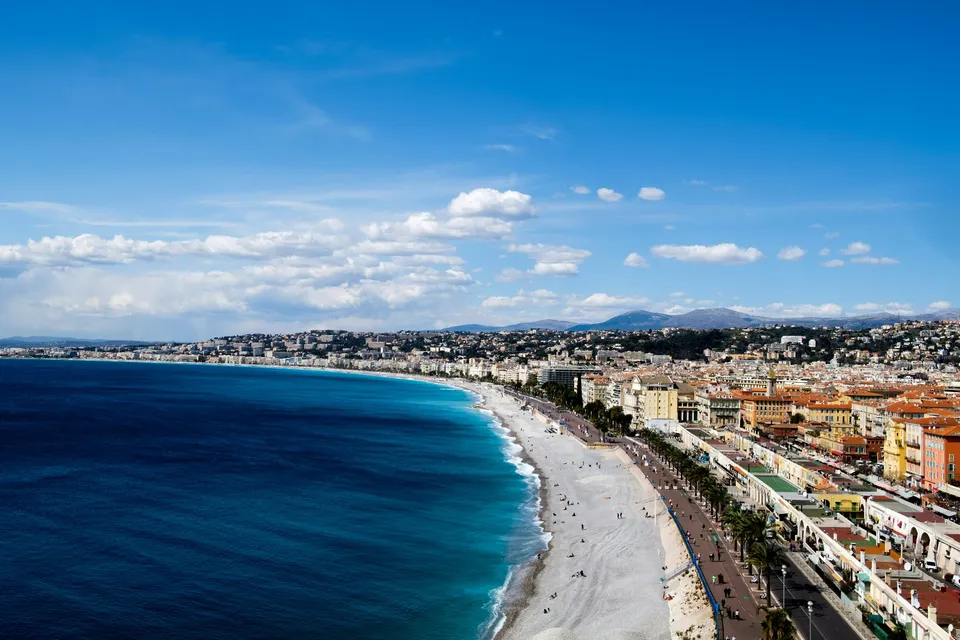
Nice, 357,737 residents, is “the capital of the Côte d’Azur”, in its tourist office’s words, with 7 kilometers of beaches and the second-largest airport in France after Paris. UNESCO listed it in 2021 as “Nice, Winter Resort Town of the Riviera”, a site of 522 hectares that, in the office’s words, covers “the entire coastline, from the Promenade des Anglais to Mont Boron”.
For a visitor.
- The Promenade des Anglais, almost 7 kilometers along the Baie des Anges, with its blue chairs; its story began in 1824, when the British Reverend Lewis Way encouraged the building of a coastal path.
- Vieux Nice and the Cours Saleya, the old town and its flower market, which gives way to an antiques market every Monday.
- Castle Hill, a wooded park overlooking the city, with a view over the whole Baie des Anges, where Greek settlers from Massalia founded Nikaia in the 3rd century B.C.
- The Musée Matisse, in a Genoese villa in the olive grove of Cimiez, with a collection of nearly 600 works; Matisse lived in Nice from 1917 to his death in 1954. A 4-day ticket to all the city’s museums costs 15 euros.
The French Riviera Pass, sold by the office, costs 30 euros for 24 hours, 45 euros for 48 hours and 65 euros for 72 hours, for more than 60 sites, without public transport. The Nice Carnival runs from February 9 to 28, 2027, and “Noël à Nice” until January 3, 2027. Tram line 2 links the airport to the center in under 30 minutes, every 7 to 8 minutes on weekdays.
For a resident. Nice has no rent control, and the highest advertised rents of the eleven after Paris: 20.43 euros a square meter. The fastest train from Paris takes 5 h 42. Nice airport lists non-stop flights to four US cities: New York (JFK with Delta and Newark with United, seven flights a week each from April to October, and La Compagnie to Newark four times a week), Atlanta (Delta, daily from May to October), Boston (Delta, three a week from May to October) and Philadelphia (American, daily from May to October). Our complete guide to Nice covers the city in detail, and our guides to renting in Nice and to where to live on the Côte d’Azur cover a longer stay.
6. Nantes: The Castle and the Machines
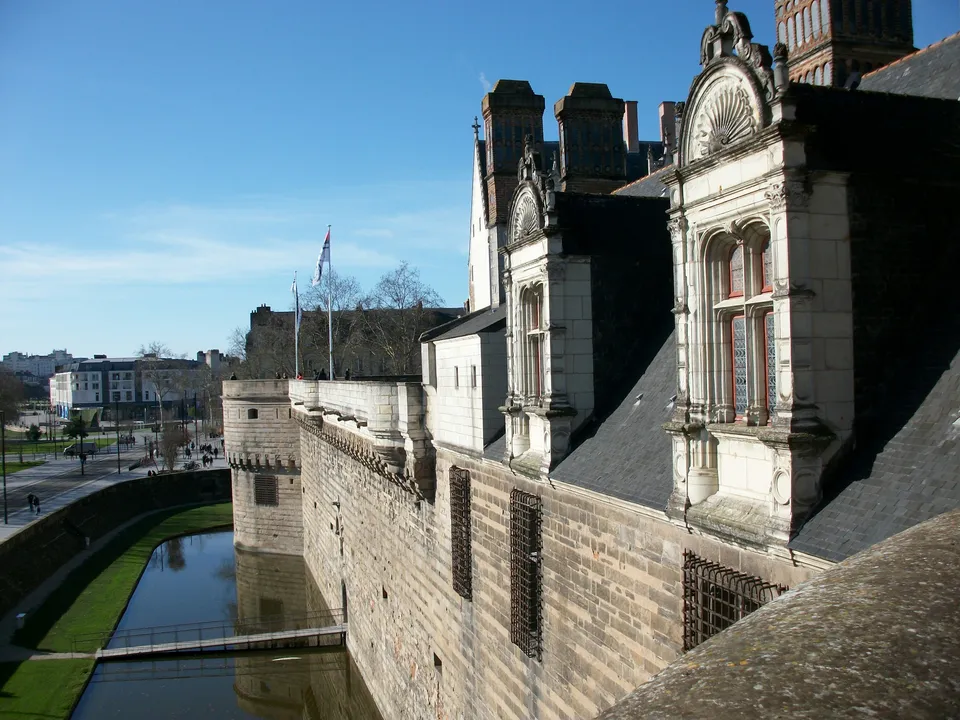
Nantes, 327,734 residents, sells itself through its heritage and a public collection of more than 130 permanent artworks that run from the city center out to the ocean along the estuary, laid out by its tourist office, Le Voyage à Nantes.
For a visitor.
- The Château des ducs de Bretagne, the city’s most important historic building with the cathedral: a fortress with 500 meters of walls and seven towers around a 15th-century ducal residence, which houses the Nantes history museum (9 euros).
- Les Machines de l’île, a mechanical bestiary on the former shipyards. The Great Elephant carries 49 passengers (12 euros a ride), but there are no rides from November 2, 2026 to February 26, 2027.
- The Memorial to the Abolition of Slavery, opened in 2012. In the 18th century, Nantes became the most important slave-trading port in France, and 2,000 plaques recall the ships that left from it.
- The green line, more than 20 kilometers painted on the ground between the sights and artworks, free at most of its stops, and Estuaire, 33 artworks along 60 kilometers of estuary to Saint-Nazaire.
The Pass Nantes includes public transport, 50 sites and one return trip on the airport shuttle: 30 euros for 24 hours, 40 euros for 48 hours, 49 euros for 72 hours and 75 euros for 7 days, with 10 percent off until March 31, 2027. The summer festival, Le Voyage à Nantes, runs from July 3 to August 29, 2027, and its winter program until January 3, 2027. The airport shuttle reaches the center in 20 minutes.
For a resident. Nantes has no rent control. On the ministry’s map, advertised rents stand at 14.50 euros a square meter, and the fastest of 23 trains a day from Paris takes 1 h 57.
7. Montpellier: A Medieval Center Near the Sea
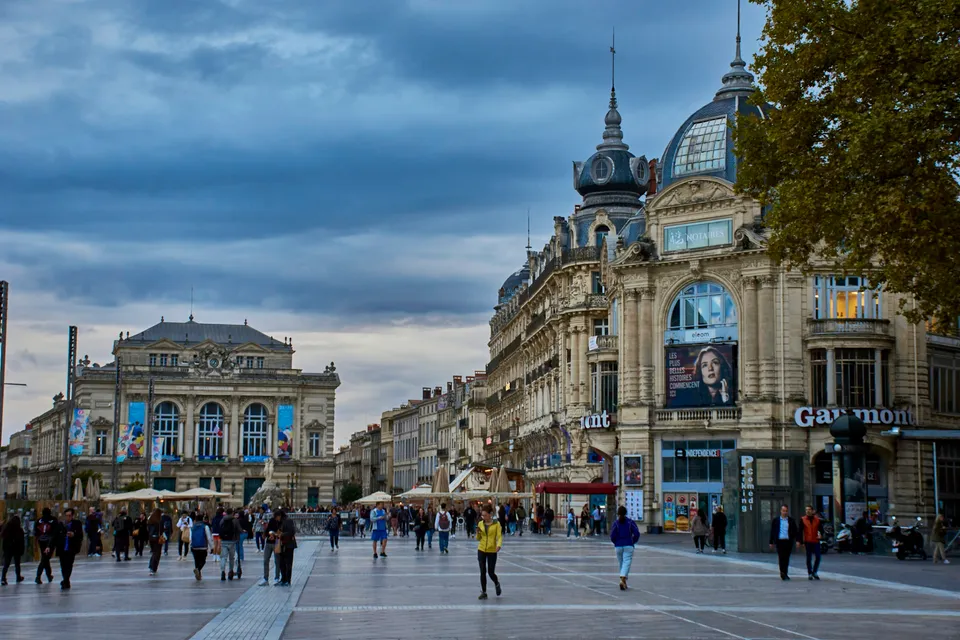
Montpellier, 310,240 residents, founded in 985, grew faster than any other of France’s ten largest cities from 2017 to 2023, by INSEE’s figures. Its pedestrian medieval center, the Écusson, lies 13 kilometers from the beaches, its tourist office says.
For a visitor. Among the office’s must-sees:
- The Place de la Comédie, nicknamed “the Egg” for its shape, one of the largest pedestrian areas in Europe, with the Opéra Comédie of 1888 and the fountain of the Three Graces.
- The Faculty of Medicine, officially recognized in 1220: the oldest medical school founded by a charter that is still in operation, the office says.
- The Musée Fabre, European art from the Renaissance to the present, opened in 1828, with a pavilion for 20th-century painters such as Pierre Soulages.
- The Promenade du Peyrou, a royal square and belvedere with an equestrian statue of Louis XIV, completed in 1774. The Christmas market fills it from November 27 to December 30, 2026, with about a hundred stalls, free to enter.
The Montpellier City Card with public transport costs from 22 euros for 24 hours, 29 euros for 48 hours and 34 euros for 72 hours, with the Musée Fabre and a guided tour included. From the airport, shuttle 620 reaches the Place de l’Europe in about 25 minutes, for 2 euros, and the beaches (Palavas-les-Flots, Carnon, La Grande-Motte) are reached by tram line 3 and a beach bus.
For a resident. Montpellier has had rent control since July 1, 2022. On the ministry’s map, advertised rents stand at 15.49 euros a square meter, and the fastest train from Paris takes 3 h 12. Our guide to renting in Montpellier covers the neighborhoods and 2026 rents.
8. Strasbourg: Alsace and Europe
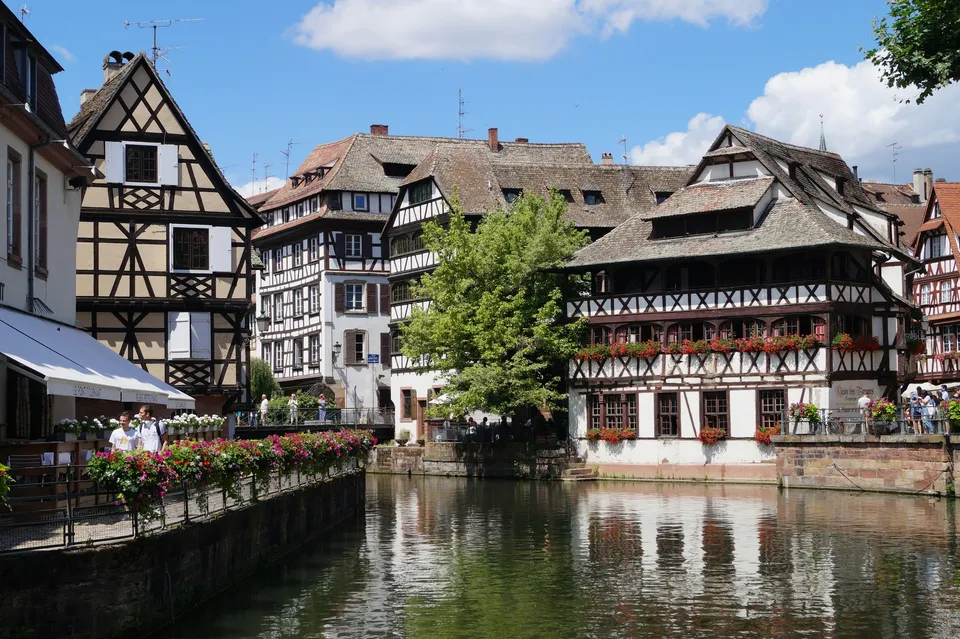
The capital of Alsace, 293,771 residents, has the European Parliament building in its European district and, since 1988, is the first French city whose UNESCO listing covers a whole historic center rather than a single monument, its tourist office says: the Grande-Île, extended in 2017 to the Neustadt, the district built under German rule from 1871 to 1918.
For a visitor.
- The cathedral, in pink sandstone, with a spire of 142 meters and an astronomical clock of 1574 whose figures perform Monday to Saturday.
- The Grande-Île, ringed by the Ill and linked to the rest of the city by 21 bridges and footbridges, with the 15th-century Maison Kammerzell and the Palais Rohan, completed in 1742.
- The Petite France, the old district of millers, tanners and fishermen, with its half-timbered houses on the arms of the river.
- The European district, with the European Parliament building, opened in 1999, the Palace of Europe of the Council of Europe and the European Court of Human Rights.
The Christmas market, held since 1570 and the oldest in France, runs from November 27 to December 24, 2026, every day from 11:30 a.m. to 9 p.m. (from 2 p.m. on the opening day, to 10 p.m. on December 11, 12, 18 and 19, and to 6 p.m. on December 24), in 8 markets and more than 300 chalets on the Grande-Île; nearly two million visitors come every year. The Strasbourg City Card is a discount card, 5 euros, valid 7 days. A train shuttle links the airport to the main station in 8 or 9 minutes, for 3.20 euros, and the old center is a 10-minute walk from the station.
For a resident. Strasbourg has no rent control. On the ministry’s map, advertised rents stand at 15.57 euros a square meter, and the fastest train from Paris takes 1 h 44.
9. Bordeaux: The City of Wine
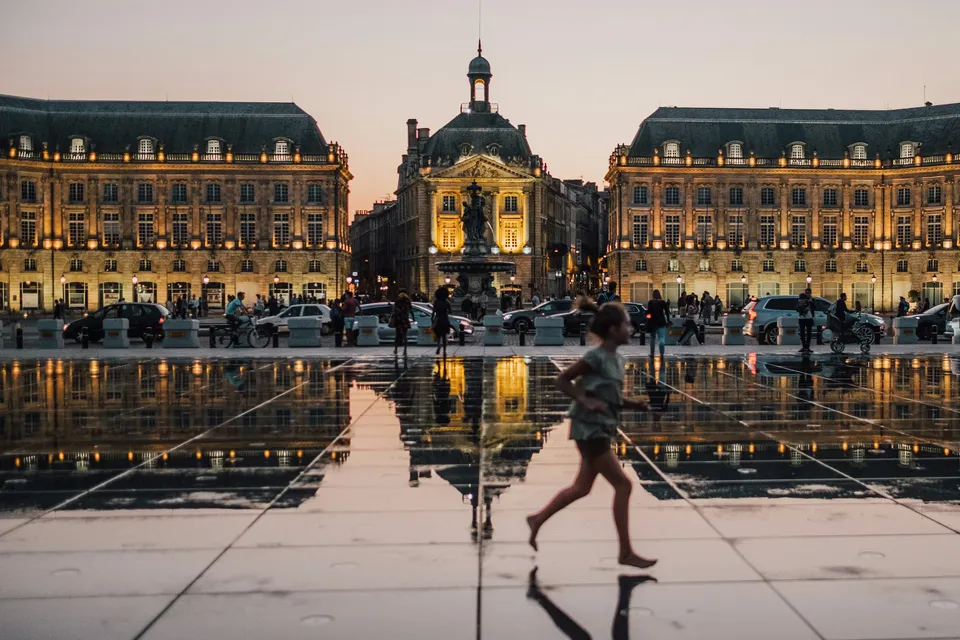
Bordeaux, 267,991 residents, a port city of south-west France, has been on the World Heritage List since 2007 as “Bordeaux, Port of the Moon”, a city of the Enlightenment that has more protected buildings than any other French city except Paris, UNESCO says. Its tourist office counts more than 350 listed historic monuments.
For a visitor.
- The Place de la Bourse and the Water Mirror: the square took 20 years to build in the 18th century, to designs by Jacques Gabriel, Louis XV’s first architect, and the pool in front of it, 2 centimeters of water on a granite slab that alternates a mirror and a mist, is the most photographed site in Bordeaux.
- The Cité du Vin, on the quays, a wine center that “isn’t visited like a conventional museum”, the office says, with a permanent exhibition of 3,000 square meters and a tasting at the top of its 55-meter spire.
- The Bassins des Lumières, the largest digital art center in the world, the office says, with exhibitions on the great names of art history.
- The Place des Quinconces, with the 43-meter Monument aux Girondins, which the office calls the largest square in Europe.
- The vineyards: six wine regions around the city, from the Médoc to Saint-Émilion, which the office calls the first wine-growing landscape UNESCO listed, a medieval town with the largest underground religious building in Europe.
The Bordeaux CityPass costs 37 euros for 24 hours, 48 euros for 48 hours, 56 euros for 72 hours and 62 euros for 96 hours, with trams and buses, the Cité du Vin, the Bassins des Lumières, a guided tour and 15 museums and monuments. The Christmas market fills the Place des Quinconces from November 27 to December 27, 2026, every day from 11 a.m. to 9 p.m., free, and Bordeaux Fête le Vin, the wine festival, returns from July 7 to 11, 2027, with the Tall Ships Races. Tram line F links the airport to the city center (Hôtel de Ville) in 35 minutes, for 1.90 euros, the airport says.
For a resident. Bordeaux has had rent control since July 15, 2022. On the ministry’s map, advertised rents stand at 15.99 euros a square meter, and the fastest of 29 trains a day from Paris takes 2 h 03. Bordeaux airport lists no US destination; Montreal is its only one in North America. Our guide to renting in Bordeaux covers what the market costs in 2026.
10. Lille: The Flemish North
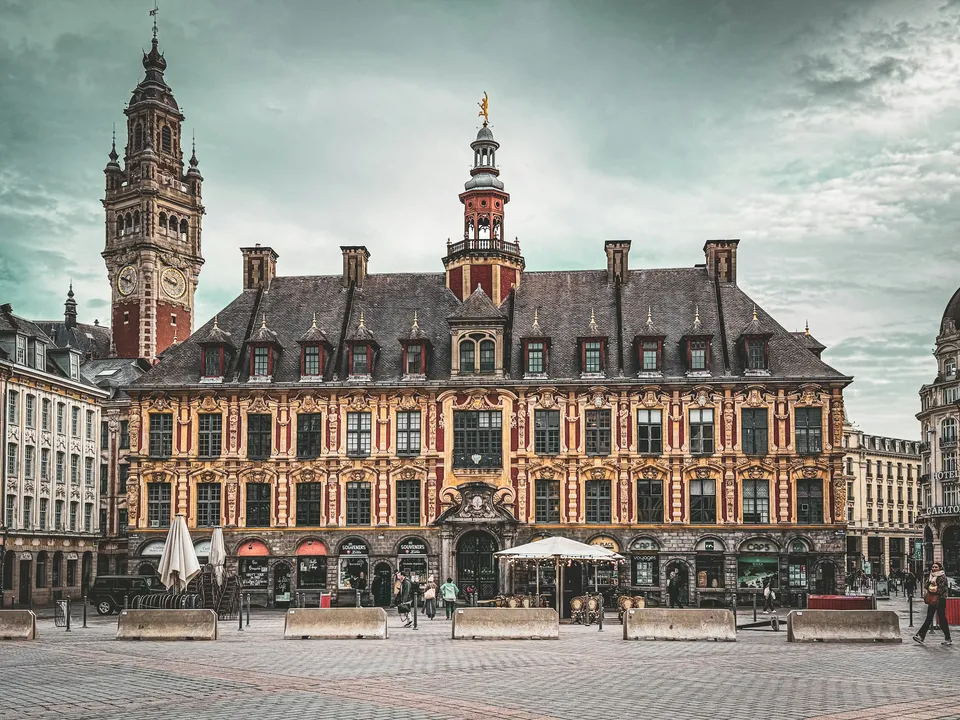
Lille, 238,246 residents, is 55 minutes from Paris on the fastest train, and 30 minutes from Brussels by TGV and 1 hour 20 minutes from London by Eurostar, its tourist office says; it is the only city in France with two train stations so close together, 500 meters apart: Lille-Flandres and Lille-Europe, both in the center.
For a visitor.
- Vieux-Lille, the oldest district, with its cobbled streets, its colorful facades and Meert’s waffles on rue Esquermoise.
- The Vieille Bourse and the Grand Place: the 17th-century Old Stock Exchange, “a Flemish architectural jewel”, and the main square, first built in the Middle Ages and named since 1944 after General de Gaulle, who was born in Lille.
- The town hall belfry, 104 meters, the highest in northern France and a World Heritage site: climb the first 109 steps, then take the lift or keep walking.
- The Palais des Beaux-Arts, one of France’s largest museums, the office says, from Rubens to Rodin; nearby, La Piscine in Roubaix, a museum in an Art Deco swimming pool, and the Villa Cavrois, a modernist house of 1932.
- The Braderie de Lille, the giant flea market of the first weekend of September; the 2027 dates are not yet published.
The HelloLille City Pass gives free entry to 20 sites in and around Lille, from 25 euros for 24 hours, 35 euros for 48 hours and 45 euros for 72 hours, plus 4 euros for 24 hours of public transport. The Christmas market fills the Place Rihour with 90 chalets from November 18 to December 30, 2026, free, with a Ferris wheel on the Grand Place. A shuttle links Lille-Lesquin airport, 10 kilometers out, to the center in 20 minutes, for 7.99 euros online.
For a resident. Lille, with Hellemmes and Lomme, has had rent control since March 1, 2020. On the ministry’s map, advertised rents stand at 15.76 euros a square meter, and the fastest of 27 trains a day from Paris takes 55 minutes.
11. Rennes: The Capital of Brittany
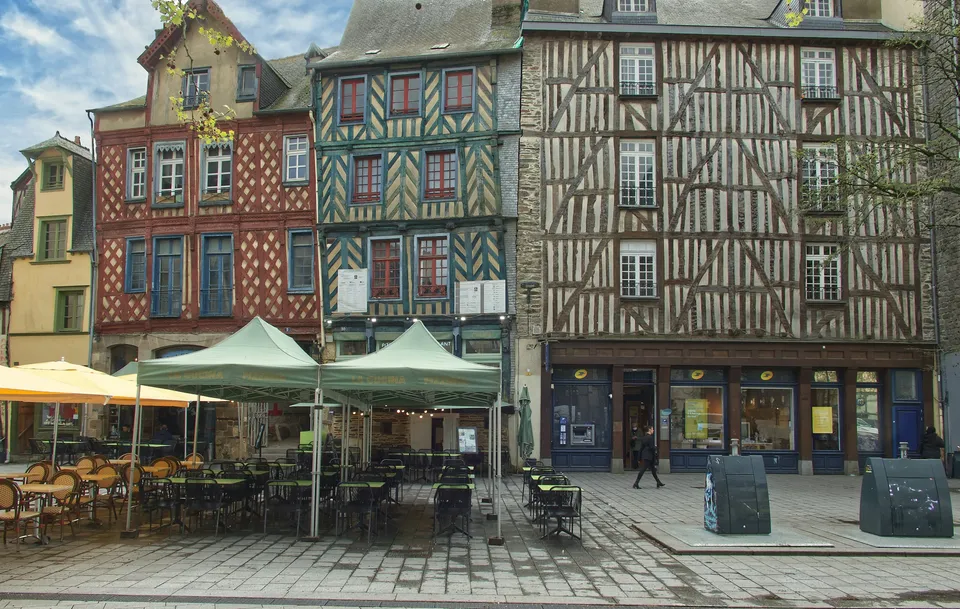
Rennes, 230,890 residents, the eleventh city of France, is the capital of Brittany, a student city where everything can be done on foot, its tourist office says, and the base for Brittany’s best-known sites: Saint-Malo is 50 minutes away by train and Mont-Saint-Michel 1 hour 10 minutes by bus, each for a full fare of 15 euros, according to the office.
For a visitor.
- The historic center, pedestrian streets around the Cathédrale Saint-Pierre, the Portes Mordelaises and the ramparts, with 370 half-timbered houses, more than any other town in Brittany.
- The Parlement de Bretagne, built in the 17th century to plans by Salomon de Brosse, the architect of the Palais du Luxembourg, badly damaged by fire in 1994 and still the seat of the Court of Appeal; it is visited on a guided tour.
- The Marché des Lices, every Saturday from 7:30 a.m. to 1:30 p.m. for four centuries, with about 250 producers and merchants: the second-largest market in France, the office says.
- The galette-saucisse, a pork sausage wrapped in a buckwheat pancake, for 2.50 to 3 euros, and nearly forty crêperies.
The 48th Trans Musicales, the music festival, runs from December 2 to 6, 2026, and “Cet hiver à Rennes”, the Christmas program of markets, lights and projections on the city hall, from November 28, 2026 to January 3, 2027. Two metro lines cross the city in under 15 minutes, and bus C6 serves the airport every 10 to 12 minutes on weekdays.
For a resident. Rennes has no rent control. On the ministry’s map, advertised rents stand at 14.87 euros a square meter, and the fastest of 23 trains a day from Paris takes 1 h 25.
The Weather in France’s Major Cities
The sunniest large cities are Marseille, Nice and Montpellier, in the south, and the coolest summers are in the north and the west. These are Météo-France’s climate normals, averages for 1991 to 2020, at the station Météo-France gives for each city:
| City (station) | January, low and high | July, low and high | Sunshine a year | Rain a year | Days with rain |
|---|---|---|---|---|---|
| Paris (Montsouris) | 3.2 and 7.6 °C (38 and 46 °F) | 16.2 and 25.7 °C (61 and 78 °F) | 1,717 h | 634 mm | 109 |
| Marseille (Marignane) | 3.6 and 11.8 °C (38 and 53 °F) | 19.7 and 30.7 °C (67 and 87 °F) | 2,898 h | 532 mm | 54 |
| Lyon (Bron) | 1.1 and 7.1 °C (34 and 45 °F) | 17 and 28.2 °C (63 and 83 °F) | 2,050 h | 821 mm | 103 |
| Toulouse (Blagnac) | 2.9 and 9.7 °C (37 and 49 °F) | 17 and 28.2 °C (63 and 83 °F) | 2,075 h | 627 mm | 96 |
| Nice | 5.8 and 13.3 °C (42 and 56 °F) | 20.8 and 27.5 °C (69 and 82 °F) | 2,761 h | 791 mm | 62 |
| Nantes (Bouguenais) | 3.4 and 9.3 °C (38 and 49 °F) | 14.3 and 25.1 °C (58 and 77 °F) | 1,873 h | 820 mm | 120 |
| Montpellier (airport) | 3.3 and 12 °C (38 and 54 °F) | 19.3 and 29.5 °C (67 and 85 °F) | 2,705 h | 639 mm | 58 |
| Strasbourg (Entzheim) | -0.2 and 5.2 °C (32 and 41 °F) | 14.9 and 26.4 °C (59 and 80 °F) | 1,747 h | 636 mm | 112 |
| Bordeaux (Mérignac) | 3.7 and 10.5 °C (39 and 51 °F) | 16.2 and 27.1 °C (61 and 81 °F) | 2,070 h | 925 mm | 123 |
| Lille (Lesquin) | 1.7 and 6.6 °C (35 and 44 °F) | 14.2 and 23.7 °C (58 and 75 °F) | 1,627 h | 740 mm | 126 |
| Rennes (Saint-Jacques) | 3.3 and 9.2 °C (38 and 49 °F) | 13.7 and 24.8 °C (57 and 77 °F) | 1,762 h | 691 mm | 115 |
Source: Météo-France, climate normals 1991-2020, each station’s page, read on November 25, 2026. Fahrenheit figures are converted from the Celsius values and rounded; “days with rain” is Météo-France’s “number of days with precipitation”. The Marseille figures are those of the Marignane station: Météo-France’s Provence-Alpes-Côte d’Azur list has no station named Marseille, and Marignane is the one it gives for the area.
What the table means for a trip:
- For sun: Marseille, Nice and Montpellier get about 2,700 to 2,900 hours of sunshine a year, against about 1,600 to 1,900 in Lille, Paris, Strasbourg, Rennes and Nantes.
- For a mild winter: Nice has the warmest January, with average lows of 5.8 °C and highs of 13.3 °C. Strasbourg has the coldest, with lows just below freezing.
- For a cool summer: Lille, Rennes and Nantes average highs of about 24 to 25 °C in July; Marseille passes 30 °C.
- For dry days: Marseille, Nice and Montpellier have rain on 54 to 62 days a year; Bordeaux and Lille on more than 120, though Bordeaux also gets 2,070 hours of sun.
Rents and Rent Control in France’s Major Cities
For anyone staying longer, rents differ widely between these cities, from 13.98 euros a square meter in Toulouse to 37.89 euros in the 6th arrondissement of Paris. The French ministry’s rent map estimates the advertised rent of an unfurnished apartment, charges included, from the listings of leboncoin and SeLoger:
| City | Advertised rent per square meter a month | For the reference apartment of 52 m² | Rent control |
|---|---|---|---|
| Paris | 27.70 euros (19th arrondissement) to 37.89 euros (6th) | About 1,440 to 1,970 euros | Yes, since July 1, 2019 |
| Nice | 20.43 euros | About 1,060 euros | No |
| Lyon | 15.78 euros (5th arrondissement) to 17.66 euros (6th) | About 820 to 920 euros | Yes, with Villeurbanne, since November 1, 2021 |
| Bordeaux | 15.99 euros | About 830 euros | Yes, since July 15, 2022 |
| Lille | 15.76 euros | About 820 euros | Yes, with Hellemmes and Lomme, since March 1, 2020 |
| Strasbourg | 15.57 euros | About 810 euros | No |
| Montpellier | 15.49 euros | About 810 euros | Yes, since July 1, 2022 |
| Rennes | 14.87 euros | About 770 euros | No |
| Nantes | 14.50 euros | About 750 euros | No |
| Marseille | 14.31 euros (14th arrondissement) to 18.41 euros (7th) | About 740 to 960 euros | No |
| Toulouse | 13.98 euros | About 730 euros | No |
Sources: Ministère de la Transition écologique, “Carte des loyers” 2025 (estimations ANIL, from the data of Groupe SeLoger and leboncoin; apartments let unfurnished in the third quarter of 2025, 52 m² reference); Service-Public.fr, rent control, read on November 25, 2026. Paris, Marseille and Lyon are given by arrondissement, their lowest and highest; the 52 m² column multiplies the rate by the map’s reference size and is rounded to 10 euros. The map’s figures are estimates from listings, not signed leases.
Where rent control applies, the landlord cannot set the rent freely: it is capped by reference rents for the area, and a landlord who ignores the cap can be fined up to 5,000 euros (15,000 euros for a company), service-public.fr says. Its list covers Paris and two territories of Île-de-France (Est Ensemble and Plaine Commune), Lyon and Villeurbanne, Lille with Hellemmes and Lomme, Montpellier, Bordeaux, part of the Grenoble metro area and the Pays Basque. The scheme is an experiment that was due to end in November 2026; a law of November 21, 2026 extended it by two years in the same territories, and lets a city leave it before then, according to the Senate. Furnished rentals are not what this map measures.
Cities on the UNESCO World Heritage List
For an independent view of the most beautiful cities in France, UNESCO’s World Heritage List is a guide. Beyond the large cities above, these smaller cities have a World Heritage listing of their own:
| City | World Heritage listing | Inscribed |
|---|---|---|
| Avignon | Historic Centre of Avignon: the Papal Palace, the episcopal ensemble and the Avignon bridge | 1995 |
| Carcassonne | Historic Fortified City of Carcassonne | 1997 |
| Arles | Roman and Romanesque Monuments | 1981 |
| Nîmes | The Maison Carrée, a Roman temple of the 1st century | 2023 |
| Albi | Episcopal City of Albi | 2010 |
| Reims | The cathedral of Notre-Dame, the former abbey of Saint-Rémi and the Palace of Tau | 1991 |
| Nancy | Place Stanislas, Place de la Carrière and Place d’Alliance | 1983 |
| Le Havre | The city rebuilt by Auguste Perret from 1945 to 1964 | 2005 |
Source: UNESCO World Heritage List, France, each property’s page, read on November 25, 2026. France has 56 properties on the list.
Avignon, Arles, Nîmes and Carcassonne are in our guide to the South of France, and Reims is one of the best day trips from Paris.
Which City for Which Trip
- A first trip to France: Paris, then one other city by TGV: Lyon or Strasbourg in under 2 hours, Bordeaux in about 2.
- History on foot: Lyon (Roman Fourvière, Renaissance Vieux Lyon), Strasbourg (the Grande-Île and the cathedral) and Bordeaux (the 18th-century city), three World Heritage centers.
- The south: Nice for the Riviera, Marseille for the Calanques and the old port, Montpellier for a medieval center 13 kilometers from the beaches.
- Food and wine: Lyon and its bouchons, Bordeaux and its vineyards.
- December: the Strasbourg Christmas market, from November 27 to December 24, 2026, and Lyon’s Fête des Lumières, from December 5 to 8; then Lille, Bordeaux, Montpellier, Rennes and the Marseille santon fair.
- Winter sun: Nice, the mildest January of the eleven.
Before you fix your dates, our guide to French public holidays gives the 2027 holidays, the long weekends and what closes on each.
Getting to French Cities from the US and the UK
From London, Eurostar runs direct from St Pancras International to the center of Paris in 2 hours 16 minutes, according to Eurostar.
Paris-Charles de Gaulle lists some 27 US destinations on its own site, served by Air France, Delta, United, American, JetBlue and others. Outside Paris, the choice is small. Of the other airports whose lists we read (Nice, Marseille, Lyon, Toulouse and Bordeaux), only Nice has several US routes: New York, Atlanta, Boston and Philadelphia, mostly from spring to October. Marseille lists New York-Newark with United, Toulouse adds Washington Dulles with United from April 26, 2027, and Lyon and Bordeaux list no US city, only Montreal. For the other cities, the simplest route is a flight to Paris, then the TGV: trains to Lille leave from Paris-Nord and from the Charles de Gaulle 2 TGV station at the airport, SNCF Connect says, and the fastest trains reach Rennes, Lyon, Strasbourg, Nantes and Bordeaux in 1 h 25 to 2 h 03.
Staying Longer in a French City
Each of these cities also works for a stay of months, and three things matter once you stay beyond a holiday:
- The 90-day rule. As a visitor from a visa-exempt country such as the US, the UK, Canada or Australia, you can usually stay a maximum of 90 days within any 180-day period, according to the European Commission. Our guide to how long Americans can stay in France without a visa explains the count, and the Schengen calculator checks your dates.
- The rent and its rules. The city sets the budget: an unfurnished 52 m² apartment is advertised at about 730 euros a month in Toulouse and about 1,440 euros in the cheapest arrondissement of Paris, on the ministry’s map, and five of the eleven cities cap rents by law. Our step-by-step playbook for renting in France explains the application file landlords ask for.
- Choosing the city. Our comparison of where to live in France as an American weighs Paris, Lyon, Bordeaux, Marseille and Montpellier by profile.
Finding a flat, calling agencies and owners, and lining up a bank appointment and a phone plan in French is the kind of work our Personal Assistant handles: the calls, the emails and the apartment search, in French.
FAQ
What are the 10 major cities in France?
By official population, INSEE’s figures in force since January 1, 2026: Paris (2,103,778), Marseille (886,040), Lyon (519,127), Toulouse (514,819), Nice (357,737), Nantes (327,734), Montpellier (310,240), Strasbourg (293,771), Bordeaux (267,991) and Lille (238,246).
Is Lyon or Marseille bigger?
Marseille is the bigger city, with 886,040 residents against 519,127 in Lyon. Lyon is the bigger metro area: 2,339,329 people against 1,917,728 for Marseille and Aix-en-Provence, which INSEE counts as one area.
How many cities are there in France?
France has 34,858 communes outside Mayotte, INSEE says, and 42 of them have more than 100,000 residents; the populations in this guide are those of the commune itself.
What is the most beautiful city in France?
Tastes differ, but UNESCO’s World Heritage List gives an independent pointer. Among the large cities, it lists the banks of the Seine in Paris, large parts of the historic centers of Lyon, Bordeaux and Strasbourg, and Nice’s winter-resort seafront; among smaller ones, the historic centers of Avignon, Carcassonne and Albi, the 18th-century squares of Nancy and the rebuilt center of Le Havre.
Which French cities have direct flights from the US?
Of the airports whose lists we read on November 25, 2026: Paris-Charles de Gaulle, with some 27 US destinations on its list, and Nice, with New York, Atlanta, Boston and Philadelphia, mostly from spring to October. Marseille lists New York-Newark, and Toulouse adds Washington Dulles from April 26, 2027. Lyon and Bordeaux list none.
What is the best city in France to live in?
It depends on the budget and the climate you want. On the ministry’s rent map, Toulouse, Nantes and Rennes have the lowest advertised rents of the eleven largest cities, along with Marseille’s cheapest arrondissements, the 14th and 15th; Nice and Paris have the highest; Marseille, Nice and Montpellier get the most sun. Our comparison of where to live in France as an American goes through the choice by profile.
Conclusion
France’s cities are easier to choose between than they look. Paris stands alone, with 2.1 million residents and by far the widest choice of US flights. Behind it, Lyon and Marseille compete for second place depending on whether you count the city or the metro area, and Lyon, Strasbourg, Bordeaux, Lille, Nantes and Rennes are all within about 2 hours of Paris by TGV. The three southern cities, Marseille, Nice and Montpellier, have the sun, and Toulouse, Nantes and Rennes, with Marseille’s cheapest arrondissements, the lowest rents. Start with Paris and the things to do in Paris, add one or two cities by train, and for the south, see our guide to the South of France. For the places beyond the cities, from Mont-Saint-Michel to the Dordogne, our guide to the best places to visit in France goes region by region.
The parts of the move Americans find out about too late.
What Americans get wrong about moving to France, and the number, form or deadline that fixes it. Straight to your inbox.
One email a week. Real numbers, nothing else.
Written by
Aurelio Maurici
Co-Founder, EasyFranceNow
Aurelio Maurici is a French entrepreneur and co-founder of EasyFranceNow. His work focuses on the intersection of French administration, banking constraints affecting U.S. nationals, tax residency and cross-border reporting, healthcare enrollment, and the procedural realities Americans encounter while settling in France.


