
Marseille, France: The Complete Guide from the Vieux-Port to the Calanques

By Maxime Roseau Co-founder, Master of Business and Communication, Université Nice Sophia Antipolis
Published Updated

In this article
- Marseille at a Glance
- The Vieux-Port Where Marseille Began
- Notre-Dame de la Garde on Its Hill
- Le Panier and La Vieille Charité
- The Mucem and La Major at the Harbor Entrance
- The Château d’If and the Frioul Islands
- The Corniche and the Coast Road to Les Goudes
- The Calanques National Park from Marseille
- More Sights Worth the Trip
- The CityPass: Is It Worth It?
- Bouillabaisse and the Markets of Marseille
- The Beaches of Marseille
- The Weather in Marseille Month by Month
- Getting to Marseille
- From the US and from Paris
- From the airport to the city
- From the cruise port
- Getting Around Marseille
- Day Trips from Marseille
- How Many Days in Marseille?
- Staying Longer in Marseille
- FAQ
- Conclusion
Marseille is France’s second largest city, with 886,040 residents according to INSEE, and its oldest: Greek colonists from Phocaea founded it around 600 B.C., its tourist office says. It is a port first, built around the Vieux-Port where the city began and watched over by the basilica of Notre-Dame de la Garde, with 57 kilometers of seafront, 20 of them in the Calanques, the national park of limestone cliffs and coves that begins inside the city limits.
This guide covers what to see and what it costs, the Château d’If and the Frioul islands, the Corniche and the fishing coves, the Calanques and the rules that close them in summer, bouillabaisse and the markets, the beaches, the weather month by month from Météo-France, how to get in from the airport, the station and the cruise port, and what changes if you stay longer than a holiday. Every price, date and opening time was read on the official page of the site, the operator or the city on November 26, 2026.
Marseille at a Glance
| Where | On the Mediterranean; capital of the Bouches-du-Rhône and of the Provence-Alpes-Côte d’Azur region |
| Population | 886,040 (INSEE reference population 2023, in force since January 1, 2026) |
| Founded | Around 600 B.C. by Greeks from Phocaea, as Massalia, according to the tourist office |
| Area and coast | 240 km², 100 of them natural areas, according to the tourist office; 57 km of seafront, 20 of them in the Calanques, according to the city |
| World Heritage | Le Corbusier’s Unité d’habitation (the Cité Radieuse), part of a listing of 17 of his works inscribed by UNESCO in 2016 |
| From Paris | 26 trains a day, from 3 h 03 |
| From the US | Daily United flights from New York Newark from June 5, 2027 (listed to October 30, 2027) |
| Climate | 2,897.6 hours of sunshine a year at Marignane; 3.6 to 11.8 °C in January, 19.7 to 30.7 °C in July |
| Best for | A city break by the sea, the Calanques, a base for Provence |
Sources: INSEE, reference population of Marseille and geography; Ville de Marseille, key figures; Office de Tourisme de Marseille, history; UNESCO, The Architectural Work of Le Corbusier; SNCF Connect, Paris to Marseille; Marseille airport, New York; Météo-France, Marignane normals, read on November 26, 2026.
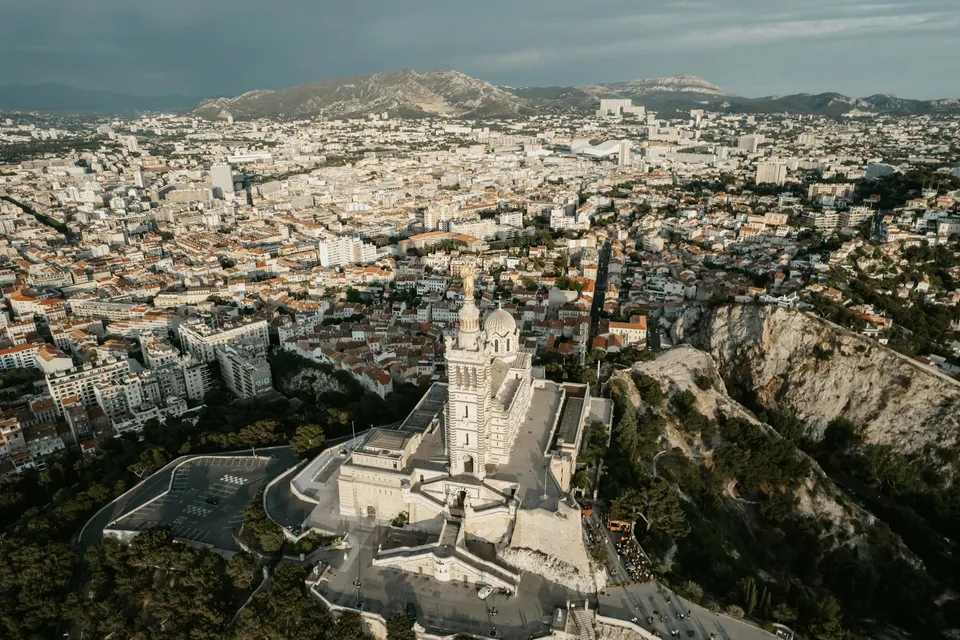
The Vieux-Port Where Marseille Began
The Old Port is where the Greeks founded Massalia more than 2,600 years ago, the tourist office says, and the founding legend is a wedding: Gyptis, daughter of the chief of the local Segobriges, chose Protis, a sailor from Phocaea. Two forts have guarded the harbor entrance since the seventeenth century, Fort Saint-Nicolas and Fort Saint-Jean. In 2013, the year Marseille was European Capital of Culture, the quays were redeveloped with less room for cars, and the Ombrière, a canopy designed by the architect Norman Foster, was built.
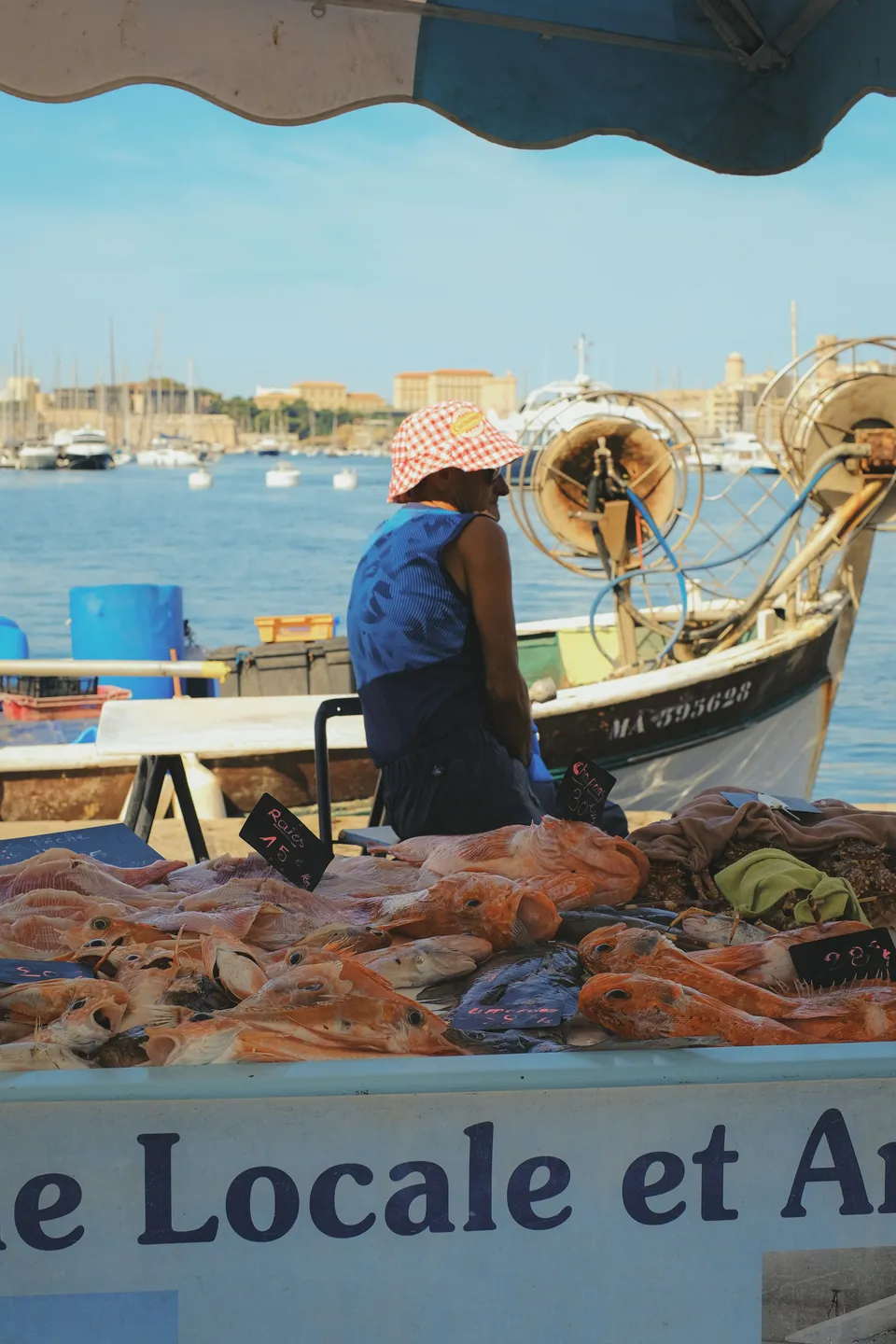
Three things to do there:
- The fish market, on the quay next to the Vieux-Port metro entrance (the Quai des Belges, now the Quai de la Fraternité), every day: from 7:30 a.m. to 12:30 p.m. according to the tourist office, from 8 a.m. to 1 p.m. according to the city. The small-scale fishermen of Marseille sell their catch there, with scorpionfish for bouillabaisse, red mullet, weever, monkfish and sea urchins, depending on the catch. A flower market sets up on the Quai du Port on Tuesday and Saturday mornings.
- The Ferry Boat, which has crossed the port since 1880 between the City Hall (Quai du Port) and the Place aux Huiles (Quai de Rive Neuve). The RTM, the metropolitan transport operator, calls its 283 meters possibly the shortest line in the world: under 5 minutes, 0.70 euros, every day from 7:30 a.m. to 8:20 p.m. except May 1, every 20 minutes, weather permitting, according to its Ferry Boat page (its network page says 7:30 a.m. to 8:30 p.m., every 10 minutes).
- The boats to the islands, which leave from the same quay for the Château d’If and the Frioul (see below).
Sources: Office de Tourisme de Marseille, the Old Port and history; Ville de Marseille, other markets and flower markets; RTM, the Ferry Boat and the network; Lebateau Frioul If, getting there, read on November 26, 2026.
The parts of the move Americans find out about too late.
What Americans get wrong about moving to France, and the number, form or deadline that fixes it. Straight to your inbox.
One email a week. Real numbers, nothing else.
Notre-Dame de la Garde on Its Hill
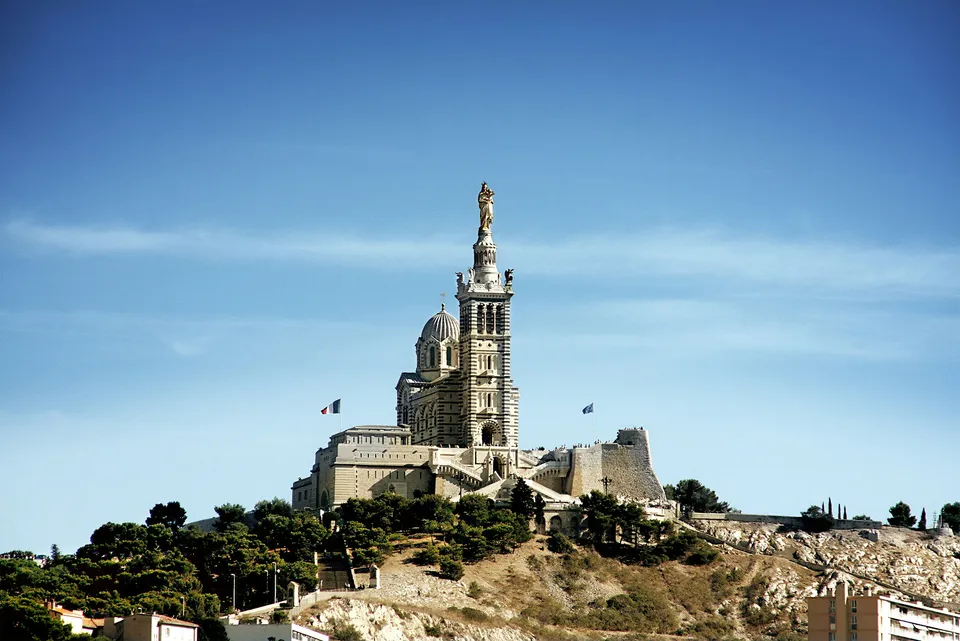
The basilica the people of Marseille call “la Bonne Mère”, the Good Mother, is the city’s most visited monument, the tourist office says. A first chapel to the Virgin was built on the hill in 1214; the basilica, designed by the architect Henri-Jacques Espérandieu in a Romano-Byzantine style, was begun in 1853 and consecrated on June 5, 1864, and Henri Révoil completed the sanctuary and its mosaics between 1874 and 1891, according to the basilica’s own history page. Its gilded statue of the Virgin, placed on the bell tower in 1870, weighs 9,796 kilograms; in 2025 it was regilded with 27,000 sheets of 23.5-carat gold. The basilica gives its height as 10 meters, the tourist office as 11.20 meters. From the esplanade, on a hill the tourist office puts at 154 meters on its page for the basilica (162 on its page for the little train), the whole city, the islands and the sea are below you.
| Notre-Dame de la Garde | As published |
|---|---|
| The sanctuary | Open every day, 7 a.m. to 6 p.m.; free. Visits of the interior are limited during services |
| The museum | Every day, 9 a.m. to 5 p.m.; 4 euros, 2 euros for ages 10 to 17, free under 10 |
| The “secret terraces” (guided panoramic visit) | Tuesday, Thursday and Friday afternoons, departures at 2, 3, 4 and 5 p.m., 15 people at most; 10 euros, 5 euros reduced, free under 10; the ticket also opens the museum. Access by stairs, not suited to people with reduced mobility; the basilica warns about vertigo |
| Getting there | Bus 60 from the Mucem, the City Hall or the Vieux-Port to car park no. 1, every 20 minutes; the little tourist train from the Vieux-Port (from 11 euros, 1 h 15); or about 45 minutes on foot from the Old Port, according to the tourist office |
| Rules | Decent dress in the sanctuaries and on the esplanades; no animals anywhere on the site, even carried; four free car parks with about 150 places in all, open from 7 a.m. to 6 p.m. |
Sources: Notre-Dame de la Garde, hours and access, museum, panoramic visit and history; Office de Tourisme de Marseille, the basilica and the Notre-Dame de la Garde tour, read on November 26, 2026.
On August 25, 1944, the liberation of the city was directed from the basilica, its history page says. Go late in the afternoon for the light over the islands, and leave the car behind in summer: the tourist office warns that the car park fills up very quickly.
Le Panier and La Vieille Charité
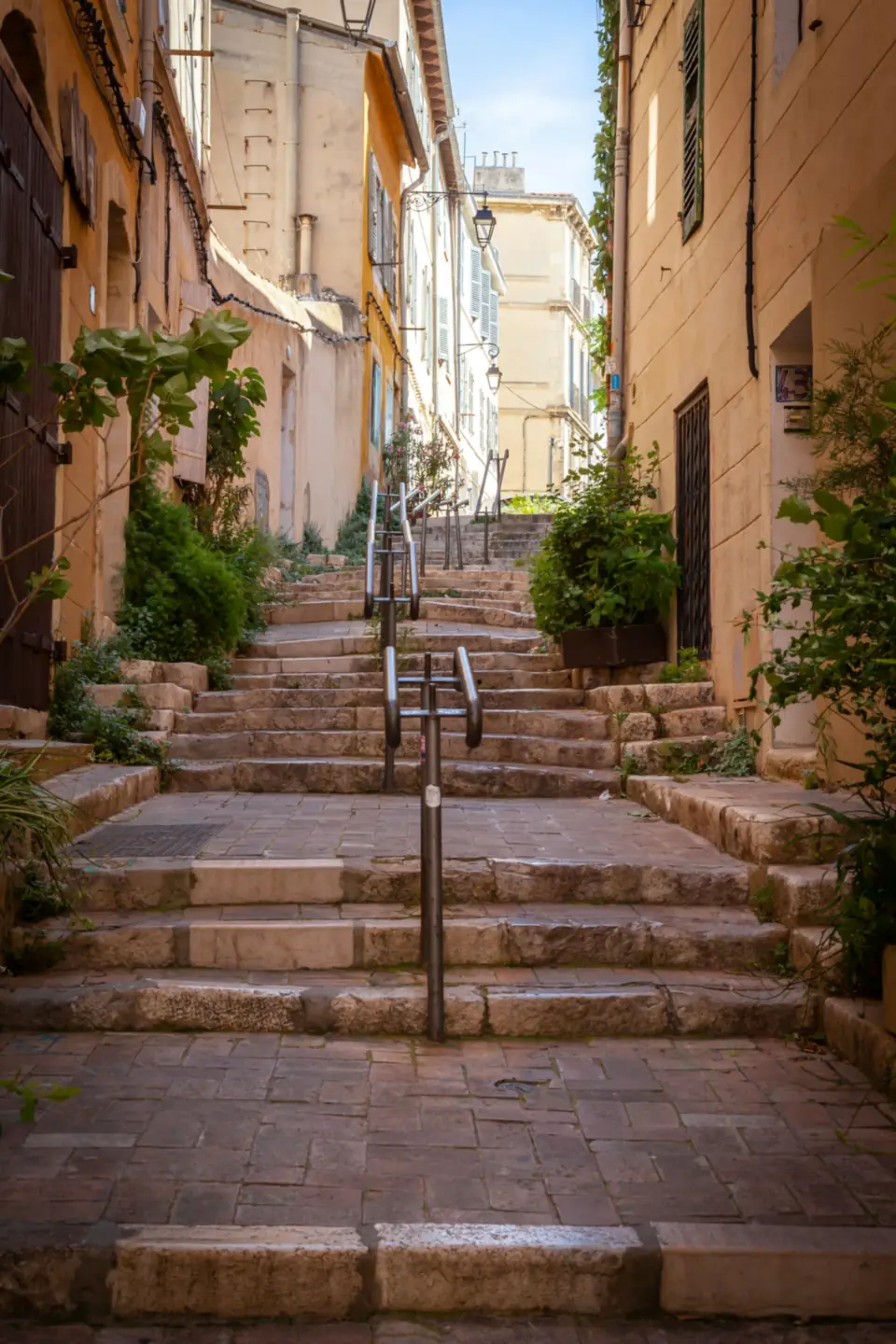
Le Panier, on the hill above the Vieux-Port, is the oldest district: Massalia was founded on its site in 600 B.C., with the agora on today’s Place de Lenche, the tourist office says. In 1943, the German occupiers decided to raze the district. The tourist office counts more than 30,000 people evicted, thousands arrested and 1,500 buildings destroyed between January 22 and 24; the departmental archives put the eviction at about 20,000 people on Sunday, January 24, and the start of the demolition on February 1, and the city’s history museum counts 2,000 buildings demolished. Today it is a hill of stepped lanes and small squares, with the Maison Diamantée, listed in 1925 and spared in 1943, and the Hôtel-Dieu, a five-star hotel since 2013. The tourist office suggests a 2.3-kilometer walk of about an hour and a half, and runs a guided walk of Le Panier, in English or French, from 12 euros.
In the heart of the district, La Vieille Charité is a former hospice for the poor designed by Pierre Puget, the king’s architect, who grew up in the neighborhood; its first stone was laid in 1671, and its chapel with an oval dome was built between 1679 and 1707. The tourist office dates the end of the works to 1749 on its page for the building and to 1745 on its page for the district. It now holds the city’s museum of Mediterranean archaeology and its museum of African, Oceanian and Amerindian arts. The permanent collections are free; temporary exhibitions cost 10 euros. It is closed on Mondays (except Easter and Whit Mondays) and on January 1, May 1, November 1 and 11 and December 25.
Sources: Office de Tourisme de Marseille, the Panier district, La Vieille Charité and the Panier guided walk; Archives départementales des Bouches-du-Rhône, February 1943; Musée d’Histoire de Marseille, read on November 26, 2026.
The Mucem and La Major at the Harbor Entrance
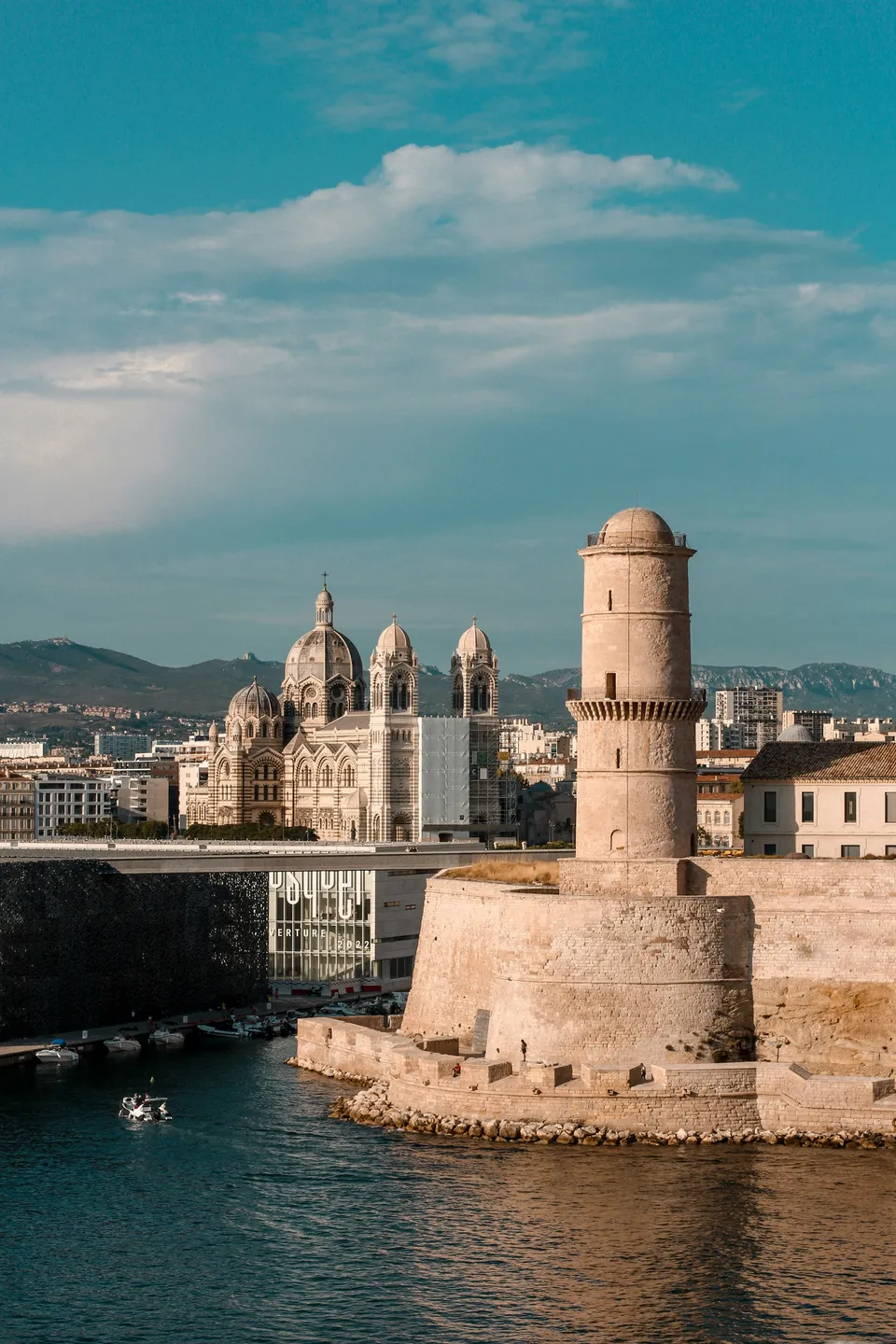
At the harbor entrance, the Mucem, the Museum of European and Mediterranean Civilizations, opened in June 2013 in two places joined by a footbridge: the J4, a 72-meter cube wrapped in a fine concrete mesh, by the architects Rudy Ricciotti and Roland Carta, and Fort Saint-Jean, a fort whose origins go back to the twelfth century and which opened to the public for the first time in 2013. The outdoor areas of the fort, its gardens included, and those of the J4 are free; a second footbridge leads from the fort to Le Panier.
| Mucem | As published |
|---|---|
| Open | Every day except Tuesday, May 1 and December 25 |
| Hours | 10 a.m. to 6 p.m. from November 2 to May 2; 10 a.m. to 7 p.m. from May 2 to July 5 and from August 31 to November 1; 10 a.m. to 8 p.m. from July 6 to August 30 |
| Price | 11 euros (all exhibitions, J4 and Fort Saint-Jean, the same day); 7.50 euros reduced; family ticket 18 euros (2 adults and up to 5 children under 18) |
| Free | Under 18, and for everyone on the first Sunday of the month; outdoor areas always free |
| Good to know | Luggage is not allowed, with a free checkroom; the ticket office closes 45 minutes before closing time and the last entry is 30 minutes before (the FAQ says 45 minutes for the exhibition halls) |
Source: Mucem, visiting the three sites and the J4, read on November 26, 2026. The Mucem’s FAQ gives season dates a day apart from the timetable on its J4 page; the table follows the timetable.
A stone’s throw from the Mucem, La Major, the Cathedral of Sainte-Marie-Majeure, is the only cathedral built in France in the nineteenth century, the tourist office says: its first stone was laid in 1852 by Louis-Napoléon Bonaparte, on plans by Léon Vaudoyer, and it was completed in 1893. It is 146 meters long, its main dome nearly 70 meters high, and it was designed for nearly 3,000 people. Entry is free. The tourist office gives its hours as 10 a.m. to 7 p.m. from April 1 to October 31, 2026, and 10 a.m. to 5:30 p.m. from January 1 to March 31, 2026; it lists none yet for the end of the year.
On the J4 esplanade, next to the Mucem, Cosquer Méditerranée, open since June 4, 2022, is a replica of the Cosquer cave, found in 1985 by the diver Henri Cosquer near Cap Morgiou, 37 meters under the sea according to the replica’s site (36 meters according to the tourist office). Visitors ride through the 1,750-square-meter cave in small exploration vehicles, in groups of six, for 35 minutes, among more than 400 works of cave art (the tourist office counts more than 480), for a visit of about two hours in all. It is open every day. Tickets cost 19 euros for adults on the French page of its site (18 euros on its English page, which still shows its 2024 hours), 11 euros for ages 10 to 17 and 6 euros for ages 6 to 9; the ride needs a height of at least 1.25 meters.
Sources: Mucem, about the museum, Fort Saint-Jean and FAQ; Office de Tourisme de Marseille, La Major and the Cosquer cave; Cosquer Méditerranée, practical information, in English and the visit, read on November 26, 2026.
The Château d’If and the Frioul Islands
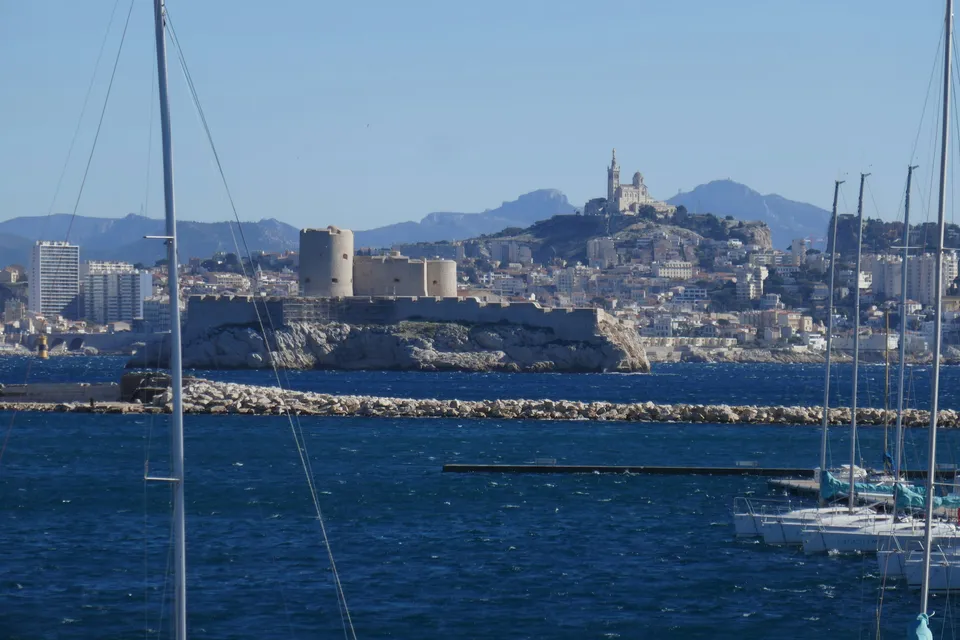
Out in the bay, the Château d’If is the island fortress that Alexandre Dumas made famous: in The Count of Monte Cristo, published as a serial from 1844, Edmond Dantès is locked up there in 1814 and spends fourteen years in it, where he meets the abbé Faria. The real château was decided by Francis I in 1516 and finished in 1531, according to the Centre des monuments nationaux, which runs it; it soon became a prison “d’exception”, used in times of revolt or when the city’s jails were full, from a knight jailed for conspiracy in 1580 to German prisoners of the First World War; the revolutionaries of 1848 left many graffiti in the courtyard. It officially opened to the public in 1880, the Centre says (the tourist office gives 1890), and the whole island is part of the Calanques national park.
| Château d’If | As published |
|---|---|
| Hours | April 1 to September 27: 10 a.m. to 6 p.m.; September 28 to March 31: 10 a.m. to 5 p.m., closed Mondays |
| Closed | January 1, May 1 and December 25, and whenever the weather is bad |
| Price | 7 euros, the boat not included |
| Free | Under 18 with family; ages 18 to 25 who are EU nationals or non-EU residents of France; first Sundays of the month from November to March |
| Rules | No swimming, no smoking, no alcohol, no knives or aerosol cans; suitcases and big backpacks are refused and there are no lockers; take your trash back. Many steps and uneven ground: not accessible with reduced mobility, strollers not allowed inside |
Source: Château d’If, practical information and history, read on November 26, 2026.
Two operators sail from the Vieux-Port, at the foot of La Canebière:
| Boat | Season | Price, as published |
|---|---|---|
| Lebateau Frioul If, the public boat run by the RTM | All year | Frioul round trip 17.70 euros; If and Frioul round trip 26 euros; one way 9.60 euros; evening Frioul round trip 6 euros (departures from 7 p.m., July 1 to September 30); free under 4. Tickets at the office on the Quai de la Fraternité; the château entry is paid on arrival |
| Calanques If (Compagnies Maritimes) | February 8 to November 11, according to the Château d’If | 14 euros for the crossing plus 7 euros for the château, which can be bought together; about 50 minutes of cruise and at least an hour on the island |
Sources: Lebateau Frioul If, tickets (fares in force from November 1, 2026); Calanques If, prices; Château d’If, practical information; RTM, the network, read on November 26, 2026. The RTM puts the crossing at 20 minutes to the Château d’If and 35 minutes to the Frioul.
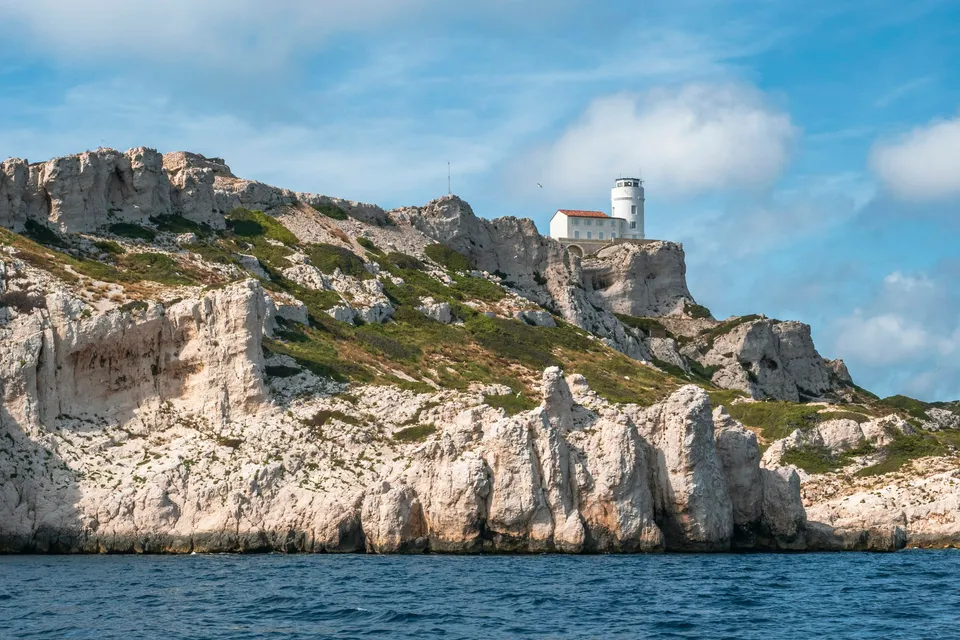
The Frioul archipelago has four islands, Pomègues, Ratonneau, Tiboulen and If, owned by the city since 1971, with a village, Port-Frioul, and a marina of 700 moorings, the tourist office says. Ratonneau is 2.7 kilometers long and Pomègues 2.5, and both have walking paths; the Saint-Estève beach, the only real beach on the islands and lifeguarded in summer, is about half an hour’s walk from the landing stage, and a mini-train runs every day in July and August (5 euros, 3 euros for children). A swimming race to the Château d’If, the Monte-Cristo Challenge, has been held since 1999; it takes place every June and draws about 800 swimmers. In summer, the tourist office warns that the wait for the boats to If and the Frioul can last several hours, and tickets are sold only on the day.
Sources: Château d’If, The Count of Monte Cristo; Office de Tourisme de Marseille, the Frioul islands and the Château d’If and CityPass with transport; Lebateau Frioul If, legal notice, read on November 26, 2026.
The Corniche and the Coast Road to Les Goudes
South of the port, the Corniche Président-John-Fitzgerald-Kennedy runs for nearly 3 kilometers along the sea from the Palais du Pharo to the Prado beaches, the tourist office says. Opened in 1863 as a narrow coastal path and widened from 1954 to 1968, it was renamed for Kennedy in 1963; its stone bench, installed in 1965, is often called the longest bench in the world, a claim the office itself takes with a pinch of salt because the bench has breaks. The walk takes 45 minutes to an hour; bus 83 runs along it, and one Sunday a month the Corniche is closed to cars (“La Voie est libre”).
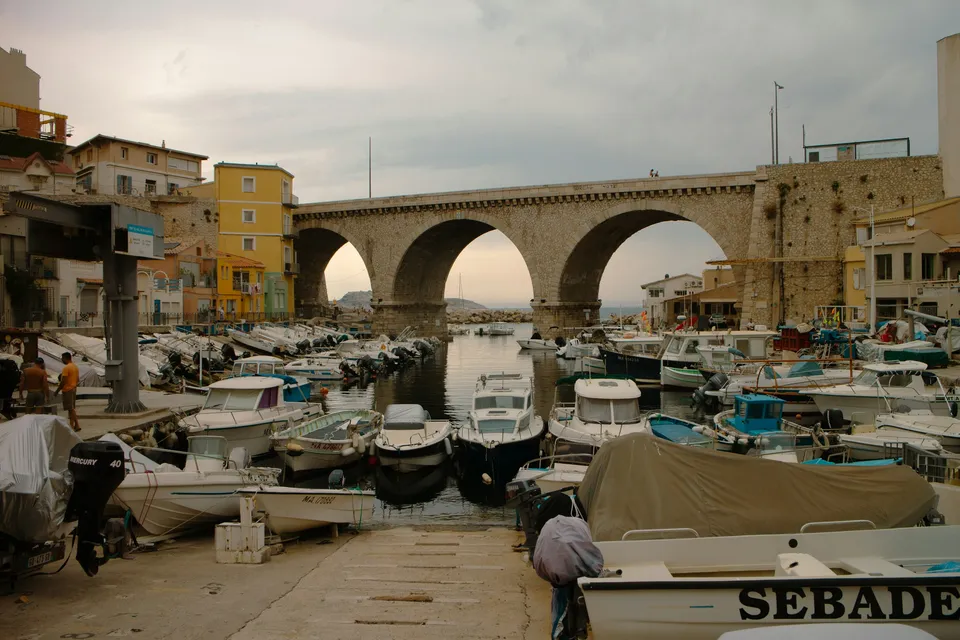
Between the Catalans and Prophète beaches, the road crosses the Vallon des Auffes on a three-arched bridge, 60 meters long, built in the nineteenth century by the engineer Jean François Mayor de Montricher. Below it lies a small fishing harbor named after the auffe, a plant once used to make ship’s ropes and fishing nets, 15 minutes from the Vieux-Port on bus 83. There is no beach. Nearby, people also swim off the rocks of Malmousque, but the tourist office warns that the water there is deep and unsupervised.
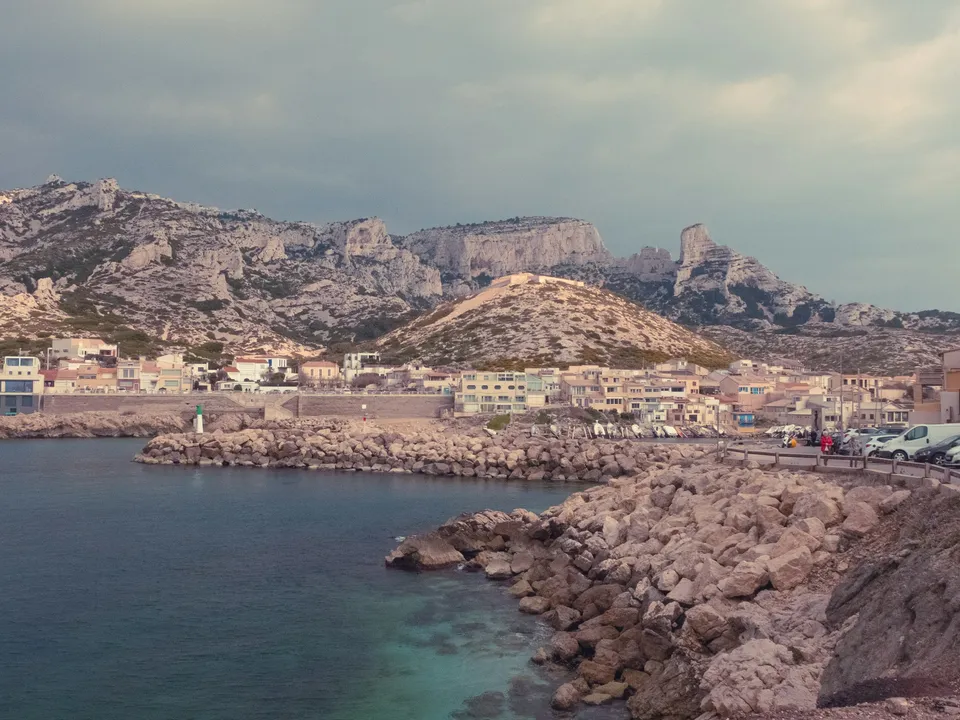
At the far end of the coast road, Les Goudes is “a real little fishermen’s village on the edge of Marseille”, as the tourist office puts it, and Callelongue, after it, is the end of the road and the start of the GR 98 footpath along the coast to Cassis. Neither has a beach, only rocks. The tourist office recommends public transport, because a single road leads there and it is known for being very packed: bus 19 from the Rond-Point du Prado metro station to the Madrague de Montredon, then bus 20 to Les Goudes and Callelongue, or the RTM sea shuttle in season. A walk of 2.7 kilometers links Callelongue to Les Goudes.
Sources: Office de Tourisme de Marseille, the Corniche Kennedy, the Vallon des Auffes, beaches and swimming, Les Goudes, the Goudes calanque and Callelongue; RTM, lanavette, read on November 26, 2026.
The Calanques National Park from Marseille
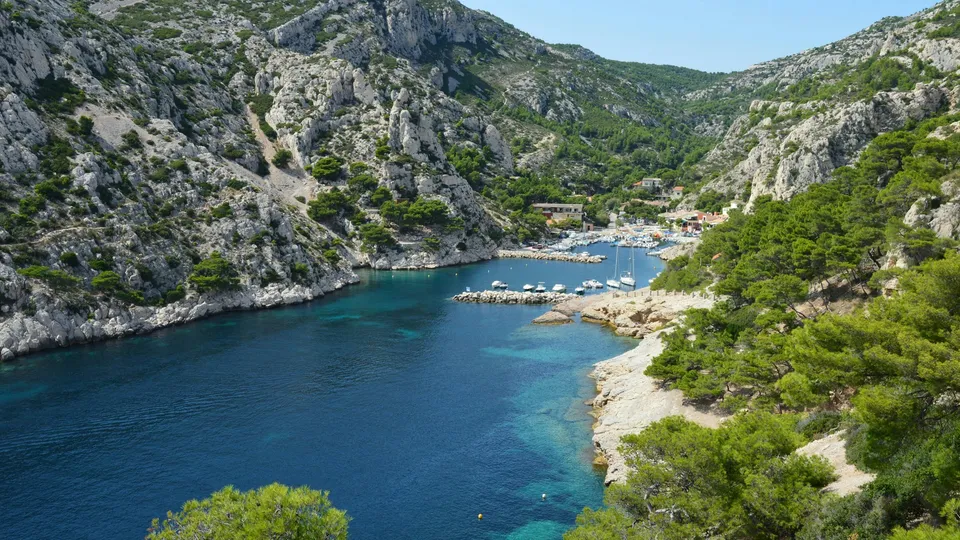
The limestone coves between Marseille, Cassis and La Ciotat lie in the Parc national des Calanques, created by a decree of April 18, 2012. Its protected core covers 51,961 hectares, 43,463 of them at sea, and the French national parks describe it as the only peri-urban national park in Europe that is both on land and at sea, and the most visited in France, with about 2 to 3 million visitors a year (the park’s own site says 3 million). It is open all year, and access is free.
The calanques on the Marseille side, in the 8th and 9th arrondissements, are reached mostly on foot:
| Calanque | What you find | How to get there, according to the tourist office |
|---|---|---|
| Sormiou | One of the rare large beaches of the Calanques, 60 meters of pebbles and sand, lifeguarded from 11 a.m. to 6:30 p.m. during the city’s lifeguard season (May 29 to August 30 in 2026) | Metro 2 to Rond-Point du Prado, bus 22 to the Baumettes terminus, then a walk of 45 minutes to 1 hour |
| Morgiou | A cove with a small port and a single bar-restaurant (no cards), linked to the city by road only in 1959 | About an hour on foot from the Luminy massif; Sugiton is 45 minutes further east on the GR 98-51 |
| Sugiton | A walk down from the Luminy campus, with a lookout point 25 to 30 minutes away | Bus B1 from Castellane to the “Luminy PN des Calanques” stop, then about an hour downhill and a little more back up; reservation in summer |
| Marseilleveyre | A pebble and sand beach larger than its neighbors’ | 45 minutes on foot from the port of Callelongue on the GR 98 |
Sources: Office de Tourisme de Marseille, the calanques of Marseille (pages for each calanque); Ville de Marseille, beaches, read on November 26, 2026. Port-Miou, Port-Pin and En-Vau are reached from Cassis.
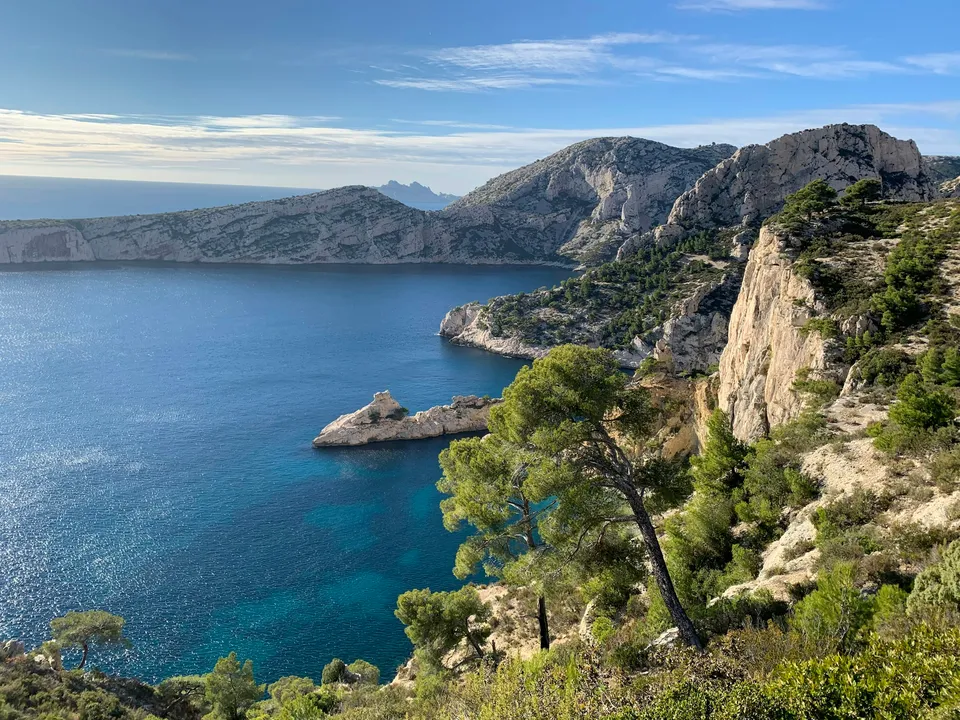
Three rules shape a summer visit:
| Rule | When | What it means |
|---|---|---|
| Fire risk | June 1 to September 30 | The prefecture decides every day whether the forest massifs are open the next day: green and yellow, open; red, closed, with visits by sea allowed but no landing. The park says the decision comes around 5 p.m., the prefecture and the city around 6 p.m. On a red day, the Frioul islands and the southern coast from the Madrague de Montredon to Callelongue stay open, except the natural areas east of the coast road and those of Mont-Rose |
| Reservation for Sugiton and Pierres Tombées | High summer | Compulsory and free. In 2026 it applied on June 20 and 21, every day from June 27 to August 30, and on the weekends of September 5 and 6 and 12 and 13. No 2027 dates were published yet |
| Road closures | Spring and summer | The roads to Sormiou, Morgiou and Callelongue close to cars on a calendar the city sets each year, from April to the end of September according to the city. In 2026, the park says, they closed from 7 a.m. to 7 p.m. on June 5 to 7 and every day from June 12 to August 30, and for Morgiou and Sormiou on weekends in September; on red fire-risk days they close day and night, the city says. Walkers and cyclists can still go through |
Sources: Parc national des Calanques, fire-risk rules, Sugiton 2026 dates and road closures; Préfecture des Bouches-du-Rhône, access to the forest massifs; Ville de Marseille, access to the calanques, read on November 26, 2026. The city says bookings for Sugiton are made on the park’s website; its booking page was empty when we read it.
The prefecture publishes the daily map on risque-prevention-incendie.fr/13 and in the “MesCalanques” app, and the city gives a phone line, 0811 20 13 13. The city also warns that rocks and blocks can fall at any time: do not settle at the foot of a cliff. All year, fire is forbidden in the park and within 200 meters of its forests, smoking and camping stoves included, with a fixed fine of 135 euros; camping and bivouacs are forbidden too, dogs must be on a leash and drones are not allowed. The park asks you to wear walking shoes, not flip-flops, and to carry at least 1.5 liters of water per person per half day: there is no fountain and no trash can in the Calanques. One piece of its advice is worth repeating: do not rely on artificial intelligence or social media to plan your route, it says, because the information there is often wrong. Check its site and the prefecture’s map the evening before.
From the Vieux-Port, Calanques If also sells boat tours of the coast: 30 euros for the “Essentiel des Calanques” and 35 euros for the “Intégrale des Calanques”, adult fares.
Sources: Parc national des Calanques, preparing your visit, fire-risk rules and good practice and rules; Ville de Marseille, access to the calanques; Office de Tourisme de Cassis, the Calanques; Calanques If, prices, read on November 26, 2026.
More Sights Worth the Trip
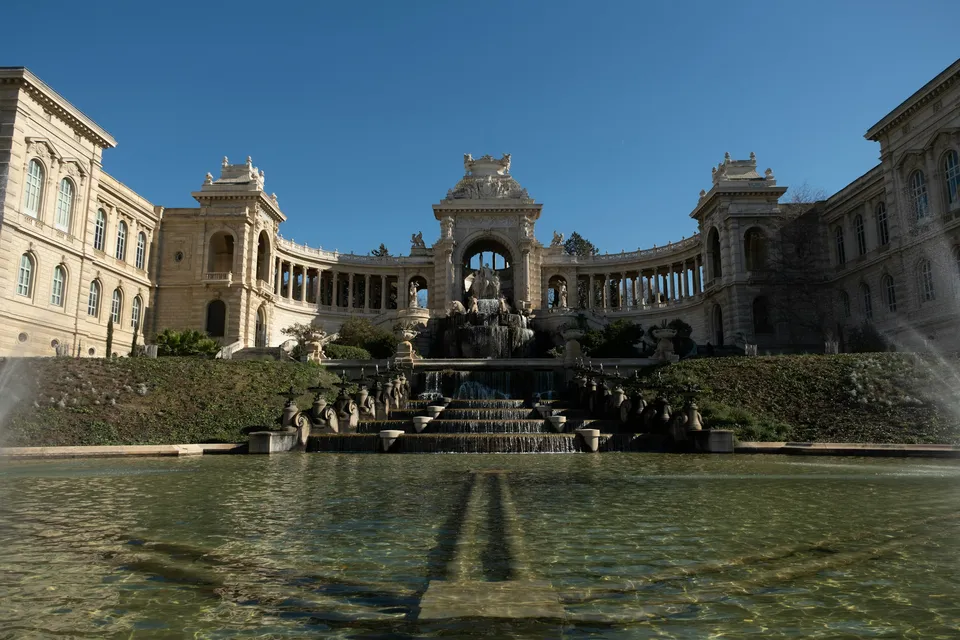
- The Palais Longchamp, built from 1862 to 1869 by Henri Espérandieu, the architect of Notre-Dame de la Garde, after an 85-kilometer canal, dug from 1839 to 1849, brought the water of the Durance to a city struck by cholera in 1835. Its left wing holds the Museum of Fine Arts, the city’s oldest museum, founded in 1802, its right wing the Natural History Museum. The park is free, open from 7 a.m. to 7 p.m. (to 9 p.m. in June, July and August); metro M1 to Cinq Avenues-Longchamp, about 10 minutes from the Vieux-Port.
- The Abbey of Saint-Victor, founded in the fifth century by John Cassian, with crypts that hold sarcophagi stacked up to seven levels high, open every day from 9 a.m. to 6 p.m. On February 2, Candlemas, a procession goes from the Old Port to the abbey, where the archbishop blesses the Black Madonna kept in its crypts and the city, then goes on to the Four des Navettes to bless the boat-shaped biscuits.
- The Cité Radieuse, Le Corbusier’s first Unité d’habitation, built from 1947 to 1952, with 337 flats of 23 types and a roof terrace; the people of Marseille nicknamed it “la Maison du Fada”, the madman’s house. Visitors may walk its inner streets and part of the roof; a guided tour that includes a listed flat is sold only by the tourist office, from 18 euros, 1 h 30, in French. Bus B1, 19 or 22 from Rond-Point du Prado to the Le Corbusier stop.
- The Vélodrome, the stadium of Olympique de Marseille, whose history began in 1937 as a velodrome, now France’s second largest after the Stade de France, with 67,000 seats: the tourist office runs a self-guided tour of the locker rooms, the players’ tunnel and the pitchside, from 21 euros, in English or French.
Sources: Office de Tourisme de Marseille, Palais Longchamp, Saint-Victor, Cité Radieuse and its guided tour, the Vélodrome and OM stadium tour, read on November 26, 2026.
The CityPass: Is It Worth It?
The tourist office’s CityPass Marseille costs 36 euros for 24 hours, 47 euros for 48 hours and 55 euros for 72 hours, counted from the first scan; the RTM’s fare list gives 19, 24 and 29 euros for children aged 6 to 12 (fares in force since September 1, 2025). It includes unlimited buses, metro and trams, one crossing to the Château d’If or the Frioul with free entry to the château (or one entry to Cosquer Méditerranée instead of the crossing), the Mucem, the little train to Notre-Dame de la Garde, a Colorbüs hop-on hop-off tour, a guided visit of the Citadel and about 40 discounts. Bought separately, the boat to the Château d’If and its entry cost 21 euros with Calanques If, the Mucem 11 euros and a 24-hour transit pass 6.70 euros: 38.70 euros before the little train and the bus tour, so a full first day pays for the 24-hour pass. It does not cover the RTM’s summer sea shuttles, and the tourist office notes that in peak season you may wait several hours for the boats to the islands.
Sources: Office de Tourisme de Marseille, CityPass and CityPass with transport; RTM, tickets, child CityPass and lanavette, read on November 26, 2026.
Bouillabaisse and the Markets of Marseille
Bouillabaisse began as a fishermen’s dish, the tourist office says, made from the pieces they set aside when sorting the catch for sale, and its name comes from the way it is cooked: when it boils, lower the heat (“quand ça bout, on abaisse”). A Marseille bouillabaisse must include at least four species from a list that runs from scorpionfish and monkfish to conger eel, John Dory, spider crab and lobster. It is usually served in two dishes, the fish on one side and the broth on the other, with rouille or aïoli, and the fish must be cut up in front of the guests. Book ahead, as the office advises, and expect it to be served for two people at least. Some restaurants follow a bouillabaisse charter written by restaurateurs in 1980 to define the ingredients and the service; others serve it by the rules without having signed it.
The tourist office lists other specialties to try: the navettes, boat-shaped biscuits of flour, sugar, eggs and orange-blossom water created in 1781; the panisse of L’Estaque, brought by Italians from Piedmont and Liguria, and the chichis of the three chichi stalls of L’Estaque; and the pizza, introduced by Neapolitans in 1900.
Sources: Office de Tourisme de Marseille, bouillabaisse (French page), culinary specialties and Noailles, read on November 26, 2026.
For markets, start with the fish market of the Vieux-Port and the Marché des Capucins in Noailles, a district the office calls “the belly of Marseille”: a food market founded in 1956 and, the office says, the least expensive in central Marseille. The city lists these, among others:
| Market | Where | When, as published |
|---|---|---|
| Fish market | Quai de la Fraternité, Vieux-Port | Every day, 8 a.m. to 1 p.m. (7:30 a.m. to 12:30 p.m. according to the tourist office) |
| Flower market | Quai du Port, Vieux-Port | Tuesday and Saturday, 8 a.m. to 1 p.m.; Saturday is the main day |
| Producers’ market | Quai de la Fraternité, Vieux-Port | Sunday, 8 a.m. to 1 p.m. |
| Summer market of Provençal goods | Quai de la Fraternité, Vieux-Port | Every day from July to September, 10 a.m. to 11 p.m. |
| Capucins, fruit and vegetables | Noailles (metro Noailles) | Monday to Saturday, 8 a.m. to 7 p.m. |
| La Plaine | Place Jean Jaurès | Tuesday, Thursday and Saturday, 7:30 a.m. to 1 p.m. |
| Prado | Avenue du Prado (metro Castellane) | Monday to Saturday, 7:30 a.m. to 1:30 p.m. |
Source: Ville de Marseille, food markets, other markets and flower markets, read on November 26, 2026. The markets open on public holidays except January 1, May 1 and December 25.
The Beaches of Marseille
Marseille has more than 21 beaches, natural or man-made, sand or pebble, from Corbières in the north to Pointe-Rouge in the south, the city says, and 14 bathing areas with lifeguards, watched from 9:30 a.m. to 6:45 p.m. from May 29 to August 30 in 2026. Most are reached by bus 83 or 19:
| Beach | What it is | Getting there |
|---|---|---|
| Les Catalans | The most accessible sandy beach in central Marseille | Bus 83, “Les Catalans” stop |
| Le Prophète | One of the oldest beaches, with shallow water where children can walk a long way out | Bus 83, “Le Prophète” stop |
| The Prado beaches | The largest beach in Marseille, 3.5 kilometers of free beaches created in the 1970s, from the statue of David to the Vieille Chapelle | Bus 83 or 19, “La Plage” stop; or metro 2 to Rond-Point du Prado and a 20-minute walk |
| La Pointe-Rouge | The largest sandy beach in Marseille | Bus 19, “Pointe Rouge” stop; the sea shuttle from the Vieux-Port in summer |
| Les Corbières (L’Estaque) | Three beaches of fine sand and pebbles, with lifeguards, showers and free lockers, the only beaches of the northern districts | Bus 35, “Estaque Riaux” stop; the sea shuttle in season |
| Saint-Estève (Frioul) | The only real beach on the islands, lifeguarded in summer | The Frioul boat, then about 30 minutes on foot |
Sources: Office de Tourisme de Marseille, beaches and swimming; Ville de Marseille, beaches, water quality and beach rules, read on November 26, 2026. The office calls the Prado the largest beach and the Pointe-Rouge the largest sandy one.
During the season, the city tests the water of most beaches, the most sensitive every day, with results the same morning, and posts them on its site, in the Ville de Marseille app and with flags on the beach: green for supervised swimming without apparent danger, yellow or orange for a limited or marked danger, red for no swimming, purple for pollution or dangerous species such as jellyfish; no flag means no lifeguard. Smoking is forbidden on the whole coast, e-cigarettes included, dogs are banned from the beaches all year, and so are alcohol, barbecues, speakers and jumps of more than 3 meters from rocks, quays or cliffs.
The Weather in Marseille Month by Month
Météo-France’s climate normals pages list no station inside the city: the one for the Marseille area is Marignane, by Marseille Provence airport, which the tourist office puts 27 kilometers from the center. These are its averages for 1991 to 2020:
| Month | Average low | Average high | Rain | Sunshine |
|---|---|---|---|---|
| January | 3.6 °C (38 °F) | 11.8 °C (53 °F) | 47.1 mm | 148 h |
| February | 3.7 °C (39 °F) | 12.8 °C (55 °F) | 29.8 mm | 173 h |
| March | 6.5 °C (44 °F) | 16.4 °C (62 °F) | 29.5 mm | 235 h |
| April | 9.4 °C (49 °F) | 19.3 °C (67 °F) | 51.6 mm | 251 h |
| May | 13.3 °C (56 °F) | 23.5 °C (74 °F) | 37.7 mm | 299 h |
| June | 17.2 °C (63 °F) | 27.9 °C (82 °F) | 27.9 mm | 338 h |
| July | 19.7 °C (67 °F) | 30.7 °C (87 °F) | 10.8 mm | 372 h |
| August | 19.4 °C (67 °F) | 30.5 °C (87 °F) | 25.8 mm | 334 h |
| September | 15.9 °C (61 °F) | 25.9 °C (79 °F) | 82.0 mm | 264 h |
| October | 12.6 °C (55 °F) | 21.3 °C (70 °F) | 73.3 mm | 196 h |
| November | 7.7 °C (46 °F) | 15.7 °C (60 °F) | 75.9 mm | 151 h |
| December | 4.4 °C (40 °F) | 12.4 °C (54 °F) | 40.9 mm | 138 h |
| Year | 11.1 °C (52 °F) | 20.7 °C (69 °F) | 532.3 mm | 2,897.6 h |
Source: Météo-France, Marignane climate normals 1991-2020, read on November 26, 2026. Fahrenheit figures are converted from the Celsius values; monthly sunshine hours are rounded.
What the table means for a trip:
- For the beach: July and August are the hottest and driest months, with highs above 30 °C; July is the sunniest month, then June and August. June (27.9 °C) and September (25.9 °C) are a little cooler.
- For the Calanques: April, May and October, with highs of 19 to 24 °C, are good months to walk: they fall outside the fire-risk season (June 1 to September 30) and the Sugiton reservations. In 2026 the access roads closed to cars only from June, but the city says closures can start in April.
- For a winter trip: highs of about 12 to 13 °C from December to February, with 138 to 173 hours of sunshine a month.
- The wettest months are September to November, with 73 to 82 millimeters of rain each: Météo-France says the heavy Mediterranean rain episodes it counts, 3 to 6 a year on average, come most often in autumn.
Then there is the mistral, the regional wind. Météo-France describes it as gusty and usually dry, blowing from the northwest around Marseille; it can average 50 km/h, with gusts of 80 to 100 km/h or more, and is often stronger in winter and spring, sometimes for more than a week. Mistral days are often very sunny, but the wind can make the sea along the coast much colder, and in summer it can help forest fires start and spread; the prefecture’s daily decision on the massifs depends on the weather and the drought.
Sources: Météo-France, the mistral and climate normals in Provence-Alpes-Côte d’Azur; Préfecture des Bouches-du-Rhône, access to the forest massifs, read on November 26, 2026.
Getting to Marseille
From the US and from Paris
From June 5, 2027, United Airlines flies daily between Marseille Provence and New York Newark, the first US airline to serve the airport, in 9 hours 15 minutes, on an A321XLR of 150 seats; the airport’s calendar lists flights every day to October 30, 2027, and New York is its only US destination. Otherwise, fly to Paris and take the train: SNCF Connect lists 26 trains a day from Paris (Gare de Lyon, Marne-la-Vallée Chessy or Austerlitz) to Marseille, from 6:03 a.m. to 9:12 p.m., 3 hours 35 minutes on average and 3 hours 3 minutes on the fastest, from 16 euros on some trains and dates. They arrive at Marseille Saint-Charles or Marseille Blancarde. Saint-Charles, which SNCF Connect puts 2 kilometers from the Old Port, is a 20-minute walk down the station’s grand staircase, the tourist office says, and both metro lines leave from its basement.
Sources: Marseille airport, United to New York, the New York route and all destinations; SNCF Connect, Paris to Marseille; Office de Tourisme de Marseille, arriving in Marseille, read on November 26, 2026.
From the airport to the city
Marseille Provence airport is at Marignane, 27 kilometers from the center, according to the tourist office.
| How | Time and price, as published |
|---|---|
| Shuttle bus A1 | To Saint-Charles station by motorway in about 30 to 50 minutes; every 10 minutes from 7 a.m. to 8 p.m., every 20 minutes earlier and later, from 4:05 a.m. to 1:50 a.m. from the airport. 15 euros one way (age 26 and over), 25 euros round trip; you can pay by tapping a bank card on board |
| Train | Bus LeBus13 (5 minutes, ticket bought from the driver) to Vitrolles Aéroport Marseille Provence station, served by up to 73 regional trains a day; about 20 minutes from there to Saint-Charles, according to the tourist office |
| Taxi | About 70 to 80 euros by day and 90 to 100 euros at night with luggage, more on Sundays and public holidays, according to the tourist office, on a page whose shuttle fare is out of date (the metered fares are set by prefectoral order); the rank is in front of Terminal 1, with 86 cars, cash or card |
Sources: Marseille airport, bus to Saint-Charles, trains and taxis; La Métropole Mobilité, fares from November 1, 2026; Office de Tourisme de Marseille, arriving in Marseille, read on November 26, 2026. The tourist office still prints a shuttle fare of 10 euros; the operator’s fare page, from November 1, 2026, says 15 euros.
From the cruise port
Marseille is France’s first cruise port, with 2.6 million cruise passengers in 2025, according to the Port of Marseille Fos. Ships that berth at the J4 terminal, next to the Vieux-Port and the Mucem, are a few minutes’ walk from the center. The other terminals are at Gate 4 (Porte 4), about 6 kilometers from the center, which you cannot leave on foot because the area is ringed by the motorway: the tourist office lists the port’s free shuttles to the Terrasses du Port shopping center on ship days (9 a.m. to 5 p.m., every 30 minutes), the cruise lines’ paid shuttles, RTM buses from Gate 4 and a taxi for about 20 euros.
Sources: Port of Marseille Fos, cruise passengers; Office de Tourisme de Marseille, arriving in Marseille, read on November 26, 2026.
Getting Around Marseille
The center, from the Vieux-Port to Le Panier and the Mucem, is walkable; the rest is the RTM’s network of 2 metro lines, 3 tram lines and 93 bus lines, plus the boats.
| Ticket | Price, as published |
|---|---|
| Single ticket (bus, metro, tram, with 59 minutes of transfers), fares from November 1, 2026 | 1.60 euros; 2.50 euros bought on board a bus |
| Contactless bank card tapped on the validator | 2 euros a trip; one card can pay for up to 5 travelers |
| 10 trips (can be shared) | 16 euros |
| 24-hour pass | 6.70 euros |
| Pass Intégral, 3 or 7 days, with the airport shuttles and the regional trains within the metropolis | 40 euros or 55 euros, on the personal “lacarte” card only |
| Ferry Boat across the Vieux-Port | 0.70 euros |
| Lanavette sea shuttle (Vieux-Port to L’Estaque or to Pointe-Rouge, Pointe-Rouge to Les Goudes) | 7 euros a crossing; 10 euros from the Vieux-Port to Les Goudes |
Sources: RTM, tickets, paying by bank card, the Ferry Boat and lanavette; RTM, the network and the evening and night network; La Métropole Mobilité, fares, read on November 26, 2026. The bank-card fare is on an RTM page of September 2025; the other RTM fares are those in force from November 1, 2026. The RTM’s network page gives the metro’s last departures at 12:34 a.m. every day and the trams’ at 12:30 a.m.; its evening and night page, followed below, closes the metro at 9:30 p.m. from Monday to Wednesday and runs the trams until 1 a.m.
Four things to know:
- The metro closes early on some nights: the two lines run from 4:50 a.m. to 12:30 a.m. from Thursday to Sunday, but from Monday to Wednesday the last trains leave at 9:30 p.m. and relay buses take over until 12:30 a.m. The trams run every day until 1 a.m.
- The useful lines: bus 60 to Notre-Dame de la Garde, bus 83 along the Corniche, bus 19 to the Prado and Pointe-Rouge, bus 20 to Les Goudes and Callelongue, bus B1 to Luminy and the Calanques, metro 1 to the Palais Longchamp.
- The sea shuttles are seasonal: lanavette ended its 2026 season and returns in spring 2027; tickets are sold on board only, the 24-hour and 72-hour passes and the CityPass do not cover it (30-day, annual and permanent passes do), and a ticket does not guarantee a seat when the boat is full.
- Tap the same card at every transfer if you pay by bank card, the RTM says.
Day Trips from Marseille
- Cassis, the port on the far side of the Calanques, from which Port-Miou, Port-Pin and En-Vau are reached: SNCF Connect lists 31 regional trains a day from Marseille Blancarde, 16 minutes at the fastest, from 8 euros; the national park adds that bus 78 runs from Marseille to Cassis over the Gineste road. Our guide to Cassis covers the calanques on its side, the boat trips from its port and the Cap Canaille.
- Aix-en-Provence, inland: 37 regional trains a day from Saint-Charles, 39 minutes at the fastest, according to SNCF Connect, or bus 50 for 7 euros, according to La Métropole Mobilité. Our guide to Aix-en-Provence covers its fountains, markets, museums and Cézanne’s places.
- The rest of Provence, from the Luberon villages to Avignon and Arles, area by area in our guide to Provence, and with the Riviera and the Languedoc in our guide to the South of France.
Sources: SNCF Connect, Marseille to Cassis and Marseille to Aix-en-Provence; Parc national des Calanques, preparing your visit, read on November 26, 2026.
How Many Days in Marseille?
- Day 1, the port and the hill: the fish market at the Vieux-Port in the morning, the Ferry Boat, Le Panier and La Vieille Charité, Fort Saint-Jean and the Mucem, La Major, then bus 60 up to Notre-Dame de la Garde for the end of the afternoon.
- Day 2, the sea: a boat to the Château d’If and the Frioul in the morning, then the Corniche on foot or by bus 83, the Vallon des Auffes and an evening on the Prado beaches or at Les Goudes.
- Day 3, the Calanques: Sugiton from Luminy or Sormiou from the Baumettes, outside the summer restrictions, or a boat tour of the coast; Cosquer Méditerranée or the Palais Longchamp if the massifs are closed.
With four or five days, add Cassis and Aix-en-Provence by train. With a week, Marseille works as a base for Provence, from the Luberon to Arles.
Staying Longer in Marseille
Three rules matter once a stay in Marseille goes beyond a holiday:
- The 90-day rule. As a visitor from a visa-exempt country such as the US, the UK, Canada or Australia, you can usually stay a maximum of 90 days within any 180-day period, according to the European Commission, and the European Union’s Entry/Exit System counts that period across all the countries using it, so a week in Italy or Spain counts in the same total; it has been fully in force at every external border since April 10, 2026. Our guide to how long Americans can stay in France without a visa explains the count, and the Schengen calculator checks your dates. For any stay of more than 90 days, France-Visas says, you need a long-stay visa obtained before you leave.
- The tourist tax. The City of Marseille charges a taxe de séjour per person and per night, with a 10 percent departmental surcharge and a 34 percent regional one; with both, it costs 2.16 euros a night in a three-star hotel and 3.25 euros in a four-star until December 31, 2026, and new rates voted in June 2026 apply from January 1, 2027. Minors are exempt.
- Furnished rentals. The city has cut to 90 days a year, from 120, the time a main residence may be let to tourists, and since April 29, 2025 a furnished tourist rental outside the owner’s main residence needs a change-of-use permit with compensation. Every listing must show its registration number (13 digits on the city’s tourist-tax page, 13 characters in its tourist-tax portal): check it before you book. A furnished lease under the bail mobilité, for one to ten months, is open only to tenants in professional training, higher education, an apprenticeship, an internship, a civic service, a work transfer or a temporary work assignment, service-public says, and our guide to renting in Marseille compares the arrondissements, the budget and the paperwork.
Sources: European Commission, short-stay calculator; European Union, what is the EES and EES FAQ; France-Visas, long-stay visa; Ville de Marseille, tourist tax, tourist-tax portal and furnished tourist rentals; DGFiP, tourist-tax rates; service-public, the bail mobilité, read on November 26, 2026.
Finding that flat, calling the agencies and setting up a phone line or a bank account in French is the kind of work our Personal Assistant handles: the calls, the forms and the apartment search, in French.
FAQ
Is Marseille worth visiting?
Yes: it is France’s oldest city, with a working port at its heart, free monuments (Notre-Dame de la Garde, La Major, the grounds of Fort Saint-Jean), a major museum at 11 euros, the Château d’If 20 minutes away by boat, city beaches, and a national park of calanques you can reach by city bus. It is also a base for Cassis, Aix-en-Provence and the rest of Provence.
Is Marseille safe for tourists?
The US State Department’s advisory covers France as a whole, not Marseille: Level 2, “Exercise increased caution”, issued on October 21, 2026, because of terrorism and unrest, and it notes that pickpocketing and phone thefts are common in crowded places such as airports, subways and trains, train stations and tourist attractions. The tourist office’s own advice is to keep your bag closed, keep your wallet out of your back pocket, not let a stranger distract you, and never leave your things unattended while you swim. The emergency numbers are 17 for the police, 15 for medical emergencies and 18 for the fire brigade.
What is Marseille known for?
The Vieux-Port, where the Greeks founded the city around 600 B.C.; Notre-Dame de la Garde, “la Bonne Mère”; the Château d’If of The Count of Monte Cristo; bouillabaisse; the Calanques national park; and Le Corbusier’s Cité Radieuse, on UNESCO’s World Heritage List since 2016.
What is the best time to visit Marseille?
May, June and September for warm days and the sea without the July and August heat; spring and October for walking in the Calanques outside the fire-risk season and the Sugiton reservations (in 2026, the access roads closed to cars from June to September). July and August are the hottest and driest months, with highs above 30 °C, and September to November the wettest, according to Météo-France.
How do you get from Marseille airport to the city center?
Shuttle bus A1 runs to Saint-Charles station in about 30 to 50 minutes, every 10 minutes during the day, for 15 euros one way or 25 euros round trip. A taxi costs about 70 to 80 euros by day, according to the tourist office, whose page is partly out of date.
Can you visit the Calanques from Marseille without a car?
Yes, and in summer it is the better way: bus B1 to Luminy for Sugiton, bus 22 to the Baumettes for Sormiou, bus 20 to Callelongue for Marseilleveyre, or a boat tour from the Vieux-Port. From June 1 to September 30, check the prefecture’s daily map the evening before, and in high summer book Sugiton.
Conclusion
Marseille rewards a stay of a few days: a port that has been a city for 2,600 years, a basilica above the whole bay, a museum and a fort at the harbor entrance, the Château d’If 20 minutes away by boat, beaches on the bus line and the Calanques inside the city limits. Come in May, June or September for the sea, in spring or October for the Calanques, and check the summer rules before you set off on foot. For the region around it, see our guide to Provence and our guide to the South of France; for the whole country, our guide to the best places to visit in France; and for how Marseille compares with France’s other large cities, our guide to the cities in France.
The parts of the move Americans find out about too late.
What Americans get wrong about moving to France, and the number, form or deadline that fixes it. Straight to your inbox.
One email a week. Real numbers, nothing else.
Written by
Maxime Roseau
Co-founder, EasyFranceNow
Maxime Roseau is a French entrepreneur and co-founder of EasyFranceNow. His work focuses on French visas, residency, and citizenship: long-stay visa applications, OFII validation, prefecture procedures, permit renewals, and naturalization files, along with the operational side of relocation such as housing, rental dossiers, and administrative coordination after arrival.


