How to Choose Where to Live in France as an American: Paris, Lyon, Bordeaux, Marseille, and Montpellier Compared

Published Feb 13, 2026-Updated Jun 29, 2026

Key Takeaways
Your biggest practical decision: city and region shape cost, healthcare, and admin speed.
Do not default to Paris: Lyon, Bordeaux, and smaller cities trade cost for pace.
Healthcare access varies: rural areas can mean longer waits and fewer specialists.
Visit in different seasons on short trips before you commit.
Cross-check schools if you have children, school is by address.
Sources: service-public.fr
The question of where to live in France is the most consequential practical decision of your move, and it is rarely given enough systematic attention. Most Americans default to Paris because it is the city they know, or to wherever they happened to visit once and liked. Both are understandable starting points and both sometimes produce the right answer, but France has cities that suit specific American expat profiles better than Paris does: better on cost, better on climate, better on community size, better on the ratio of quality of life to administrative complexity. This article maps five cities, Paris, Lyon, Bordeaux, Marseille, and Montpellier, against the variables that actually determine whether you will be happy living there: rental costs, climate, English accessibility, transportation connections, expat community, and fit by life stage and profile. It draws on city-specific guidance from this site's rental guides and adds the comparison layer that individual city articles cannot provide.
If you are moving for retirement, our guide to the France retirement visa and relocation process covers the full sequence from visa to healthcare.
What's the best city to live in France for Americans?
There's no single best city: it depends on your budget, climate preference, and how much English you need. Paris offers the most international infrastructure but the highest rents; Lyon balances cost, careers, and connections; Bordeaux and Montpellier trade size for lifestyle and milder weather; Marseille is the warmest and cheapest large city. Don't default to Paris. Match the city to your profile.
How to Use This Comparison
The five variables that determine city fit for most American expats are:
Cost relative to income. If your income is fixed (Social Security, pension, passive investment income), the rent-to-income ratio determines your quality of life directly. A city where a comfortable apartment costs €700 per month versus €1,400 per month is a €8,400 per year difference that compounds across every year of your stay. The French government's statistical agency INSEE publishes population, employment, and housing data for all French cities and communes at insee.fr, a useful reference for comparing city-level economic context.
Climate preference. France spans a wide climatic range from the grey, cold Atlantic northwest to the Mediterranean south. This is not a minor lifestyle variable: Americans who dislike cold, damp winters often find Paris and Lyon tolerable in summer but genuinely difficult from November through March. Official climate data by French city is available from Météo-France, France's national meteorological service.
Professional infrastructure. For remote workers, employed professionals, entrepreneurs, and investors, the city's business environment, co-working infrastructure, professional network, and international company presence matters alongside livability.
French language environment. Some cities are more accommodating of limited French than others: Paris has the highest concentration of English-speaking French people and services oriented toward foreigners. Smaller cities outside Paris expect French.
Travel connectivity. For Americans who travel frequently, the quality of TGV connections and the proximity and quality of the international airport matter substantially. Paris has the best international connections; other cities have varying degrees of direct transatlantic access.The SNCF's national train schedule and TGV journey times between French cities are searchable on SNCF Connect (the official SNCF platform that replaced oui.sncf in 2022), which provides a reliable reference for comparing actual travel times between your target city and Paris or major international hubs.
Paris: Still the Reference, But Not for Everyone
Paris is the default answer because it is the most internationally legible French city, and for many Americans it is genuinely the right choice. It has the largest English-speaking expat community in France, the strongest professional infrastructure, the best cultural offer, and the widest range of international institutions, schools, hospitals, and services oriented toward foreign residents.
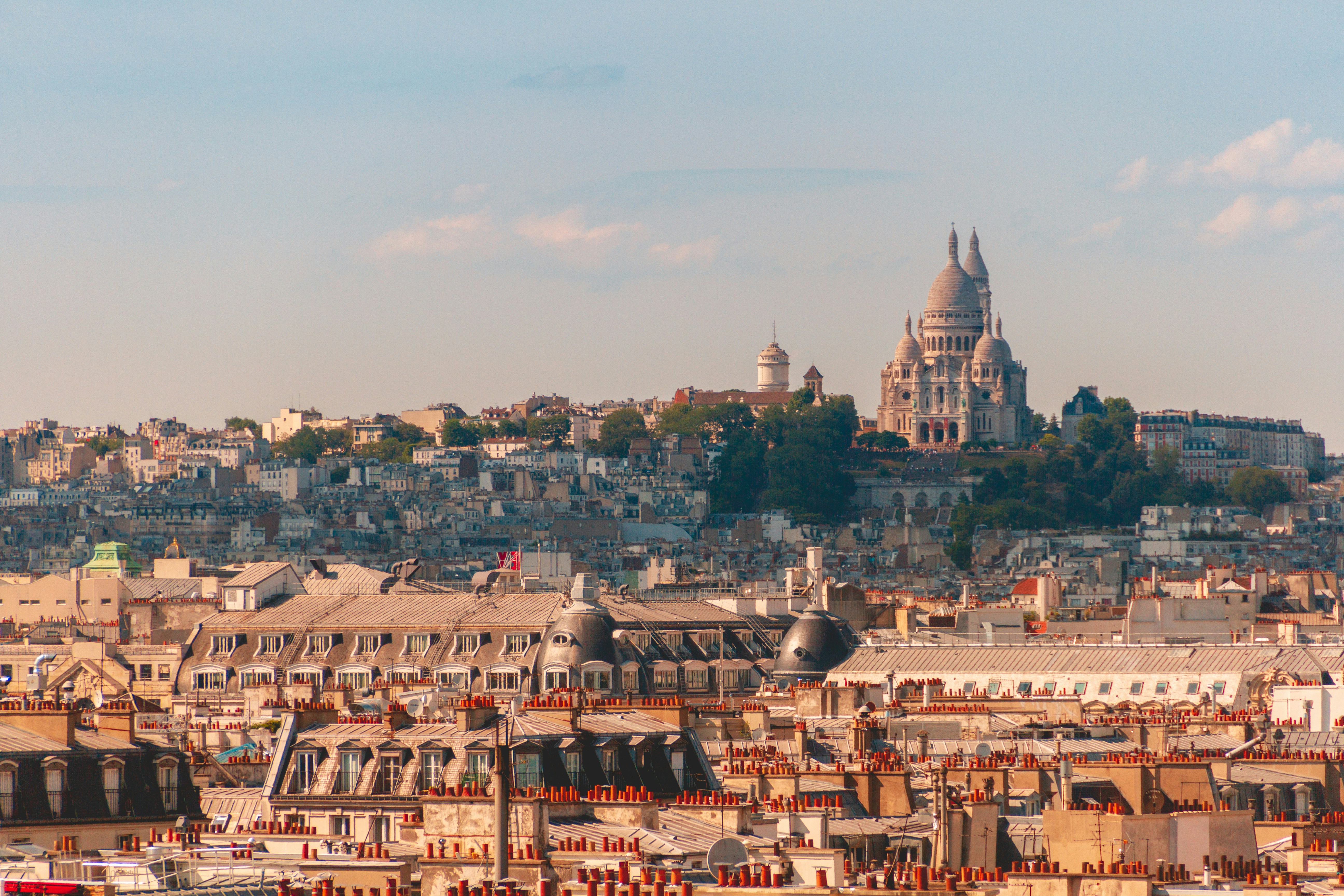
The case for Paris is strongest for: Americans who are there for professional reasons (an employer in Paris, a business that benefits from proximity to the French capital, a passeport talent track requiring institutional connections); Americans who want the largest possible social and cultural offer; Americans who need regular international flights; and Americans who want the most developed expat service infrastructure (English-speaking doctors, lawyers, accountants, and advisors).
The case against Paris is cost and density. A furnished T2 in a desirable central arrondissement costs €1,300 to €2,200 per month. The city is dense, crowded in tourist seasons, and administratively complex in ways that are partly a function of scale: the prefecture for foreigners in Paris handles a disproportionate share of France's immigrant population and is notoriously slower than provincial prefectures. The apartment search is the most competitive in France.
For retirees with fixed income at or below roughly €3,000 per month, Paris offers a thinner quality of life margin than the provincial cities in this comparison. For remote workers and professionals with higher incomes or employer-covered costs, Paris's infrastructure and network value often justifies the premium.
If Paris is your target city, our dedicated rental guide for Americans in France covers the market dynamics and dossier requirements. For the full rental picture in Paris, see our dedicated guide to renting in Paris as an American.
Lyon: The Most Consistent Value Proposition for Working-Age Americans
Lyon is the choice that consistently produces the best combined score on cost, livability, professional infrastructure, and international connectivity for Americans who are not anchored to Paris for professional reasons.
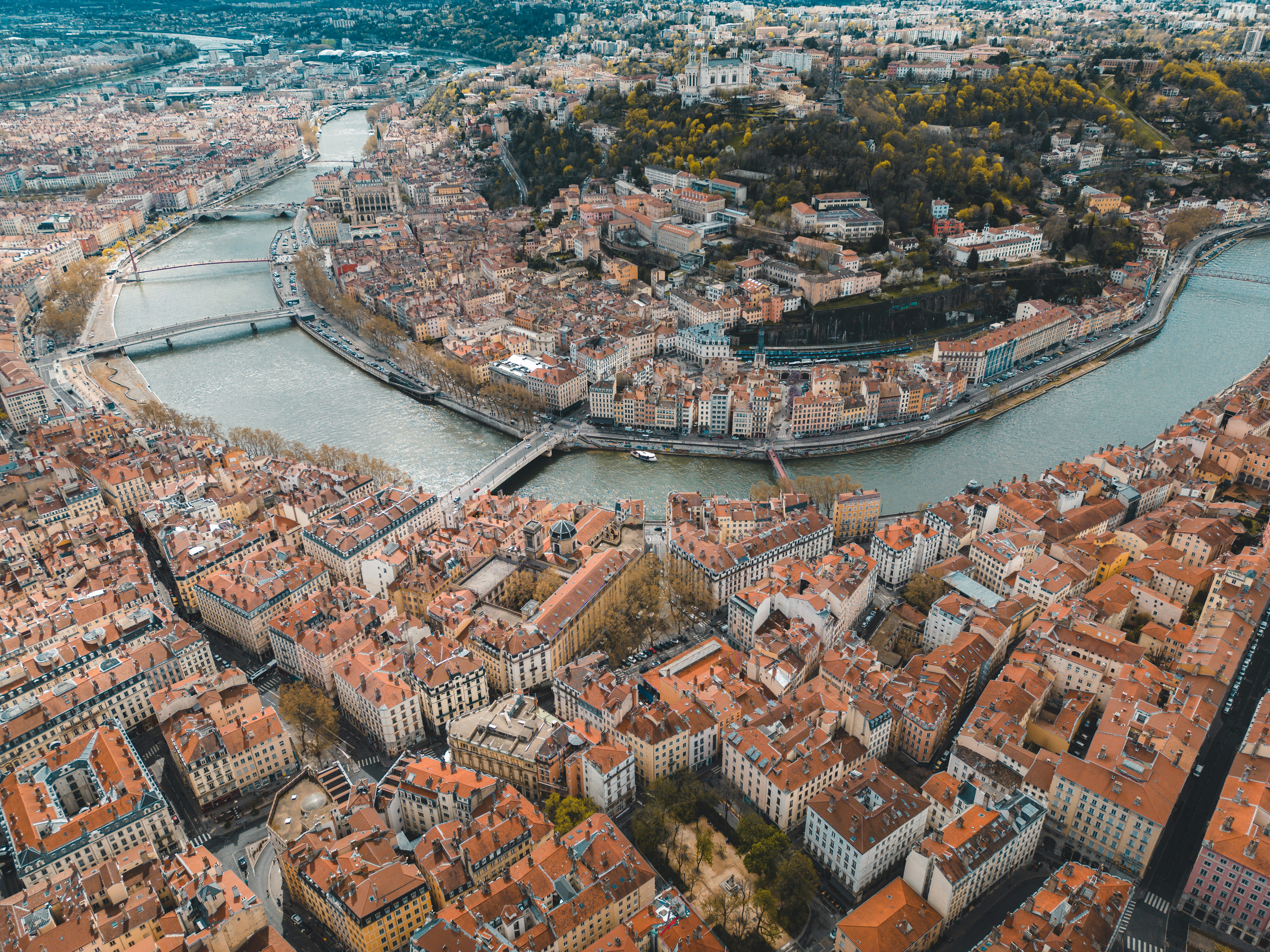
It sits two hours from Paris by TGV, one hour from the Alps, forty minutes from Geneva, and has a direct connection to major European and some transatlantic destinations through Lyon-Saint Exupéry airport. It has a substantial international professional community centered on pharmaceuticals, biotech, and financial services, which means practical tolerance for foreign professionals and non-French income documentation in the rental market. It has a diverse, vibrant food culture, excellent public transit, and neighborhoods that range from bohemian and affordable (Croix-Rousse) to prestigious and quiet (6th arrondissement) to emerging and value-driven (Jean Macé).
Rent in Lyon runs 35 to 50% below equivalent Paris apartments. A furnished T2 in a good central neighborhood costs €900 to €1,400 per month depending on the arrondissement, versus €1,400 to €2,200 in comparable Paris locations.
The Lyon climate is a real consideration. Winters are cold and grey, not dramatically colder than Paris but similarly overcast from November through February. It is not a Mediterranean climate and should not be treated as one.
The French language environment in Lyon is less accommodating of English than Paris in daily administration and some service contexts. English-speaking professionals are more concentrated in specific sectors (pharma, Interpol, financial services). Americans who are not working in those sectors may encounter more French-only interactions in daily life.
For Americans planning to rent in Lyon, our dedicated renting in Lyon guide covers arrondissement-by-arrondissement pricing, dossier strategy, and agency dynamics in detail.
Bordeaux: Best Lifestyle Value for Wine Culture and Atlantic Climate
Bordeaux has become one of the most sought-after French cities for quality of life over the past decade, and for good reason. The TGV to Paris takes two hours, the city center is genuinely beautiful (UNESCO-listed), the wine culture is world-class in the literal sense, the Atlantic coast and the Dordogne are accessible on weekends, and the climate is milder than Lyon and Paris with warmer and sunnier winters than either.

The case for Bordeaux is strongest for: Americans who value outdoor life alongside urban quality; retirees looking for a beautiful mid-sized city with good healthcare and pleasant weather; remote workers who want a high quality-of-life city at a lower price point than Lyon or Paris; and Americans who are genuinely interested in the culture of southwest France, including wine, food, and architecture.
Rent in Bordeaux typically runs 15 to 25% below Lyon and 45 to 55% below Paris. A furnished T2 in a desirable central neighborhood costs €800 to €1,200 per month. The rental market is competitive but not at Paris levels, and the dossier requirements follow the standard French framework.
The professional infrastructure in Bordeaux, while real (aerospace, wine industry, technology, and university sectors), is smaller than Paris and Lyon. Remote workers function well here; Americans seeking French employment connections or local business networks will find Bordeaux thinner than the larger cities.
English availability in daily life is below Lyon and well below Paris. Bordeaux is a French city that sees significant tourism but has a smaller permanent anglophone expat community than Paris or Lyon. Administrative interactions are conducted in French.
Bordeaux's international airport has direct connections to London, Amsterdam, and some European hubs, but transatlantic flights require Paris or Lyon as connections for most destinations.
In our experience, Bordeaux produces some of the highest quality-of-life satisfaction scores among Americans in France, particularly for retirees and remote workers with flexible schedules who engage deeply with local French life rather than seeking an anglophone bubble. Americans who move to Bordeaux expecting a smaller, cheaper Paris are sometimes disappointed; Americans who move there specifically for what Bordeaux is, its wine culture, Atlantic outdoor life, and genuine southwest French identity, consistently report that it exceeded their expectations. For the rental market specifically, our guide to renting in Bordeaux as an American covers what the 2026 market actually costs.
Marseille: The Real City That Rewards the Right Profile
Marseille is the most misunderstood city in this comparison. Its reputation among some Americans, drawn from outdated perceptions of urban difficulty, significantly undersells the actual living experience for an expat who chooses it deliberately. The city you pick changes your visa options and your cost base at once, and the France Navigator maps those against each other before you commit.
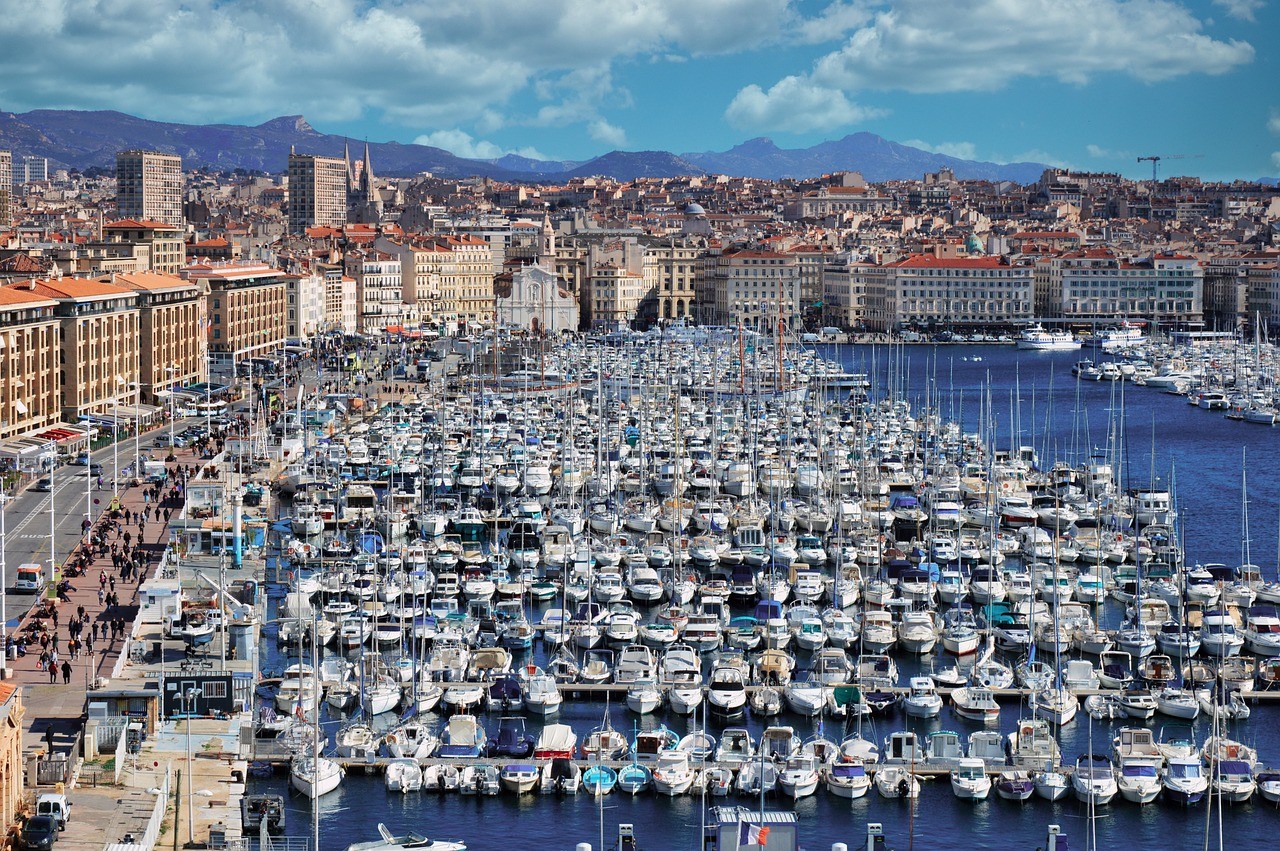
Marseille is France's second city by population, France's largest port, and the most genuinely multicultural French city. It has the warmest and sunniest climate of any large French city, with significantly more sun days per year than Paris, Lyon, or Bordeaux. The Calanques, some of the most spectacular coastal scenery in Europe, are accessible from the city center by public transit. Rent is the lowest of any large French city in this comparison.
A furnished T2 in Marseille costs €650 to €1,000 per month in most desirable central neighborhoods. The cost differential versus Paris is dramatic: an equivalent lifestyle in Marseille can cost 40 to 60% less than in Paris.
The professional infrastructure is real but concentrated in specific sectors: maritime, logistics, Mediterranean trade, and a growing tech and startup ecosystem around the Euroméditerranée urban redevelopment zone. For remote workers and retirees, professional infrastructure is largely irrelevant; for Americans seeking French employment, Marseille's market is smaller and more specialized.
Marseille is deeply French in a specific way that differs from Paris: it has its own dialect features, a strong working-class and Mediterranean identity, and a social culture that is warm but not automatically oriented toward English-speaking expatriates. Learning French, or at minimum making a genuine effort, is more important in Marseille than in Paris.
The main caveat: Marseille is a city that rewards deliberate neighborhood selection. Some neighborhoods are genuinely rough by French standards; others are beautiful, safe, and deeply livable. American expats who have done their neighborhood research (focused on the 7th, 8th, and parts of the 6th arrondissements for the most comfortable expat-accessible zones) consistently report high satisfaction. Americans who choose Marseille based on cheap rent without neighborhood research have more mixed experiences.
For the city-specific rental context in a comparable southern city, our renting in Toulouse guide provides useful parallel reference points for the southern market.
Montpellier: The Best Option for Sun, Students, and the Mediterranean on a Budget
Montpellier is the fastest-growing major city in France and consistently ranks among the most livable for its combination of Mediterranean climate, university city energy, relatively affordable rent, and proximity to both the sea and the mountains.
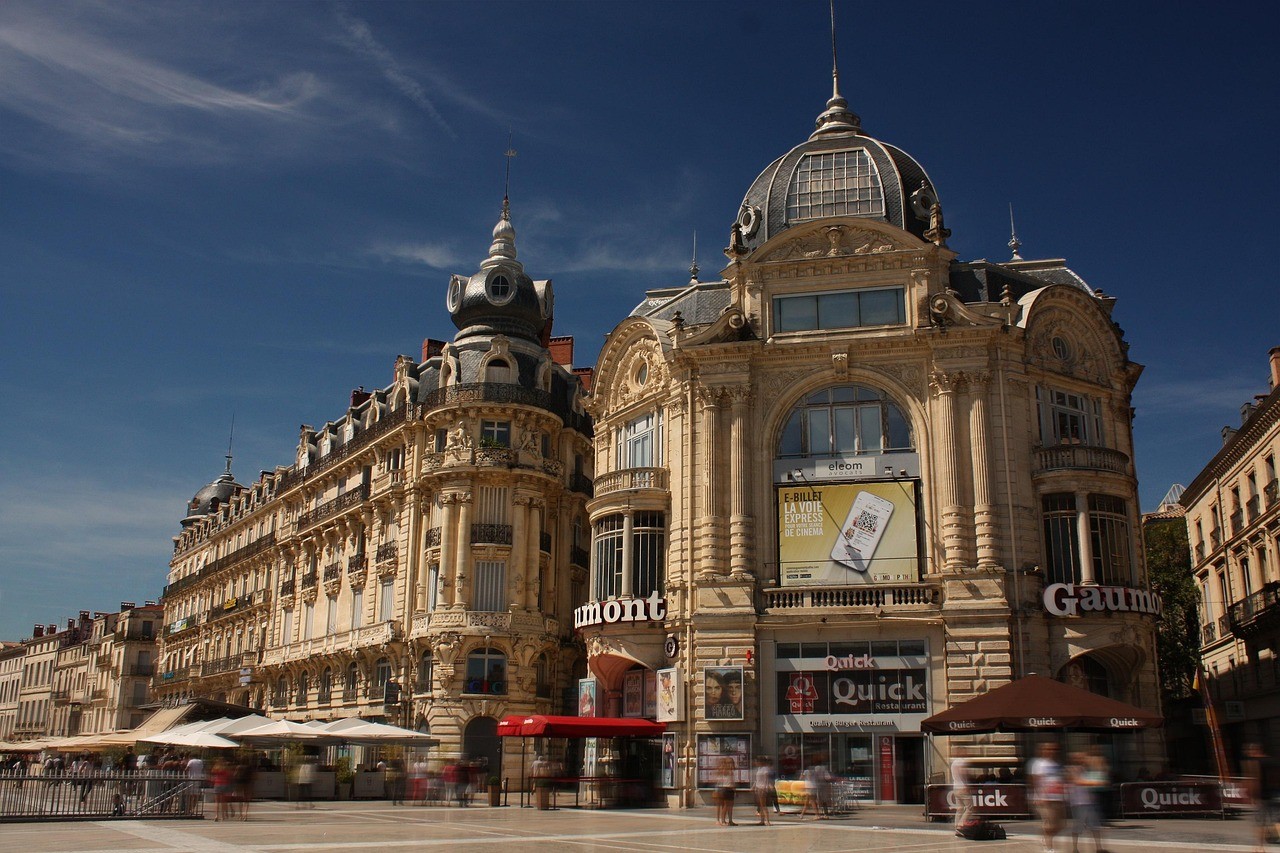
The city has a large student population (one-third of the city's 300,000 residents are students), which shapes its demographic energy: it is young, active, and more English-aware than a purely traditional French city. The Mediterranean climate means warm, dry summers and mild winters with significantly more sun than Lyon or Paris.
Rent in Montpellier is comparable to or slightly above Bordeaux: a furnished T2 in a central neighborhood costs approximately €750 to €1,100 per month. The market is active given student and young professional demand, and the dossier requirements are standard.
Montpellier has good TGV connections to Paris (3.5 hours) and a regional airport with European connections. For regular transatlantic travel, Paris or Lyon are the practical hubs.
The case for Montpellier is strongest for: retirees who want Mediterranean climate and quality of life at a lower price point than Paris or the Côte d'Azur proper; remote workers who value climate and outdoor life highly; Americans who are open to a smaller professional network in exchange for quality of life; and younger expats or families with children (the university atmosphere and outdoor lifestyle suit families well).
The case against Montpellier for some Americans: it has a smaller international professional community than Paris or Lyon, and its English-language service infrastructure for administrative and professional needs is more limited. It is genuinely a French city that functions primarily in French in its daily and administrative life.
If that affordable, sunny profile appeals to you, read our city-specific guide to renting an apartment in Montpellier on an American budget before you start your search.
City Comparison by Profile
City | Furnished T2 rent / month | Climate | English in daily life | Best for |
|---|---|---|---|---|
Paris | €1,300–2,200 | Cool, grey winters | Highest in France | Careers, networks, frequent flyers |
Lyon | €900–1,400 | Cold, grey winters | Sector-dependent | Working-age value + connectivity |
Bordeaux | €800–1,200 | Milder, Atlantic | Below Lyon | Lifestyle, wine, retirees & remote work |
Marseille | €650–1,000 | Warmest, sunniest | Limited | Sun + lowest cost (choose neighborhood carefully) |
Montpellier | €750–1,100 | Mediterranean | More English-aware (student city) | Sun on a budget, families, students |
For families with children, school quality and international school availability vary significantly by city and even by neighborhood within a city. Our guide to the French school system for American parents explains how public school assignment by address works in France and where international options are concentrated.
What the Decision Actually Comes Down To
In our experience, Americans who spend the most time researching cities intellectually and the least time visiting them in person make the most regrettable choices. A weekend visit to a French city tells you more about day-to-day livability than any comparison article can. If you are able to visit two or three cities before committing to a rental, the decision becomes significantly more grounded.
The variables that look important in research but often prove less decisive in daily life: specific neighborhood prestige within a city, proximity to Paris measured in TGV minutes, and city population size above a certain threshold. The variables that look minor in research but prove highly decisive in daily life: the character of your immediate neighborhood, the quality of your apartment and building, whether you make French friends or remain primarily in an expat bubble, and whether your climate tolerance matches the city's actual weather from November to March.
How easily you will build a social circle is part of that calculus too, which is why it is worth pairing this decision with our guide to building a real social circle in France.
What we see most often is Americans who moved to Paris because it was the obvious choice and who, two years in, wish they had considered Lyon or Bordeaux more seriously, not because Paris is wrong but because the specific trade-offs (cost, density, administrative congestion at the prefecture) that are abstract in planning become concrete in daily life. The reverse is equally true: Americans who chose a smaller city primarily for lower costs and found the professional and social network thinner than they had anticipated. In practice, the Americans who are happiest with their city choice are those who visited at least once before signing a lease there, rather than choosing on research alone.
Visit before you commit. Use the first months in temporary housing to assess the city on the ground before signing a year-long lease.
Choosing a city is much easier once you are sure about the move itself, so it helps to read our honest assessment of life in France as an American before you narrow down neighborhoods.
If you are still deciding on the country itself and not just the city, our side-by-side look at France, Portugal, and Spain covers the trade-offs that come before picking where in France to settle.
Practical Next Steps
For a detailed monthly budget comparison by city and lifestyle, see our 2026 cost of living breakdown for Americans in France.Once your city is chosen, the rental and first-month setup process is the same across all French cities. Our renting in France playbook covers the national rental process. Our city-specific guides for Lyon and Toulouse provide market-specific depth for those cities. Our step-by-step first-month plan once you arrive covers what to prioritize in the first four weeks after arrival regardless of city. Once you have settled on a city, the logistics of the move itself start with what you ship. Our guide to shipping your belongings from the US to France covers container vs air freight costs, customs clearance, and how to vet a moving company for a transatlantic move. For families moving with a dog or cat, the preparation window is significantly longer than most people expect. Our guide to moving to France with your pet from the US covers the USDA health certificate timeline, microchip requirements, and airline rules by carrier. For Americans leaning toward the Riviera specifically, how to rent an apartment in Nice breaks down the best neighborhoods, what the market costs in 2026, and the dossier that gets you approved.
Most Americans narrow this list by visiting two or three cities before committing, which is the right way to do it and also the point at which you are travelling as a tourist rather than a resident. Your US health plan almost certainly does not follow you, and those trips draw down the same 90/180-day allowance your arrival will need. Travel medical cover for the scouting trips is bought by the four-week block, so it costs nothing during the months you are back home between visits.
When to Get Help
Choosing a city is a decision most Americans can make independently with the right information and, ideally, in-person visits. The cases that benefit from professional guidance are families where school zone access directly shapes neighborhood choice, professionals whose permit category creates geographic constraints, and Americans who want a housing search launched in a specific city before they arrive, with vetted options ready for viewing during the first week on the ground.
Once the city is chosen, the school zone, the housing search and the arrival admin all have to line up in a workable order, and the steps that follow the decision are already laid out in sequence.
FAQ
Which French city is best for American retirees on a fixed income?
Bordeaux and Montpellier are the strongest choices for most American retirees prioritizing quality of life per euro. Both offer significantly lower rent than Paris or Lyon, genuinely pleasant year-round climates (Atlantic mild in Bordeaux, Mediterranean sunny in Montpellier), good healthcare access, and beautiful urban environments. Montpellier is the better choice for maximum sunshine and outdoor life; Bordeaux for architectural beauty, wine culture, and a slightly more cosmopolitan urban feel. Marseille offers even lower costs but requires more deliberate neighborhood research. Paris is the right choice for retirees who specifically value maximum cultural offer and English-language infrastructure and whose income comfortably covers the premium.
Is Paris the only French city where Americans can get by without speaking French?
Paris is by far the most accommodating of limited French for daily life. Significant numbers of Parisians speak English, many commercial and service businesses operate in English, and the expat community is large enough to support English-language social and professional networks. In all other cities on this list, French is the operating language of daily life: administration, healthcare, shopping, and social interaction. This does not mean these cities are inaccessible to non-French-speaking Americans, but it does mean that learning French is significantly more urgent outside Paris than inside it. Americans who arrive in Lyon, Bordeaux, Marseille, or Montpellier with limited French and make no progress in the first six months have a fundamentally different daily experience from Americans in Paris in the same situation.
How does Bordeaux compare to Lyon for Americans planning to stay three or more years?
Both are excellent long-term choices for Americans outside Paris. Lyon edges ahead on: professional infrastructure and employment network, international transportation connections, and the size of the established expat community. Bordeaux edges ahead on: climate (milder and sunnier Atlantic winters versus Lyon's colder, greyer ones), architectural beauty, and overall quality-of-life satisfaction for non-professionally anchored expats. For remote workers and retirees, Bordeaux is often the stronger emotional choice. For professionals and families, Lyon's larger city-scale offers more options for schools, healthcare specialists, and career development. Rent is broadly comparable between the two cities; Lyon is slightly higher in prestige neighborhoods.
Is Marseille safe for American expats?
Marseille has parts of the city that have significant social challenges, as does any major French city. For Americans who do their neighborhood research and choose to live in the 7th, 8th, parts of the 1st (Vieux-Port area) or parts of the 6th arrondissement, the daily experience is safe, lively, and genuinely pleasant. The Calanques, the old port, the Panier neighborhood, and the southern coastal zones are popular with both French and international residents. Americans who rent in Marseille without neighborhood research, attracted primarily by lower costs, have more variable experiences. Apply the same approach you would to any large city: research your specific neighborhood before committing to it, and visit in person before signing a lease.
How does Montpellier compare to the Côte d'Azur (Nice, Cannes) for Americans wanting Mediterranean life?
Montpellier offers Mediterranean climate and lifestyle at significantly lower cost than Nice or the Côte d'Azur proper. Nice's rental costs are comparable to Lyon and above, driven by its popularity as a tourist and luxury residential destination. Montpellier provides the Mediterranean sunshine and outdoor culture at a price point closer to Bordeaux. The Côte d'Azur has greater international name recognition, a larger established international community, and direct international airport connections at Nice. Montpellier's airport has European connections but fewer international routes than Nice. For Americans primarily motivated by climate and outdoor life who are not anchored to the Côte d'Azur for other reasons, Montpellier typically offers better value.
Conclusion
There is no universally correct French city for Americans, and the right choice depends on whether your priority is maximizing the English-language infrastructure that Paris provides, the professional value and TGV connectivity that Lyon offers, the climate and lifestyle of Bordeaux or Montpellier, or the cost and Mediterranean energy of Marseille.
The most important step is visiting your target city before committing to a lease. Research narrows the field; experience makes the decision. Arriving with a plan for temporary housing and a structured apartment search in the first weeks gives you the space to confirm the choice before locking into a year-long commitment.
Not sure which visa you need? Start with our guide to the France long-stay visa for Americans, which covers every category and its requirements.
The city you choose changes your visa options, your school zone, and your cost base at once, and our Navigator maps those against each other before you commit.
About the author
Maxime Roseau
Related posts