
The Best Museums in Paris: Which to See, What They Cost and How to Avoid the Lines

By Aurelio Maurici Co-Founder, Master of Business Law, Aix-Marseille Université III
Published

In this article
- The Best Museums in Paris at a Glance
- 1. The Louvre
- 2. The Musée d’Orsay
- 3. The Musée de l’Orangerie
- 4. The Musée Rodin
- 5. The Musée Picasso
- Three More Worth the Time
- The Centre Pompidou Is Closed Until 2030
- Free Museum Days in Paris
- Is the Paris Museum Pass Worth It for Museums?
- How to See More and Queue Less
- FAQ
- Conclusion
The best museums in Paris, for most visitors, are five: the Louvre, for the scale of it; the Musée d’Orsay, for the Impressionists; the Orangerie, for Monet’s Water Lilies; the Rodin museum, for its sculpture garden; and the Picasso museum, in the Hôtel Salé, one of the private mansions of the Marais. Together they cover the art most people come to Paris to see, they are all within reach of one another, and each has a day it closes, a time slot worth booking and, for some, a free day. The one big name missing is the Centre Pompidou, closed for renovation until 2030.
This guide compares them, with the official 2026 prices, hours and booking rules read on each museum’s own site on November 25, 2026, then covers the free days, the combined tickets and whether the Paris Museum Pass is worth it.
The Best Museums in Paris at a Glance
| Museum | Best for | Closed | Adult price, 2026 | Free for everyone |
|---|---|---|---|---|
| Louvre | The great collections, from antiquity to 1848 | Tuesdays | 32 euros non-EEA, 22 euros EEA | First Friday of the month after 6 p.m. (not July and August), and July 14 |
| Musée d’Orsay | Impressionist and Post-Impressionist painting | Mondays | 16 euros online, 14 euros on site | First Sunday of the month, with a booked slot |
| Musée de l’Orangerie | Monet’s Water Lilies | Tuesdays | 12.50 euros online, 11 euros on site | First Sunday of the month, with a booked slot |
| Musée Rodin | Rodin’s sculpture, in a house and garden | Mondays | 14 euros | First Sunday of the month, October to March |
| Musée Picasso | Picasso, in the Marais | Mondays | 16 euros | First Sunday of the month |
| Catacombs | The ossuary under the city | Mondays | 31 euros | No |
Sources: the official site of each museum, linked in its section, read on November 25, 2026. Under-18s get in free at the Louvre, Orsay, the Orangerie and the Picasso museum. EEA means the European Economic Area: the EU plus Iceland, Liechtenstein and Norway; American visitors pay the non-EEA price where there is one.
1. The Louvre
The Louvre describes itself as the former palace of the kings of France, now the largest museum in the world, with a collection covering nearly 10,000 years of art history; its collections database holds more than 500,000 entries. Plan it as you would a city within the city: pick the departments you want, and go early or late.
| Louvre | As published |
|---|---|
| Hours | 9 a.m. to 6 p.m. on Monday, Thursday, Saturday and Sunday; 9 a.m. to 9 p.m. on Wednesday and Friday; last entry one hour before closing |
| Closed | Tuesdays, and January 1, May 1 and December 25 |
| Price | 32 euros for visitors from outside the EEA, 22 euros for EEA citizens and residents, since January 14, 2026; free under 18 and for EEA residents under 26 |
| Booking | A time slot is recommended for everyone, free visitors included, and required for all visitors from December 19, 2026 to January 4, 2027 |
| Included | The temporary exhibitions, and same-day or next-day entry to the Musée Eugène-Delacroix |
| Audio guide | 6 euros |
Source: Musée du Louvre, hours and admission, read on November 25, 2026.
The museum’s own warning is worth repeating: beware of mirror sites copying the official ticket office, of “skip the line” offers and of street vendors, whose tickets can get you refused at the entrance. Book on ticket.louvre.fr. And any exit is final, so plan your break inside.
The parts of the move Americans find out about too late.
What Americans get wrong about moving to France, and the number, form or deadline that fixes it. Straight to your inbox.
One email a week. Real numbers, nothing else.
2. The Musée d’Orsay
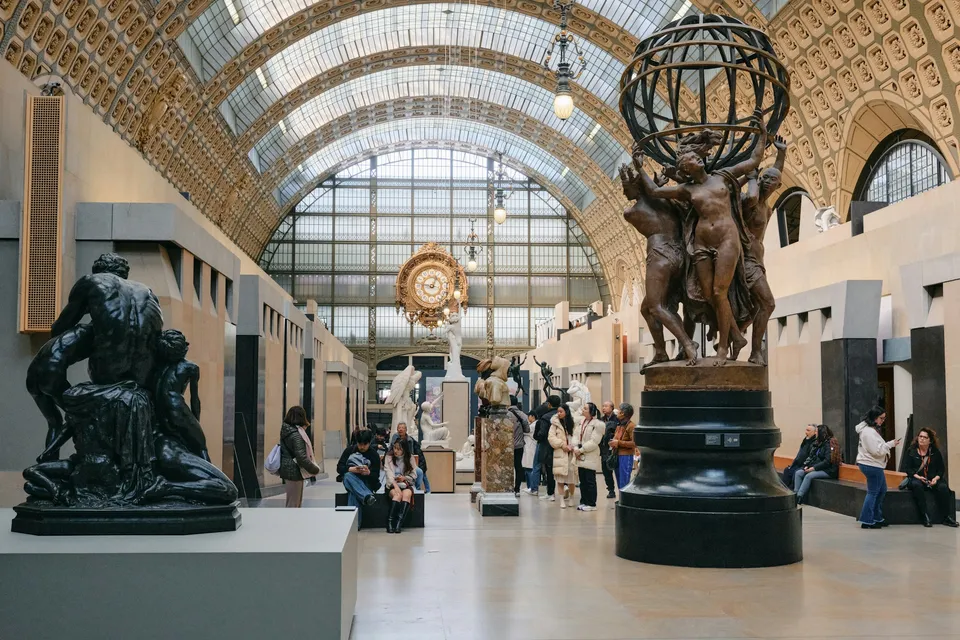
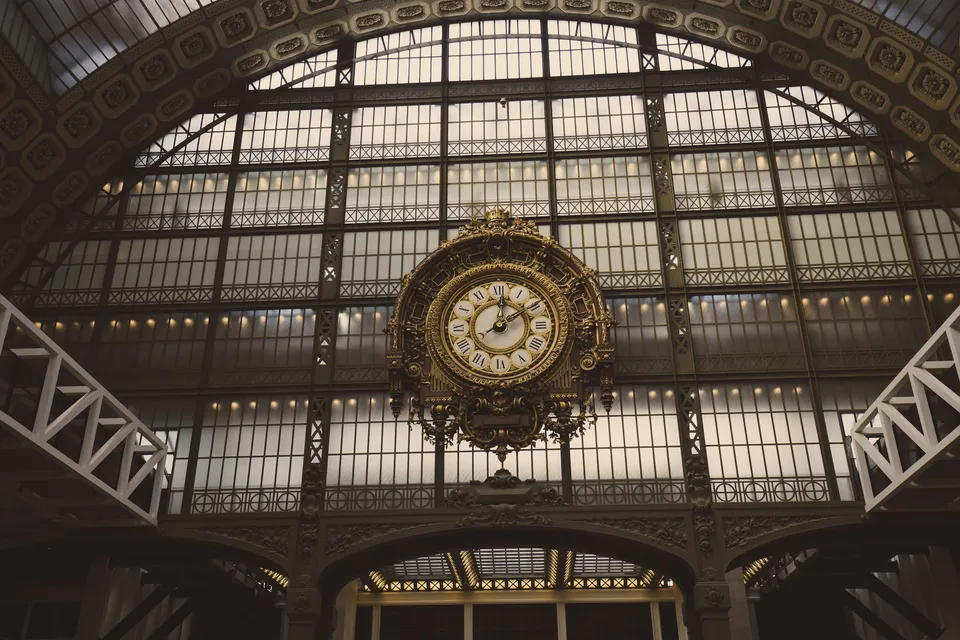
The Musée d’Orsay shows, in its own words, the richest collection of Impressionist and Post-Impressionist paintings in the world, in the former Gare d’Orsay railway station. Its Impressionist gallery is on the fifth floor, with a café, the Café Campana, at its exit and, in summer, a terrace over the rooftops of Paris.
| Musée d’Orsay | As published |
|---|---|
| Hours | Tuesday to Sunday, 9:30 a.m. to 6 p.m.; Thursday until 9:45 p.m.; last admission at 5 p.m. (9 p.m. on Thursdays) |
| Closed | Mondays, May 1 and December 25 |
| Price | 16 euros online, 14 euros at the museum; 12 euros online on Thursdays after 6 p.m.; free under 18 |
| Free day | The first Sunday of the month, with a mandatory booked time slot |
| Works | From March 10, 2026 to summer 2028, renovation of the public areas; the museum stays open with all collections accessible, and online booking is highly recommended |
Source: Musée d’Orsay, visit and rates, read on November 25, 2026.
Two combined tickets save money: Orsay and the Rodin museum for 25 euros, valid three months with no reservation needed, and Orsay and the Orangerie for 20 euros, sold at the museum.
3. The Musée de l’Orangerie
At the Concorde end of the Tuileries garden, beside the Seine, the Orangerie is the home of Monet’s Great Decorations, the Water Lilies, and of the Walter-Guillaume collection, with masterpieces from Monet to Picasso, according to the museum. Its exhibition “Monet, painting time” runs from September 30, 2026 to January 25, 2027.
| Musée de l’Orangerie | As published |
|---|---|
| Hours | Monday, Wednesday, Thursday, Saturday and Sunday 9 a.m. to 6 p.m.; Friday until 9 p.m. during exhibitions; last admission at 5:15 p.m. |
| Closed | Tuesdays, May 1, the morning of July 14, and December 25 |
| Price | 12.50 euros online, 11 euros at the museum; 10 euros online on Friday evenings; free under 18 |
| Free day | The first Sunday of each month, with a reservation |
Source: Musée de l’Orangerie, visit and rates, read on November 25, 2026.
The Orangerie pairs easily with the Louvre, across the Tuileries, or with Orsay, on the same day.
4. The Musée Rodin
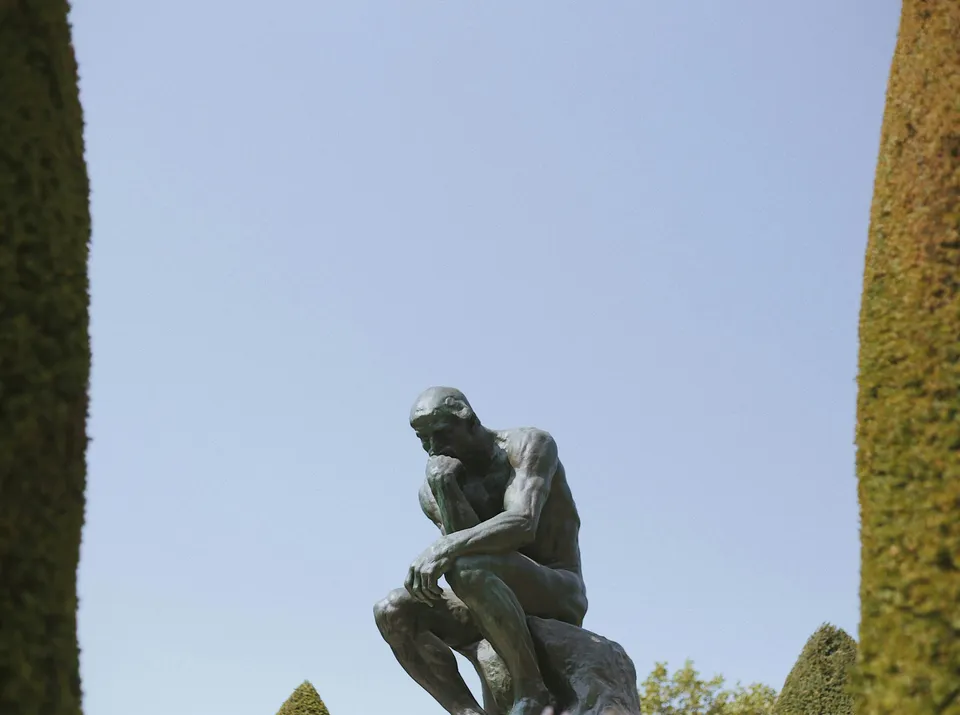
The Rodin museum has kept and shown the work of Auguste Rodin (1840-1917) since 1919, in the Hôtel Biron on the rue de Varenne, in the 7th arrondissement, and in his villa at Meudon, outside Paris. Its most famous work, The Thinker, began as the crowning figure of The Gates of Hell, where it was first called The Poet, before being shown on its own in 1888, the museum explains.
| Musée Rodin | As published |
|---|---|
| Hours | Tuesday to Sunday, 10 a.m. to 6:30 p.m., last admission at 5:45 p.m.; from October to February, the sculpture garden closes at a time that varies with sunset |
| Closed | Mondays, and January 1, May 1 and December 25 |
| Price | 14 euros; combined with Orsay 25 euros, with the Musée de l’Armée 26 euros, with the Musée du quai Branly 23 euros |
| Free day | The first Sunday of each month from October to March, no booking needed |
| Getting there | 77 rue de Varenne; metro Varenne (line 13) or Invalides (lines 8 and 13) |
Source: Musée Rodin, plan your visit, read on November 25, 2026.
5. The Musée Picasso
The Musée national Picasso-Paris occupies the Hôtel Salé, one of the seventeenth-century private mansions of the Marais, as the Paris tourism office describes the district.
| Musée Picasso | As published |
|---|---|
| Hours | Tuesday to Sunday, 9:30 a.m. to 6 p.m.; last admission at 5:15 p.m. |
| Closed | Mondays, January 1, May 1 and December 25 |
| Price | 16 euros; family rate 12 euros per adult with a child; free under 18 and for EU residents under 26 |
| Free day | The first Sunday of the month, without reservation |
| Pass | Accepts the Paris Museum Pass; booking a time slot avoids the lines |
Source: Musée national Picasso-Paris, practical information, read on November 25, 2026. The museum does not accept suitcases or travel bags, and has no place to leave them.
Three More Worth the Time
- The Catacombs, a City of Paris museum 20 meters underground, with an ossuary holding the remains of several million Parisians: Tuesday to Sunday, 9:45 a.m. to 8:30 p.m. (last admission 7:30 p.m.), 31 euros with the audio guide, 15 euros for ages 8 to 17, and online booking strongly recommended.
- The Treasury of Notre-Dame, with a new museography since the restoration of the cathedral: 12 euros (reduced 6 euros), Monday to Friday 9 a.m. to 6 p.m. (8:30 p.m. on Thursdays), Saturday from 9:30 a.m., Sunday 1 to 6:30 p.m. The cathedral itself is free.
- The Palais Garnier, the opera house, visited on your own for 1 hour 30: 25 euros for non-EEA adults, 15 euros for EEA residents, online booking only. The auditorium can close for rehearsals without notice.
The Centre Pompidou Is Closed Until 2030
The Centre Pompidou, the national museum of modern art, closed its building on September 22, 2025 for a renovation it plans to finish in 2030, with no exact reopening date. Until then it shows its collection elsewhere in Paris, at the Panthéon, the Musée d’Art Moderne de Paris and the Grand Palais, according to its site. Check the Pompidou’s list of exhibitions before you go.
Free Museum Days in Paris
| Museum | When it is free for everyone |
|---|---|
| Louvre | First Friday of the month after 6 p.m. (except July and August), and July 14 |
| Musée d’Orsay | First Sunday of the month, with a booked slot |
| Musée de l’Orangerie | First Sunday of the month, with a reservation |
| Musée Picasso | First Sunday of the month, without reservation |
| Musée Rodin | First Sunday of the month, from October to March, without booking |
Sources: the official site of each museum, read on November 25, 2026.
Is the Paris Museum Pass Worth It for Museums?
The official Paris Museum Pass costs 85 euros for 2 days, 105 euros for 4 days and 125 euros for 6 days, starts at your first visit and runs for 48, 96 or 144 consecutive hours, and covers more than 50 museums and monuments, the Louvre and Orsay among them. For a visitor paying non-EEA prices, the Louvre (32 euros), Orsay (16 euros), the Picasso museum (16 euros), the Rodin museum (14 euros) and the Orangerie (12.50 euros) come to 90.50 euros, just over the 2-day pass. So it pays off if you see five museums in two days, or add monuments such as the Sainte-Chapelle or the Arc de Triomphe.
What it does not do: skip reservations. The pass’s own list tags the Louvre “Mandatory reservation”, and Orsay requires pass holders to book a time slot since March 10, 2026; some sellers also add service fees. Buy it on the official site, which warns, like the museums, against sites imitating official ticketing.
How to See More and Queue Less
- Book a time slot for the Louvre, Orsay and the Orangerie, even on a pass, and print or save the ticket.
- Use the late openings: the Louvre on Wednesdays and Fridays until 9 p.m., Orsay on Thursdays until 9:45 p.m., the Orangerie on Friday evenings during exhibitions.
- Group them by area: the Louvre, the Tuileries and the Orangerie on one bank; Orsay and the Rodin museum on the other, joined by a combined ticket; the Picasso museum with the Marais.
- Watch the closing days: Tuesday shuts the Louvre and the Orangerie, Monday shuts Orsay, Rodin and Picasso.
For the rest of the city, from the Eiffel Tower to Montmartre, see our guide to the things to do in Paris, and for the season, the best time to visit Paris.
FAQ
What is the best museum in Paris?
For most first visits, the Louvre, the largest museum in the world in its own words, and the Musée d’Orsay, for its Impressionist and Post-Impressionist paintings. With a little more time, add the Orangerie for Monet’s Water Lilies, the Rodin museum and the Picasso museum.
How much is the Louvre for Americans?
32 euros, the rate for visitors from outside the European Economic Area since January 14, 2026; EEA citizens and residents pay 22 euros, and under-18s are free.
Which Paris museums are closed on Monday and on Tuesday?
On Mondays: the Musée d’Orsay, the Rodin museum, the Picasso museum and the Catacombs. On Tuesdays: the Louvre and the Orangerie.
Are Paris museums free on the first Sunday of the month?
Some are: Orsay and the Orangerie (with a booked slot) and the Picasso museum, every first Sunday, and the Rodin museum from October to March. The Louvre is not; its free time is the first Friday evening of the month, except in July and August.
Is the Centre Pompidou open?
No. Its building closed on September 22, 2025 for a renovation planned until 2030; meanwhile its collection is shown at other Paris venues, such as the Panthéon and the Grand Palais.
Do you need to book the Musée d’Orsay?
Online booking is highly recommended, and it is required on the free first Sunday of the month and for Paris Museum Pass holders.
Conclusion
Five museums make the core of Paris: the Louvre and Orsay for the great collections, the Orangerie for the Water Lilies, the Rodin museum for its garden and the Picasso museum in the Marais. Book time slots for the first three, plan around the Monday and Tuesday closures, use the late openings, and do the arithmetic on the Museum Pass before buying it. Then step outside: our guide to the things to do in Paris covers the rest of the city.
The parts of the move Americans find out about too late.
What Americans get wrong about moving to France, and the number, form or deadline that fixes it. Straight to your inbox.
One email a week. Real numbers, nothing else.
Written by
Aurelio Maurici
Co-Founder, EasyFranceNow
Aurelio Maurici is a French entrepreneur and co-founder of EasyFranceNow. His work focuses on the intersection of French administration, banking constraints affecting U.S. nationals, tax residency and cross-border reporting, healthcare enrollment, and the procedural realities Americans encounter while settling in France.


