The Best Places to Live in the South of France for Americans: Côte d'Azur, Provence, and Occitanie Compared

Published Jun 16, 2026-Updated Jul 2, 2026

Key Takeaways
No single winner: The best place to live in the South of France depends on your budget, your tolerance for wind, how often you fly home, and whether you need a local job.
Côte d'Azur for connections: Nice has the busiest airport in France outside Paris and the only seasonal direct flights to the United States, but it is the most expensive Southern region to rent and buy in.
Provence for charm at a middle price: Aix-en-Provence, Marseille, and the Luberon villages offer historic Southern life, though Provence gets the Mistral, a strong, cold wind that blows around one hundred days a year.
Occitanie for value: Montpellier and the Languedoc coast are the most affordable Mediterranean option, with central one-bedroom rents typically well below the Riviera's.
Same paperwork everywhere: Your French visa, residence permit, and tax obligations are identical in every region, so the real decision is about lifestyle and cost, not administration.
Sun is universal, wind is not: The Mediterranean South gets roughly 2,700 to 2,900 hours of sunshine a year, but only the sheltered Côte d'Azur largely escapes the regional winds.
Plan the housing hunt early: Good long-term rentals are scarce and competitive, especially on the Riviera, so prepare a French-standard rental file and a guarantor solution using our renting playbook before you start viewing.
Sources: Météo-France, U.S. Consulate General Marseille, INSEE, France-Visas.
If you have already fallen for the South of France, the hard question is no longer whether to move, it is where. The best places to live in the South of France for Americans cluster into three very different regions, and the right one depends almost entirely on your budget, your tolerance for wind, and how often you need to fly home. In short: the Côte d'Azur (the French Riviera) offers the most international infrastructure and the only direct flights to the United States, but it is the priciest; Provence offers postcard towns and culture at a middle price; and Occitanie offers the lowest cost of the three with a younger, more local feel. This guide compares all three on cost, climate, transport, work, and community, with realistic 2026 figures, so you can build a shortlist you trust. If you want the national budget picture first, start with our breakdown of what it really costs to live in France.
Here is how the three regions compare at a glance, using typical 2026 market figures that vary by neighborhood and season:
Region | Flagship cities | One-bedroom rent, city center (2026) | Climate and wind | Best for |
|---|---|---|---|---|
Côte d'Azur (Riviera) | Nice, Antibes, Menton, Cannes | About 850 to 1,050 euros (Nice) | Mildest winters, most sheltered | International life, easy US flights, retirees, creatives |
Provence | Aix-en-Provence, Marseille, Avignon, Luberon villages | About 900 to 1,060 euros (Aix), lower in Marseille | Very sunny, but the Mistral wind | Postcard charm, culture, families, a middle budget |
Occitanie | Montpellier, Sète, Nîmes, Béziers (Toulouse inland) | About 650 to 750 euros (Montpellier) | Very sunny, Tramontane in the west | Value, students, remote workers, a younger feel |
How to choose the best place to live in the South of France: five levers that decide it
For most Americans, the choice between the South's three regions comes down to five levers, and ranking them honestly for your own household settles most of the decision before you ever book a viewing. One useful starting point: your French visa, residence permit and tax obligations are identical in every region, because those rules are national, set through the official France-Visas system and the French tax administration. That means the real decision is about lifestyle and cost, not paperwork. If you have not actually ruled out the north yet, compare the major cities nationwide in our guide to choosing between Paris, Lyon, Bordeaux, Marseille and Montpellier first, then come back here to go deeper on the south.
The five levers that matter most:
Budget. Rent and purchase prices swing widely across the south. The Riviera sits at the top, Provence in the middle (with Marseille as the affordable exception), and Occitanie at the bottom. This single factor reshapes every other choice.
Wind and weather tolerance. All three regions are sunny, but Provence and the western Languedoc get strong, cold seasonal winds that the sheltered Côte d'Azur largely escapes. This surprises more newcomers than anything else.
How often you fly home. Nice has direct flights to the United States in season; from Provence and Occitanie you connect through Paris or Amsterdam. If you cross the Atlantic often, this is decisive.
Whether you need a local job. Salaried roles, and employers willing to sponsor a foreign hire, concentrate in the larger metros. If you are retired or work remotely, you are free to chase value and charm anywhere.
How much English-speaking infrastructure you want. The Riviera has the most structured anglophone community, Provence has village clusters, and Occitanie's English speakers are more spread out.
Côte d'Azur: the most connected, the most expensive
The Côte d'Azur is the right choice if international connections and a ready-made English-speaking life matter to you more than price. Stretching from Cannes east to the Italian border, the Riviera pairs a glamorous coastline with a genuinely cosmopolitan culture: an arts scene, year-round events, and a long history of attracting foreigners that dates back to the American writers and artists of the 1920s.
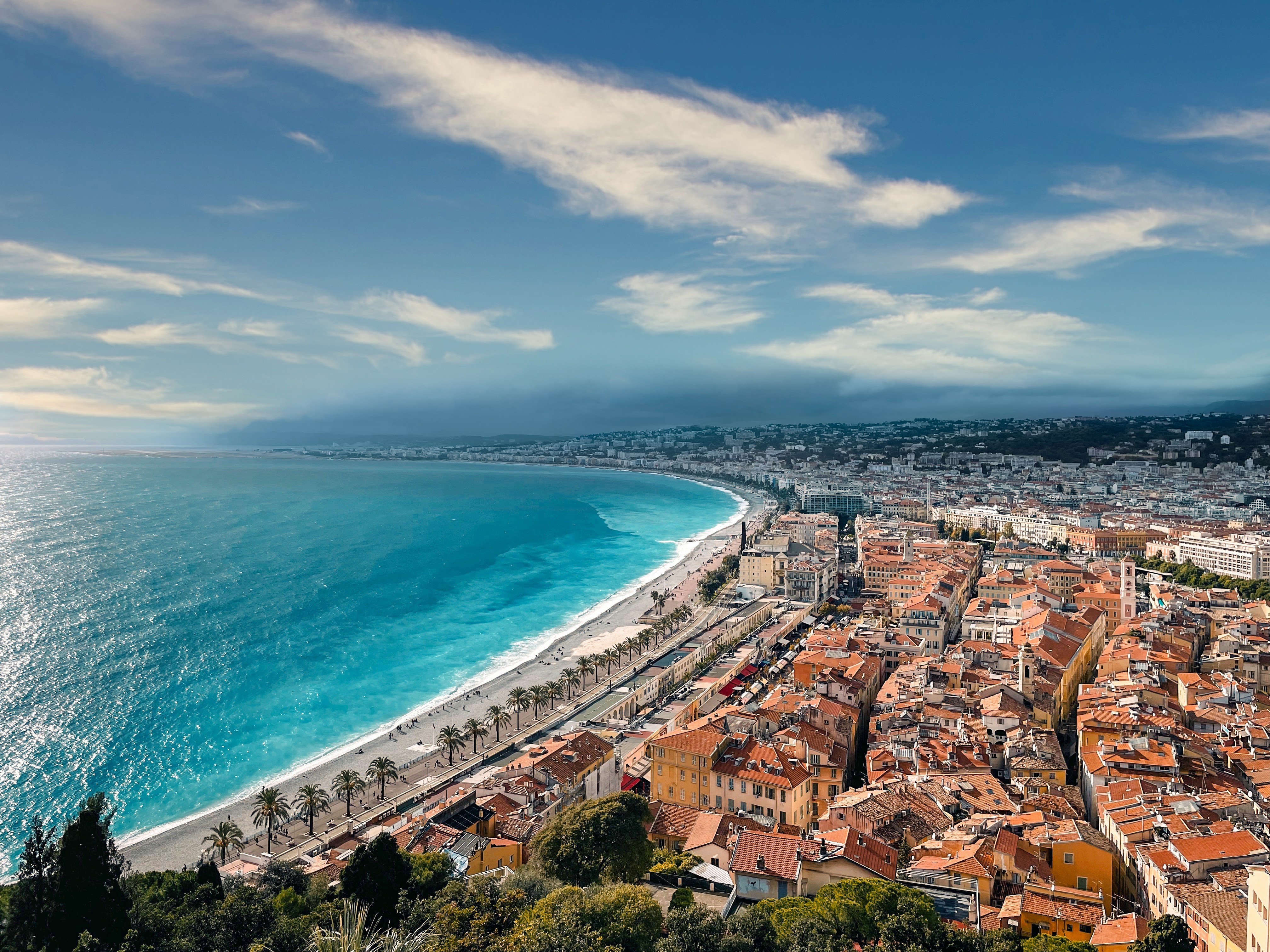
Each town has a personality. Nice is the practical base, the largest city, with the region's airport, a walkable old town, and trams; Antibes draws a sailing and anglophone crowd; Menton is the quiet, warm choice on the Italian border; Cannes is the glossy festival town. Nice Côte d'Azur is the busiest airport in France outside Paris and the only airport in the south with seasonal direct flights to the United States, which is the Riviera's single biggest practical advantage for Americans.
The trade-off is cost. A one-bedroom apartment in central Nice typically rents for around 850 to 1,050 euros a month in 2026, and average apartment purchase prices sit near 5,400 euros per square meter, among the highest in the south. The Riviera also has the most developed international expat infrastructure of the three regions, with long-running groups like the American Club of the Riviera organizing regular events that become real entry points for newcomers.
In our experience, the hidden friction on the Riviera is the rental market itself. Many owners prefer lucrative short-term and seasonal holiday lets to year-long unfurnished leases, so the supply of good long-term rentals is thinner and more competitive than the population would suggest, especially if you arrive in spring as the summer season approaches.
If the Côte d'Azur wins you over, your next step is the local rental reality, and our guide to renting in Nice as an American covers neighborhoods, 2026 prices, and how to win a lease.
If your budget stretches to the very top of the Côte d'Azur, it is worth weighing the principality next door before you decide, since our guide to Monaco versus France for wealthy Americans shows why Monaco's zero income tax saves US citizens far less than it appears.
Provence: postcard villages, deep culture, and the Mistral
Provence suits Americans who want the quintessential southern-France life, historic towns and open countryside, at a price between the Riviera and Occitanie. It is the region of lavender fields, weekly markets, and stone villages, but it is also home to a major metropolitan economy.
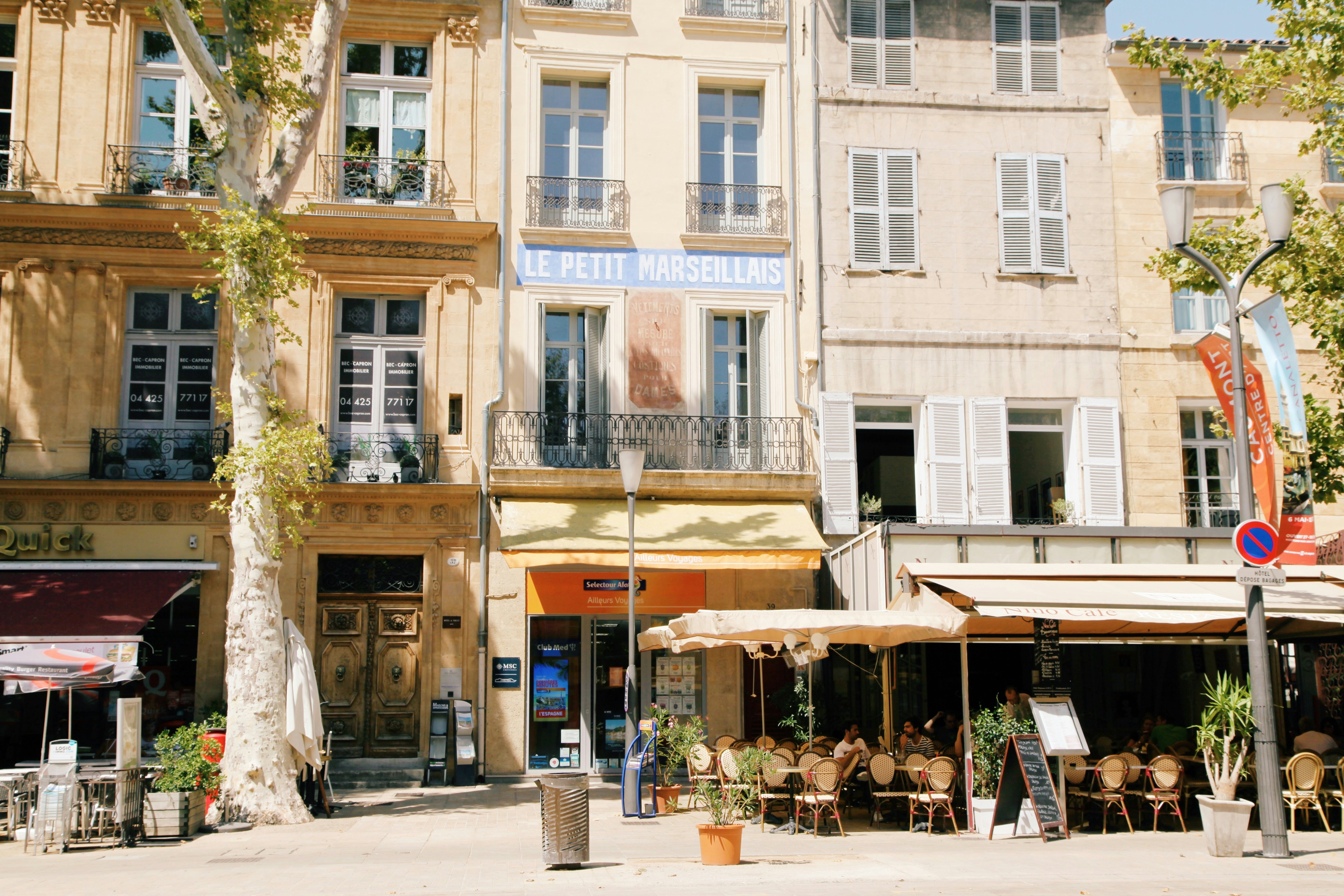
Aix-en-Provence is the elegant, cultured anchor: a university town with beautiful architecture that appeals to retirees and families alike. It is worth knowing that Aix is expensive to buy into, with average property prices around 6,800 euros per square meter, which is actually higher per square meter than the Nice average. Marseille, by contrast, is France's gritty, vibrant second city and by far the most affordable major city in the south to live in, with rents commonly running 15 to 17 euros per square meter. Marseille rewards people who want energy, diversity, and a real working city rather than a postcard; if safety is on your mind as you weigh it, read our honest look at crime and safety by city in France. If Marseille is the affordable city pulling at you, our breakdown of the best areas and a realistic rent budget for Marseille walks through each district.
Beyond the cities, the Luberon villages such as Ménerbes, Bonnieux, and Gordes hold the south's most concentrated rural anglophone communities, where English-speaking neighbors and shared local knowledge are within walking distance.
The detail Provence newcomers most often underestimate is the Mistral. What we see most often is an American who fell for Provence on a still, warm visit and is then genuinely shaken by weeks of cold, relentless wind in winter and early spring. The Mistral is not folklore: it blows around one hundred days a year with gusts that can exceed 100 kilometers per hour. There is a reason the oldest Provençal farmhouses are built with no windows at all on their north-facing walls.
Many of the region's best-value stone homes need work, so before you fall for one, see our guide to buying and renovating a farmhouse in France as an American.
Occitanie: the value play, younger and more local
Occitanie is the best-value way to live on the Mediterranean, and Montpellier is its anglophone-friendly heart. The region runs from the Rhône delta west to the Spanish border, and its coast, historically called Languedoc-Roussillon, has long been the more affordable cousin of the Riviera and Provence.
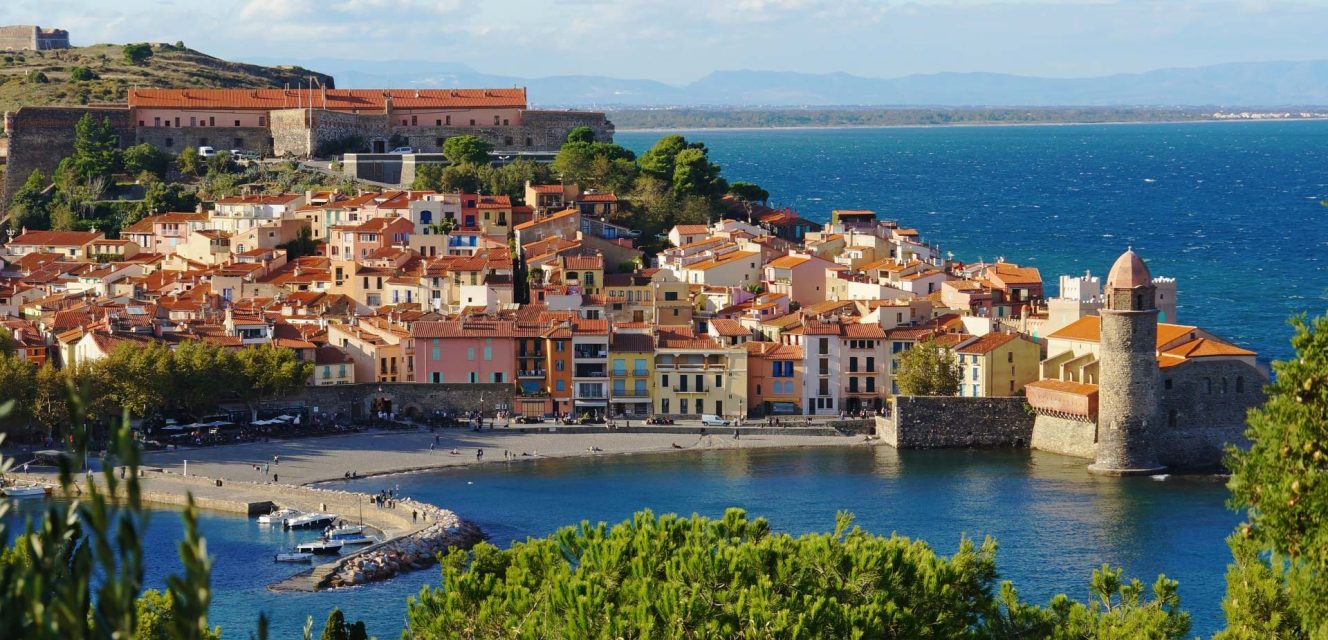
Montpellier is a young, fast-growing university city near the beaches, with a strong research, health, and technology base, good trams, and a growing international community. A one-bedroom in the center commonly rents for around 650 to 750 euros, well below Nice, and average apartment prices sit near 5,540 euros per square meter. Around it sits a string of appealing smaller places: Sète, the arty fishing port; Nîmes, with its Roman monuments and lower prices; and Béziers and Pézenas, inexpensive towns popular with British retirees. Further west, Narbonne and Perpignan are cheaper still and close to Spain, but they sit in the path of the Tramontane wind. Toulouse, Occitanie's largest city and the center of Europe's aerospace industry, lies inland to the southwest rather than on the Mediterranean, so it is a different proposition from the coastal south. Once you have a shortlist of towns, the visa and admin sequence is the next thing to get right, and the France Navigator maps it against your situation.
In our experience, Montpellier's affordability is real but it comes with a trade-off: fewer direct international connections and a smaller, though expanding, anglophone professional network than the Riviera. We see remote workers and self-employed Americans thrive there, while those who need a traditional French salaried job often find the search harder than in a bigger metro.
When Montpellier moves to the top of your shortlist, our step-by-step guide to how to find and secure a rental in Montpellier as an American covers the 2026 rent ranges, the city's rent-control caps, and the guarantor workaround.
Cost of living compared: what your money actually buys
The south is cheaper than Paris everywhere, but the gap between its own regions is large, and it widens further when you look past rent to purchase prices. Here is a like-for-like comparison using approximate 2026 figures:
Item (2026, approximate) | Côte d'Azur (Nice) | Provence (Aix / Marseille) | Occitanie (Montpellier) |
|---|---|---|---|
One-bedroom rent, city center | 850 to 1,050 euros | 900 to 1,060 euros (Aix), lower in Marseille | 650 to 750 euros |
Average apartment purchase, per square meter | About 5,400 euros | About 6,800 euros (Aix), far lower in Marseille | About 5,540 euros |
Single person, monthly, excluding rent | About 1,050 euros | About 1,000 euros | About 800 euros |
Two things stand out. First, Marseille is the affordability outlier inside an otherwise pricey region, which is why budget-minded Americans who want a true city often land there. Second, Aix-en-Provence is the most expensive place to buy of the three flagship cities, a counterintuitive fact that catches buyers off guard when they assume the Riviera must cost the most. Whatever the headline rent, budget for the full southern cost stack: copropriété (building) charges, summer price spikes in tourist towns, and a car if you settle outside a well-served city like Nice or Montpellier.
Weather and wind: the part Americans underestimate
The whole Mediterranean south is sunny, so wind, not rain, is the real climatic difference between these regions. The southern coast gets roughly 2,700 to 2,900 hours of sunshine a year, and the French weather service describes this Mediterranean climate as one of mild winters, hot summers, abundant sun, and frequent strong winds, as you can read on Météo-France. The catch is in that last point. Provence and the Rhône valley get the cold Mistral; the western Languedoc and Roussillon (around Narbonne and Perpignan) get the Tramontane. The Côte d'Azur, tucked against the Alps, is largely sheltered from both and has the mildest winters of the three, while Montpellier is the least windy of the major coastal cities because it sits between the two wind zones.
There is one more pattern worth planning around. In autumn, the inland south can see intense Mediterranean rainstorms, sometimes dropping a month of rain in a few hours near the hills, with local flooding. None of this should scare you off, but it should shape where and when you visit before committing.
Getting home and getting around: airports and the TGV
If flying home easily is a priority, the Côte d'Azur wins outright, and it is not close. Here is how the three regions compare for travel:
Region | Main airport | Direct US flights? | TGV to Paris |
|---|---|---|---|
Côte d'Azur | Nice Côte d'Azur (NCE) | Yes, seasonal (New York, Boston, Atlanta, Philadelphia, Washington) | About 5.5 hours |
Provence | Marseille Provence (MRS) | No, connect via Paris or Amsterdam | About 3 hours (Aix or Marseille) |
Occitanie | Montpellier Méditerranée (MPL) | No, connect via Paris or Amsterdam | About 3.5 hours |
Notice the inversion: Nice is the easiest place to reach the United States but the slowest to reach Paris by rail, while Marseille, Aix, and Montpellier are close to Paris by TGV but require a connection to cross the Atlantic. A small detail that changes the outcome: the direct US flights from Nice are seasonal, so they thin out or disappear in winter, exactly when many Americans want to fly home for the holidays, leaving you to connect through Paris or Amsterdam anyway. For day-to-day life, Nice and Montpellier have strong public transport, while village life in Provence or the Languedoc hinterland effectively requires a car. On the administrative side, routine US citizen services in the south, such as passport renewals and notarizations, are handled by the US Consulate General in Marseille, which also runs a consular agency in Nice.
Which Southern region fits which American? A by-profile guide
The honest answer to "which is best" is "best for whom," so here is how the three regions map onto the most common profiles:
Retirees. The Riviera (Menton or Nice) is hard to beat for healthcare access, mild winters, direct flights, and an established community, while Occitanie offers a similar climate for noticeably less money. Work through the full picture in our guide to retiring in France as an American.
Remote workers and digital entrepreneurs. Montpellier and Aix give you lifestyle and a workable cost base; choose Nice only if connectivity is worth the premium to you.
Families. Aix-en-Provence and Montpellier tend to win on walkability, schools, and a calmer pace; the Riviera is family-friendly but expensive.
Budget-conscious movers. Occitanie (Montpellier, Béziers, Nîmes) or Marseille stretch your money furthest while keeping you on the Mediterranean.
Job-seekers who need a French salary. Bigger metros carry the most roles and the most employers willing to sponsor: Aix-Marseille, the Nice and Sophia Antipolis technology corridor, or aerospace-heavy Toulouse inland.
Where Americans get stuck choosing a Southern base
Choosing a region is the fun part; choosing well is where people slip. A few recurring traps stand out.
What we see most often is the August mistake: an American picks a town based on a glorious two-week summer holiday, when every village is sunny, full of life, and at its absolute best, and never sees the off-season reality of shuttered shops, strong wind, and very quiet streets from November through March. The town you love in August can feel like a different place in February.
In our experience, the second trap is budgeting on the headline rent-per-square-meter alone and forgetting the rest of the southern cost stack: building charges, summer tourist-season price spikes, the cost of running a car outside the big cities, and the expense or hassle of arranging a guarantor as a newcomer. A third trap is assuming English will carry you everywhere. It largely does in Nice and the tourist hubs and inside expat circles, but it does not in village daily life or in French administration, which operates in French in every region. And finally, many people underestimate how scarce and competitive good long-term rentals are, particularly on the Riviera, especially when they are hunting remotely from the United States without a French guarantor lined up.
That last point is the one that most often turns a dream move into a stressful scramble. Lining up viewings, screening listings for scams, and assembling a French-standard rental file from across the Atlantic is genuinely hard in tight markets like Nice or Aix.
Your South of France shortlist: a readiness check before you commit
Before you settle on a region, run through this short readiness check:
Rank the five levers (budget, wind, flights home, work, language) in order of importance for your household, and let the top two guide you.
Pick two or three candidate towns and look up current rent and purchase prices for each specific town, not regional averages.
Check the off-season reality of your shortlist, ideally by visiting in winter rather than summer, or by researching what closes and how the weather changes.
Map your flight-home routine honestly: a seasonal direct flight from Nice, or a connection from Marseille or Montpellier.
Confirm healthcare access for your needs, including specialists and any English-speaking doctors, in your chosen town, and understand how enrollment works in our guide to setting up healthcare in France.
If you need a job, check which metros have employers in your field who are likely to sponsor a foreign hire.
Prepare your rental file and a guarantor solution before you start viewing, using our step-by-step renting playbook.
Budget the full cost stack, not just the rent, so the move stays affordable after you arrive.
The winter visit on that list is the most useful item on it and the one people book last. If you are flying over to test a shortlist rather than to move, you are travelling as a visitor, which means French emergency care is yours to pay up front and your US plan will reimburse little of it. Travel medical cover billed by the four weeks covers a scouting trip without committing you to a year of expat insurance you will only need once you actually hold a visa.
When you can do this alone, and when help pays off
You can absolutely choose your region on your own. The comparison above, a couple of well-timed visits, and a clear ranking of your priorities are usually enough to settle the question, and nothing in this article requires you to buy anything to act on it. Where most Americans actually get stuck is later, in the apartment hunt itself: finding genuine long-term listings, avoiding rental scams, and presenting a file that a French landlord will accept, all from another continent and often without a French guarantor or fluent French. If your timeline is tight, your target market is competitive, or you simply do not want to manage viewings from abroad, handing off that stage is usually worth it.
FAQ
Where do most American expats live in the South of France?
American and other English-speaking residents are spread across all three regions, but they cluster differently. The Côte d'Azur, especially Nice, Antibes, and Menton, has the most structured anglophone infrastructure, with long-established clubs and events. Provence has tight rural communities in the Luberon villages such as Ménerbes and Gordes, plus an international crowd in Aix and Marseille. Occitanie's English speakers are more dispersed across Montpellier, inland Toulouse, and rural Languedoc. France's statistics agency, INSEE, tracks foreign residents by region, but on the ground the pattern is consistent: the Riviera offers the most ready-made community, while the others reward people willing to build their own.
Is the South of France cheaper than Paris?
Yes. Average apartment rents and purchase prices in Nice, Aix-en-Provence, Marseille, and Montpellier all sit below central Paris levels in 2026. Within the south, Montpellier and Marseille are the most affordable major options, with central one-bedroom rents commonly in the 650 to 1,000 euro range, while the Côte d'Azur and Aix are the most expensive, with Nice one-bedrooms often running 850 to 1,050 euros and Aix property among the priciest per square meter in the region. The catch is that the south's cheapest spots also tend to have fewer international flight connections, so you trade convenience for cost.
Which part of the South of France has the best weather?
All three regions are very sunny, with roughly 2,700 to 2,900 hours of sunshine a year, so the better question is which wind suits you. The Côte d'Azur has the mildest winters and is the most sheltered, because the Alps protect it from the cold Mistral that sweeps through Provence and the Rhône valley. The western Languedoc and Roussillon get a different wind, the Tramontane, while Montpellier sits between the two wind zones and is the least windy of the major coastal cities. If calm, mild winters matter most to you, the Riviera wins; if you do not mind wind, Provence and Occitanie deliver the same sunshine for less money.
Can I live in the South of France without speaking French?
You can get started without fluent French, but you will hit limits quickly. English is widely usable in Nice, the larger tourist hubs, and within established expat communities, and it makes the Riviera the gentlest landing for non-French speakers. In smaller Provençal and Languedoc villages, and in any dealings with French administration, you will need French, because public services operate in French in every region regardless of how many foreigners live nearby. Treat English as enough to arrive but not enough to settle, and plan to learn French in parallel, especially if you will need it later for a residence permit renewal.
Conclusion
There is no single best place to live in the South of France for Americans, only the best fit for your priorities: the Côte d'Azur for international connections and easy flights home at a premium, Provence for postcard charm and culture at a middle price (wind included), and Occitanie for the most affordable life on the Mediterranean with a younger, more local feel. Rank the five levers, shortlist two or three towns, and check them in the off-season before you commit. Once the town is settled, the residency and admin sequence is the next thing to get right, and our Navigator maps that against your situation before you commit to a lease.
About the author
Maxime Roseau
Related posts