
The Best Time to Visit Paris: Month by Month, with the Weather, the Crowds and the 2027 Events

By Aurelio Maurici Co-Founder, Master of Business Law, Aix-Marseille Université III
Published

In this article
- The Best Time to Visit Paris at a Glance
- The Weather in Paris, Month by Month
- When Paris Is Busiest, and When It Is Quiet
- Paris Month by Month, with the 2027 Calendar
- Public Holidays in France in 2027
- The Best Time to Visit France, Beyond Paris
- What to Do Whatever the Season
- Staying Longer: a Season in Paris
- FAQ
- Conclusion
The best time to visit Paris is late spring, May and June, or September: mild days around 20 to 23 °C (68 to 74 °F), long evenings, and the city in full swing. They are not secret months, though. INSEE’s hotel figures for the Paris region put June at the top of the year, with 83.6 percent occupancy in 2025, and September and October close behind. If you want Paris with fewer visitors, January and February are the quietest months, and August is calmer than its reputation suggests, as Parisians leave on vacation.
This guide goes through the year with three kinds of official data: Météo-France’s climate averages for Paris, INSEE’s monthly hotel occupancy for the Paris region, and the 2027 dates of the events and public holidays, read on each official page on November 25, 2026. It ends with how Paris compares with the rest of France, for those choosing between Paris and the South.
The Best Time to Visit Paris at a Glance
| Season | Weather in Paris (average low and high) | Crowds (hotel occupancy, Paris region, 2025) | Why go | Watch out for |
|---|---|---|---|---|
| Spring (March to May) | 5.6 to 12.8 °C in March, 11.1 to 20.2 °C in May | 70 to 76 percent | Blossom, gardens, the marathon, mild days | Easter and spring school holidays; May 1, when much is closed |
| Summer (June to August) | 14.2 to 23.4 °C in June, 16.2 to 25.7 °C in July | 83.6 percent in June, 74.5 in July, 64.9 in August | Long days, the Fête de la Musique, swimming in the Seine | June is the busiest month; small shops close in August |
| Autumn (September to November) | 13 to 21.5 °C in September, 6.2 to 11.1 °C in November | 79 percent in September and October, 72 in November | Mild September, the heritage days | Trade fairs in September; shorter days from November |
| Winter (December to February) | 3.2 to 7.6 °C in January | 63 to 64 percent in January and February, 71 in December | Christmas lights and markets, the quietest months for hotels | Cold, gray days; closures on December 25 and January 1 |
Sources: Météo-France, Paris-Montsouris normals 1991-2020; INSEE, Insee Flash Île-de-France no. 110, read on November 25, 2026.
The Weather in Paris, Month by Month
Météo-France’s normals for its Paris-Montsouris station, averages for 1991 to 2020:
| Month | Average low | Average high | Rain | Sunshine |
|---|---|---|---|---|
| January | 3.2 °C (38 °F) | 7.6 °C (46 °F) | 47.6 mm | 59 h |
| February | 3.3 °C (38 °F) | 8.8 °C (48 °F) | 41.8 mm | 84 h |
| March | 5.6 °C (42 °F) | 12.8 °C (55 °F) | 45.2 mm | 135 h |
| April | 7.9 °C (46 °F) | 16.6 °C (62 °F) | 45.8 mm | 177 h |
| May | 11.1 °C (52 °F) | 20.2 °C (68 °F) | 69.0 mm | 201 h |
| June | 14.2 °C (58 °F) | 23.4 °C (74 °F) | 51.3 mm | 204 h |
| July | 16.2 °C (61 °F) | 25.7 °C (78 °F) | 59.4 mm | 222 h |
| August | 16.0 °C (61 °F) | 25.6 °C (78 °F) | 58.0 mm | 215 h |
| September | 13.0 °C (55 °F) | 21.5 °C (71 °F) | 44.7 mm | 175 h |
| October | 9.9 °C (50 °F) | 16.5 °C (62 °F) | 55.2 mm | 119 h |
| November | 6.2 °C (43 °F) | 11.1 °C (52 °F) | 54.3 mm | 70 h |
| December | 3.8 °C (39 °F) | 8.0 °C (46 °F) | 62.0 mm | 57 h |
| Year | 9.2 °C (49 °F) | 16.5 °C (62 °F) | 634.3 mm | 1,717 h |
Source: Météo-France, Paris-Montsouris climate normals 1991-2020, read on November 25, 2026. Fahrenheit figures are converted from the Celsius values and sunshine hours are rounded.
Three things the averages tell you. Paris is gray in winter: December and January get under 60 hours of sunshine each, about a quarter of July’s. Rain is spread through the year rather than concentrated in a season: Météo-France counts 108.9 days with precipitation a year, and no month averages more than 70 mm. And Paris is mild rather than hot: July and August highs average under 26 °C, although summer heat waves happen, and the tourism office counted 48 days above 30 °C in 2026.
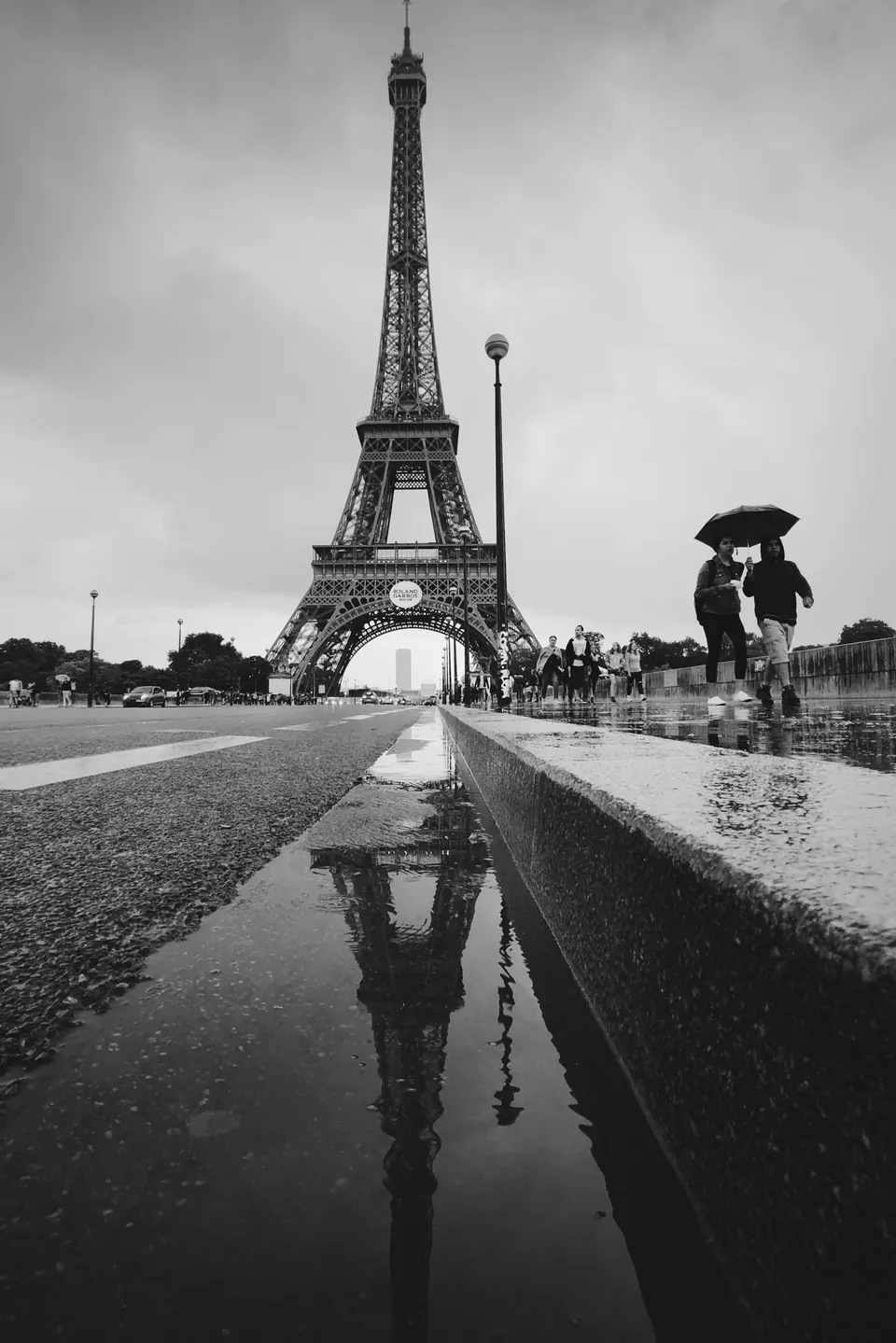
Météo-France classes the climate of Paris as “altered oceanic”, a transition between the Atlantic coast and the continental east: the gap between winter and summer grows with distance from the sea, and rain is lower than on the coast.
The parts of the move Americans find out about too late.
What Americans get wrong about moving to France, and the number, form or deadline that fixes it. Straight to your inbox.
One email a week. Real numbers, nothing else.
When Paris Is Busiest, and When It Is Quiet
The best official measure of crowds is hotel occupancy. INSEE publishes it month by month for the hotels of the Paris region (Île-de-France):
| Month | Hotel occupancy, 2025 | Month | Hotel occupancy, 2025 |
|---|---|---|---|
| January | 63.1 percent | July | 74.5 percent |
| February | 64.0 percent | August | 64.9 percent |
| March | 70.0 percent | September | 79.1 percent |
| April | 76.3 percent | October | 79.4 percent |
| May | 76.4 percent | November | 72.0 percent |
| June | 83.6 percent | December | 71.2 percent |
Source: INSEE, Insee Flash Île-de-France no. 110, figure 3, read on November 25, 2026. The average for the year was 72.9 percent, and 80.1 percent in Paris itself.
What INSEE says about it: occupancy is at its lowest at the start of the year, in January and February, peaks in June, and stays above the yearly average from April to October, except in August, when it “traditionally falls sharply”. The number of nights spent tells a slightly different story: it peaks in June and July (8.4 and 8.6 million nights in 2025) and stays high in August (8.1 million), even as hotel occupancy falls. Americans are the largest foreign market: 7.7 million hotel nights in the Paris region in 2025, up 12 percent on 2024.
In practice: book well ahead for June, September and October; expect the best availability in January, February and August; and watch for trade fairs, which push Paris occupancy above 95 percent on some days of September, according to the tourism office.
Paris Month by Month, with the 2027 Calendar
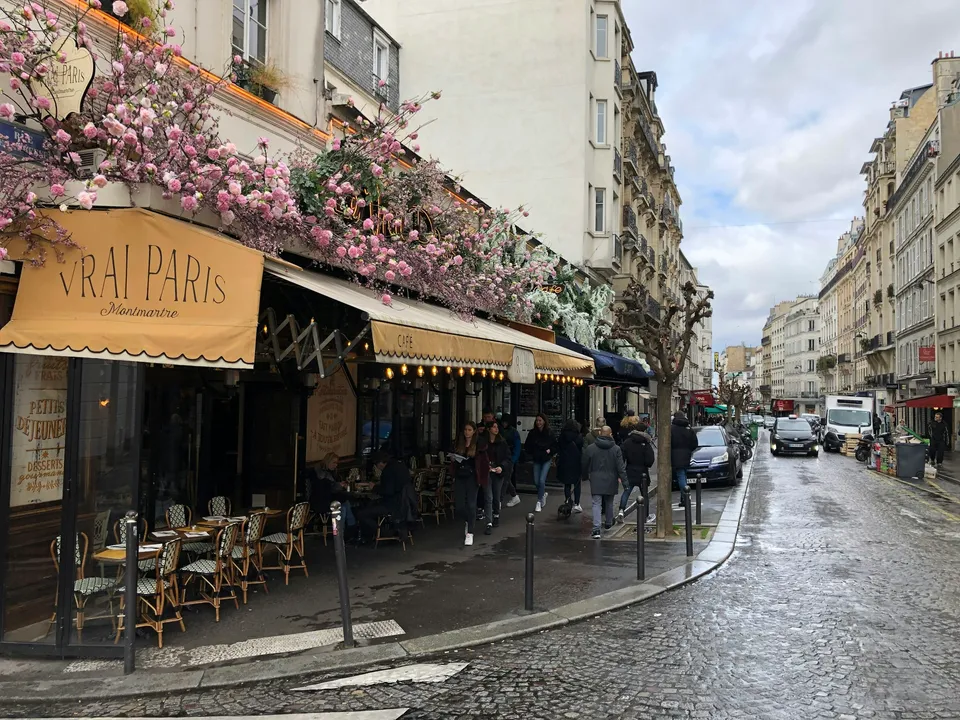
January. The coldest month (3.2 to 7.6 °C) and among the quietest. January 1 is a public holiday when many museums and monuments close. The top of the Eiffel Tower closes for its annual maintenance from January 4 to February 5, 2027; the second floor stays open.
February. Still cold and quiet, with a little more sun. The winter school holidays of the Paris zone (zone C) run from February 6 to 22, 2027, so expect more families. In the South, the Carnival of Nice and the Lemon Festival of Menton fill the second half of the month.
March. The days lengthen fast: 135 hours of sunshine against 84 in February. The Paris half marathon runs on March 7, 2027, and Easter Monday falls on March 29.
April. Spring proper, with highs around 17 °C. The Paris Marathon, its 50th edition, runs on April 4, 2027. The spring school holidays of the Paris zone run from April 3 to 19, 2027.
May. Mild (11 to 20 °C) and, in Météo-France’s averages, the wettest month of the year, at 69 mm. Watch the holidays: May 1, the only day off that is compulsory for all employees in France, when many museums close; May 8; Ascension on May 6; and Whit Monday on May 17, 2027. The European Night of Museums, when many museums open free from nightfall to midnight, is on May 22, 2027, and the Roland-Garros tennis tournament runs from May 17 to June 6, 2027.
June. Long days (on June 21, 2027, the sun rises at about 5:49 a.m. and sets at about 9:56 p.m. Paris time, converted from the Paris Observatory’s tables) and the busiest month for hotels. Nuit Blanche, the all-night contemporary art festival, takes place on June 5, 2027, according to the tourism office; the Rendez-vous aux jardins, the garden open days, from June 4 to 6; and the Fête de la Musique, with free concerts in the streets, on June 21, 2027, a Monday.
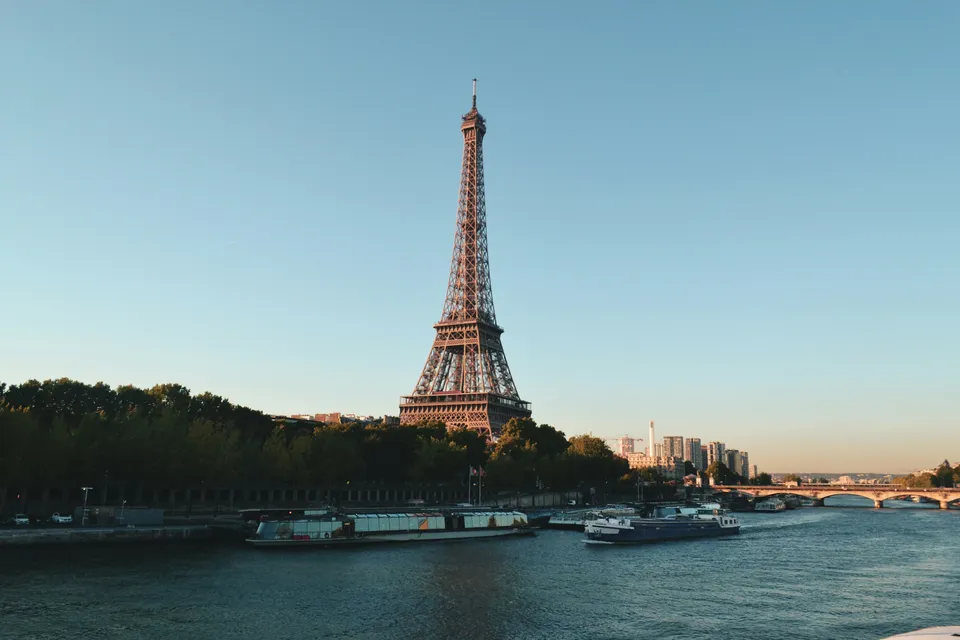
July. The warmest month (16.2 to 25.7 °C) and the sunniest. Bastille Day, July 14, falls on a Wednesday in 2027; the city usually stages a free fireworks show from the Champ-de-Mars, preceded by a concert, though in 2026 it was moved to July 13 as an exception, and the 2027 plans were not yet announced. The Louvre is free on July 14. The Tour de France ends on the Champs-Élysées on Sunday, July 25, 2027. And in summer the city opens the Seine for swimming and runs Paris Plages: in 2026, both from July 4 to August 30, free.
August. Still warm, but the city empties of Parisians: “Paris is still deserted for a few days”, as the city put it in mid-August 2026, and many small shops close for their holidays from mid-July to the end of August, the tourism office says. Hotel occupancy drops to 64.9 percent, its lowest level outside January and February. August 15, Assumption Day, is a public holiday, falling on a Sunday in 2027. A good month for the big sights, the parks and the river; a poorer one for small shops.
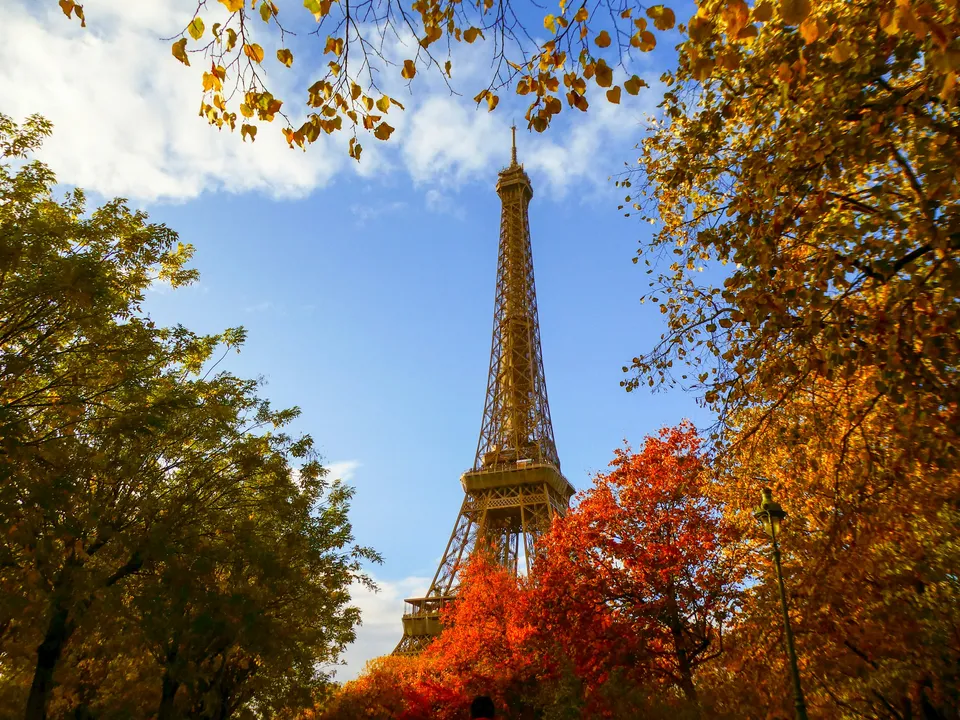
September. Still warm (13 to 21.5 °C), sunny (175 hours), and busy again, with 79.1 percent hotel occupancy in 2025 and a high share of business travelers. The European Heritage Days take place on September 18 and 19, 2027, on the theme of Europe’s hidden heritage.
October. Cooler (9.9 to 16.5 °C) and wetter, but still one of the busiest months for hotels (79.4 percent). The clocks go back on the last Sunday of October; in 2026, the All Saints’ school holidays ran from October 17 to November 2.
November. Gray (70 hours of sunshine) and quieter. November 1 and 11 are public holidays. The Christmas season starts: in 2026, the Champs-Élysées lights went on on November 22, across nearly 400 trees, lit every day from 5 p.m. to midnight (1 a.m. on weekends).
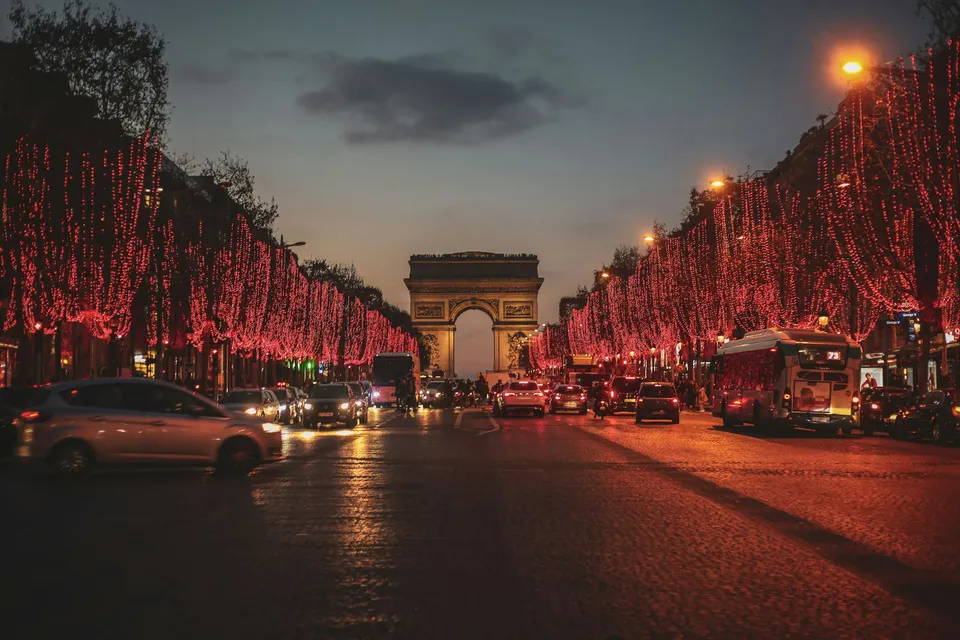
December. The darkest month (57 hours of sunshine; on December 21, 2027, sunrise at about 8:43 a.m. and sunset at about 4:54 p.m. Paris time), but the most festive. In 2026, the Christmas markets run at the Tuileries (November 14 to January 3), on the Champs-Élysées, back after nearly ten years, with nearly 200 chalets and an ice rink (November 22 to January 4), and on the square of Notre-Dame (November 26 to December 27). The Louvre requires a booked time slot for everyone from December 19, 2026 to January 4, 2027, and December 25 closes many museums.
Public Holidays in France in 2027
| Holiday | Date in 2027 |
|---|---|
| New Year’s Day | Friday, January 1 |
| Easter Monday | Monday, March 29 |
| Labor Day | Saturday, May 1 |
| Ascension | Thursday, May 6 |
| Victory in Europe Day | Saturday, May 8 |
| Whit Monday | Monday, May 17 |
| Bastille Day | Wednesday, July 14 |
| Assumption | Sunday, August 15 |
| All Saints’ Day | Monday, November 1 |
| Armistice Day | Thursday, November 11 |
| Christmas | Saturday, December 25 |
Source: Service-Public, public holidays 2027, read on November 25, 2026.
Only May 1 must be a day off for every employee, Service-Public explains; other holidays depend on collective agreements and employers, so shops and restaurants decide case by case. For visitors, the tourism office’s rule of thumb is that many museums and monuments close on January 1, May 1 and December 25, while some, the Eiffel Tower among them, open every day of the year.
The Best Time to Visit France, Beyond Paris
Paris is neither the sunniest nor the mildest part of France. Météo-France’s normals for six cities:
| City (station) | January low and high | July low and high | Rain a year | Sunshine a year |
|---|---|---|---|---|
| Paris (Montsouris) | 3.2 and 7.6 °C | 16.2 and 25.7 °C | 634.3 mm | 1,717 h |
| Lille (Lesquin) | 1.7 and 6.6 °C | 14.2 and 23.7 °C | 740 mm | 1,627 h |
| Strasbourg (Entzheim) | -0.2 and 5.2 °C | 14.9 and 26.4 °C | 635.7 mm | 1,747 h |
| Lyon (Bron) | 1.1 and 7.1 °C | 17 and 28.2 °C | 820.8 mm | 2,050 h |
| Bordeaux (Mérignac) | 3.7 and 10.5 °C | 16.2 and 27.1 °C | 924.9 mm | 2,070 h |
| Nice | 5.8 and 13.3 °C | 20.8 and 27.5 °C | 791.3 mm | 2,761 h |
Source: Météo-France, climate normals 1991-2020, each station’s page, read on November 25, 2026.
The pattern: sunshine grows from the north, about 1,500 hours a year at Brest or Rouen, to the south, about 2,800 hours at Marseille, as Météo-France puts it. For a winter trip, the Riviera is the mild exception, with January highs above 13 °C in Nice; for summer, Paris and the north stay cooler than Lyon, Bordeaux or the Mediterranean. Our guide to the South of France covers the regions and their best seasons, from the lavender in June and July to the Riviera in winter.
What to Do Whatever the Season
- On a rainy or cold day, go to the museums: our guide to the best museums in Paris gives their hours, late openings and free days.
- On a fine day, take a train out of the city: our guide to the best day trips from Paris covers Versailles, Giverny, Mont-Saint-Michel and Normandy.
- For the whole city, see our guide to the things to do in Paris, with the prices and booking rules of every major sight.
Staying Longer: a Season in Paris
A month in spring or a whole autumn in Paris is a different trip. As an American visiting the Schengen area, you can usually stay a maximum of 90 days within any 180-day period, according to the European Commission, and our guide to how long Americans can stay in France without a visa explains the count. For a furnished flat by the month, our guide to renting in Paris covers the neighborhoods and the leases. Finding that flat and handling the calls and forms in French is the kind of work our Personal Assistant does: the calls, the forms and the apartment search, in French.
FAQ
What is the best month to visit Paris?
June or September: highs of 23.4 and 21.5 °C on Météo-France’s averages, 175 to 204 hours of sunshine a month, and the city at its liveliest. June is also the busiest month for hotels, so book early; late May and early October are good alternatives.
What is the cheapest time to visit Paris?
The official data does not publish prices, but it shows when demand is lowest: hotel occupancy in the Paris region is at its lowest in January and February, and drops again in August, according to INSEE. Those are the months with the most availability.
Is August a good time to visit Paris?
For the big sights, the parks and the river, yes: hotel occupancy falls to 64.9 percent, the Seine opens for swimming and Paris Plages runs along the banks. But many small shops close from mid-July to the end of August, and August 15 is a public holiday.
Does it rain a lot in Paris?
Not much in volume: 634.3 mm a year on average, less than Lyon, Bordeaux or Nice. But it is spread over 108.9 days a year, with no clear dry season, so carry an umbrella whatever the month.
What is Paris like in winter?
Cold and gray but quiet: January averages 3.2 to 7.6 °C with 59 hours of sunshine, and hotel occupancy is at its lowest of the year. December brings the Christmas lights on the Champs-Élysées and the Christmas markets.
When is the Fête de la Musique in 2027?
On Monday, June 21, 2027, with free concerts across the city; the first one was held on June 21, 1982, the day of the summer solstice.
When is Roland-Garros in 2027?
From May 17 to June 6, 2027, according to the tournament. Its ticket draw for the general public runs from December 3 to 17, 2026.
Conclusion
For most first trips, aim for May, June or September: the weather is at its best and the city at its liveliest, as long as you book early. For a quieter, cheaper-feeling Paris, choose January, February or August and accept the cold or the closed shops. Then pin the trip on the 2027 calendar: the marathon on April 4, Roland-Garros from May 17, the Fête de la Musique on June 21, the Tour de France finish on July 25, the heritage days on September 18 and 19, and the Christmas lights from late November. And once the dates are set, plan the visit with our guide to the things to do in Paris.
The parts of the move Americans find out about too late.
What Americans get wrong about moving to France, and the number, form or deadline that fixes it. Straight to your inbox.
One email a week. Real numbers, nothing else.
Written by
Aurelio Maurici
Co-Founder, EasyFranceNow
Aurelio Maurici is a French entrepreneur and co-founder of EasyFranceNow. His work focuses on the intersection of French administration, banking constraints affecting U.S. nationals, tax residency and cross-border reporting, healthcare enrollment, and the procedural realities Americans encounter while settling in France.


