
Where to Live on the Côte d'Azur as an American: Cagnes-sur-Mer, Nice, Antibes, Cannes, Menton and Villefranche Compared

By Maxime Roseau Co-founder, Master of Business and Communication, Université Nice Sophia Antipolis
Published

In this article
- One Coast, One Rent Zone, Seven Different Lives
- Cagnes-sur-Mer: The Practical Middle
- Nice: The City With the Airport
- Antibes: Ramparts, a Market and a Cheaper Zone
- Cannes and Saint-Laurent-du-Var: Two Ends of the Same Scale
- Menton and Villefranche-sur-Mer: Small, Pretty and Half Second Homes
- The Year-Round Test: How Many Homes Are Anyone’s Home?
- Who Lives There: Renters, Cars and Commutes
- Getting Around and Getting Home
- How to Test a Town Before You Sign
- Which Town for Which American?
- Before You Sign Anything
- When to Get Help
- FAQ
- Conclusion
The best place to live on the Côte d’Azur depends on what you want from a normal Tuesday, because the rents barely tell the towns apart. For most of the coast between Cannes and Menton, the rent observatory of the Alpes-Maritimes publishes a single price zone: a median of 18.0 euros per square meter on leases in force in 2024. Antibes is the exception. What separates the towns is how many homes are lived in all year, how far you are from the airport and the train, and what the streets feel like in February. This guide compares seven of them: Cagnes-sur-Mer, Nice, Antibes, Cannes, Menton, Villefranche-sur-Mer and Saint-Laurent-du-Var. If you are still choosing between regions, start with our comparison of the Côte d’Azur, Provence and Occitanie. To weigh the coast against the big cities, where to live in France as an American compares Paris, Lyon, Bordeaux, Marseille and Montpellier. This article is for informational purposes only: rents and timetables change, so check them on the pages linked here.
One Coast, One Rent Zone, Seven Different Lives
The rent observatory of the Alpes-Maritimes, hosted by the ADIL 06 in Nice, publishes its 2024 results by price zone, not by town. Several towns share a zone, so the observatory has no rent of its own for Cagnes-sur-Mer or Cannes. Its figures count leases in force, not asking prices, which is why they sit under the roughly 20 euros per square meter of asking rents in our Nice rental guide.
| Price zone of the observatory | Towns of this guide | Median per m2 | Middle half of rents | Median monthly rent | Average size |
|---|---|---|---|---|---|
| Alpes-Maritimes 1 | Nice, Cagnes-sur-Mer, Saint-Laurent-du-Var, Cannes, Menton, Villefranche-sur-Mer | 18.0 euros | 14.9 to 21.2 euros | 850 euros | 56 m2 |
| Alpes-Maritimes 2 | Mandelieu-la-Napoule | 16.4 euros | 13.9 to 19.0 euros | 800 euros | 56 m2 |
| Alpes-Maritimes 10 | Antibes (with Grasse) | 14.5 euros | 11.8 to 17.2 euros | 680 euros | 53 m2 |
Each row comes from the observatory’s page for the commune. The “middle half” is the range between the first and the third quartile. Two limits are worth knowing. A median covers a whole zone, so a flat on the seafront and a flat uphill fall in the same figure. And an observatory does not publish rents by neighborhood: for those, the only honest source is the listings of the month you search.
Cagnes-sur-Mer: The Practical Middle
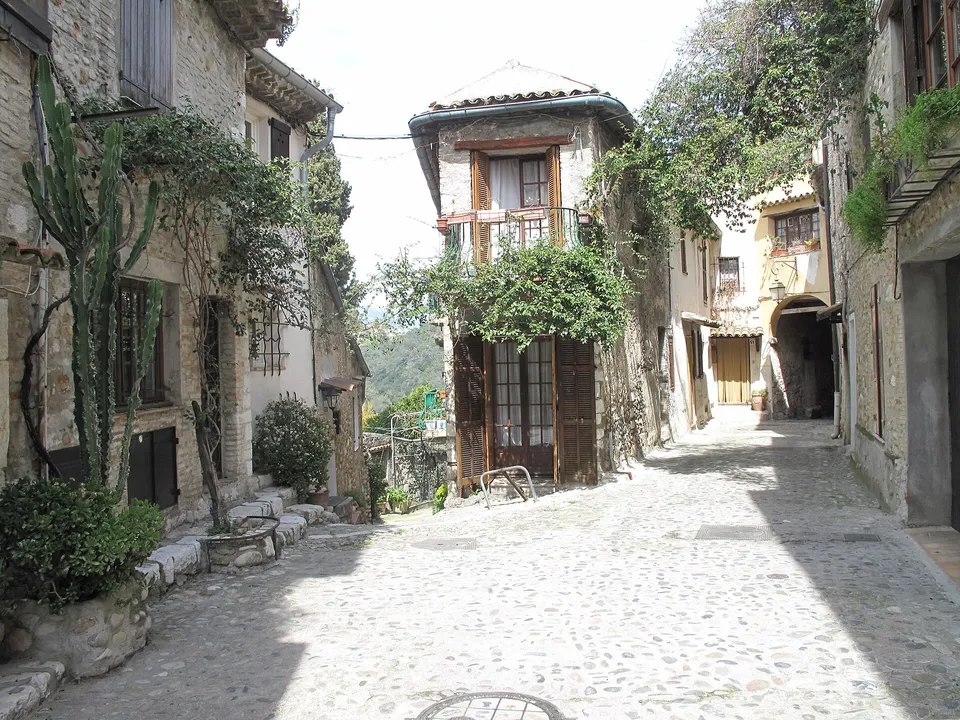
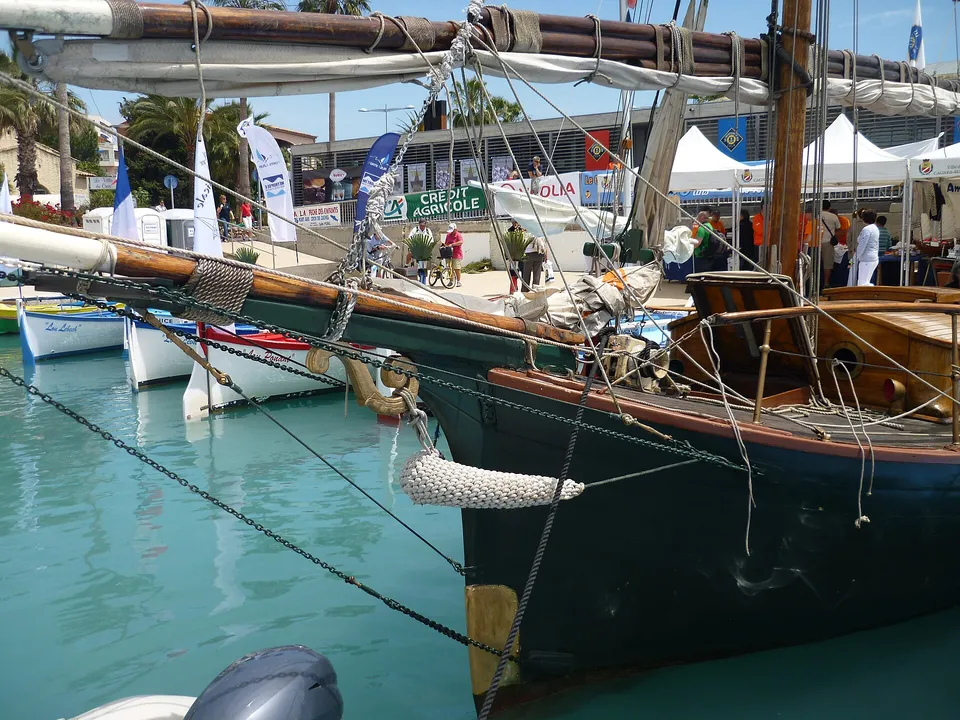
Cagnes-sur-Mer is a town of 53,354 people (INSEE, 2023) between Nice and Antibes, and it is easy to reduce to the road you take through it. It is three places in one. Haut-de-Cagnes is the medieval village on the hill, with the Grimaldi castle-museum at the top (the commune climbs from the sea to 187 meters). The town center has the racecourse, the Hippodrome de la Côte d’Azur, which the tourist office calls the second-largest in France, and Shopping Promenade Riviera, an open-air shopping center. Cros-de-Cagnes is the former fishing port on the sea.
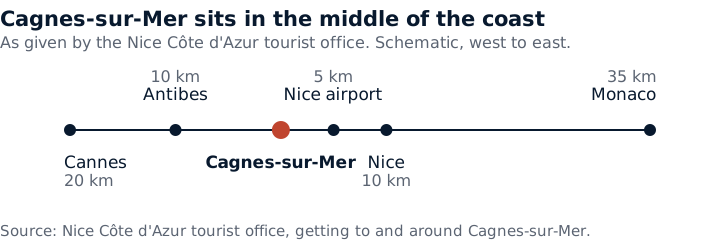
The geography does the selling. According to the Nice Côte d’Azur tourist office, the airport is 5 km away, Nice and Antibes are 10 km, Cannes 20 km and Monaco 35 km. By car, Nice is 20 minutes away, by the A8 exit 48. Two train stations serve the town: Cagnes-sur-Mer for the center, Haut-de-Cagnes and the racecourse, and Cros-de-Cagnes for the seaside. A free shuttle, no. 44, leaves the town center for the old village every 20 minutes from 7 a.m. to 10:30 p.m., seven days a week.
On the INSEE figures, Cagnes-sur-Mer is a town where people live all year: 81.1 percent of its 33,380 homes are main homes, 14.5 percent are second homes and 4.4 percent are vacant. About three homes in four are apartments (77.6 percent), and 28.6 percent of residents are 65 or older. In the observatory’s data it shares Nice’s price zone, so the official rent figures cannot tell the two apart.
Because the town has two stations at two ends, it is worth deciding which end you want before you look at a single listing: the center and the hill, or the seaside.
A town is also what you do in it on a free Saturday, and here the tourist office lists a lot for 53,000 people. The Renoir Museum is housed in the house the painter lived in, in a garden of olive trees. The Grimaldi castle-museum, at the top of the village, looks out over the Mediterranean, and the town holds a “Ville et Métiers d’Art” label for contemporary jewelry. Nine urban parks, among them the Parc de la Méditerranée and the Parc des Canebiers, sit inside the town itself. None of this tells you whether you will like living here, but it shows that Cagnes-sur-Mer has a life of its own and is not only a stop between Nice and Antibes.
Nice: The City With the Airport
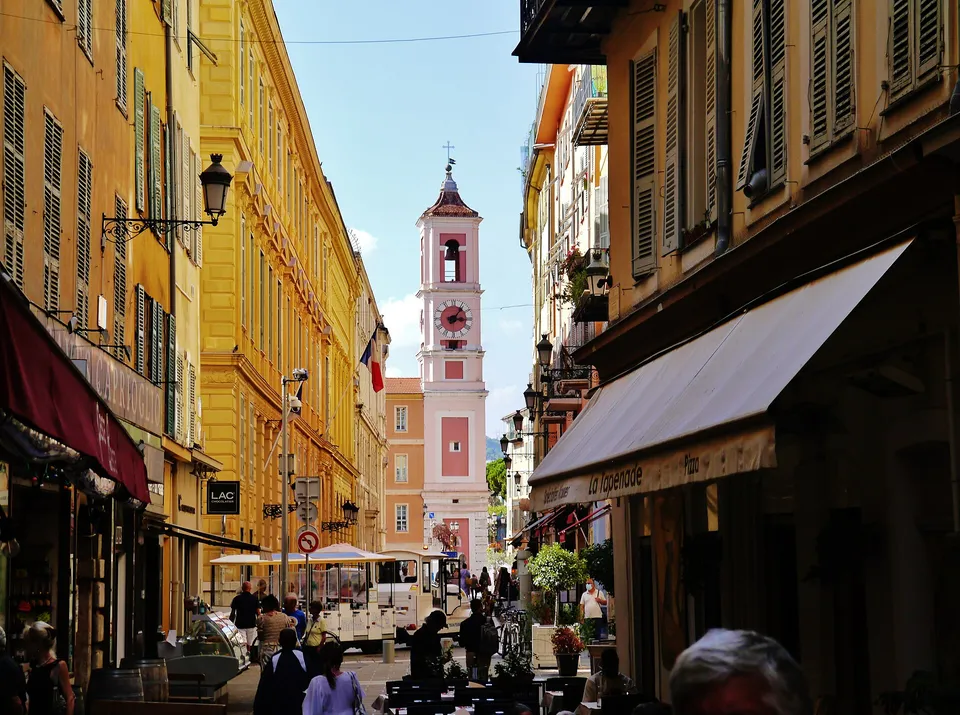
With 357,737 residents (INSEE, 2023), Nice is the only real city of the coast, and 92.7 percent of its homes are apartments. It has the airport, the tram and the main station. Its housing is the most mixed of the seven: 73.8 percent main homes, 13.8 percent second homes, and 12.4 percent vacant, the highest share of vacant homes here. Neighborhoods, prices and the application file are covered in our guide to renting in Nice, so this guide does not repeat them.
Nice is also the town with the shortest link to the airport. The airport’s own page says that tram lines 2 and B link Terminal 2, Terminal 1 and the Grand-Arénas stop for free, and that Nice Saint-Augustin train station is a 7-minute walk from Terminal 1.
Antibes: Ramparts, a Market and a Cheaper Zone
Antibes is a town of 77,637 people (INSEE, 2023) and the one place of the seven the observatory places in a cheaper zone: 14.5 euros per square meter, against 18.0 in the Nice zone. It shares that zone with Grasse, so read it as a hint rather than a promise for any one flat.
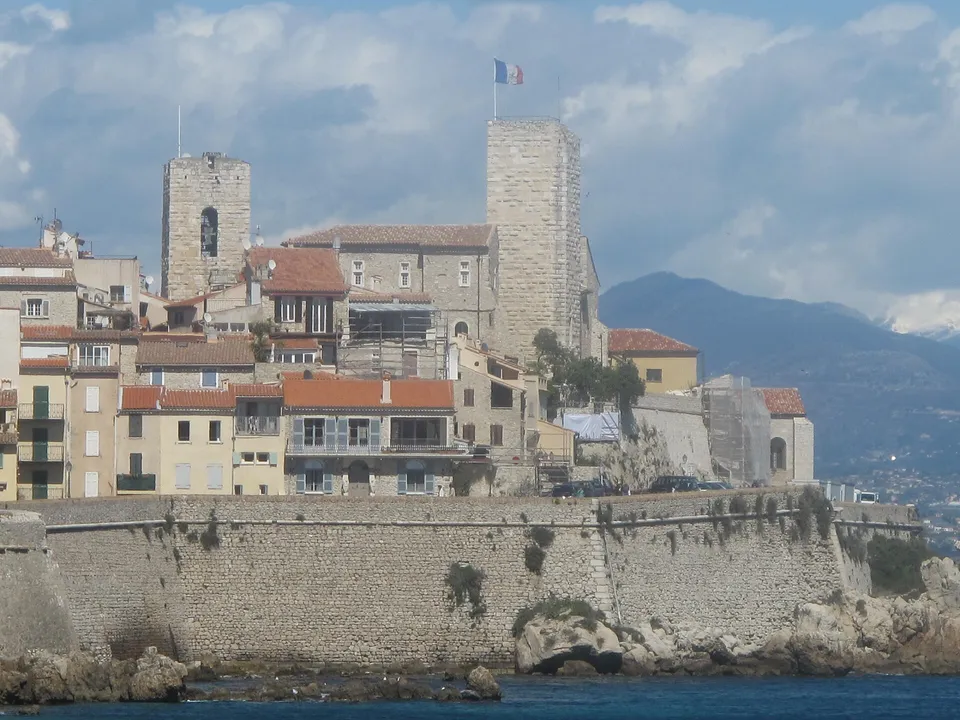
The Antibes Juan-les-Pins tourist office describes a daily Provençal market under the Cours Masséna halls, open every morning from 6 a.m. to 1 p.m. (except Mondays off season), the Picasso Museum and the Safranier district inside the old town. The housing numbers add the other half: 61.2 percent of homes are main homes and 33.5 percent are second homes, so one home in three is a second home.
Cannes and Saint-Laurent-du-Var: Two Ends of the Same Scale
Cannes has 74,350 residents, yet only 52.5 percent of its homes are main homes, while 44.2 percent are second homes or occasional homes (INSEE, 2023). Only Menton and Villefranche-sur-Mer are lower. It does not mean empty streets, but it does mean that about half of the homes are not someone’s main address.
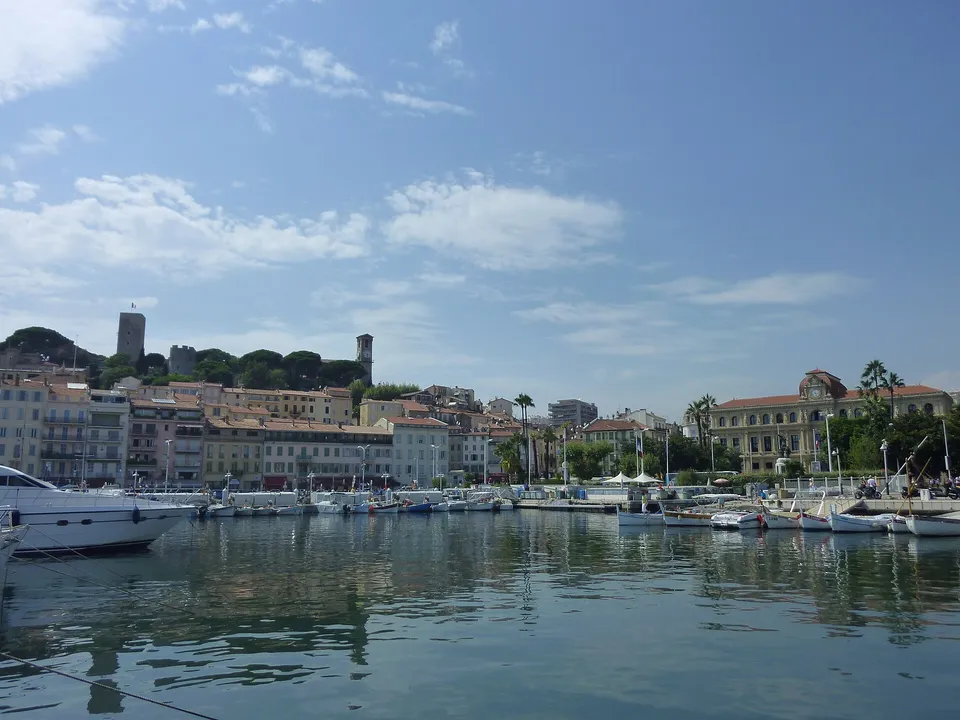
Saint-Laurent-du-Var, between Nice and Cagnes-sur-Mer, is the opposite: 32,172 residents and 81.3 percent main homes, the highest share of the seven. It sits in the same observatory zone as Nice. The figures describe a residential town.
Menton and Villefranche-sur-Mer: Small, Pretty and Half Second Homes
Menton (30,604 residents) and Villefranche-sur-Mer (5,008) are the two towns where second homes come close to, or pass, main homes: 42.1 percent second homes in Menton, 50.2 percent in Villefranche-sur-Mer, against 50.4 and 44.4 percent of main homes. Both sit in the Nice price zone.
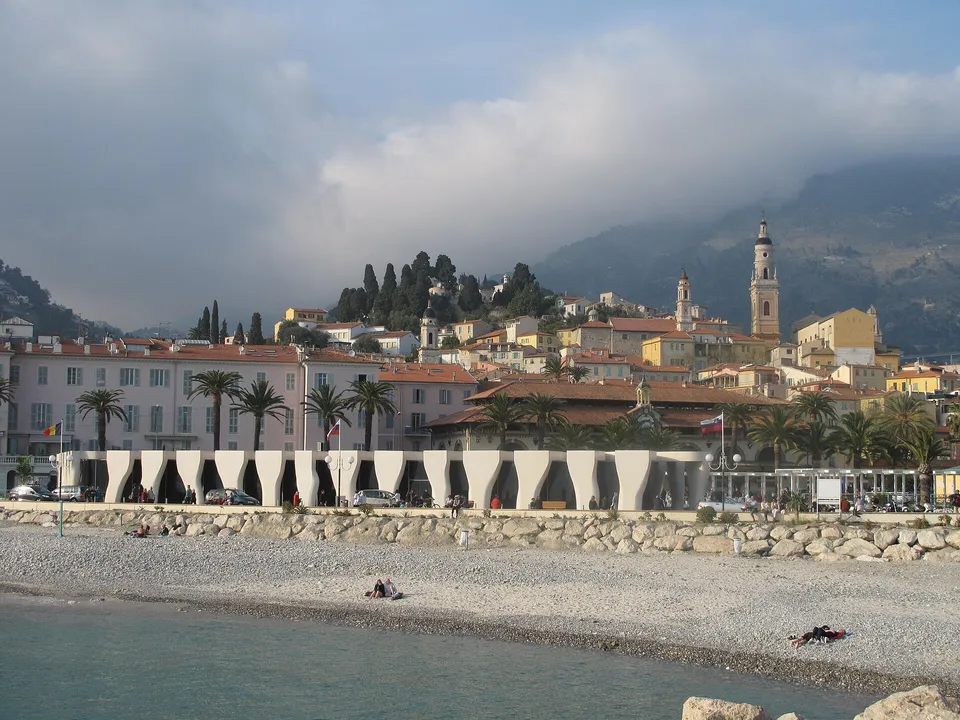
Menton’s tourist office says that “the winter mildness is real”, and that you can reach a ski resort within an hour and a half’s drive. That is the office’s own promotion, not a measurement. The town’s Lemon Festival has taken place in the second half of February every year since 1934. The old town of Villefranche-sur-Mer, according to the Nice Côte d’Azur tourist office, stretches like an amphitheater above a harbor, below the 16th-century Citadelle Saint-Elme.
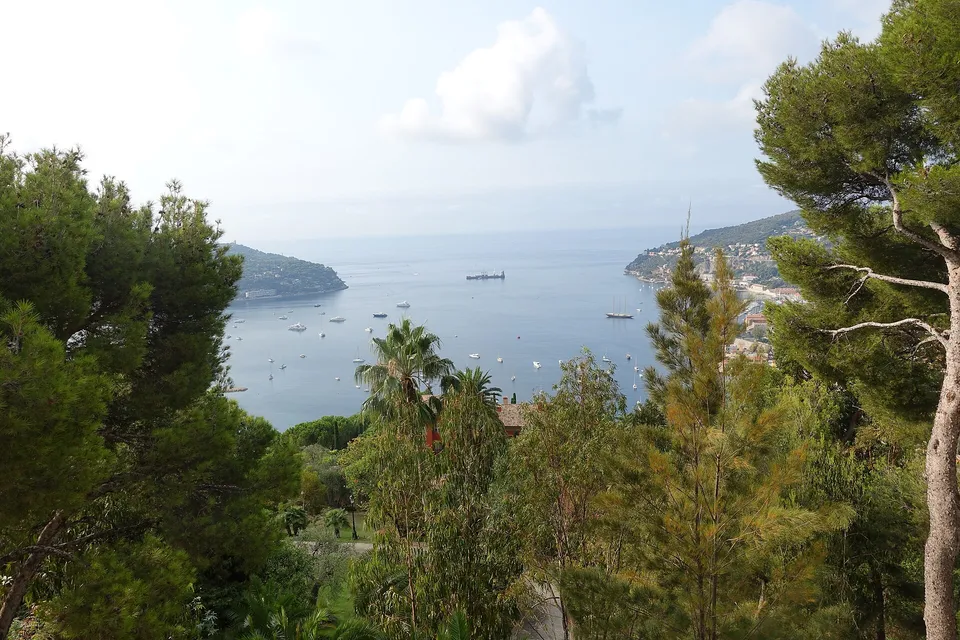
Both are places to choose for the setting. The housing figures say you will be one of fewer year-round neighbors, and that the rental stock is thin.
The Year-Round Test: How Many Homes Are Anyone’s Home?
This is the number that most changes a search. INSEE splits every town’s dwellings into main homes, second or occasional homes and vacant ones.
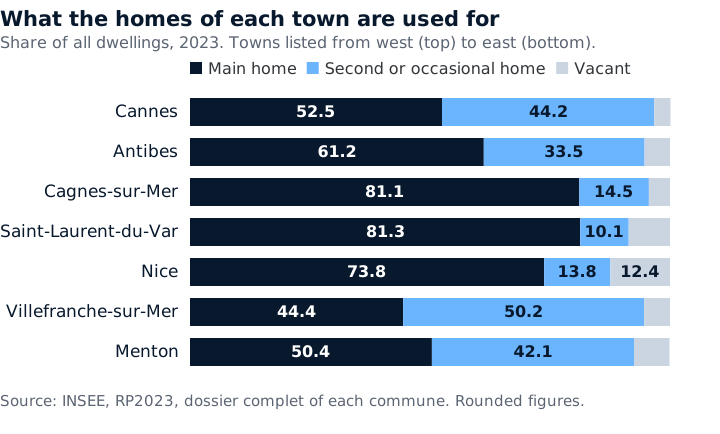
Read the chart from the top: the further left the dark bar reaches, the more of the town is someone’s address. Cagnes-sur-Mer and Saint-Laurent-du-Var are around 81 percent, Nice 74 percent. Cannes, Menton and Villefranche-sur-Mer are around 50 percent or below. Second homes are not a flaw, but by definition they are not someone’s main address, so a town with many of them has fewer year-round neighbors. If you are arriving from a short-term rental, this 7-day plan is the order to follow.
Who Lives There: Renters, Cars and Commutes
Housing counts say how many homes are lived in. Four more INSEE figures say how each town lives, and they matter if you will rent, drive or commute. They come from the same INSEE pages (2023), one per town.
| Town | Main homes rented | Households with a car | Workers who work in their own town | Median standard of living a year | Aged 65 or older |
|---|---|---|---|---|---|
| Cannes | 49.4 percent | 71.8 percent | 62.6 percent | 24,000 euros | 30.5 percent |
| Antibes | 41.2 percent | 80.5 percent | 51.8 percent | 27,560 euros | 27.7 percent |
| Cagnes-sur-Mer | 40.7 percent | 81.2 percent | 33.6 percent | 27,000 euros | 28.6 percent |
| Saint-Laurent-du-Var | 40.7 percent | 85.6 percent | 30.8 percent | 27,570 euros | 25.4 percent |
| Nice | 49.7 percent | 62.4 percent | 74.9 percent | 24,080 euros | 23.4 percent |
| Villefranche-sur-Mer | 33.1 percent | 81.2 percent | 32.2 percent | 29,910 euros | 36.1 percent |
| Menton | 39.6 percent | 76.2 percent | 45.4 percent | 25,700 euros | 25.2 percent |
The standard of living is INSEE’s median for the town. The 65-plus column adds INSEE’s two age bands (65 to 79, and 80 or older).
Three things stand out. First, Nice is the only town here where going without a car is common: 37.6 percent of its households have none (the complement of the figure above), against 14.4 percent in Saint-Laurent-du-Var and 18.8 percent in Cagnes-sur-Mer. If you do not want to drive, the numbers point to Nice.
Second, the commute. In Nice, 74.9 percent of the workers who live there also work there. In Cagnes-sur-Mer it is 33.6 percent, so two out of three residents with a job go to work in another town. Most residents of Saint-Laurent-du-Var and Villefranche-sur-Mer also work elsewhere (69.2 and 67.8 percent). In these towns the station and the road matter more than the town’s own jobs.
Third, the neighbors. Villefranche-sur-Mer has the highest median standard of living (29,910 euros) and the oldest population, with 36.1 percent aged 65 or older. Nice and Cannes have the lowest medians (about 24,000 euros) and, in INSEE’s Filosofi data, the highest poverty rates, 23.4 and 22.6 percent, against 12.5 percent in Saint-Laurent-du-Var. Nice is also the youngest of the seven, with 23.4 percent aged 65 or older.
Getting Around and Getting Home
The coast is built around one railway. The airport’s page says that on the Cannes, Nice, Monaco and Menton line there is a train every 15 minutes on weekdays from 5:50 a.m. to 10 p.m., then every 30 minutes until 11:30 p.m., with later trains on weekends. The tourist office adds that both stations of Cagnes-sur-Mer are served by TER trains from the Nice and Antibes stations. For Saint-Laurent-du-Var and Villefranche-sur-Mer, check the stop and the timetable before you rely on them.
For flights home, the airport’s US page lists five destinations: Atlanta, Boston, New York, Philadelphia and Washington. It gives no dates, so check the airline for the months you plan to fly. Our Nice guide and the Monaco guide cover what changes if you look at the principality next door.
How to Test a Town Before You Sign
Pick two towns and spend a few days in each before you commit. Four checks cost nothing.
- Take the train, not the car. Ride from your candidate town to the airport station and back at the hour you would commute. Nice Saint-Augustin is a 7-minute walk from Terminal 1, and trains on the Cannes to Menton line run every 15 minutes on weekdays until 10 p.m., then every 30 minutes until 11:30 p.m.
- Walk the street at night and in the morning. Do it in a town where about half the homes are second homes, such as Cannes, Menton or Villefranche-sur-Mer, and note how many windows are lit.
- Go up the hill. In Cagnes-sur-Mer, test the free shuttle no. 44 to Haut-de-Cagnes, which runs every 20 minutes from 7 a.m. to 10:30 p.m. If you rent in the village, this is your daily connection.
- Ask what the rent includes. Get the charges and the lease type in writing, and read what changes between a furnished and an unfurnished lease.
Before the trip, My Place in France, our map of every French commune, gives each of these towns its official figures: price per square meter to buy and to rent, property tax, weather, time to the nearest station and hospital, recorded break-ins and thefts, and the share of homes that are second homes.
Which Town for Which American?
This table is our reading of the figures above, not an official ranking.
| If you want | Look first at | What the figures say |
|---|---|---|
| A real city, the tram and the airport | Nice | 357,737 residents, 92.7 percent apartments, airport 7 minutes from a station |
| A town where people live year-round, near the airport | Cagnes-sur-Mer | 81.1 percent main homes, airport 5 km, two stations |
| A lower rent zone and a walkable old town | Antibes | Zone at 14.5 euros per m2, 61.2 percent main homes |
| To live without a car | Nice | 62.4 percent of households have a car, against 81 to 86 percent in Cagnes-sur-Mer, Antibes, Saint-Laurent-du-Var and Villefranche-sur-Mer |
| A plain residential base | Saint-Laurent-du-Var | 81.3 percent main homes, Nice rent zone |
| The setting before the practicalities | Menton, Villefranche-sur-Mer, Cannes | About half of homes are second homes, Nice rent zone |
For a budget outside housing, our cost of living guide is the next stop, and for a long stay after retirement, the retirement timeline.
Before You Sign Anything
A landlord on the coast will ask for the same file as anywhere: proof of income, an ID and a guarantor. Your options without a French guarantor are the first thing to settle. Be careful with the quick deals that appear when time is short: the red flags of a rental scam are the same on the Riviera as elsewhere. A hotel or short-term address does not count as an address for most paperwork, so read what counts as proof of address. The full process is in the step-by-step rental playbook, and the choice between a furnished and an unfurnished lease matters more on a coast with many second homes.
When to Get Help
If you cannot visit before you choose, the Navigator lays out the whole move in order, and a dedicated assistant can handle calls and emails with agencies in French while you are still in the US.
FAQ
Which town on the Côte d’Azur is cheapest?
Of the seven towns here, Antibes, whose price zone has a median of 14.5 euros per square meter against 18.0 for the Nice zone. The observatory gives no figure by neighborhood, so the cost of a given street has to come from the listings.
Is Cagnes-sur-Mer cheaper than Nice?
The official data cannot say: the observatory puts both in the same price zone, with the same median of 18.0 euros per square meter. What differs is the town: 53,354 residents instead of 357,737, and 81.1 percent main homes instead of 73.8.
Is the Côte d’Azur empty in winter?
Not everywhere. In Cagnes-sur-Mer, Saint-Laurent-du-Var and Nice, more than seven homes in ten are main homes. In Cannes, Menton and Villefranche-sur-Mer, about half or fewer are, so those towns depend more on seasonal residents.
Do I need a car on the Côte d’Azur?
It depends on the town. INSEE counts 62.4 percent of households with a car in Nice, and 81.2 percent in Cagnes-sur-Mer, 80.5 percent in Antibes and 85.6 percent in Saint-Laurent-du-Var. The railway line gives all of the coast a car-free spine, but only Nice is a town where many households live without one. If the town you choose means driving, how an American buys and registers a car in France covers the documents, the choice between a dealer and a private seller, and the registration.
Which town is closest to the airport?
Nice itself. Cagnes-sur-Mer is 5 km from it, according to the tourist office, and Nice Saint-Augustin train station is a 7-minute walk from Terminal 1.
Conclusion
On the Côte d’Azur the rent says little and the town says a lot. Most of the coast sits in one price zone, so the choice comes down to the share of homes that are lived in all year, the distance to the airport and the train, and the size of the place. Cagnes-sur-Mer is the practical answer, Nice the city one, Antibes the cheaper zone with an old town, and Cannes, Menton and Villefranche-sur-Mer the ones to choose for the setting. Pick two towns, read their listings for a week, and then look at the dossier you would send.
How far along is your move?
Written by
Maxime Roseau
Co-founder, EasyFranceNow
Maxime Roseau is a French entrepreneur and co-founder of EasyFranceNow. His work focuses on French visas, residency, and citizenship: long-stay visa applications, OFII validation, prefecture procedures, permit renewals, and naturalization files, along with the operational side of relocation such as housing, rental dossiers, and administrative coordination after arrival.


