
French Food: The Classic Dishes to Try in France, Region by Region, and How to Eat Like the French

By Aurelio Maurici Co-Founder, Master of Business Law, Aix-Marseille Université III
Published

In this article
- French Food at a Glance
- What Makes a Meal French
- Classic French Dishes Region by Region
- Paris and Its Bistros
- Lille and the North
- Normandy and Brittany
- Alsace and Lorraine
- Burgundy and Lyon
- The Alps and Annecy
- Provence and Marseille
- Nice and the Riviera
- Toulouse and the South-West
- Corsica
- The Baguette and the French Bakery
- French Cheese: What AOP Means
- French Pastries and Desserts
- French Breakfast and the Café
- How Meals Run in France
- How to Read a French Menu and Order
- Service Compris and Tipping in France
- French Food Markets
- French Wine in Brief
- Eating Out with Allergies
- Staying Longer in France
- FAQ
- Conclusion
French food is the cooking of a country that put its meal on UNESCO’s list: in 2010 the “gastronomic meal of the French” was inscribed on the Representative List of the Intangible Cultural Heritage of Humanity, and in 2022 the “artisanal know-how and culture of baguette bread” joined it. The classic dishes to know belong to the regions: bouillabaisse from Marseille, salade niçoise and socca from Nice, ratatouille from Provence, cassoulet from Castelnaudary and Toulouse, choucroute and flammekueche from Alsace, quiche from Lorraine, carbonnade from Lille, crêpes and galettes from Brittany, bœuf bourguignon from Burgundy, quenelles from Lyon, fondue and tartiflette from the Alps, and onion soup and the croque-monsieur from Paris. Add the baguette, 47 cheeses with a protected designation of origin (AOP), and pastries from the croissant to the macaron, and you have the French food a visitor meets.
This guide takes the classic dishes region by region, with what each is and where it comes from as the regional tourist offices and official bodies describe them, then the bakery, cheese and what AOP means, pastries and desserts, breakfast and the café, how meals run in France, how to read a menu, service compris and tipping, markets and wine. Every rule, date and figure was read on the official page (UNESCO, Légifrance, the consumer authority DGCCRF, INSEE, INAO, the Ministry of Agriculture, the tourist offices) on November 27, 2026.
French Food at a Glance
| Dish | What it is | Where it comes from |
|---|---|---|
| Bouillabaisse | Fish soup served in two dishes, the fish cut at the table, with rouille | Marseille |
| Salade niçoise | Tomatoes, raw vegetables, tuna, anchovies, eggs and olives, laid on mesclun | Nice |
| Socca | A thin chickpea-flour pancake from a very hot oven | Nice |
| Ratatouille | Aubergines, courgettes, peppers, tomatoes and onions cooked in olive oil | Provence |
| Aïoli | Garlic mayonnaise, served with salt cod, whelks and vegetables | Provence |
| Cassoulet | Beans, duck or goose confit, Toulouse sausage and pork, cooked slowly | Castelnaudary, Toulouse, Carcassonne |
| Foie gras and confit | Duck from the South-West, under an IGP since 2000 | The South-West |
| Choucroute garnie | Fermented cabbage with sausages, bacon, pork knuckle and potatoes | Alsace |
| Flammekueche | A tart cooked in a wood-fired oven, shared in a winstub | Alsace |
| Quiche lorraine | Eggs, smoked pork belly and crème fraîche in pastry, no cheese | Lorraine |
| Carbonnade flamande | Beef cooked in brown beer with gingerbread, with fries | Lille and the North |
| Crêpes and galettes | Sweet wheat crêpes; savory buckwheat galettes, with cider | Brittany |
| Bœuf bourguignon | Beef slowly cooked in Burgundy red wine with lardons and mushrooms | Burgundy |
| Escargots | Snails baked in their shells with garlic and parsley butter | Burgundy |
| Quenelle | A plain or pike dumpling, baked with a crayfish sauce | Lyon |
| Fondue savoyarde | Beaufort, abondance and emmental melted with white wine | Savoie |
| Tartiflette | Potatoes baked with reblochon, onions, bacon and cream | The Alps (Haute-Savoie) |
| Onion soup | Broth and caramelized onions under cheese and croutons | Paris |
| Croque-monsieur | Ham and béchamel between bread, under melted cheese | Paris |
Sources: the regional and city tourist offices, france.fr and INAO, as cited in each section below, read on November 27, 2026.
What Makes a Meal French
UNESCO describes the gastronomic meal of the French as “a customary social practice for celebrating important moments in the lives of individuals and groups, such as births, weddings, birthdays, anniversaries, achievements and reunions”. It is not a recipe but an order: the meal “should respect a fixed structure, commencing with an apéritif (drinks before the meal) and ending with liqueurs, containing in between at least four successive courses, namely a starter, fish and/or meat with vegetables, cheese and dessert”. France’s national tourism site, france.fr, calls the last drink a digestif and adds that it all comes “accompanied by bread and wine”. UNESCO also lists the pairing of food with wine, “the setting of a beautiful table” and the purchase of “good, preferably local products”.
The everyday meal keeps the habit of eating together, at fixed hours. INSEE, the national statistics institute, measured it in its time-use survey: in 2010 the French spent 2 hours 22 minutes a day eating, 13 minutes more than in 1986, and at 1 p.m., half of the French are eating lunch (48 percent). INSEE contrasts this with the United States, where far fewer people eat at the same hours. Dinner comes late: its peak moved from a little before 8 p.m. to about 8:15 p.m. INSEE launched a new edition of the survey in October 2025, with no meal results published yet.
Which dishes do the French themselves see as their own? For the first Fête de la gastronomie, in September 2011, an Ipsos poll published by the Ministry of the Economy found that foie gras came first among the emblematic dishes of French gastronomy (48 percent of mentions), ahead of pot-au-feu (41 percent), blanquette de veau (31 percent), cassoulet (30 percent) and rib of beef with fries (19 percent).
The parts of the move Americans find out about too late.
What Americans get wrong about moving to France, and the number, form or deadline that fixes it. Straight to your inbox.
One email a week. Real numbers, nothing else.
Classic French Dishes Region by Region
Paris and Its Bistros
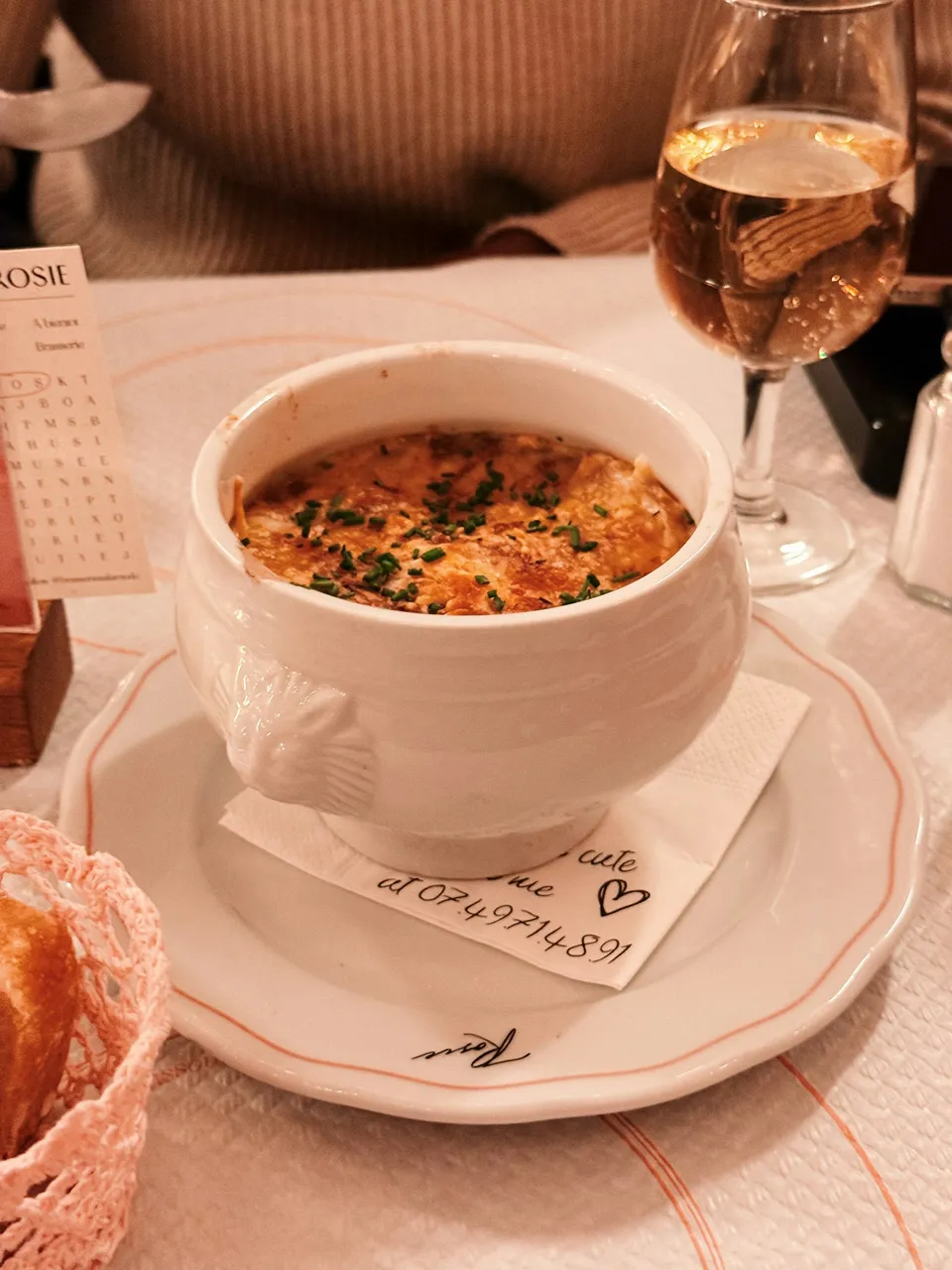
Paris has its own classics, the Paris tourist office says:
- Onion soup: broth and caramelized onions under a layer of melted cheese and croutons. It “used to be served by restaurants in the old market halls to reinvigorate the handlers and night revellers”, and today it is “on the menu in all good brasseries”.
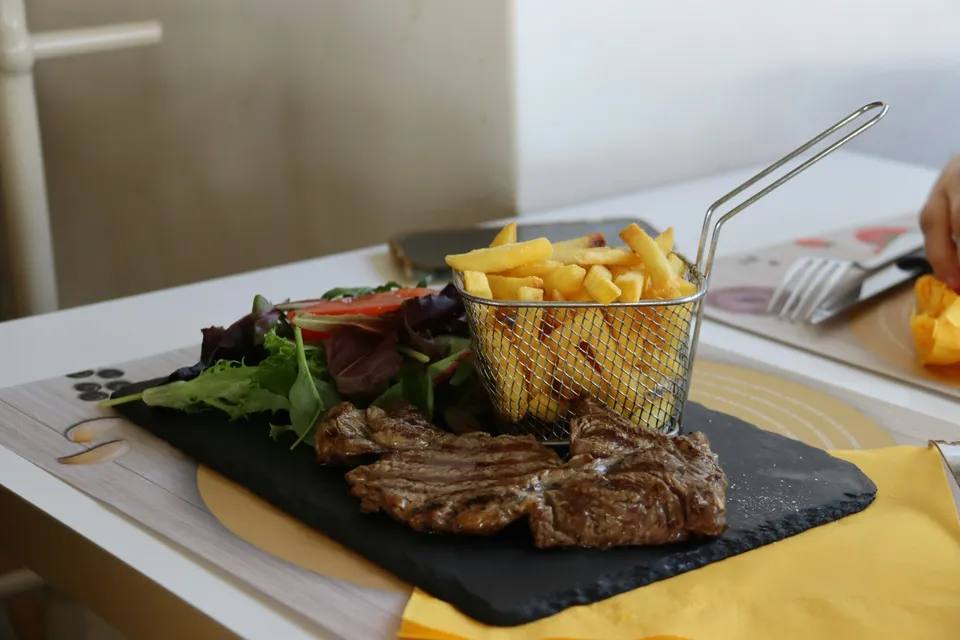
- Steak frites: the dish goes back to the 19th century, when La Villette was a slaughterhouse and its butchers ate rib steak with butter and herbs and “Pont-Neuf potatoes”, the ancestors of fries; it is still a staple of Paris bistros.
- Croque-monsieur: two slices of bread with boiled ham and béchamel under melted cheese, sold in brasseries and bakeries; with a fried egg on top it becomes a croque-madame. Marcel Proust put it in a novel in 1918.
- Jambon-beurre: “the capital’s most iconic sandwich”, a crisp baguette with lightly salted butter and a slice of ham.
Where to eat them: a bistro, which in the last century was run by a wine merchant, offers a good wine list, simple traditional dishes and reasonable prices, the tourist office says; a brasserie began as a brewery and is now a large Paris restaurant serving onion soup, coq au vin and pot-au-feu, often in an art deco room. The oldest, La Brasserie Mollard, dates from 1867, the office says. Our guide to the things to do in Paris covers the city’s sights and neighborhoods.
Lille and the North
In the north, the place to eat is the estaminet, which the Lille tourist office defines as the typical restaurant of the north of France: local dishes in a Flemish setting, with old objects, garlands of hops and regional or Belgian beers. What to order:
- Carbonnade flamande: beef slowly cooked in the north’s brown beer, with mustard and a slice of gingerbread, served with fries.
- Welsh: bread and ham covered with cheddar melted in local beer, baked, and eaten with a spoon or with fries.
- Potjevleesch: white meats set in jelly, eaten cold with fries.
- Moules-frites: mussels and fries, the dish of the Braderie de Lille.
- Tarte au maroilles: a tart of the region’s square, washed-rind cheese, an AOP made only in the Thiérache, INAO says.
For dessert, the Lille waffle is thin and filled with vergeoise, a brown beet sugar, and the merveilleux is two meringue shells filled with whipped cream and dusted with chocolate or speculoos shavings, the tourist office says. Our guide to Lille explains the estaminets and the street of Vieux-Lille where the tourist office sends you for them.
Normandy and Brittany
Normandy cooks with cream, apples and cheese, its tourism board says, with Camembert as the star; it is also France’s leading producer of scallops, and its coast gives oysters and mussels. Its best-known drinks come from the apple: cider, with three appellations (Pays d’Auge since 1996, Cotentin since 2016 and the Perche since 2020); pommeau, an apple must blended with calvados and aged in oak, an appellation since 1991; and calvados, the apple brandy, made under three appellations. A Normandy meal may stop for the trou normand, a small glass of calvados, or nowadays an apple sorbet soaked in calvados, taken between courses, traditionally between the fish and the meat. The board’s Cider Route runs for 25 miles through the Pays d’Auge, east of Caen.
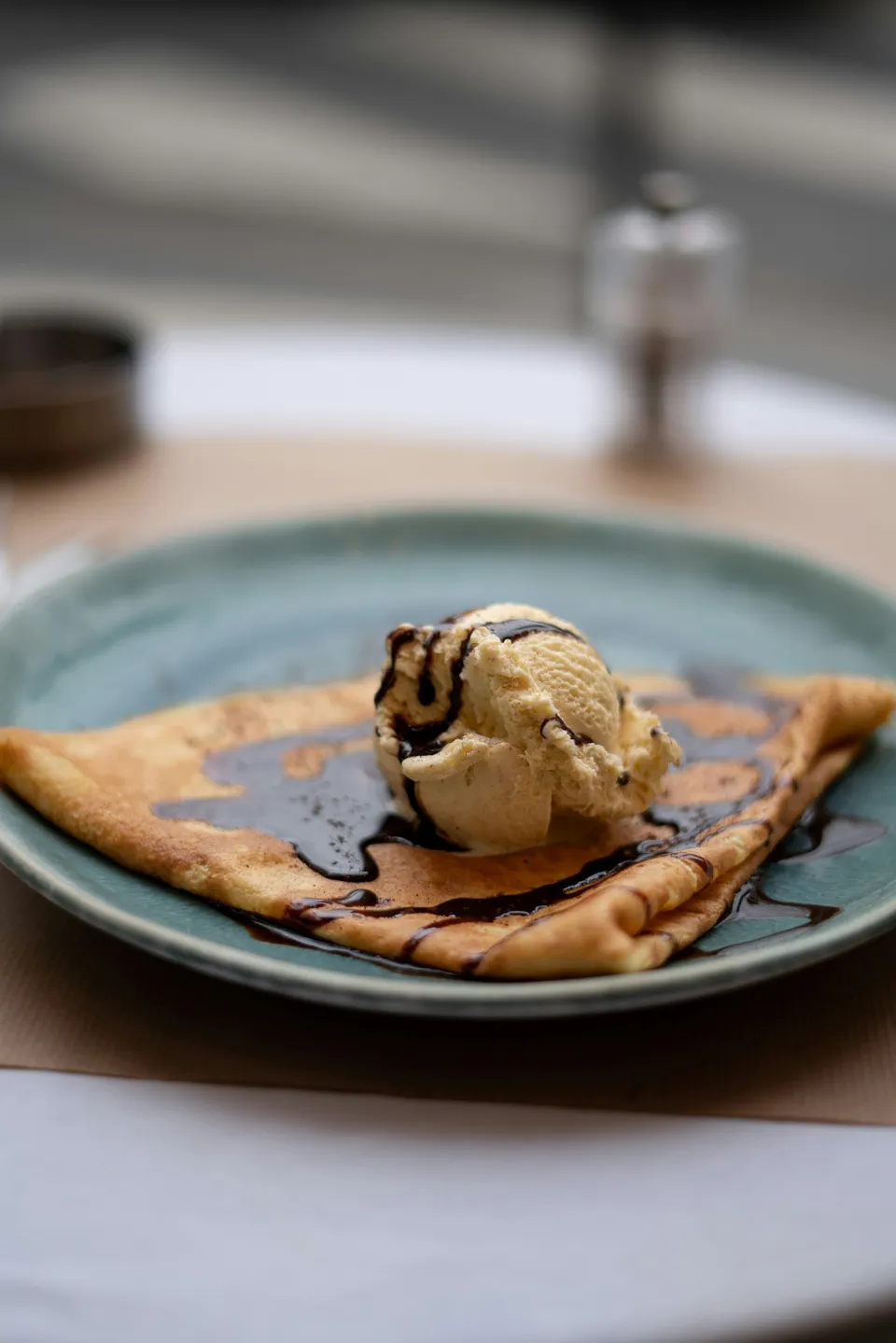
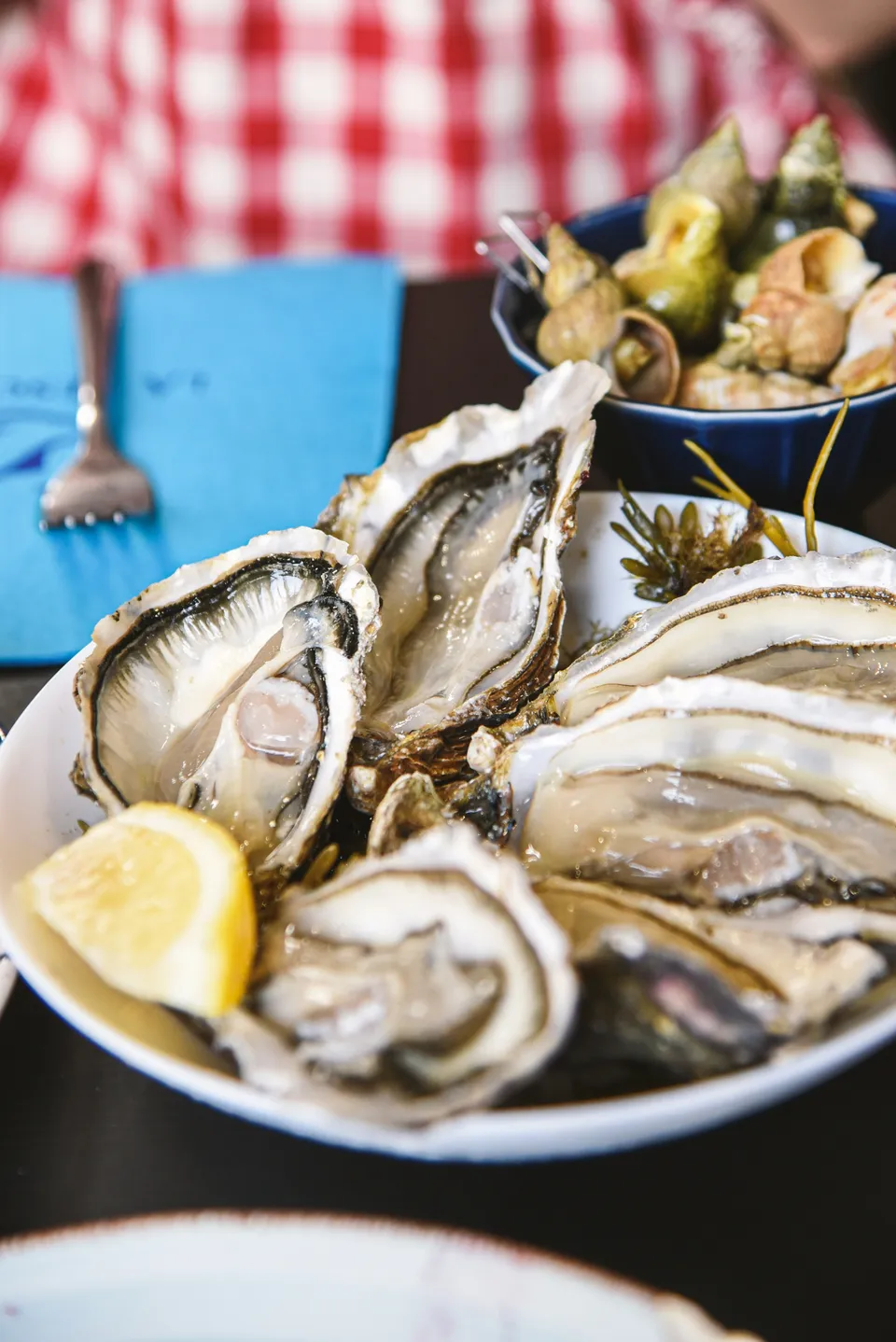
In Brittany, the difference that matters is between the crêpe, of white wheat flour, milk and eggs, usually sweet, and the galette, of buckwheat flour and water, usually savory, france.fr explains; the “complet” (egg, ham and cheese) is “the queen of the galettes”, and both come with Breton cider. The sweet crêpe with butter and sugar is made with salted butter. Brittany is also the home of the kouign-amann (see the pastries below) and of the oysters of Cancale, where the oyster beds cover 366 hectares, visible at low tide, and you eat the oysters on the slipway by the oyster market, the Brittany tourism board says.
Alsace and Lorraine
Alsace cooks in the winstub, the wine tavern that the Strasbourg tourist office calls “the first ambassadors” of Alsatian cuisine. The dishes:
- Choucroute: strictly, the word means the fermented cabbage itself, from the Alsatian “Sürkrüt”, sour cabbage, and “Choucroute d’Alsace” has been an IGP since 2018, INAO says. In Alsace it is eaten “garnie”, with Strasbourg and Montbéliard sausages, bacon, knuckle of pork and potatoes, france.fr explains.
- Flammekueche (tarte flambée): a tart cooked in a wood-fired oven, france.fr says, to share and eat with your fingers in a winstub, the Alsace tourism board says; in Strasbourg it is served all-you-can-eat and traditionally shared as an evening meal.
- Baeckeoffe: three kinds of marinated meat and potatoes, slowly baked, in white wine, the Strasbourg and Colmar tourist offices say.
- Kougelhopf: the tall brioche of Alsace, with raisins soaked in kirsch, and, at Christmas, bredele, the small biscuits baked a few weeks before the holiday. Munster cheese is served mild or strong.
Alsace also claims foie gras: the Colmar tourist office says it was invented in Strasbourg in 1780, while INAO calls the South-West its cradle since the 16th century. Our guide to Strasbourg covers its winstubs, and our guides to Strasbourg and Colmar their Christmas markets.
In Lorraine, the quiche lorraine is eggs beaten as for an omelet, smoked pork belly and a little crème fraîche in shortcrust pastry, served hot with a green salad, in france.fr’s description, with no cheese. Commercy is the town of the madeleine, the little humped cake, which france.fr says takes its name from a young servant, Madeleine, who saved a reception given by Stanislas, Duke of Lorraine; and Lorraine grows most of the world’s mirabelles, small yellow plums: “Mirabelles de Lorraine” has been an IGP since 1994, and the region’s 250,000 trees give 90 percent of world production, INAO says. The bergamote de Nancy, a square sweet of cooked sugar and bergamot essence, was the first French confectionery to receive an IGP, in 1996.
Burgundy and Lyon
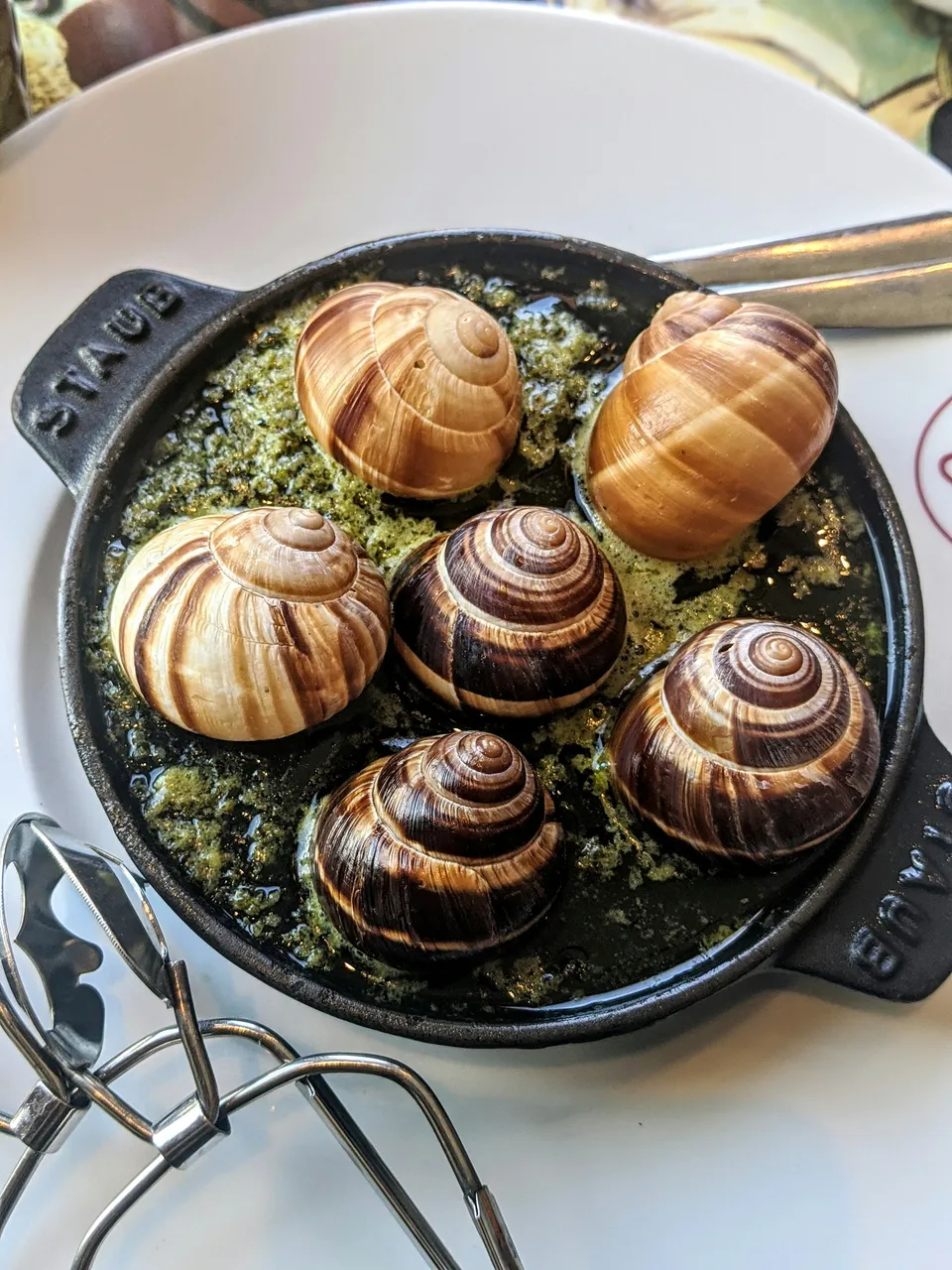
Burgundy cooks with its wine. The dishes, as france.fr and the Burgundy tourism board describe them:
- Bœuf bourguignon: beef slowly cooked in a casserole with a sauce of Burgundy red wine, onions, garlic, mushrooms, carrots, lardons and a bouquet garni, served with mashed potatoes or a gratin dauphinois. The tourism board calls it surely one of the best-known regional dishes in the world.
- Coq au vin, one of the dishes cooked “en meurette”, with lardons and red wine.
- Œufs en meurette: poached eggs in a red or white wine sauce with lardons, onions, shallots and mushrooms, on a slice of warm bread, rubbed with garlic if you like.
- Escargots de Bourgogne: Burgundy snails baked in their shells with butter, garlic and parsley, eaten hot with white wine.
- Jambon persillé: ham set with parsley and white Burgundy wine, also called Easter ham; and gougères, small cheese puffs of choux pastry from around Auxerre, served with the aperitif.
The mustard needs a footnote: “moutarde de Dijon” names a method, not a place, and is not a protected name, the tourism board says; the protected one is “Moutarde de Bourgogne”, an IGP since 2009, made with seeds grown in Burgundy and Burgundy white wine. The board also tells the story of the kir: one third crème de cassis, two thirds aligoté white wine, named after Canon Kir, a former mayor of Dijon who made it popular; the first crème de cassis was made in 1841 by a distiller, Claude Joly, and a Dijon café owner, Auguste-Denis Lagoute.
Lyon’s tourist office calls the city’s own restaurants bouchons, and the “Les Bouchons Lyonnais” label, created by the Lyon Chamber of Commerce with the tourist office, listed 22 addresses on November 27, 2026. What to order in one:
- Quenelle, plain or with pike, baked and served with a crayfish (Nantua) sauce, a tomato sauce or a béchamel: the Lyon dish par excellence, the office says.
- Saucisson brioché, a Lyon sausage baked in brioche.
- Cervelle de canut, fresh cheese with garlic, herbs, salt and pepper, named after the canuts, Lyon’s silk workers.
- Tarte aux pralines, the pink praline tart, born in the 1970s.
In the bouchons the wine comes in a pitcher, france.fr notes. The city’s cooking owes much to the “mères lyonnaises”, women cooks who opened their own restaurants in the early 20th century; the most famous, la Mère Brazier, became the first woman to hold three Michelin stars, for her two restaurants, in 1933, and Paul Bocuse trained in her kitchen, the tourist office says. North of Lyon, the volaille de Bresse is the only poultry with an appellation of origin (with the Bresse turkey), recognized by law in 1957, INAO says: white feathers, blue feet and a red comb. For the city itself, see the Lyon section of our guide to the cities in France.
The Alps and Annecy
The Alps cook with cheese. In Savoie, fondue is made with beaufort, abondance and emmental, white wine, garlic to flavor the pot and a dash of kirsch, france.fr says (an older france.fr page notes that fondue came from Switzerland). Raclette was invented on the other side of the Alps, in Switzerland, in the 19th century, france.fr says; “Raclette de Savoie”, a raw-milk cheese, has been an IGP since 2015, INAO says. Tartiflette, potatoes baked with reblochon, onions, smoked bacon and crème fraîche, is younger than it looks: france.fr says the reblochon trade body created it in the 1980s to promote the cheese, from an older potato gratin, the “péla”. Reblochon itself, an appellation of origin since 1958 and an EU AOP since 1996, takes its name from the “reblâche”, the second milking, INAO says, and the Annecy tourist office counts eight AOP and IGP cheeses around the lake. Our guide to Annecy gives the days of the old-town market.
Provence and Marseille
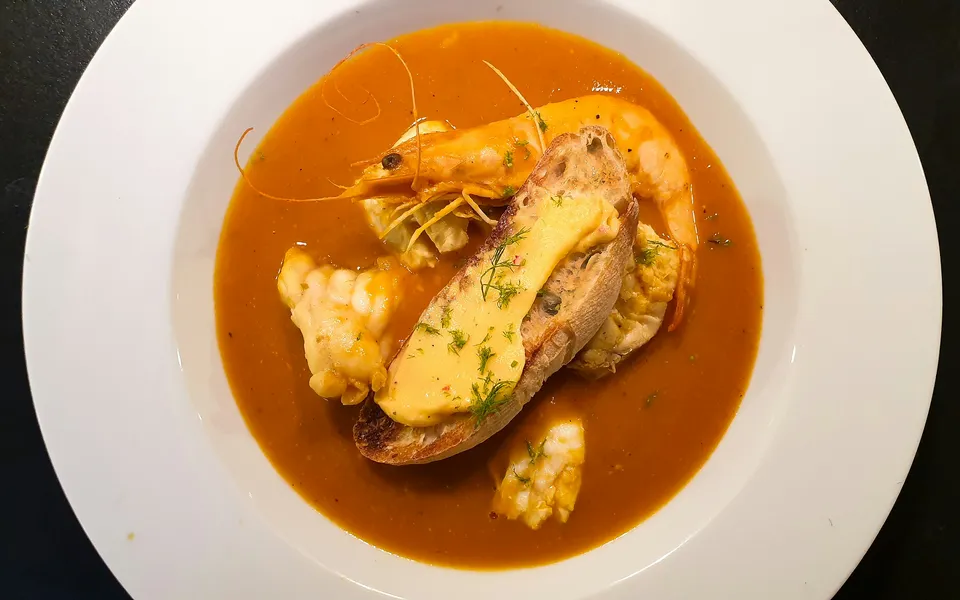
The dishes of Provence and Marseille, as the Marseille tourist office and the regional tourism board describe them:
- Bouillabaisse is Marseille’s dish. It began as a fishermen’s meal, the Marseille tourist office says, made from the pieces they set aside when sorting the catch for sale, and its name comes from the cooking: when the broth boils, lower the heat (“quand ça bout, on abaisse”). The fish and the broth come in two dishes, the fish is cut in front of the guests, and it is served with rouille or aïoli and garlic croutons. A Marseille bouillabaisse must include at least four species from a list that runs from rascasse (scorpion fish), monkfish, conger eel and weever to John Dory and spiny lobster, the office says, and some restaurants have signed a charter that restaurateurs wrote in 1980 to define the dish, because others were selling any fish soup under the name. It is usually served for two people at least, and the office advises booking. Our guide to Marseille covers bouillabaisse, the Vieux-Port fish market and the Marché des Capucins.
- Aïoli is a garlic mayonnaise whose name comes from the Provençal words for garlic and oil, the regional tourism board says; as a meal, it comes with salt cod, whelks, eggs and vegetables.
- Daube provençale is beef marinated in red wine with onion, carrot, garlic, thyme, bay and dried orange peel, then cooked with tomato sauce, with black olives and olive oil added at the end, in the regional board’s recipe.
- Tapenade, of black olives, anchovies, capers, garlic and olive oil, is “an accompaniment, an aperitif, not a dish”, the Marseille tourist office says: you spread it on toast.
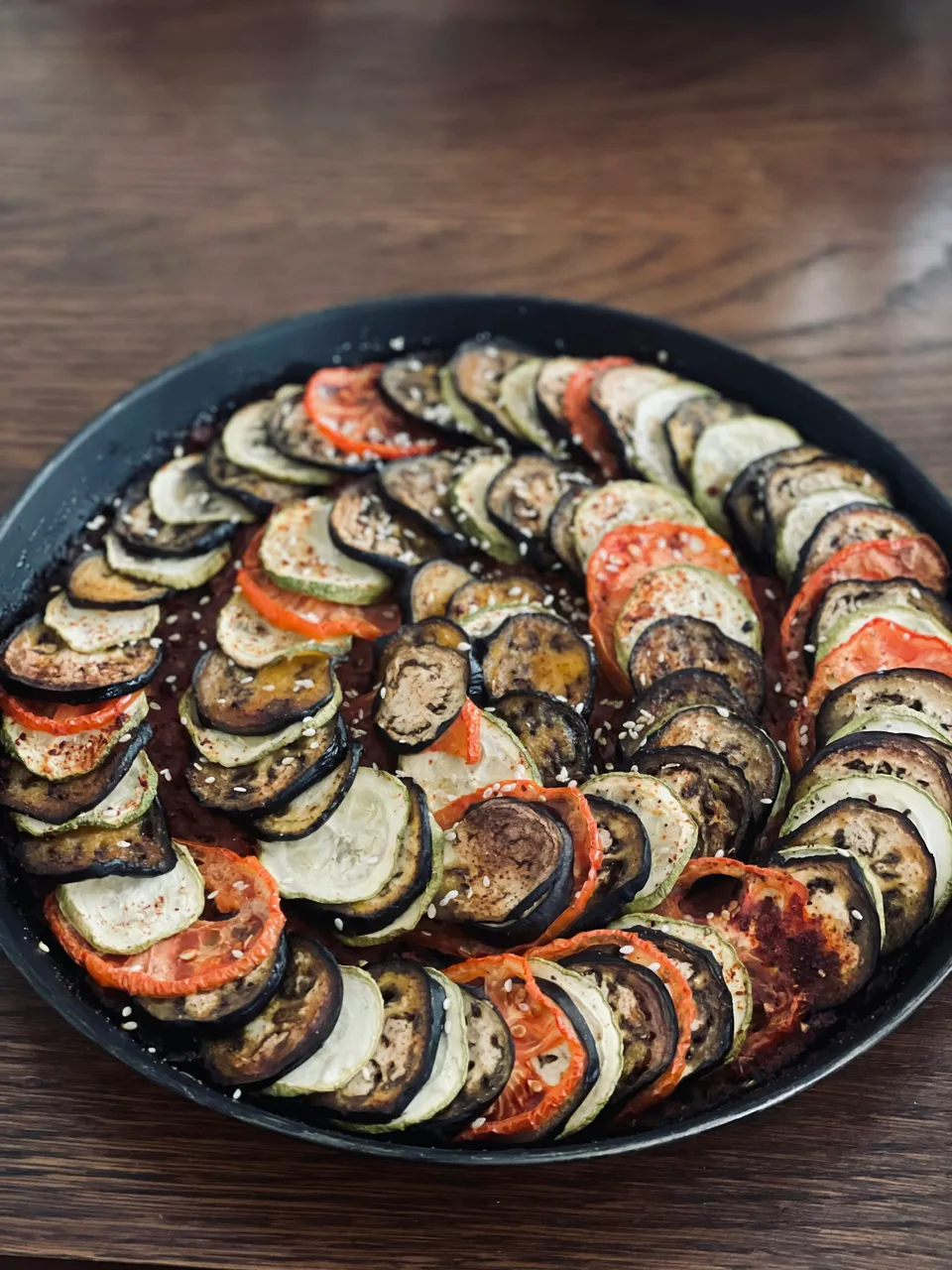
- Ratatouille is the Provençal dish of aubergines, courgettes, peppers, tomatoes and onions cooked gently with garlic and olive oil, in france.fr’s recipe.
- Soupe au pistou is a summer soup of vegetables and beans with a pounded paste of garlic, basil and olive oil; the Marseille tourist office says it came from Genoa with Italian families who settled in Provence, and that “pistou” means “to grind” in Provençal.
- Panisses, slices of chickpea paste fried and eaten from a paper cone, are the specialty of L’Estaque, brought by Italian workers from Piedmont and Liguria, the Marseille office says.
For the sweets of Provence, from the calissons of Aix to the thirteen desserts of Christmas, see the pastries section below. Our guides to Provence and Aix-en-Provence give the market of each town, day by day.
Nice and the Riviera
Nice has a cooking of its own, with its own label. The “Cuisine Nissarde” label, created in 1995 and run by the Nice tourist office since 2013, is granted to restaurants that commit to the traditional recipes, products and methods, the city and the tourist office say; the tourist office listed 27 labeled establishments in and around Nice on November 27, 2026. The dishes to know, from the label’s official recipes:
- Salade niçoise: tomatoes, small purple artichokes, green peppers, radishes, spring onions, broad beans in season, tuna, anchovies, hard-boiled eggs and Nice black olives, laid on mesclun in a dish rubbed with garlic. It is “not a mixed salad”, the tourist office says: the ingredients are placed, not tossed.
- Socca: a large, thin pancake of chickpea flour, water and olive oil, baked on round copper plates in a very hot oven, preferably wood-fired, and eaten hot, peppered. The city says it came from Liguria.
- Pissaladière: bread dough topped with onions cooked slowly without browning, anchovies and black olives. The city says its name comes from pissalat, a salted paste of sardines and anchovies.
- Pan bagnat: a round loaf soaked with olive oil and filled with tomato, raw vegetables, tuna, egg, anchovy and olives. The city says it began as the take-away snack of fishermen, with anchovy, before tuna replaced it.
- Farcis (stuffed vegetables), tourte de blettes (a sweet chard pie with raisins and pine nuts) and daube à la niçoise are among the label’s other official recipes.
Our guide to Nice covers the Cours Saleya market and the old town where these dishes are served.
Toulouse and the South-West
The South-West, from Toulouse to the Basque Country, as its tourist offices and INAO describe it:
- Cassoulet: beans (the lingot bean, preferably from the Lauragais), duck or goose confit, Toulouse sausage and pork, cooked slowly in a cassole, the dish made at Issel, in the recipe of the Castelnaudary tourist office. Castelnaudary, Toulouse and Carcassonne each have their version; the Castelnaudary office says its origin is not clearly defined and that it is thought to go back to a long-simmered stew of the Middle Ages.
- Toulouse sausage, the star of the cassoulet, the Toulouse tourist office says, which points visitors to the Label Rouge version or to producers at the markets.
- Foie gras, confit and magret: the South-West has been the cradle of the foie-gras duck since the 16th century thanks to maize, INAO says, and “Canard à foie gras du Sud-Ouest” has been a protected geographical indication (IGP) since June 2000, covering foie gras, confit and magret. Confit, a way of cooking and preserving the meat, was invented in the South-West, INAO says.
- Black truffle: the Sarlat tourist office calls the black Périgord truffle “the black diamond of the region”; Sarlat’s Truffle Festival takes place on January 16 and 17, 2027.
- Roquefort: the first cheese recognized as an appellation of origin, on July 26, 1925, made from raw milk of Lacaune ewes and ripened in the caves of Roquefort-sur-Soulzon, in the Aveyron (more in the cheese section below).
- The Basque Country: piment d’Espelette, a pepper grown in ten Basque communes, is the only French spice with an AOP, INAO says, an appellation since a decree of May 29, 2000; Bayonne ham has been an IGP since 1998, the Bayonne tourist office says, which lists axoa, piperade and the gâteau basque among the dishes to try.
Corsica
Corsican charcuterie, made in winter from the island’s own pig breed, has a protected designation of origin for its lonzu, coppa and prisuttu, and brocciu, its best-known cheese (an AOP), is eaten fresh or aged “only from November to June”, the Corsica tourism agency says. Its canistrelli, biscuits of flour, sugar and white wine, go with breakfast or a coffee.
The Baguette and the French Bakery
The baguette is “the most popular kind of bread enjoyed and consumed in France throughout the year”, UNESCO says, and it is made with “only four ingredients (flour, water, salt and leaven and/or yeast) from which each baker obtains a unique product”. Bakers bake it “throughout the day in small batches”, and buying it is a daily habit: UNESCO lists “daily visits to bakeries” among the practices it inscribed in 2022. The government announced the inscription on November 30, 2022, and relayed the figures of the national bakers’ confederation: 12 million customers go to a bakery every day, and more than 6 billion baguettes are made each year.
Its origin is debated. The government’s release traces it to the long loaves of the 17th century and says it became widespread in the 20th; the Paris tourist office says that “the experts don’t all agree on its origins” and that it spread in Paris in the 1920s, after a 1919 law kept bakers from working the dough before 4 a.m.
Three French rules tell you what you are buying:
| Words on the shop or the bread | What the law requires |
|---|---|
| “Boulangerie”, “boulanger” | The baker kneads the dough, ferments it, shapes it and bakes the bread on the premises where it is sold, from raw materials of their choice; the dough and the bread may never be frozen (Code de la consommation, article L122-17) |
| “Pain de tradition française” | Never frozen during its making, no additive, a dough of only wheat flour, drinking water and salt, raised with baker’s yeast and/or leaven; at most 2 percent bean flour, 0.5 percent soy flour and 0.3 percent wheat malt flour (decree of September 13, 1993, article 2) |
| “Pain maison” | Kneaded, shaped and baked entirely where it is sold (same decree, article 1) |
Source: Légifrance, Code de la consommation, article L122-17 and decree no. 93-1074 of September 13, 1993, read on November 27, 2026.
So a shop that sells bread but does not bake it on site cannot call itself a boulangerie, and the “baguette de tradition française”, the loaf that competitions judge, is the one made without additives.
Paris crowns the best one every year. Since 1994 the city’s Grand Prix de la baguette de tradition française has elected the best baguette among the city’s bakers, and the winner supplies the Élysée Palace for a year, the city says. The 33rd edition, in 2026, went to Sithamparappillai Jegatheepan of the Fournil Didot, 103 rue Didot, in the 14th arrondissement, out of 143 baguettes entered; the rules ask for 250 to 255 grams and 55 to 60 centimeters, and the jury judges appearance, taste, baking, crumb and air holes. Paris counted 1,180 bakers in 2024, and the city says 93 percent of Parisians live less than five minutes’ walk from a bakery.
French Cheese: What AOP Means
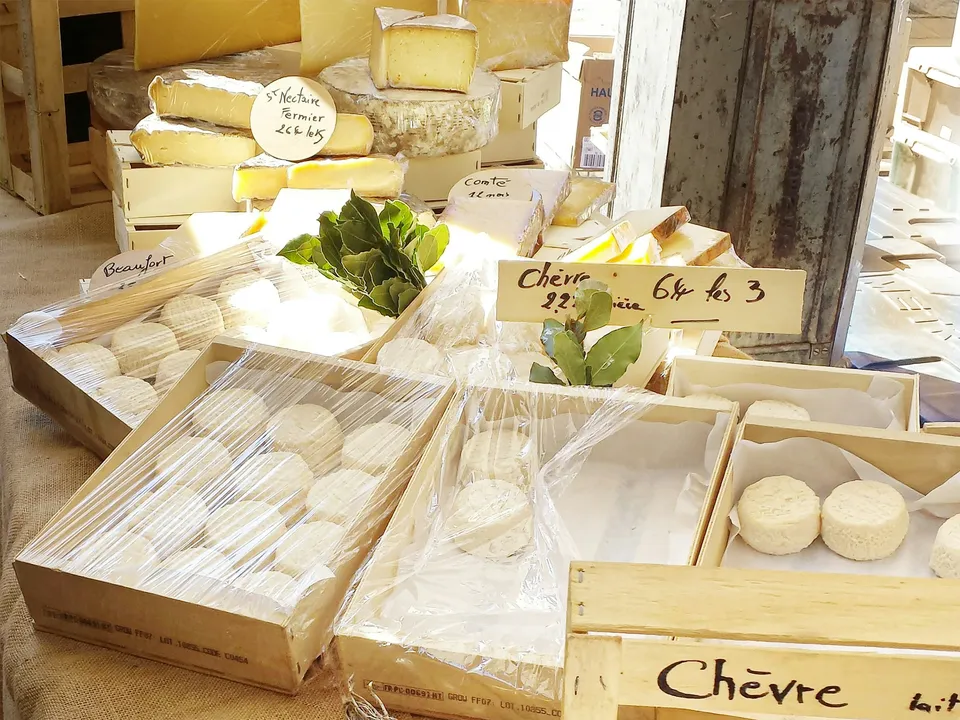
France has 47 cheeses with a protected designation of origin (AOP), and 52 AOP dairy products in all with three butters and two creams, which makes it Europe’s leader for dairy products under official quality signs, just ahead of Italy, the Ministry of Agriculture says. Three quarters of these AOP cheeses are made from raw milk. The newest, Mothais sur feuille, a goat’s cheese, was registered in June 2026. Beyond the AOPs, the ministry counts 1,200 varieties of cheese in France, and 26 kilograms of cheese eaten per person in 2024.
What the labels mean, as INAO, the public body that manages them, defines them:
- AOP (appellation d’origine protégée, protected designation of origin): every stage of production takes place in one geographical area, following recognized know-how, and the name is protected across the European Union. For cheese, the ministry says, that runs from the production of the milk to the ripening of the cheese. Its logo is red and yellow.
- AOC (appellation d’origine contrôlée): the French step that comes before registration as an AOP; only wines may still carry the words AOC.
- IGP (indication géographique protégée, protected geographical indication): at least one stage of production, processing or preparation takes place in the area.
- Label Rouge: a national sign for products of higher quality than similar products usually sold, checked by regular tastings; a product cannot be both Label Rouge and AOP.
Roquefort was the first: it became France’s first cheese appellation on July 26, 1925, INAO says. These are some of the AOP cheeses you will meet, with the year of the appellation where INAO’s page gives it:
| Cheese | Milk | Where it is made | Appellation since |
|---|---|---|---|
| Roquefort | Raw ewe’s milk (Lacaune ewes), blue | Ripened only in Roquefort-sur-Soulzon (Aveyron) | 1925 |
| Comté | Raw cow’s milk, cooked and pressed | The Jura massif | 1952 |
| Saint-Nectaire | Cow’s milk (raw for farmhouse cheese) | The Monts Dore, Auvergne | 1955 |
| Cantal | Cow’s milk; sold young, “entre-deux” or aged | Auvergne | 1956 |
| Reblochon | Raw cow’s milk | Haute-Savoie | 1958 |
| Beaufort | Raw cow’s milk, cooked and pressed | Savoie | 1968 |
| Maroilles | Cow’s milk, square, washed rind | Thiérache (Nord and Aisne) | 1976 |
| Crottin de Chavignol | Raw goat’s milk | The hills of Sancerre (Berry) | 1976 |
| Brie de Meaux | Raw cow’s milk, ripened at least 4 weeks | From the Seine-et-Marne, north-east of Paris, to the Meuse | 1980 |
| Ossau-Iraty | Ewe’s milk, pressed | The Basque Country and Béarn | 1980 |
| Sainte-Maure de Touraine | Raw goat’s milk, with a straw through the middle | Touraine | 1990 |
| Époisses | Cow’s milk, rind washed with marc de Bourgogne | Burgundy (Auxois) | 1991 |
| Banon | Raw goat’s milk, wrapped in chestnut leaves | Haute-Provence | 2003 |
| Camembert de Normandie | Raw cow’s milk, from herds at least half Normandy-breed cows | Normandy | Not given (EU-registered in 1996) |
| Mont d’Or | Raw cow’s milk, in a spruce box; made from August 15 to March 15, sold from September 10 to May 10 | The Haut-Doubs (Jura) | Not given (EU-registered in 1996) |
Sources: INAO product pages, from Roquefort and Comté to Banon (all listed at the end of this guide), and the Ministry of Agriculture, AOP cheeses, read on November 27, 2026; EU registration dates from the European Commission’s eAmbrosia register.
How the French serve it. Cheese comes after the main course and before dessert, in UNESCO’s description of the meal. For a cheese board, the Ministry of Agriculture suggests 5 to 7 cheeses of different families, taken out of the fridge at least an hour and a half before serving, eaten from the mildest to the strongest, and blue cheeses last. A health note: the health authorities advise young children (especially under 5), pregnant women and people with weakened immune systems not to eat raw milk or raw-milk cheese, the ministry says.
Three butters carry an AOP: Beurre d’Isigny, which bakers also use for croissants and puff pastry, INAO says; Beurre Charentes-Poitou; and Beurre de Bresse.
French Pastries and Desserts
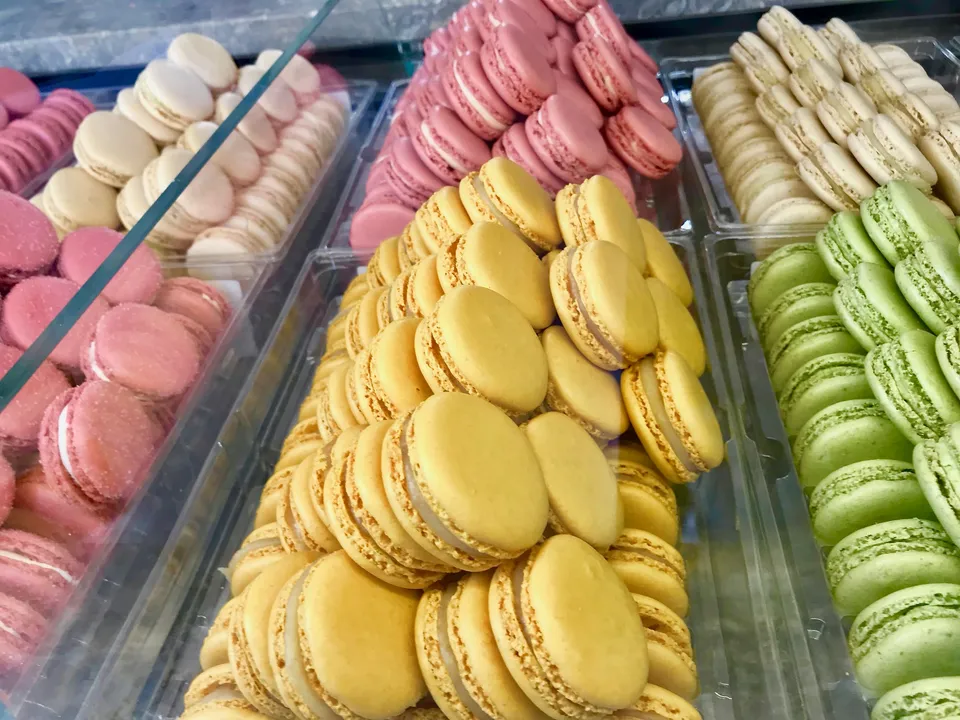
The pâtisserie is the other shop of the French street. The classics, as france.fr and the Paris tourist office describe them:
| Pastry | What it is | Where it comes from, as the official page tells it |
|---|---|---|
| Croissant | A Viennese pastry, first brioche-like, later made with puff pastry | The Austrian bakeries that opened in Paris in the 1830s (Paris tourist office) |
| Macaron | Two crisp shells of ground almonds with a filling | Made famous by the Paris pâtisseries; Nancy’s macaron dates from 1793, and Saint-Émilion’s, by legend, from its Ursuline convent |
| Éclair | An oblong choux pastry filled with cream and topped with icing | Given its long shape by Antonin Carême in the 19th century (france.fr) |
| Mille-feuille | Layers of puff pastry and pastry cream | Invented in 1867 in a pastry shop of the 7th arrondissement, the Paris tourist office says; france.fr dates it to the 17th century and its success to 1867 |
| Paris-Brest | A wheel of choux pastry with praline cream | A tribute to the Paris-Brest cycle race (france.fr) |
| Religieuse | Two choux pastries, one on the other, with chocolate or coffee cream | The Frascati café in Paris, in 1855 for france.fr and 1856 for the Paris tourist office |
| Saint-Honoré | Puff and choux pastry with creams | Named after the patron saint of bakers and pastry cooks |
| Opéra | Almond sponge, coffee butter cream, ganache and a chocolate glaze | Paris, 1955, named after the Palais Garnier (Paris tourist office) |
| Tarte Tatin | Caramelized apples baked with the pastry on top | Lamotte-Beuvron, in Sologne: the Tatin sisters, after a mistake, as the story goes; france.fr calls its origins a little blurry |
| Canelé | A small cake with a caramelized crust and a soft center, flavored with rum and vanilla | Bordeaux (Bordeaux tourist office) |
| Kouign-amann | Breton for “butter cake”: bread dough with as much sugar as butter | Douarnenez, around 1860 (Brittany tourism board) |
| Gâteau basque | A crisp pastry base filled with pastry cream or black cherry jam | The Basque Country, mid-19th century (france.fr) |
| Calisson | Almond paste and candied melon on a wafer, under royal icing | Aix-en-Provence (Aix tourist office) |
| Nougat de Montélimar | Honey (at least 25 percent of the sweetening), egg whites and roasted almonds (at least 30 percent) | Montélimar and 13 nearby communes; an IGP since November 26, 2024 (INAO) |
Sources: france.fr, French pastry, tarte Tatin and gâteau basque; Destination Nancy, macaron; Saint-Émilion tourist office; Paris je t’aime, Paris pastries and Paris in 10 specialities; Tourisme Bretagne, kouign-amann; Bordeaux tourist office; Aix-en-Provence tourist office; INAO, Nougat de Montélimar, read on November 27, 2026.
The calisson is not yet a protected name: its makers’ union has applied to INAO for an IGP, and the Aix tourist office describes the process as under way. In Aix, calissons are blessed every year on the first Sunday of September, a custom the town traces to a vow made in 1630 against the plague.
Desserts follow the calendar:
- January 6, Epiphany: the galette des rois, made with frangipane in puff pastry or as a brioche, with a bean, the fève, baked inside; whoever finds it in their slice is crowned king or queen, france.fr explains.
- February 2, Candlemas (la Chandeleur): crêpes, and in Marseille the navettes, boat-shaped biscuits flavored with orange blossom; on Candlemas a procession from the Abbey of Saint-Victor ends at the Four des Navettes, whose oven the archbishop blesses, the Marseille tourist office says.
- Christmas in Provence: the thirteen desserts, eaten after the Christmas Eve supper; the Marseille tourist office lists the pompe à l’huile, white and black nougat, dates, the four “mendiants” (dried figs, raisins, almonds, hazelnuts), winter melon and white grapes.
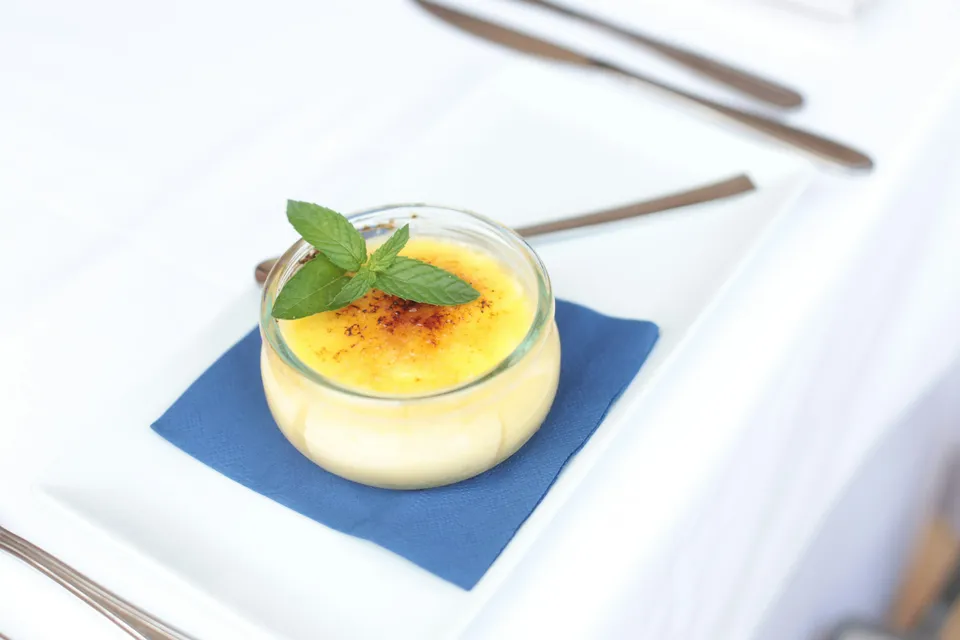
Crème brûlée, for its part, is first mentioned in France in 1691, in François Massialot’s cookbook, france.fr says.
French Breakfast and the Café
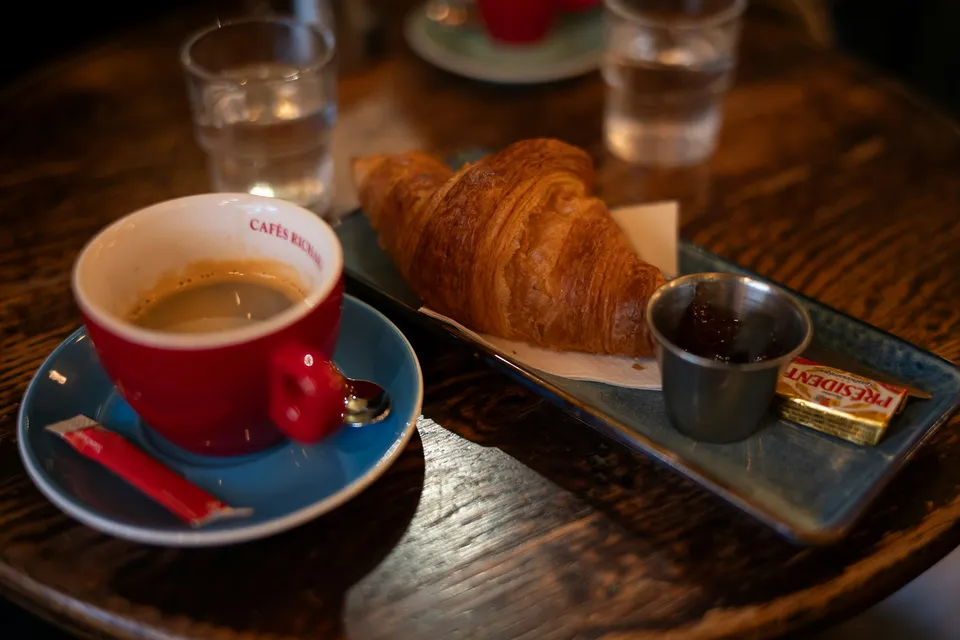
Breakfast “is an institution in France”, france.fr says, and it is built around bread: the baguette, fresh or lightly toasted; tartines with butter, jam or honey; viennoiseries (croissants, pains au chocolat, brioches, pains aux raisins); fruit juice; and coffee, tea or hot chocolate. Cafés usually serve it from 7:30 a.m. and hotels from 6 a.m., until about 11 a.m. In Bordeaux, Occitanie and much of the South-West, a pain au chocolat is a “chocolatine”. Each region has its own breakfast cake: the kougelhopf in Alsace, the kouign-amann in Brittany, the teurgoule (rice, milk and cinnamon baked under a golden crust) in Normandy. INSEE puts the breakfast peak at around 8 a.m. on weekdays.
At the café, “un café” means an espresso, a “café crème” is an espresso with milk and a “café allongé” an espresso lengthened with hot water, france.fr explains. A “demi” of beer is 25 centiliters, not half a liter, the DGCCRF reminds café owners. A café must post outside the prices of its most common drinks, service included, both at the counter and in the room, and it may not refuse to serve you a single coffee on the terrace.
How Meals Run in France
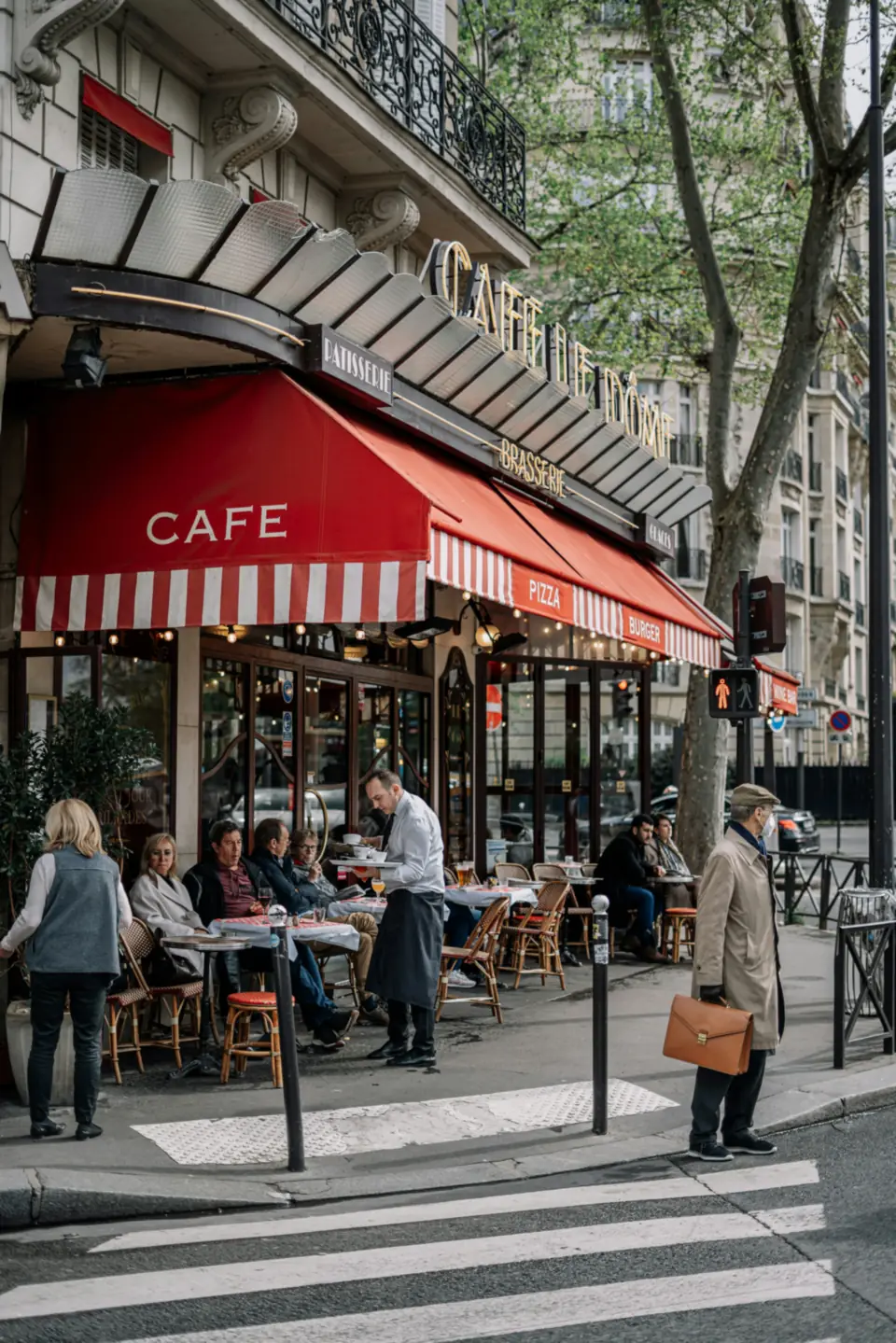
Lunch is a real meal, france.fr notes, usually a starter, a main course and/or a dessert, often followed by an espresso, and it keeps to its hours: “if you want to be sure to have a hot and cooked meal, it’s better to respect the service hours: between 12pm and 1:30 pm for lunch and between 8pm and 10:30 pm for dinner”, the DGCCRF advises visitors in Paris. Bars and cafés there open around 6:30 a.m. and close around 10 p.m. By law, a restaurant must have its menu posted outside from 11:30 a.m. at the latest for lunch and from 6 p.m. for dinner.
The menu, in the French sense, is a set meal of two or three courses at one price, and most restaurants also offer a dish of the day, the plat du jour, france.fr says; cafés must post its price outside.
The apéritif is the drink before the meal, in UNESCO’s words, and in Provence it comes with something to spread or dip, such as tapenade or anchoïade. In Marseille it is pastis, an aniseed spirit served with water, one measure to five of water, the tourist office says. In Burgundy it is the kir, aligoté white wine with crème de cassis.
Dinner starts around 8 p.m. and can last until 10 p.m., france.fr notes. In a restaurant, france.fr says, the meal runs apéritif, starter, main course, cheese and dessert, the order UNESCO describes for the gastronomic meal.
How to Read a French Menu and Order
French law decides much of what you see before you sit down. Every restaurant must post its menus, its day’s menu and the prices of at least five wines outside, for the whole service, and keep identical menus inside; every dish shows its price and whether a drink is included (“boisson comprise”) or not (“boisson non comprise”), under the order of March 27, 1987. A QR code alone is not enough for these displays, the DGCCRF says.
| On the menu | What it means |
|---|---|
| Menu | A set meal of two or three courses at one price |
| La carte | The full list of dishes, priced one by one |
| Plat du jour | The dish of the day |
| Boisson comprise / non comprise | Drink included / not included |
| Prix service compris | Prices include taxes and service; the rate charged for service follows in brackets |
| Fait maison | Cooked on site from raw products; a restaurant that makes no “fait maison” dish may not use the word “maison” at all |
| Maître restaurateur | The only title the State grants to restaurateurs (since 2007), after an independent audit, for cooking that is entirely homemade |
| Carafe d’eau | A jug of tap water: free, and the restaurant must tell you that you can ask for it |
| Origin of the meat | The country of origin of beef, pork, mutton and poultry must be shown on the menu or a notice |
| L’addition | The bill |
Sources: Légifrance, order of March 27, 1987; DGCCRF, restaurants and consumer questions in English; Ministry of the Economy, “fait maison” and Maître restaurateur; service-public.fr, read on November 27, 2026.
Two cautions on “fait maison”. No one certifies it before it appears: the restaurant decides, and the DGCCRF checks afterward. And it does not mean craft cooking: a chain can cook “fait maison” in quantity, the ministry notes.
A few rights worth knowing, as the DGCCRF lists them:
- Water and bread. You can turn down bottled water and wine and ask for a free carafe of tap water. In restaurants the price of the meal includes the cover, “bread, plain water (served in a jug), spices, seasonings, condiments, tableware”, and the Paris tourist office lists tap water, bread and cutlery among what is always free.
- Children. A restaurant may not turn you away because you have children with you. A children’s menu states its age limit.
- A dish that is not right. You can ask for a dish to be replaced if it is not fresh or not hot enough, or a wine if it is corked; a dish you simply do not like is the restaurant’s call.
- Leftovers. Since July 1, 2021, restaurants must give you, on request, a reusable or recyclable container to take home what you did not finish, except at all-you-can-eat buffets; they may charge for it if the price is on the menu, and you can bring your own.
- The bill. A restaurant must give you a written bill; a café must do so from 25 euros, or below that if you ask.
- Hygiene. The results of official hygiene inspections are public on the government’s Alim’confiance site, on a four-level scale.
Service Compris and Tipping in France
In France the service charge is in the price. Under the order of March 27, 1987, where a service charge is collected, the displayed price includes taxes and service, and the menu must say “Prix service compris” followed by the rate. A tip, the DGCCRF says, is an optional sum given by the customer to an employee, and no profession can demand it; in its page for visitors it calls tipping “a traditional practice in restaurants and cafés” that “continues to be optional”. The Paris tourist office says the same: “there is no obligation to leave a tip. Only do this if you are satisfied with the service and welcome.”
If you do leave something, in cash or by card, the State has made it go further for the staff: tips given voluntarily are exempt from social contributions from January 1, 2022 to December 31, 2028 for employees earning less than 1.6 times the minimum wage, the Urssaf says, and from income tax until the end of 2028, the tax administration says. France.fr, in its etiquette page, suggests leaving a few coins or rounding up. Our guide to tipping in France covers the other cases, from taxis to hairdressers.
French Food Markets
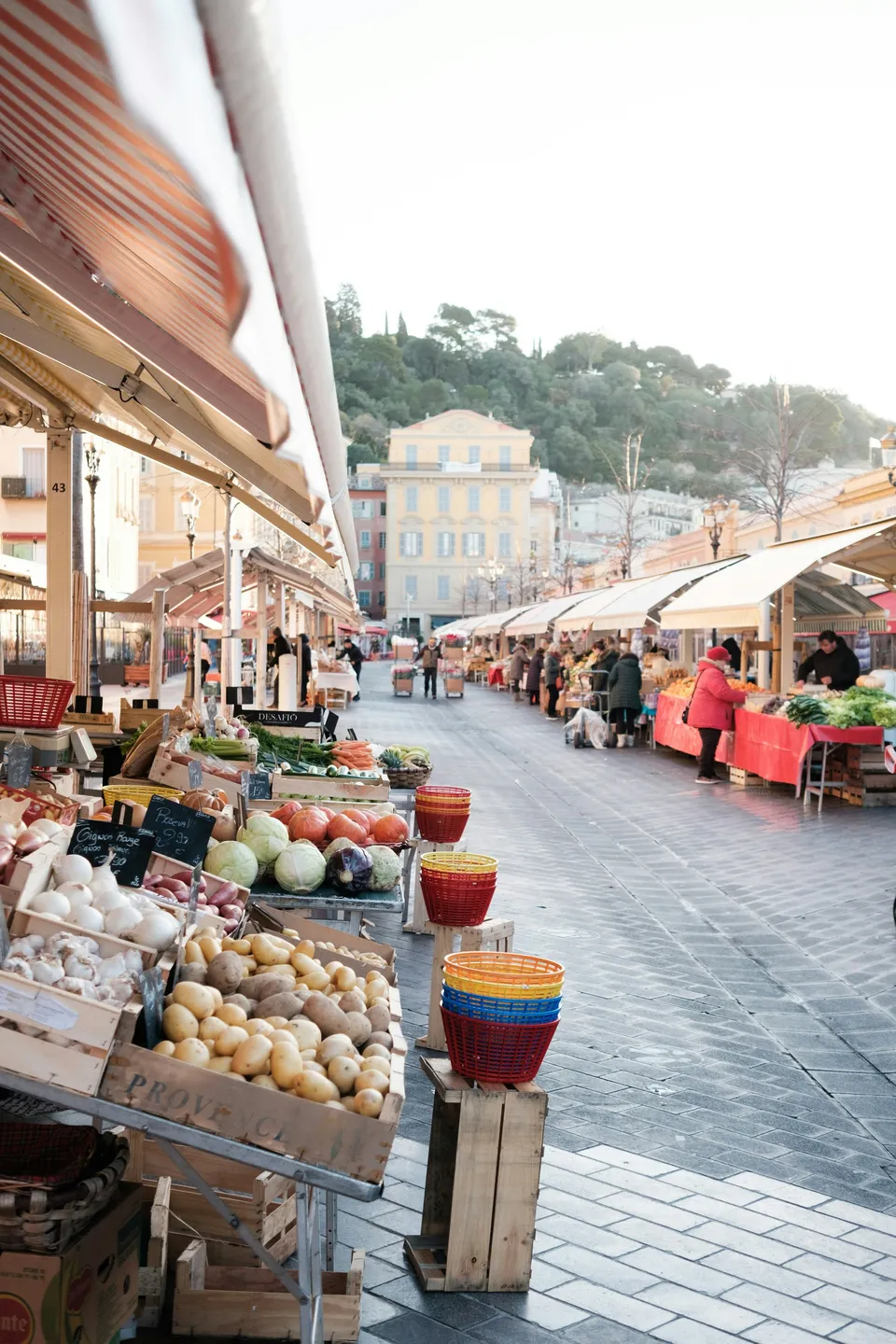
Markets are where the regional food is sold by those who make it. Most are morning markets.
| Market | Where | When, as published |
|---|---|---|
| Paris food markets | 83 across the city, 74 open-air and 9 covered | Morning markets 7 a.m. to 1:30 p.m. on weekdays, to 2:30 p.m. at weekends; afternoon markets 10 a.m. to 8 p.m.; food markets closed on Mondays |
| Marché des Enfants Rouges, Paris | 39 rue de Bretagne (3rd) | Founded in 1615 and listed as a historic monument, the city says; its page now says the traders receive customers in front of the market |
| Cours Saleya, Nice | Vieux Nice | Fruit, vegetable and fish market, Tuesday to Sunday, 6 a.m. to 1:30 p.m. |
| Vieux-Port fish market, Marseille | Quai de la Fraternité | Every morning |
| Halles de Lyon Paul Bocuse | 102 cours Lafayette | A covered market of 56 traders, at this address since 1971 |
| Marché des Capucins, Bordeaux | Saint-Michel district | Tuesday to Friday, 6 a.m. to 1 p.m.; weekends to 2 p.m. |
| Sarlat | The old town | Wednesday morning and Saturday; a truffle market on Saturday mornings from December to mid-March |
| Wazemmes, Lille | Place de la Nouvelle Aventure | Tuesday, Thursday and Sunday mornings; almost 400 stalls on Sundays |
Sources: Ville de Paris, food markets, markets and Marché des Enfants Rouges; Nice tourist office, Cours Saleya market; Marseille tourist office, fish market; Ville de Lyon, Halles Paul Bocuse; Ville de Bordeaux, markets; Sarlat tourist office, markets and truffle market; Ville de Lille, markets and Wazemmes, read on November 27, 2026.
For the markets of Provence day by day, see our guide to Provence; for the covered market of Colmar, opened in 1865 by the canals of Little Venice, our guide to Colmar. If you are staying longer and cooking for yourself, our guide to grocery shopping in France explains the supermarkets, the marché and how to weigh your fruit.
French Wine in Brief
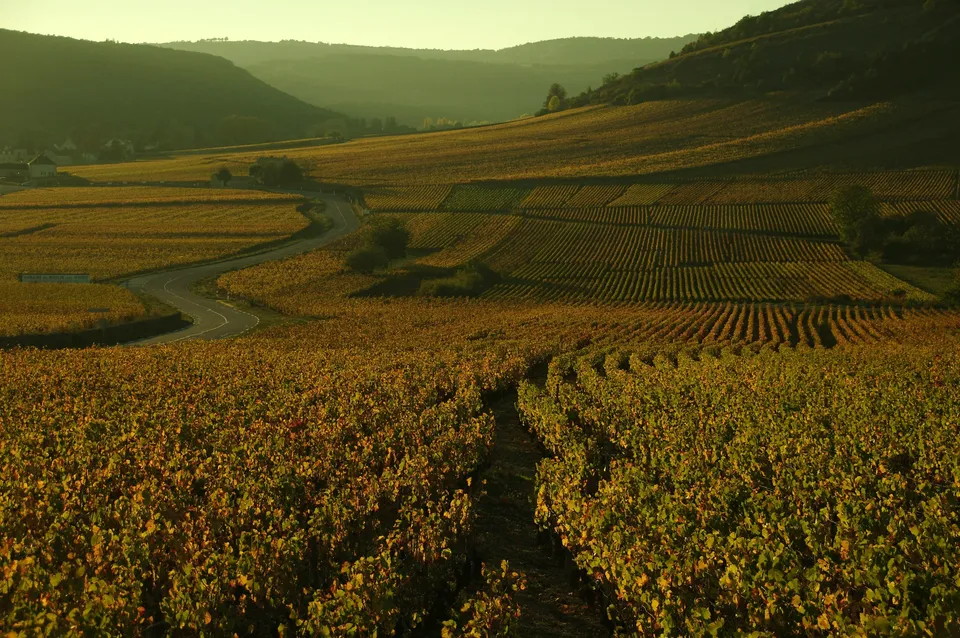
French wines are classified by the region they come from, not by grape, france.fr explains. INAO’s 2023 figures count 366 wine appellations (AOC/AOP) and 77 wine IGPs on its economy page, while the key figures of its 90th-anniversary exhibition give 386 for the same year. The system began with a decree-law of 1935 and the first appellations of May 15, 1936: Arbois, Cassis, Châteauneuf-du-Pape, Cognac, Monbazillac and Tavel, followed the same year by Chablis, Saint-Émilion, Sauternes and Champagne.
| Wine region | What it is known for, per the official pages | Where to start |
|---|---|---|
| Bordeaux | The world’s largest vineyard of fine wines, france.fr says; five wine routes, from the Médoc to Saint-Émilion and Pomerol | The Cité du Vin, Bordeaux |
| Burgundy | Almost 100 AOCs from Chablis to the Mâconnais; 1,247 “climats” on UNESCO’s list | Beaune |
| Champagne | Sparkling wine from hand-picked grapes; an appellation since 1936 | Reims and Épernay |
| Alsace | A 170 km wine route from Marlenheim to Thann, 51 grands crus, seven grape varieties | Colmar |
| The Loire | An 800 km wine route with 51 appellations, from Muscadet to Sancerre | Tours, Saumur |
| The Rhône | Châteauneuf-du-Pape, Tavel, Lirac, Gigondas around Avignon | Avignon |
| Provence | France’s leading producer of AOC rosé | Provence, Cassis |
Sources: INAO, economy, key figures, the AOC system and the first AOCs; INAO, Champagne; france.fr, wine routes; Avignon tourist office, Côtes du Rhône, read on November 27, 2026.
For a visit, look for the “Vignobles & Découvertes” label of Atout France, the national tourism agency, which lists more than 70 wine destinations. Two rules: alcohol may not be sold to anyone under 18, or offered to them free in bars, shops and public places, and the server must ask for proof of age (Code de la santé publique, article L3342-1, and service-public.fr); and the drink-driving limit is 0.5 grams of alcohol per liter of blood, 0.2 grams for a probationary license, service-public.fr says.
Eating Out with Allergies
Restaurants must give you written information on the allergens in their dishes: on the menu, on a board, or in a binder you can ask for, service-public.fr says, and the same rule applies across the European Union. It covers fourteen groups: cereals containing gluten, crustaceans, eggs, fish, peanuts, soy, milk (including lactose), tree nuts, celery, mustard, sesame, sulfites, lupin and mollusks. For the day’s dishes, ask the waiter, the DGCCRF advises. The rule applies to meals eaten on site, not to takeaway food.
Staying Longer in France
A trip of a week leaves time for a few markets and a dozen restaurants; a season lets you cook with what the markets sell and learn the regional dishes in their own season, from the Mont d’Or in winter to the soupe au pistou in summer. For the practical side, our guide to grocery shopping in France covers the supermarkets and their opening hours.
Finding a furnished home for a month or a season, calling owners and agencies, and booking in French is the kind of work our Personal Assistant handles: the calls, the forms and the apartment search, in French.
FAQ
What is the most popular food in France?
Among breads, the baguette: UNESCO calls it “the most popular kind of bread enjoyed and consumed in France throughout the year”, with more than 6 billion made each year according to the national bakers’ confederation. Among dishes, the French named foie gras, pot-au-feu, blanquette de veau, cassoulet and rib of beef with fries as the most emblematic in an Ipsos poll for the first Fête de la gastronomie, in 2011.
What is a classic French menu?
The gastronomic meal that UNESCO inscribed in 2010 opens with an apéritif, then has at least four courses (a starter, fish and/or meat with vegetables, cheese and dessert), and ends with liqueurs. A restaurant’s set menu is shorter: a starter, a main course and a dessert, or two of the three, at one price.
What time do people eat dinner in France?
Around 8 p.m.: INSEE found that the dinner peak moved from a little before 8 p.m. to about 8:15 p.m. In Paris, the DGCCRF advises eating between 8 and 10:30 p.m. if you want a hot meal, and between noon and 1:30 p.m. for lunch.
Do you tip in restaurants in France?
It is optional. Service is included in the displayed price (“prix service compris”) wherever a service charge is taken, and no one can demand a tip, the DGCCRF says. Leave something only if you were pleased with the service, as the Paris tourist office puts it.
What does AOP mean on French cheese?
Appellation d’origine protégée, the protected designation of origin: every stage, from producing the milk to ripening the cheese, takes place in one defined area, following recognized know-how, and the name is protected across the European Union. France has 47 AOP cheeses; Roquefort was the first cheese appellation, in 1925.
Is tap water free in French restaurants?
Yes. Restaurants and bars must offer free drinking water, served cool or at room temperature, and say on the menu or a sign that you can ask for it, under the Code de l’environnement (article L541-15-10). Ask for “une carafe d’eau”.
Conclusion
French food is regional first: bouillabaisse in Marseille, socca in Nice, cassoulet in Castelnaudary, choucroute in a winstub in Alsace, carbonnade in an estaminet in Lille, quenelles in a bouchon in Lyon, a galette and a bowl of cider in Brittany. It is also a set of habits the law protects: the baguette made on the premises, 47 AOP cheeses, the price that includes service, the free carafe of water. Eat at French hours, start the day at the bakery, end the meal with cheese before dessert, and go to the market in the morning. For the places themselves, region by region, see our guide to the best places to visit in France, and for the regions and what each is known for, our guide to the regions of France.
The parts of the move Americans find out about too late.
What Americans get wrong about moving to France, and the number, form or deadline that fixes it. Straight to your inbox.
One email a week. Real numbers, nothing else.
Written by
Aurelio Maurici
Co-Founder, EasyFranceNow
Aurelio Maurici is a French entrepreneur and co-founder of EasyFranceNow. His work focuses on the intersection of French administration, banking constraints affecting U.S. nationals, tax residency and cross-border reporting, healthcare enrollment, and the procedural realities Americans encounter while settling in France.


