
Biarritz, France: The Complete Guide from the Grande Plage to the Basque Coast

By Maxime Roseau Co-founder, Master of Business and Communication, Université Nice Sophia Antipolis
Published

In this article
- Biarritz at a Glance
- Why Biarritz Is Famous: From Whaling Port to Imperial Resort
- The Beaches of Biarritz
- The Rocher de la Vierge
- The Port des Pêcheurs and the Port-Vieux
- The Lighthouse of Biarritz
- The Imperial Chapel, the Russian Church and the Casino
- The Aquarium and the Cité de l’Océan
- Surfing in Biarritz
- Les Halles and Basque Food
- Two Museums for a Rainy Day
- Christmas in Biarritz 2026
- The Weather in Biarritz Month by Month
- When to Go to Biarritz
- Getting to Biarritz
- By train from Paris and Bordeaux
- By air
- Getting Around Biarritz
- Day Trips from Biarritz
- Bayonne
- Saint-Jean-de-Luz
- San Sebastián (Donostia)
- Espelette, the villages and the Rhune train
- How Many Days in Biarritz?
- Staying Longer in Biarritz
- FAQ
- Conclusion
Biarritz is a town of 26,206 residents, according to INSEE, on the Atlantic coast of the Pyrénées-Atlantiques, in the region of Nouvelle-Aquitaine, and is often called the gateway to the Basque Country, its tourist office says: the cliffs of the coast run on to Hendaye and Spain, only 30 kilometers away. Written records of whaling here go back to the 12th century, and the town stayed a fishing village until a young Spanish noblewoman, Eugenia de Montijo, who first stopped here at the age of eight in 1834, married Napoleon III. The emperor built her a summer residence on the beach, the Villa Eugénie, today the Hôtel du Palais, and the imperial couple came back every year until 1868. Europe’s surfing began here a century later, on the Côte des Basques.
This guide covers the six beaches and when they are guarded, the Rocher de la Vierge, the old fishing port, the lighthouse, the Hôtel du Palais and the imperial chapel, the Aquarium and the Cité de l’Océan with their hours and prices, surfing, Les Halles and Basque food, Christmas 2026, the weather month by month from Météo-France, the trains and flights, getting around, the day trips to Bayonne, Saint-Jean-de-Luz, San Sebastián and the Basque villages, and what changes if you stay longer than a vacation. Every price, date and opening time was read on the official page of the city, the tourist office, the site or the operator on November 27, 2026.
Biarritz at a Glance
| Where | Pyrénées-Atlantiques department, Nouvelle-Aquitaine region, on the Atlantic coast of the French Basque Country; Spain is 30 km away and Bayonne 5 km |
| Population | 26,206 (INSEE reference population 2023, in force since January 1, 2026) |
| Beaches | Six, guarded by lifeguards from April 4 to October 31 in 2026 |
| From Paris | 8 trains a day from Paris Montparnasse, from 4 hours 6 minutes and 25 euros; flights from Paris Charles de Gaulle and Orly |
| Airport | Biarritz Pays Basque, 4 km from the center, the tourist office says |
| Climate | 1,920.6 hours of sunshine and 1,473.6 mm of rain a year; 5.0 to 12.2 °C in January, 17.2 to 25.1 °C in August |
| Best for | Beaches and surfing, a long weekend by the sea, Basque food, a base for the Basque Country and San Sebastián |
Sources: INSEE, reference population of Biarritz and geography; Destination Biarritz (the tourist office), the lighthouse, getting around, getting to Biarritz, Biarritz as a base for the Basque Country and the beaches; SNCF Connect, Paris to Biarritz; Aéroport de Biarritz-Pays Basque, flight program 2026-2027; Météo-France, Biarritz-Pays Basque normals, read on November 27, 2026.
Why Biarritz Is Famous: From Whaling Port to Imperial Resort
Biarritz began as a whaling port. The oldest written records of whaling here date from the 12th century, the tourist office says, and the boats brought the whales onto the beach of the Port-Vieux, then called the Port du Hart; the hunt lasted until the 17th century. Victor Hugo came in 1843. Eleven years later, Eugénie, now Empress of the French after her marriage to Napoleon III, settled in for the season, the emperor had a summer residence built for her, the Villa Eugénie, and the couple came every year until 1868, by which time Biarritz counted 10,000 summer visitors a season.
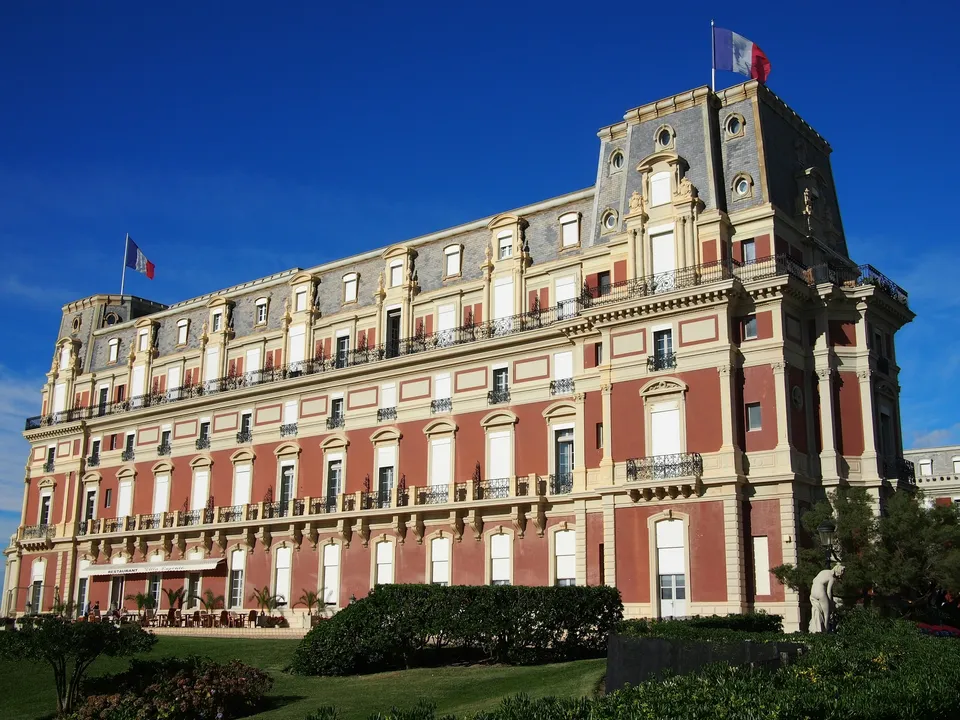
The villa is today’s Hôtel du Palais. The hotel itself says it was founded in 1854, a date the tourist office’s hotel page shares, while its walking-tour page says the imperial residence was built in 1855. The empress sold the estate in 1881 to the Banque Parisienne, which turned it into a hotel-casino, the “Palais-Biarritz”, and then a hotel in 1893. A fire ravaged it on February 1, 1903; the architects Dourgnon and Niermans rebuilt and enlarged it on its original E-shaped plan, the E of Eugénie, and it has received guests from around the world since 1905. It is a five-star hotel with the French Palace distinction, 142 rooms including 56 suites.
The town’s later fame came from the sea. In 1956, during the shooting of The Sun Also Rises on the Basque coast, the screenwriter Peter Viertel tried a surfboard here, and in 1957 he came back with several boards and three French followers: Georges Hennebutte, Jacky Rott and Joël de Rosnay (more in the surfing section below).
Is Biarritz French or Spanish? French: it is a French town in the French Basque Country, 30 km from Spain, and you will see Basque alongside French on the city’s own website. The empress who made it famous was Spanish, and the town’s links with Spain run through its history, from the Hôtel du Palais to the day trip to San Sebastián.
Sources: Destination Biarritz, the history of Biarritz, the fishing port, walking tour “In the footsteps of the Spanish”, the Hôtel du Palais and the history of surfing; Hôtel du Palais, Hyatt, read on November 27, 2026.
The parts of the move Americans find out about too late.
What Americans get wrong about moving to France, and the number, form or deadline that fixes it. Straight to your inbox.
One email a week. Real numbers, nothing else.
The Beaches of Biarritz
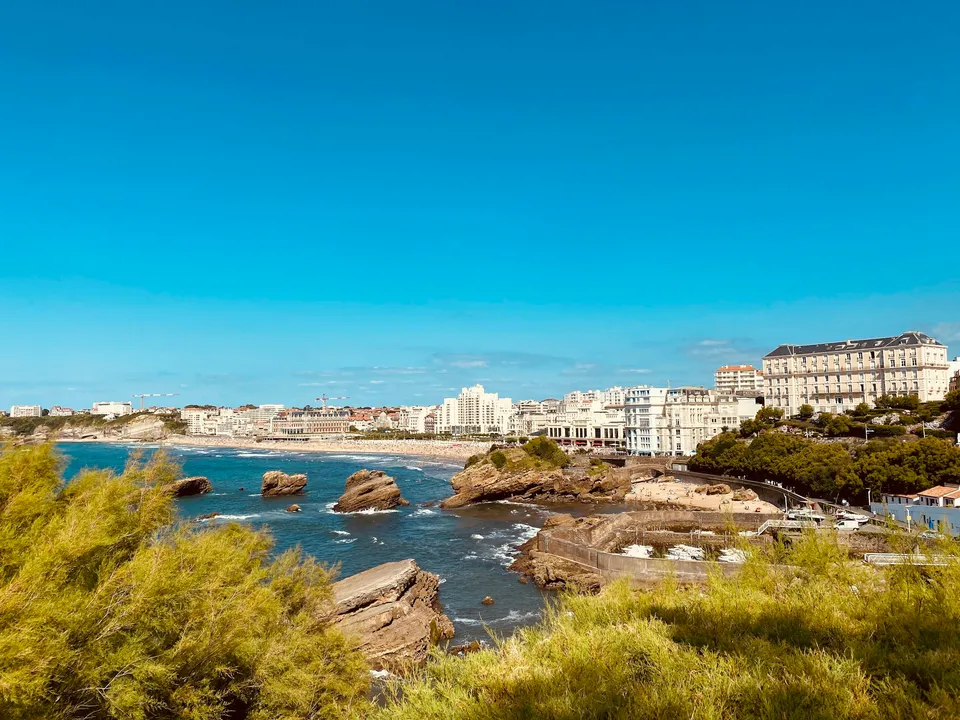
Biarritz has six beaches, the city and the tourist office agree, each with a character of its own. In 2026, their lifeguard calendars ran from April 4 to October 31; outside July and August, several beaches had only a “vigie”, one or two lifeguards with a jet ski who watch over the beach and its neighbors. The tourist office’s general page says “from mid-April to November” and the city’s pages end the last period on November 1, but the beach-by-beach calendars below are the ones the tourist office publishes. The 2027 dates are not yet out.
| Beach | What it is like | Lifeguards in 2026 |
|---|---|---|
| Grande Plage | The central beach, “ideal for swimming” and easy to reach on foot; short, powerful waves for local surfers | April 4 to October 31; 10 a.m. to 8 p.m. in July and August |
| Miramar | Calm swimming facing the Roche Percée, the pierced rock; liked by bodyboarders; strong currents in rough seas | A vigie from April 4, a full post from 10:30 a.m. to 7:30 p.m. in July and August, a vigie to October 31 |
| Port-Vieux | A sheltered cove, a “natural swimming pool” for families and less experienced swimmers; paddleboarding | June 1 to September 30; a full post from 10:30 a.m. to 7:30 p.m. in July and August |
| Côte des Basques | The legendary surf beach, with easy waves for beginners; covered by the sea at high tide | April 4 to October 31; a full post from June 6 to September 20 (10:30 a.m. to 7:30 p.m. in July and August) |
| Marbella | Experienced surfers and bodyboarders, mostly locals; about fifty steps down | April 4 to October 31; a full post from 10:30 a.m. to 7:30 p.m. in July (its page has no line for August) |
| Milady | Spacious, easy to reach, for families; beginners surf at low tide; Handiplage access for disabled bathers | April 4 to October 31; a full post from June 6 to September 30 (10:30 a.m. to 7:30 p.m. in July and August) |
Source: Destination Biarritz, the beaches and each beach’s page (Grande Plage, Miramar, Port-Vieux, Côte des Basques, Marbella, Milady); Ville de Biarritz, the beaches, read on November 27, 2026.
What to know before you swim:
- The flags. Swim between the red-and-yellow flags, which mark the guarded bathing zone; the black-and-white flags on each side mark the surfing zones. A green flag means swimming is allowed, yellow that it is dangerous, red that it is forbidden, and purple that the water quality may be briefly degraded. The city’s Kalilo app also tells you whether a beach is open to swimmers. On the Grande Plage, the city moves the bathing and surfing zones with the tide and the state of the sea.
- Outside the lifeguard season, the city and the tourist office both warn that swimming is dangerous and that water sports are at your own risk.
- The Côte des Basques disappears at high tide when the tidal coefficient is above 45, and swimming is then suspended for lack of access. The city points to the tide tables of the SHOM, the French navy’s hydrographic service, for Bayonne. Beginner surfers there are told to leave the water on a rising tide before the first waves reach the rocks.
- The water averages 19 to 22 °C from June to September, the tourist office says; in winter, the city writes that it can be close to 12 °C.
- Children can get a free identity bracelet at the lifeguard posts. On the Grande Plage, a beach service rents loungers, tents and chairs under parasols from July 1 to August 31, and Milady’s Handiplage, with an access platform and four floating beach chairs (tiralos), ran from June 13 to September 30 in 2026, from 2 to 7 p.m.
- The rocks of the Grande Plage are off limits, and so is the Bernain beach, for the risk of falling rocks, the city says. The Port-Vieux, Milady and the Grande Plage are no-smoking beaches.
Sources: Destination Biarritz, the beaches, the Côte des Basques, the Grande Plage and Milady; Ville de Biarritz, Côte des Basques, Grande Plage, Miramar, tide times, bathing water quality and the Christmas and New Year swims, read on November 27, 2026.
The Rocher de la Vierge
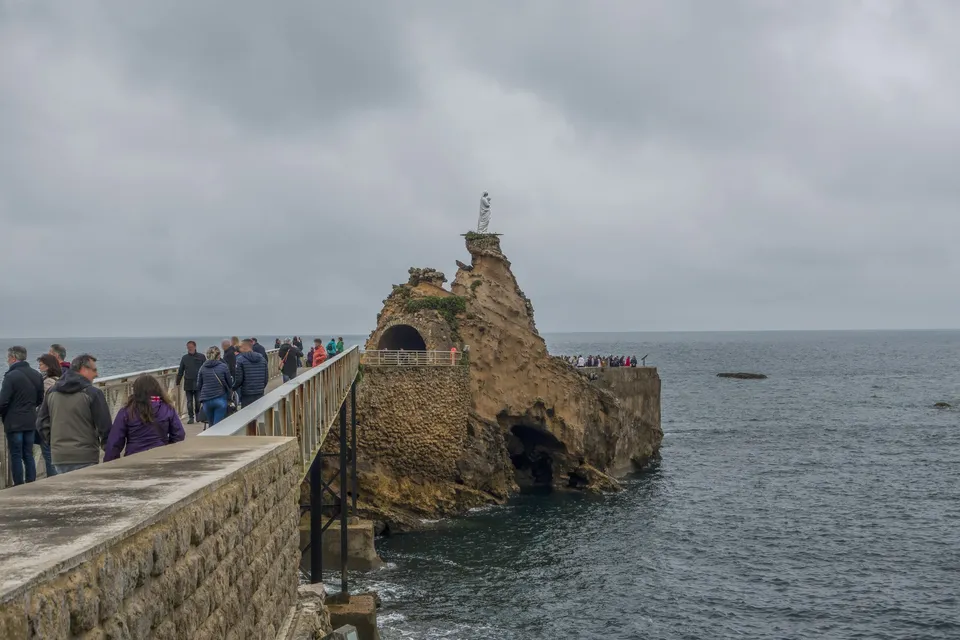
The Rocher de la Vierge, the Virgin’s Rock, is the emblem of Biarritz, a rock in the sea joined to the shore by a footbridge. It owes its path to an unfinished project: Napoleon III wanted a port of refuge at Biarritz, and his engineers dug two tunnels, one under the Atalaye rock and one under the Cucurlon, before the port was abandoned as too costly. Work on the first footbridge began in 1863, but the sea got the better of it, and in 1877 it was replaced by a metal footbridge built, the tourist office’s main page insists, not by Gustave Eiffel, as is sometimes said, but by the Schryvers workshops of Haumont, in the north of France (another of its pages still credits Eiffel, and a third dates an “Eiffel-type” bridge to 1900). The bronze statue of the Virgin, cast by a Bordeaux foundry and shown at the Franco-Spanish exhibition in Bayonne, was set on top in 1865.
The rock is free and open day and night all year, but the footbridge can be closed in storms or dangerous weather. There is no parking in front of it: the tourist office points to the Place Sainte-Eugénie car park. The Aquarium stands on the esplanade above it, and the walk on to the Port-Vieux and the Côte des Basques follows the coast.
Sources: Destination Biarritz, the Rocher de la Vierge (and its English page), its listing and the rocks of Biarritz, read on November 27, 2026.
The Port des Pêcheurs and the Port-Vieux
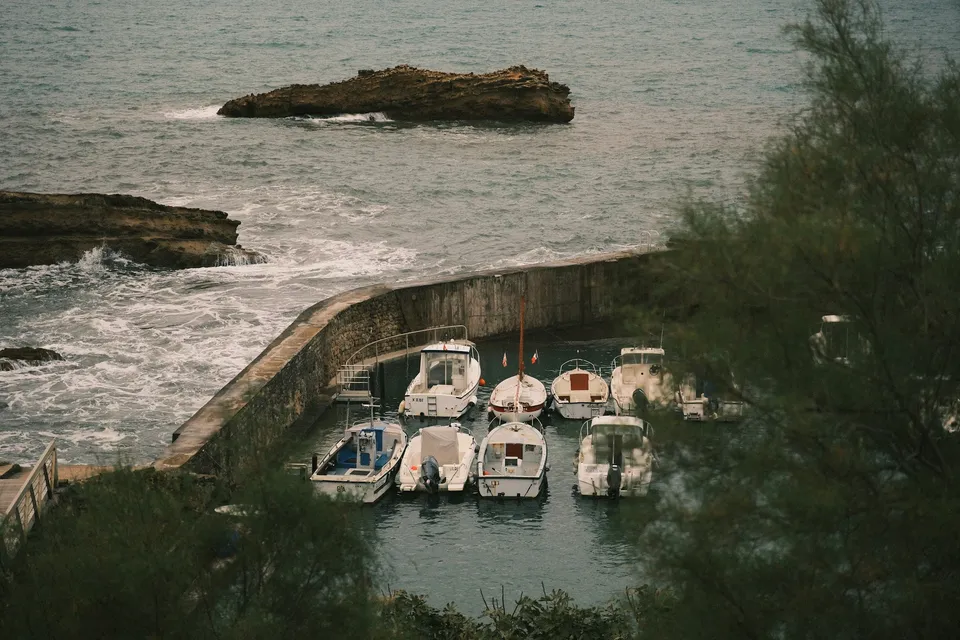
Below the Rocher de la Vierge, the Port des Pêcheurs, the fishermen’s port, is the old Biarritz. A first sea wall was built in 1837, a second in 1858, and larger works followed under Napoleon III; the Gamaritz wall came in 1881 to shelter the entrance channel. In the early 20th century, the town’s sailors were allowed to build the crampottes, the small white huts with colored shutters where they kept their fishing gear and salted their sardines. The town lets them only to residents with a boat moored in the port: the tourist office counts 65 on one page and 66 on another. Three hundred fishermen worked from Biarritz in the early 20th century and 30 in the 1950s. The anchor of the Padosa, a ship that sank off the Miramar on December 14, 1907, lies on the quay, and in summer the port hosts night markets of local designers on Wednesdays and Fridays.
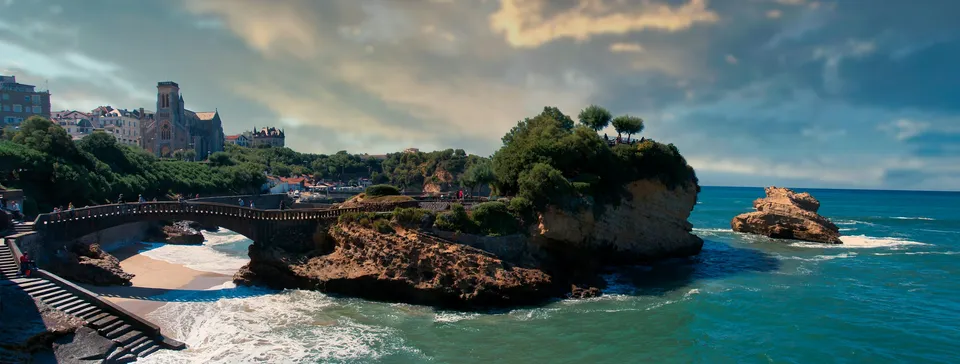
The Port-Vieux, the old port, takes its name from the little fishing harbor where Biarritz’s story as a fishing village began, and you can still see the cobbled slipway that let boats be hauled out of the water. It is now the sheltered beach of the families. On the hill above it, the neo-Gothic church of Sainte-Eugénie, with stained glass by Luc-Olivier Merson, is closed for works, the tourist office says.
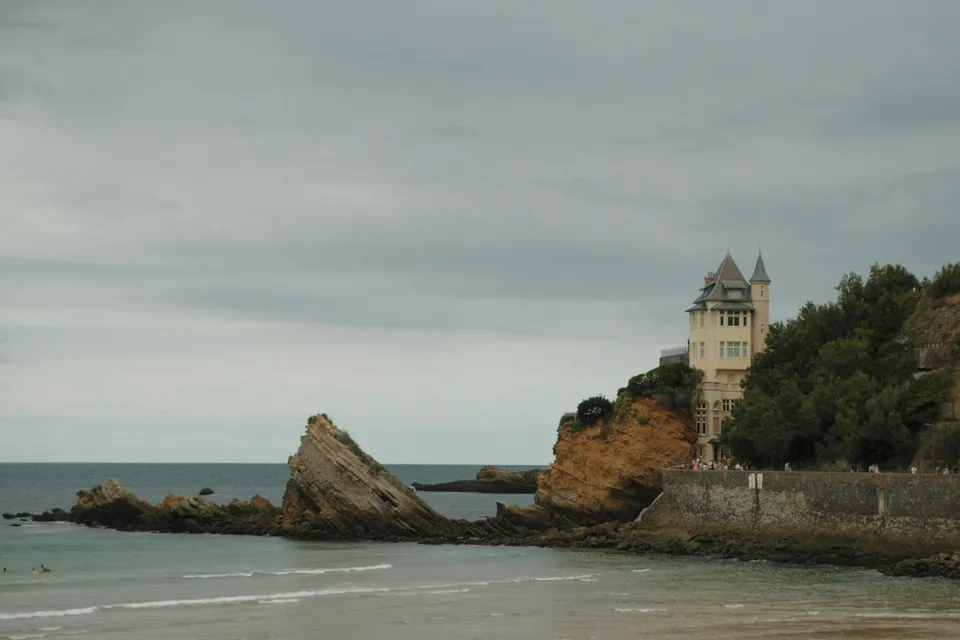
Across the cove, the turreted Villa Belza stands on its own rock. The architect Alphonse Bertrand built it in the early 1880s (1880 or 1882, depending on the tourist office page) for a Parisian businessman, Ange Dufresnay; “belza” means “black” in Basque. In the 1920s, Grégoire Beliankine, the brother-in-law of the composer Igor Stravinsky, turned it into a Russian restaurant and cabaret, renamed the “Château Basque”. Its exterior was restored between 2015 and 2018, and it is now divided into private apartments: like almost all the villas of Biarritz, it is seen from the outside only.
Sources: Destination Biarritz, the fishing port, the lighthouse (for the Padosa), the must-sees, the markets, the Port-Vieux beach, the Sainte-Eugénie church, the Villa Belza and walking tour “In the footsteps of the Spanish”, read on November 27, 2026.
The Lighthouse of Biarritz
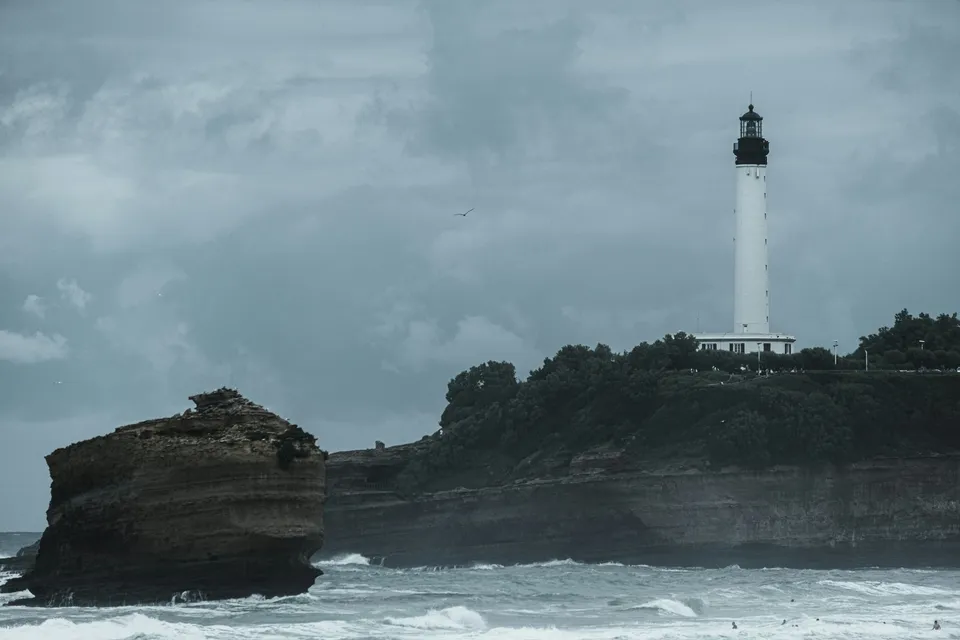
At the northern end of the town, on the Pointe Saint-Martin, the lighthouse has guided ships since February 1, 1834. Its white tower is 47 meters high and its light stands 73 meters above the ocean, under a copper dome decorated with twelve bronze lion heads, and it reaches 27 nautical miles (50 km). It was enlarged in the 1950s to be electrified, automated in 1980, left without a keeper in 1998, and listed as a historic monument in 2009. Climb its 248 steps for the view: south, the rocky Basque coast runs to Hendaye and Spain; north, the long sandy beaches begin.
| When | Opening hours |
|---|---|
| November and December | Saturdays and Sundays, 2 to 5 p.m.; every afternoon of the school vacations, 2 to 5 p.m.; closed December 25 |
| January to April | Saturdays and Sundays, 2 to 5 p.m. (to 6 p.m. once summer time begins); every afternoon of the school vacations; closed January 1 |
| May | Saturdays, Sundays, public holidays and long weekends, 2 to 6 p.m. |
| June | Every day, 2 to 6 p.m. |
| July and August | Every day, 10 a.m. to 7 p.m. |
| September | Every day, 1:30 to 6 p.m. |
| October | Saturdays and Sundays, 2 to 6 p.m. (5 p.m. once winter time begins); every afternoon of the school vacations, 2 to 5 p.m. |
Last entry is 30 minutes before closing, and the lighthouse can close in strong wind, storms or a heat wave. Tickets cost 5 euros for adults (from 16), 3 euros for children from 4 to under 16 (the lighthouse’s own listing says under 12), and nothing under 4. You can buy them at the door or online from the tourist office, where they are valid for 6 months and not refundable unless the lighthouse closes for the weather. One booking page lists more closing days around the holidays than the main calendar, December 24 to 27 and January 1 and 2: check before you go in that week. No more than 10 people at a time are allowed at the top; strollers and animals are not, and the climb cannot be made in a wheelchair.
Sources: Destination Biarritz, the lighthouse, its listing and its booking page, read on November 27, 2026.
The Imperial Chapel, the Russian Church and the Casino
The empress left Biarritz more than a hotel.
- The Imperial Chapel (Chapelle Impériale) was built in 1864 at Eugénie’s request (the tourist office also gives its inauguration as May 1865) by Émile Boeswilwald, a student of Viollet-le-Duc, in a Romano-Byzantine and Hispano-Moorish style, and dedicated to the Black Virgin of Mexico, Our Lady of Guadalupe; it is a listed historic monument. It opens only for the tourist office’s guided visits: about an hour, 6 euros for adults, 3 euros from 12 to 17, 4 euros for students, job seekers and disabled visitors, with online booking advised as places are limited. The next ones are on Saturday, December 5, 2026 (in Spanish) and Wednesdays, December 16, 23 and 30, at 10 a.m., at 15 rue des Cent Gardes; no 2027 date was listed yet.
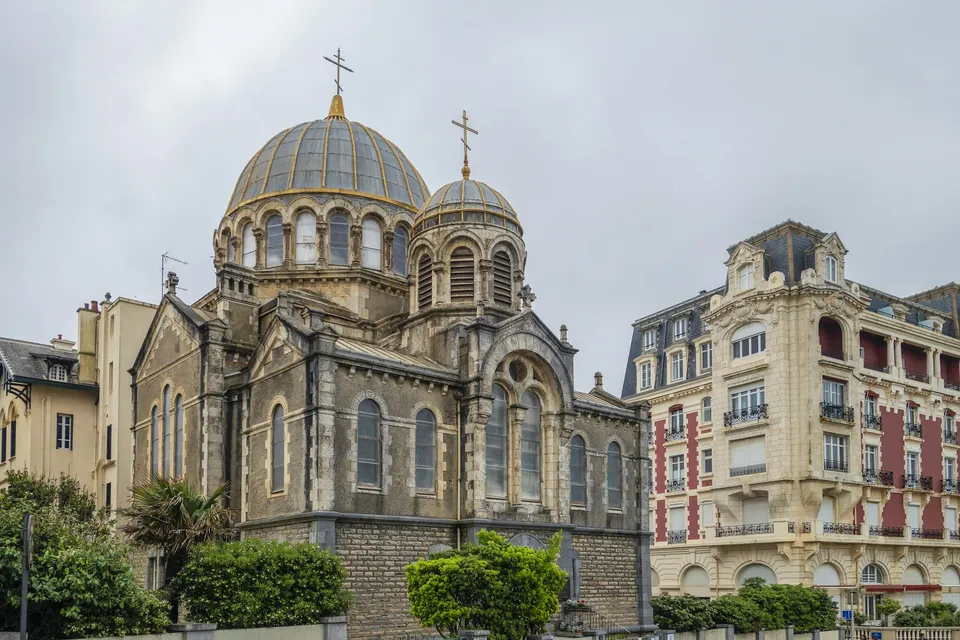
- The Russian Orthodox church was built from 1890 to 1892, at the request of the Russian nobility and aristocracy who came regularly to Biarritz, by a Russian architect, Nikonoff, and a French one, Tisnès, and dedicated to the Protection of the Mother of God and Saint Alexander Nevsky. It is a place of worship, at 8 avenue de l’Impératrice; the tourist office’s listing gives it as open on Saturdays from 3 to 5 p.m. and Sundays from 2:30 to 5 p.m., with groups by appointment only.
- The Casino Municipal on the Grande Plage, built in 1929 on the site of the Napoleonic baths, is a landmark of Art Deco, listed as a historic monument in 1992 and renovated in 1994 by the architect François Lombard. It holds the congress center, a 730-seat theater, the Barrière casino games, a brasserie and the municipal swimming pool.
The Hôtel du Palais, which lists no public tour on its website, has seven restaurants and bars, among them La Rotonde, a gastronomic restaurant with a 180-degree view of the ocean, a brasserie served on the terrace or in the Rotonde, the seasonal Sunset terrace and the Bar Napoléon III. Hyatt sells tables at the brasserie on its restaurant site, and its Sunday Imperial Brunch, served from September to June, starts at 110 euros; the hotel advises booking La Rotonde, especially on weekends and in high season.
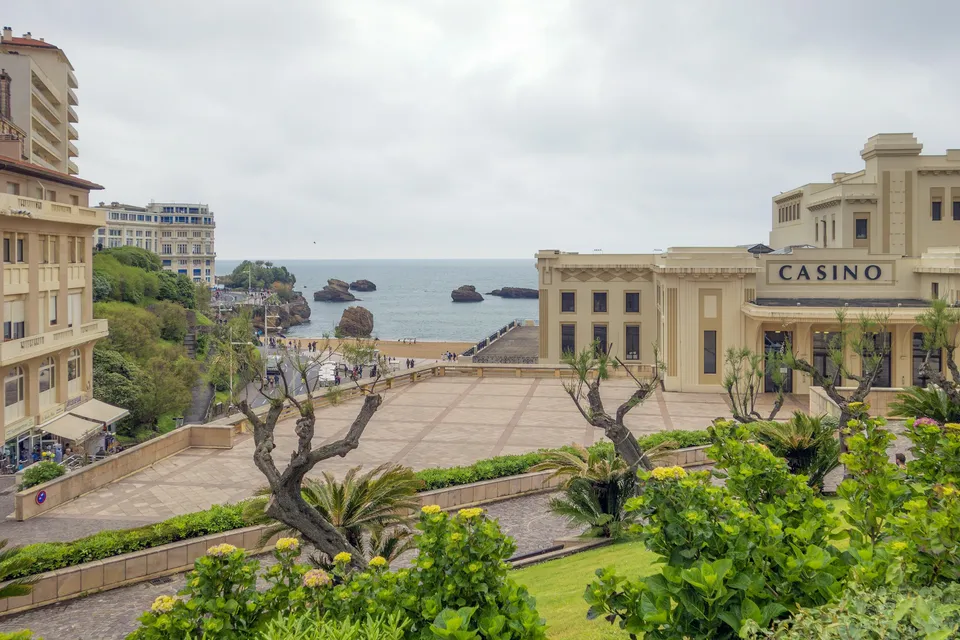
Sources: Destination Biarritz, the Imperial Chapel, its December 2026 guided visit, guided visits, the Orthodox church, the Grande Plage and the casino and the Casino Municipal; Hôtel du Palais, Hyatt, home page, dining and FAQ; Hyatt Restaurants, the brasserie, read on November 27, 2026.
The Aquarium and the Cité de l’Océan
Biarritz has two ocean museums, 3 kilometers apart, with one ticket shop.
The Aquarium de Biarritz, long called the Musée de la Mer, opened on August 10, 1933, in an Art Deco building on the esplanade of the Rocher de la Vierge, designed by the architects Hiriart, Lafaye and Lacoureyre. Its extension of 2011 doubled its surface, from 3,500 to 7,000 square meters, with one of the largest tanks in France, 1,500 cubic meters. Its two grey seals, Charlie and Izar, are fed every day at 10:30 a.m. and 5 p.m. on the outdoor terrace of the third floor. Count 1 hour 30 to 2 hours.
The Cité de l’Océan, above the Milady beach, opened in 2011 in a building by the New York architect Steven Holl and his Brazilian colleague Solange Fabião, shaped like the waves of the Basque coast. It is about the ocean, its science and surfing, entirely indoors, and virtual reality makes up most of its attractions, closed to children under 6. Count 2 to 3 hours, up to 5 in school vacations.
| Aquarium | Cité de l’Océan | Both (combined ticket) | |
|---|---|---|---|
| Adult | 17 euros | 15 euros | 28 euros |
| Child | 12 euros (4 to 12), free under 4 | 11 euros (6 to 12) | 20 euros (6 to 12), 12 euros (4 to 5) |
| Reduced (13 to 17, students, job seekers) | 15 euros | 13 euros | 24 euros |
| Hours, winter 2026-2027 | Every day, 9:30 a.m. to 7 p.m.; closed December 25, 2 to 7 p.m. on January 1 | 2 to 7 p.m. to December 18, from January 30 to February 5 and from March 8 to 31; 10 a.m. to 7 p.m. December 19 to January 3 (except 2 to 7 p.m. on January 1) and February 6 to March 7; closed December 25 and January 4 to 29, 2027 | |
| Hours, April to October 2027 | 9:30 a.m. to 7 p.m. | 10 a.m. to 7 p.m. | |
| Ticket desk closes | 1 hour before | 2 hours before |
Sources: Aquarium de Biarritz, prices, hours, history, the seals’ meal, FAQ and getting there; Cité de l’Océan, prices, hours, history and FAQ, read on November 27, 2026.
Online tickets cost the same as at the desk, and give fast access at the desk during school vacations only; in school vacations and busy periods, tickets are sold for a set time. Outside those timed periods, the combined ticket lets you visit the two sites on different days, within one year of purchase. Neither site has a cloakroom. The Aquarium has no parking of its own (the nearest is the open-air Port-Vieux car park, 240 meters away, 40 paid places), while the Cité de l’Océan has a paid car park; bus N4 stops at Port Vieux for the Aquarium, and buses 12 and 18 stop at Cité de l’Océan.
Surfing in Biarritz
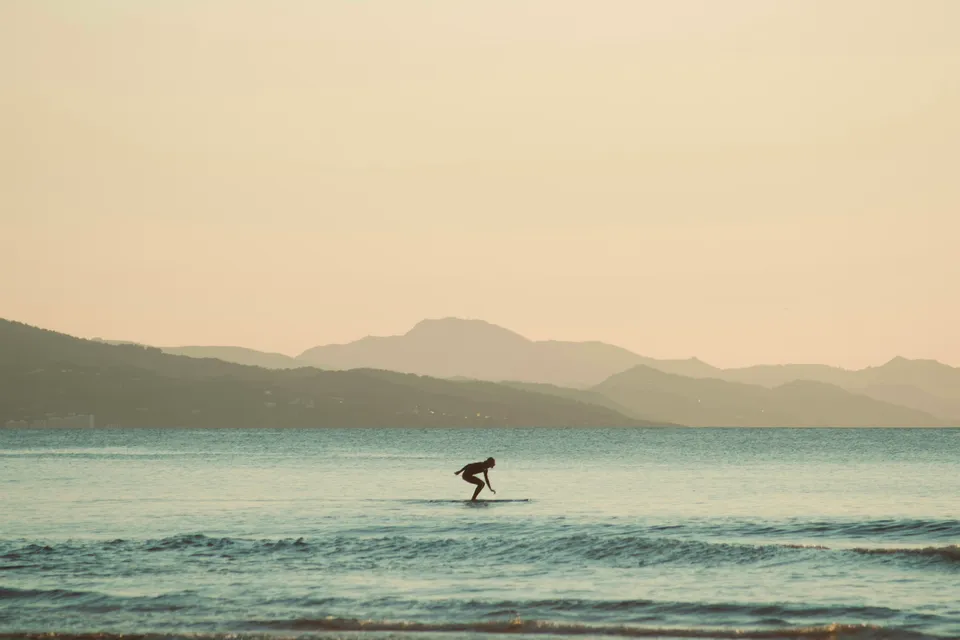
The tourist office tells the story this way. In 1956, the Californian producer Dick Zanuck, in the Basque Country to shoot The Sun Also Rises, from Hemingway’s novel, had a surfboard sent over from the United States, but had to leave before trying the waves; his screenwriter, Peter Viertel, tried instead, without much success. The next year, in 1957, Viertel, the husband of the actress Deborah Kerr, came back to Biarritz with several boards and took three Frenchmen into the water with him: Georges Hennebutte, Jacky Rott and Joël de Rosnay. They founded the Waikiki Surf-Club in September 1959, Joël de Rosnay created the Surf Club de France in 1964, and the first surf school in France opened in 1966.
Today, about twenty surf schools approved by the city teach on the beaches (the tourist office lists 21), and you can surf all year round. For a first lesson:
- The Côte des Basques is the classic place to learn, with easy waves for beginners and about 6 hours of surf around low tide; leave the water on a rising tide before the waves reach the rocks.
- Milady suits beginners at low tide and experienced surfers at mid-tide.
- The Grande Plage is for experienced surfers who like short, powerful waves, and Marbella is mostly for locals and experienced surfers.
The city asks every surfer to respect the surfers’ code. Biarritz’s oldest contest, the Maider Arosteguy, created in 1984 and, for the tourist office, the oldest surfing competition in Europe, brings nearly 250 surfers to the Grande Plage; the Hotdogger Surf Festival returns from May 21 to 23, 2027.
Sources: Destination Biarritz, the history of surfing, surfing in Biarritz, surf schools, surfing events, the Maider Arosteguy and beach anecdotes; Ville de Biarritz, the surfers’ code, read on November 27, 2026.
Les Halles and Basque Food
The covered market, Les Halles, built in 1885 on the site of the old real-tennis court, is the place to fill a picnic basket: fresh fish and seafood, Basque charcuterie, cheeses, fruit and vegetables, pastries and wine. The tourist office gives its hours as every day from 7:30 a.m. to 2 p.m. (one of its pages says 7 a.m., another 1 p.m. on Sundays). Outside, a producers’ market sets up every Saturday from 7:30 a.m. to 1 p.m., and a textile and decoration market every day from Easter to All Saints’ Day. Two neighborhood markets run on Wednesday mornings (Saint-Martin, rue du Reptou) and Friday mornings (Place Saint-Charles), from 9 a.m. to 1 p.m.
What to taste, as the tourist board of the Pays Basque lists it:
- The gâteau basque, the pastry of the Basque Country, most often filled with cream or cherry, and called “etxeko bixkotxa”, the cake of the house, because it was baked at home on Sundays and feast days.
- Piperade, tomatoes, sweet peppers and onions cooked slowly and seasoned with piment d’Espelette, served with egg and ham; and axoa, minced veal simmered with onions and peppers.
- Ttoro, the fish stew that the fishermen of Ciboure and Saint-Jean-de-Luz first made with their unsold catch, and the talo, a cornmeal flatbread filled with ventrèche (cured pork belly) or cheese.
- Piment d’Espelette, grown in the Basque Country since 1650, is the only spice in France with an appellation: an AOC in 2000, an AOP in 2002, from ten communes around Espelette.
Bayonne’s tourist office adds its two flagships, Bayonne ham, the most eaten cured ham in France, 20 percent of the country’s cured-ham production, and chocolate, brought to France by Portuguese Jews driven out by the Inquisition in the early 17th century; it suggests Ossau-Iraty sheep’s cheese with a glass of Irouléguy wine, and the pintxos of a poteo, the evening that goes from bar to bar in the southern Basque Country.
Sources: Destination Biarritz, the markets of Biarritz, Les Halles and the must-sees; En Pays Basque, Basque specialties and piment d’Espelette; Office de Tourisme de Bayonne, a city of gastronomy, read on November 27, 2026.
Two Museums for a Rainy Day
- The Musée Asiatica, a short walk from the center behind the Gare du Midi (1 rue Guy Petit, free parking opposite), holds what it calls the finest private collection of Oriental art in Europe: more than 2,000 works from India, Nepal, Tibet, China and the Himalayas, in a museum created by Michel Postel and Xintian Zhu and opened in March 1999. It is open all year, Monday to Saturday, from 10 a.m. to 5 p.m. without a break; adults pay 10 euros, ages 13 to 25 pay 8 euros and children 2 euros, with the youngest free (the museum’s price page says 8 to 12 and under 8, its FAQ 2 to 8 and under 2), and a free audio guide in English is available on the Izi.travel app. Count 1 to 1 hour 30.
- The Musée historique de Biarritz, in the former Anglican church of St Andrew’s, whose first stone was laid on January 13, 1876, tells the story of Biarritz from the little whaling port to the international resort. It opened on November 8, 1986, and reopened, fully renovated, on June 15, 2019. It is open Tuesday to Saturday from 10 a.m. to 12:30 p.m. and 2 to 6:30 p.m. (10 a.m. to 1 p.m. and 2:30 to 6:30 p.m. in July and August), closed on Sundays, Mondays and public holidays; adults pay 8 euros, students, job seekers and visitors with reduced mobility 5 euros, and it is free up to 12; audio guides in English cost 2 euros.
Sources: Musée Asiatica, hours and prices, highlights and history; Musée historique de Biarritz, practical information and the museum; Ville de Biarritz, places to visit, read on November 27, 2026.
Christmas in Biarritz 2026
From December 1, 2026 to January 3, 2027, Biarritz celebrates Christmas. The lights, the Christmas village and the parades are free; some concerts and shows of the program are ticketed.
- The Christmas village in the Jardin Public is open every day from 11:30 a.m. to 7:30 p.m. outside the school vacation, to 10 p.m. on Fridays and Saturdays, and every day from 11:30 a.m. to 10 p.m. during the vacation, except December 24 and January 3 (to 7 p.m.) and December 25 and January 1 (from 3 p.m.). Six shopping chalets stand on the Place Clemenceau, every day from 10:30 a.m. to 7:30 p.m.
- Biarritz en Lumière: light shows on the tourist office, the Aquarium and the Sainte-Eugénie church, and new lighting from the Casino Municipal to the Hôtel du Palais, from December 19, 2026 to January 3, 2027, from 6:30 to 10 p.m.
- Olentzero, the charcoal-maker of Basque Christmas, parades with music on Sunday, December 20: meet from 4:45 p.m. on the south forecourt of the Grande Plage, departure at 5:30 p.m. Father Christmas is at the Place Bellevue from December 19 to 24, from 2:30 to 5:30 p.m.
- The sea swims: the Coupe de Noël des Ours Blancs, at most 600 meters, at the Port-Vieux on Sunday, December 20 at noon (10 euros to take part); the Christmas swim at the Port-Vieux on Sunday, December 27 at 11 a.m.; and the first swim of the year on the Grande Plage on Friday, January 1, 2027 at 1 p.m., for the fight against cancer.
Sources: Ville de Biarritz, Christmas 2026; Destination Biarritz, Biarritz en Lumière, the Christmas village, the Coupe de Noël des Ours Blancs, the Christmas swim and the first swim of the year, read on November 27, 2026.
The Weather in Biarritz Month by Month
These are Météo-France’s climate normals for its Biarritz-Pays Basque station, averages for 1991 to 2020:
| Month | Average low | Average high | Rain | Days with rain | Sunshine |
|---|---|---|---|---|---|
| January | 5.0 °C (41 °F) | 12.2 °C (54 °F) | 139.6 mm | 13.7 | 95.7 h |
| February | 4.9 °C (41 °F) | 12.8 °C (55 °F) | 110.4 mm | 12.0 | 115.2 h |
| March | 7.1 °C (45 °F) | 15.2 °C (59 °F) | 102.8 mm | 11.9 | 163.3 h |
| April | 8.8 °C (48 °F) | 16.8 °C (62 °F) | 117.7 mm | 13.3 | 170.7 h |
| May | 11.9 °C (53 °F) | 19.9 °C (68 °F) | 116.1 mm | 12.5 | 196.7 h |
| June | 14.9 °C (59 °F) | 22.5 °C (73 °F) | 99.2 mm | 10.1 | 206.3 h |
| July | 16.9 °C (62 °F) | 24.2 °C (76 °F) | 77.3 mm | 9.4 | 218.5 h |
| August | 17.2 °C (63 °F) | 25.1 °C (77 °F) | 87.5 mm | 9.2 | 214.3 h |
| September | 14.5 °C (58 °F) | 23.3 °C (74 °F) | 118.2 mm | 10.2 | 199.2 h |
| October | 11.9 °C (53 °F) | 20.2 °C (68 °F) | 147.3 mm | 12.1 | 145.4 h |
| November | 7.9 °C (46 °F) | 15.4 °C (60 °F) | 206.9 mm | 13.8 | 103.4 h |
| December | 5.7 °C (42 °F) | 12.9 °C (55 °F) | 150.6 mm | 12.9 | 91.8 h |
| Year | 10.6 °C (51 °F) | 18.4 °C (65 °F) | 1,473.6 mm | 141.1 | 1,920.6 h |
Source: Météo-France, Biarritz-Pays Basque climate normals 1991-2020, read on November 27, 2026. Fahrenheit figures are converted from the Celsius values.
What the table means for a trip:
- It rains, in every season: 1,473.6 millimeters a year, on about 141 days. November is by far the wettest month (206.9 mm), July the driest (77.3 mm), and even in summer it rains on about 9 days a month: pack a raincoat.
- Winters are mild: highs of 12 to 13 °C from December to February, and lows that stay around 5 °C.
- For the beach: July and August are the warmest months, with highs of 24 to 25 °C and more than 210 hours of sunshine, and the sea averages 19 to 22 °C from June to September, the tourist office says. September, with a high of 23.3 °C, is almost as warm as July.
When to Go to Biarritz
- July and August are the full beach season: every beach has its lifeguards, the Grande Plage is guarded from 10 a.m. to 8 p.m., the beach service rents its tents, and the night markets run at the fishermen’s port. In 2026, a free electric shuttle ran from July 1 to August 31 between Hélianthe, the Port-Vieux and the Côte des Basques, every 30 minutes from 11 a.m. to 8 p.m. The Assumption fireworks are on August 15, 2027, free.
- June and September keep the warm sea and long days, with lifeguards on every beach, and the Biarritz Film Festival, Nouvelles Vagues, runs from June 22 to 27, 2027.
- Spring and autumn suit surfers and walkers; the Biarritz Pays Basque marathon is on April 25, 2027, and the Hotdogger Surf Festival from May 21 to 23, 2027. The lighthouse opens every day only from June to September; the rest of the year, mostly on weekends and in school vacations.
- Winter is quiet and mild but wet, with the Christmas lights from December 1, 2026 to January 3, 2027 and the FIPADOC documentary festival from January 22 to 30, 2027. Note that the Cité de l’Océan closes from January 4 to 29, 2027, and the Rhune train until March 2027.
Sources: Destination Biarritz, the main events and surfing events; Ville de Biarritz, the Côte des Basques shuttle, read on November 27, 2026.
Getting to Biarritz
By train from Paris and Bordeaux
From Paris Montparnasse, SNCF Connect lists 8 trains a day to Biarritz on a sample day, Saturday, November 28, 2026, from 7:11 a.m. to 6:11 p.m., covering the 744 km in 4 hours 6 minutes at the fastest (4 hours 4 minutes, says another line of the same page) and 4 hours 22 minutes on average. Most are direct TGV INOUI or low-cost OUIGO trains; two that day needed a change. Fares start at 25 euros one way in second class on some trains and dates (that was the price on December 1, 2 and 15), but a ticket for travel the same day cost 102 euros when we looked: book ahead.
From Bordeaux Saint-Jean, 11 trains a day run to Biarritz, in 1 hour 57 minutes at the fastest, from 10 euros. If you fly into Paris Charles de Gaulle, 5 trains a day leave the airport’s TGV station for Biarritz, all with at least one change, in 6 hours 3 minutes at the fastest.
Biarritz station is on the allée du Moura, south-west of the town and away from the historic center, SNCF Connect says. Bus line 5 links it with the town hall (Mairie de Biarritz-Edouard VII) in about 11 minutes, and line 12 also serves the center; the tourist office counts about 10 minutes.
Sources: SNCF Connect, Paris to Biarritz, Bordeaux to Biarritz, Charles de Gaulle to Biarritz and Biarritz station; SNCF Gares & Connexions, Biarritz; TXIK TXAK, winter timetables 2026-2027; Destination Biarritz, Biarritz without a car, read on November 27, 2026. Fares are the lowest one-way second-class prices on selected trains and dates.
By air
Biarritz Pays Basque airport, in Anglet, is 5 minutes from the center of Biarritz, the airport says. From October 25, 2026 to March 27, 2027, its winter program has Air France to Paris Charles de Gaulle (up to 4 flights a day) and Lyon, Transavia to Paris Orly (up to 3 a day) and Marrakech, easyJet to Lyon, and Ryanair to London Stansted and Brussels Charleroi (2 flights a week each, on Fridays and Sundays). In summer 2026, the list was longer, with Amsterdam, Frankfurt, Munich, Zurich, Luxembourg, Dublin, Edinburgh, London Gatwick and Nice among others, and easyJet adds Malaga from May 7 to September 24, 2027; the full summer 2027 program is not out yet. No route on the program leaves North America: from the US or Canada, fly to Paris and connect, or take the train.
From the airport, TXIK TXAK bus line 11 reaches the town hall of Biarritz in 12 to 13 minutes, every 30 minutes on weekdays and hourly on Sundays, and line 21 links the airport with Biarritz station, Monday to Saturday, about every hour; line 3 runs every day to Bayonne station (19 minutes) and Saint-Jean-de-Luz (31 minutes). A machine at the airport sells bus tickets, and the taxi rank is outside arrivals. Avis, Europcar, Hertz and Sixt are among the car rental firms of the Village des Loueurs, a few minutes’ walk from the terminal.
Sources: Aéroport de Biarritz-Pays Basque, buses, airlines, flight program 2026-2027, news for 2027, taxis and car rental; TXIK TXAK, line 11, line 21 and line 3 winter timetables, read on November 27, 2026.
Getting Around Biarritz
TXIK TXAK, the public transport network of the Pays Basque, runs the buses of Biarritz and its neighbors.
| TXIK TXAK ticket | Price | What it covers |
|---|---|---|
| Single trip (ticket 1 voyage) | 1.40 euros | 1 hour 30 minutes from the first validation, changes included, but not a return on the same line |
| Bank card tapped at the validator | 1.40 euros a trip | The same trip; never more than 3.80 euros a day per person, and one card can validate for up to 5 people |
| Day pass (pass 1 jour) | 3.80 euros | Unlimited travel on the day of the first validation |
| 3-day and 7-day passes | 8.70 and 14.60 euros | Unlimited travel |
| 10 trips | 10.50 euros | Ten single trips |
| Small group day pass (p’tit groupe) | 7.70 euros | Up to 5 people for a day |
Source: TXIK TXAK, occasional tickets, points of sale, FAQ and public transport, read on November 27, 2026. Children under 6 travel free all year.
Contactless Visa and Mastercard bank cards work, and so do phone and watch payments. On most lines you can also buy a ticket from the driver, but not on the Tram’bus lines: line T1, which links the town halls of Biarritz and Bayonne in less than 30 minutes, every 10 minutes at peak times, sells its tickets from machines at the stops. In winter, two free electric shuttles, N4 and N5, loop through the center of Biarritz from Monday to Saturday, past the Halles, the Jardin Public, the town hall and the Hôtel du Palais, and in summer 2026 a third free shuttle ran to the Côte des Basques.
By car, the city counts about 2,500 paid parking spaces in four zones. The first hour is free, once a day; from September 1 to June 30, parking is paid in the red and orange zones from Monday to Saturday, 9 a.m. to 12:30 p.m. and 2 to 7 p.m., and from July 1 to August 31 in every zone, every day, 9 a.m. to 8 p.m. A visitor pass for the green and yellow zones costs 35 euros for 2 days or 70 euros for 7 days, from April 1 to November 15. The Iraty park-and-ride has 290 free spaces, linked with the Jardin Public from June 30 to August 31 by bus line 31 every 15 minutes, and eight car parks run by Indigo, seven of them underground, are open around the clock. Biarritz also has 27 km of cycle paths, and the Pony bike-sharing service counts 800 bikes at 150 points.
Sources: TXIK TXAK, Tram’bus T1, shuttle N4 and shuttle N5 winter timetables; Ville de Biarritz, parking; Destination Biarritz, parking and getting around, read on November 27, 2026.
Day Trips from Biarritz
Bayonne, Saint-Jean-de-Luz, Hendaye and San Sebastián are all within an hour of Biarritz by train or bus:
| From Biarritz to | By train | By bus |
|---|---|---|
| Bayonne | 17 trains a day, 11 to 12 minutes, from 2 euros | Tram’bus T1 from the town hall, less than 30 minutes, 1.40 euros |
| Saint-Jean-de-Luz | 19 trains a day, 13 to 15 minutes, from 3 euros | Line 18 from the town hall, 39 minutes, about every hour, 1.40 euros |
| Hendaye | 19 trains a day, about 29 minutes | Line 18, then line 4 from Saint-Jean-de-Luz |
| San Sebastián | Train to Hendaye, then the Topo (see below) | FlixBus, about 35 minutes, from 6.48 euros; ALSA, 55 minutes, from 10 euros |
Sources: SNCF Connect, Biarritz to Bayonne, Biarritz to Saint-Jean-de-Luz and Biarritz to Hendaye (sample day Saturday, November 28, 2026); TXIK TXAK, Tram’bus T1, line 18 and line 4; FlixBus, Biarritz to San Sebastián; ALSA, Biarritz to San Sebastián, read on November 27, 2026. Train fares are the lowest one-way second-class prices on selected trains and dates.
Bayonne
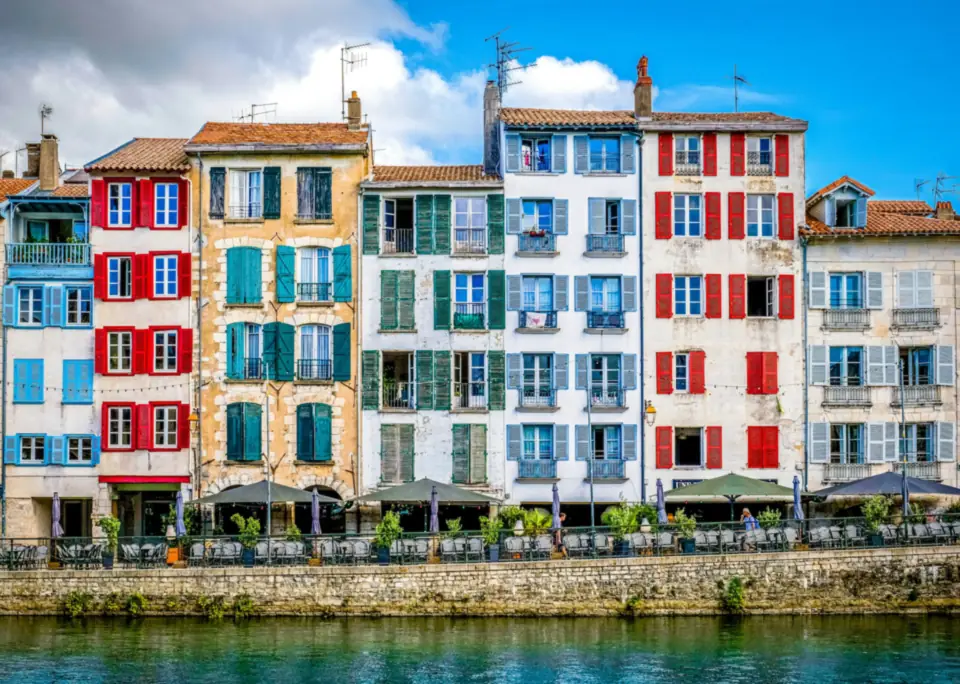
Bayonne, 5 km away, lies on the Adour and the Nive. Its tourist office picks its must-sees:
- The cathedral of Sainte-Marie, on UNESCO’s World Heritage List since 1998, was rebuilt in the Gothic style on the ruins of a Romanesque cathedral destroyed by fire in 1258. Around it, the medieval streets of the Grand Bayonne hold designer shops on the rue des Faures and food shops on the rue d’Espagne, and you can walk the ramparts that Vauban improved from 1680 to 1685.
- The Petit Bayonne is livelier and more Basque, with the church of Saint-André and the trinquet of the same name, the oldest in France, a former jeu de paume hall documented since the early 17th century; on Thursday afternoons you can watch a game of bare-hand pelota there.
- The Bonnat-Helleu Museum, which reopened in late November 2025, holds what the tourist office calls one of the finest art collections between Paris and Madrid, with works by Rubens, Ingres, Degas and Leonardo da Vinci.
- Les Halles of Bayonne are closed for renovation from August 31, 2026 until late June 2027; the market has moved to the Esplanade Roland Barthes.
The Musée Basque et de l’histoire de Bayonne, in the Maison Dagourette since 1924, is open on Tuesday, Wednesday and Friday to Sunday from 10 a.m. to 6 p.m., and on Thursday from 1 to 8 p.m. (free from 6 to 8 p.m.); it is closed on Mondays and public holidays, except July 14 and August 15. Tickets cost 11 euros, 8 euros reduced, and it is free under 26 and for everyone on the first Sunday of the month; a full-price ticket to the Musée Basque or the Bonnat-Helleu gives the reduced price at the other for a week.
The Fêtes de Bayonne open on the last Wednesday of July, at 10 p.m. on the Place de la Liberté, for five days and nights, with the town dressed in white, with a red scarf and sash (the cinta), and the ham fair has been held every year since 1462. For Christmas, from November 27, 2026 to January 3, 2027, a Ferris wheel turns on the Place de la Liberté and the main market fills the Place du Réduit.
Sources: Office de Tourisme de Bayonne, five must-sees, Bayonne is a party, Christmas in Bayonne and home page; Musée Basque, hours and prices; Destination Biarritz, Biarritz as a base, read on November 27, 2026.
Saint-Jean-de-Luz
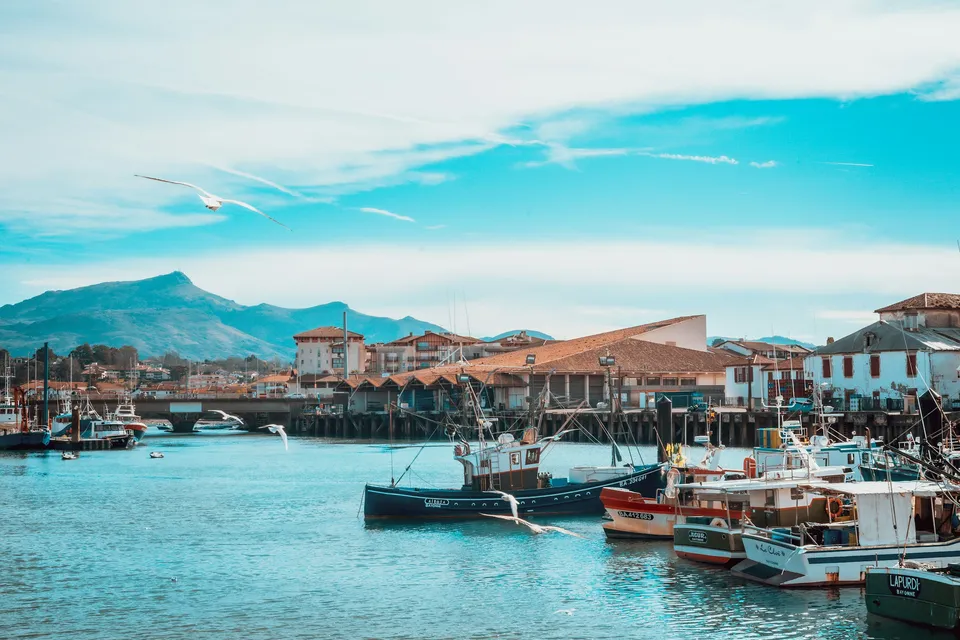
Saint-Jean-de-Luz, the “city of corsairs”, lies in a wide bay between the ocean and the mountains, with a fishing port it shares with Ciboure, where the colored boats still land their catch every day. It is where Louis XIV married the Infanta Maria Theresa of Spain on June 9, 1660, sealing the reconciliation of France and Spain after the Treaty of the Pyrenees, in the church of Saint-Jean-Baptiste, known for its 17th-century altarpiece.
- The Maison Louis XIV, built in 1643 by the shipowner Joannis de Lohobiague, housed the young king for more than a month. It opens from Easter to All Saints’ Day (8 euros for adults, 4 euros from 10 to 18 and for students under 26) and is closed in winter: it reopens on Saturday, April 3, 2027.
- The Maison de l’Infante (Joanoenia), built around 1640 by the shipowner Joannot de Haraneder, has pink brick and stone facades and two Italian-style galleries.
- The Grande Plage is two minutes’ walk from the Place Louis XIV and the port, along the promenade Jacques Thibaud; the bay is closed by three sea walls that Napoleon III ordered.
- The Corniche Basque, about ten kilometers of cliffs from Ciboure to Hendaye, largely in Urrugne, rises to 45 meters, and from its cliffs you may see Belharra, a giant wave that only professionals can surf. The coastal path along it is closed to walkers for erosion, from the edge of Ciboure to the Haizabia estate in Hendaye, the tourist office says.
Sources: Office de Tourisme de Saint-Jean-de-Luz, the historic center, the ports and fishing and the Corniche Basque; Maison Louis XIV, read on November 27, 2026.
San Sebastián (Donostia)
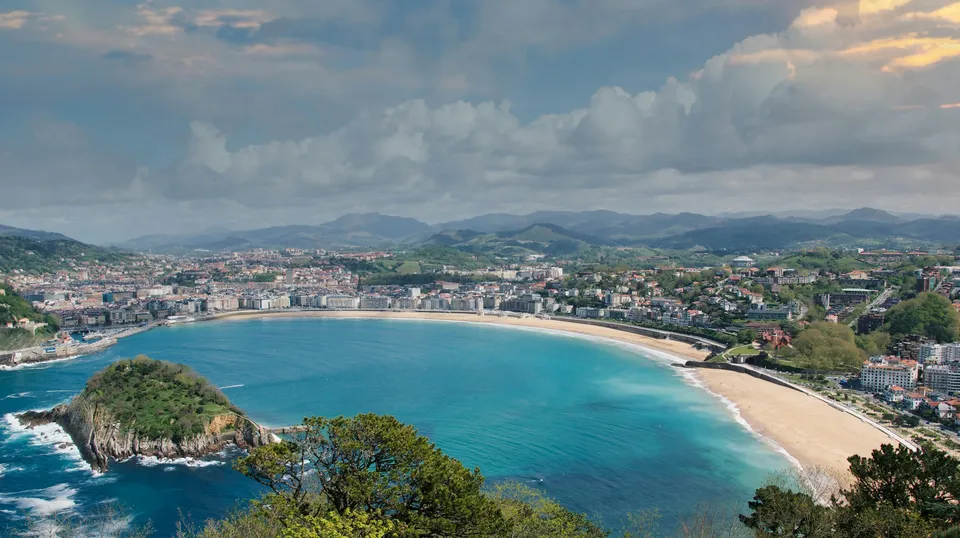
Across the border, in the Spanish Basque Country, San Sebastián is, for the Basque government’s tourist board, “one of the most romantic cities in the world, famed for its beauty and fine food”. La Concha beach, framed by Mount Igueldo and the island of Santa Clara, invites a swim or a walk even in winter; Zurriola beach is for surfers, the Paseo Nuevo runs around Mount Urgull, and Ondarreta beach ends at the Peine del Viento, the large sculpture by Eduardo Chillida and Peña Ganchegui. The Old Town, at the foot of Mount Urgull and rebuilt after the fire of 1813, is the most visited place in the city, with the basilica of Santa María del Coro, the San Telmo Museum in an old convent, the Plaza de la Constitución, a former bullring whose balconies still carry numbers, and bars full of pintxos. A funicular climbs Mount Igueldo, and the International Film Festival comes every September.
How to get there from Biarritz:
- By coach, the most direct: FlixBus counts about 10 departures a day, in about 35 minutes, from 6.48 euros, from the Halle d’Iraty or the airport; ALSA runs 2 a day, at 11:25 a.m. and 2:40 p.m., in 55 minutes, from 10 euros, from the Halle d’Iraty.
- By train: about 29 minutes to Hendaye, then the Euskotren line from Hendaia to San Sebastián, nicknamed the Topo, every 30 minutes, about 36 minutes to Amara Donostia. TXIK TXAK sells the Euskopass, a combined bus and Topo round trip to San Sebastián for 6.50 euros, with the change at Hendaye station; Euskotren’s page ties it to the bus from Bayonne, so ask at the TXIK TXAK agency on the avenue Louis Barthou which buses it covers from Biarritz.
Sources: Basque Tourism (Gobierno Vasco), San Sebastián and San Sebastián Old Town; Euskotren, timetables and tickets; TXIK TXAK, Euskopass; FlixBus, France and UK pages; ALSA, read on November 27, 2026.
Espelette, the villages and the Rhune train
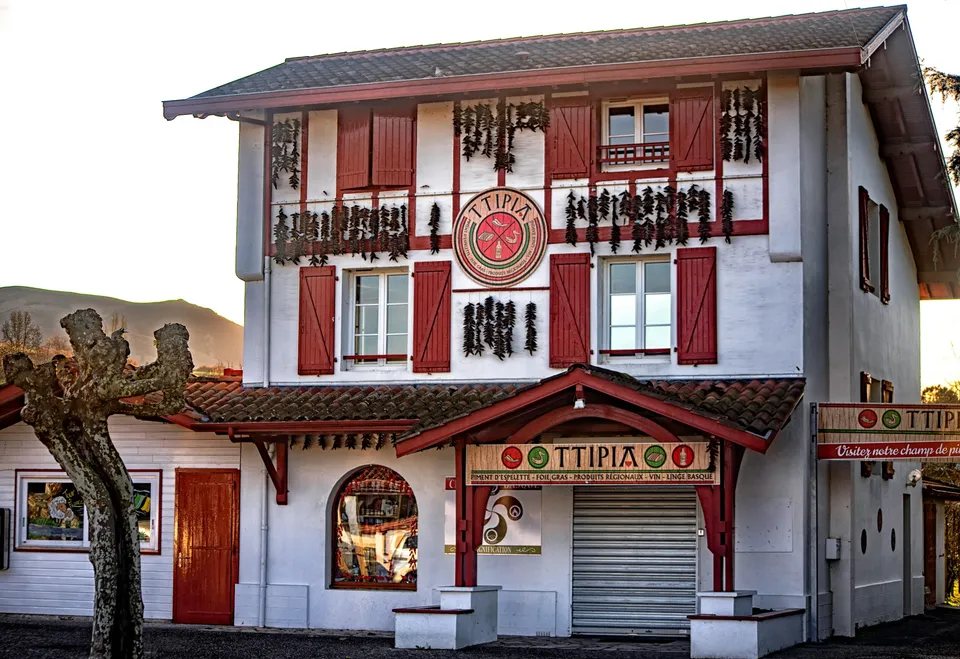
Inland, the Basque villages are the land of the piment d’Espelette: the pepper is grown in ten communes, among them Espelette, Ainhoa, Itxassou, Cambo-les-Bains and Saint-Pée-sur-Nivelle, and the women who first grew it dried it on the facades of the houses. Espelette holds its Fête du piment in October and a fair of farm products, IDOKI, in August, the tourist board’s calendar says.
Above Sare, the Rhune train, a rack railway with wooden carriages running since June 30, 1924, climbs from the Col de Saint-Ignace to its summit station at 905 meters: 35 minutes up and 35 minutes down at 9 km/h, with 1 hour 20 minutes at the top, 2 hours 30 minutes in all. It is closed for the winter and reopens in March 2027, on a date not yet published. In 2026, a round trip cost 26 euros for adults, 18 euros for children from 4 to 12 and 82 euros for a family of four; there is no one-way ticket up, online sales close an hour before each departure, and buses 44 and 45 stop at the Col de Saint-Ignace.
Sources: En Pays Basque, piment d’Espelette and food festivals; Train de la Rhune, the train, hours and prices, practical information and FAQ, read on November 27, 2026.
How Many Days in Biarritz?
- Day 1, the seafront: the Grande Plage and the casino in the morning, the Rocher de la Vierge, then the Aquarium for the seals’ meal at 10:30 a.m. or 5 p.m.; in the afternoon, the fishermen’s port, the Port-Vieux and the Villa Belza, and the sunset over the Côte des Basques.
- Day 2, the town: Les Halles in the morning, the lighthouse (every day from June to September, otherwise mostly on weekends and in school vacations), the Imperial Chapel on a guided visit or the Musée historique, and a surf lesson on the Côte des Basques or an afternoon at the Cité de l’Océan.
- Day 3, a day trip: Bayonne or Saint-Jean-de-Luz, each a quarter of an hour by train, or San Sebastián across the border.
With a week, Biarritz works as a base for the whole Basque coast and its villages, and for the Rhune train once it reopens in March 2027.
Staying Longer in Biarritz
Biarritz is also a town to stay in for a season. Three rules matter once you stay beyond a vacation:
- The 90-day rule. As a visitor from a visa-exempt country such as the US, the UK, Canada or Australia, you can usually stay a maximum of 90 days within any 180-day period, according to the European Commission, and the European Union’s Entry/Exit System counts that period as one for all the countries using it, so a week in San Sebastián counts in the same total; it has been fully in operation at every external border since April 10, 2026. ETIAS, the travel authorization these visitors will need, is not yet in operation, and the EU says it will announce its start date several months ahead. Our guide to how long Americans can stay in France without a visa explains the count, and the Schengen calculator checks your dates. To stay longer than 90 days you need a long-stay visa or a residence permit, the Commission says.
- Furnished rentals. Biarritz is one of the 24 communes of the Pays Basque where housing is scarce, and since March 1, 2023, renting a home other than your main residence to tourists has needed a change-of-use authorization from the town, granted against compensation: the owner must turn another space of at least the same size in Biarritz into a home. A main residence let for less than 120 days in total a year is exempt, and every listing must show the 13-digit registration number of the furnished rental: check it before you book. The Conseil d’État upheld these rules on June 11, 2026. Rents are also capped in Biarritz since November 25, 2024, a scheme that a law of November 21, 2026 extended: the rent may not exceed the reference rent for the zone, the number of rooms, the age of the building and furnished or not, increased by 20 percent, and the reference rents must appear in the listing and in the lease. Seasonal rentals are not covered.
- The bail mobilité. This furnished lease of 1 to 10 months, not renewable and without a security deposit, is open only to a tenant in vocational training, higher education, an apprenticeship, an internship, civic service, a job transfer or a temporary work assignment, service-public says, so a visitor who simply wants a season by the sea cannot sign one: our bail mobilité guide sets out the other leases.
Every night in a hotel or a rental also carries the tourist tax, collected all year in Biarritz; under-18s and holders of a seasonal work contract in the town are exempt. In 2026, it runs from 1.15 euros per person and night in a one-star hotel or a guest room to 2.45 euros in a three-star, 3.74 euros in a four-star, 5.18 euros in a five-star and 7.06 euros in a palace, surcharges included; in a furnished rental that is not classified, it is 5 percent of the price per person and night, plus surcharges, capped at 4.90 euros before them.
Sources: European Commission, short-stay calculator; European Union, what is the EES, EES FAQ and ETIAS; Communauté d’Agglomération Pays Basque, furnished tourist rentals, the Conseil d’État ruling and rent control; Ville de Biarritz, seasonal rental rules, tourist tax and 2026 rates; Légifrance, article 140 of the ELAN law, as amended by law no. 2026-1072 of November 21, 2026; Préfecture des Pyrénées-Atlantiques, rent control; service-public, the bail mobilité, read on November 27, 2026.
Finding that furnished apartment, calling the agencies and setting up a phone line or a bank account is the kind of work our Personal Assistant handles: the calls, the forms and the apartment search, in French.
FAQ
Is Biarritz worth visiting?
Yes: six beaches with lifeguards from April to October, the Rocher de la Vierge and its footbridge, a lighthouse with a view to Spain for 5 euros, an Aquarium in an Art Deco building of 1933, the imperial history of the Hôtel du Palais and its chapel, the Côte des Basques where surfing first appeared in Europe, Les Halles for Basque food, and Bayonne, Saint-Jean-de-Luz and San Sebastián close by. From Paris, it is 4 hours 6 minutes by the fastest train.
Why is Biarritz so famous?
Because an empress chose it. Eugénie, the Spanish wife of Napoleon III, settled here for the summer in 1854, the emperor built her the Villa Eugénie, today’s Hôtel du Palais, and the couple came every year until 1868. A century later, in 1956 and 1957, the American screenwriter Peter Viertel brought surfing to Biarritz: it was on the Côte des Basques, the tourist office says, that surfing first appeared in Europe.
Is Biarritz more French or Spanish?
Biarritz is French: a town of the Pyrénées-Atlantiques, in Nouvelle-Aquitaine. It is also Basque, in the French part of the Basque Country, and only 30 km from the Spanish border, with San Sebastián a short trip away. Its most famous summer guest, the Empress Eugénie, was Spanish.
Is Biarritz expensive?
Biarritz has a palace hotel, but much of what it offers costs little or nothing: the beaches, the Rocher de la Vierge and the Christmas events are free, the lighthouse costs 5 euros, the Aquarium 17 euros, a bus trip 1.40 euros and the train to Bayonne or Saint-Jean-de-Luz from 2 or 3 euros, and the first hour of street parking is free. The tourist tax adds from 1.15 euros per adult and night in a one-star hotel to 7.06 euros in a palace. We did not compare hotel prices.
Can you swim in Biarritz in winter?
Lifeguards watch the beaches only from April to the end of October, and outside those dates the city and the tourist office warn that swimming is dangerous. The water can be close to 12 °C in winter, the city says, which does not stop the Christmas swims at the Port-Vieux on December 20 and 27, 2026, and the first swim of the year on the Grande Plage on January 1, 2027.
What is the best beach in Biarritz for families?
The city and the tourist office both point to the Port-Vieux, a sheltered cove that the city calls a natural swimming pool, and the tourist office also to Milady, a spacious family beach, easy to reach, with the Handiplage access for disabled bathers. The Grande Plage, in the center, is ideal for swimming, the tourist office says, within the flags.
What is the weather like in Biarritz?
Mild and wet: highs average 12.2 °C (54 °F) in January and 25.1 °C (77 °F) in August at the Biarritz-Pays Basque station, according to Météo-France, with 1,473.6 millimeters of rain on about 141 days a year and 1,920.6 hours of sunshine. July and August are the warmest and driest months, and November the wettest.
How do I get from Biarritz to San Sebastián?
By coach, in about 35 minutes with FlixBus (about 10 departures a day, from 6.48 euros) or 55 minutes with ALSA (2 a day, from 10 euros), from the Halle d’Iraty; or by train to Hendaye in about 29 minutes, then the Topo, the Basque train that runs every 30 minutes to San Sebastián in about 36 minutes. TXIK TXAK also sells a combined bus and Topo round trip, the Euskopass, for 6.50 euros.
Conclusion
Biarritz rewards two or three days: six beaches for every kind of swimmer and surfer, a rock in the sea reached by its footbridge of 1877, a lighthouse of 1834 with a view to Spain, an Art Deco aquarium and a museum of the ocean, the imperial traces of Eugénie, and Les Halles for lunch. Come by train from Paris Montparnasse in just over four hours, or fly in to an airport five minutes from the center, check the tide before you walk down to the Côte des Basques, and keep a day for Bayonne, Saint-Jean-de-Luz or San Sebastián. For the Mediterranean side of the south, from the Riviera to Provence, see our guide to the South of France; for the rest of the country, region by region, our guides to the best places to visit in France and to the regions of France; and for the Basque dishes and cheeses in the context of the whole country, our guide to French food.
The parts of the move Americans find out about too late.
What Americans get wrong about moving to France, and the number, form or deadline that fixes it. Straight to your inbox.
One email a week. Real numbers, nothing else.
Written by
Maxime Roseau
Co-founder, EasyFranceNow
Maxime Roseau is a French entrepreneur and co-founder of EasyFranceNow. His work focuses on French visas, residency, and citizenship: long-stay visa applications, OFII validation, prefecture procedures, permit renewals, and naturalization files, along with the operational side of relocation such as housing, rental dossiers, and administrative coordination after arrival.


