
French Riviera: The Towns from Menton to Saint-Tropez, the Beaches, the Weather and the Trains

By Maxime Roseau Co-founder, Master of Business and Communication, Université Nice Sophia Antipolis
Published Updated

In this article
- The French Riviera at a Glance
- Where Is the French Riviera and What Does It Include
- The Riviera Town by Town from the Italian Border to Saint-Tropez
- Menton
- Roquebrune-Cap-Martin
- Monaco
- Èze
- Beaulieu-sur-Mer
- Saint-Jean-Cap-Ferrat
- Villefranche-sur-Mer
- Nice
- Cagnes-sur-Mer and Haut-de-Cagnes
- Saint-Paul-de-Vence and Vence
- Antibes and Juan-les-Pins
- Grasse
- Cannes and the Lérins Islands
- The Estérel: Mandelieu-la-Napoule and Théoule-sur-Mer
- Saint-Raphaël and Fréjus
- Saint-Tropez
- Which Town for Which Trip
- The Beaches of the French Riviera: Sand or Pebbles
- Weather on the French Riviera Month by Month
- The 2027 Calendar of the French Riviera
- Getting to the French Riviera
- From the US
- From Paris by train
- From Nice airport to the towns
- Getting Around the Riviera Without a Car
- By train along the coast
- By bus to the villages
- By boat
- By car
- A French Riviera Itinerary for 3 to 7 Days
- Is the French Riviera Expensive?
- Staying Longer on the Riviera
- FAQ
- Conclusion
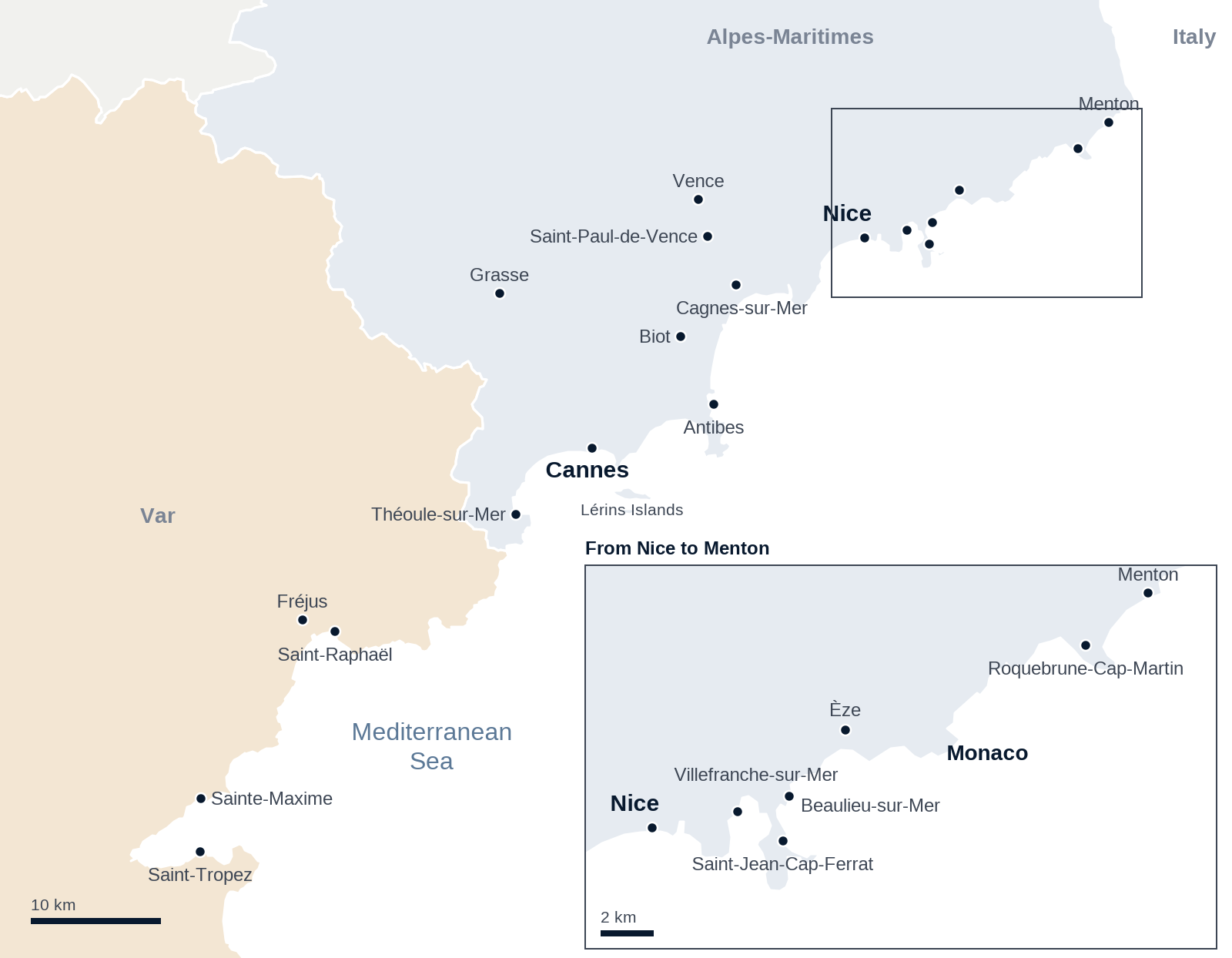
The French Riviera, the Côte d’Azur in French, is the Mediterranean coast of southeastern France that runs west from the Italian border. France’s national tourism site draws it from the border to the Estérel massif and the Gulf of Saint-Tropez, “about a hundred kilometers” along the sea, with a hinterland that climbs to the Mercantour National Park. Its towns follow one another along the shore, most of them on one railway: Menton on the border, Monaco (a separate country), Èze, Saint-Jean-Cap-Ferrat, Villefranche-sur-Mer, Nice, Antibes, Cannes and, at the western end, Saint-Tropez, with the walled village of Saint-Paul-de-Vence and the perfume town of Grasse just inland.
This guide takes the coast town by town, from east to west: what each place is for, what its sights cost, which beaches are sand and which are pebbles, the weather month by month from Météo-France, the 2027 festivals, and how to get there and around without a car. Every price, date and timetable was read on the official page of the town, the monument or the operator on November 26, 2026. Three places have their own guide, which this page sums up and links to: Nice, Èze and Menton. For the wider South, from Provence to the Languedoc, see our guide to the South of France.
The French Riviera at a Glance
| Where | Southeastern France, on the Mediterranean, from the Italian border to the Estérel and the Gulf of Saint-Tropez, according to France.fr |
| Departments | The Alpes-Maritimes, and the eastern coast of the Var from Saint-Raphaël to Saint-Tropez |
| Coastline | 185 km in the Alpes-Maritimes alone, from Menton to Théoule-sur-Mer, according to the Département (another of its pages gives 120 km) |
| Main towns | Nice (357,737 residents), Antibes (77,637), Cannes (74,350), Fréjus (59,719), Cagnes-sur-Mer (53,354), Grasse (50,970), Saint-Raphaël (37,113), Menton (30,604); Monaco, a sovereign state of 38,857 residents |
| UNESCO | Nice, as a winter resort of the Riviera (2021); Le Corbusier’s Cabanon at Roquebrune-Cap-Martin (2016); the perfume skills of the Pays de Grasse, on UNESCO’s intangible heritage list (2018) |
| Airport | Nice Côte d’Azur, the second airport in France after Paris, with non-stop flights to New York, Boston, Atlanta and Philadelphia |
| Getting around | TER regional trains along the coast, from about 5:30 a.m. to past 10 p.m., and buses to the perched villages |
| Climate | At Nice, 2,760 hours of sunshine a year; January averages 5.8 to 13.3 °C, August 21.1 to 27.9 °C |
Sources: France.fr, Côte d’Azur; Département des Alpes-Maritimes, the coast; INSEE, reference populations 2023, commune pages (municipal populations, in force since January 1, 2026); Visit Monaco (2025 data); UNESCO, Le Corbusier and Grasse; Office de Tourisme Nice Côte d’Azur, Nice and UNESCO; Aéroport Nice Côte d’Azur; Météo-France, Nice normals 1991-2020, read on November 26, 2026.
Where Is the French Riviera and What Does It Include
The official tourism bodies draw the Riviera in three ways:
- France.fr, the national tourism site, runs it from the Italian border in the east to the Estérel massif and the Gulf of Saint-Tropez, “at the eastern end of the Var coast”, in the west.
- Côte d’Azur France, the tourism board of the Alpes-Maritimes, writes of “the Côte d’Azur, from Menton to Hyères”, from “the pebbles of Nice to the sands of Pampelonne”.
- Provence-Alpes-Côte d’Azur Tourism, the regional board, describes the shores “from Saint-Tropez to Menton”, and files the Var, the department of Saint-Tropez, under Provence. Saint-Tropez’s own tourist office settles it its way: the town, it says, is both Provence and the Côte d’Azur.
The boards use “French Riviera” and “Côte d’Azur” for the same coast. The French name dates from 1887, when Stéphen Liégeard coined it, the Nice tourist office says. In the Alpes-Maritimes alone, the Département counts 185 km of coast between Menton and Théoule-sur-Mer, of which 24 km are open as a coastal path; a page on its marine policy gives 120 km, and the Alpes-Maritimes tourism board writes of nearly 200 km of coastline for the Côte d’Azur.
Monaco, between Cap-d’Ail and Roquebrune-Cap-Martin, is not France. Visit Monaco describes a sovereign state of 2.08 km², a constitutional monarchy and the second-smallest state in the world after the Vatican, with 38,857 residents in 2025, French as its official language and the euro as its currency. There is no separate formality for a visitor coming from France: the Monaco government says a stay of under three months needs the passport, and the visa where one is required, that entry into France needs.
The parts of the move Americans find out about too late.
What Americans get wrong about moving to France, and the number, form or deadline that fixes it. Straight to your inbox.
One email a week. Real numbers, nothing else.
The Riviera Town by Town from the Italian Border to Saint-Tropez
Menton
Menton, the last French town before Italy, is the “pearl of the Riviera” to its tourist office, a place where “the mountains seem to plunge into the sea”. It has been a Town of Art and History since 1991, its lemon has had a Protected Geographical Indication since 2015, and every February it holds the Fête du Citron, from February 13 to 28 in 2027. Our Menton guide covers the baroque old town, the gardens and the beaches.
Roquebrune-Cap-Martin
Between Monaco and Menton, Roquebrune-Cap-Martin is two places. Up the hill, the medieval village sits at nearly 300 meters around a castle built around the year 970, “one of the oldest keeps still standing in France”, the town hall says, with an olive tree nearly 2,000 years old; allow 1.5 to 2 hours for the village, the castle and the church. The castle costs 5 euros (3 euros for children from 6 and students, free under 6) and opens daily except May 1, November 1 and 11, December 25 and January 1, from 10 a.m. to 5 p.m. from November 2 to March 31 and from 10:30 a.m. to 6:30 p.m. from April 1 to October 31; it is not wheelchair accessible.
Down on the cape, Cap Moderne groups Eileen Gray’s villa E-1027 (1926 to 1929), Le Corbusier’s Cabanon (1952), his camping units and the Étoile de Mer bar-restaurant. The Cabanon is one of the 17 sites of UNESCO’s listing “The Architectural Work of Le Corbusier”, inscribed in 2016; the villa E-1027 is not part of the listing. Visits are guided only and booked online, for 19 euros (10 euros at special rates): a 2-hour tour in French and English leaves at 10 a.m. and 2 p.m. from the Hangar at Cap-Martin Roquebrune station, the operator says (the town hall lists four tours a day, at 10 and 11 a.m. and 2 and 3 p.m.). The 2026 season ran from April 1 to October 31, and the site reopens in April 2027; it is not recommended for children under 7.
The Sentier Le Corbusier, the old customs path, runs along the shore to the Monaco border, open all year and free: about 2 km and 1 to 1.5 hours by the town hall’s count, 5 km from the tip of Cap Martin by the tourist office’s. The Cabanon cannot be seen from it.
Monaco
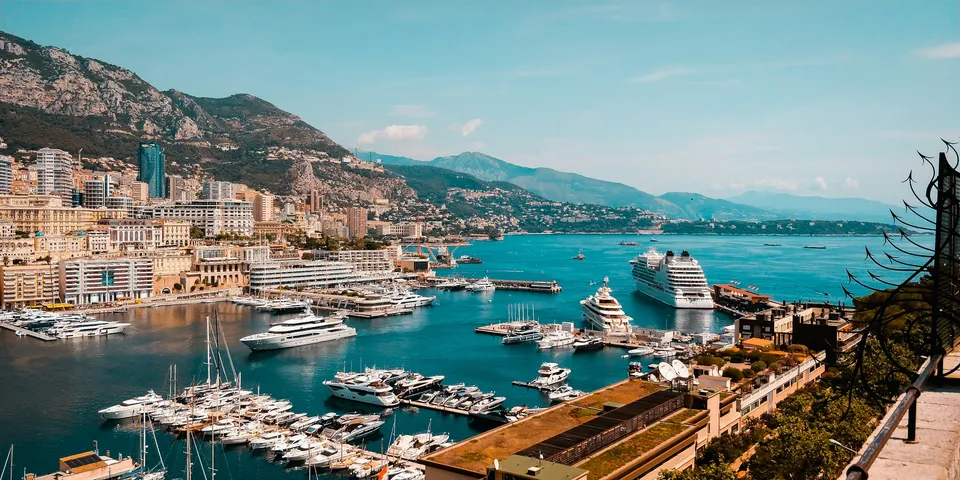
Monaco is the country; Monte-Carlo is one of its districts, like Fontvieille or La Condamine, and Monaco has no capital, Visit Monaco points out. What to see, with the prices read on the operators’ own sites:
| Sight | What it is | When | Adult price |
|---|---|---|---|
| Prince’s Palace, State Apartments | The residence of the Grimaldis, with 600 m² of Italian Renaissance frescoes | Closed now; the 2026 season ran March 30 to October 15 and the next opens in spring 2027 | 13 euros in 2026 (8 euros for ages 6 to 17) |
| Changing of the guard | On the Palace square | Every day at 11:55 a.m. | Watched from the square |
| Oceanographic Museum | On the Rock, about 2 hours of visit | Every day except December 25 and the Grand Prix weekend; 10 a.m. to 6 p.m. from October to March, to 7 p.m. from April to June and in September, 9:30 a.m. to 8 p.m. in July and August | 20.50 euros (13 euros for ages 4 to 17) |
| Monte-Carlo Casino | Morning visits with a guide on your phone; gaming rooms from 2 p.m. | Visits 10 a.m. to 1 p.m. (last entry 12:15 p.m.) | 20 euros (15 euros for ages 13 to 17, free from 6 to 12); gaming rooms 20 euros, over 18 only |
| Exotic Garden | A garden with a guided visit of the Observatory cave | All year except the Grand Prix, November 19 and December 25 | 12 euros, 15 euros with the cave |
Sources: Visit Monaco; Palais princier, visits; Musée océanographique; Monte-Carlo SBM, casino admission; Jardin Exotique de Monaco, read on November 26, 2026.
For the gaming rooms of the casino you need a passport (no photocopy, no phone scan) and a dress code: no shorts, sportswear, flip-flops or beachwear, and no T-shirts after 7 p.m. Monegasque citizens may not gamble in the casinos at all. The Monaco Grand Prix runs from June 3 to 6, 2027, according to the Automobile Club de Monaco, which organizes it (formula1.com lists the race weekend as June 4 to 6); the Oceanographic Museum closes that weekend, and the palace closed for the 2026 race. The club also dates the Monte-Carlo Rally (January 21 to 24, 2027) and the Monaco E-Prix (May 1 and 2, 2027).
Èze
Èze is the perched village between Nice and Monaco. At its summit, 429 meters above the sea according to the tourist office, the exotic garden (10 euros for an adult on the garden’s price list, which gives no year) looks out “from Italy to Saint-Tropez”, with Corsica in view on clear winter days. ZOU! bus 602 links Nice, Èze Village and Monaco. Our Èze guide covers the lanes, the perfumers, the Nietzsche path and the buses.
Beaulieu-sur-Mer
Beaulieu, which its tourist office says is nicknamed “the pearl of the Côte d’Azur”, was a Belle Époque winter resort for the royalty and aristocracy of Europe. Its main sight is the Villa Kérylos, on a rocky point over the sea: the archaeologist Théodore Reinach had it built from 1902 by the architect Emmanuel Pontremoli on the model of the Hellenistic houses of Delos, and left it to the Institut de France in 1928. It costs 15 euros (10 euros for ages 7 to 17 and students up to 25, free under 7), opens from 10 a.m. to 5 p.m. from October to March and to 6 p.m. from April to September, and sells its tickets on site only. A combined ticket with the Villa Ephrussi costs 24 euros and is valid for 8 days. The town’s two beaches, the Petite Afrique and the Baie des Fourmis, are of fine gravel, with lifeguards from June to August.
Saint-Jean-Cap-Ferrat
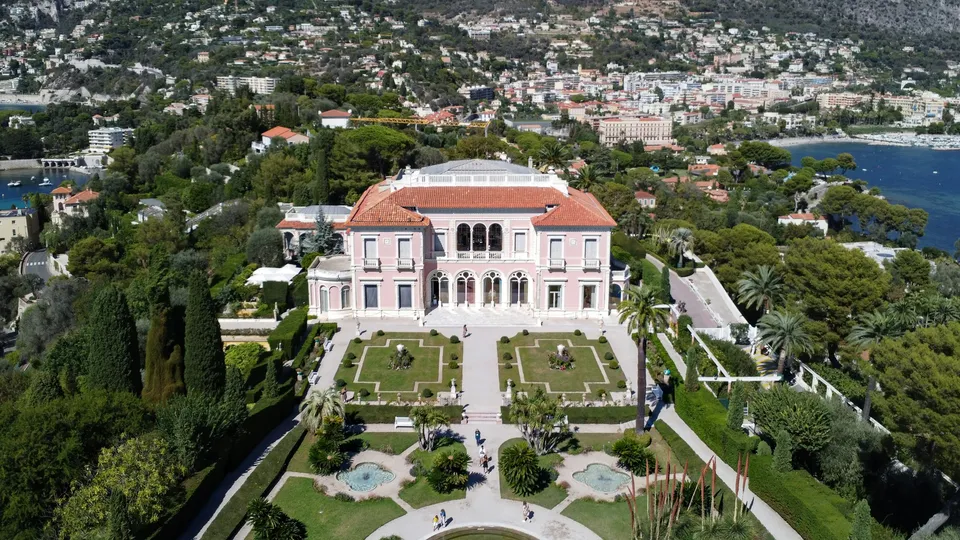
Saint-Jean-Cap-Ferrat is the green peninsula between Nice and Monaco, a former fishing village of 1,531 residents. Its Villa Ephrussi de Rothschild was built from 1907 to 1912 for Béatrice Ephrussi de Rothschild, who left it in 1933, with 7 hectares and some 5,000 works of art, to the Académie des Beaux-Arts. It is a palace in nine themed gardens: French, Spanish, Florentine, Sèvres, stone, Japanese, exotic, Provençal and a rose garden. It opens every day of the year (except December 14 and 25, 2026): until January 31, 2027, from 10 a.m. to 4:30 p.m. on weekdays and to 6 p.m. on weekends and school holidays; from February 1 to October 31, 2027, from 10 a.m. to 6 p.m., to 7 p.m. in July and August. The ticket is 18 euros (12 euros for ages 7 to 17 and students up to 25, free under 7), with an audioguide in English.
The cape is also a walk. The tourist office lists the tour of Cap Ferrat, 4.8 km in about 1.5 hours, from the Chemin de la Carrière past the lighthouse to Passable beach (good shoes, not for anyone prone to vertigo), the Pointe Saint-Hospice, 1.8 km in 40 minutes to the Paloma beach, and the paved, step-free Promenade Maurice Rouvier to Beaulieu, 1.3 km one way and 20 minutes, fine for strollers and for people with reduced mobility. The paths can be closed in a heavy swell or wind. Paloma, facing east toward the cliffs of Beaulieu and Èze, is partly a private beach club.
Villefranche-sur-Mer
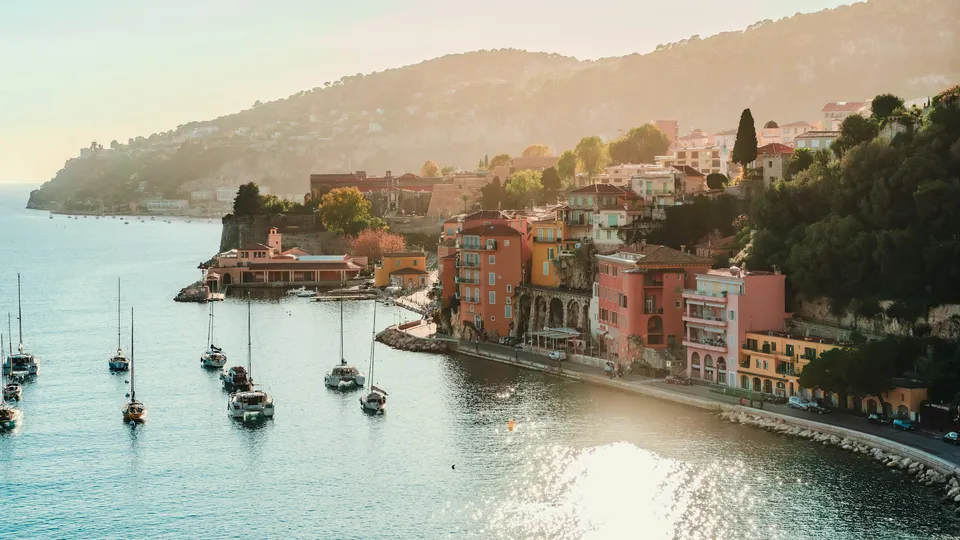
Villefranche, 5 minutes from Nice by train, opens on a bay the town calls “one of the deepest and most beautiful in Europe”, a regular port of call for cruise ships; on November 13, 2026, it became the first town to sign the Sustainable Cruise Charter for the Mediterranean. Founded in 1295 by Charles II of Anjou, a port of the House of Savoy, it has been French since 1860. Allow 3 to 4 hours for the sights, the tourist office says:
- The Citadelle Saint-Elme, a star-shaped fortress built from 1557 for Emmanuel-Philibert of Savoy, now the town hall, gardens and an open-air theater: free, open every day except January 1, May 1 and December 25. Its museums are closed for renovation.
- The Chapelle Saint-Pierre, the fishermen’s chapel that Jean Cocteau decorated inside and out in 1956 and 1957: 4 euros, free under 15, cash or check only, Wednesday to Sunday, 9:30 a.m. to 12:30 p.m. and 2 to 6 p.m.; closed for the winter from November 22 to December 22, 2026, and no photographs inside.
- The Rue Obscure, a covered medieval street of 130 meters along the first rampart, a listed monument since 1932, where Cocteau filmed part of “Le Testament d’Orphée” in 1959.
On the beach side, La Darse, behind the ramparts of the port, is pebble; Les Marinières, the largest, has a lifeguard post in summer.
Nice
Nice is the city of the Riviera and its practical base: 357,737 residents, the airport, the Promenade des Anglais, pebble beaches, and a World Heritage listing since 2021, as a winter resort of the Riviera. Its Carnival runs from February 9 to 28, 2027. Our Nice guide covers it neighborhood by neighborhood, with the museums and their prices.
Cagnes-sur-Mer and Haut-de-Cagnes
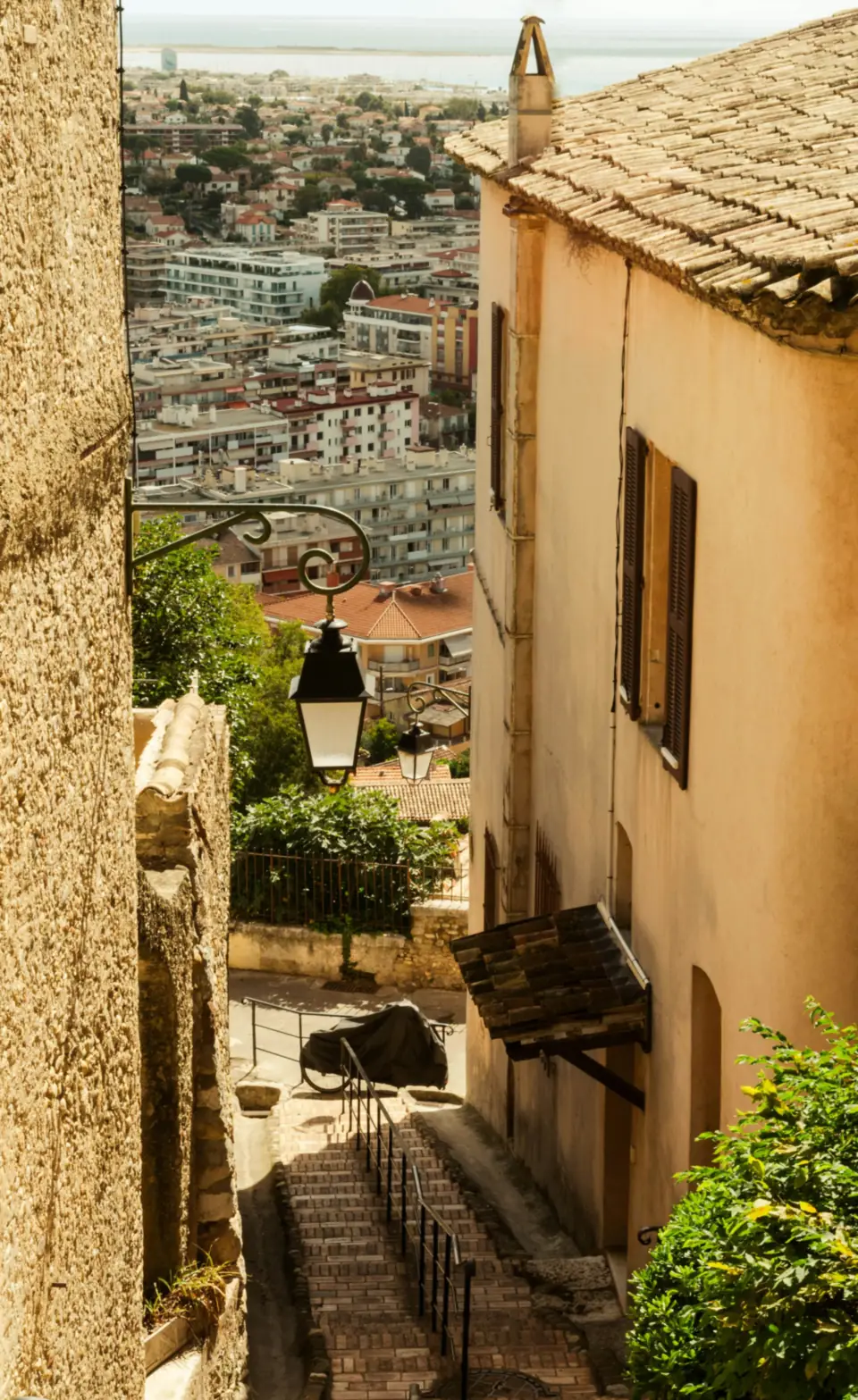
Cagnes-sur-Mer (53,354 residents) has a medieval village on its castle hill, Haut-de-Cagnes, a listed historic site since 1948 where 650 people live in steep cobbled lanes and vaulted passages. At the top, the Château-Musée Grimaldi, a fortress built around 1300 by Rainier Grimaldi and turned into a residence around 1620, holds an olive tree museum and some forty portraits of the cabaret singer Suzy Solidor by Foujita, Kisling, Laurencin, Lempicka, Picabia and Van Dongen, among others; 4 euros, closed on Tuesdays. Free shuttle bus 44 climbs to the village from the town-center bus station every 15 minutes, from 7 a.m. to 12:30 a.m. The Musée Renoir, the estate of Les Collettes where Renoir settled in 1908 (he spent the last 12 years of his life in Cagnes-sur-Mer), is closed: the town says it is currently closed, and the Nice Côte d’Azur tourist office says until further notice, so check before you go.
Saint-Paul-de-Vence and Vence
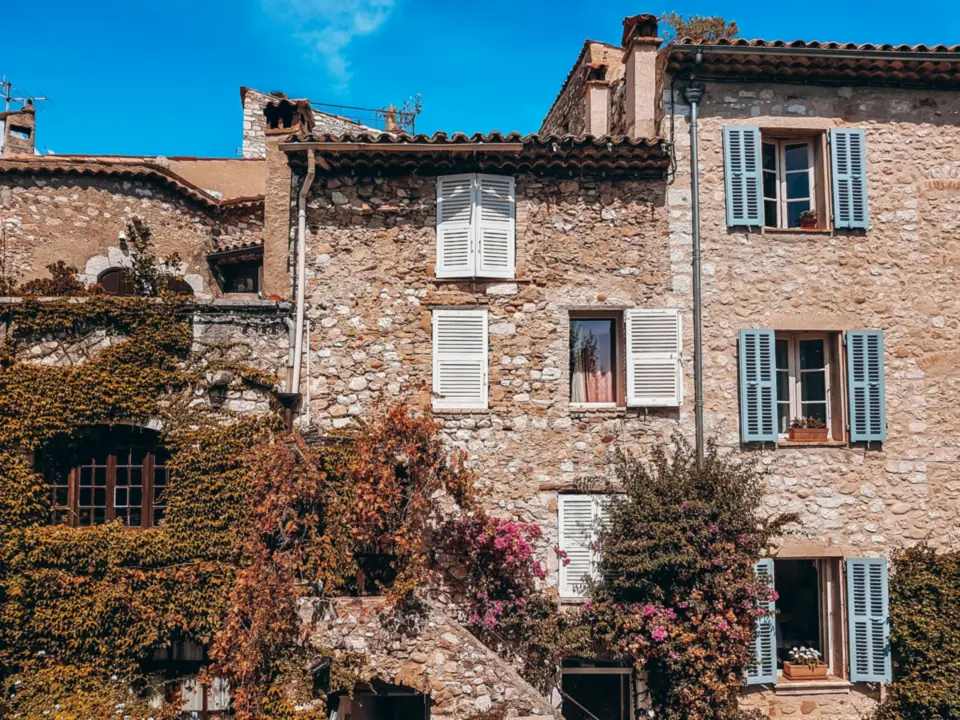
Saint-Paul-de-Vence (3,203 residents) is a village inside its ramparts, with 11 listed historic monuments, its tourist office says, and streets paved with pebbles set on edge in the Provençal way. Marc Chagall lived here from 1966 to 1985 and is buried in the village cemetery, facing the Mediterranean. Outside the village, a 10-minute walk away by the chemin de Sainte-Claire, the Fondation Maeght, “France’s first independent art foundation”, opens every day from 10 a.m. to 6 p.m. (to 7 p.m. in July and August), for 18 euros (14 euros reduced, free under 16); its temporary exhibition rooms are closed until December 4, 2026, while the sculpture garden, the Miró labyrinth and the Giacometti courtyard stay open. ZOU! bus 655 runs from Cagnes-sur-Mer to Vence via Saint-Paul.
Next door, Vence (19,917 residents) has the Chapelle du Rosaire, which Henri Matisse designed from 1948 to 1951 for the Dominican sisters, recognizable by its blue and white tiled roof and its wrought-iron cross 13 meters high. It opens Tuesday to Saturday, 10 to 11:30 a.m. and 2 to 5:30 p.m. from March to October (to 4:30 p.m. from November to February), for 7 euros, free under 12; it closes on Sundays, Mondays and public holidays, and every year from November 21 to December 12. Lignes d’Azur bus 9 reaches Vence from Grand Arénas, by Nice airport, in about 35 minutes.
Antibes and Juan-les-Pins
Antibes (77,637 residents, more than Cannes) has an old town inside its ramparts and 25 km of coast. At its center, the Château Grimaldi, where Picasso worked in 1946, became on December 27, 1966, the Musée Picasso, the first museum devoted to the artist. It costs 12 euros (8 euros reduced, free under 18) and closes on Mondays; it opens from 10 a.m. to 6 p.m. from June 15 to September 15, with a lunch break the rest of the year. Juan-les-Pins has sandy public beaches that run from the center toward Golfe-Juan; east of Antibes, from La Brague to the Fort Carré, the beaches are pebble. Its jazz festival, Jazz à Juan, held its 65th edition from July 9 to 19, 2026; the 2027 dates were not yet published. Our Antibes guide covers the town in detail: the museums and Fort Carré, the markets, the beaches one by one, the Cap d’Antibes path and Juan-les-Pins.
Two small towns nearby each have a national museum. Biot, “world capital of glass”, has been a reference in glassblowing since 1956, known for its bubble glass, and holds the Musée national Fernand Léger (8 euros, 10 euros during exhibitions, closed on Tuesdays, tickets on site only, reached from Biot station). Vallauris, a town of potters since Roman times, keeps Picasso’s mural “War and Peace” in the Romanesque chapel of its priory, at the Musée national Pablo Picasso (6 euros, free up to age 18 and on the first Sunday of the month, closed on Tuesdays).
Grasse
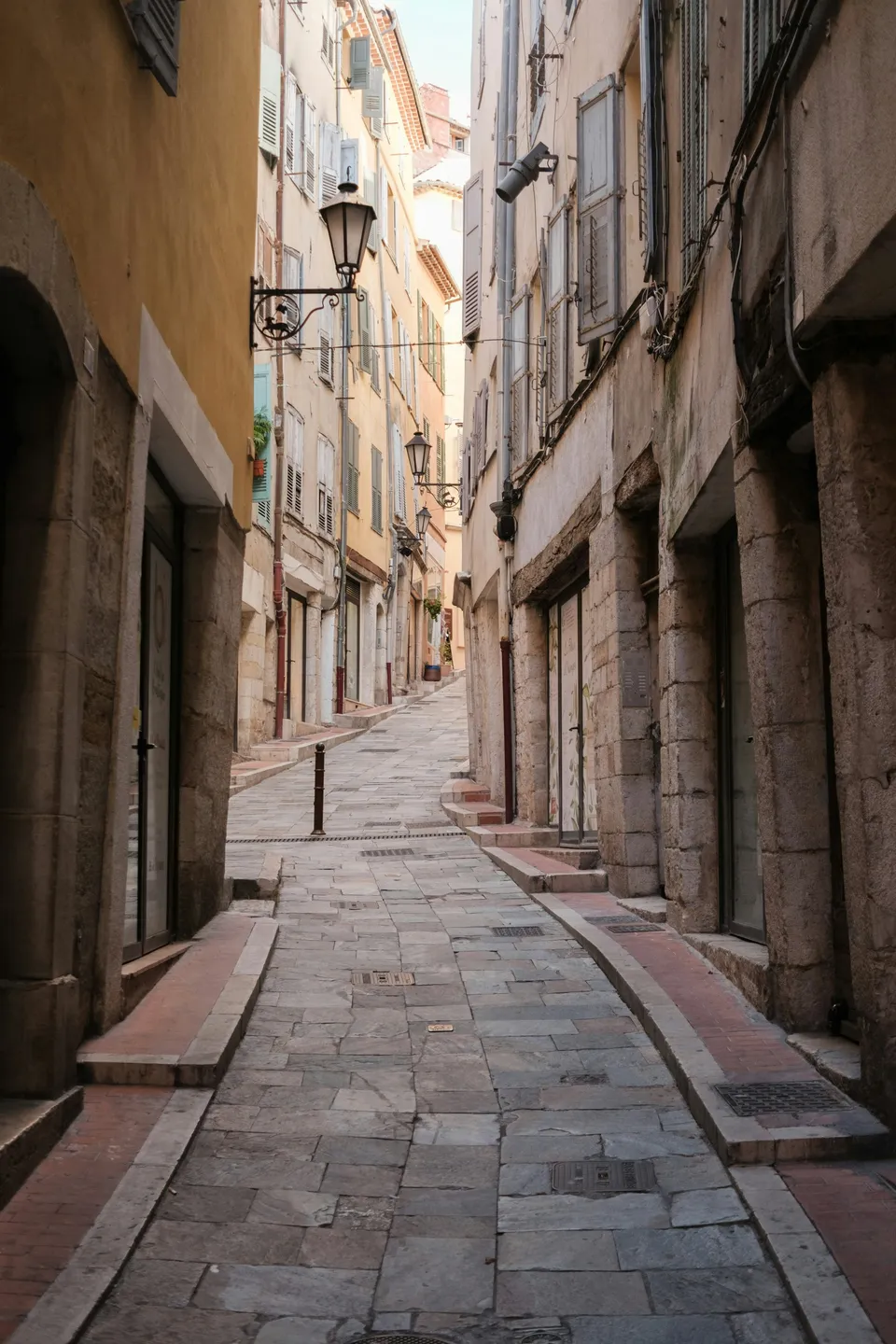
Grasse (50,970 residents), inland from Cannes, is the town of perfume. Since 2018, UNESCO has listed “the skills related to perfume in Pays de Grasse”, the growing of perfume plants, the processing of natural raw materials and the art of composition, practiced there “since at least the sixteenth century” in a craft long dominated by leather tanning. Three things to do:
- The Musée International de la Parfumerie, created in 1989, which the tourist office says covers more than 4,000 years of fragrance: 6 euros, free under 18, with 2 euros off for an adult holding a same-day TER train ticket to Grasse; 10 a.m. to 6 p.m. (to 7 p.m. in July and August), closed on the first Monday of January, February, March, October, November and December.
- The perfume houses Fragonard, Molinard and Galimard, whose guided tours are free and need no booking, the tourist office says.
- ExpoRose, every May over one weekend, when more than 25,000 cut roses decorate the streets (2027 dates not yet published), and the Jasmine Festival on the first weekend of August.
Cannes and the Lérins Islands
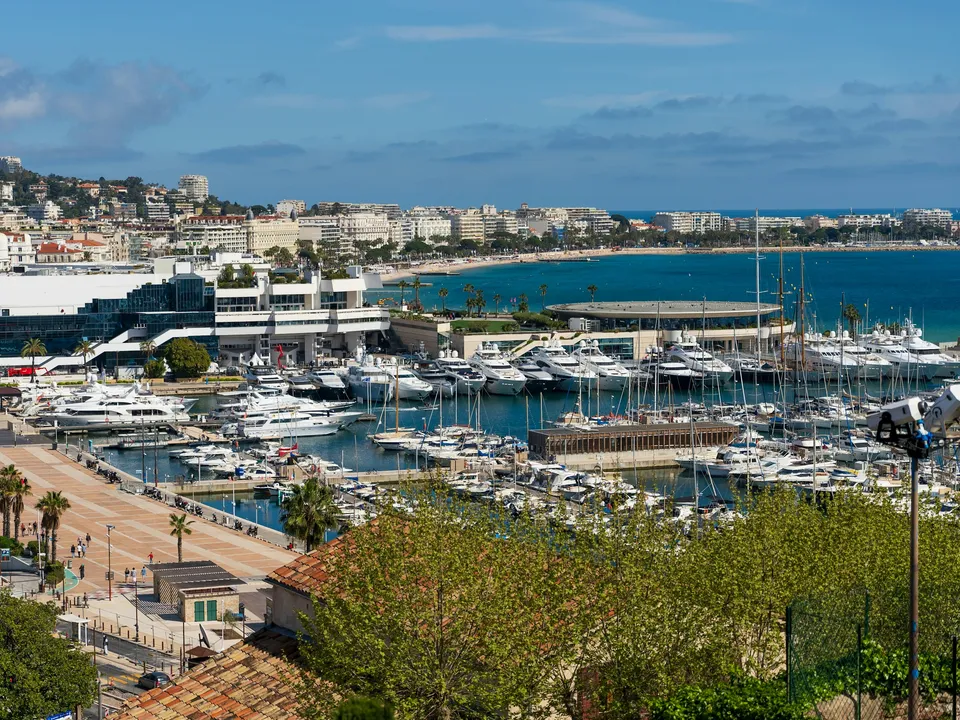
Cannes (74,350 residents) is the Croisette, 3 kilometers of palms and beach restaurants from the Palais des Festivals to Port Canto, and the 24 steps of the Palais, where the red carpet can be seen simply by standing in front of it. The 80th Festival de Cannes runs from May 11 to 22, 2027. It is “primarily reserved for film professionals”, the festival says, but film lovers can apply for a Cinéphiles accreditation through its Cannes Cinéma program, within the seats available, and people aged 18 to 28 for “3 Days in Cannes”.
Above the old port, Le Suquet is where Cannes began, as a fishing village. At its top, the castle of the Lérins monks holds the Musée des Explorations du Monde, formerly the Musée de la Castre: 6.50 euros, free under 18 and for students, closed on Mondays outside July and August. On the way up, the rue Meynadier leads to the Forville market. The city counts 7.6 km of beaches on its 15 km of coast, “seven kilometers of fine sand”, with 18 public beaches, 1 run by the city and 33 private concessions; at La Bocca, the Plage des Rochers has the red rocks of the Estérel on its sand.
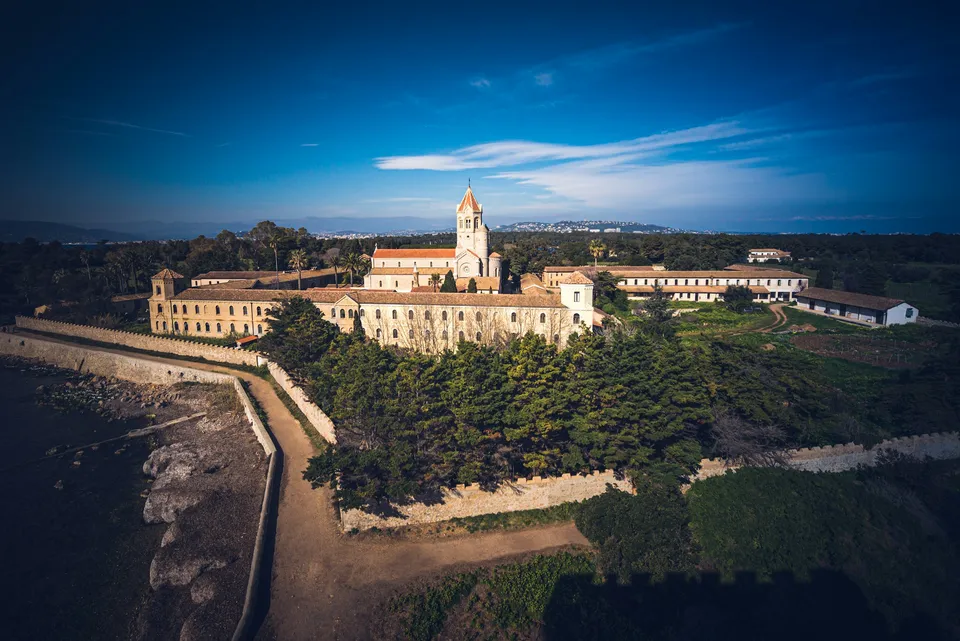
Off the Croisette, the two Lérins Islands are 15 to 20 minutes away by boat, the Cannes tourist office says, with boats every day of the year:
| Island | What you find | Boat from Cannes | Adult round trip |
|---|---|---|---|
| Sainte-Marguerite | The Fort Royal, whose prisons held the Man in the Iron Mask, and its Musée du Masque de Fer, a museum of underwater and land archaeology (6.50 euros, free under 18 and for students up to 26; on Mondays from October to May the museum is closed and the fort alone costs 3.50 euros); an underwater eco-museum, since 2021, that you reach by swimming about 100 meters from the beaches | Trans Côte d’Azur and Riviera Lines, quai Saint-Pierre: 9 departures a day, from 7:30 a.m. to 4:30 p.m. (no 7:30 a.m. boat on Sundays from November 1 to April 1) | 19 euros (the tourist office page says 18.50 euros) |
| Saint-Honorat | A Cistercian abbey, home to a monastic community for 16 centuries, with a fortified monastery (free to visit), six chapels and 8.5 hectares of vineyards on an island 1.5 km long | Planaria, the monks’ company, from the quai Laubeuf; book your return time | 19.50 euros |
Sources: Cannes Tourisme, the Lérins Islands; Ville de Cannes, Musée du Masque de Fer; Trans Côte d’Azur; Riviera Lines; Planaria; Abbaye de Lérins, read on November 26, 2026. Planaria’s online sales were paused on that day: tickets are sold at its kiosk on the quai Laubeuf.
The Estérel: Mandelieu-la-Napoule and Théoule-sur-Mer
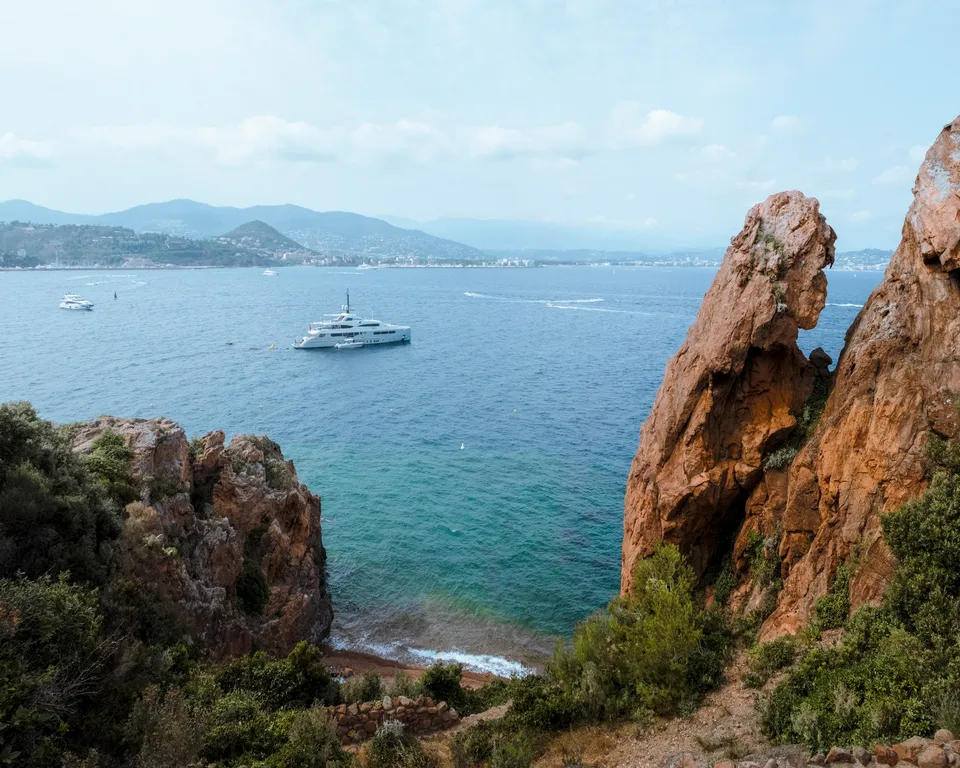
West of Cannes, the coast turns red. The Estérel is a massif of 32,000 hectares, nearly half of it a Natura 2000 area, whose rock, rhyolite or red porphyry, came from lava, the Estérel tourism board explains; it counts 40 km of footpaths. The Corniche d’Or, the sea road opened in 1903 at the initiative of the Touring Club de France, links Cannes to Saint-Raphaël between the red rocks and the water (30 km on one page of the board, 40 km on another).
Théoule-sur-Mer has fine-sand beaches and coves of red rock, and a departmental marine park of 355 hectares since 2017. Mandelieu-la-Napoule has the Château de la Napoule, a medieval fortress rebuilt after 1918 by an American couple of artists and patrons, the Clews: its gardens cost 4 euros and the guided tour of the interior, in French, 8 euros; they open Tuesday to Sunday from April to September and only on some days in winter. Mandelieu calls itself the mimosa capital of Europe, with the largest mimosa forest in Europe in the Tanneron hills: the mimosa season runs from January to March, and the Fête du Mimosa, held every February since 1930, runs from February 10 to 14, 2027.
Saint-Raphaël and Fréjus
At the foot of the Estérel, in the Var, Saint-Raphaël (37,113 residents) is a seaside resort 65 km from Nice airport, with the bay of Agay and its three fine-sand beaches; seven of its beaches flew the Blue Flag in 2026. Next to it, Fréjus (59,719 residents) was Forum Julii, founded by Julius Caesar, a leading port of the Roman Empire: its tourist office points to the Roman amphitheater, the aqueduct and the Saint-Léonce cathedral, the seat of one of the first bishoprics of Gaul.
Saint-Tropez
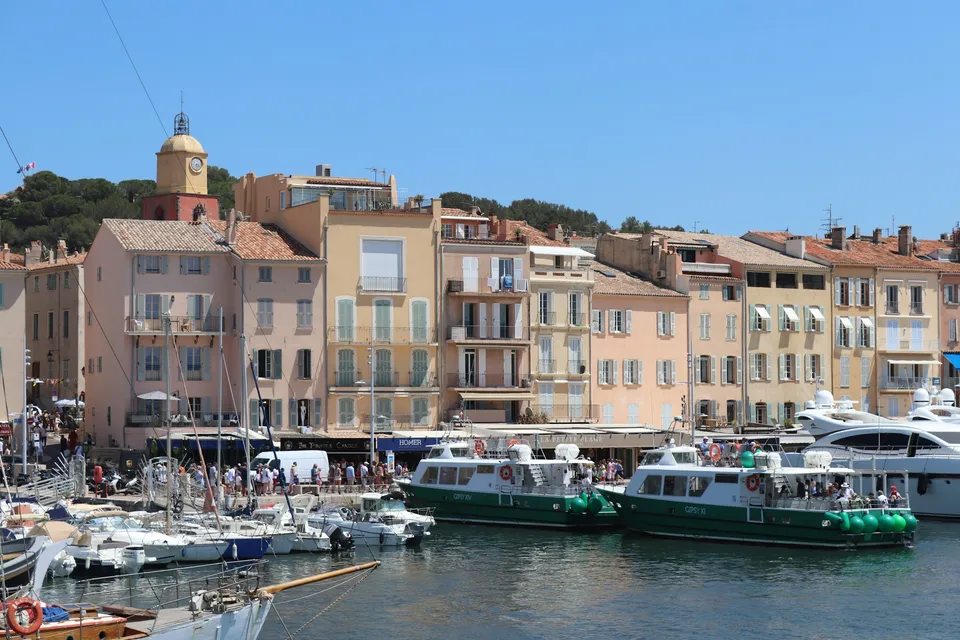
Saint-Tropez (3,582 residents) sits at the end of its peninsula, its tourist office says, “barely more than an hour” from the main airports and stations of Provence and the Côte d’Azur. Its port of colored facades and yachts drew the painter Paul Signac, who sailed in on his yacht L’Olympia in 1892, and the painters who followed him. What to know before you go:
- The market on the Place des Lices: every Tuesday and Saturday morning, more than 100 stalls.
- The Citadel, a fortress begun in 1602, has held a maritime history museum since 2013: 5 euros, free under 12 (the English text of the town’s page says 4 euros). It is closed for works until December 18, 2026, the tourist office says.
- The Musée de l’Annonciade, the town’s museum of pointillist, Nabi and Fauve painting, has been closed since October 19, 2026, for an extension; its reopening is planned for 2029.
- Pampelonne, the beach of the Saint-Tropez legend, is not in Saint-Tropez but in Ramatuelle next door: 4.5 km of fine sand, with about twenty beach clubs in season.
- Les Voiles de Saint-Tropez, the regatta, runs from September 25 to October 3, 2027, and the Bravades, held since 1558, honor the town’s patron saint every May 16, 17 and 18.
Without a car, the tourist office lists these routes: Les Bateaux Verts from Sainte-Maxime all year (20 minutes, 9.20 euros one way on the operator’s site, 9 euros on the tourist office’s page); Trans Côte d’Azur day trips from Cannes or Nice from May 11 to October 28, 2027; Les Bateaux Bleus from Saint-Raphaël from April 2027; ZOU! bus 876 from the bus station behind Saint-Raphaël-Valescure station, via Sainte-Maxime; and ZOU! buses 878 and 879 from Toulon station.
Which Town for Which Trip
| If you want | Choose | Why |
|---|---|---|
| A first trip without a car | Nice | The airport, the trains both ways along the coast, buses to the villages |
| Small towns by the sea | Menton, Beaulieu-sur-Mer | Menton, the “pearl of the Riviera”; Beaulieu, a Belle Époque winter resort |
| Villas and gardens | Saint-Jean-Cap-Ferrat, Beaulieu-sur-Mer | The Villa Ephrussi and its nine gardens, the Villa Kérylos |
| Sandy beaches | Cannes, Juan-les-Pins, Saint-Raphaël | Fine sand at Cannes and Agay, sand at Juan-les-Pins, where Nice has pebbles |
| Modern art | Antibes, Saint-Paul-de-Vence, Vence, Biot, Vallauris | Picasso, the Fondation Maeght, the Matisse chapel, Léger |
| Events and glamour | Monaco, Cannes, Saint-Tropez | The Grand Prix, the Film Festival, the Voiles |
| Walks and nature | Théoule-sur-Mer and the Estérel, Cap Ferrat, Cap Martin | Red rocks, coastal paths, a marine park |
Source: the official pages cited in each town section above, read on November 26, 2026.
The Beaches of the French Riviera: Sand or Pebbles
The Riviera’s beaches range from pebbles to fine sand, and several towns have both free public beaches and private beach clubs: Cannes counts 18 public beaches and 33 private concessions, Beaulieu three beach clubs from mid-April to mid-October. What the towns’ own pages say:
| Town | Beaches |
|---|---|
| Roquebrune-Cap-Martin | Four beaches between Menton and Monaco, among them the Buse, a little-visited pebble beach in the Cabbé bay |
| Beaulieu-sur-Mer | Two beaches of fine gravel, the Petite Afrique and the Baie des Fourmis, with lifeguards from June to August |
| Saint-Jean-Cap-Ferrat | Paloma, facing the cliffs of Beaulieu and Èze, partly a private beach club |
| Villefranche-sur-Mer | La Darse, pebble; Les Marinières, the largest, with a lifeguard post in summer |
| Nice | Pebbles |
| Antibes and Juan-les-Pins | Sandy public beaches in Juan-les-Pins; pebbles east of Antibes; the shallow Ponteil and La Salis are good for young children |
| Cannes | 7.6 km of beaches, mostly fine sand: 18 public, 1 run by the city, 33 private concessions, plus the beaches of the Lérins Islands |
| Théoule-sur-Mer and Saint-Raphaël | Fine sand and red-rock coves; three sandy beaches at Agay |
| Ramatuelle (Pampelonne) | 4.5 km of fine sand, about twenty beach clubs in season |
Sources: Ville de Roquebrune-Cap-Martin; Beaulieu-sur-Mer tourist office; Saint-Jean-Cap-Ferrat tourist office; Office de Tourisme Nice Côte d’Azur, La Darse; Côte d’Azur France; Antibes Juan-les-Pins tourist office; Ville de Cannes; Théoule-sur-Mer tourist office; Estérel Côte d’Azur, Saint-Raphaël; Ramatuelle tourist office, read on November 26, 2026.
The Blue Flag in 2026. The Pavillon Bleu label, held by 384 beaches in France in 2026, went to 30 beaches in the Alpes-Maritimes, all in three towns: Cannes (12, two of them on Sainte-Marguerite), Antibes (11) and Nice (7). In the Var, Saint-Raphaël has 7, among them Agay, Anthéor and Le Dramont. None of the beaches of Menton, Villefranche, Saint-Tropez or Pampelonne is on the 2026 list, according to Pavillon Bleu.
Weather on the French Riviera Month by Month
Météo-France’s climate normals for three stations of the coast, averages for 1991 to 2020: Nice, Cannes and Fréjus, at the western end.
| Month | Nice, low to high | Cannes, low to high | Fréjus, low to high | Rain, Nice and Cannes |
|---|---|---|---|---|
| January | 5.8 to 13.3 °C | 3.7 to 13.6 °C | 4.0 to 13.3 °C | 73.5 and 82.5 mm |
| February | 6.1 to 13.5 °C | 3.7 to 13.9 °C | 3.8 to 14.0 °C | 53.6 and 57.0 mm |
| March | 8.3 to 15.4 °C | 6.0 to 16.0 °C | 6.1 to 16.3 °C | 51.0 and 60.2 mm |
| April | 10.8 to 17.4 °C | 8.7 to 18.2 °C | 8.6 to 18.6 °C | 68.8 and 78.2 mm |
| May | 14.5 to 21.0 °C | 12.6 to 21.9 °C | 12.5 to 22.4 °C | 40.3 and 51.8 mm |
| June | 18.1 to 24.7 °C | 16.3 to 25.5 °C | 16.2 to 26.3 °C | 35.7 and 32.5 mm |
| July | 20.8 to 27.5 °C | 18.7 to 28.2 °C | 18.6 to 29.1 °C | 13.6 and 18.7 mm |
| August | 21.1 to 27.9 °C | 18.8 to 28.6 °C | 18.7 to 29.3 °C | 17.2 and 23.9 mm |
| September | 17.7 to 24.8 °C | 15.4 to 25.3 °C | 15.4 to 25.6 °C | 81.0 and 92.1 mm |
| October | 14.0 to 21.0 °C | 12.1 to 21.3 °C | 12.2 to 21.5 °C | 127.9 and 134.3 mm |
| November | 9.7 to 17.0 °C | 7.9 to 17.1 °C | 8.0 to 16.9 °C | 138.4 and 145.4 mm |
| December | 6.6 to 14.1 °C | 4.6 to 14.3 °C | 4.9 to 13.7 °C | 90.3 and 104.6 mm |
| Year | 12.8 to 19.8 °C | 10.7 to 20.3 °C | 10.8 to 20.6 °C | 791.3 and 881.2 mm |
Source: Météo-France, normals 1991-2020: Nice, and the station sheets of Cannes and Fréjus, read on November 26, 2026. In Fahrenheit, Cannes averages highs of about 56 °F in January and 83 °F in August.
What the table means for a trip:
- From June to September, highs reach about 25 to 29 °C, and July and August are the driest months, with under 25 mm of rain at both Nice and Cannes. Cannes counts 98.7 days a year at 25 °C or more, and 17.5 at 30 °C or more.
- April and May give highs of 17 to 22 °C.
- Winter is mild by the sea, with highs of 13 to 14 °C from December to February, and sunny: Nice counts about 145 to 165 hours of sunshine a month in winter and 2,760 hours a year, Cannes 2,743 (sunshine measured from 1995 to 2018). The nights are cooler in Cannes and Fréjus than in Nice.
- The wettest months are October and November, with 128 to 145 mm of rain at Nice and Cannes, over about 7.5 to 8.5 days of rain a month.
Météo-France’s climate normals give no sea temperature; a Météo-France article of August 6, 2024 notes that August is usually the warmest month for the seas around France, and that Mediterranean water can swing in a few days with the wind.
The 2027 Calendar of the French Riviera
| Event | Where | 2027 dates, as published |
|---|---|---|
| Monte-Carlo Rally | Monaco | January 21 to 24 |
| Carnaval de Nice | Nice | February 9 to 28 |
| Fête du Mimosa | Mandelieu-la-Napoule | February 10 to 14 |
| Fête du Citron | Menton | February 13 to 28 |
| Monaco E-Prix | Monaco | May 1 and 2 |
| Festival de Cannes (80th edition) | Cannes | May 11 to 22 |
| Bravades | Saint-Tropez | May 16 to 18, every year |
| ExpoRose | Grasse | One weekend in May; 2027 date not yet published |
| Monaco Grand Prix (Formula 1) | Monaco | June 3 to 6 (Automobile Club de Monaco); race weekend June 4 to 6 (formula1.com) |
| Jazz à Juan | Juan-les-Pins | 2027 dates not yet published (2026: July 9 to 19) |
| Nice Jazz Festival | Nice | 2027 dates not yet published (2026: July 23 to 25) |
| Monaco Yacht Show | Monaco, Port Hercule | September 22 to 25 |
| Les Voiles de Saint-Tropez | Saint-Tropez | September 25 to October 3 |
Sources: Automobile Club de Monaco; formula1.com, 2027 calendar; Carnaval de Nice; Mandelieu-la-Napoule tourist office; Fête du Citron; Festival de Cannes; Saint-Tropez tourist office, history; Ville de Grasse, ExpoRose; Jazz à Juan; Métropole Nice Côte d’Azur, Nice Jazz Festival; Monaco Yacht Show; Les Voiles de Saint-Tropez, read on November 26, 2026.
February is the Riviera’s festival month: the Carnival, the Lemon Festival and the Mimosa Festival overlap, in a month of mild days by the sea.
Getting to the French Riviera
From the US
Nice Côte d’Azur is “the second airport in France after Paris”, it says, with 15,229,664 commercial passengers in 2025. Its pages list non-stop flights from four US cities:
| From | Airline | Frequency, as published | Flight time |
|---|---|---|---|
| New York JFK | Delta | 7 a week, April to October | About 9 hours |
| New York Newark | United | 7 a week, April to October | About 9 hours |
| New York Newark | La Compagnie | 4 a week, all year | About 9 hours |
| Boston | Delta | 3 a week, May to October | About 8 h 30 |
| Atlanta | Delta | 7 a week, May to October | About 10 h 15 |
| Philadelphia | American Airlines | 7 a week, May to October | About 9 hours |
Source: Aéroport Nice Côte d’Azur, flights to the United States, read on November 26, 2026. The flight times are the airport’s averages for the route.
From Paris by train
| From Paris to | Trains a day | Fastest | Average | From |
|---|---|---|---|---|
| Saint-Raphaël (Saint-Raphaël-Valescure station) | 15 | 4 h 38 | 5 h 41 | 25 euros |
| Cannes | 15 | 5 h 03 | 6 h 02 | 25 euros |
| Antibes | 15 | 5 h 15 | 6 h 15 | 25 euros |
| Nice | 15 | 5 h 34 | 6 h 38 | 25 euros |
| Monaco (Monaco Monte-Carlo), with a change | 12 | 6 h 25 | 7 h 29 | 25 euros |
| Menton, with a change | 12 | 6 h 40 | 7 h 43 | 33 euros |
Source: SNCF Connect, routes from Paris to Nice, Cannes, Antibes, Saint-Raphaël, Monaco and Menton, read on November 26, 2026. Trains leave from Paris Gare de Lyon (and Austerlitz for the night train); the “from” fares are one way in second class, on some trains and dates.
From Nice airport to the towns
| To | How | Time and price, as published |
|---|---|---|
| Central Nice | Tram line 2 | Under 30 minutes to Jean Médecin, every 7 to 8 minutes on weekdays; airport round-trip ticket 10 euros |
| Monaco and Menton | ZOU! express bus 80, stand 1 at Terminal 2 | Every 30 minutes, 47 trips a day; 21.40 euros; on the 8:30 a.m. run, about 1 hour to Monaco and 1 h 30 to Menton |
| Cannes | ZOU! express bus 81, stand 2 | 21.40 euros |
| Antibes, Golfe-Juan, Vallauris | ZOU! express bus 82, stand 3 | 11 euros |
| By taxi | From the official ranks | Fixed 2026 fares: Nice center 32 euros, Antibes or Juan-les-Pins 72 euros, Cannes 85 euros, Monaco 95 euros |
Sources: Aéroport Nice Côte d’Azur, public transport and taxis; Nice Airport Xpress, line 80; ZOU! tickets for lines 81 and 82, read on November 26, 2026. For lines 81 and 82, the airport points to tickets sent by text message (t-zoukeolis.fr); line 80 takes a bank card at the validator on board.
Getting Around the Riviera Without a Car
By train along the coast
The coast railway is the Riviera’s main street: the Nice tourist office describes the TER regional trains as “a fast link between Cannes and Ventimiglia for all the main towns along the Côte d’Azur coast”, and a ticket is valid on any train that day on its route.
| Route | Trains a day (round trips) | Average time | Full one-way fare |
|---|---|---|---|
| Nice to Villefranche-sur-Mer | 60 | 5 minutes | 3.60 euros |
| Nice to Monaco | 65 | 20 minutes | 6.10 euros |
| Nice to Menton | 60 to 65 | 40 minutes | 7.70 euros |
| Monaco to Menton | More than 60 | 4.10 euros | |
| Nice to Ventimiglia (Italy) | More than 30 | 10.60 euros | |
| Nice to Antibes | More than 140 | 20 minutes | 7 euros |
| Cannes to Antibes | More than 160 | 10 minutes | 5 euros |
| Nice to Cannes | More than 140 | 35 minutes | 9.70 euros |
| Cannes to Grasse | More than 30 | 6.70 euros | |
| Cannes to Saint-Raphaël | More than 30 | 10.20 euros | |
| Nice to Saint-Raphaël | 60 | 1 hour | 16 euros |
Source: TER Sud, route pages for each pair of towns, read on November 26, 2026; the empty cells are times the route page does not give, and the Nice to Menton page gives both 60 and 65. First trains leave Nice at about 5:30 to 5:50 a.m., the last at about 10:20 to 11:10 p.m., depending on the route.
Two discounts are worth knowing. The ZOU! Malin card costs 20 euros for a year and takes 30 percent off every regional train and ZOU! bus trip, for you and one companion, with no proof needed. The Pass SudAzur Explore gives unlimited trains, trams and buses in the Alpes-Maritimes and Monaco: 35 euros for 3 days, 50 euros for 7 days, 80 euros for 14 days (30, 40 and 65 euros for children under 18 with an adult). Its train part runs from Théoule-sur-Mer to Menton-Garavan.
By bus to the villages
In and around Nice, the Lignes d’Azur network charges 1.70 euros for a Solo ticket, with connections for 74 minutes, 7 euros for a 1-day pass and 20 euros for 7 days. Useful lines for a visitor, from the Lignes d’Azur journey planner:
- Line 15, from central Nice to Villefranche-sur-Mer, Beaulieu-sur-Mer and the port of Saint-Jean-Cap-Ferrat, about 35 minutes end to end.
- Line 600 (ZOU!), along the coast road from Nice through Villefranche, Beaulieu, Èze-sur-Mer and Cap-d’Ail to Monaco and Menton, about 1 h 15 end to end on the first morning run.
- Line 602 (ZOU!), from Nice’s Vauban bus station to Èze Village and Monaco, 6 trips a day each way, about 35 minutes to Èze.
- Line 9, from Grand Arénas, by the airport, to Cagnes-sur-Mer and Vence, about 35 minutes.
- Line 650 (ZOU!), from Nice Grand Arénas to Grasse, about 1 h 05, and line 620 (ZOU!) from Nice to Antibes and Cannes.
Sources: Lignes d’Azur, tickets and passes; Lignes d’Azur journey planner (timetable of November 26, 2026), read that day. The ZOU! regional bus fares are published only in a downloadable leaflet, not read for this guide: check the price in the ZOU! app before you board.
By boat
| Crossing | Operator | When | Adult price |
|---|---|---|---|
| Cannes to Île Sainte-Marguerite | Trans Côte d’Azur, Riviera Lines | Every day, all year | 19 euros round trip |
| Cannes to Île Saint-Honorat | Planaria (the Lérins Abbey) | Every day, all year | 19.50 euros round trip |
| Sainte-Maxime to Saint-Tropez | Les Bateaux Verts | All year, 20 minutes | 9.20 euros one way, 16.30 euros round trip (9 and 16 euros on the tourist office’s page) |
| Cannes to Saint-Tropez, day trip | Trans Côte d’Azur | May 11 to October 28, 2027 (daily from July 1 to September 26); leaves 10:15 a.m., back 5:45 p.m. | 73 euros |
| Nice to Saint-Tropez, day trip | Trans Côte d’Azur | May 11 to October 28, 2027 (daily except Mondays from July 1 to September 26); leaves 9 a.m., back 7 p.m. | 86 euros |
| Nice to Monaco, day trip | Trans Côte d’Azur | April 5 to October 31, 2027, Tuesdays, Thursdays and Saturdays; leaves 9:30 a.m., back 6 p.m. | 50 euros |
Sources: Trans Côte d’Azur, its Nice to Saint-Tropez and Nice to Monaco pages; Riviera Lines; Planaria; Les Bateaux Verts, read on November 26, 2026. The day trips are round trips on the same day, with five hours in Saint-Tropez (11:30 a.m. to 4:30 p.m.) and nearly seven in Monaco (10:15 a.m. to 5 p.m.); the Saint-Tropez trips need a booking.
By car
Between Nice and Menton, three roads run one above the other, the Nice tourist office explains: the Basse Corniche along the sea, through Villefranche, Beaulieu and Saint-Jean-Cap-Ferrat; the Moyenne Corniche, halfway up, the old Route Nationale 7, through Èze Village; and the Grande Corniche, more than 400 meters up, built under Napoleon I on the Roman Via Augusta. The A8 motorway runs behind the coast from Aix-en-Provence to the Italian border: Cannes to Nice is 33 km and about 53 minutes, with a toll estimated at 3.50 euros for a car by Vinci Autoroutes, against 35 minutes on average by train.
Sources: Office de Tourisme Nice Côte d’Azur, the three corniches and by road; Vinci Autoroutes, route tool (toll estimate on the tariffs of June 1, 2026), read on November 26, 2026.
A French Riviera Itinerary for 3 to 7 Days
With Nice as a base, the trains and buses above cover almost everything:
- Day 1, Nice: the Promenade des Anglais, the old town, Castle Hill and a museum, as our Nice guide sets out.
- Day 2, the capes east of Nice: the train to Villefranche-sur-Mer (5 minutes) for the old town and the Cocteau chapel (Wednesday to Sunday), bus 15 to Saint-Jean-Cap-Ferrat for the Villa Ephrussi or the 4.8 km tour of the cape, and the Villa Kérylos in Beaulieu on the way back.
- Day 3, Èze and Monaco: bus 602 to Èze Village in the morning, on to Monaco for the changing of the guard at 11:55 a.m. and the Oceanographic Museum, back by train; with time left, Roquebrune-Cap-Martin or Menton, 4.10 euros by train from Monaco.
- Day 4, Antibes and the art villages: the train to Antibes (20 minutes) for the old town and the Musée Picasso (closed on Mondays), then Saint-Paul-de-Vence and Vence for the Fondation Maeght and the Matisse chapel (closed on Sundays and Mondays).
- Day 5, Cannes and the Lérins Islands: the Croisette and Le Suquet in the morning, a boat to Sainte-Marguerite or Saint-Honorat in the afternoon.
- Day 6, Grasse or the Estérel: the train from Cannes to Grasse for the perfume museum and a free factory tour, or the coast west of Cannes for the red rocks of Théoule-sur-Mer.
- Day 7, Saint-Tropez: in season, the Trans Côte d’Azur day trip from Nice or Cannes; the rest of the year, the train to Saint-Raphaël and ZOU! bus 876, or the boat from Sainte-Maxime.
With three days, keep days 1 to 3. With five, add days 4 and 5.
Is the French Riviera Expensive?
Here is what the main sights and trips cost, from the operators’ own pages read on November 26, 2026:
| What | Price |
|---|---|
| A public beach in Nice, Cannes, Juan-les-Pins or Villefranche | Free |
| The Citadelle of Villefranche, the guided tours of the Grasse perfume houses, the Saint-Honorat monastery | Free |
| A Lignes d’Azur bus or tram ticket in and around Nice | 1.70 euros |
| A train from Nice to Monaco, or to Cannes | 6.10 euros, or 9.70 euros |
| The perfume museum of Grasse; the Musée Picasso of Vallauris | 6 euros each |
| The Musée Picasso of Antibes | 12 euros |
| The Villa Kérylos; the Villa Ephrussi de Rothschild | 15 euros; 18 euros |
| The Fondation Maeght | 18 euros |
| The Oceanographic Museum of Monaco | 20.50 euros |
| A day trip by boat from Nice to Saint-Tropez | 86 euros |
Source: the official pages cited in the town and transport sections above; for the beaches, article L321-9 of the Code de l’environnement (free use by the public is the basic purpose of a beach). Several museums are free under 18 (the Musée Picasso of Antibes, the perfume museum of Grasse, the museums of Cannes), and some are free for everyone on the first Sunday of the month, in some months of the year.
Staying Longer on the Riviera
If you come back for a winter or a season, the rules change once you stay beyond a holiday:
- The 90-day rule. As a visitor from a visa-exempt country such as the US, the UK, Canada or Australia, you can usually stay a maximum of 90 days within any 180-day period, according to the European Commission. Since April 10, 2026, the European Union’s Entry/Exit System has been fully running at its external borders: it records each entry and exit with your face and fingerprints instead of a stamp, and counts the 180 days as one period for all the countries that use it. Monaco asks for the same documents as France, with no other formality once you are in, its government says. Our guide to how long Americans can stay in France without a visa explains the count, and the Schengen calculator checks your dates. To stay longer than 90 days in any 180, you need a long-stay visa or a residence permit.
- The tourist tax. Since the 2023 finance law, the taxe de séjour carries a 34 percent additional tax in the Alpes-Maritimes, the Var and the Bouches-du-Rhône; the French government’s local authorities site says it goes to the company building the new Provence-Côte d’Azur rail line. The Métropole Nice Côte d’Azur keeps its 2027 rates equal to its 2026 rates.
- Furnished rentals. Since September 1, 2026, Nice lets a main residence be rented to tourists for up to 120 days a year, instead of 90. A bail mobilité, the furnished lease of 1 to 10 months, is open only to a tenant in training, higher education, an apprenticeship, an internship, civic service, a job transfer or a temporary work assignment, service-public says, so a visitor who simply wants a winter on the coast cannot sign one: our bail mobilité guide sets out the other leases.
For choosing a base for months rather than days, our comparison of where to live on the Côte d’Azur sets Cagnes-sur-Mer, Nice, Antibes, Cannes, Menton and Villefranche side by side, and our guide to renting in Nice covers the city’s market.
Finding a furnished home for a season, calling agencies and owners, and setting up the power, the internet or a bank appointment is the kind of work our Personal Assistant handles: the calls, the forms and the apartment search, in French.
FAQ
Where is the French Riviera?
On the Mediterranean coast of southeastern France, from the Italian border westward. France.fr runs it to the Estérel and the Gulf of Saint-Tropez, “about a hundred kilometers” along the sea, with Nice as its largest city (the Alpes-Maritimes Département counts 185 km of shoreline in its own territory alone); the Alpes-Maritimes tourism board takes it as far as Hyères.
What towns are on the French Riviera?
From east to west: Menton, Roquebrune-Cap-Martin, Monaco, Èze, Beaulieu-sur-Mer, Saint-Jean-Cap-Ferrat, Villefranche-sur-Mer, Nice, Cagnes-sur-Mer, Antibes and Juan-les-Pins, Cannes, Mandelieu-la-Napoule, Théoule-sur-Mer, Saint-Raphaël, Fréjus and Saint-Tropez, with Saint-Paul-de-Vence, Vence, Biot and Grasse inland. Nice and Cannes are both on it, and the Alpes-Maritimes tourism board lists “Nice, Cannes, Antibes, Grasse, Saint-Tropez, Monaco and Menton” as its best-known towns.
Is Monaco part of the French Riviera?
It is on the Riviera but it is not France: Monaco is a sovereign principality of 2.08 km² between Cap-d’Ail and Roquebrune-Cap-Martin, with its own government, French as its language and the euro. You enter it from France without a separate formality, by the train from Nice in 20 minutes.
What is the best time to visit the French Riviera?
June and September for warm days, with highs of about 25 to 26 °C; July and August are the hottest and driest months, with highs of 28 to 29 °C in Cannes and Fréjus. February is the festival month, with the Nice Carnival, the Menton Lemon Festival and the Mandelieu Mimosa Festival; October and November are the wettest months, according to Météo-France.
Can you visit the French Riviera without a car?
Yes, on the coast: TER trains link Cannes, Antibes, Nice, Monaco and Menton all day, with 60 to more than 160 round trips a day depending on the route, and buses reach Èze, Saint-Jean-Cap-Ferrat, Vence and Grasse. For Saint-Tropez, the tourist office points to the boats from Sainte-Maxime all year and from Nice and Cannes in season, and to bus 876 from Saint-Raphaël station.
Are the beaches on the French Riviera sandy?
Some are. Nice has pebble beaches, and so does La Darse in Villefranche; Beaulieu has fine gravel; Cannes, Théoule-sur-Mer, Agay and Pampelonne have fine sand, and Juan-les-Pins sandy public beaches. In 2026, 30 beaches in Antibes, Cannes and Nice, and 7 in Saint-Raphaël, carried the Blue Flag.
Conclusion
The French Riviera is one coast and a dozen trips: Menton and Roquebrune for the Italian end, Monaco for its palace and museum, the capes of Villefranche, Saint-Jean and Beaulieu for their villas and paths, Nice for the city, Antibes, Saint-Paul-de-Vence and Vence for Picasso, Maeght and Matisse, Grasse for perfume, Cannes for the Croisette and the Lérins Islands, the Estérel for its red rocks and Saint-Tropez for its port. Base yourself in Nice, take the train, come in June or September for the sea or in February for the festivals, and check the winter closures before you go. For the towns with their own guide, see Nice, Èze and Menton; for Provence and the rest of the South, our guide to the South of France; and for the whole country, region by region, our guide to the best places to visit in France.
The parts of the move Americans find out about too late.
What Americans get wrong about moving to France, and the number, form or deadline that fixes it. Straight to your inbox.
One email a week. Real numbers, nothing else.
Written by
Maxime Roseau
Co-founder, EasyFranceNow
Maxime Roseau is a French entrepreneur and co-founder of EasyFranceNow. His work focuses on French visas, residency, and citizenship: long-stay visa applications, OFII validation, prefecture procedures, permit renewals, and naturalization files, along with the operational side of relocation such as housing, rental dossiers, and administrative coordination after arrival.


