
Paris Food: What to Eat in Paris and Where, from Bistros and Bouillons to Bakeries and Markets

By Maxime Roseau Co-founder, Master of Business and Communication, Université Nice Sophia Antipolis
Published

In this article
- Paris Food at a Glance
- The Parisian Classics to Try
- Paris Pastries and Where They Come From
- The Best Baguette in Paris
- Where to Eat in Paris: Bistro, Brasserie, Bouillon or Café
- Where to Eat in Paris, Neighborhood by Neighborhood
- Paris Food Markets
- Food Tours and Cooking Classes
- Eating Out in Paris: Hours, Booking, Water and Tipping
- Staying Longer in Paris
- FAQ
- Conclusion
Paris food starts with a short list of dishes the city calls its own: onion soup in a brasserie, steak frites in a bistro, the croque-monsieur, the jambon-beurre sandwich, a baguette from an artisan baker, a croissant, and pastries born in Paris, from the mille-feuille to the Paris-Brest and the opéra. Where to eat them matters as much as what to order: a bistro for simple traditional cooking, a brasserie for the classics in an art deco room, a bouillon for a cheap meal in a historic dining room, a bakery for breakfast and lunch, and one of the city’s 91 markets for everything else.
This guide takes the Parisian dishes and pastries as the Paris tourist office describes them, the best baguette of 2026 and where to buy it, the kinds of restaurants and what they cost, the neighborhoods to eat in, the markets day by day, and the rules that apply at the table: meal times, free tap water, service included and tipping. Every address, price and date was read on the official page (the Paris tourist office, the City of Paris and the consumer authority, DGCCRF) on November 28, 2026. For the regional dishes of the rest of France, see our guide to French food.
Paris Food at a Glance
| What to eat | What it is | Where to eat it |
|---|---|---|
| Onion soup | Broth and caramelized onions under melted cheese and croutons | A brasserie |
| Steak frites | Rib steak with butter and herbs, and fries | A bistro |
| Croque-monsieur | Ham and béchamel in bread under melted cheese; with a fried egg, a croque-madame | A brasserie or a bakery |
| Jambon-beurre | A baguette with butter and ham | A bakery or a sandwich counter |
| Baguette | Crisp crust, soft crumb; the “tradition” is made without additives | An artisan bakery |
| Croissant | A buttery Viennese pastry, inherited from the Austrian bakeries of the 1830s | An artisan bakery |
| Macaron, opéra, mille-feuille, Paris-Brest | Pastries made famous, or invented, in Paris | A pâtisserie or a tea room |
| Brie and Coulommiers | The soft cheeses of the Paris region | A market or a cheese shop |
Source: Paris tourist office, Paris in 10 specialities and 10 Parisian pastries, read on November 28, 2026.
The Parisian Classics to Try
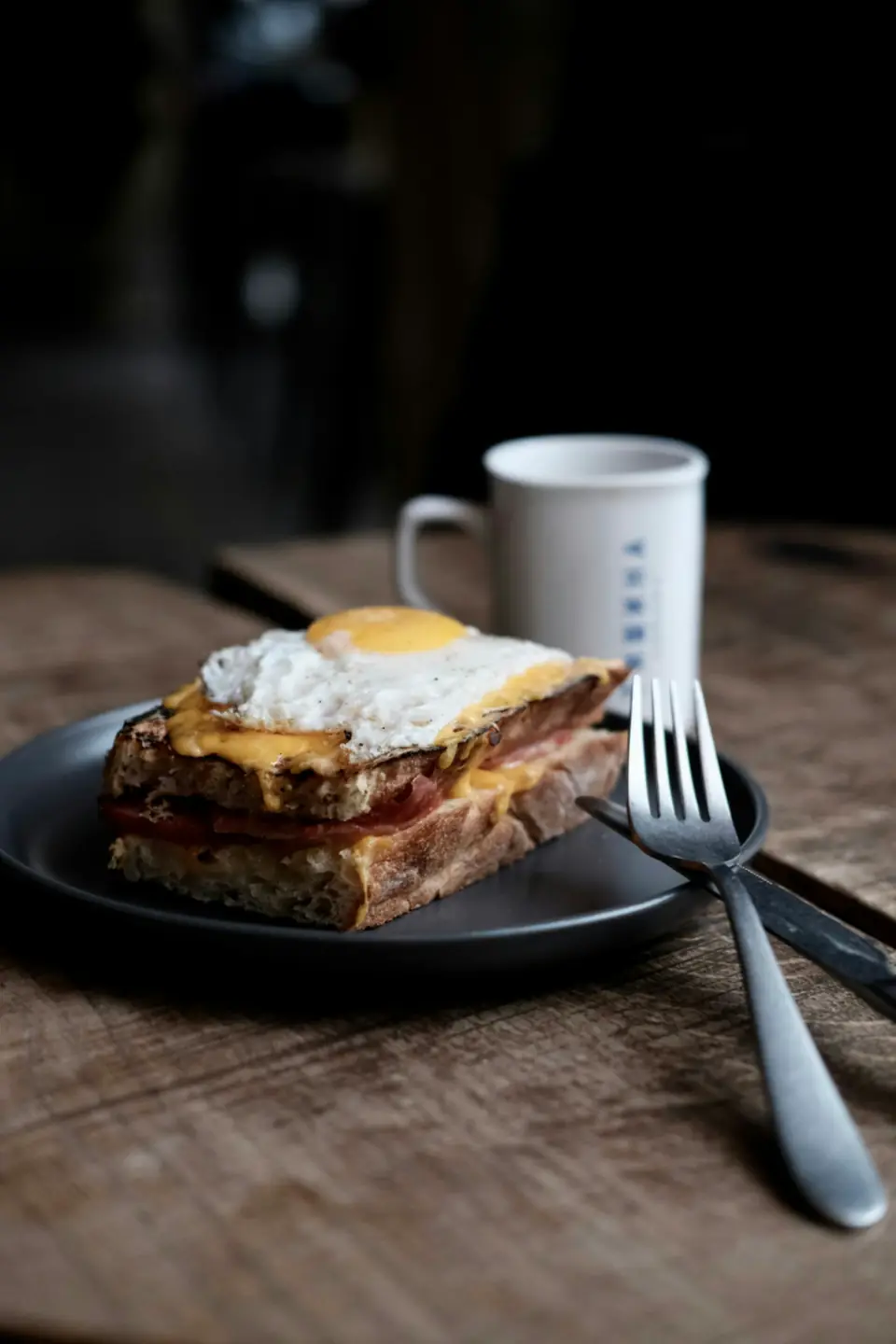
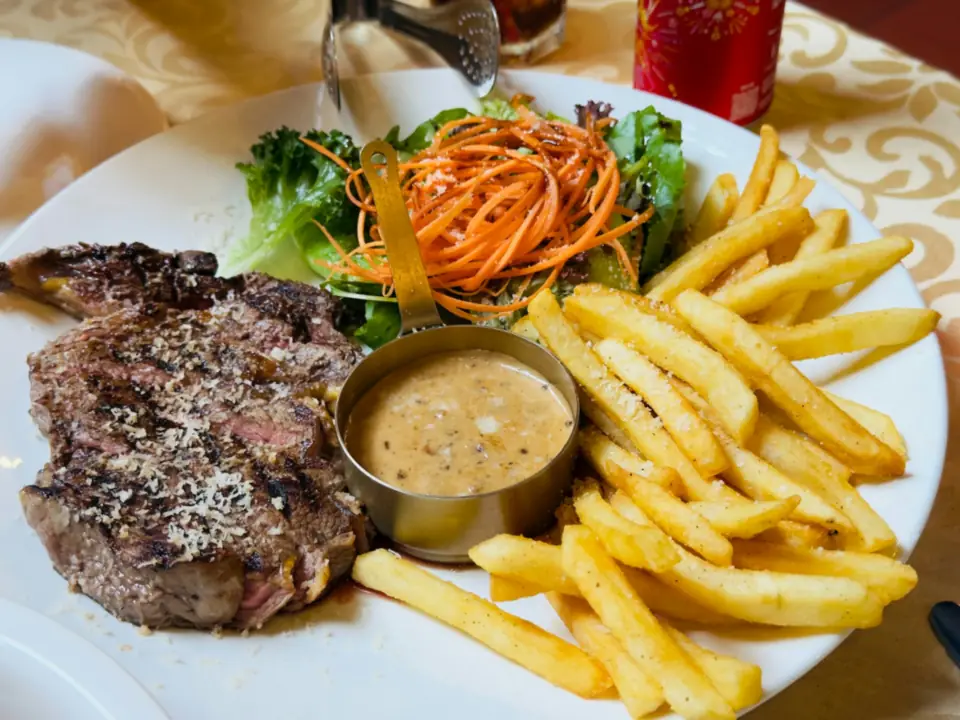
The dishes the Paris tourist office lists as the city’s own:
- Onion soup: a rich broth of caramelized onions under a layer of melted grated cheese and croutons. It was once served by the restaurants of the old market halls to revive the porters and the night owls; today it is on the menu of every good brasserie.
- Steak frites: the dish goes back to the 19th century, when La Villette was a slaughterhouse and its butchers ate rib steak with butter and herbs, with “Pont-Neuf potatoes”, the ancestors of fries. It is still a staple of Paris bistros. Beef in France is ordered at one of four cooking levels, from very rare to well done, the office notes, so say how you want it.
- Croque-monsieur: two slices of bread with boiled ham and béchamel under melted cheese, sold in brasseries and bakeries. Marcel Proust put it in a novel in 1918, and with a fried egg on top it becomes a croque-madame.
- Jambon-beurre: a baguette, butter and ham. The tourist office’s selection of the city’s sandwiches starts with it, at Le Petit Vendôme, 8 rue des Capucines (2nd), a bistro with red-checked tablecloths where the baguette is buttered at the counter, and at the boutique of the Ritz, Ritz Paris Le Comptoir, 38 rue Cambon (1st).
- Cheeses of the Paris region: mostly cow’s milk, soft, and led by the bries, from Meaux, Montereau, Melun or Provins, made from raw milk; Paris markets also sell Coulommiers, close to Camembert in taste and texture.
- Parisian honey and beer: hives on the roofs of the Musée d’Orsay, the Monnaie de Paris, the Institut de France and the Invalides make honey from the flowers of the city’s gardens and balconies, and the local beer scene has grown again, the office says, from Gallia, brewed from 1890 to 1969 and revived in 2009, to microbreweries.
Paris also eats the food of the whole world. The tourist office’s sandwich list runs from the bánh mì, the Vietnamese sandwich in a baguette, at Nonette Banh Mi & Donuts, 71 rue Jean-Pierre Timbaud (11th), to the Japanese sando at Benchy, 50 rue du Cherche-Midi (6th), and the meatball sandwich in matlouh bread at La Fille du Boucher, 20 rue Cardinet (17th).
The parts of the move Americans find out about too late.
What Americans get wrong about moving to France, and the number, form or deadline that fixes it. Straight to your inbox.
One email a week. Real numbers, nothing else.
Paris Pastries and Where They Come From
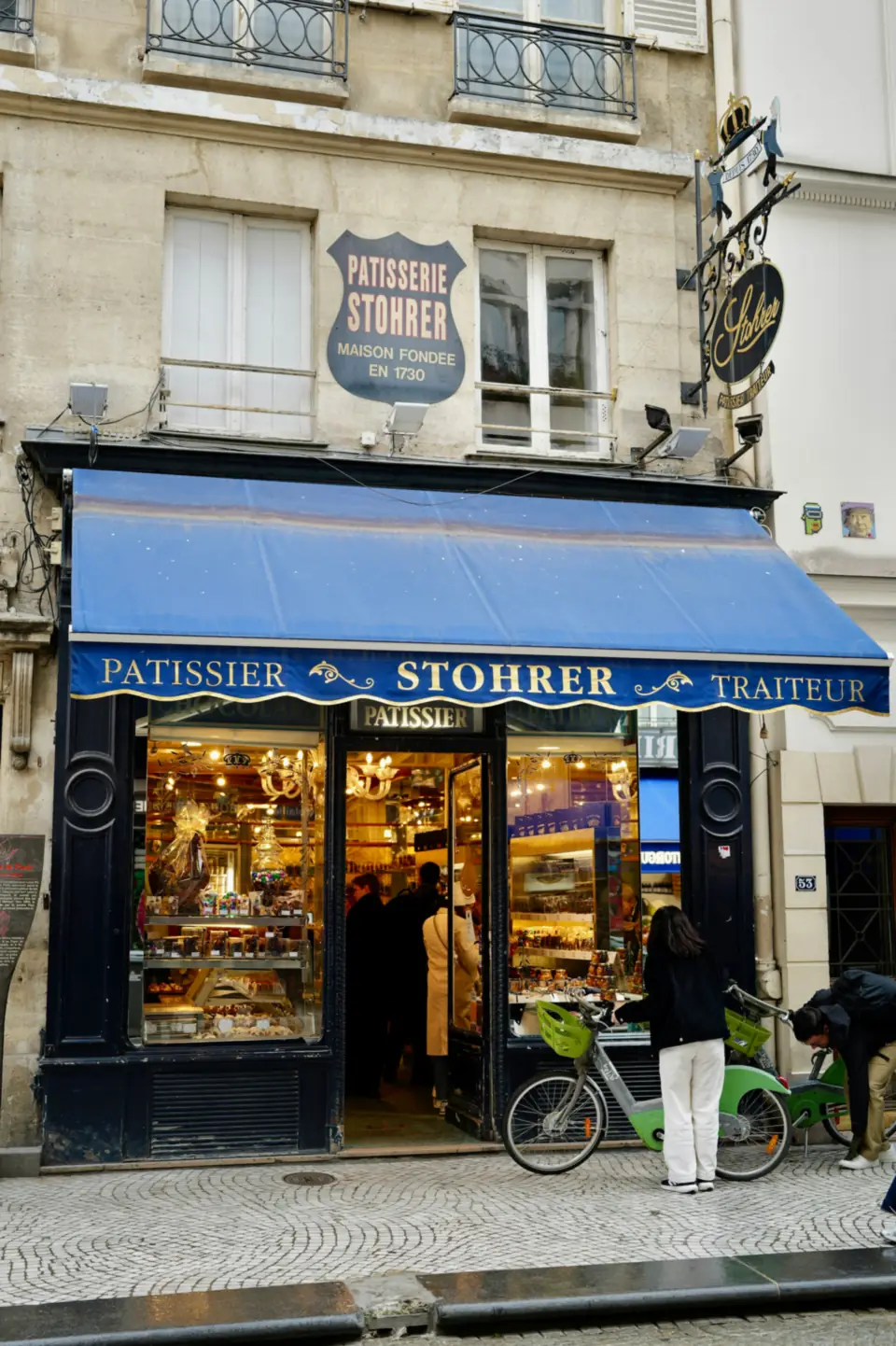
Many of the pastries you see in a Paris window were invented in the city. The tourist office’s list:
| Pastry | What it is | Its Paris story |
|---|---|---|
| Croissant | A buttery Viennese pastry, once brioche-like, now made with puff pastry | Inherited from the Austrian bakeries that opened in Paris in the 1830s |
| Mille-feuille | Layers of puff pastry and pastry cream under icing | Invented in 1867 in a pastry shop of the 7th arrondissement |
| Religieuse | A small cream-filled choux on a larger one, iced in chocolate or coffee | Invented in 1856 at the Frascati café, boulevard Montmartre |
| Financier | A small cake of butter and almond flour, shaped like a gold bar | Created around 1890 by a pastry chef named Lasne, in the stock exchange district |
| Paris-Brest | A wheel of choux pastry with praline cream | Named after the Paris-Brest bicycle race by Louis Durand, early 20th century |
| Opéra | Almond sponge, coffee cream, ganache and a chocolate glaze | Created in 1955 and named after the stage of the Palais Garnier |
| Saint-Honoré | A choux pastry base crowned with small cream puffs and Chantilly or Chiboust cream | Named after the patron saint of bakers and pastry chefs |
| Tarte Bourdaloue | A pear tart with frangipane | Invented in rue Bourdaloue, between Pigalle and the Opéra |
| Macaron | Two crisp almond shells with a filling | Made famous by Paris houses such as Ladurée and Pierre Hermé |
| Chouquettes | Light choux puffs with pearl sugar, eaten by the dozen | Choux pastry dates from the 16th century, at the French court |
Source: Paris tourist office, 10 Parisian pastries and Paris in 10 specialities, read on November 28, 2026.
The City of Paris also crowns a pastry each year. Its Grand Prix de la pâtisserie, created in 2019, went in its 2026 edition, the fifth, to Enzo Baptista, a pastry chef at Bo&Mie, for “Amour³”, a pastry built around the hazelnut with a touch of beer from a Paris brewery, on the 2026 theme “Paris, city of love”; 32 candidates competed, and taste counted for 45 percent of the score, the city says.
The Best Baguette in Paris
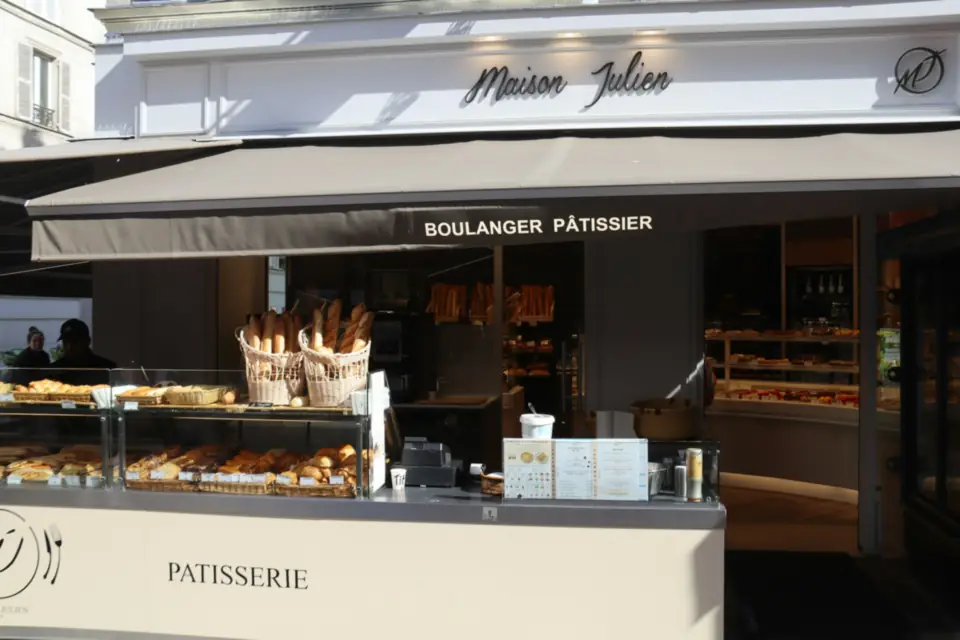
Every year since 1994 the City of Paris has elected the best “baguette de tradition française” among its bakers, and the winner supplies the Élysée Palace for a year. The 33rd Grand Prix, in 2026, went to Sithamparappillai Jegatheepan of the Fournil Didot, 103 rue Didot, in the 14th arrondissement. His baguette met the rules of the contest, 250 to 255 grams and 55 to 60 centimeters, and stood out for its fourteen hours of fermentation at 5 °C, the city says. The jury tasted 143 baguettes and judged their appearance, taste, baking, crumb and air holes; size and salt content also count.
The ten bakers the city honored in 2026, in their order:
| Rank | Bakery | Address |
|---|---|---|
| 1 | Le Fournil Didot | 103 rue Didot (14th) |
| 2 | Boulangerie B&S Nation | 24 place de la Nation (12th) |
| 3 | L’Écrin Gourmand | 15 avenue du Dr Arnold Netter (12th) |
| 4 | Maison Daguet | 175 rue de la Convention (15th) |
| 5 | Boulangerie Laurent B. | 112 rue Saint-Dominique (7th) |
| 6 | Boulangerie Guyot Ferreira | 28 rue Monge (5th) |
| 7 | Maison Leparq | 6 rue de Lourmel (15th) |
| 8 | Boulangerie Moderne Rabineau | 16 rue des Fossés Saint-Jacques (5th) |
| 9 | Aux Délices de Glacière | 90 boulevard Auguste Blanqui (13th) |
| 10 | Au Paradis du Gourmand | 156 rue Raymond Losserand (14th) |
Sources: Ville de Paris, the best baguette of Paris 2026 and the 2026 jury, read on November 28, 2026.
You rarely need to cross the city for good bread, though: 93 percent of Parisians live less than five minutes’ walk from a bakery, the city says. Ask for “une tradition” rather than “une baguette” to get the loaf the contest judges, made without additives; our guide to French food explains what the words “boulangerie” and “tradition française” guarantee by law.
Where to Eat in Paris: Bistro, Brasserie, Bouillon or Café
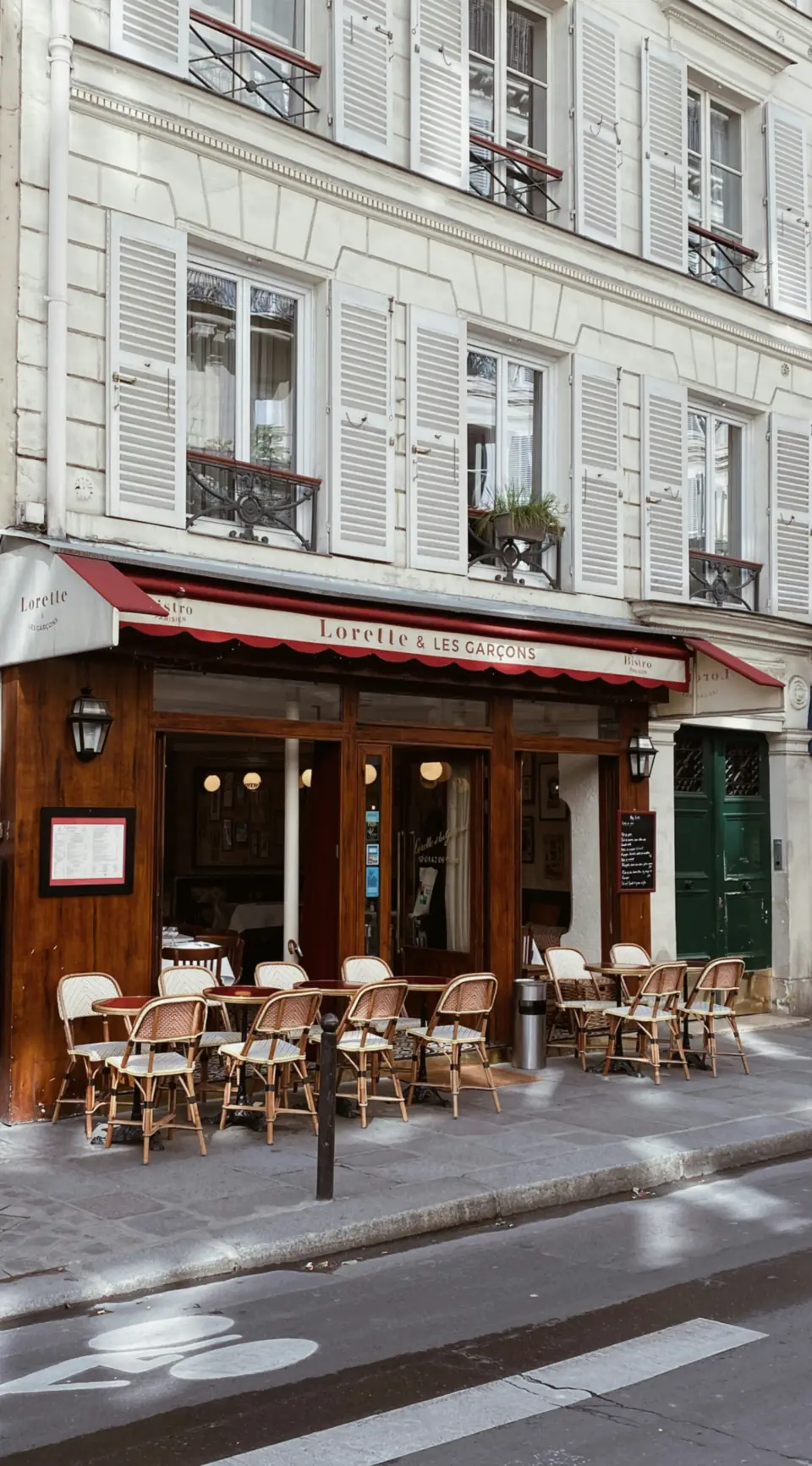
Each kind of place has its own food and its own price, and the tourist office gives a rough budget per person:
| Type of place | What it serves | Budget per person, approximately |
|---|---|---|
| Bistro | Simple, hearty traditional dishes, a good wine list, in a friendly room | €20 to €35 |
| Brasserie | Parisian classics (onion soup, coq au vin, pot-au-feu), often all day, often in an art deco room | €25 to €45 |
| Gastronomic restaurant | A chef’s cooking, served slowly | €80 to €200 and more |
| Street food or canteen | Quick service, relaxed | €10 to €18 |
Source: Paris tourist office, choosing a restaurant in Paris, read on November 28, 2026.
The bistro differs from the café in that it was run, in the last century, by a wine merchant, the tourist office says; expect tiles, wood panelling and curtains, down-to-earth service and reasonable prices. Benoit, 20 rue Saint-Martin, opened in 1912. The office’s tip for value: the fixed-price lunch menu, often half the price of the evening one, and lunch menus at €17 to €20 in Paris bistros generally offer excellent value.
The brasserie was first a brewery that served its own beer, then became the large Paris restaurant, often in an art deco room. The finest are in Montparnasse, around Place de Clichy and near the main stations, the office says. In Montparnasse, La Coupole (102 boulevard du Montparnasse) has served since 1927, alongside Le Dôme, La Rotonde and La Closerie des Lilas, with seafood platters, sauerkraut and beef tartare; Brasserie Mollard (115 rue Saint-Lazare) is a listed historic monument with a 1900s decor; on the Champs-Élysées, Fouquet’s dates from 1899 and L’Alsace (39 avenue des Champs-Élysées) has served 24 hours a day, seven days a week, since 1968.
The bouillon is the cheapest way to eat the classics in a historic room. Bouillon Chartier, 7 rue du Faubourg Montmartre (9th), was born in 1896 to serve a decent meal at a reasonable price, the tourist office says: leeks vinaigrette, eggs mayonnaise or snails to start, mains at around €10, an average bill under €20, service non-stop from 11:30 a.m. to midnight, and no reservations, so expect to queue. Chartier also has a Montparnasse dining room (59 boulevard du Montparnasse, reopened in 2019) and one by the Gare de l’Est (5 rue du 8 mai 1945).
The café is for coffee, a croissant at the counter and a terrace. Saint-Germain-des-Prés keeps its literary cafés, the Café de Flore and Les Deux Magots, the tourist office notes, and Parisians take a terrace table “as soon as the sun comes out”, even at 13 °C.
Where to Eat in Paris, Neighborhood by Neighborhood
The tourist office’s guide sorts the city by the kind of meal you will find:
- The Marais: new addresses, Asian street food, bistronomy and natural wine bars, with rue des Gravilliers at their heart.
- Montmartre: bistros with a village feel in the streets behind the Sacré-Cœur, for dinner after sunset from the basilica.
- Saint-Germain-des-Prés: the literary cafés, neo-bistros, fish and fine pastries.
- Canal Saint-Martin: waterside terraces, inventive menus and natural wine.
- Bastille and Ménilmontant: small restaurants of every cuisine, Neapolitan pizzerias and Ethiopian bistros in the steep streets of the 20th.
- Montparnasse: the great brasseries of the 1920s.
- The 13th arrondissement: Chinatown, around avenue de Choisy and avenue d’Ivry, which the office calls the largest Asian district in Europe, with Vietnamese, Cambodian and Thai restaurants, and the Butte-aux-Cailles; the office describes the whole arrondissement as affordable.
- Batignolles: neighborhood bistros, away from the tourist sites.
For what to see between meals in each of these areas, see our guide to the things to do in Paris.
Paris Food Markets
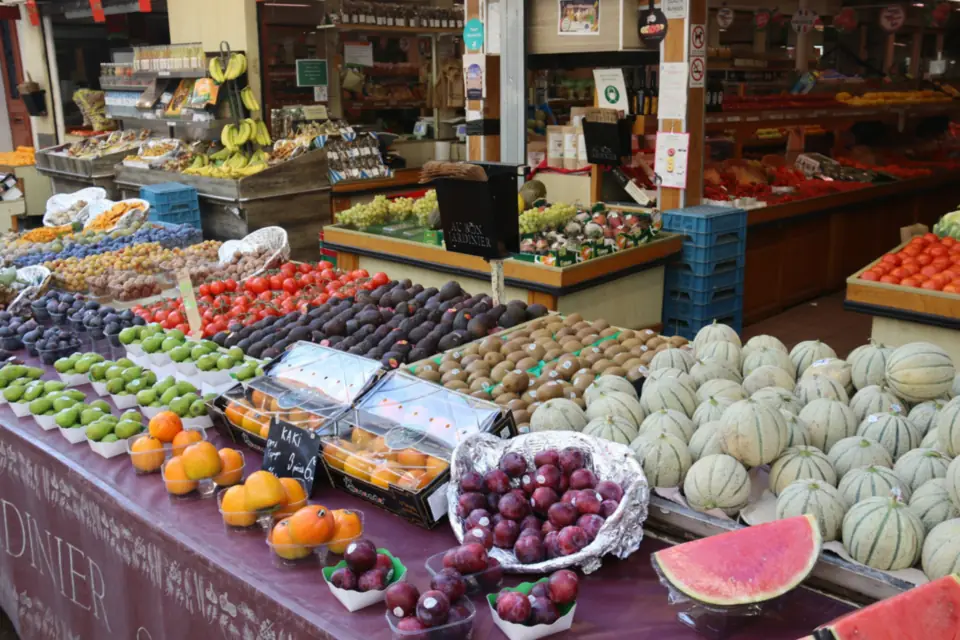
Paris has 91 markets, the city says, open-air, covered and specialized. The food markets follow a simple timetable: the open-air morning markets run from 7 a.m. to 1:30 p.m. on weekdays and to 2:30 p.m. at weekends, a few afternoon markets run from 10 a.m. to 8 p.m. (Bourse, Saint-Honoré, Baudoyer, Les Halles), and every food market is closed on Mondays. Nine covered markets are open Tuesday to Sunday all year: permanent halls of butchers, cheesemongers, greengrocers and caterers.
| Market | Where | Days, as the city publishes them |
|---|---|---|
| Marché d’Aligre and Marché Beauvau (covered) | Place d’Aligre (12th) | Tuesday to Sunday; Beauvau, one of the oldest covered markets, was rebuilt in 1811 |
| Marché Bastille | Boulevard Richard-Lenoir (11th) | Thursday and Sunday mornings |
| Marché Raspail | Boulevard Raspail (6th) | Tuesday and Friday; the organic market on Sunday |
| Marché Président Wilson | Avenue du Président Wilson (16th) | Tuesday and Saturday mornings |
| Marché Monge | Place Monge (5th) | Wednesday, Friday and Sunday mornings |
| Marché biologique des Batignolles | Boulevard des Batignolles (17th) | Saturday morning (organic) |
| Marché couvert des Enfants Rouges | 39 rue de Bretagne (3rd) | Tuesday to Saturday 8:30 a.m. to 8:30 p.m., Sunday to 5 p.m. |
| Marché couvert Saint-Quentin | 85 bis boulevard Magenta (10th) | Tuesday to Sunday; the largest covered market in Paris |
| Marché couvert Saint-Germain | 4/6 rue Lobineau (6th) | Tuesday to Sunday |
Sources: Ville de Paris, the markets of Paris, covered markets and Marché des Enfants Rouges, read on November 28, 2026.
The Enfants Rouges, founded in 1615 and listed as a historic monument in 1982, is the one visitors ask for, with Lebanese, Italian, Moroccan, Japanese, African and French stalls, the city says. One caution: its page says the traders now receive customers in front of the market, at 39 rue de Bretagne, with a greengrocer, an organic greengrocer, a florist and a cheesemonger, so check before you plan lunch around it.
Food Tours and Cooking Classes
If you would rather be guided, the tourist office’s own ticket office sells food walks. On November 28, 2026, its brasserie page listed a Montmartre food tour at €89, pastry tasting tours in Montmartre and in the Marais from €120, and a Belleville food tour, and its specialities page recommended a family croissant-making class in English with Cook’n with Class, for children aged 6 and over with an adult. Prices change, so check the booking page.
Eating Out in Paris: Hours, Booking, Water and Tipping
Eat at Paris hours. For a hot meal, the DGCCRF advises lunch between noon and 1:30 p.m. and dinner between 8 and 10:30 p.m. The tourist office adds that many kitchens close after 10:30 p.m., that some restaurants serve continuously from 6:30 p.m., and that closing days are often Sunday and Monday.
Book ahead for dinner. At least three days for a popular restaurant, especially on Friday and Saturday evenings, two to three weeks or more for a starred restaurant, while a weekday lunch can often be booked the same day, the tourist office says.
Read the menu outside. Before you sit down, even on the terrace, the restaurant must show outside, from 11:30 a.m. for lunch and 6 p.m. for dinner: its menus with prices including all taxes, whether drinks are included, any weekday or lunch menu, the prices of the five most popular drinks, and its hours. The menu inside must be the same, the DGCCRF says.
Bread and water are free. The price of a meal includes the cover: bread, plain water served in a jug, condiments and tableware. Ask for “une carafe d’eau”; you can ask for a second one, the tourist office says.
Service is included. The menu or the bill must say “service compris” with the rate. A tip is a traditional practice in restaurants and cafés but remains optional, and no customer can be forced to give one, the DGCCRF says; leave something only if you were pleased with the service and welcome, the tourist office adds. Our guide to tipping in France covers taxis, hotels and the rest.
Check the hygiene rating. The State’s Alim’confiance site publishes the results of official hygiene inspections of restaurants, bakeries and food shops, on a four-level scale from “very satisfactory” to “requires urgent corrective action”, for a year after each visit, the DGCCRF says. If something goes wrong, write to the restaurant first, then report it on the SignalConso platform.
Our guide to French food explains how to read a French menu, the “fait maison” label and the title of Maître restaurateur.
Staying Longer in Paris
A week in Paris leaves time for a dozen restaurants; a month or a season lets you shop like a Parisian, at the same market every Sunday and the same bakery every morning. Our guide to grocery shopping in France covers the supermarkets and their hours, and our guide to the cost of living in Paris puts a monthly budget on it. To choose your dates, see the best time to visit Paris.
Finding a furnished apartment for a few months, booking tables and calling in French are what our Personal Assistant takes care of while you enjoy the city.
FAQ
What is the famous food of Paris?
The Paris tourist office names the baguette, the croissant, the croque-monsieur, the macaron, the opéra cake, steak frites, onion soup and the bries of the Paris region among the city’s specialities. The jambon-beurre, a baguette with butter and ham, is the Paris sandwich.
What is a main dish in Paris?
Steak frites, a rib steak with fries, is a staple of Paris bistros; in a brasserie, the classics are onion soup, coq au vin and pot-au-feu, and in the Montparnasse brasseries, seafood platters, sauerkraut and beef tartare.
Where is the best baguette in Paris?
The City of Paris’s 2026 Grand Prix went to the Fournil Didot, 103 rue Didot, in the 14th arrondissement, out of 143 baguettes. The winner supplies the Élysée Palace for a year.
How much does a meal cost in Paris?
About €20 to €35 a person in a bistro, €25 to €45 in a brasserie, €10 to €18 for street food and €80 to €200 or more in a gastronomic restaurant, the tourist office estimates. Lunch menus are the best value, often half the price of dinner.
Do you tip in Paris restaurants?
It is optional. Service is included in the menu price (“service compris”), and no one can demand a tip, the DGCCRF says. Leave a little only if you were happy with the service.
Is tap water free in Paris restaurants?
Yes. Plain water served in a jug is part of the cover included in the price of a meal, with bread and condiments. Ask for “une carafe d’eau”.
What should you watch out for when eating in Paris?
Check the menu posted outside before you sit down: it must show prices including all taxes and whether drinks are included. Eat between noon and 1:30 p.m. and between 8 and 10:30 p.m. if you want a hot meal, book dinner a few days ahead, and look up a restaurant’s hygiene inspection on Alim’confiance if you have doubts.
Are Paris markets open every day?
No. Every food market is closed on Mondays. Open-air markets are held on two or three mornings a week, from 7 a.m. to 1:30 p.m. (2:30 p.m. at weekends), and the nine covered markets open Tuesday to Sunday.
Conclusion
Eating well in Paris comes down to a few habits: a croissant or a tradition from an artisan bakery in the morning, the lunch menu of a bistro, a brasserie or a bouillon for the classics, a market on a weekend morning, and a pastry the city invented. Book dinner ahead, eat at Paris hours, drink the free tap water and treat the tip as a thank-you, not a duty. For the rest of your trip, see our guides to the things to do in Paris, the best museums in Paris and the best day trips from Paris.
The parts of the move Americans find out about too late.
What Americans get wrong about moving to France, and the number, form or deadline that fixes it. Straight to your inbox.
One email a week. Real numbers, nothing else.
Written by
Maxime Roseau
Co-founder, EasyFranceNow
Maxime Roseau is a French entrepreneur and co-founder of EasyFranceNow. His work focuses on French visas, residency, and citizenship: long-stay visa applications, OFII validation, prefecture procedures, permit renewals, and naturalization files, along with the operational side of relocation such as housing, rental dossiers, and administrative coordination after arrival.


