
Paris Syndrome: What Doctors Found and How to Enjoy a First Trip to Paris

By Maxime Roseau Co-founder, Master of Business and Communication, Université Nice Sophia Antipolis
Published

In this article
- What Is Paris Syndrome?
- Who Described Paris Syndrome and When
- What the Published Cases Showed
- The symptoms the doctors reported
- Two kinds of journey
- Why Paris Syndrome Is Linked to Japanese Visitors
- Is Paris Syndrome Real?
- How Many People Get Paris Syndrome?
- Paris Syndrome and Other Travel Syndromes
- What Surprises First-Time Visitors to Paris
- Crowds at the famous sights
- Pickpockets and street scams
- Strikes and demonstrations
- Opening hours and closing days
- Taxis from the airports
- Cleanliness
- Restaurants and tipping
- How to Plan a Calmer First Trip to Paris
- If Something Goes Wrong: Emergency Numbers in France
- Staying Longer in Paris
- FAQ
- Conclusion
Paris syndrome is the name a Japanese psychiatrist working in Paris, Dr. Hiroaki Ota, gave to the psychiatric crises he saw in Japanese travelers and residents in the city; his book パリ症候群 (Paris Syndrome) came out in Tokyo in 1991. The cases are real and documented: the main published series, from Sainte-Anne hospital in Paris, describes 63 Japanese patients hospitalized in an acute state from 1988 on, most of them with a psychosis such as schizophrenia. What is not established is that Paris itself causes an illness. The psychiatrists who described those patients called their condition “pathological travel” and classed it under ordinary diagnoses, and the figures quoted in the press, a dozen or twenty cases a year, were printed in newspapers, one of them on the word of an embassy official, and none comes from a study. Some papers also use it in a broader sense: the culture shock, or “profound disappointment”, of Japanese tourists on a first visit when the city does not match their expectations.
This guide sets out what the medical papers say and where each circulating figure comes from, all read on November 27, 2026. Then, from official French and foreign government pages, it covers what tends to surprise first-time visitors (crowds, pickpockets, strikes, closed doors) and how to plan a calmer trip. It gives no medical advice: if you feel unwell during a trip, see a doctor, and in an emergency call 15 or 112.
What Is Paris Syndrome?
The papers give it two meanings, a narrow one and a broad one.
In the clinical sense, it is a psychiatric crisis in a Japanese visitor or resident in Paris. The psychiatrists of Sainte-Anne describe patients admitted “always in an acute state”, most often sent by an emergency department or by the psychiatric infirmary of the Paris police after major behavioral disturbances. In 1998, Tamami Katada, of the Nissei Hospital, summed up the term in the English abstract of a case report written in Japanese: a condition “that Dr. Ota, japanese psychiatrist, has reported” and from which “a number of Japanese staying in paris are suffering because of their fantasy and idealization of Paris and of their cultural shock”.
In the broad sense, it is culture shock. A 2016 chapter by E. Witztum and M. Kalian, in a book on unusual and rare psychological disorders published by Oxford University Press, defines it as “a form of culture-shock observed primarily in Japanese tourists visiting Paris for the first time”, and calls it, like Jerusalem syndrome, a relatively rare phenomenon. A 2021 paper on travel medicine and “dark tourism”, which speaks of syndromes “allegedly triggered by visits to high emotional valence sites”, says that Paris syndrome refers to “a profound disappointment” of Japanese tourists due to “an over-romanticised expectation of the city”.
Who Described Paris Syndrome and When
The earliest case series found, 1982. Nine years before the name appears in any record found, seven young Japanese psychiatrists working in Paris as residents or foreign assistants published the cases of 28 Japanese patients they had helped over about three years in the Paris area, in the French journal Annales médico-psychologiques. Fifteen were hospitalized, and all were sent back to Japan, according to the paper’s English abstract. The patients were tourists as well as permanent and temporary residents.
Hiroaki Ota. Dr. Ota, born in 1949 according to Japan’s National Diet Library, was the Japanese psychiatrist who advised the Embassy of Japan in Paris and was attached to Sainte-Anne hospital, where he was called in for every Japanese patient referred to Dr. Caroli’s department, and decided on the care: consultations or a hospital stay. His earliest article on the subject found in the records searched, cited in the reference lists of his 1996 paper and of the 2004 paper, appeared in the French psychiatric journal Nervure in 1988, under the title “Voyages et déplacements pathologiques des Japonais vers la France” (pathological journeys of the Japanese to France). His book パリ症候群, with the French alternative title “Le Syndrome de Paris”, was published in Tokyo by Travel Journal in August 1991, 293 pages; one of its four chapters asks why these troubles occur so often in Paris. He published an article titled “Le Syndrome de Paris” in the journal Humeur in 1993, and another on “Paris syndrome today” in a Japanese psychotherapy journal in 2020. A French edition of the book, “Le syndrome de Paris d’hier à aujourd’hui”, came out at L’Harmattan in 2025.
A date of 1986 also circulates for the first use of the name. BBC News wrote in 2006 that Ota “first identified the syndrome some 20 years ago”, without a date or a reference, and the Japanese and medical catalogs searched for this guide (CiNii, PubMed, Europe PMC) list nothing by him from that year.
The parts of the move Americans find out about too late.
What Americans get wrong about moving to France, and the number, form or deadline that fixes it. Straight to your inbox.
One email a week. Real numbers, nothing else.
What the Published Cases Showed
The reference paper is “Les japonais en voyage pathologique à Paris : un modèle original de prise en charge transculturelle”, by A. Viala, H. Ota, M.N. Vacheron, P. Martin and F. Caroli, published in June 2004 in a supplement to Nervure. It describes the Japanese patients of Dr. Caroli’s department at Sainte-Anne: “Since 1988, 63 Japanese patients have been hospitalized in our department”, the authors write, without giving the end of the period. Among them were 34 women and 29 men, aged 20 to 65, half of them between 20 and 30.
Their diagnoses, under the DSM-IV criteria, were these:
| Diagnosis | Patients |
|---|---|
| Schizophrenia | 23 |
| Acute delusional state | 11 |
| Schizoaffective disorder | 9 |
| Manic state | 6 |
| Schizophreniform disorder | 4 |
| Major depression | 4 |
| Disorder due to a general medical condition | 4 |
| Psychotic disorder induced by a substance | 1 |
| Anxiety disorder (social phobia) | 1 |
| Total | 63 |
Source: Viala, Ota, Vacheron, Martin and Caroli, Nervure supplement, June 2004, archived copy, read on November 27, 2026.
The symptoms the doctors reported
On arrival at the hospital, the authors write, the symptoms were often very acute, even violent. They fell into three groups:
- Behavior: wandering, agitation, damaged cars, a fall from a train, aggression against oneself or others, suicide attempts.
- Delusions: very often of persecution, or of grandeur, but also erotomanic or mystical.
- Severe anxiety: often with a feeling of strangeness, of unreality (derealization), of being detached from oneself (depersonalization), or of dissociation.
Katada’s 1998 case, a man who had begun to live alone in Paris, away from his family and his work as a professor, showed insomnia, mood swings, aggression, irritation and a rise in sex drive, within a manic-depressive disorder.
Two kinds of journey
With Dr. Ota, the Sainte-Anne psychiatrists distinguished two types of “pathological travel”. In the first, linked to a psychiatric illness, most often a psychosis and often schizophrenia, there is often a past psychiatric history, sometimes earlier hospital stays, and the symptoms often appear very early, “sometimes at the airport” or in the days after arrival. In the second, the symptoms appear at least three months after arrival; there is not necessarily a psychiatric history, and the patients are often fragile, sometimes borderline personalities, the authors write, who had sought to escape their difficulties fitting in at home, or were in search of an “illusory” freedom.
Most of these patients had no insurance covering care in France, so their stay was kept as short as possible: two weeks on average. The embassy told their families and organized their return. Of the 63, 28 went home with a relative who had come to Paris, 18 by medical repatriation, and the others on their own. The authors conclude that adding a Japanese psychiatrist to the team clearly improved the quality of care and shortened the hospital stay.
Why Paris Syndrome Is Linked to Japanese Visitors
The Sainte-Anne authors list the difficulties their patients met:
- Language, “without any doubt one of the main difficulties”.
- Isolation: cut off from their community, the authors write, patients could withdraw into silence, even into prostration.
- Disappointment: contact with daily reality brings incomprehension and anxiety, but also disillusion and depression. “The stereotyped image of Paris, a city of luxury consumption, widely spread by the media, does not survive everyday life,” they write.
- Fatigue: business or leisure trips made in very short times, with overloaded schedules, can contribute to the destabilization, together with jet lag.
The same paper gives the setting. About one million Japanese people traveled to France every year at the time, it notes; France had, in its words, the highest rate of patients with psychopathological disorders in Europe, but it was also the only European country offering Japanese people specialized help in their own language, through the cooperation of Sainte-Anne and the embassy. The patients of the series were all seen by that one team.
Travelers of other nationalities have similar crises. Dr. Youcef Mahmoudia, a psychiatrist at the Hôtel-Dieu hospital next to Notre-Dame, counted about fifty cases a year there in 2002, foreigners and French people from the provinces alike, according to the Paris hospitals’ own magazine; in 2011 he told Slate.fr that of the fifty or so “pathological travelers” hospitalized there each year, there were also Italians, Belgians and Germans, and only 3 to 5 percent were Japanese. And when Japanese travelers fall ill elsewhere, the picture is similar: of the Japanese nationals who needed psychiatric help in New York, 73.1 percent had a psychiatric disorder before they traveled, according to a 2003 study in the Journal of Nippon Medical School, which found that cultural elements had little influence on their crises.
Is Paris Syndrome Real?
The patients are real. A distinct illness caused by Paris is not established: recent reviews list “Paris syndrome” among travelers’ syndromes, but none of the papers read for this guide gives evidence for one:
- The words. The 2004 Sainte-Anne paper never uses the words “syndrome de Paris”: its term is “voyage pathologique”, pathological travel. Nor is “Paris syndrome” a heading of MeSH, the medical vocabulary of the US National Library of Medicine.
- The diagnoses. The Sainte-Anne patients were classed under ordinary diagnoses, schizophrenia and acute delusional states first.
- The numbers. A 2018 review of travel-related psychosis in the Journal of Travel Medicine, by R. Airault and T.H. Valk, found that incidence and prevalence figures “do not exist”, and that “it is not clear” that such psychoses are more likely on trips to places of strong cultural or religious meaning than on other trips. It adds that some Japanese patients in Paris may fit the ordinary diagnosis of brief psychotic disorder.
- The doctors on the ground. “It doesn’t exist,” Dr. Mahmoudia told Slate.fr in 2011, for whom a passing state of anxiety in a traveler who cannot adapt must not be confused with a delusional state that causes disturbances in the street. Dr. Alain Stern, head of psychiatry at the American Hospital of Paris, told Europe 1 in 2013 that Dr. Ota had noticed at least one patient in three already had a psychological history in Japan.
The Japan Times reached the same view in an editorial of October 2006: “it seems a stretch to label their affliction a syndrome,” since fragile travelers of every nationality lose their bearings wherever they go.
How Many People Get Paris Syndrome?
No study read for this guide gives a yearly figure: Dr. Ota’s 1996 paper of clinical statistics over 11 years in the Paris area could not be read, and the 2004 series does not say over how many years its 63 patients were counted. The figures that circulate were published in the press; the table shows, for each, where it appeared and whom it came from, when that is said:
| Figure | Published by | Where it comes from |
|---|---|---|
| More than a hundred a year, among Japanese who came to live in Paris, with 25 percent hospitalized before going home | Libération, December 13, 2004 | Not said in the part of the article open to read; AFP, relaying it, cited the mental health services of the city’s hospitals |
| Around a dozen Japanese tourists a year needing psychological treatment | Journal du Dimanche, October 22, 2006, as reported by Reuters | The newspaper’s own figure |
| Around 20 cases a year | The Guardian, October 25, 2006 | An administrator at the Embassy of Japan in Paris |
| At least four visitors repatriated in 2006 | Journal du Dimanche (as reported by Reuters) and the Guardian | The Embassy of Japan |
| “Up to 12” a year, mainly women in their 30s, and a 24-hour embassy hotline | BBC News, December 20, 2006 | No source given |
| At least 20 people, most of them Japanese, in the summer of 2011 | The Atlantic, October 18, 2011 | No source in the part open to read; Slate.fr wrote that it cited none, and the embassy told Slate.fr it had repatriated no Japanese national affected by this kind of syndrome in 2011 |
Sources: Libération; Reuters, on NBC News; The Guardian; BBC News; The Atlantic; Slate.fr, read on November 27, 2026.
Two of these claims can be checked. The BBC’s “in their 30s” does not match the Sainte-Anne series, in which half the patients were aged 20 to 30; women were a small majority there (34 of 63). And the hotline was denied by the embassy itself: for several years its contacts page said, in French and in Japanese, that despite incorrect information published by various media, the Embassy of Japan in France had no telephone service devoted to the so-called “Paris syndrome” and would not answer any request on the subject. The notice is visible on archived copies of the page from 2019 to 2023; the notice is no longer online, and the embassy’s medical page now lists the French emergency numbers and Japanese-speaking doctors.
Paris Syndrome and Other Travel Syndromes
Paris is not the only place with a syndrome, and the papers debate the others in the same terms: whether the place itself matters.
- Pathological travel. French psychiatry has written about illness-driven journeys since at least 1875, according to Airault and Valk; the 2004 paper credits M. Briand and colleagues, in 1914, with the notion of “voyage pathologique”. In 1981, F. Caroli and G. Massé, cited by the 2004 paper, distinguished three types: the journey that obeys a delusion, the journey that is part of it, and the two combined.
- Jerusalem syndrome. Described as “a unique acute psychotic state” in the British Journal of Psychiatry in 2000 by psychiatrists of the Kfar Shaul Mental Health Centre, who linked its discrete form to religious excitement near the holy places of Jerusalem. Kalian and Witztum answered the Jerusalem group in two letters the same year, one of them titled “Jerusalem syndrome or paranoid schizophrenia?”, and to Airault and Valk the idea of a unique psychotic state “does not appear to be valid”.
- Stendhal syndrome. The Florentine psychiatrist Graziella Magherini reported 106 patients, seen from 1977 to 1986, who had acute and passing psychiatric symptoms after viewing art in Florence, as Airault and Valk summarize her work. The name comes from the French writer Stendhal, who felt distressing symptoms on viewing art in Florence in 1817.
- Honeymoon psychosis. Sixteen cases of acute psychiatric disturbance in Japanese honeymooners in Hawaii, described in 1997.
“Every culture” has destinations where its members seem more likely to falter, R. Airault wrote in 2015: the roads to the East for Westerners, the West for the Japanese, Mecca, Benares or Jerusalem for pilgrims. For the patient, he adds, a return home is mostly needed to regain a footing.
What Surprises First-Time Visitors to Paris
The medical cases are rare. The ordinary surprises of a first visit are not, and the official sources describe them plainly: crowds at the famous sights, petty theft where visitors gather, strikes and demonstrations, closed doors on the wrong day. None of them is an illness, and all of them are easier to live with when you expect them.
Crowds at the famous sights
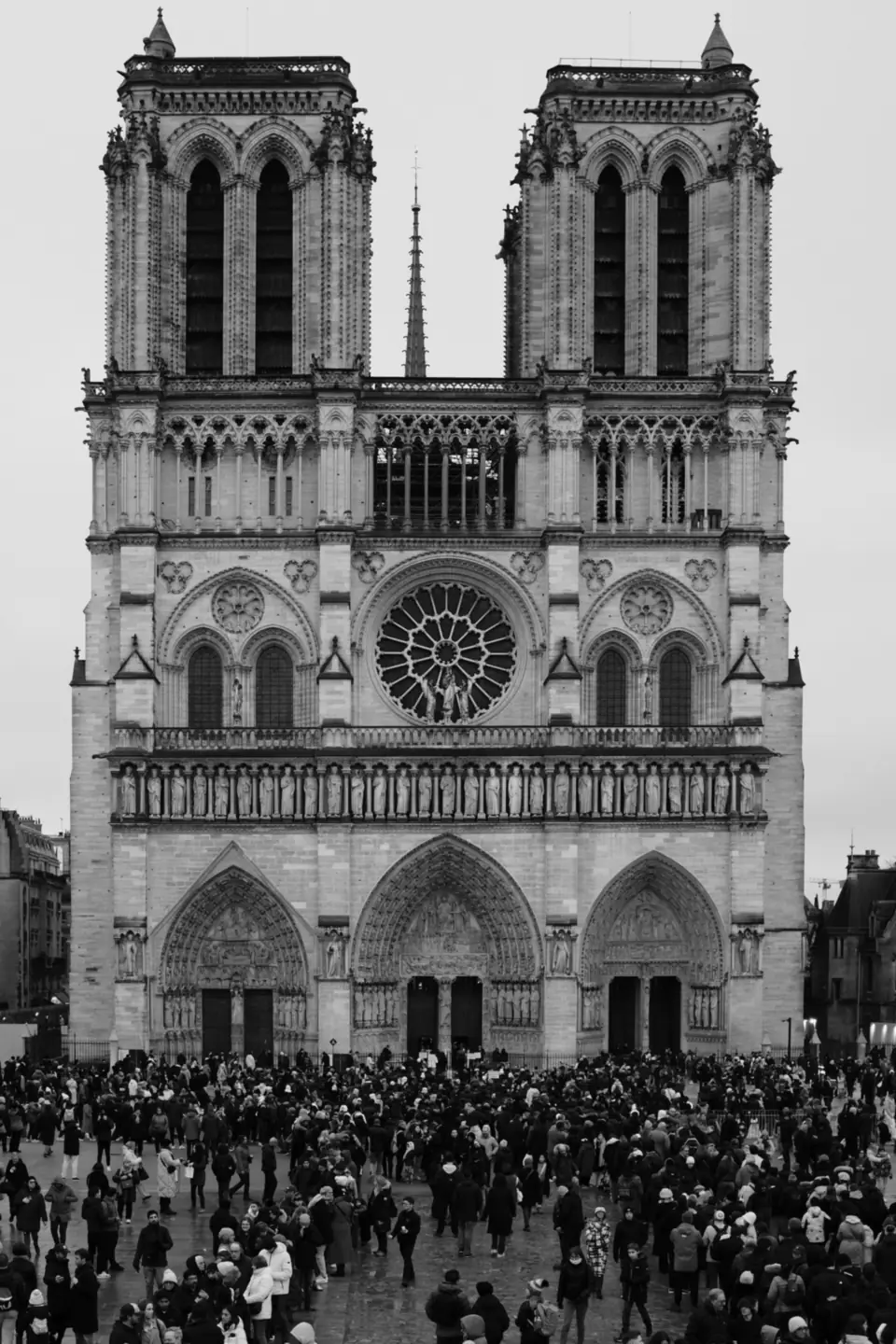
The Paris region welcomed nearly 50 million visitors in 2025, more than 23 million of them from abroad, according to its regional tourism board, and the Louvre alone counted 9 million visits. The crowds follow the calendar, and INSEE measures them in two ways for the Paris region. The nights spent in hotels and other tourist accommodation peak in June and July (8.4 and 8.6 million in 2025) and are lowest in January and February (6.1 and 5.7 million). Hotel occupancy peaks in June (83.6 percent) and stays above the yearly average from April to October, except in August, when it “traditionally falls sharply”, to 64.9 percent, although the nights spent that month stay high (8.1 million).
| Month (2025) | Tourist nights, Paris region | Hotel occupancy, Paris region | What it means for a visit |
|---|---|---|---|
| January | 6.1 million | 63.1 percent | One of the two quietest months |
| February | 5.7 million | 64.0 percent | The fewest nights of the year |
| March | 6.8 million | 70.0 percent | Still fairly quiet |
| April | 8.1 million | 76.3 percent | Busy |
| May | 8.1 million | 76.4 percent | Busy |
| June | 8.4 million | 83.6 percent | The fullest hotels of the year |
| July | 8.6 million | 74.5 percent | The most nights of the year |
| August | 8.1 million | 64.9 percent | Hotels emptier, visitors still many; many small shops close |
| September | 7.7 million | 79.1 percent | Busy again |
| October | 8.0 million | 79.4 percent | Busy |
| November | 6.8 million | 72.0 percent | Quieter |
| December | 7.5 million | 71.2 percent | Quieter |
| Year | 89.7 million | 72.9 percent (80.1 percent in Paris itself) |
Source: INSEE, Insee Flash Île-de-France no. 110, figures 2 and 3, read on November 27, 2026.
Our guide to the best time to visit Paris goes through the year month by month, with the weather and the 2027 events.
Pickpockets and street scams
“Busy areas and tourist areas in particular are zones that attract pickpockets,” the Paris tourism office warns. Japan’s Ministry of Foreign Affairs names, among the places where many Japanese have fallen victim to theft, the Eiffel Tower, the Louvre, the Tuileries, the Champs-Élysées, the Trocadéro gardens, and the stations and carriages of the metro and the RER. The UK government says the same of the metro, the RER and the mainline stations, and adds that pickpockets can work in gangs, one distracting you while another goes into your bag.
The Préfecture de police gives visitors a short list of habits:
- Do not keep your wallet or phone in a back pocket; carry a small crossbody bag rather than a backpack.
- On public transport, do not let anyone follow close behind you through the gates.
- In public places, do not leave anything in a coat hung on your chair.
- In restaurants and bars, ask for the menu, so the bill holds no surprise.
- Avoid theaters and cabarets whose staff solicit customers on the sidewalk, especially around Pigalle.
The scams it names are the fake petition, common around the Latin Quarter and Notre-Dame, where young people, often minors claiming to be deaf and mute and to collect for a charity, ask for money along with your signature; the three-card game (bonneteau), a swindle punished by the criminal code, in which the player always loses and two accomplices pose as players; and unlicensed street selling, which is prohibited in France. Japan’s ministry adds the cup-and-ball version of the same game, souvenirs or flowers pushed into your hands before money is demanded, and fake police officers who ask to see your wallet: real officers may ask for a passport, it notes, but not for your wallet.
If something is stolen, call 17, or 112 from a mobile, at once, the Préfecture advises, then file a complaint. The 20 central police stations of the arrondissements are open 24 hours a day, 7 days a week; bilingual officers wear a badge with the flag of the languages they speak in summer; and the SAVE system lets an officer take a foreign visitor’s complaint and hand over a receipt in the visitor’s own language. For a theft by an unknown person, the Interior Ministry’s online complaint is free and open to foreign visitors. A lost item is declared online with the Préfecture’s lost property office, which charges an 11-euro storage fee if the item is found and posts it to you, at your cost.
For the whole picture, from violent crime to safety city by city, see our guide to whether France is safe for Americans.
Strikes and demonstrations
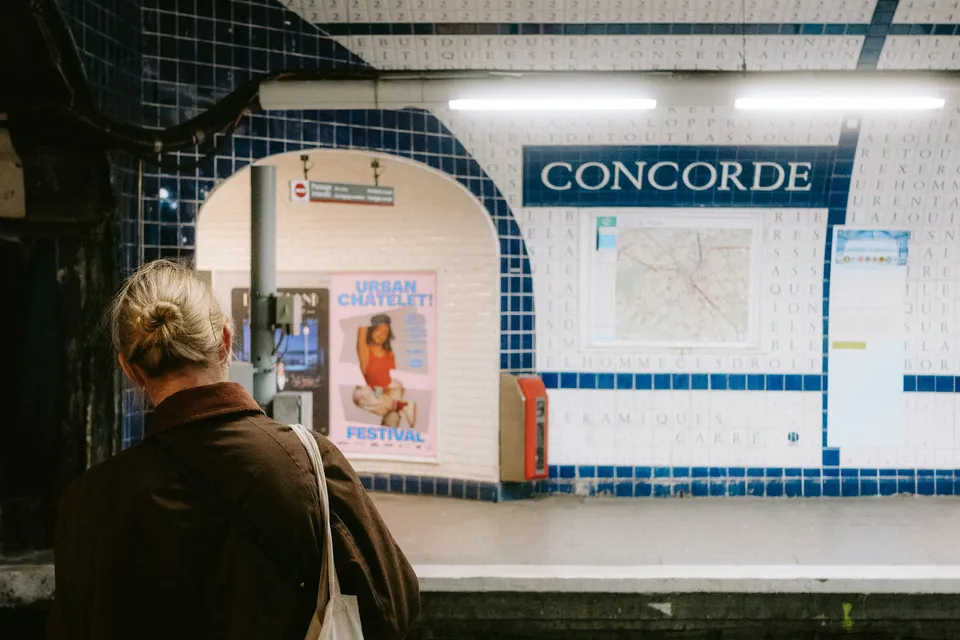
Transport strikes happen, and the law gives you some warning. Under the French transport code, a strike counts as a foreseeable disruption; the staff concerned must declare their intention to strike at least 48 hours ahead, the operator must inform passengers at least 24 hours before the disruption starts, and it runs an adapted transport plan with a minimum level of service. A passenger who could not travel is entitled to an extension of their pass, or to an exchange or refund of an unused ticket. The live status of every line is on RATP’s traffic page and on Île-de-France Mobilités’ app.
Demonstrations are a separate matter. Canada’s travel advice, updated on November 25, 2026, notes large-scale demonstrations across the country since late September, with disruption to public services and transport; Australia’s warns that they may take place at short notice; Japan’s tells its travelers to leave at once if they come across one.
Opening hours and closing days
Closed doors catch many first trips out. The tourism office’s rules of thumb: museums open at 9 or 10 a.m., close between 5 and 6 p.m., and usually close one day a week, Monday or Tuesday; many museums and monuments close on January 1, May 1 and December 25; Sunday and public holidays are the usual closing days for shops, with exceptions; and many small shops close for their holidays from mid-July to the end of August. Parisians lunch between noon and 1:30 p.m. and dine between 8 and 10:30 p.m., and many restaurant kitchens close after 10:30 p.m.
Taxis from the airports
For a direct trip, the fare between the airports and Paris is fixed, whatever the traffic and even during strikes, the Préfecture de police says:
| Trip, in either direction | Fixed fare, 2026 |
|---|---|
| Charles-de-Gaulle and Paris, right bank | 56 euros |
| Charles-de-Gaulle and Paris, left bank | 65 euros |
| Orly and Paris, right bank | 45 euros |
| Orly and Paris, left bank | 36 euros |
Sources: Préfecture de police, Paris taxis; Légifrance, order (arrêté) of December 24, 2025 on taxi fares for 2026, read on November 27, 2026.
Canada and Australia both warn of illegal taxis at the Paris airports and stations. A real one has a “Taxi parisien” sign on the roof, a visible meter, a fare notice and the driver’s pink and blue professional card on the windshield, the Préfecture says; you can always pay cash, a receipt is due from 25 euros, and you should check the amount on the card terminal before you pay.
Cleanliness
Cleanliness is a subject the city itself addresses. Paris has 7,500 staff working on it, 6,200 of them in the streets, who clean 2,900 km of sidewalk and collect 3,000 tonnes of waste a day, according to the City of Paris. Residents and visitors can report a problem in the street, such as dumped rubbish, on the free DansMaRue app, which handles about 2,000 reports a day; on average, reports of dumped waste are handled within 24 hours. Dropping a cigarette butt costs a 135-euro fine. The city asks residents and tourists alike to see themselves as part of keeping it clean.
Restaurants and tipping
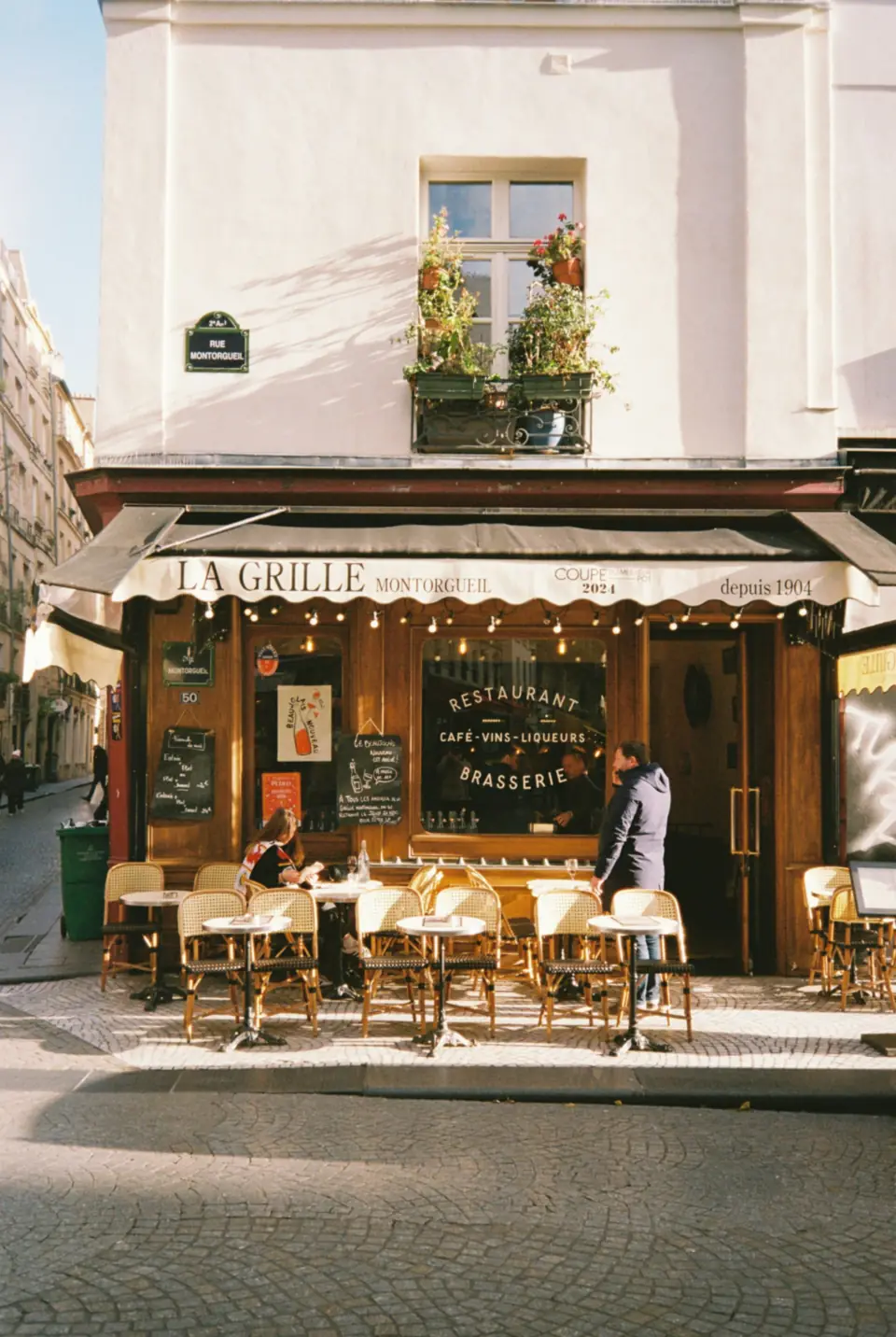
Prices in France include tax and service, and restaurant prices are always displayed outside, the tourism office says. Since service is included, there is no obligation to tip; if the service was particularly good, 5 to 10 percent of the bill is the usual amount. A jug of tap water and bread are always free.
How to Plan a Calmer First Trip to Paris
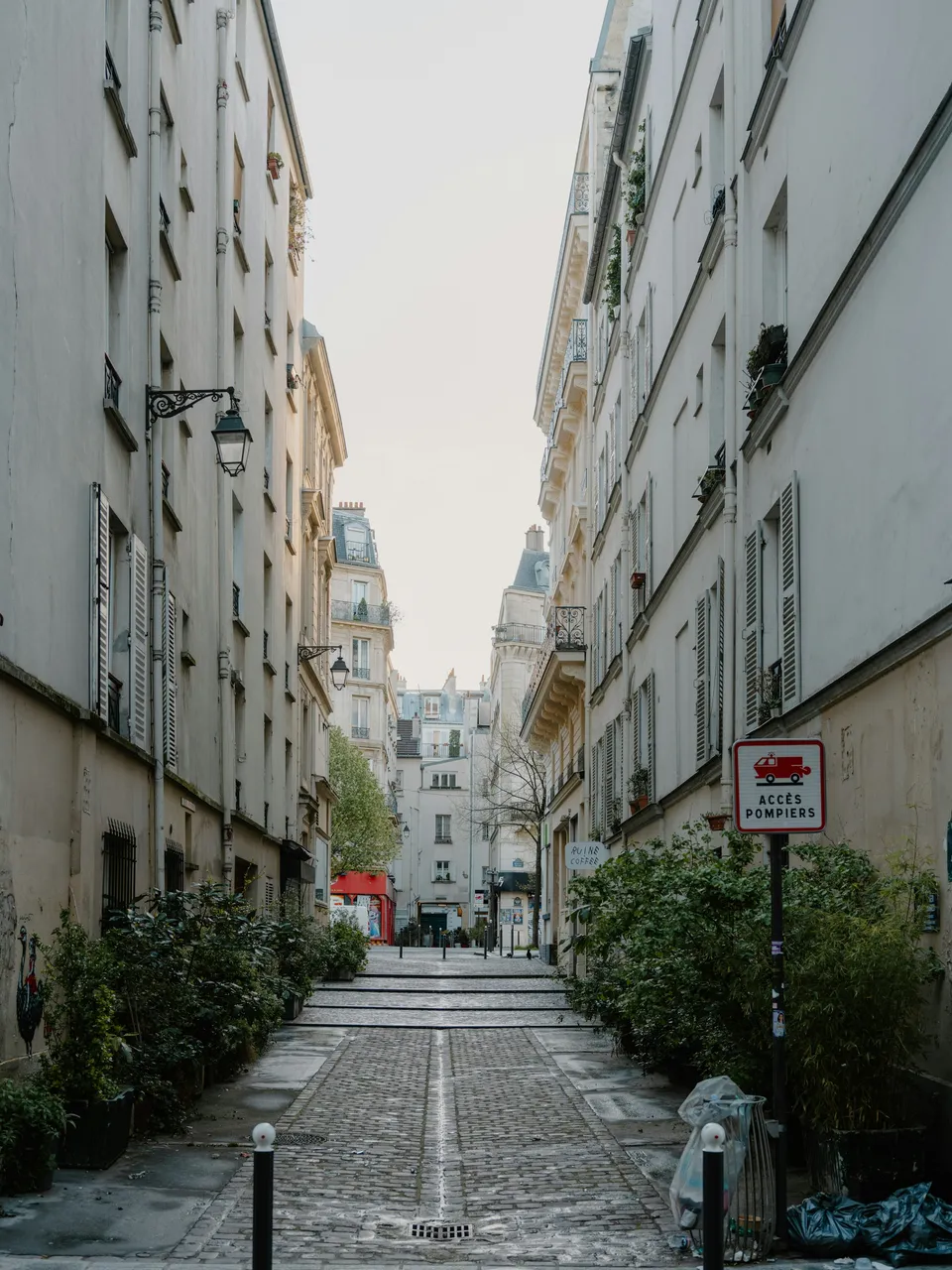
Nothing here prevents an illness. What it can help with is the tired, rushed first trip that ends in disappointment:
- Choose the month. January and February are the quietest months on both of INSEE’s measures, hotel occupancy and tourist nights; June and July are the busiest, and in August hotels empty while tourist nights stay high. See the best time to visit Paris.
- Book the big sights, and fewer of them. One great sight in the morning and a neighborhood in the afternoon is a better day than four queues. Our guide to the things to do in Paris gives the prices and booking rules of each, and the best museums in Paris their hours and late openings.
- Leave the city for a day. A train to Versailles, Giverny or Normandy breaks a long stay; see the best day trips from Paris.
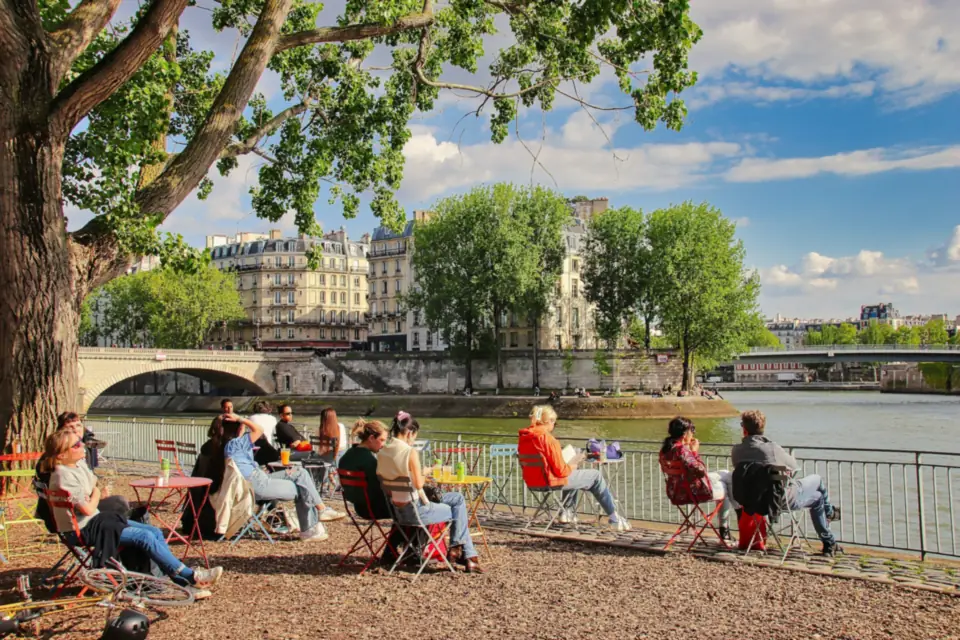
- Keep a quiet place in reserve. A garden, the banks of the Seine, a side street early in the morning.
- Know where to ask. The tourism office’s concierge answers on +33 1 49 52 42 81, in French and English: its own page, updated in September 2026, gives staff from Monday to Friday, 9 a.m. to 6 p.m., and an AI assistant at other times, while the City of Paris, in July, gave every day from 9 a.m. to 6 p.m. Newsagents’ kiosks across the city, from the Gare du Nord to the Opéra, now serve as its information points.
- Leave room in the schedule. The Sainte-Anne psychiatrists counted trips made in very short times, with overloaded schedules and jet lag, among the strains on a traveler, and Japan’s Foreign Ministry notes on its health page for France that it is not unusual to fall ill from jet lag and the fatigue of a long journey.
If Something Goes Wrong: Emergency Numbers in France
| Number | What it is for |
|---|---|
| 15 | Medical emergency (SAMU), and the access to out-of-hours care |
| 17 | Police, for an offense, a road accident or a disturbance of public order |
| 18 | Fire and rescue |
| 112 | The European emergency number, in any EU country; you are routed to the right service |
| 114 | For deaf or hard-of-hearing people, or anyone who cannot speak aloud: SMS, app or web |
Sources: Service-Public, emergency numbers and calling the police in an emergency, read on November 27, 2026.
All these calls are free, answered 24 hours a day, 7 days a week, and work from a landline or a mobile, even a phone with no credit left as long as it holds a SIM card. The operators of 112 can speak French or English, Service-Public says. Outside surgery hours in the Paris region, after 8 p.m. on weekdays, on Saturday afternoons, Sundays and public holidays, the regional health agency asks you to call 15 before going anywhere for an urgent consultation.
If you, or someone traveling with you, feels unwell, very anxious or confused during a trip, see a doctor. In an emergency, call 15 or 112.
Staying Longer in Paris
A season in Paris is a different trip. As a visitor from a visa-exempt country such as the US, the UK, Canada, Australia or Japan, you can usually stay a maximum of 90 days within any 180-day period, according to the European Commission, and the European Union’s Entry/Exit System, fully operational since April 10, 2026, counts that period as one for all the countries using it. Our guide to how long Americans can stay in France without a visa explains the count, and the Schengen calculator checks your dates. Beyond 90 days you need a long-stay visa. For a stay of a few months, our Personal Assistant handles the calls, the forms and the apartment search, in French.
FAQ
What is Paris syndrome?
The name the Japanese psychiatrist Hiroaki Ota gave, in a book published in Tokyo in 1991, to psychiatric crises in Japanese travelers and residents in Paris. In a broader sense, two papers use it for the culture shock or disappointment of Japanese tourists on a first visit to Paris.
Is Paris syndrome real?
The cases are: Sainte-Anne hospital in Paris published a series of 63 Japanese patients hospitalized from 1988 on. But the doctors who treated them spoke of “pathological travel” and classed all of them under ordinary DSM-IV diagnoses, schizophrenia most often, and no study read for this guide shows that Paris causes an illness of its own.
Why is Paris syndrome linked to Japanese visitors?
The Sainte-Anne psychiatrists pointed to the language barrier, isolation from their community, the gap between a stereotyped image of Paris and daily life, and short trips with overloaded schedules and jet lag. Their cases also come from one hospital department, where a Japanese psychiatrist was called in for every Japanese patient referred to it; a psychiatrist of the Hôtel-Dieu put Japanese patients at only 3 to 5 percent of the travelers hospitalized there.
What are the symptoms of Paris syndrome?
In the published hospital cases: very acute behavioral disturbances, delusions (very often of persecution), and severe anxiety with a feeling of unreality or of being detached from oneself. In its broader sense, it describes culture shock and disappointment, not a psychiatric illness.
How many people get Paris syndrome each year?
No study read for this guide gives a yearly figure. The figures in the press, around a dozen Japanese tourists a year (the Journal du Dimanche, as reported by Reuters in 2006) or “around 20 cases” (an embassy administrator quoted by the Guardian, 2006), are press figures, not study results, and the Embassy of Japan later wrote, in a notice online from at least 2019 to 2023, that it ran no “Paris syndrome” hotline.
What should I do if I feel unwell during a trip to Paris?
See a doctor. In an emergency, call 15 for the SAMU or 112, free from any phone, 24 hours a day; the operators of 112 can speak French or English. Outside surgery hours in the Paris region, call 15 before going anywhere for an urgent consultation.
Conclusion
Paris syndrome began as a clinical observation: a Japanese psychiatrist at Sainte-Anne, and the colleagues who published 63 cases in 2004, describing travelers in acute psychiatric crisis, most of them with a psychosis. The name outgrew the papers, and the figures attached to it, a dozen or twenty cases a year, a hotline, a typical patient, were spread by the press. For a visitor, the useful part is simpler. Paris is crowded in June and quiet in January, pickpockets work where visitors gather, strikes are announced, and most museums close one day a week. Plan for that, leave room in the schedule, and start with our guide to the things to do in Paris.
The parts of the move Americans find out about too late.
What Americans get wrong about moving to France, and the number, form or deadline that fixes it. Straight to your inbox.
One email a week. Real numbers, nothing else.
Written by
Maxime Roseau
Co-founder, EasyFranceNow
Maxime Roseau is a French entrepreneur and co-founder of EasyFranceNow. His work focuses on French visas, residency, and citizenship: long-stay visa applications, OFII validation, prefecture procedures, permit renewals, and naturalization files, along with the operational side of relocation such as housing, rental dossiers, and administrative coordination after arrival.


