
Lyon, France: The Complete Guide, from Fourvière to the Traboules

By Aurelio Maurici Co-Founder, Master of Business Law, Aix-Marseille Université III
Published

In this article
- Lyon at a Glance
- Where Is Lyon, and What Is It Known For?
- Things to Do in Lyon
- Vieux Lyon and the traboules
- Fourvière: the basilica and the Roman theaters
- The Presqu’île: Bellecour, the Terreaux and the Museum of Fine Arts
- The Croix-Rousse, the hill that works
- Confluence and its museum
- The Parc de la Tête d’Or
- The Musée Lumière, where cinema was born
- The Halles Paul Bocuse and the bouchons
- Lyon’s Museums and Sites: Hours and Prices
- The Fête des Lumières 2026
- The Lyon City Card and the Tourist Office
- The Weather in Lyon, Month by Month
- How to Get to Lyon
- By train
- By air
- Getting Around Lyon
- Day Trips from Lyon
- Vienne, the little Rome of the Rhône
- Pérouges, a medieval village
- The Beaujolais
- How Many Days in Lyon?
- Living in Lyon, or Spending a Season There
- The 90-day rule and the long-stay visa
- Where to live, and what rent costs
- Leases and furnished rentals
- FAQ
- Conclusion
Lyon has 519,127 residents, according to INSEE, and is the capital of the Auvergne-Rhône-Alpes region. The Romans founded it in the 1st century B.C. as the capital of the Three Gauls, and UNESCO inscribed its historic center on the World Heritage List in 1998, from the Roman remains on the hill of Fourvière to the Renaissance houses of Vieux Lyon, the classical squares of the Presqu’île between the Rhône and the Saône, and the silk workers’ slopes of the Croix-Rousse. It is also the city of the Lumière brothers, of the bouchons, its traditional restaurants, and of the Fête des Lumières every December.
This guide covers what Lyon is known for, its districts and traboules, Fourvière and the Roman theaters, the museums with their hours and prices, the Halles Paul Bocuse and the bouchons, the Fête des Lumières 2026, the Lyon City Card, the weather month by month from Météo-France, the trains and the airport, the metro and its fares, three day trips, and what changes if you stay for a season or move there. Every price, date and opening time was read on the official page of the city, the tourist office, the site or the operator on November 28, 2026.
Lyon at a Glance
| Where | Capital of the Auvergne-Rhône-Alpes region, in the Rhône department and the Métropole de Lyon, where the Rhône and the Saône meet |
| Population | 519,127 (INSEE reference population 2023, in force since January 1, 2026) |
| World Heritage | Historic Site of Lyon, inscribed in 1998, 427 hectares |
| From Paris | 30 trains a day, 1 h 43 on the fastest, from 10 euros, to Lyon Part-Dieu, Perrache or Saint-Exupéry TGV; 422 km by rail |
| Airport | Lyon-Saint-Exupéry, 30 minutes from Part-Dieu by the Rhônexpress tram; no direct flight to New York |
| Climate | 2,049.5 hours of sunshine and 820.8 mm of rain a year; 1.1 to 7.1 °C in January, 17.0 to 28.2 °C in July |
| Best for | History on foot, food, museums, the Fête des Lumières in December, a base for the Alps and the Rhône valley |
Sources: INSEE, reference population of Lyon and geography; UNESCO, Historic Site of Lyon; SNCF Connect, Paris to Lyon; Rhônexpress; Lyon airport, flights to New York; Météo-France, Lyon-Bron normals, read on November 28, 2026.
Where Is Lyon, and What Is It Known For?
Lyon lies 422 km from Paris by rail, where the Saône flows into the Rhône. It is the seat of the Auvergne-Rhône-Alpes region, INSEE says, and belongs to the Métropole de Lyon. Its history is written on its hills and riverbanks, and UNESCO’s description of the World Heritage site follows it in order: a city “founded by the Romans in the 1st century B.C. as the capital of the Three Gauls”, whose Roman remains, medieval streets, Renaissance houses, classical peninsula and silk workers’ slopes still stand side by side. The dates UNESCO gives for its great buildings run from the Cathedral of Saint-Jean, built from 1160 to 1481, to the City Hall (1646 to 1703) and the basilica of Fourvière (1872 to 1896).
Lyon is known for four things above all:
- Its old town. Vieux Lyon, 24 hectares, is “one of the largest Renaissance complexes in Europe”, the tourist office says, with its traboules, passages that run through the buildings from one street to the next.
- Silk. Silk weaving took hold in the 16th century, under François I, and the Croix-Rousse became “the hill that works”, the district of the silk workers, the canuts.
- Food. The tourist office and the Chamber of Commerce award a label to the traditional restaurants, the bouchons lyonnais, and the city’s covered market carries the name of Paul Bocuse.
- Light and cinema. The Lumière family home is a museum of the Cinématographe, and the Fête des Lumières fills the city with light works for four nights every December.
Sources: INSEE, geography of Lyon; UNESCO, Historic Site of Lyon; ONLYLYON Tourisme, Vieux Lyon and the Croix-Rousse, read on November 28, 2026.
The parts of the move Americans find out about too late.
What Americans get wrong about moving to France, and the number, form or deadline that fixes it. Straight to your inbox.
One email a week. Real numbers, nothing else.
Things to Do in Lyon
Vieux Lyon and the traboules
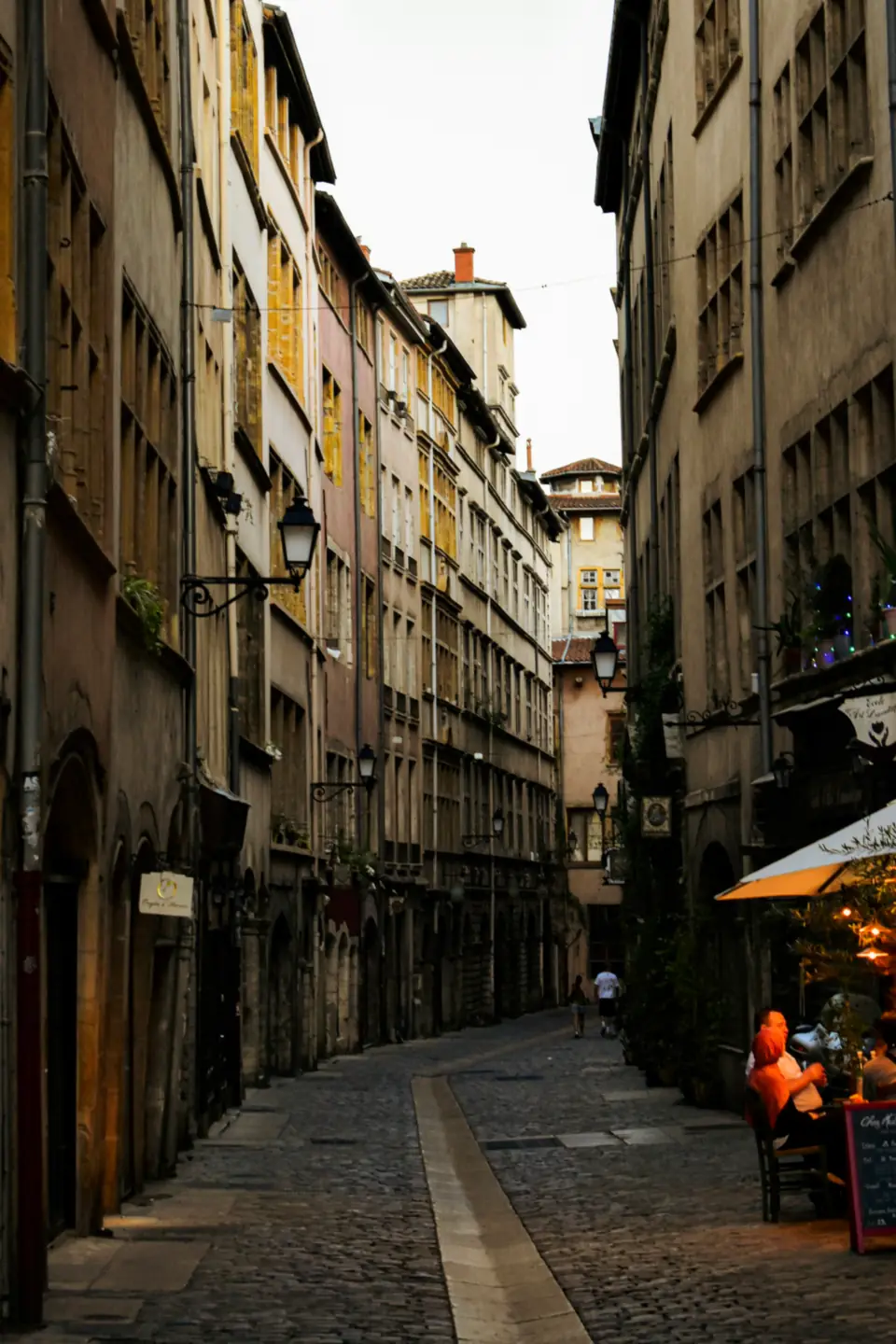
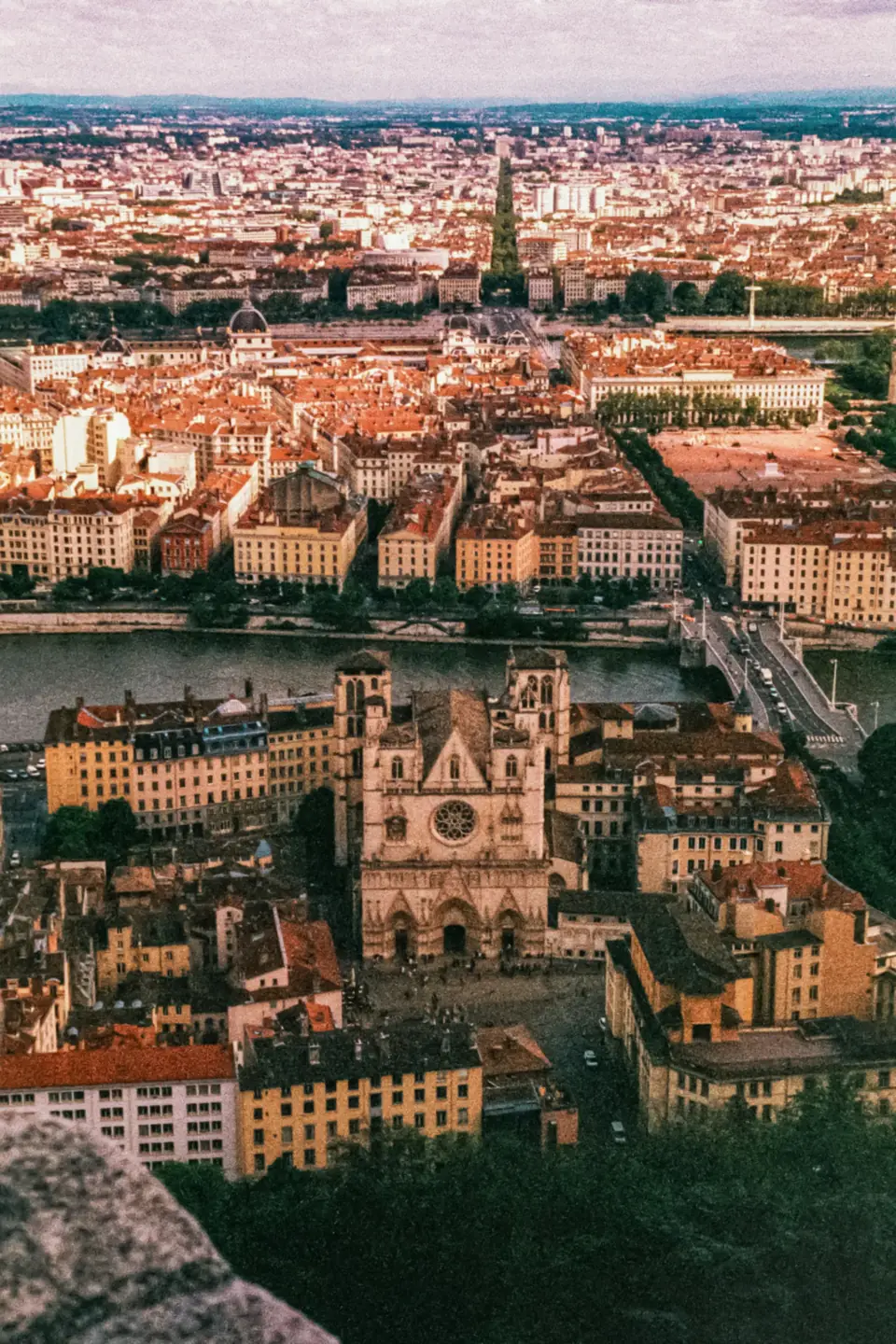
Vieux Lyon is made of three districts, Saint-Georges, Saint-Jean and Saint-Paul, and covers 24 hectares, the tourist office says. Its merchants’ houses, courtyards, spiral staircases and galleries make it “one of the largest Renaissance complexes in Europe”. The Cathedral of Saint-Jean was built from 1160 to 1481, UNESCO says; the tourist office points to its astronomical clock, and to the Soierie Saint-Georges, the last silk-making workshop still at work in the district.
The traboules, from the Latin “trans ambulare”, to walk through, are passages that cross the buildings from one street to the next. The tourist office counts about 500 of them in more than 230 streets: about 200 in Vieux Lyon, 160 on the slopes of the Croix-Rousse and 130 on the Presqu’île. Only about 50 are open to the public, under an agreement with the owners adopted in July 1990, “365 days a year, between 7 am and 7 pm”. People live there: walk through quietly, without shouting, running or leaving litter.
The Fresque des Lyonnais, an 800 m² trompe-l’oeil mural painted in 1994 and 1995 by CitéCréation, shows 31 famous people of Lyon, among them the Lumière brothers, Paul Bocuse and Antoine de Saint-Exupéry, at the corner of 49 quai Saint-Vincent and 2 rue de la Martinière, in the 1st arrondissement.
Sources: ONLYLYON Tourisme, Vieux Lyon, the traboules and courtyards and the Fresque des Lyonnais; UNESCO, read on November 28, 2026.
Fourvière: the basilica and the Roman theaters
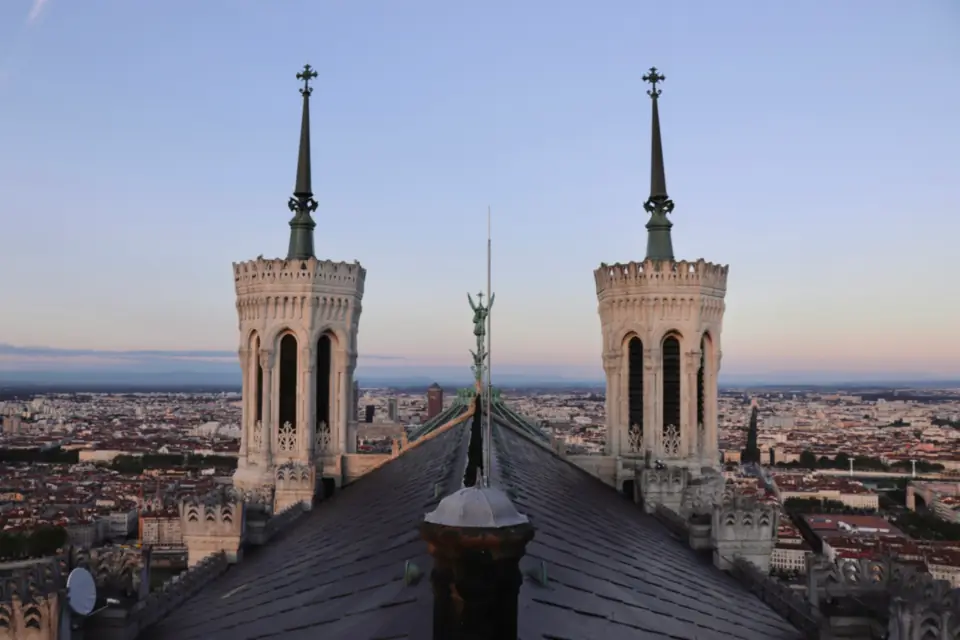
The basilica of Notre-Dame de Fourvière, built from 1872 to 1896, looks down on the city from its hill. Entry is free and without booking, every day of the year; the basilica opens from 7 a.m. to 8 p.m. (9 p.m. on Sunday) and the crypt from 8:30 a.m. to 6:30 p.m. A one-hour guided discovery visit costs 8 euros (4 euros reduced and for ages 5 to 17), except in January. The rooftop visit, 1 hour 30 minutes, 345 steps and 18 people at most, costs 14 euros (7 euros reduced and for ages 5 to 17) and has a tour in English, but it does not run in December and January. The towers are under restoration and the Rosaire gardens are closed, the basilica’s site says.
To get up there, take the F2 funicular from Vieux Lyon station to Fourvière: TCL names it as the one for the basilica. The F1 runs from Vieux Lyon to Saint-Just. Lyon opened the world’s first urban funicular in 1862, TCL says.
A few minutes’ walk from the basilica, the Roman theaters of Lugdunum are open from 7 a.m. to 9 p.m. from May 2 to September 30 and from 7 a.m. to 7 p.m. from October 1 to April 30. The Lugdunum museum beside them, on the Roman city, opens from Tuesday to Friday from 11 a.m. to 6 p.m. and on weekends from 10 a.m. to 6 p.m., and costs 4 euros (7 euros during exhibitions). It is free for under-18s, students aged 18 to 25, visitors aged 65 and over, Lyon City Card holders, and for everyone on the first Sunday of each month.
Sources: Fondation Fourvière, hours, visits, the guided discovery visit, the rooftop visit and the rooftop tour in English; TCL, the funiculars and the network; Lugdunum, hours and prices, read on November 28, 2026.
The Presqu’île: Bellecour, the Terreaux and the Museum of Fine Arts
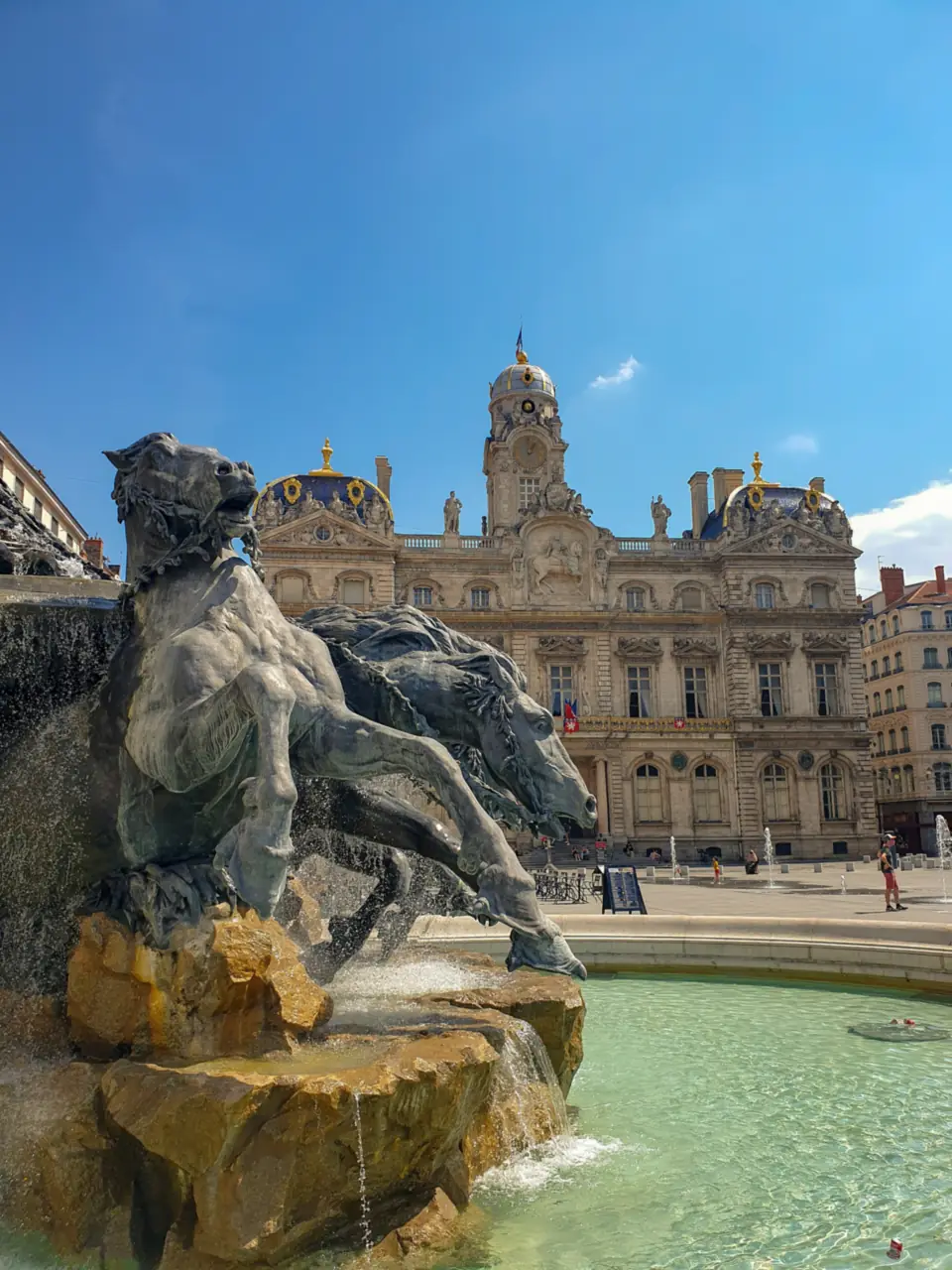
The Presqu’île is the peninsula between the Rhône and the Saône, the heart of the city. Place Bellecour is, in the tourist office’s words, “the largest pedestrianised square in Europe”, and the Place des Terreaux holds the City Hall, built from 1646 to 1703, and the Museum of Fine Arts.
The Musée des Beaux-Arts, at 20 place des Terreaux, opens from Wednesday to Monday from 10 a.m. to 6 p.m. (10:30 a.m. on Friday) and closes on Tuesdays and public holidays. Entry costs 8 euros, 4 euros for ages 18 to 25, free under 18; its exhibition “Musée sentimental” costs 14 euros. Its 20th-century rooms are closed for now.
Sources: ONLYLYON Tourisme, the Presqu’île; Musée des Beaux-Arts, practical information, read on November 28, 2026.
The Croix-Rousse, the hill that works
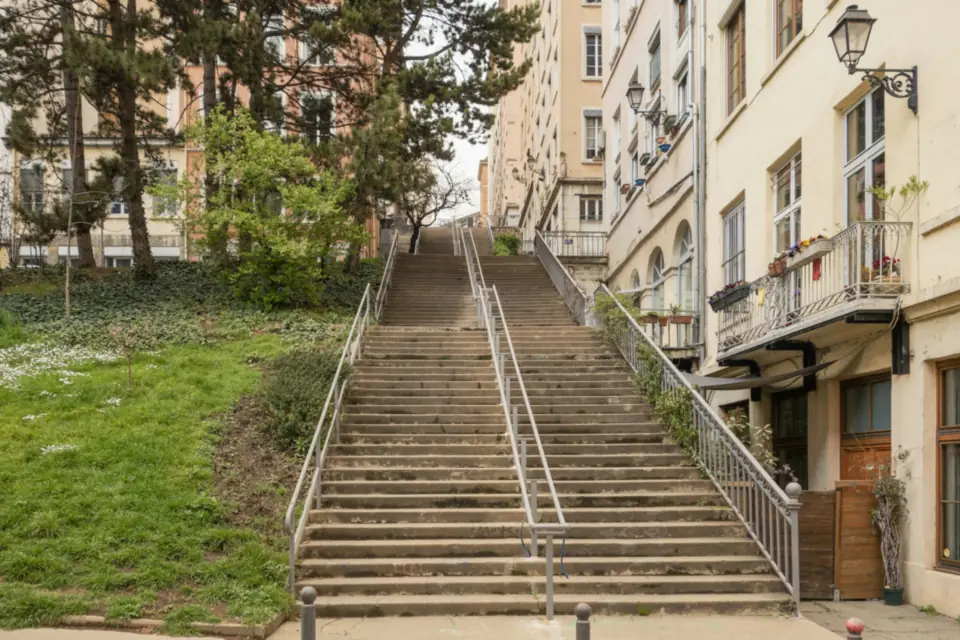
Facing Fourvière, Lyon’s other hill, the Croix-Rousse, climbs in slopes and stairways. Silk has been woven in Lyon since the 16th century, the tourist office says, and the canuts made this district “the hill that works”. About 160 of the city’s traboules are on its slopes, and the Mur des Canuts, a trompe-l’oeil mural by CitéCréation, is “the biggest in Europe” in the tourist office’s words.
Source: ONLYLYON Tourisme, the Croix-Rousse, read on November 28, 2026.
Confluence and its museum
At the southern tip of the Presqu’île, the Confluence district has been rebuilt since the 2000s, the tourist office says, with La Sucrière, an exhibition venue. The Musée des Confluences opens from Tuesday to Sunday from 10:30 a.m. to 6:30 p.m., every day during the school holidays of zone A except in summer, and until 10 p.m. on the first Thursday of the month. Entry costs 12 euros (7 euros reduced), free for under-18s and Lyon City Card holders; it is closed on December 25 and January 1.
Sources: ONLYLYON Tourisme, Confluence; Musée des Confluences, read on November 28, 2026.
The Parc de la Tête d’Or
The Parc de la Tête d’Or, 105 hectares laid out from 1856 to 1858, has a zoo, a botanical garden and rose gardens, all free. The park opens from 6:30 a.m. to 10:30 p.m. from April 15 to October 14 and from 6:30 a.m. to 8:30 p.m. from October 15 to April 14. The zoo, 8 hectares, opens from 9:30 a.m. to 5 p.m. in winter (5:45 p.m. in summer) and closes every Tuesday; the botanical garden opens from 9:30 a.m. to 5 p.m. in winter (6 p.m. in summer).
Source: Ville de Lyon, the Parc de la Tête d’Or, read on November 28, 2026.
The Musée Lumière, where cinema was born
In the 8th arrondissement, the Musée Lumière, devoted to the Cinématographe and the Lumière family, fills the Villa Lumière, the family home, at 25 rue du Premier-Film. The first ten Lumière films were shown on December 28, 1895, at the Grand Café in Paris, to 33 people, the Institut Lumière says. The museum opens from Tuesday to Sunday from 10 a.m. to 6:30 p.m., closes on Mondays, December 25, January 1 and May 1, and costs 9.50 euros (7.50 euros reduced, free under 7). Take metro D to Monplaisir-Lumière.
Source: Institut Lumière, Musée Lumière, read on November 28, 2026.
The Halles Paul Bocuse and the bouchons
The covered market of Lyon, the Halles de Lyon Paul Bocuse, opened on January 1, 1971 at 102 cours Lafayette, in the 3rd arrondissement. Its merchants (55 on its home page, 56 on its practical page) open from Monday to Saturday from 7:30 a.m. to 7:30 p.m. and on Sunday from 7:30 a.m. to 1 p.m.; its restaurants serve lunch from 11:30 a.m. to 2:30 p.m. (3:30 p.m. on Sunday), and the oyster sellers stay open until 10 p.m. (4 p.m. on Sunday). The magazine Food & Wine named it the third best market in the world, the Halles announced on April 28, 2026.
The bouchons lyonnais are the city’s traditional restaurants. The Chamber of Commerce and Industry and Lyon’s tourist office created a label for them, and the tourist office’s list showed 22 labeled restaurants when we read it. What to order in a bouchon is in our guide to French food.
Sources: Halles de Lyon Paul Bocuse, practical information, history and the Food & Wine ranking; ONLYLYON Tourisme, the bouchons lyonnais label, read on November 28, 2026.
Lyon’s Museums and Sites: Hours and Prices
| Place | Open | Adult price | Free for |
|---|---|---|---|
| Basilica of Fourvière | Every day, 7 a.m. to 8 p.m. (9 p.m. Sunday) | Free; guided visit 8 euros, rooftops 14 euros (not in December and January) | Everyone (basilica) |
| Roman theaters | 7 a.m. to 7 p.m. (October to April), to 9 p.m. (May to September) | No price given | |
| Lugdunum museum | Tuesday to Sunday, from 11 a.m. (10 a.m. weekends) to 6 p.m. | 4 euros, 7 euros with an exhibition | Under 18, students 18 to 25, 65 and over, everyone the first Sunday of the month |
| Musée des Beaux-Arts | Wednesday to Monday, 10 a.m. to 6 p.m.; closed Tuesdays and public holidays | 8 euros | Under 18 |
| Musée des Confluences | Tuesday to Sunday, 10:30 a.m. to 6:30 p.m. | 12 euros | Under 18 |
| Musée Lumière | Tuesday to Sunday, 10 a.m. to 6:30 p.m. | 9.50 euros | Under 7 |
| Parc de la Tête d’Or and its zoo | Park from 6:30 a.m.; zoo closed Tuesdays | Free | Everyone |
Source: the official pages named in each section above, read on November 28, 2026.
The Fête des Lumières 2026
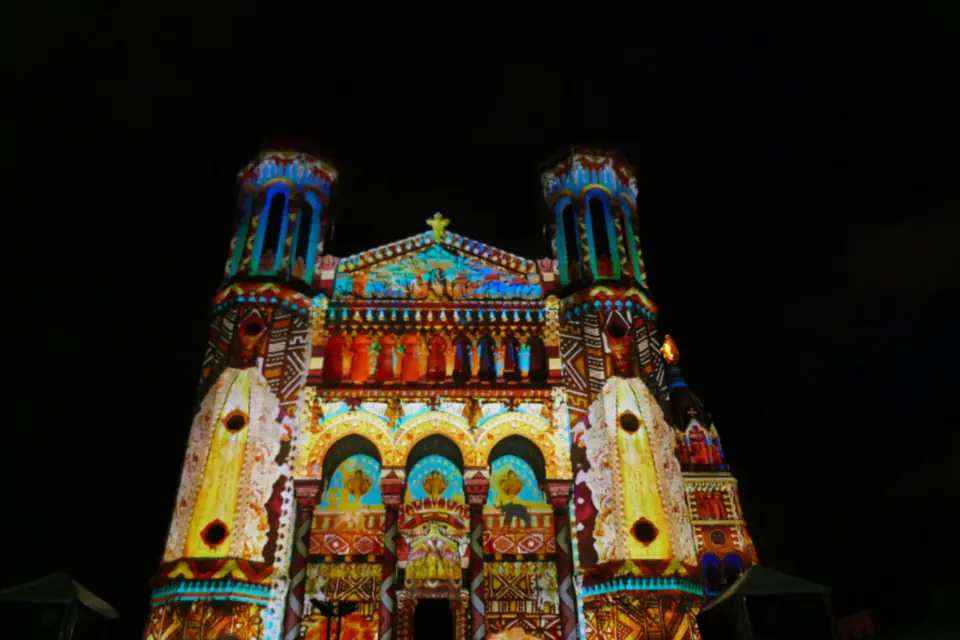
The Fête des Lumières, the Festival of Lights, runs from Saturday, December 5 to Tuesday, December 8, 2026, the city’s official site says: from 7 to 11 p.m. on Saturday, Monday and Tuesday, and from 6 to 10 p.m. on Sunday. It is entirely free. The 2026 edition lists 27 works across the city (the home page says “more than 25”), and the city counts about 2 million visitors. The festival goes back to 1852, when the people of Lyon set little candles, the lumignons, in their windows, and the city has run it in its present form since 1999.
What the city advises for those four nights:
- Transport: TCL sells a “Pass TCL en fête” for 3.70 euros, valid on all zones, and the whole TCL network is free on December 8 from 4 p.m. Get off at Bellecour or Cordeliers rather than at the crowded Vieux Lyon station.
- Traffic: the center is closed to cars from 5 p.m. (4 p.m. on Sunday).
- Bags: suitcases and travel bags are banned in the parks and the security perimeter, and so are glass and takeaway alcohol.
During the festival, the tourist office’s temporary welcome point on Place Bellecour opens from 9 a.m. to 8 p.m., and its Fourvière office from 10 a.m. to 7 p.m. (more on the tourist office below).
Sources: Fête des Lumières, home, dates and hours 2026, the 2026 edition, getting around and questions; ONLYLYON Tourisme, the tourist office, read on November 28, 2026.
The Lyon City Card and the Tourist Office
The Lyon City Card runs for 24, 48, 72 or 96 hours from its first use. It gives free entry to 26 museums, a guided tour, a river cruise or a City Bus tour depending on the season, and, as an option, public transport on TCL zones 1 and 2. With transport, TCL sells it for 32 euros (24 hours), 44 euros (48 hours), 56 euros (72 hours) and 68 euros (96 hours); the tourist office’s shop shows prices from 21 euros per adult, for its smallest plan. Transport is not included on May 1, when the TCL network does not run. Rhônexpress sells a round trip to the airport with the card, from 57.40 euros with a one-day card.
The tourist office’s main welcome center on Place Bellecour has been closed since a fire on October 17, 2026, with no reopening date. A temporary point, “Le Rectangle”, on Place Bellecour on the Saône side, opens every day from 9 a.m. to 6 p.m., and the Fourvière office from 10 a.m. to 5 p.m. on Monday, Tuesday, Thursday and Friday, 9:30 a.m. to 5 p.m. on Wednesday and Saturday, and 1:30 to 5 p.m. on Sunday.
Sources: ONLYLYON Tourisme, the Lyon City Card and the tourist office; TCL, fares; Rhônexpress, fares, read on November 28, 2026.
The Weather in Lyon, Month by Month
Lyon has cold, gray winters and hot summers. At the Lyon-Bron station, Météo-France’s normals for 1991 to 2020 give 2,049.5 hours of sunshine and 820.8 mm of rain a year, on about 103 days.
| Month | Low | High | Rain | Rain days | Sunshine |
|---|---|---|---|---|---|
| January | 1.1 °C (34 °F) | 7.1 °C (45 °F) | 49.8 mm | 8.1 | 71 h |
| February | 1.4 °C (35 °F) | 9.0 °C (48 °F) | 41.6 mm | 7.9 | 102 h |
| March | 4.2 °C (40 °F) | 13.8 °C (57 °F) | 49.4 mm | 8.4 | 174 h |
| April | 7.2 °C (45 °F) | 17.4 °C (63 °F) | 68.9 mm | 9.0 | 198 h |
| May | 11.2 °C (52 °F) | 21.5 °C (71 °F) | 80.9 mm | 10.3 | 224 h |
| June | 15.0 °C (59 °F) | 25.6 °C (78 °F) | 74.1 mm | 8.5 | 257 h |
| July | 17.0 °C (63 °F) | 28.2 °C (83 °F) | 67.4 mm | 7.5 | 288 h |
| August | 16.6 °C (62 °F) | 28.0 °C (82 °F) | 65.5 mm | 7.2 | 263 h |
| September | 12.8 °C (55 °F) | 23.1 °C (74 °F) | 82.5 mm | 7.3 | 204 h |
| October | 9.6 °C (49 °F) | 17.7 °C (64 °F) | 99.8 mm | 9.9 | 131 h |
| November | 4.9 °C (41 °F) | 11.4 °C (53 °F) | 87.2 mm | 9.4 | 79 h |
| December | 2.0 °C (36 °F) | 7.7 °C (46 °F) | 53.7 mm | 9.2 | 59 h |
Source: Météo-France, Lyon-Bron normals 1991-2020, read on the rendered page on November 28, 2026. Fahrenheit rounded.
When to go. May, June and September give long, warm days without the heat of July and August, the two hottest months. October is the wettest month. December is the darkest, but it brings the Fête des Lumières, from December 5 to 8 in 2026: book a room early for those nights.
How to Get to Lyon
By train
Lyon has three main stations for long-distance trains: Lyon Part-Dieu, Lyon Perrache and Lyon Saint-Exupéry TGV, at the airport.
| From Lyon to (or from) | Trains a day | Fastest | Average | Tickets from |
|---|---|---|---|---|
| Paris | 30 | 1 h 43 | 2 h 36 | 10 euros |
| Marseille (Saint-Charles) | 17 | 1 h 31 | 2 h 07 | 10 euros |
| Avignon | 30 | 0 h 50 | 2 h 04 | 10 euros |
| Annecy | 16 | 1 h 50 | 2 h 10 | 24 euros |
| Geneva (Cornavin) | 11 | 2 h 02 | 2 h 29 | 32 euros |
Source: SNCF Connect, Paris to Lyon, Lyon to Marseille, Lyon to Avignon, Lyon to Annecy and Lyon to Geneva, read on November 28, 2026. Prices are one way in second class, on some trains and dates.
By air
Lyon-Saint-Exupéry airport says it serves 140 destinations with direct flights, but its page for New York says there is no direct flight and gives routes with one change, through London, Lisbon, Brussels or Munich. It does have direct flights to Montreal, with Air Canada and Air Transat, in 8 hours 10 minutes, and, from June 2027, to Quebec City every Tuesday with Air Transat. From the United States, the other route is a flight to Paris and the train, 1 hour 43 minutes on the fastest.
From the airport, the Rhônexpress tram reaches Part-Dieu in 30 minutes, every 15 minutes, from 4:25 a.m. to midnight, seven days a week. A one-way ticket costs 16.30 euros online and 17.40 euros at the machine, a round trip 28.50 euros online and 30.30 euros at the machine, 10.70 euros one way for ages 12 to 25, and children under 12 ride free. TCL’s bus C200 also runs from Vaulx-en-Velin La Soie, the end of metro A, but only one bus in three on weekdays and one in two on weekends goes all the way to the airport.
Sources: Lyon-Saint-Exupéry airport, flights to New York, to Montreal and to Quebec City; Rhônexpress, home and fares; TCL, bus C200, read on November 28, 2026.
Getting Around Lyon
The TCL network has four metro lines, A to D, trams, buses and the two funiculars up the hill of Fourvière. Metro A runs from 4:35 or 5 a.m. to about midnight, and all four metro lines run until 2 a.m. on Friday and Saturday nights; the network does not run on May 1.
| TCL ticket, zones 1 and 2 | Price | All zones |
|---|---|---|
| One trip (1 hour in zones 1 and 2, 2 hours all zones, transfers included) | 2.10 euros | 3.70 euros |
| 10 trips | 20.50 euros | 33.60 euros |
| 24 hours | 7.10 euros | 9.90 euros |
| 48 hours | 13.20 euros | 18.80 euros |
| 72 hours | 18.50 euros | 26.10 euros |
| 7 days | 23.80 euros | 33.60 euros |
| Funicular round trip, same day | 3.70 euros | |
| Monthly pass, ages 26 to 64 | 75.90 euros | 91.80 euros |
Source: TCL, fares and paying by bank card, night travel and metro A, read on November 28, 2026. The rechargeable ticket costs 0.20 euros the first time.
You do not need to buy a ticket: tap a contactless Visa, Mastercard or CB card, or Apple Pay, Google Pay or Samsung Pay, on the red validator, and each trip costs 2.10 euros for an hour, on zones 1 and 2. One card can pay for 2 to 5 people. After three trips in a day the price is capped at the price of a 24-hour pass, TCL says (6.90 euros on its bank card page, while its 24-hour pass page gives 7.10 euros).
Vélo’v, the city’s bike share, has 5,000 bikes, 2,500 of them electric, at 428 stations. A single trip costs 1.80 euros and a 24-hour pass 4 euros, with the first 30 minutes of each trip free on a regular bike (on an electric bike, 1 euro from the first minute on a single trip, 1 euro per 30 minutes with the 24-hour pass); a year’s subscription costs 39 euros.
Source: Vélo’v, offers, read on November 28, 2026.
Day Trips from Lyon
Vienne, the little Rome of the Rhône
Vienne, 20 minutes south of Lyon by regional train, has a Roman temple of Augustus and Livia, built around 20 to 10 B.C., which survived because it became a church from the 5th century, and a Roman theater built between 40 and 50 A.D. for about 13,000 spectators, one of the largest in Gaul, where the Jazz à Vienne festival has been held since 1981, the tourist office says. SNCF Connect lists 23 trains a day from Lyon Part-Dieu or Jean Macé, from 16 minutes and 7 euros.
Pérouges, a medieval village
Pérouges, one of the Plus Beaux Villages de France, is a walled medieval town of cobbled lanes where 80 people live, open to walkers all year. The regional train from Part-Dieu to Meximieux-Pérouges station takes 19 to 35 minutes, from 7 euros, then a walk of about 20 minutes ends with a short climb. There is no cash machine in the village, the tourist office warns.
The Beaujolais
In the Beaujolais wine country, Villefranche-sur-Saône is 35 km from Lyon, 40 minutes by road, or 25 minutes by regional train from Part-Dieu or Perrache. Its vineyards grow one grape, Gamay, under 12 appellations, and in 2018 it became the first wine region recognized as a UNESCO Global Geopark, the tourist board says.
Further away, Annecy and its lake are 1 hour 50 minutes by train: our guide to Annecy covers the old town, the lake and the trains from Lyon.
Sources: Vienne Condrieu Tourisme, getting there, the temple and the Roman theater; De Pérouges au Bugey tourist office, the medieval town and Pérouges by train; Beaujolais Tourisme, getting there and the UNESCO Geopark; SNCF Connect, Lyon to Vienne and Lyon to Meximieux, read on November 28, 2026.
How Many Days in Lyon?
- Day 1, the old town and Fourvière: the funicular up to the basilica in the morning, the Roman theaters and the Lugdunum museum, then down through Vieux Lyon, the Cathedral of Saint-Jean and the open traboules (7 a.m. to 7 p.m.), and dinner in a bouchon.
- Day 2, the Presqu’île and the Croix-Rousse: Place Bellecour, the Terreaux and the Museum of Fine Arts (closed on Tuesdays), then up the slopes of the Croix-Rousse and its traboules; lunch at the Halles Paul Bocuse.
- Day 3, the left bank and Confluence: the Parc de la Tête d’Or, the Musée Lumière (closed on Mondays) and the Musée des Confluences at the meeting of the rivers.
With a fourth day, add Vienne, Pérouges or the Beaujolais. Over three days, a 72-hour Lyon City Card with transport, at 56 euros, covers the funicular, the metro and 26 museums, among them Lugdunum and the Musée des Confluences.
Living in Lyon, or Spending a Season There
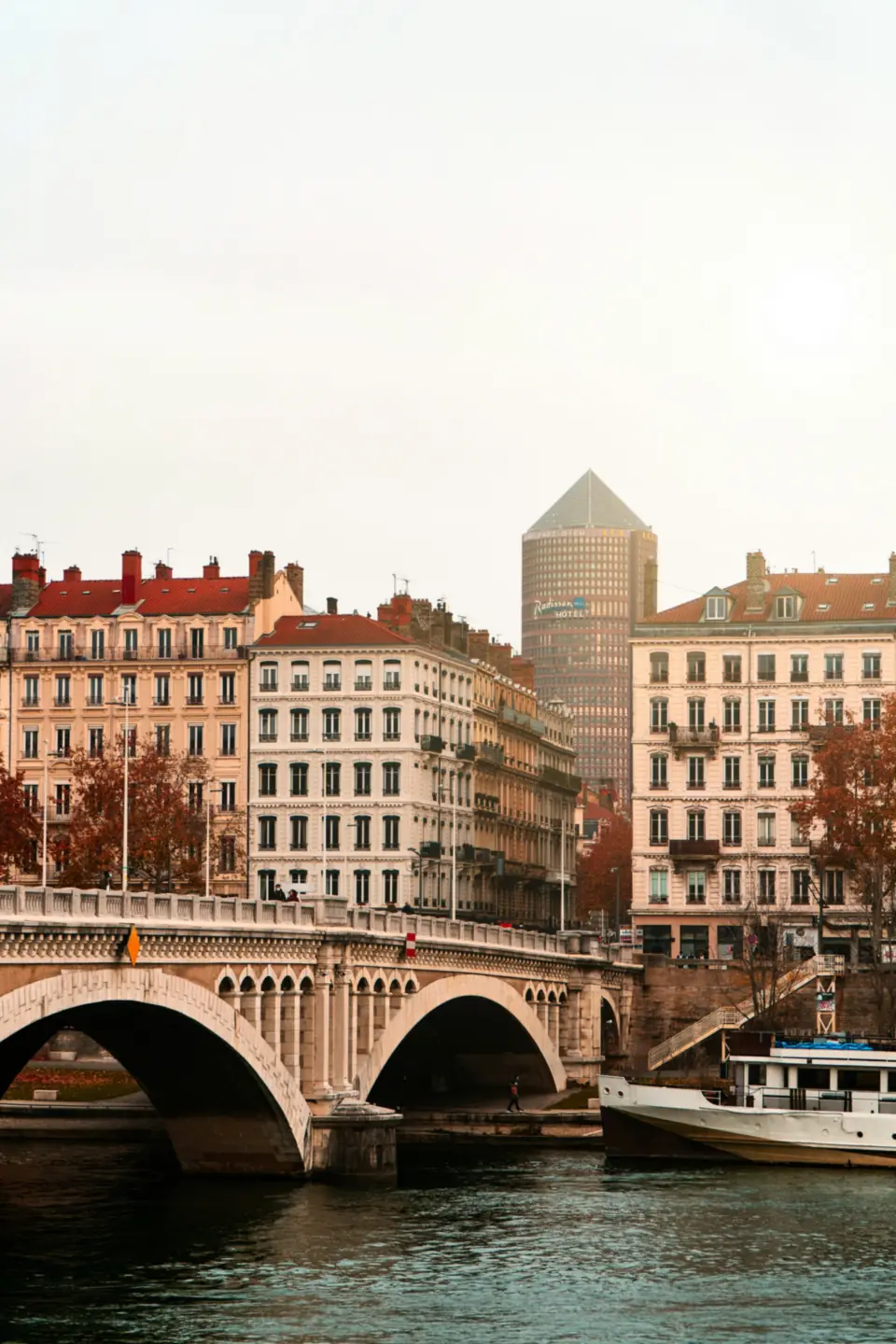
Lyon is also a city to stay in for a few months, or to move to. What changes once you stay beyond a vacation:
The 90-day rule and the long-stay visa
As a visitor who needs no visa for a short stay, you can stay a maximum of 90 days within any 180-day period, the European Commission says, counted back 180 days from each day of your stay, across all the Schengen countries. The EU’s Entry/Exit System has been fully in operation since April 10, 2026, and records each entry and exit. ETIAS, the travel authorization these visitors will need, is not yet in operation, and the EU says it will announce its start date several months before its launch. Our guide to how long Americans can stay in France without a visa explains the count, and the Schengen calculator checks your dates.
For any stay in France of more than 90 days, you must apply in advance for a long-stay visa, and France-Visas says your nationality does not exempt you. For a stay without working, that is the long-stay “visitor” visa, with proof of resources, housing and health cover and a written promise not to work in France; it lasts 3 to 12 months and must be validated online within 3 months of arrival.
Where to live, and what rent costs
The advertised rents of the Ministry of Ecological Transition’s “Carte des loyers”, for apartments let unfurnished in the third quarter of 2025, charges included, run from 15.78 euros a square meter in the 5th arrondissement to 17.66 euros in the 6th; they are 15.63 euros in Villeurbanne, the town next door.
| Arrondissement | Advertised rent, euros per m² |
|---|---|
| 1st | 17.06 |
| 2nd | 17.61 |
| 3rd | 16.40 |
| 4th | 16.88 |
| 5th | 15.78 |
| 6th | 17.66 |
| 7th | 16.31 |
| 8th | 15.97 |
| 9th | 16.02 |
| Villeurbanne | 15.63 |
Source: Ministère de la Transition écologique, “Carte des loyers” 2025, estimations ANIL, from the data of Groupe SeLoger and leboncoin; unfurnished apartments, charges included, third quarter of 2025, read on November 28, 2026. Small apartments cost more per square meter: 18.4 to 20.3 euros for 1 or 2 rooms, 14.3 to 16.7 euros for 3 rooms or more, across the nine arrondissements.
The rents actually paid are lower. The local rent observatory, the OLL, gives a median of 14.4 euros a square meter, charges excluded, in its zone 1 in 2024, 840 euros a month for an average of 68 m², down to 12.5 euros in its fifth zone.
Rent control. Lyon and Villeurbanne have had rent control since November 1, 2021, the Prefecture of the Rhône says. It applies to new leases, renewals and the bail mobilité. Each year an order sets, by sector, number of rooms, age of the building and furnished or not, a reference rent per square meter, charges excluded, and the rent may not exceed it by more than 20 percent, unless the landlord adds a justified “complément de loyer”. In the order now in force, a two-room apartment built from 1946 to 1970 has a reference rent of 12.6 to 13.9 euros a square meter unfurnished and 14.2 to 15.7 euros furnished, depending on the sector, so a cap of 15.1 to 16.7 euros unfurnished and 17.0 to 18.8 euros furnished. Listings must show the reference rent and the cap, and a landlord who ignores them can be fined up to 5,000 euros (15,000 euros for a company). A law of November 21, 2026 extended the scheme to ten years from the ELAN law of November 2018, and an order of November 23, 2026 keeps these reference rents until October 31, 2027. Seasonal rentals are not covered. The Métropole has a checker online.
Getting around as a resident. A monthly TCL pass for ages 26 to 64 costs 75.90 euros for zones 1 and 2, plus 5 euros for the named card, and includes 45 free minutes on each Vélo’v trip; a year of Vélo’v alone costs 39 euros.
Our guide to renting in Lyon as an American compares the arrondissements, says what agencies ask for in a rental file and how to rent without a French work contract.
Leases and furnished rentals
- The furnished lease. It runs for at least one year, nine months for a student, service-public says; an unfurnished lease runs for three years.
- The bail mobilité. This furnished lease of 1 to 10 months, not renewable and without a security deposit, is open only to a tenant in vocational training, higher education, an apprenticeship, an internship, civic service, a job transfer or a temporary work assignment, service-public says, so a visitor who simply wants a season in Lyon cannot sign one. Our bail mobilité guide sets out the other leases.
- Short-term furnished rentals. In Lyon, a resident may let their main home to tourists for up to 90 days a year, the city says. Any other home needs a registration number and, first, a change-of-use authorization from the city, which since June 1, 2022 generally requires the owner to turn another space into housing in compensation. Every furnished tourist rental in Lyon has a registration number: ask for it before you book.
Every night in a hotel or a rental also carries the tourist tax of the Métropole, which under-18s do not pay. In 2026 it runs, per person and night, from 0.88 euros in a one-star hotel or a guest room to 1.87 euros in a three-star, 2.86 euros in a four-star, 3.96 euros in a five-star and 5.39 euros in a palace; in a furnished rental that is not classified, it is 5 percent of the price per person and night, plus 10 percent, capped at 5.39 euros. The 2027 rates are the same.
Sources: European Commission, short-stay calculator; European Union, what is the EES, EES questions and ETIAS; France-Visas, long-stay visa and a stay of more than three months as a tourist; Observatoire local des loyers, agglomeration of Lyon; Préfecture du Rhône, rent control, order of October 23, 2026 and order of November 23, 2026; Métropole de Lyon, rent control; service-public, rent control; Légifrance, law no. 2026-1072 of November 21, 2026; Ville de Lyon, furnished tourist rentals and change of use; Métropole de Lyon, tourist tax and 2026 rates; TCL, monthly pass; Vélo’v, read on November 28, 2026.
Finding that furnished apartment, calling the agencies, setting up a phone line or a bank account, and the appointments that need French: that is what our Personal Assistant handles for you.
FAQ
Is Lyon worth visiting?
Yes: a historic center on UNESCO’s World Heritage List since 1998, the basilica of Fourvière, free, and the Roman theaters, one of the largest Renaissance districts in Europe with its traboules, museums of fine arts, of cinema and of the Confluences, the Halles Paul Bocuse and the bouchons, and the Fête des Lumières every December. It is 1 hour 43 minutes from Paris by the fastest train.
What is Lyon, France known for?
For its history, from the Roman capital of the Three Gauls to the Renaissance houses of Vieux Lyon; for silk, woven on the Croix-Rousse since the 16th century; for its food, from the bouchons to the Halles Paul Bocuse; and for light, from the Lumière family’s Cinématographe to the Fête des Lumières, which draws about 2 million visitors in four nights.
Where is Lyon?
Where the Saône flows into the Rhône, between the hills of Fourvière and the Croix-Rousse. It is the capital of the Auvergne-Rhône-Alpes region, 422 km from Paris by rail, 1 hour 31 minutes from Marseille and 2 hours 02 minutes from Geneva by the fastest trains.
How far is Lyon from Paris?
422 km by rail, 1 hour 43 minutes by the fastest of the 30 trains a day, from 10 euros one way, SNCF Connect says; the average trip takes 2 hours 36 minutes.
When is the Fête des Lumières 2026?
From Saturday, December 5 to Tuesday, December 8, 2026, from 7 to 11 p.m. (6 to 10 p.m. on Sunday), free, with 27 light works across the city.
What is the weather like in Lyon?
Cold in winter and hot in summer: at Lyon-Bron, highs average 7.1 °C (45 °F) in January and 28.2 °C (83 °F) in July, Météo-France says, with 820.8 mm of rain a year and 2,049.5 hours of sunshine. October is the wettest month and July the sunniest.
Is Lyon expensive?
Much of what it offers costs little or nothing: the basilica of Fourvière, the traboules, the Parc de la Tête d’Or and its zoo, and the Fête des Lumières are free; a metro trip costs 2.10 euros, a 24-hour pass 7.10 euros, the Museum of Fine Arts 8 euros and the Musée des Confluences 12 euros. We did not compare hotel or restaurant prices.
Can you fly directly from New York to Lyon?
No. Lyon-Saint-Exupéry’s page for New York says there is no direct flight and gives routes with one change, through London, Lisbon, Brussels or Munich. The other route is a flight to Paris and the train, 1 hour 43 minutes on the fastest.
Conclusion
Lyon rewards three days: the basilica and the Roman theaters of Fourvière, the Renaissance lanes and traboules of Vieux Lyon, the squares and museums of the Presqu’île, the slopes of the Croix-Rousse, and a long lunch in a bouchon or at the Halles. Come by train from Paris in under two hours, use the metro, the funicular or a contactless card, and if you can, come for the Fête des Lumières, from December 5 to 8, 2026. For the other great places of France, see our guide to the best places to visit in France; to compare Lyon with the other large cities, our guide to the cities in France; and if Lyon becomes the place you want to live, our guide to renting in Lyon as an American.
The parts of the move Americans find out about too late.
What Americans get wrong about moving to France, and the number, form or deadline that fixes it. Straight to your inbox.
One email a week. Real numbers, nothing else.
Written by
Aurelio Maurici
Co-Founder, EasyFranceNow
Aurelio Maurici is a French entrepreneur and co-founder of EasyFranceNow. His work focuses on the intersection of French administration, banking constraints affecting U.S. nationals, tax residency and cross-border reporting, healthcare enrollment, and the procedural realities Americans encounter while settling in France.


