
Le Marais, Paris: What to See, the Free Museums and Where to Stay

By Aurelio Maurici Co-Founder, Master of Business Law, Aix-Marseille Université III
Published

In this article
- Where Is Le Marais in Paris?
- Le Marais at a Glance
- 1. The Place des Vosges
- 2. The Musée Carnavalet, the History of Paris
- 3. The Musée Picasso
- 4. The Hôtel de Soubise and the Archives nationales
- 5. Rue des Rosiers and the Jewish Marais
- 6. The Oldest Houses and the Saint-Paul Quarter
- 7. The Haut Marais: Rue de Bretagne, Shops and the Arts et Métiers
- 8. The LGBTQ+ Marais
- Free Things to Do in the Marais
- Is the Centre Pompidou Open?
- A Day in the Marais
- Getting to the Marais
- Staying in the Marais
- FAQ
- Conclusion
Le Marais is the old aristocratic quarter of central Paris: a “village-like district built on the former marshes from which it takes its name”, in the words of the Paris tourism office, with seventeenth-century private mansions, the oldest square in the city, the historic Jewish quarter around rue des Rosiers, and more free museums than any other part of Paris. It is also one of the most pleasant places to stay in the city, and one of the most sought after. This guide covers what to see, what each place costs and the days it closes, how to get there, and what to know before you stay, with every price and opening hour read on the official site of each place on November 28, 2026.
Where Is Le Marais in Paris?
The Marais lies on the right bank of the Seine, in the center of Paris, mainly in the 3rd and 4th arrondissements. The tourism office describes it as bounded by the Seine to the south and stretching as far as the area around the Place de la République to the north. The tourism office calls the northern part, around rue du Temple, the Haut Marais; the southern part runs down to the river through the Saint-Paul quarter.
It is a district for walking: the tourism office describes cobbled streets and mansions recognizable by their carved white stone and wide carriage gateways, and the streets themselves are a large part of the visit.
Le Marais at a Glance
| Place | Adult price | Closed | Nearest metro |
|---|---|---|---|
| Place des Vosges | Free | Open square | Saint-Paul (1), Chemin Vert (8) |
| Maison de Victor Hugo | Ticket needed during the current exhibition | Mondays | Saint-Paul (1), Chemin Vert (8), Bastille (1, 5, 8) |
| Hôtel de Sully, courtyard and garden | Free, every day 9 a.m. to 7 p.m. | Open every day | Reached through the Place des Vosges |
| Musée Carnavalet | Free (permanent collections) | Mondays, January 1, May 1, December 25 | Saint-Paul (1), Chemin Vert (8) |
| Musée Picasso | 16 euros; free on the first Sunday of the month | Mondays, January 1, May 1, December 25 | Saint-Paul (1), Chemin Vert (8) |
| Archives nationales (Hôtel de Soubise) | Free | Tuesdays, January 1, May 1, December 25 | Rambuteau (11), Hôtel de Ville (1) |
| Mémorial de la Shoah | Free | Saturdays, and December 25, January 1, May 1, July 14 | Saint-Paul (1), Pont Marie (7) |
| mahJ (Jewish art and history) | Not stated on the hours page | Mondays | Not stated on the hours page |
| Musée des Arts et Métiers | 12 euros; free on the first Sunday of the month | Mondays | Arts et Métiers (3, 11) |
Sources: the official site of each museum or monument, linked in its section below, read on November 28, 2026; the metro lines are those of the Île-de-France Mobilités station register.
The parts of the move Americans find out about too late.
What Americans get wrong about moving to France, and the number, form or deadline that fixes it. Straight to your inbox.
One email a week. Real numbers, nothing else.
1. The Place des Vosges
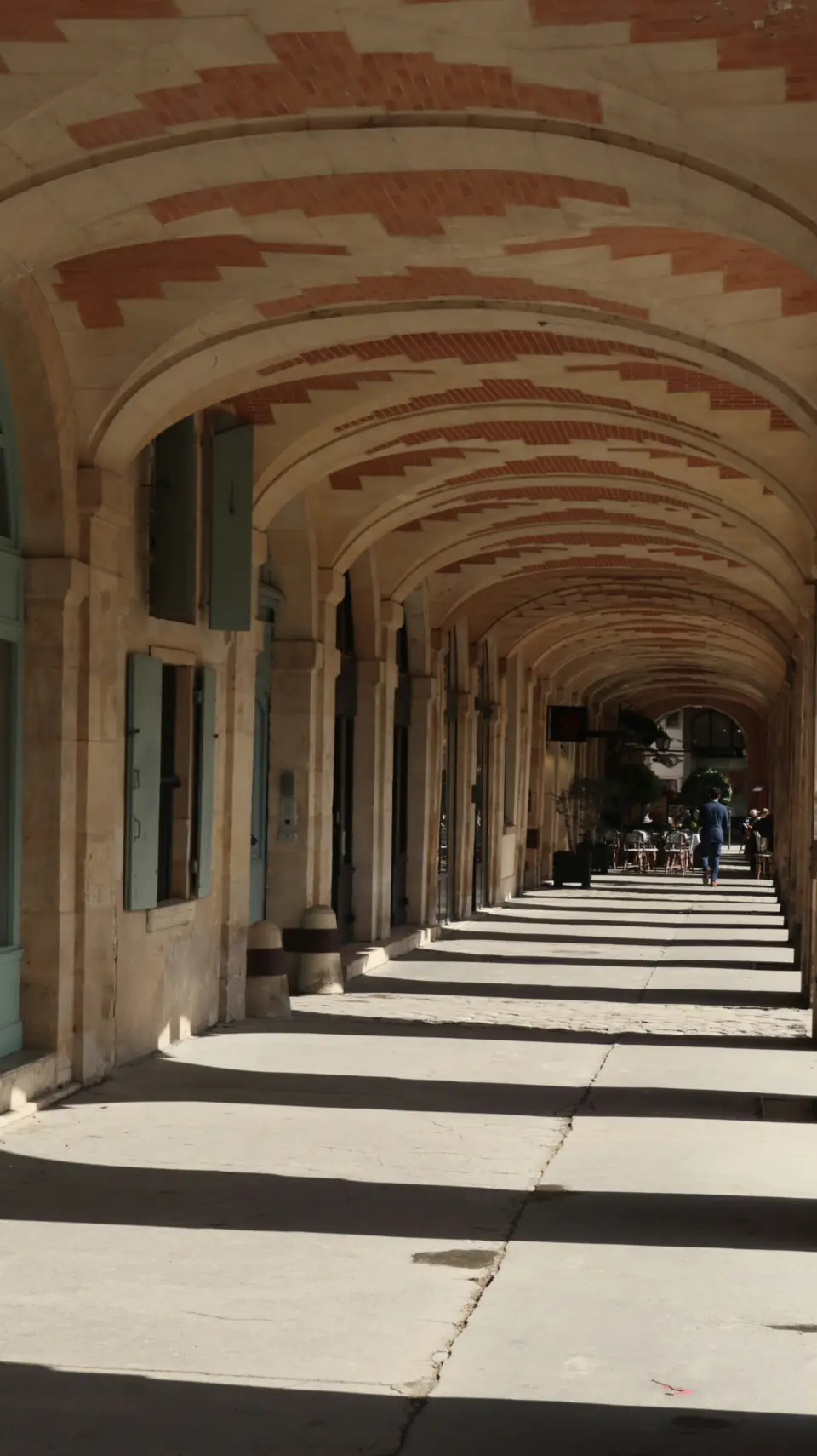
The heart of the Marais is the Place des Vosges, built in the early seventeenth century and “the oldest square in Paris”, according to the tourism office: a garden square of lawns and trees enclosed by red brick houses over stone arcades. Victor Hugo, Madame de Sévigné and Colette all lived around it. Walk the arcades, then sit in the garden in the middle.
At number 6, the Maison de Victor Hugo is the apartment where the writer lived, kept as it was in his time. It opens Tuesday to Sunday from 10 a.m. to 6 p.m. While its temporary exhibition “Hugo the Decorator” runs, there is an admission fee for the museum, the museum says; under-18s get in free. Its garden café, Café Mulot, can be reached through the museum door without a museum ticket.
The Hôtel de Sully, one of the seventeenth-century mansions the tourism office singles out, opens onto the square: its courtyard and garden, run by the Centre des monuments nationaux, are free and open every day from 9 a.m. to 7 p.m., and you can cross them to reach the Place des Vosges. The interiors are shown only on guided visits (13 euros, booking required).
2. The Musée Carnavalet, the History of Paris
The Musée Carnavalet tells the history of Paris from its origins to the present day, the tourism office says, through objects, paintings and period furniture, among them memorabilia of the French Revolution. Its permanent collections are free and need no booking; only the temporary exhibitions are paid, and the museum strongly advises booking those online.
- Hours: Tuesday to Sunday, 10 a.m. to 6 p.m., last admission 5:15 p.m.; closed on Mondays, January 1, May 1 and December 25, and at 5 p.m. on December 24 and 31.
- Entrance: 23 rue Madame de Sévigné, 3rd arrondissement.
- Bags: luggage is not accepted, only handbag-size bags.
3. The Musée Picasso
The Musée national Picasso-Paris is in the Hôtel Salé, one of the grandest mansions of the Marais, at 5 rue de Thorigny. The tourism office notes that it holds more than 5,000 works by the artist. Its rooftop café opens at the same hours as the museum.
| Musée Picasso | As published |
|---|---|
| Hours | Tuesday to Sunday, 9:30 a.m. to 6 p.m., last admission 5:15 p.m. |
| Closed | Mondays, January 1, May 1, December 25; closes at 5 p.m. on December 24 and 31 |
| Price | 16 euros; family rate 12 euros per adult |
| Free | First Sunday of the month, without reservation |
| Metro | Saint-Paul (line 1), Saint-Sébastien-Froissart and Chemin Vert (line 8) |
Source: Musée national Picasso-Paris, practical information, read on November 28, 2026. The museum recommends booking a time slot online for priority entry. For how it compares with the Louvre, Orsay and the others, see our guide to the best museums in Paris.
4. The Hôtel de Soubise and the Archives nationales
The Hôtel de Soubise, which the tourism office lists among the most remarkable mansions of the Marais, houses the museum of the Archives nationales. The princely apartments, the permanent exhibition and the temporary exhibitions are free for every visitor, and the gardens of the site are open free all year.
- Hours: Monday and Wednesday to Friday, 10 a.m. to 5:30 p.m.; Saturday and Sunday, 2 p.m. to 5:30 p.m. (until 7 p.m. during major exhibitions).
- Closed: every Tuesday, and January 1, May 1 and December 25.
- Metro: Hôtel de Ville (line 1), Rambuteau (line 11), Arts et Métiers (line 3).
5. Rue des Rosiers and the Jewish Marais
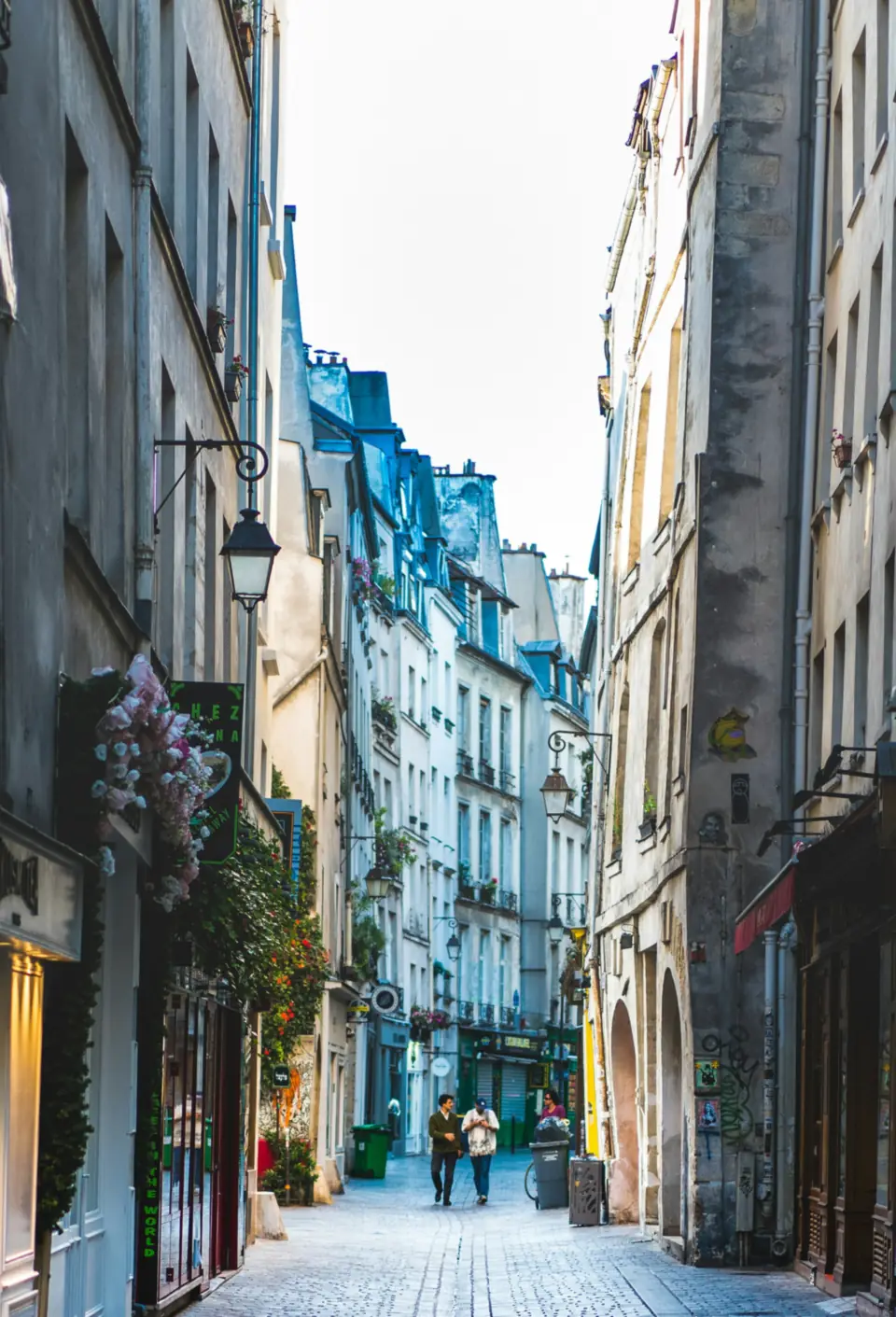
The Marais is also “the historic centre of Paris’s Jewish community”, the tourism office says, and rue des Rosiers is its main street, with kosher shops and restaurants, falafel counters and Yiddish bakeries selling strudel and vatrouchka.
Two museums tell that history:
- The Mémorial de la Shoah, 17 rue Geoffroy l’Asnier, in the 4th: free for individual visitors, open Sunday to Friday from 10 a.m. to 6 p.m., until 9 p.m. on Thursdays (except December 24 and 31, 2026, when it closes at 6 p.m.). It is closed on Saturdays and on December 25, January 1, May 1 and July 14. A free guided tour of the permanent exhibition in English runs every second Sunday of the month at 3 p.m., without reservation.
- The mahJ, the Musée d’art et d’histoire du Judaïsme, in the Hôtel de Saint-Aignan at 71 rue du Temple: open Tuesday, Thursday and Friday from 11 a.m. to 6 p.m., Wednesday from 11 a.m. to 9 p.m., and Saturday and Sunday from 10 a.m. to 6 p.m.; closed on Mondays.
6. The Oldest Houses and the Saint-Paul Quarter
The southern Marais, toward the Seine, keeps some of the oldest buildings in Paris. The tourism office points to:
- Two half-timbered houses on rue François-Miron, often called the oldest in Paris, which in fact date from the sixteenth century.
- The house of Nicolas Flamel on rue de Montmorency, built in 1407, which it calls the oldest.
- The church of Saint-Paul-Saint-Louis, a baroque church with a colorful clock and a painting by Eugène Delacroix.
- The Village Saint-Paul, where almost 200 small antique and design shops share a group of courtyards.
7. The Haut Marais: Rue de Bretagne, Shops and the Arts et Métiers
The northern Marais is the shopping half. The tourism office names rue Vieille-du-Temple, rue du Temple, rue Charlot, rue des Francs-Bourgeois and rue de Turenne for boutiques, concept stores and vintage clothes, and rue de Bretagne for food shops, from bakeries to cheesemongers.
The Marché des Enfants Rouges on rue de Bretagne, the oldest covered market in Paris, is closed to the public following a fire on the night of October 11 to 12, 2026, the tourism office says. On market days, open-air stalls set up on the Place Baudoyer.
At the northern edge, the Musée des Arts et Métiers, founded in 1794 and housed in the former abbey of Saint-Martin-des-Champs at 60 rue Réaumur, according to the tourism office. It opens Tuesday to Sunday from 10 a.m. to 6 p.m., until 9 p.m. on Fridays, and closes on Mondays. The permanent collections cost 12 euros (9 euros reduced) and are free on the first Sunday of the month, with tickets given out only at the museum’s front desk.
The Marais also holds the Musée Cognacq-Jay, an eighteenth-century collection shown in a mansion of the Enlightenment, and many contemporary art galleries. The Paris Musées website, which carries the Cognacq-Jay’s hours, was down for maintenance on the day we checked, so its hours are not given here.
8. The LGBTQ+ Marais
Since the 1980s, the Marais has been the center of gay life in Paris, the tourism office says, with bars, clubs, restaurants and bookshops around rue des Archives, rue du Temple, rue de la Verrerie, rue des Lombards and rue Sainte-Croix-de-la-Bretonnerie. The rainbow pedestrian crossings at the corner of rue du Temple and rue des Archives are a landmark, and the district joins in the Pride March in June.
Free Things to Do in the Marais
- The Place des Vosges and its arcades.
- The courtyard and garden of the Hôtel de Sully, every day from 9 a.m. to 7 p.m.
- The permanent collections of the Musée Carnavalet.
- The Archives nationales museum and its gardens in the Hôtel de Soubise.
- The Mémorial de la Shoah, and its free guided tour in English on the second Sunday of the month.
- The Musée Picasso and the permanent collections of the Arts et Métiers, on the first Sunday of the month.
- The streets themselves: rue des Rosiers, rue François-Miron, the Village Saint-Paul.
Is the Centre Pompidou Open?
No. The Centre Pompidou, which the tourism office still lists among the sights of the Marais, closed its building in autumn 2025 for renovation works that run until 2030, according to the Centre itself. If you planned the Marais around it, the Picasso museum is the modern art visit of the district.
A Day in the Marais
- Morning: start at the Place des Vosges, see the Maison de Victor Hugo when it opens at 10 a.m., then cross the Hôtel de Sully garden.
- Late morning: the Musée Carnavalet, free, a short walk away.
- Lunch: rue des Rosiers, then the Mémorial de la Shoah.
- Afternoon: the Musée Picasso, then the Hôtel de Soubise, and the shops of rue Vieille-du-Temple and rue Charlot up to rue de Bretagne.
Avoid Mondays, when most of the museums are shut. On the first Sunday of the month the Picasso museum is free, without reservation. For the rest of the city, see our guide to the things to do in Paris, and for the season, the best time to visit Paris.
Getting to the Marais
The Marais is served by several metro lines. According to the Île-de-France Mobilités register of stations:
| Station | Lines | Best for |
|---|---|---|
| Saint-Paul | 1 | Place des Vosges, Carnavalet, Picasso, rue des Rosiers |
| Hôtel de Ville | 1, 11 | The southwest, the Mémorial de la Shoah, the Hôtel de Soubise |
| Chemin Vert | 8 | Place des Vosges, Carnavalet, Picasso |
| Saint-Sébastien-Froissart | 8 | Picasso, the Haut Marais |
| Bastille | 1, 5, 8 | Place des Vosges from the east |
| Rambuteau | 11 | Archives nationales, mahJ |
| Arts et Métiers | 3, 11 | Musée des Arts et Métiers, the Haut Marais |
| Pont Marie | 7 | The quays, the Mémorial de la Shoah |
Staying in the Marais
The Marais is one of the most central places to stay in Paris: most of the sights of this guide and Notre-Dame are within walking distance, and line 1 at Saint-Paul and Hôtel de Ville takes you across the city. The flip side is that it is busy, especially on weekends, and lively at night around the bars of the 4th. A room on a courtyard rather than on the street makes a real difference.
For a stay of a few weeks or months, a furnished apartment usually makes more sense than a hotel. The rules on furnished leases, the deposit and the documents a landlord asks for are in our guide to renting in Paris as an American, and what daily life costs in the city is in our guide to the cost of living in Paris.
FAQ
Which arrondissement is Le Marais in?
Mainly the 3rd and 4th arrondissements, on the right bank in the center of Paris. It runs from the Seine in the south to around the Place de la République in the north, according to the Paris tourism office.
What is Le Marais known for?
Its seventeenth-century private mansions, the Place des Vosges, the oldest square in Paris, its museums (Carnavalet, Picasso, Victor Hugo, the Archives nationales), the historic Jewish quarter of rue des Rosiers, its shops and galleries, and its place at the center of gay life in Paris since the 1980s.
What are the free museums in the Marais?
The permanent collections of the Musée Carnavalet, the Archives nationales museum in the Hôtel de Soubise and the Mémorial de la Shoah are free every day they are open. The Musée Picasso and the permanent collections of the Musée des Arts et Métiers are free on the first Sunday of the month.
Is Le Marais a good place to stay in Paris?
For a first visit, yes: it is central, on metro line 1, and within walking distance of Notre-Dame and many museums. It is busy and lively, so ask for a room on a courtyard if you sleep lightly. For a longer stay, see our guide to renting in Paris as an American.
Which museums in the Marais are closed on Monday?
The Musée Carnavalet, the Musée Picasso, the Maison de Victor Hugo, the mahJ and the Musée des Arts et Métiers. The Archives nationales museum closes on Tuesdays instead, and the Mémorial de la Shoah on Saturdays.
Is the Marché des Enfants Rouges open?
Not at the moment. The Paris tourism office reports that the market has been closed to the public since a fire on the night of October 11 to 12, 2026.
Conclusion
The Marais rewards a day on foot: the Place des Vosges in the morning, the free Carnavalet, lunch on rue des Rosiers, the Picasso museum and the mansions in the afternoon, the shops of the Haut Marais at the end of the day. Keep Monday for something else, use the first Sunday of the month for the Picasso museum, and stay nearby if you can, so that the quiet early hours of the square are yours.
The parts of the move Americans find out about too late.
What Americans get wrong about moving to France, and the number, form or deadline that fixes it. Straight to your inbox.
One email a week. Real numbers, nothing else.
Written by
Aurelio Maurici
Co-Founder, EasyFranceNow
Aurelio Maurici is a French entrepreneur and co-founder of EasyFranceNow. His work focuses on the intersection of French administration, banking constraints affecting U.S. nationals, tax residency and cross-border reporting, healthcare enrollment, and the procedural realities Americans encounter while settling in France.


