
French Student Protests 2026: What Americans in France Need to Know

By Aurelio Maurici Co-Founder, Master of Business Law, Aix-Marseille Université III
Published

In this article
- What Is Happening in French Schools and Universities?
- What Do the Students Want?
- How Big Is the Movement, and Why Do the Numbers Differ?
- What About the Violence and the Policing?
- How Has the Government Responded?
- What Does This Mean for Americans Living in or Visiting France?
- What Comes Next?
- Practical Checklist
- FAQ
- Conclusion
Since mid-September 2026, lycée students (French high schoolers) have been blockading their schools across France, university students joined on October 1, and the movement has spread to many cities. For an American living in or visiting France, the effect so far is disruption: closed schools, interrupted trams and buses, crowds and tear gas near some schools. The U.S. Embassy’s advice is to avoid the areas around protests, plan alternative routes and allow extra travel time.
This guide sets out what is happening as of October 15, 2026, what the figures say and who gives them, and what to do if you have a child in a French school, study in France, or travel through a city where a march is called. The situation changes by the day, so each figure below carries its date and its source. A movement like this one is a news event, not a measure of how safe France is: for that, read Is France safe for Americans?.
What Is Happening in French Schools and Universities?
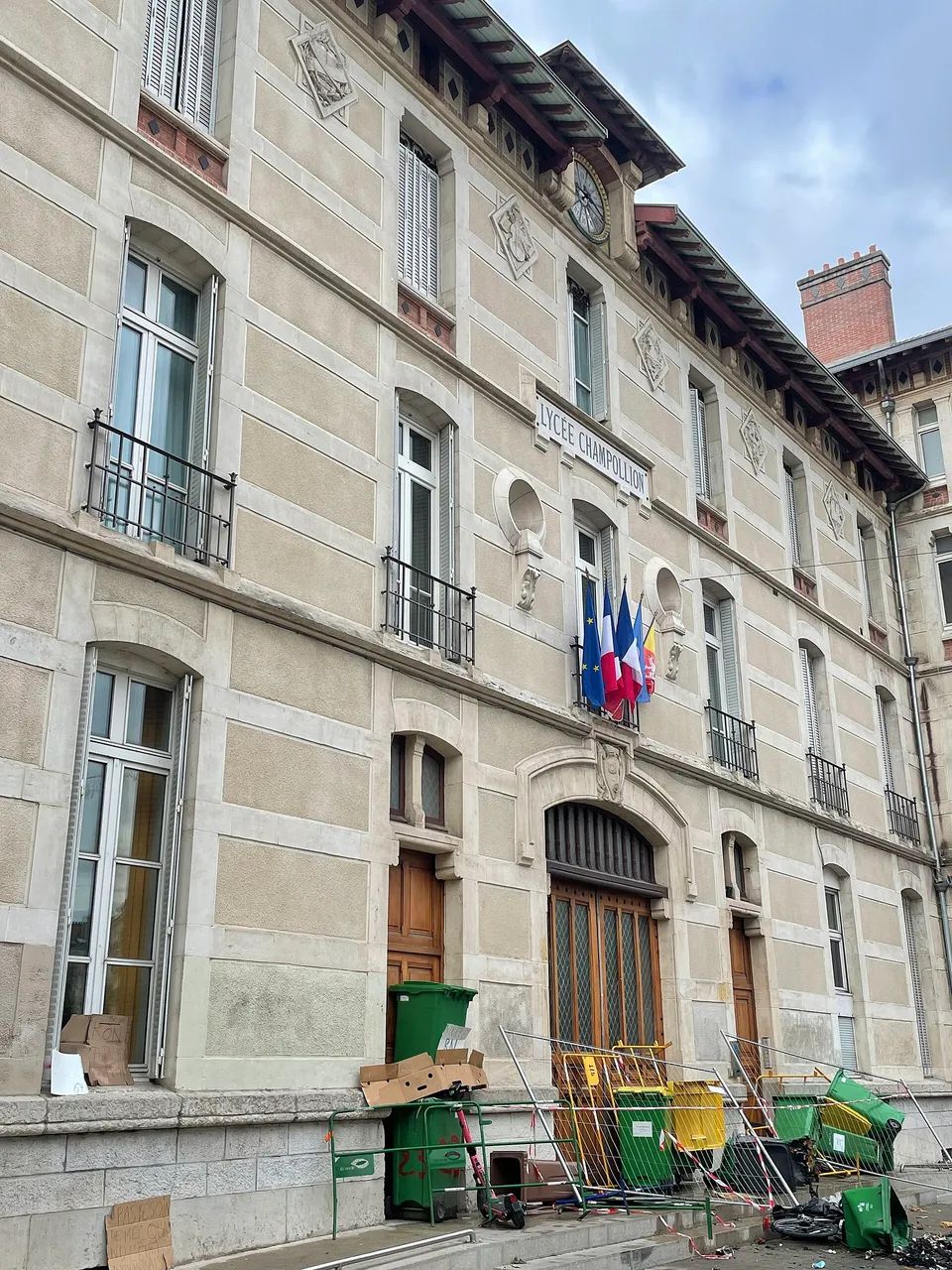
Students at lycées, the French high schools, have been blocking the entrances of their schools since mid-September 2026, and the movement has since reached universities and several cities. Al Jazeera dates the first blockades to September 17 in Créteil, in the Paris suburbs. franceinfo writes that it began in Île-de-France to denounce overcrowded classes and a lack of teachers, then spread to several regions.
| Date | What happened | Source |
|---|---|---|
| October 1 | Universities join. The Interior Ministry reports 1,949 arrests and 305 police officers and gendarmes injured. The Prime Minister, Sébastien Lecornu, chairs an interministerial crisis meeting. The government presents its draft budget the same day. | France 24, franceinfo |
| October 5 | The U.S. Embassy issues an update on the protests. In Lens, a 15-year-old loses a hand in clashes with police. | U.S. Embassy, Al Jazeera |
| October 6 | Nationwide day of action: 266,000 marchers by the authorities’ count, 450,000 by the organizers’. The Education Ministry counts 800 lycées closed. | France 24 |
| October 7 | Interior Minister Laurent Nuñez suspends the use of stun grenades against the high school movement. | Reuters via TimesLIVE |
| October 13 | Another national day: 161,500 marchers by the Interior Ministry’s count, 480,000 by the student and union alliance. 214 lycées closed. | France 24 |
Source accounts of the very first day differ by a few days, which is why the table starts with the first national figures rather than a precise start date.
What Do the Students Want?
The students ask for more teachers, safer and better buildings, smaller classes and a change to Parcoursup, the platform for access to higher education. The details differ by organization and by source.
- Teachers and staff: Al Jazeera reports demands to replace absent teachers, lengthen lunch breaks and change the length of the school day. A Paris maths teacher, Clémence, 30, told Al Jazeera that classrooms reached 35 to 40 degrees Celsius during the recent heatwave.
- Money: the Union syndicale lycéenne asks for a 10 billion euro emergency plan for public education and the abolition of Parcoursup, according to France 24.
- Budget: the draft budget presented on October 1 provides for annual fees of 178 euros in BTS programs for students without a grant, and 270 euros in classes préparatoires, according to France 24. A Snes-FSU teacher in Strasbourg said on October 13 that the budget removes 1,500 positions.
How Big Is the Movement, and Why Do the Numbers Differ?
Two sets of figures circulate for every national day, and they are far apart. On October 13, the Interior Ministry counted 161,500 marchers in France, 41,500 of them in Paris, while the alliance of student and high school organizations counted 480,000. Neither source published its counting method that day, so the two figures cannot be reconciled from what has been published.
| October 6 | October 13 | |
|---|---|---|
| Marchers in France, authorities | 266,000 | 161,500 |
| Marchers in France, organizers | 450,000 | 480,000 |
| Lycées closed (Education Ministry) | 800 | 214 |
Source: France 24, October 13, 2026
The Education Ministry reported that 94.2% of lycées were open on October 13, and that about 35% of higher education institutions were disrupted. The Union étudiante said that 90% of the roughly 70 universities were blocked or closed. These two claims about universities cannot both describe the same thing: the ministry counts disruption, including administrative closures, and the student union counts blockades and closures.
What About the Violence and the Policing?
The movement has been accompanied by fires, damage to schools, attacks on staff and clashes with police, and by injuries on both sides. Those figures are also given by different people.
- On October 13, Interior Minister Laurent Nuñez told the Senate that more than 200 high school students, nearly 900 police officers and gendarmes and 147 Education Ministry staff had been injured since the movement began.
- He also said that 36 investigations had been opened by the IGPN, the police oversight body, four of them for mutilating injuries.
- On October 7, after a teenager lost a hand in Lens, Nuñez suspended the use of stun grenades against the high school movement “until light has been shed on what happened”. According to Al Jazeera, the government said 200 to 250 protesters had thrown objects at the police, and the newspaper La Voix du Nord reported that the boy lost his hand after picking up a police grenade.
- Education Minister Geffray told Parliament that 24 high schools were damaged by fire or vandalism to the point of staying closed for weeks, leaving about 30,000 students without in-person teaching until they reopen, and estimated the repairs at 20 to 30 million euros, according to Reuters on October 8.
- franceinfo listed on October 1 school heads injured in several regions, fires set at lycées in Nantes and Bordeaux, and local officials who said that violent individuals had mixed in with the students.
On arrests, the figures also differ. The Interior Ministry gave 1,949 arrests for October 1 alone. Al Jazeera, relaying the Interior Ministry, reported about 6,100 people arrested since the start, most of them minors, and the Justice Ministry saying more than 1,800 would be prosecuted. These counts do not use the same period, and the sources do not reconcile them.
How Has the Government Responded?
The government has acknowledged the problems and condemned the violence, and it has promised proposals by the end of October without giving details.
- Prime Minister Lecornu ordered his ministers, on October 6, to present first proposals by the end of October, according to Al Jazeera. As reported by France 24 on October 13, he said that the government would table amendments to the 2027 budget bill reflecting some proposals from a consultation platform open to students.
- Education Minister Édouard Geffray announced the week of October 5 an emergency redeployment of 3,000 titular teachers without a post to the lycées most affected by absences, and said on October 13 that it had begun. Adeline Ferier, a Snes-FSU teacher marching in Strasbourg, answered that a budget with 1,500 fewer posts cannot back that announcement.
- Politics are part of the picture. Public Sénat reports that Matignon accuses La France insoumise and far-left relays of being behind the movement, and that the left and the education unions support the students. After Lecornu denounced an “irresponsible escalation” by LFI members of parliament on September 28, Jean-Luc Mélenchon replied that the Prime Minister had “ordered the repression”, with what he called an obvious racist aftertaste, according to France 24.
What Does This Mean for Americans Living in or Visiting France?
For most Americans the practical effects are about getting around and about children’s schools, not about legal status. Nothing in the sources I read says the protests target foreigners.
Transport. On October 1, franceinfo reported tram and bus services interrupted in Grenoble, Strasbourg, where the interruption was requested by the State, and Marseille, where the RTM service was fully stopped. The U.S. Embassy’s October 5 alert tells Americans to expect closures or reduced services across France, including public transport. Our guide to safety in France explains how to read this kind of day, and renting in Marseille covers the city where the RTM network was fully interrupted on October 1.
What the U.S. Embassy asks. The October 5 alert recommends that you avoid areas around protests and demonstrations, check local media for updates, plan alternative routes and allow extra travel time. It notes that past demonstrations have turned violent. As of this writing, it is the latest demonstration alert on the embassy’s alerts page.
Families. If your child attends a French lycée, a blockade can close the school for a day or more, so ask the school how it informs families on those days. For how enrollment and the school year work, see how to enroll your kids in French public school, the French school system for American parents and French public school versus international school. The official calendar puts the Toussaint holidays from the end of classes on Saturday, October 17 to the resumption on Monday, November 2.
Students. If you are enrolled in a French university on a student visa, campus blockades and closures can disrupt classes. Ask your institution’s administration what applies to your program. The visa side is in the student visa guide.
What Comes Next?
The next dates are the holidays, a Saturday march and the end-of-October proposals, and nobody can say yet whether the movement continues after the holidays.
- Several student and high school organizations were due to meet the education and higher education ministers on Thursday, October 15, according to France 24. The outcome was not known when this guide was written.
- Saturday, October 17: several student organizations call to join the cost-of-living demonstrations, and the Union syndicale lycéenne president Ryad Rani asked people to join the “gilets jaunes”. Public Sénat reported on October 5 that many of the visuals calling for that day were generated by AI and relayed by accounts with little link to the historical movement, and that an analyst thought fears of a new yellow vest movement were amplified by social networks.
- October 17 to November 2: school holidays. Some students expect the movement to lose steam, while others say they will keep going, according to France 24.
- End of October: the government’s first proposals.
Practical Checklist
- Check the U.S. Embassy’s alerts page before a trip into a city where a march is called.
- Look at your transit operator’s service notice the morning of a march, and allow extra time.
- Keep away from school entrances and from marches while they are tense, as the embassy advises.
- If you have a child at a lycée, read the school’s messages each morning during blockade days.
- If you are a student, ask your institution’s administration how closures affect your classes.
FAQ
Are the protests aimed at foreigners or tourists?
No source I read describes it that way. The movement concerns the French education system and the budget. The embassy’s warning is about demonstrations being unpredictable and sometimes violent.
Is it safe to travel to France right now?
The U.S. Embassy’s October 5 alert does not tell travelers to stay away from France. It asks them to avoid areas around protests, check local media and allow extra travel time. For anything beyond that, check the embassy’s alerts page the day you travel, and read what shapes risk for Americans in France.
How many people have been arrested?
Figures depend on the source and the period. The Interior Ministry gave 1,949 arrests for October 1 alone, and Al Jazeera, relaying it, reported about 6,100 people arrested since the beginning, most of them minors. See the section on policing above.
Will schools be open after the holidays?
Official classes resume on Monday, November 2. Whether blockades resume is not known: some students said they would continue, others expect the movement to fade.
Where do the figures of this guide come from?
Each figure is attributed to the page where it was read, either an official page (the U.S. Embassy, the Ministry of Education calendar) or a press report. Where the Interior Ministry and the organizers disagree, both are given.
Conclusion
The French student protests of 2026 are a large and fast-moving movement over school conditions and the budget, with turnouts of 161,500 to 480,000 depending on who counts, hundreds of schools closed on peak days and a serious record of injuries and arrests. They are also an event, and an event does not define how safe France is. The disruption and the violence reported in the sources are tied to school sites, marches and the transport lines around them, not to ordinary daily life for an American living in France. The risks that shape that daily life are the ones set out in our guide Is France Safe for Americans?: theft more than violence, and habits more than headlines.
The working response is practical: follow the embassy’s advice, expect transport disruption on march days, and check with your child’s school or your university. The next markers are the October 17 holidays and march, and the government’s proposals due at the end of October. If you are planning a move, the France Navigator sequences the steps that this news does not change. This guide will be updated when those markers are known.
Written by
Aurelio Maurici
Co-Founder, EasyFranceNow
Aurelio Maurici is a French entrepreneur and co-founder of EasyFranceNow. His work focuses on the intersection of French administration, banking constraints affecting U.S. nationals, tax residency and cross-border reporting, healthcare enrollment, and the procedural realities Americans encounter while settling in France.


