The 10-Year Carte de Résident in France: What It Is, Who Qualifies, and How Americans Apply

Published Sep 16, 2025-Updated May 28, 2026
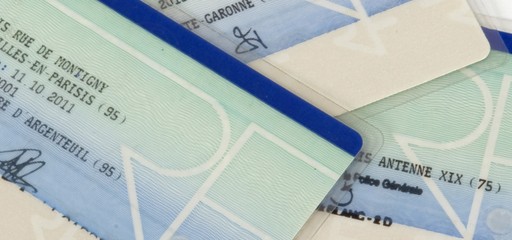
Key Takeaways
What it is: a 10-year renewable card under CESEDA that ends the yearly permit grind.
No annual proof: for ten years you do not re-document income or rebuild a dossier.
Eligibility: generally five years of regular, uninterrupted residence.
2026 conditions: a certified B1 language level and a civic exam now apply to first applications, since January 2026.
Note: this overlaps with our main carte de résident guide, which is the fuller version.
Sources: service-public.fr, legifrance.gouv.fr
The 10-year carte de résident is one of the most significant milestones available to Americans living in France, and one of the most misunderstood. Many Americans reach the five-year mark having heard the term but without a clear picture of what the permit actually grants, what it requires, and whether applying at the five-year mark makes more sense than pursuing naturalization directly. This guide answers all three questions with the specific detail you need to make an informed decision and to prepare a successful application. This article is for informational purposes only and does not constitute immigration or legal advice. Rules change, and your situation may differ: always verify current requirements with the relevant French authorities or a licensed immigration professional.
What the 10-Year Carte de Résident Is
The carte de résident is a 10-year renewable residence permit issued under Articles L. 233-1 and following of the French Code de l'entrée et du séjour des étrangers et du droit d'asile (CESEDA). It is the highest-tier residence authorization available to non-EU nationals in France below citizenship. Its most important characteristics, taken together, are what make it qualitatively different from any annual or biannual carte de séjour:
It is valid for ten years from the date of issuance. During those ten years, you do not file a renewal application, do not demonstrate your income annually, and do not rebuild a dossier every one to two years. The administrative overhead of maintaining legal status in France drops dramatically. One application, one card, ten years of uninterrupted authorized residence.
It authorizes you to work in France in any professional capacity without restriction. No separate work authorization from your employer or from the prefecture is required. A salaried employee, a freelancer, an auto-entrepreneur, and a company director are all equally authorized to work under a carte de résident. This is meaningfully different from the visiteur permit, which prohibits professional activity, and from the salarié permit, which is linked to specific employment.
The current official eligibility conditions and application requirements are published on service-public.fr. Always verify these directly before preparing your application, as the conditions are updated periodically.
What the Carte de Résident Gives You That a Shorter Permit Does Not
The practical advantages of the 10-year carte de résident over a pluriannuelle (multi-year) carte de séjour are substantial and extend well beyond the renewal savings.
Automatic right to work without restriction. If you currently hold a visiteur carte de séjour, you are not authorized to work in France. Switching to the carte de résident changes this entirely. You can take on French employment, register as an auto-entrepreneur, open a business, or pursue any professional activity without changing your permit category or filing for a separate work authorization. For Americans who want professional flexibility in France without the annual category-specific documentation burden, this is a significant practical benefit.
Stability for housing and banking. French landlords and banks are familiar with the carte de résident and treat it as a strong proof of long-term legal status. In our experience, Americans who present a 10-year carte de résident in housing and banking contexts encounter less friction than those presenting annual or biannual renewals with varying expiry dates. A 10-year document with 8 years remaining is simply easier for institutions to process than an annual document approaching expiry.
Simpler renewal cycle. Renewing the carte de résident after 10 years is generally less document-intensive than renewing an annual or biannual carte de séjour, because your long-term integration into France is already established and documented. The renewal assesses whether the conditions for initial grant continue to be met, not whether you are newly eligible.
Schengen travel flexibility. You can travel within the Schengen area on the carte de résident for stays of up to 90 days in any 180-day period, as all legal residents of Schengen member states can. The annual récépissé-during-renewal uncertainty that creates travel complications for Americans on shorter permits (see our guide on traveling on your récépissé while waiting) disappears entirely once you hold a 10-year card.
Eligibility Requirements: What France Is Actually Checking
The eligibility requirements for the carte de résident are more substantive than those for a standard renewal, and understanding what the prefecture is actually evaluating helps you prepare the right dossier.
Five years of regular and uninterrupted habitual residence. The five-year clock starts from your first entry date as a legal resident (stamped in your passport), not from the date of your first carte de séjour or your OFII validation. "Regular" means lawful status without gaps. A récépissé during a pending renewal is lawful status and does not break regularity. "Uninterrupted" means France must have been your principal habitual residence throughout the period. Short trips are fine. A pattern of spending most of the year in the United States raises questions about whether France was your habitual home.
Stable and sufficient income resources. There is no single published euro figure for the income threshold. The prefecture assesses your income against your household's cost of living, broadly benchmarked against the SMIC (French minimum wage). Verify the current applicable threshold at service-public.fr at the time of your application, as it adjusts annually. For Americans with U.S.-sourced income, the documentation challenge is presenting that income in a form the prefecture can evaluate. French bank statements showing regular transfers from a U.S. account, accompanied by the U.S. source documents (Social Security letter, brokerage statements, pension documentation) and a brief explanatory note in French, is the standard approach.
French language at B1 oral level, demonstrated by a formal certificate. Unlike the naturalization process where language is primarily assessed at the prefecture interview, the carte de résident application typically requires a formal test certificate: TCF IRN, DELF B1, or TEF Europe. Obtaining this certificate before submitting your application is not optional. In our experience, the language certificate is the document that Americans most frequently underestimate the lead time for. The TCF IRN requires booking an authorized test center (availability varies by region, from 4 weeks to 3 months in advance), sitting the test, and waiting 3 to 5 weeks for results. Start this process at least 4 to 6 months before you plan to submit your application.
Completion of OFII CIR integration obligations. The Contrat d'Intégration Républicaine (CIR) that you signed at your OFII appointment when you first arrived includes obligations (civic education sessions and, for those below A1 French, language courses). Your prefecture will check whether you completed the prescribed sessions. If you were directed to courses and did not complete them, this should be addressed before the application.
No criminal convictions above a defined threshold and no threat to public order. This is a background check that covers French and foreign criminal records. For Americans, the relevant document is typically your criminal record from the United States, which for most standard dossiers is an FBI Identity History Summary with an apostille. Some prefectures request this explicitly; others rely on the CASIER B3 (French criminal extract) alone. Verify what your specific prefecture requires before preparing your dossier.
Two of these are dates, not documents: the entry stamp that starts your clock, and the CIR sessions. Both decide whether you are eligible at all this year. Check whether your clock has run.
The Application Process Via ANEF
The carte de résident application is submitted through the ANEF platform, the same platform used for standard renewals. Log in to your existing account, navigate to "Mes démarches," and select the carte de résident application type. ANEF routes you through eligibility questions before displaying the document upload interface.
The specific document upload requirements follow the same technical rules as standard renewals: PDFs under 4 MB per file, no password protection, no HEIC or Word formats. Complete all uploads before the session timer expires. Prepare every document before opening the ANEF form.
After submission, the prefecture reviews the application. Processing times for the carte de résident application are generally longer than for standard renewals, because the review includes substantive integration assessment rather than just document verification. Allow 3 to 6 months in most departments, and up to 8 months in Paris and the Ile-de-France region for a complete, well-prepared dossier.
During the processing period, if your current permit expires, request a récépissé. The récépissé for a pending carte de résident application carries the same rights as any renewal récépissé. What we see most often with carte de résident applications is that Americans who submitted the application with an incomplete language certificate or an insufficient income documentation package receive a supplementary document request several months into the review, which adds significantly to the total processing time.
What the Application Dossier Requires
Beyond the eligibility verification documents above, the carte de résident application dossier typically includes: valid U.S. passport with all pages; copies of all French residence permits held during the qualifying 5-year period; proof of habitual residence in France spanning the full 5 years (leases, utility bills, official correspondence addressed to you in France for each year); French avis d'imposition (tax assessment notices) for at least the past 3 years (if you have been filing French tax returns as a fiscal resident, which most long-term American residents in France should be doing); income documentation appropriate to your situation with euro conversions; OFII CIR completion certificate; French language test certificate at B1 or above; U.S. birth certificate with apostille and certified French translation by a sworn translator (traducteur assermenté); and standard identity photographs. That is a long list with several items that age or expire, and a visa dossier check on the assembled file, before it goes into ANEF, is the easiest way to confirm every year of the residence trail is actually covered.
For the full picture of how the permit stages before the 10-year permit work and how to build the documentation trail as you go, see our guide on the permit stages before the 10-year permit.
The Trade-Off for Americans: Carte de Résident Now, or Naturalization?
At the five-year mark, Americans who meet the eligibility conditions for the carte de résident simultaneously meet the residence threshold for naturalization. This creates a genuine decision point that is worth thinking through clearly.
The carte de résident is the faster, simpler path. The dossier is less complex than the naturalization dossier (no FBI background check, no civic knowledge interview, no Ministry of Justice review), and processing takes months rather than years. The result is a 10-year permit with the right to live and work in France without restriction. It is renewable at year 10.
Naturalization produces a French passport and French citizenship. The French passport gives you the right to live and work in any of the 27 EU member states without a separate permit, the right to vote in all French elections, and a permanent status that does not require renewal. The naturalization dossier is more demanding, the processing timeline is 12 to 30 months, and the assessment is holistic rather than checklist-based. For the complete comparison, see our guide on is French citizenship worth pursuing after the 10-year permit?
The practical choice for most Americans at the 5-year mark: if your French is clearly at B1, your integration documentation is strong, and EU freedom of movement is a priority for you professionally or personally, pursuing naturalization directly is worth considering. If your French needs more development, your dossier has gaps, or you want the administrative stability of a 10-year card while preparing a more complete naturalization application, applying for the carte de résident first is the sensible path. Many Americans do both: obtain the carte de résident first, then apply for naturalization 2 to 3 years later with a stronger French level and more complete integration documentation. For the full residency timeline from your first arrival to this decision point, see our guide on the full timeline from arrival to the 10-year permit. For the path from the 10-year permit onward, see our guide on the path from the 10-year permit to French citizenship.
Common Mistakes to Avoid
Not applying at the earliest eligible moment is the most common oversight. Americans who reach the 5-year mark and continue renewing their pluriannuelle permits without applying for the carte de résident are doing more administrative work than necessary and delaying the stabilization of their status. Each additional renewal cycle requires rebuilding a dossier, documenting income, and renewing the récépissé during processing. None of this is required once the carte de résident is in hand. Apply as soon as you are eligible.
Not obtaining the language certificate with enough lead time is the second most consistent failure in carte de résident applications from Americans. In our experience, the TCF IRN booking, test, and results cycle takes a minimum of 6 to 8 weeks and often longer in areas with limited test center availability. Americans who start the language certificate process only after they have gathered all other documents regularly delay their carte de résident application by 2 to 4 months for this reason alone. Book the test 4 to 6 months before your planned submission date.
Not filing French income tax returns during the qualifying period is a documentation gap that creates real problems at the carte de résident application stage. If you have been a French fiscal resident and have not filed French income tax returns, the dossier will show a gap in tax compliance that the prefecture will flag. Correcting multiple years of unfiled returns before the application, with professional cross-border tax guidance, takes time and should be started well before the 5-year mark.
Readiness Checklist
Confirm 5 years of regular and uninterrupted habitual residence from your first VLS-TS entry date.
Book your French language test (TCF IRN or DELF B1) at least 4 to 6 months before planned submission.
Assemble proof of residence for all 5 years: leases, utility bills, official French correspondence per year.
Confirm French income tax returns filed for all applicable years as a French fiscal resident.
Prepare income documentation with EUR conversions for U.S.-sourced income.
Gather copies of all French residence permits held during the qualifying period.
Obtain U.S. birth certificate with apostille and certified French translation if not already in your file.
Obtain OFII CIR completion certificate.
Verify ANEF document format requirements and test all scans before the submission session.
When to Get Help
The carte de résident application is more complex than a standard renewal. The income documentation requirements for Americans with U.S.-sourced income, the integration of French tax compliance into the dossier, and the coordination of the language certificate timeline make it the dossier where preparation quality has the highest impact on outcome. If your income is entirely U.S.-sourced, your tax compliance picture is not clean, or your dossier has documentation gaps from the qualifying period, professional support is worth arranging well before the application. For the full pillar guide to the carte de résident for Americans with complete eligibility and application detail, see our guide on the full pillar guide to the carte de résident for Americans. The ten-year card is decided on the coherence of the whole file, and a visa dossier check before submission catches the gaps that turn a strong case into a refusal.
FAQ
Does the 10-year carte de résident allow me to work in other EU countries?
No. The carte de résident authorizes you to live and work in France. As a third-country national (non-EU citizen), you do not have the right to live and work in other EU member states by virtue of your French residence permit alone. For EU-wide freedom of movement, including the right to live and work in any of the 27 EU member states without a separate national permit, you need French citizenship. The carte de résident is a substantial improvement over shorter French permits, but it is not equivalent to EU citizenship or to the freedom of movement that comes with a French or EU passport. If EU mobility is important to your professional or personal plans, see our comparison of citizenship vs permanent residency before deciding which path to pursue at the 5-year mark.
Can I travel to the United States freely with a 10-year carte de résident?
Yes, with significantly more freedom than during a standard permit's renewal cycle. The carte de résident is valid for 10 years and does not expire during a renewal waiting period. When you travel to the United States and return to France, you re-enter on your U.S. passport plus your valid 10-year carte de résident, which is a recognized titre de séjour for entry to France from any country. You do not face the récépissé-related re-entry complications that affect Americans during standard permit renewals. Standard Schengen entry rules apply: as a U.S. citizen, you enter France on your U.S. passport; the carte de résident establishes your right of residence once in France. There is no 90-day travel limitation on your residence in France; the only Schengen travel limitation that applies to you as a U.S. passport holder is the 90-days-in-any-180-days rule for visits to other Schengen countries (you are already a resident of France, so travel to other Schengen countries for tourism is within normal rules).
What happens if my circumstances change significantly during the 10-year period?
The carte de résident is not linked to a specific permit category the way annual permits are. Because it grants the right to work in any capacity, a change from employment to self-employment, from one employer to another, or from not working to working does not require a permit update or a new application during the 10-year validity period. Major civil status changes (marriage, divorce, children) should be reported to the prefecture and may affect dependent permits if applicable, but do not affect your own carte de résident. Extended absences from France (generally more than three consecutive years) can potentially affect your status if France is no longer your habitual residence, but this is assessed at renewal after 10 years, not during the 10-year period. If you are planning a significant life change during the 10-year period and are uncertain about its implications for your permit, confirm with your prefecture or a professional before the change rather than after.
Can I include my spouse and children in my carte de résident application?
No. Each person must apply for their own carte de séjour or carte de résident independently. Your spouse's eligibility depends on their own residence history and the category of permit they hold. If your spouse arrived in France at the same time as you and has maintained the same pattern of legal residence, they may also be eligible for the carte de résident at the 5-year mark and should apply separately. Children who are minors and living with you in France may be covered by different permit provisions depending on their age and situation. Consult a professional or your prefecture about the specific situation for each family member separately from your own application.
Conclusion
The 10-year carte de résident is the right administrative target for Americans at the five-year mark who want to establish long-term stability in France without the annual renewal cycle. It grants the right to work in any capacity, removes the récépissé travel complications, and provides a stable document that French institutions recognize immediately. Applying at the earliest eligible moment, with a language certificate in hand and a complete 5-year residence documentation trail, gives you the best possible outcome with the least administrative friction. For the path from the 10-year permit to French citizenship if you decide to pursue it later, see our guide on the path from the 10-year permit to French citizenship. And before you file, a dossier review reads the finished file line by line against what the préfecture weighs, and comes back marked up within 72 hours.
About the author
Maxime Roseau
Related posts